Charitable Lead Annuity Trust Requirements
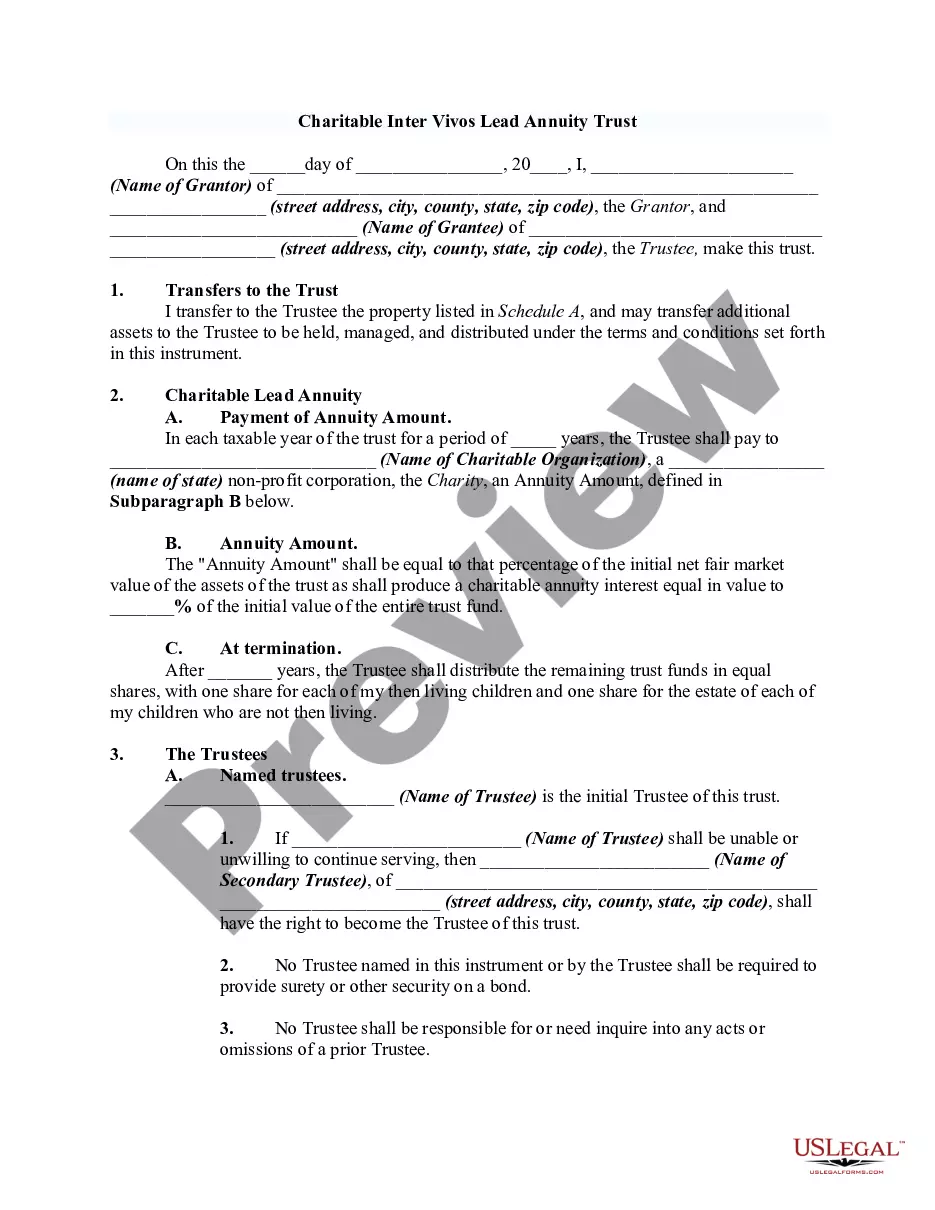
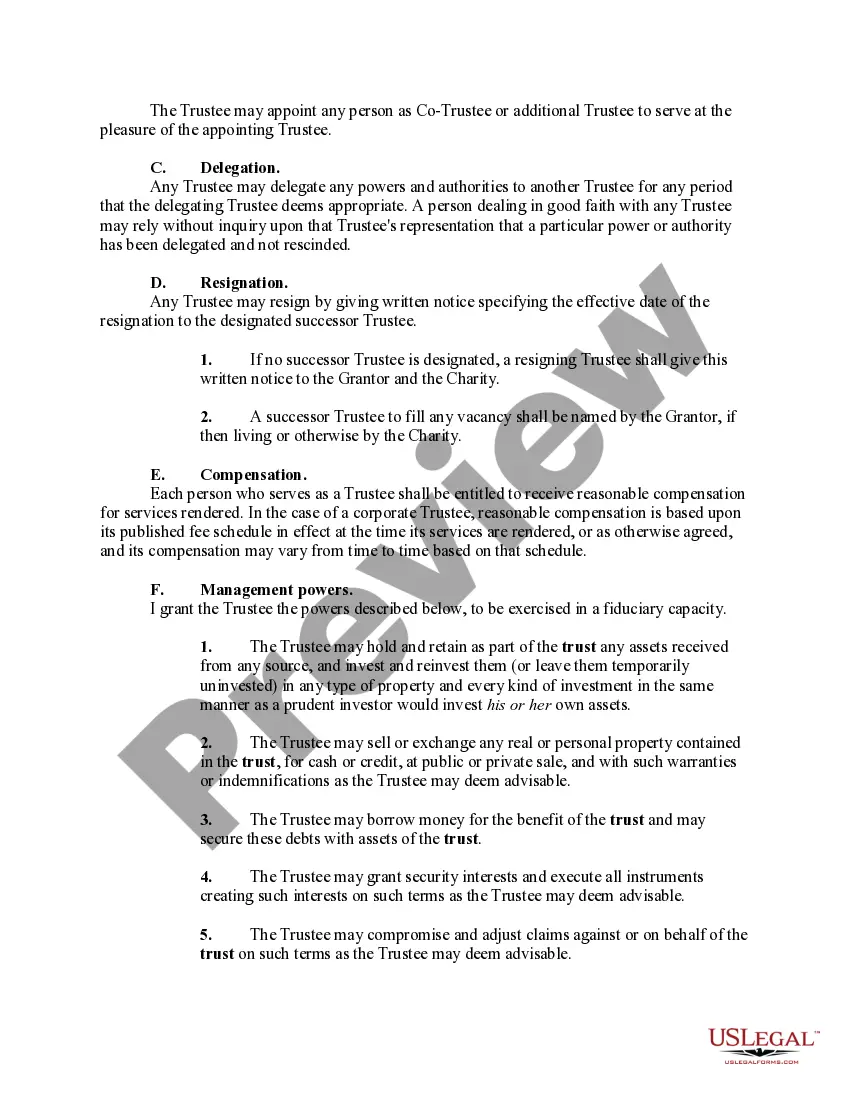
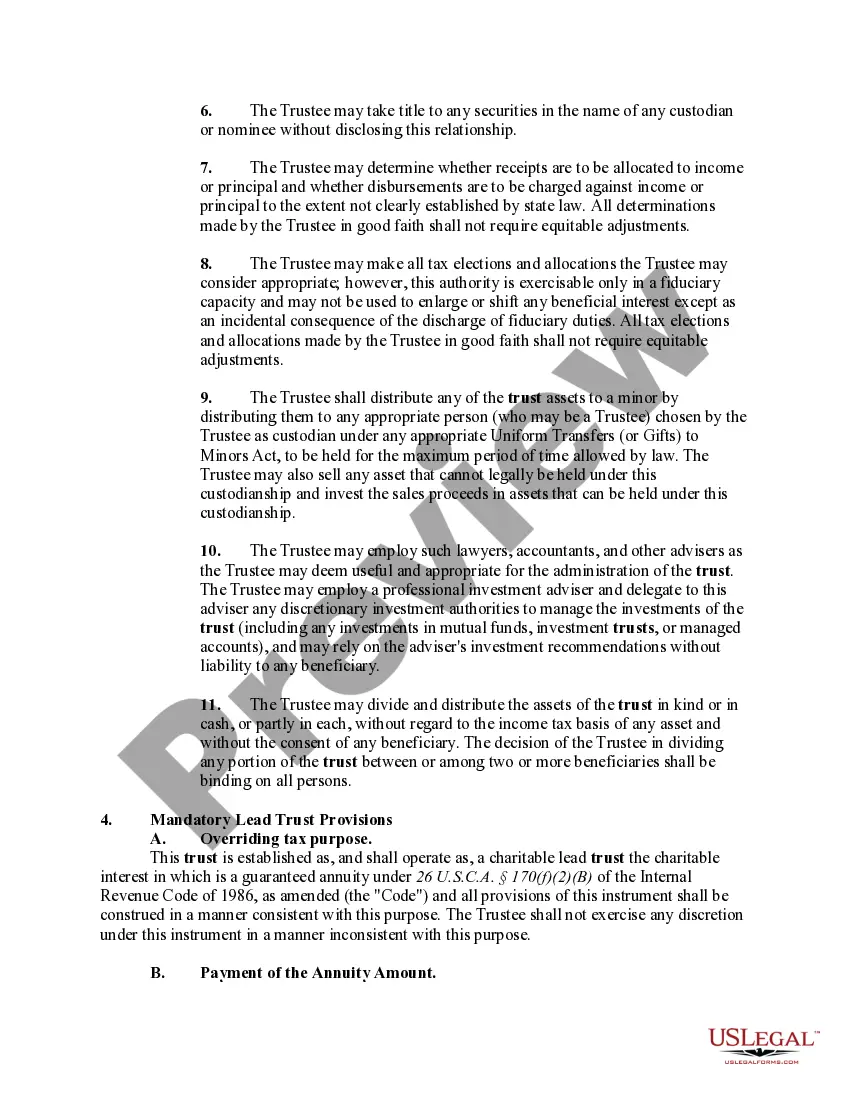
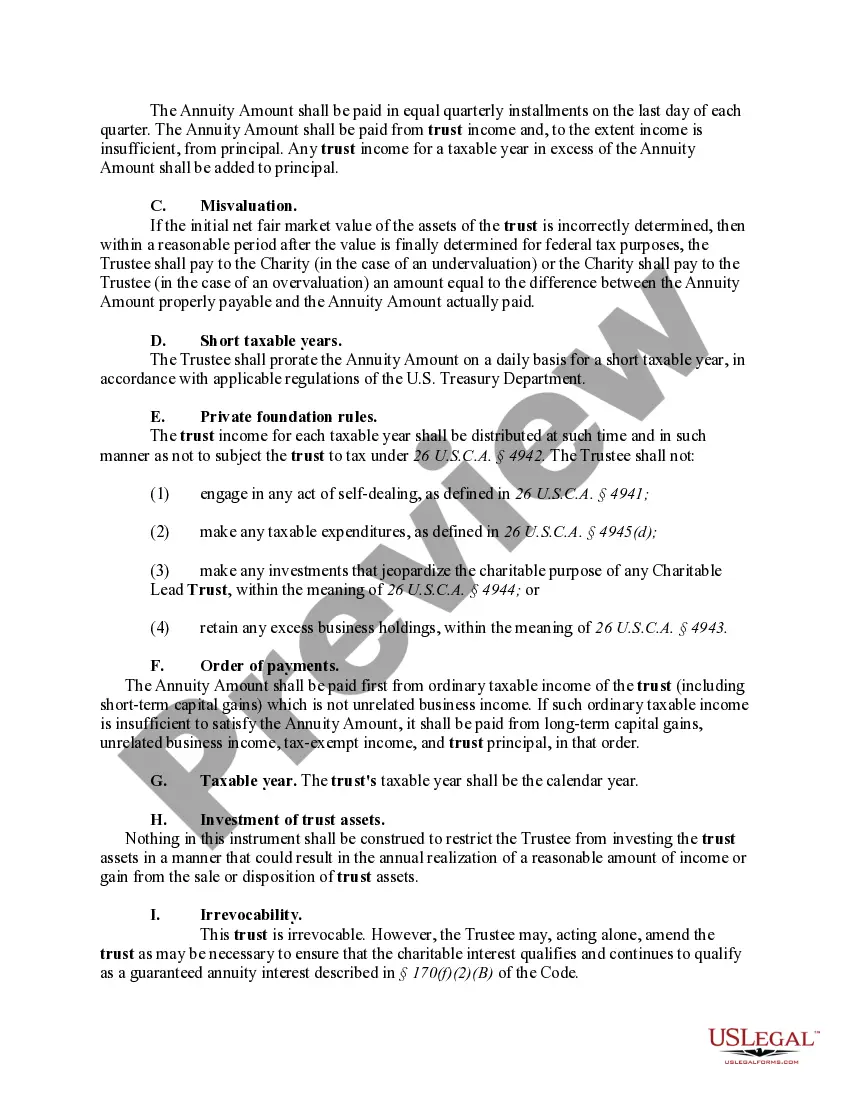
Description
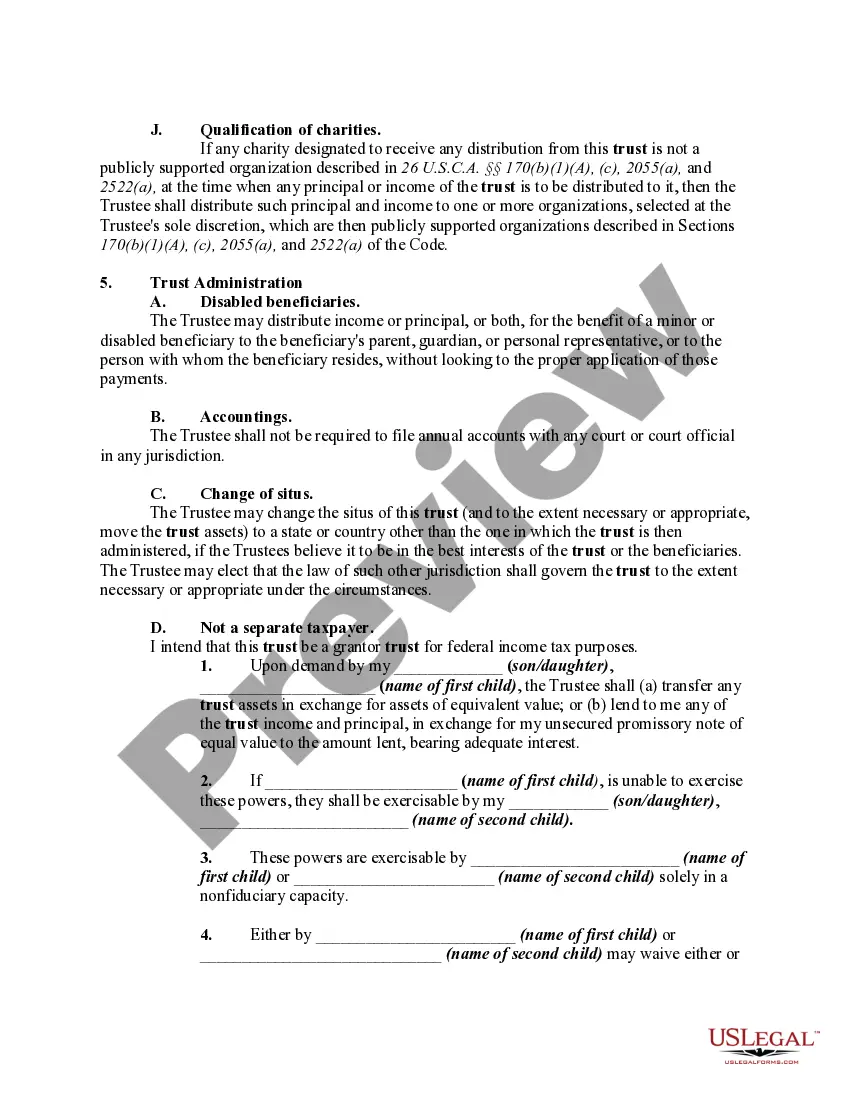
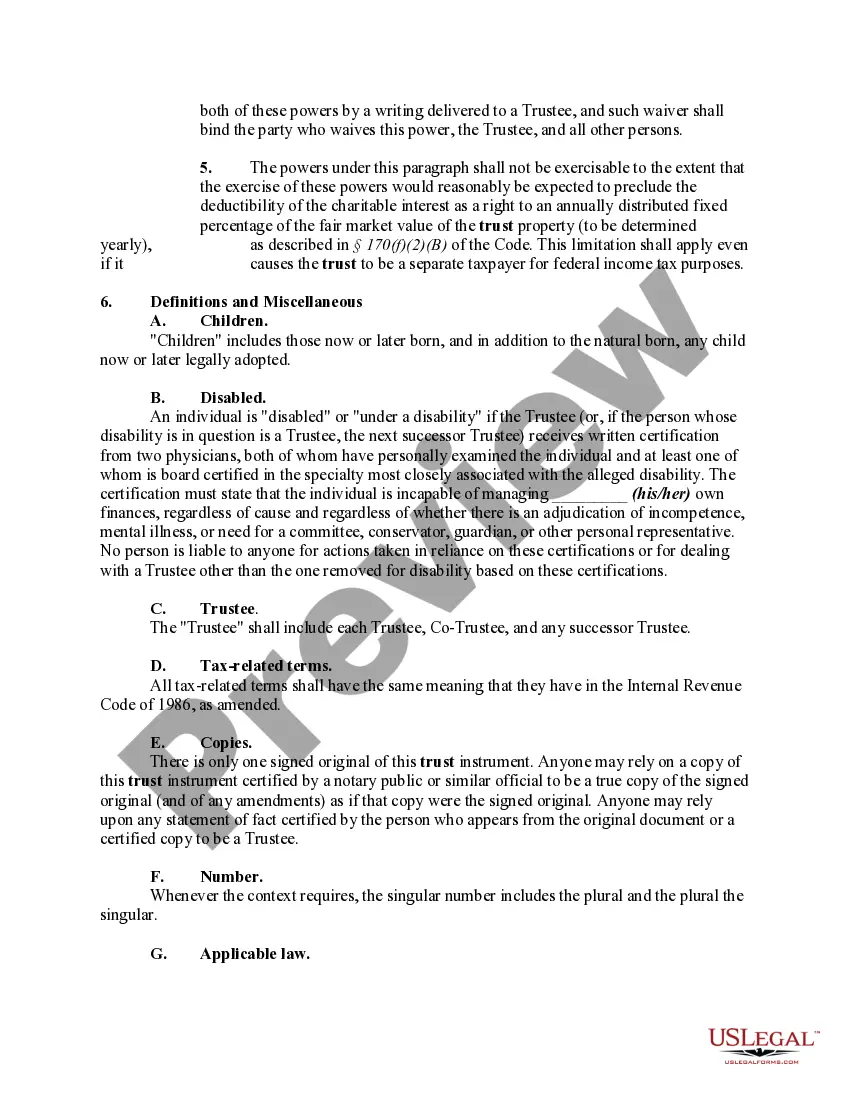

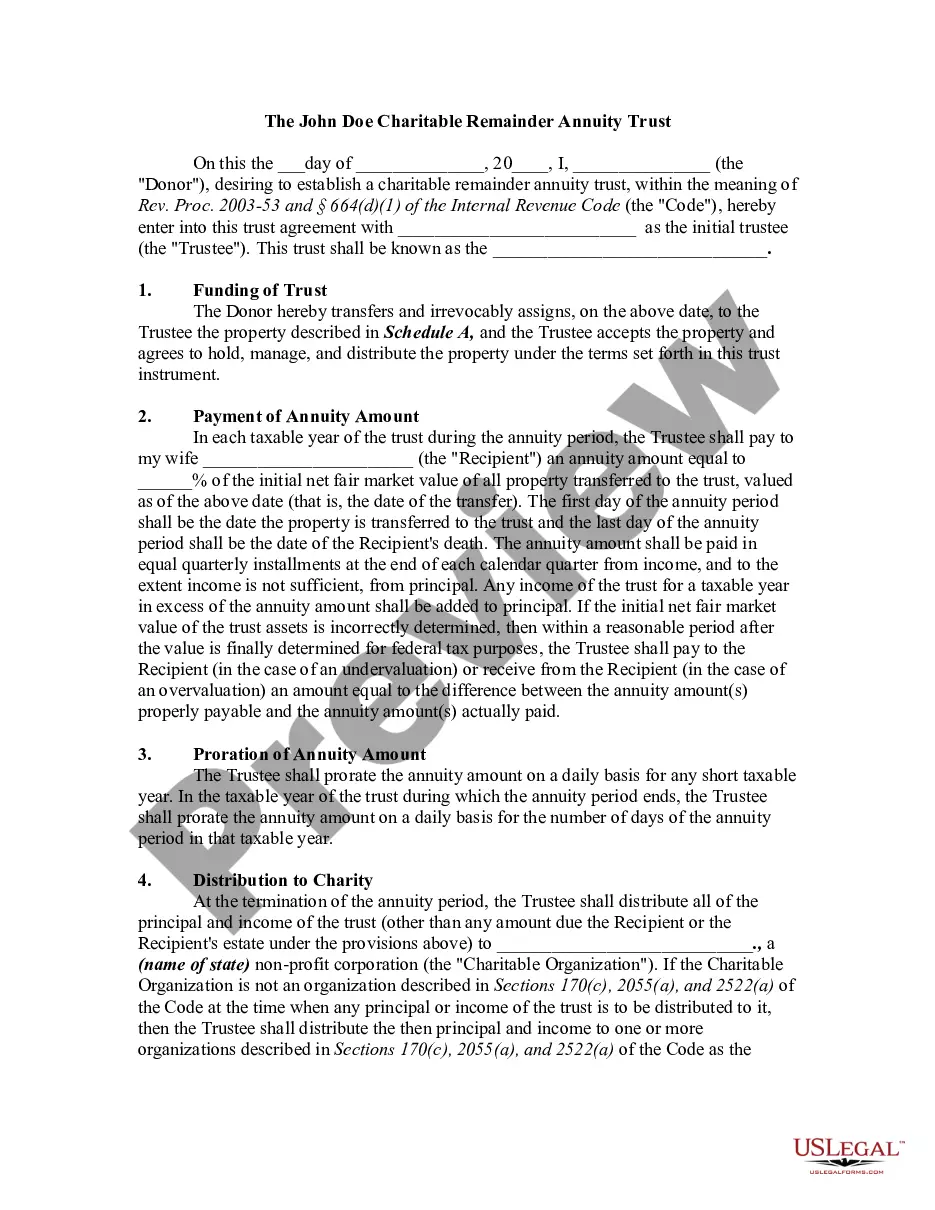
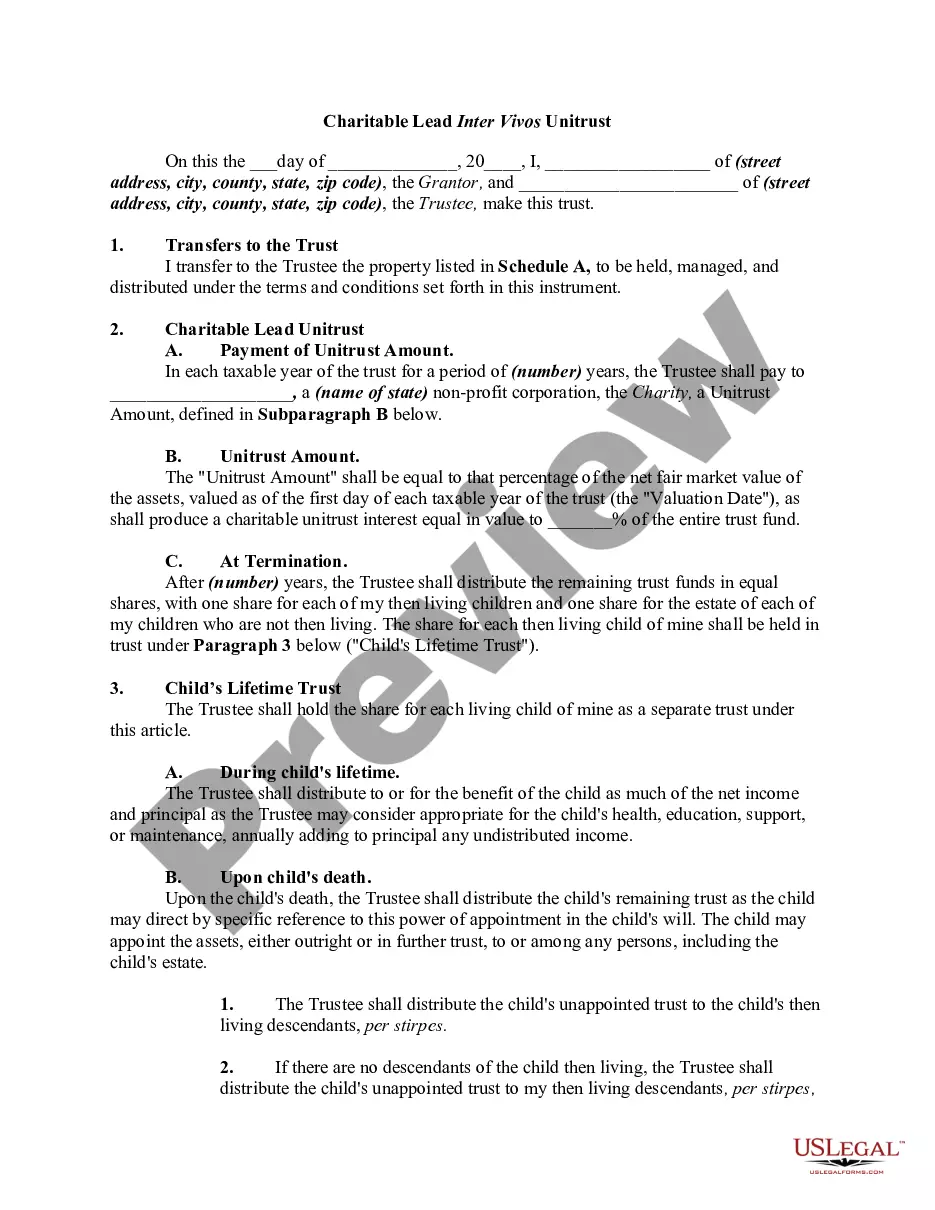
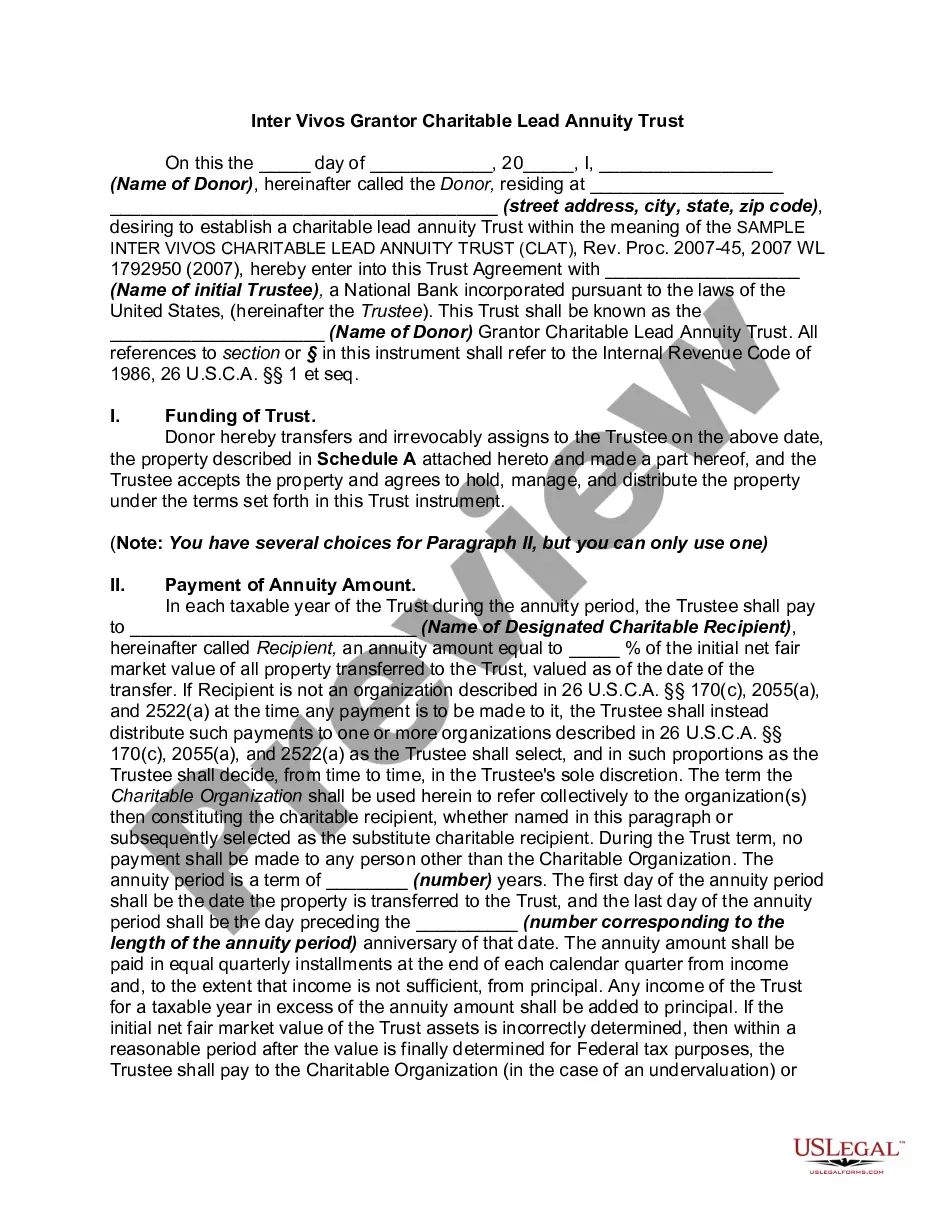
Get your form ready online
Our built-in tools help you complete, sign, share, and store your documents in one place.
Make edits, fill in missing information, and update formatting in US Legal Forms—just like you would in MS Word.
Download a copy, print it, send it by email, or mail it via USPS—whatever works best for your next step.
Sign and collect signatures with our SignNow integration. Send to multiple recipients, set reminders, and more. Go Premium to unlock E-Sign.
If this form requires notarization, complete it online through a secure video call—no need to meet a notary in person or wait for an appointment.
We protect your documents and personal data by following strict security and privacy standards.

Make edits, fill in missing information, and update formatting in US Legal Forms—just like you would in MS Word.

Download a copy, print it, send it by email, or mail it via USPS—whatever works best for your next step.

Sign and collect signatures with our SignNow integration. Send to multiple recipients, set reminders, and more. Go Premium to unlock E-Sign.

If this form requires notarization, complete it online through a secure video call—no need to meet a notary in person or wait for an appointment.

We protect your documents and personal data by following strict security and privacy standards.
Looking for another form?










How to fill out Charitable Inter Vivos Lead Annuity Trust?
Whether for commercial reasons or for personal matters, everyone must confront legal issues at some point in their lives.
Completing legal paperwork necessitates meticulous care, starting from selecting the right form template.
Once saved, you can fill out the form using editing software or print it and complete it by hand. With an extensive US Legal Forms library available, you do not need to waste time searching for the suitable template online. Use the catalog's easy navigation to find the right form for any circumstance.
- Locate the template you require using the search bar or catalog browsing.
- Review the form's description to ensure it aligns with your circumstances, state, and county.
- Click on the form's preview to inspect it.
- If it is the incorrect document, return to the search function to find the Charitable Lead Annuity Trust Requirements template you need.
- Download the document when it satisfies your criteria.
- If you already possess a US Legal Forms account, simply click Log in to access previously saved documents in My documents.
- If you do not have an account yet, you can acquire the form by clicking Buy now.
- Select the appropriate pricing option.
- Complete the profile registration form.
- Choose your payment method: you can utilize a credit card or PayPal account.
- Select the file format you desire and download the Charitable Lead Annuity Trust Requirements.
Form popularity
FAQ
A charitable lead trust is often subject to different tax rules. While the income generated by the trust may not be heavily taxed, distributions to beneficiaries can have tax implications. Understanding these details and the charitable lead annuity trust requirements will help you manage tax liabilities effectively. Explore resources like uslegalforms for guidance in this area.
Yes, charitable trusts are generally required to file a tax return. This is usually done through Form 990 or Form 1041, depending on the type of trust and its income level. Familiarizing yourself with the charitable lead annuity trust requirements can help you understand your tax obligations clearly. Utilizing platforms like uslegalforms can simplify the filing process.
Yes, a Charitable Remainder Trust (CRT) can help avoid probate. Assets placed in a CRT typically pass outside of the probate process, directly benefiting the charity and the beneficiaries. Being aware of the charitable lead annuity trust requirements can facilitate this process and ensure your wishes are honored. Consider seeking information from uslegalforms for a smoother setup.
Certain trusts are required to file Form 1041. This includes any trust that generates income over a specific threshold or one that distributes income to beneficiaries. Additionally, charitable lead trusts, when active, must also adhere to these filing requirements. It's vital to understand the charitable lead annuity trust requirements to avoid potential penalties.
Filing a Charitable Remainder Trust (CRT) involves several steps. First, you should gather all necessary documentation about the trust and its assets. Next, complete the appropriate form and submit it to the IRS. Knowing the charitable lead annuity trust requirements can streamline this process and ensure you meet all legal obligations.
Yes, a charitable lead trust typically files Form 1041. This form is necessary for reporting income, deductions, and credits for the trust. Understanding the charitable lead annuity trust requirements will help ensure compliance with tax obligations. It is advisable to consult a tax professional for accurate filing.
The 5% rule for charitable remainder trusts states that the income beneficiary must receive at least 5% of the net fair market value of the trust's assets annually. This rule ensures that beneficiaries receive a steady income stream while also benefitting charities in the long run. Remember that understanding the charitable lead annuity trust requirements can help you navigate these regulations effectively. Consulting resources available on uslegalforms can provide you with the guidance you need.
To establish a charitable trust, you must meet certain requirements, such as having a clear charitable purpose and designating specific beneficiaries. You'll also need to ensure that the trust maintains its tax-exempt status by following the charitable lead annuity trust requirements. Proper documentation is essential, including trust agreements and tax filings, to ensure compliance. Utilizing platforms like uslegalforms can streamline this process and provide the necessary templates.
You should consider a charitable lead trust when you want to support a charity while also planning your estate. These trusts provide a way to make charitable donations over a specific time, which can generate tax deductions. Additionally, they allow you to transfer assets to beneficiaries in a tax-efficient manner later on. Understanding charitable lead annuity trust requirements can help you customize the trust to fit your financial goals.
A charitable lead annuity trust operates by distributing set payments to a charity over a specified duration. This arrangement allows you to support charitable organizations while also taking advantage of tax benefits. After the payment period, the remaining assets go to your heirs, ensuring that your financial goals remain aligned. Understanding the charitable lead annuity trust requirements is key to maximizing its benefits.