Tax Unitrust Amount With Interest
Description

Get your form ready online
Our built-in tools help you complete, sign, share, and store your documents in one place.
Make edits, fill in missing information, and update formatting in US Legal Forms—just like you would in MS Word.
Download a copy, print it, send it by email, or mail it via USPS—whatever works best for your next step.
Sign and collect signatures with our SignNow integration. Send to multiple recipients, set reminders, and more. Go Premium to unlock E-Sign.
If this form requires notarization, complete it online through a secure video call—no need to meet a notary in person or wait for an appointment.
We protect your documents and personal data by following strict security and privacy standards.

Make edits, fill in missing information, and update formatting in US Legal Forms—just like you would in MS Word.

Download a copy, print it, send it by email, or mail it via USPS—whatever works best for your next step.

Sign and collect signatures with our SignNow integration. Send to multiple recipients, set reminders, and more. Go Premium to unlock E-Sign.

If this form requires notarization, complete it online through a secure video call—no need to meet a notary in person or wait for an appointment.

We protect your documents and personal data by following strict security and privacy standards.
Looking for another form?








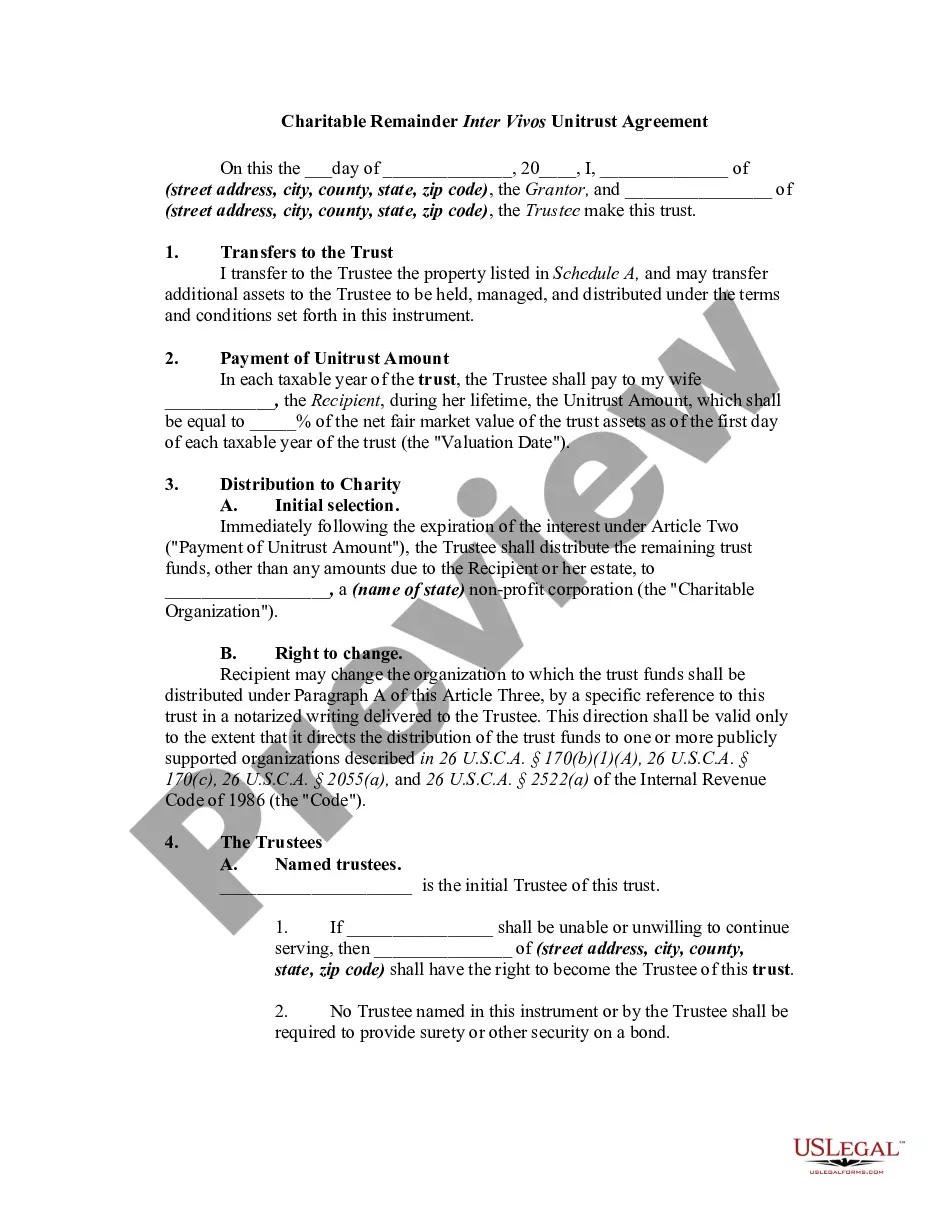
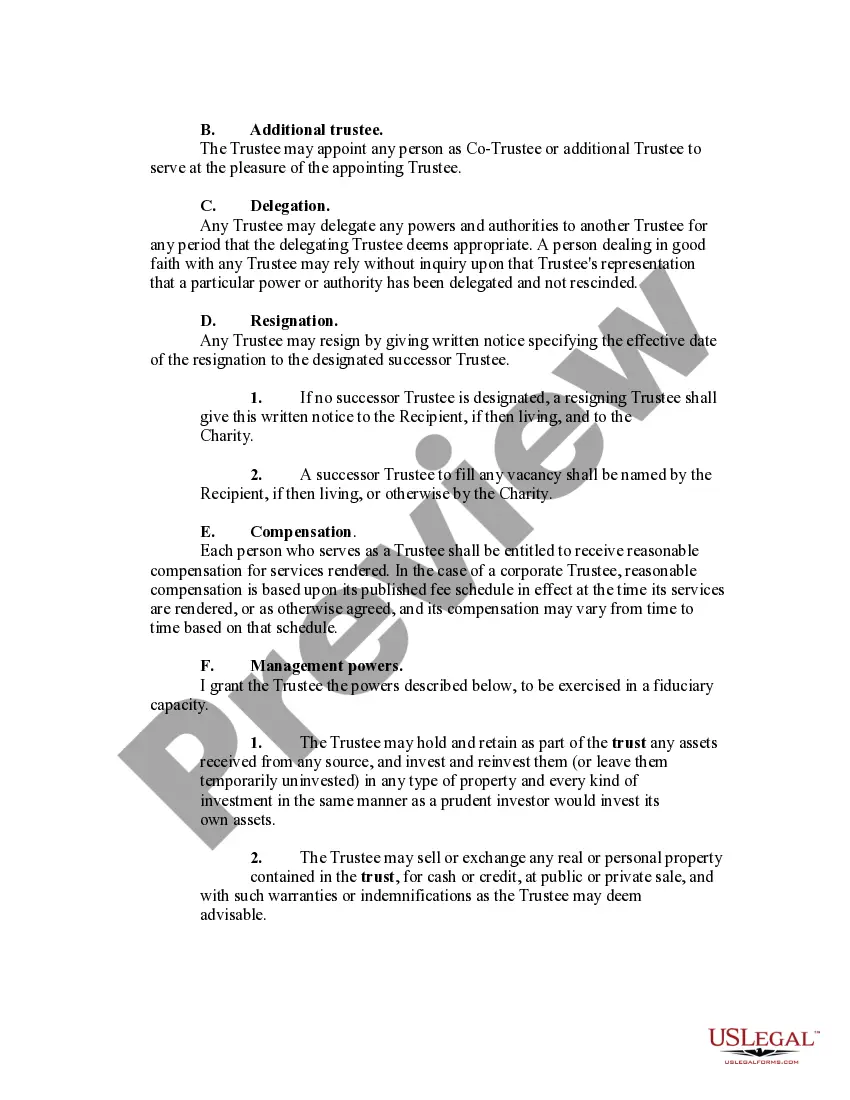
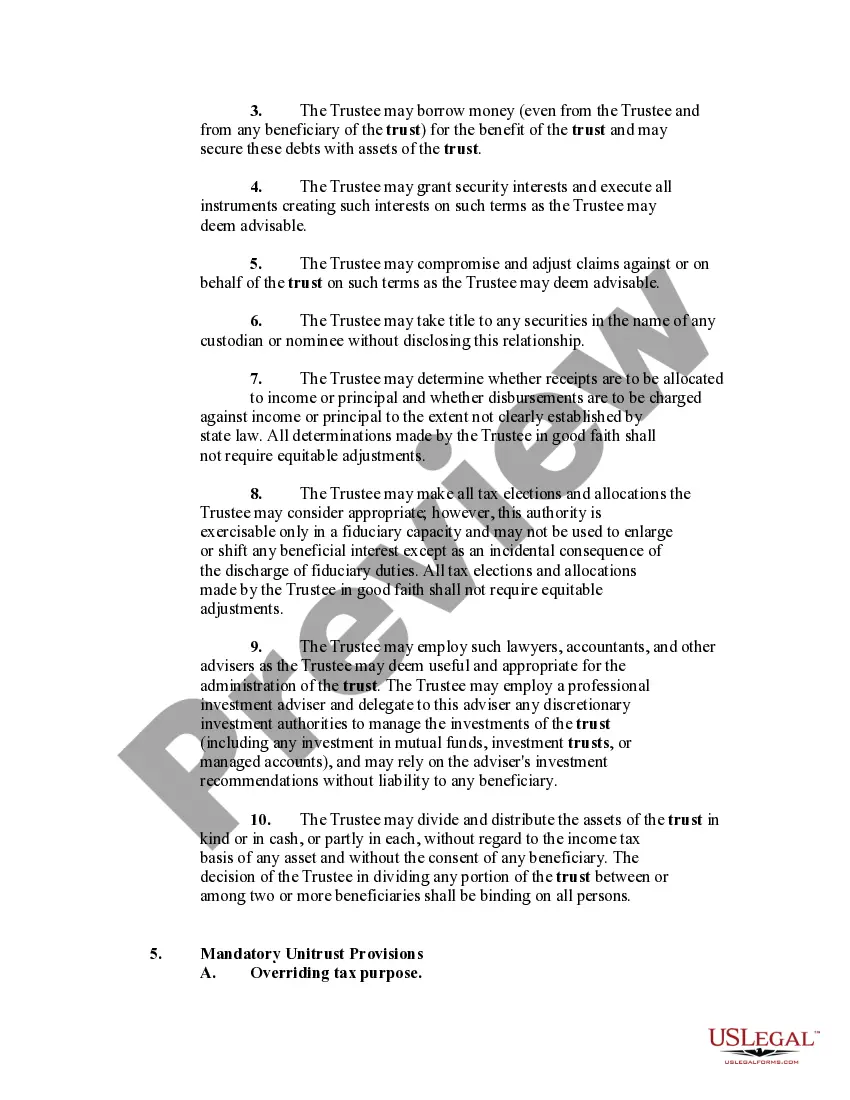
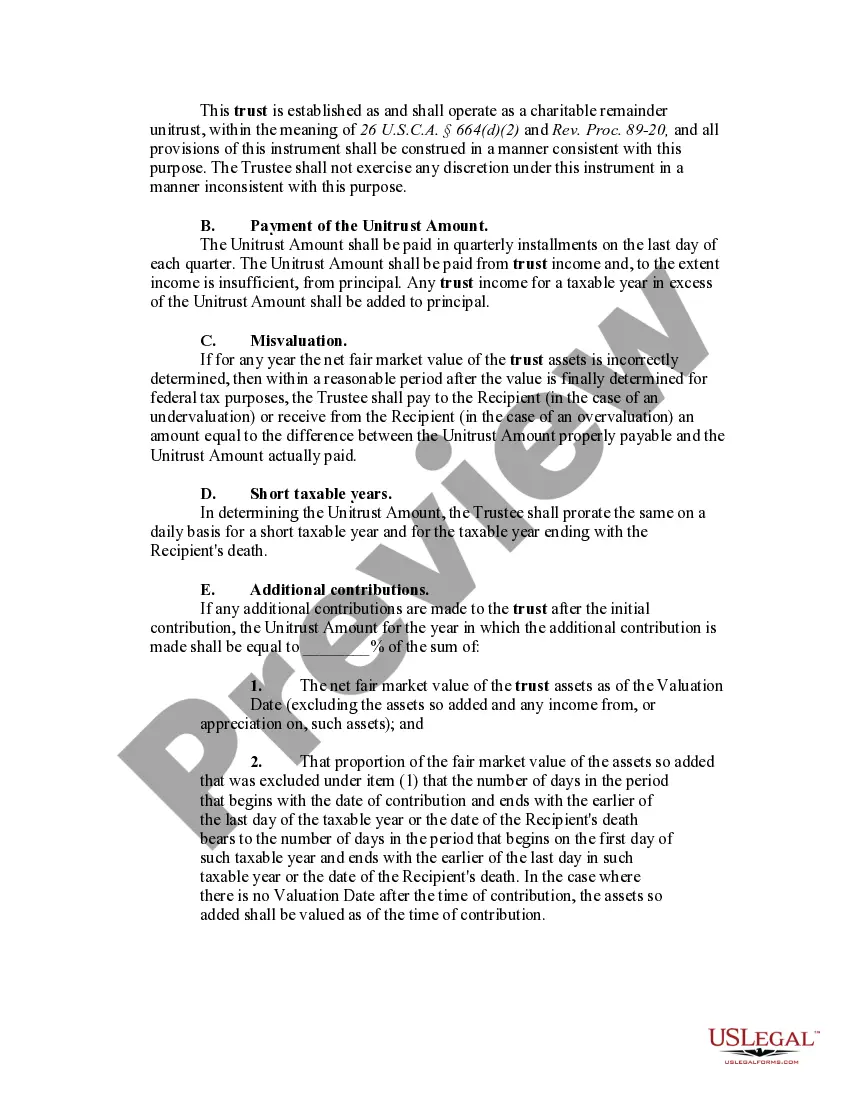
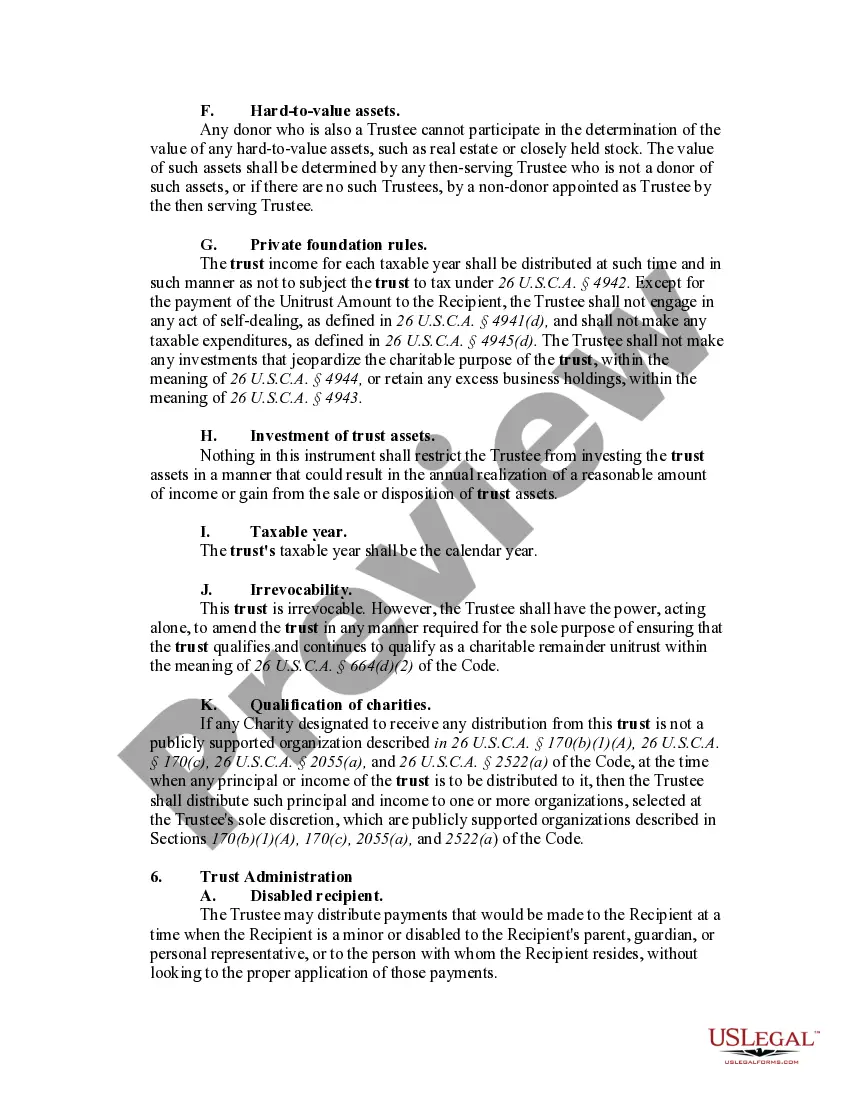
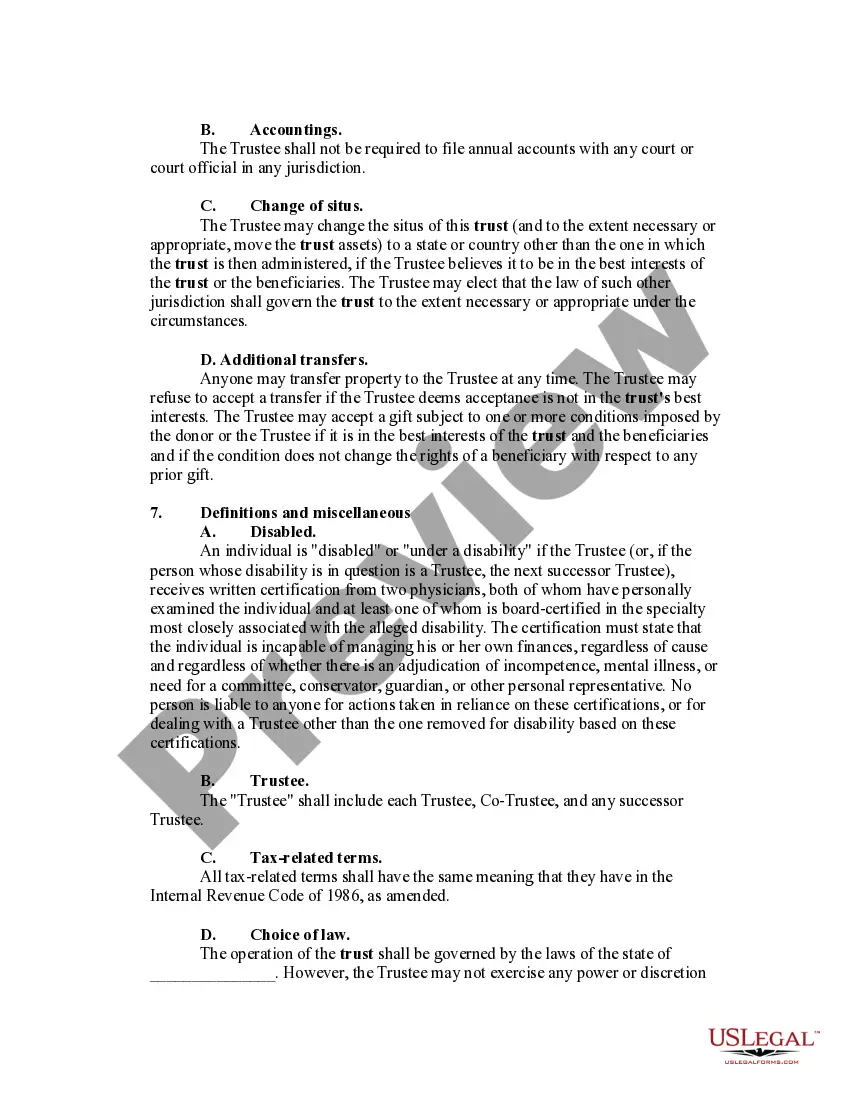
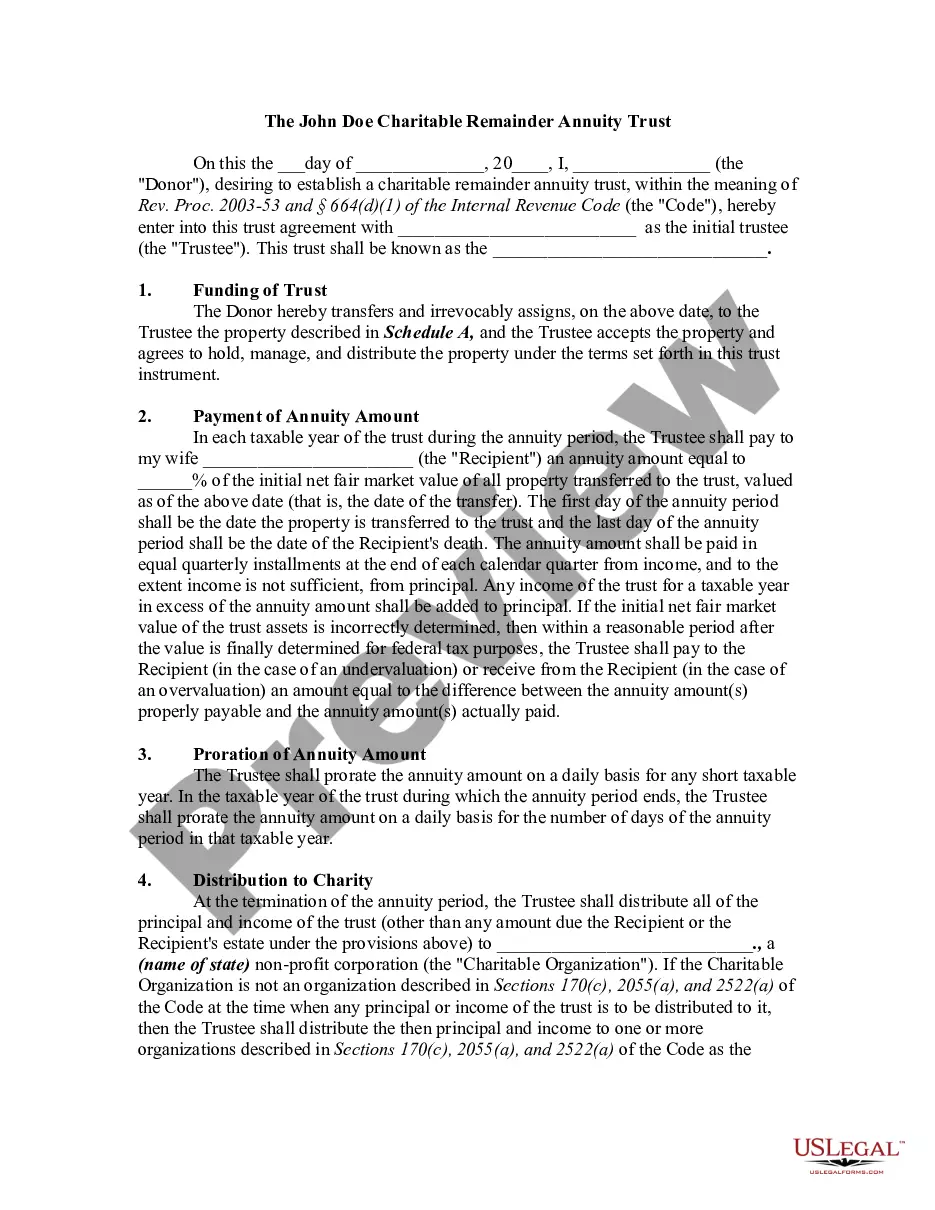
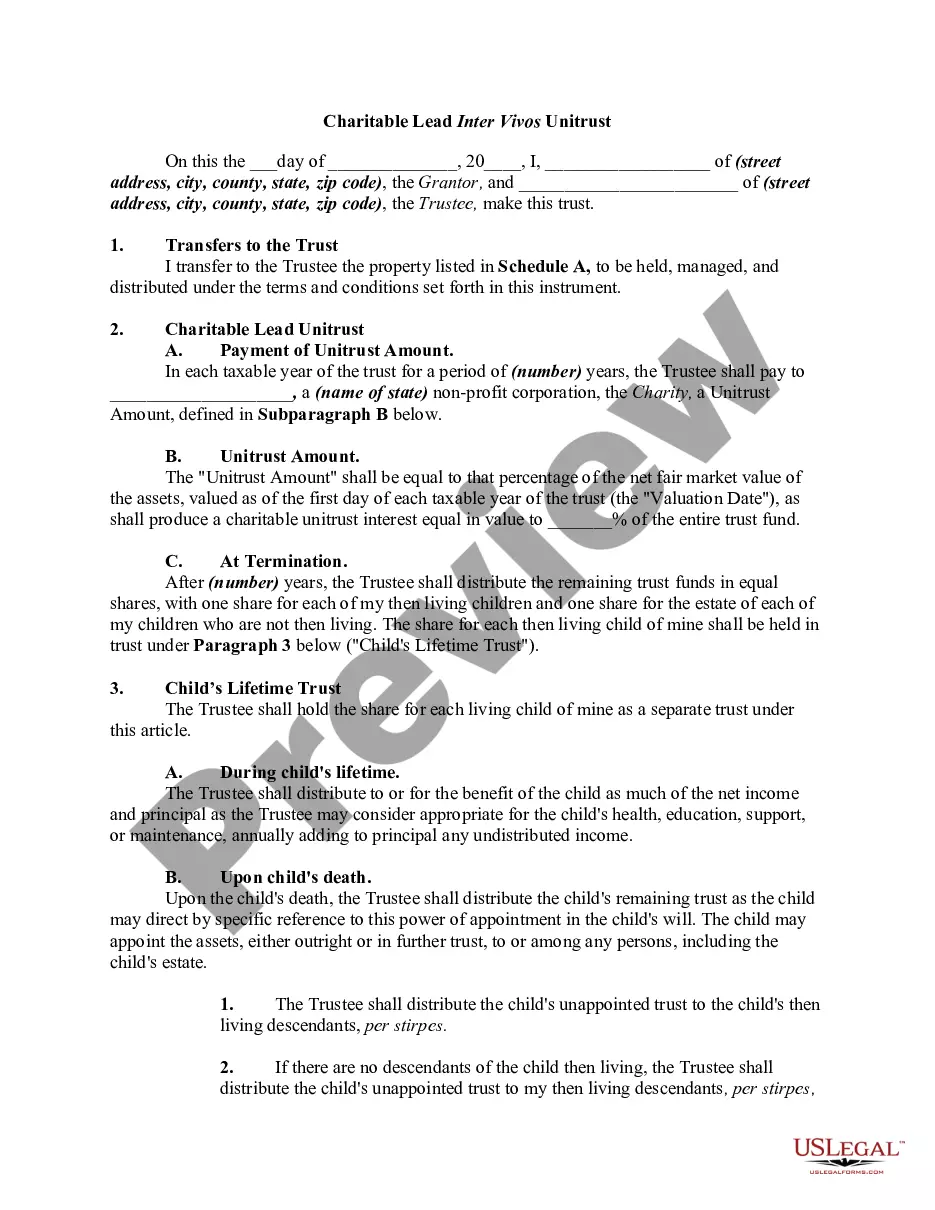
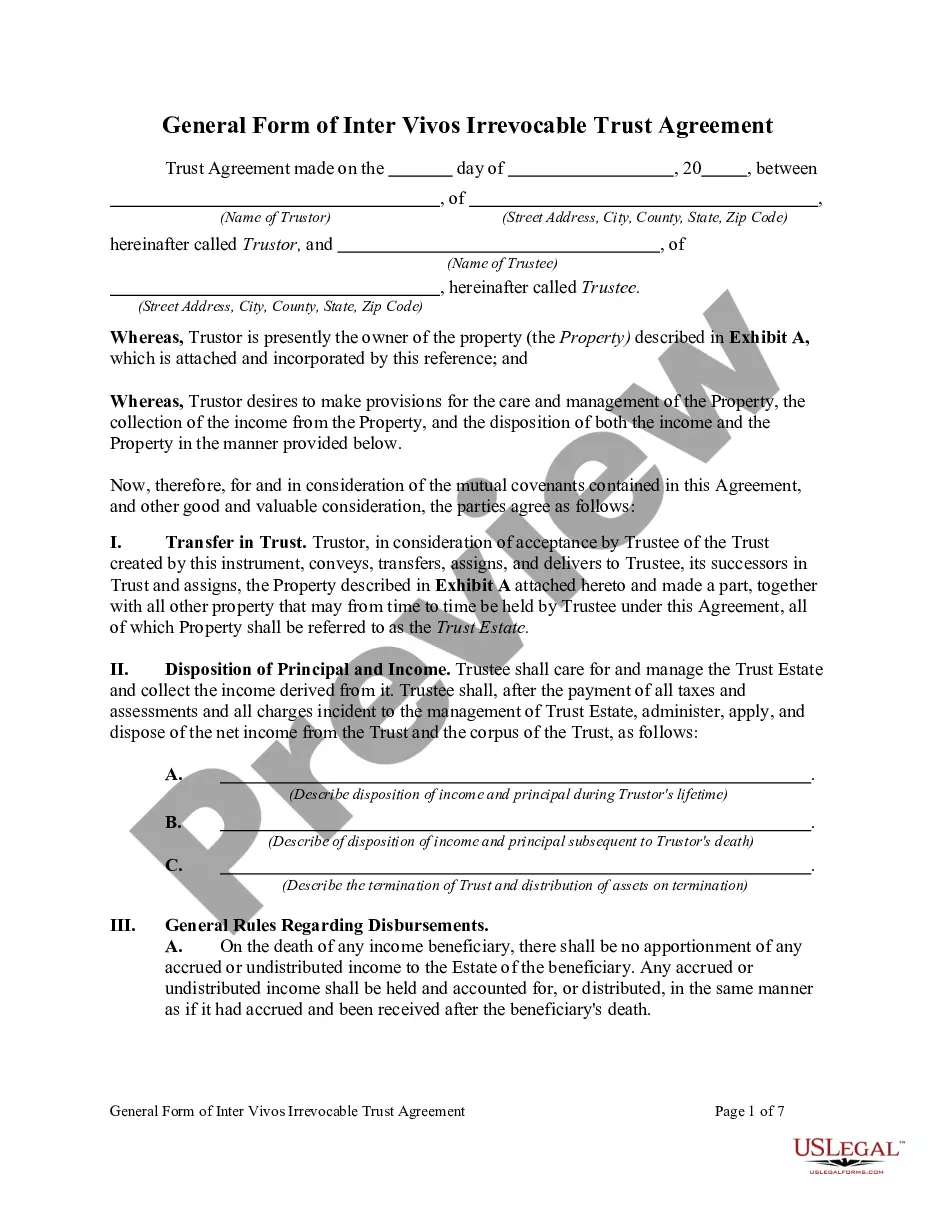
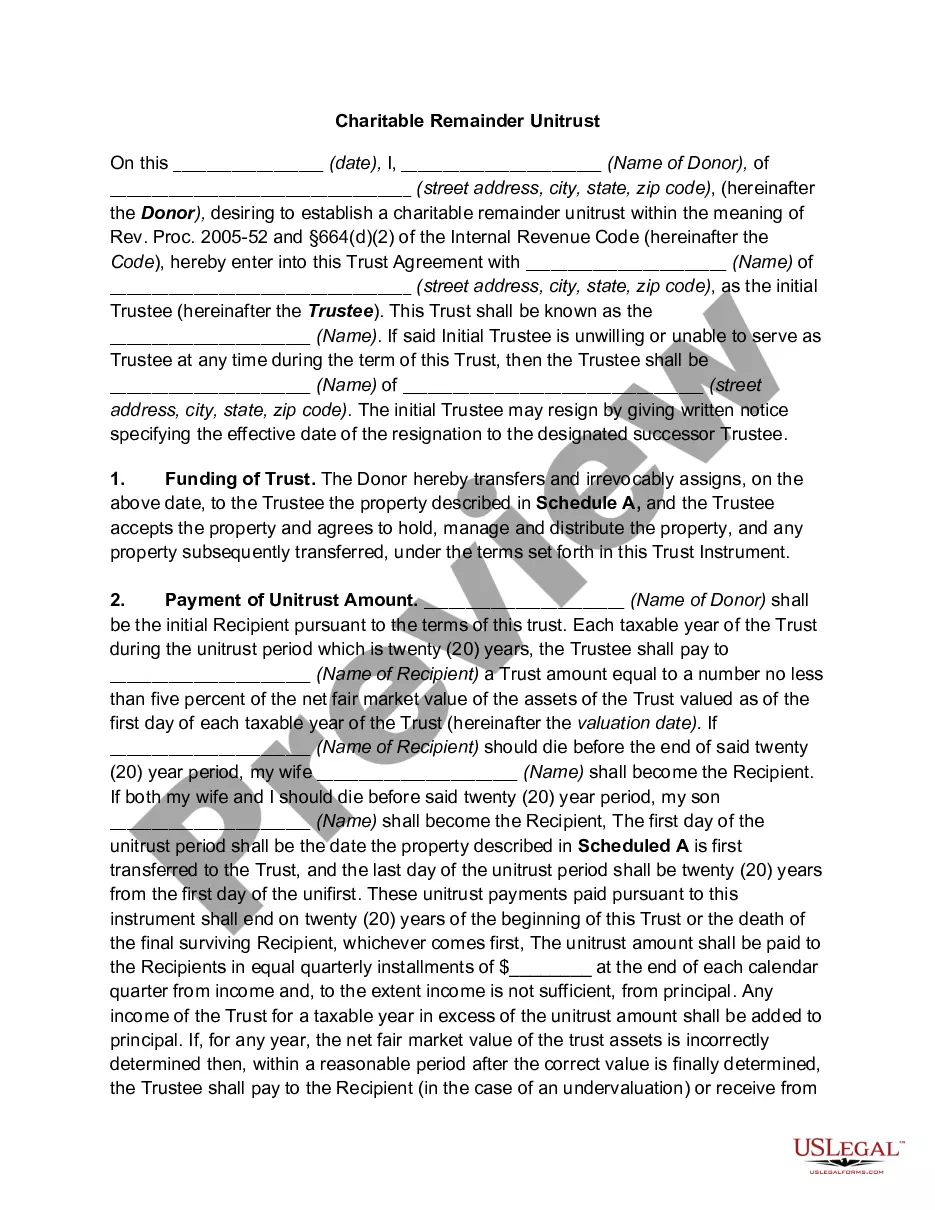
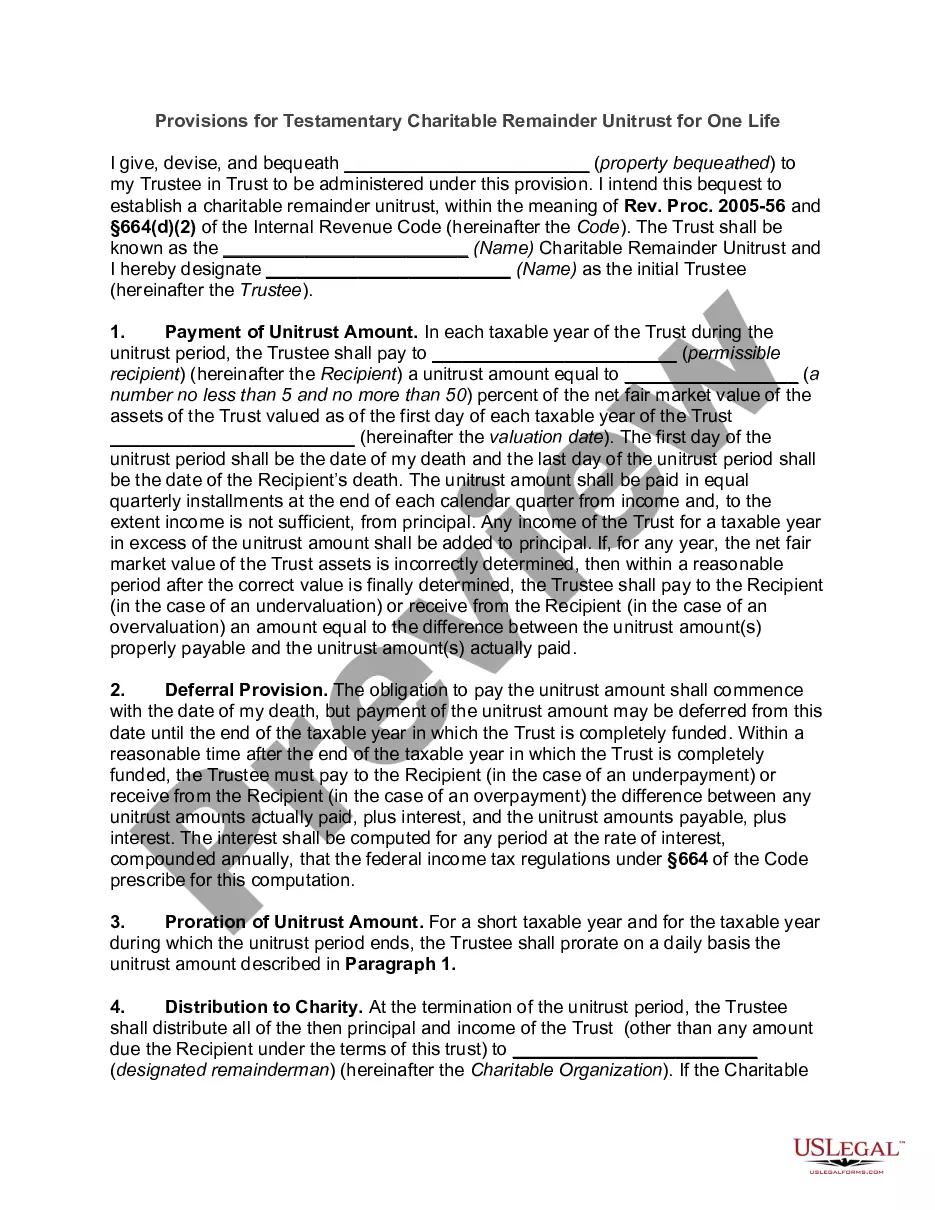
How to fill out Charitable Remainder Inter Vivos Unitrust Agreement?
- If you are a returning user, simply log in to your account and download the specific template you need by clicking the Download button. Ensure your subscription is current; renew it if necessary.
- For first-time users, begin by checking the Preview mode and description of the form. Verify that it fits your requirements and meets your local jurisdiction standards.
- If the form doesn’t meet your needs, utilize the Search tab to locate the appropriate document that suits your purpose.
- Once you find the correct document, click the Buy Now button and select a suitable subscription plan, registering for an account to access the resources.
- Complete your purchase by entering your payment information or utilizing your PayPal account to pay for the subscription.
- Finally, download the template to your device for easy access. You can also find it later in the My Forms section of your profile.
With over 85,000 legal forms available, US Legal Forms is a leading choice for anyone needing reliable legal documentation. The site not only provides a vast selection of forms but also gives users access to premium experts for assistance, ensuring that every document is legally sound.
Start simplifying your legal processes today by exploring US Legal Forms. Get your tax unitrust amount documents easily and efficiently!
Form popularity
FAQ
The unitrust amount is usually calculated based on a fixed percentage of the trust's value, assessed annually. This method allows beneficiaries to receive variable distributions that may include interest, based on how the trust performs. For a comprehensive understanding, incorporating the tax unitrust amount with interest is vital. You can also use platforms like USLegalForms to help navigate these calculations.
The net income of a unitrust is calculated by subtracting the trust's expenses from its total income. This figure will give you the actual amount available for distribution to beneficiaries. It's important to understand how this net income converts into your tax unitrust amount with interest, as it affects the amounts you may be taxed on during filing.
A total return unitrust is an investment vehicle that distributes a percentage of the trust's total value, rather than just income generated. This means distributions can include both capital gains and income, which can lead to a more significant tax unitrust amount with interest over time. It's a flexible financial option that can be tailored to meet various income needs while considering tax implications.
Unitrust payments are typically subject to income tax, as they reflect distributions from the trust. The amount you receive can include interest income, which is taxable to you. Understanding the tax implications of your unitrust payments can help you plan more effectively for your tax unitrust amount with interest. Consulting an expert can clarify specific scenarios based on your trust.
To file taxes with interest, you must report any interest earned on your tax return. This includes interest from savings accounts, bonds, or any other income-producing assets. Make sure to include the total amount of interest as taxable income. Additionally, if you're dealing with a tax unitrust amount with interest, understanding how to record this correctly is essential.
Establishing a unitrust involves specific legal requirements, including the selection of a trustee, clear terms defining the distribution method, and registration with the appropriate legal authorities. It is also essential to outline how assets will be valued annually. Using platforms like uslegalforms can simplify the process of setting up a unitrust, ensuring you comply with all legal requirements and understand your tax unitrust amount with interest.
Unitrust interest refers to the income generated from the trust, calculated as a percentage of the trust’s assets. This interest provides a steady income stream to beneficiaries, making unitrusts appealing for long-term financial planning. Monitoring the tax unitrust amount with interest can help you maximize your earnings over time and make informed financial decisions.
To calculate the present value of the remainder interest, you need to know the unitrust payout percentage, the trust’s expected return rate, and the expected duration of the trust. You can use financial formulas that consider these variables to find the present value. This calculation is crucial for understanding the total tax unitrust amount with interest and planning your financial future effectively.
The primary difference lies in how payments are made to beneficiaries. With a traditional trust, beneficiaries may receive fixed distributions, while a unitrust pays out a set percentage of its value each year. This distinction allows unitrusts to adjust to market conditions, giving beneficiaries potentially higher payouts over time. If you explore the tax unitrust amount with interest, you can optimize your financial strategy.
A unitrust is a type of trust that provides a fixed percentage of its assets to beneficiaries each year. This amount is based on the trust’s value, allowing the payout to adjust with fluctuations in the market. Essentially, you receive a consistent income from the trust, which can grow as the trust’s assets increase. Understanding the tax unitrust amount with interest can help you manage your finances effectively.