Charitable Remainder Unitrust Living With A Foreigner
Description
Get your form ready online
Our built-in tools help you complete, sign, share, and store your documents in one place.
Make edits, fill in missing information, and update formatting in US Legal Forms—just like you would in MS Word.
Download a copy, print it, send it by email, or mail it via USPS—whatever works best for your next step.
Sign and collect signatures with our SignNow integration. Send to multiple recipients, set reminders, and more. Go Premium to unlock E-Sign.
If this form requires notarization, complete it online through a secure video call—no need to meet a notary in person or wait for an appointment.
We protect your documents and personal data by following strict security and privacy standards.

Make edits, fill in missing information, and update formatting in US Legal Forms—just like you would in MS Word.

Download a copy, print it, send it by email, or mail it via USPS—whatever works best for your next step.

Sign and collect signatures with our SignNow integration. Send to multiple recipients, set reminders, and more. Go Premium to unlock E-Sign.

If this form requires notarization, complete it online through a secure video call—no need to meet a notary in person or wait for an appointment.

We protect your documents and personal data by following strict security and privacy standards.
Looking for another form?





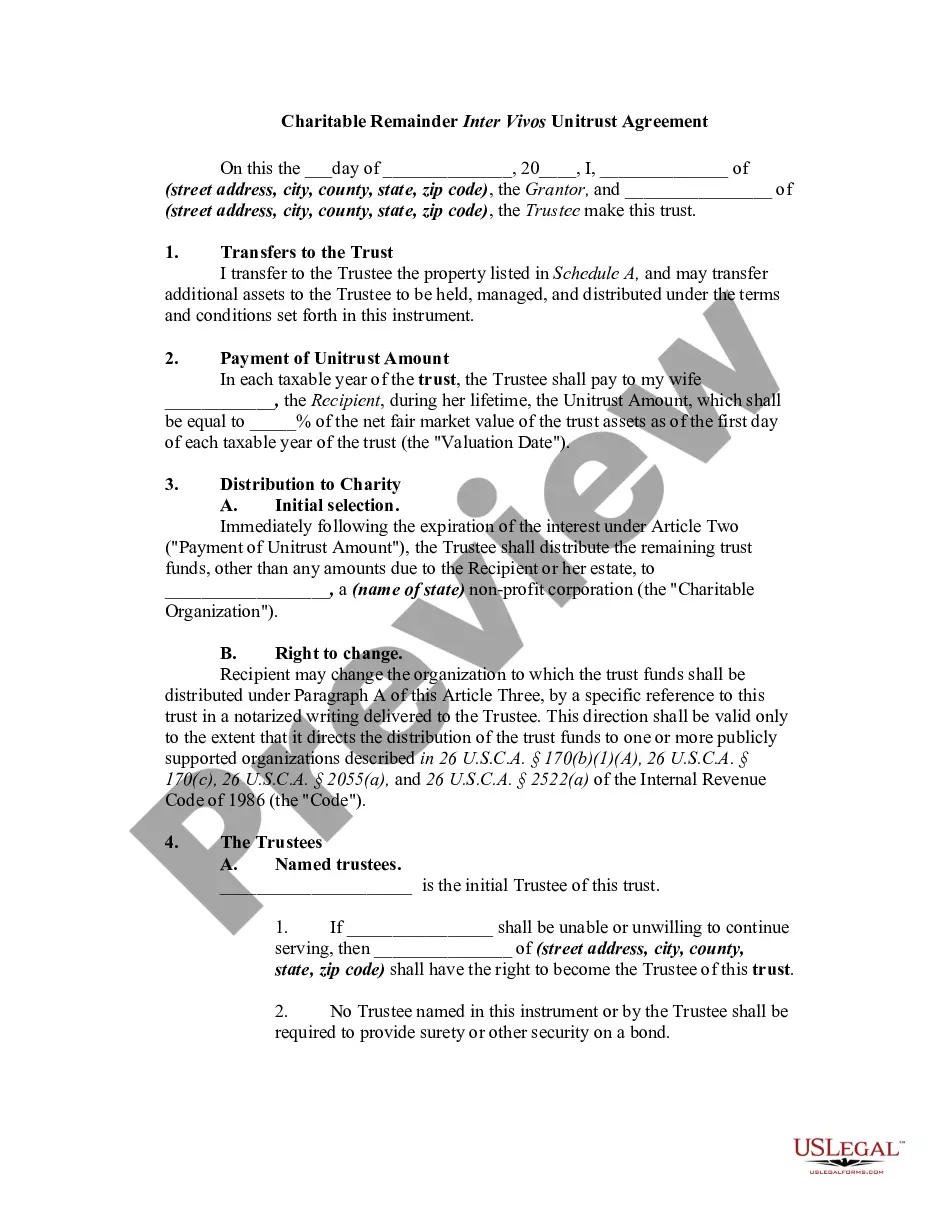
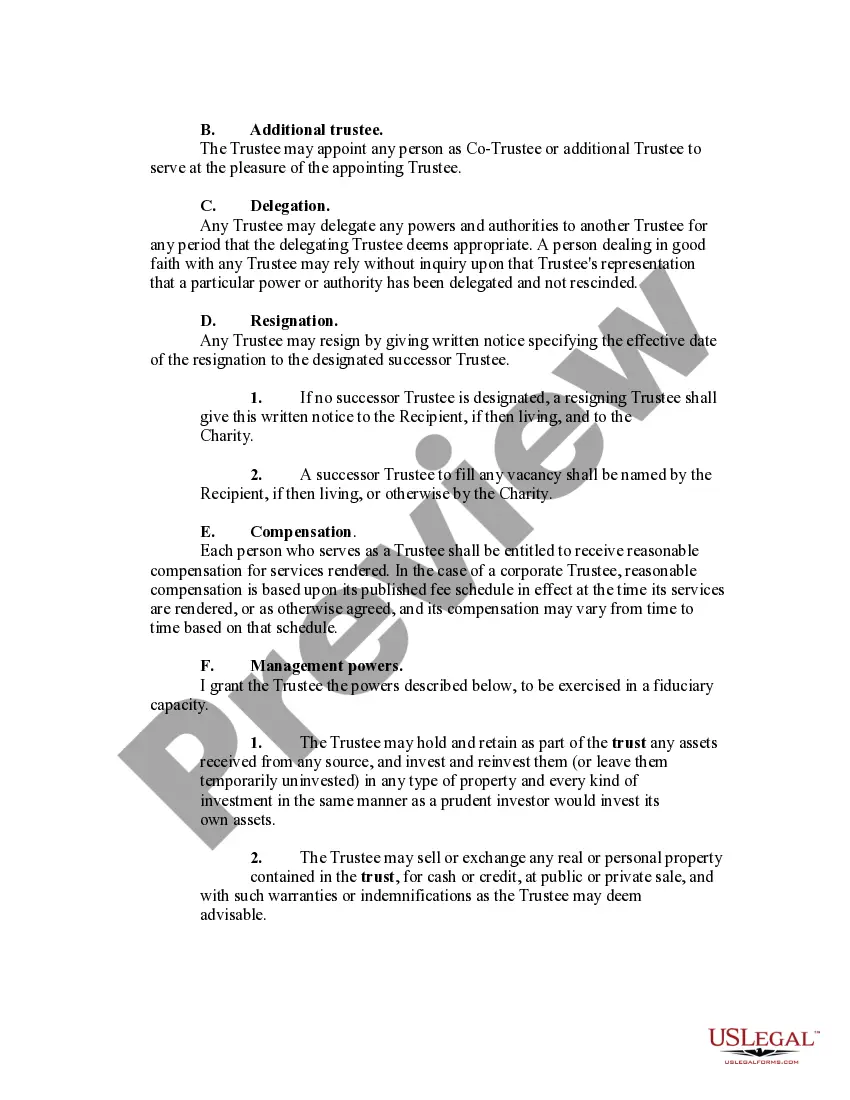
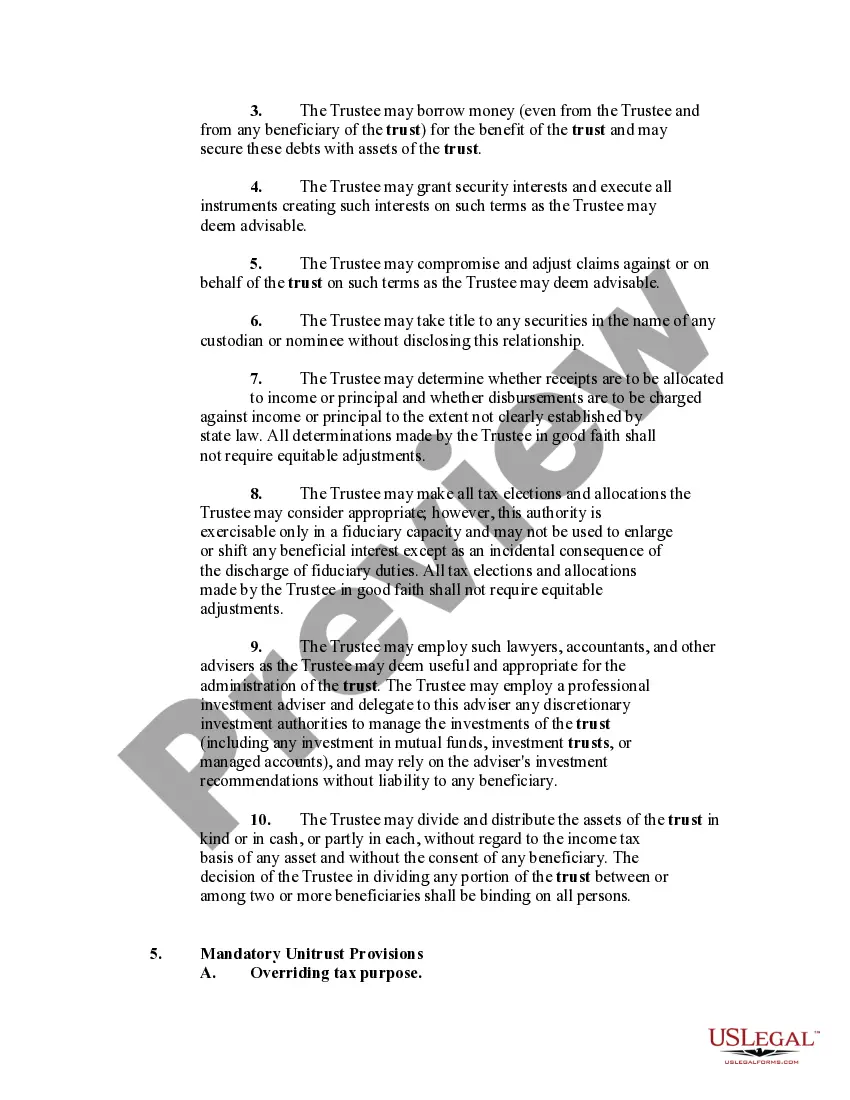
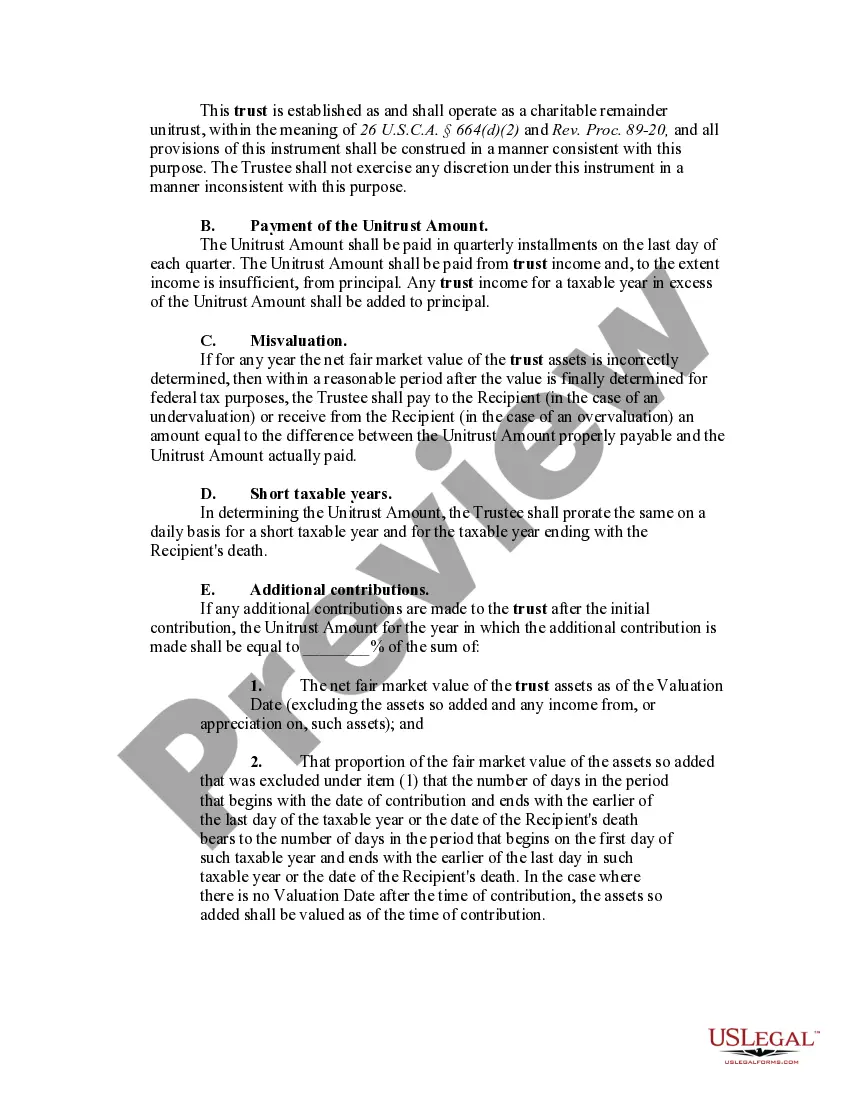
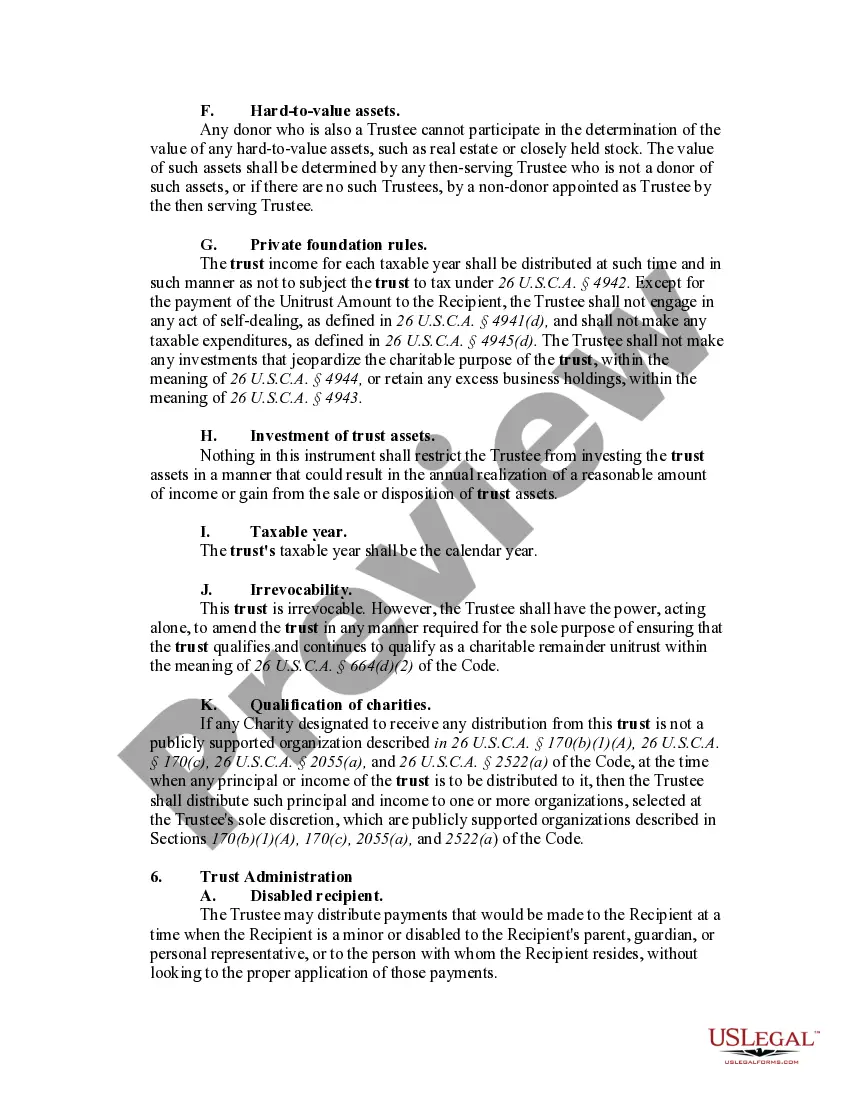
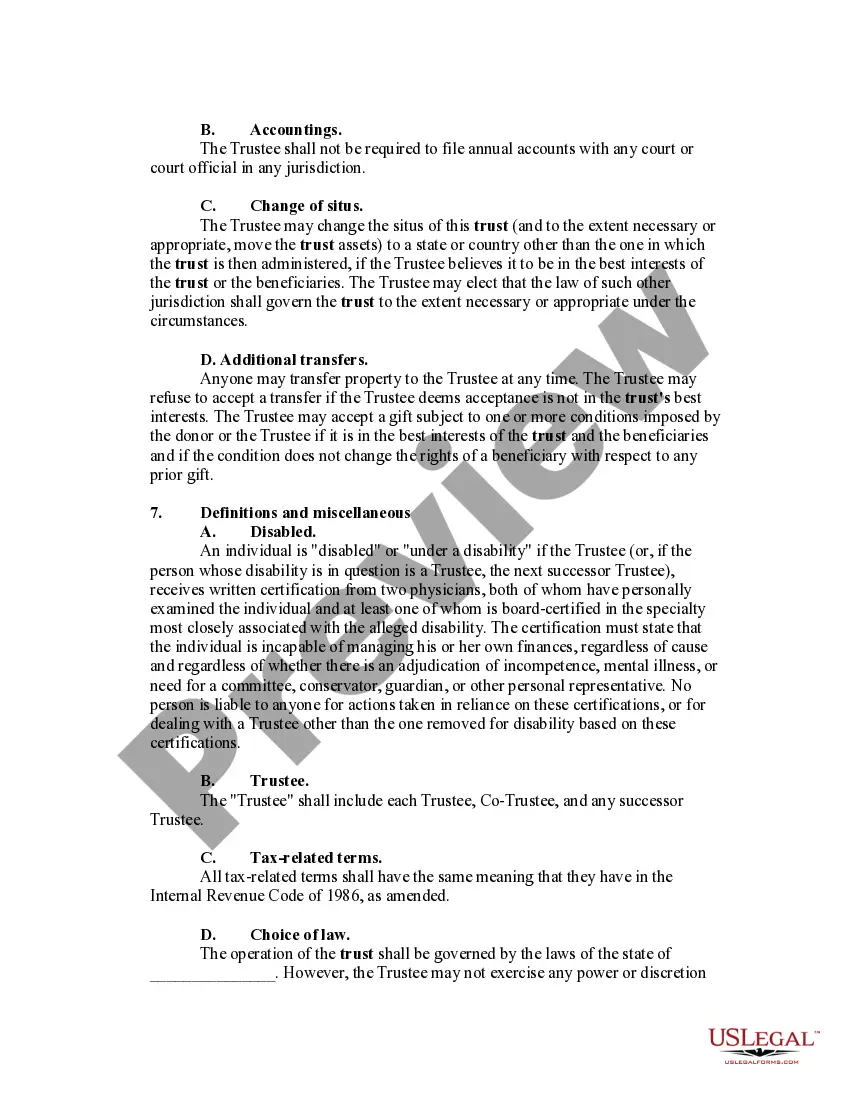
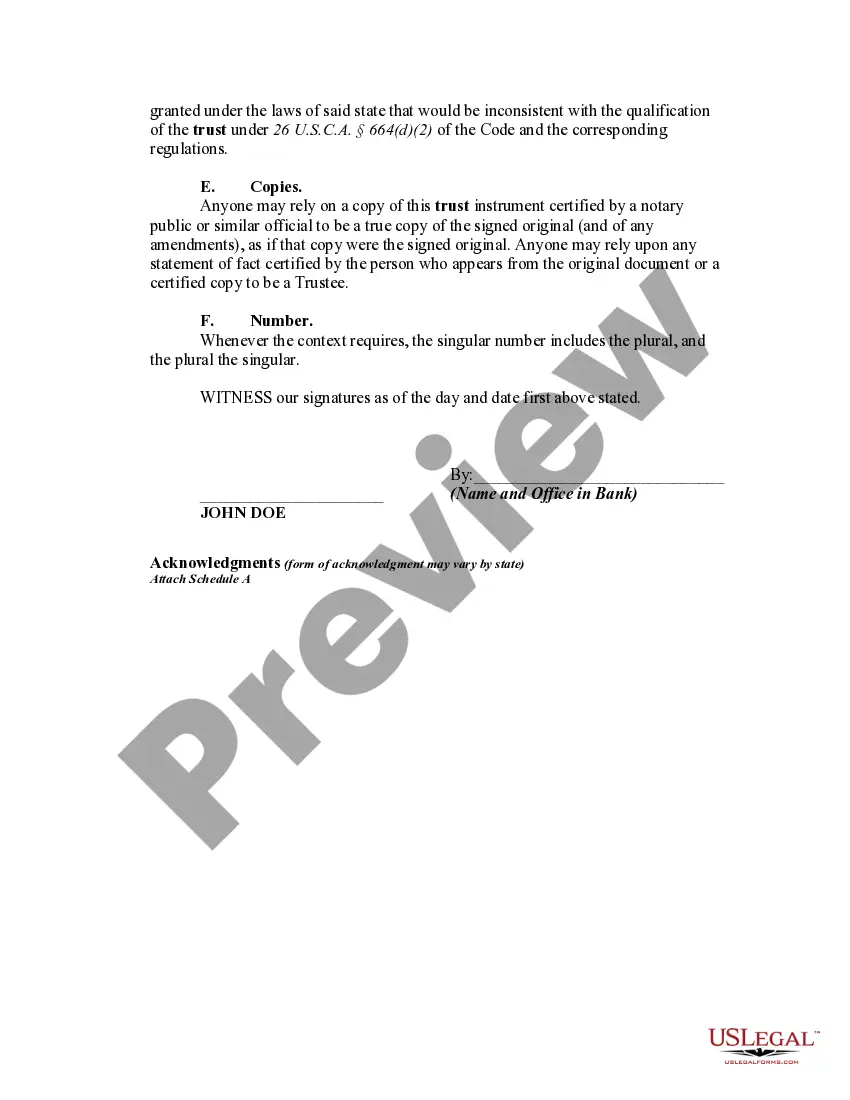
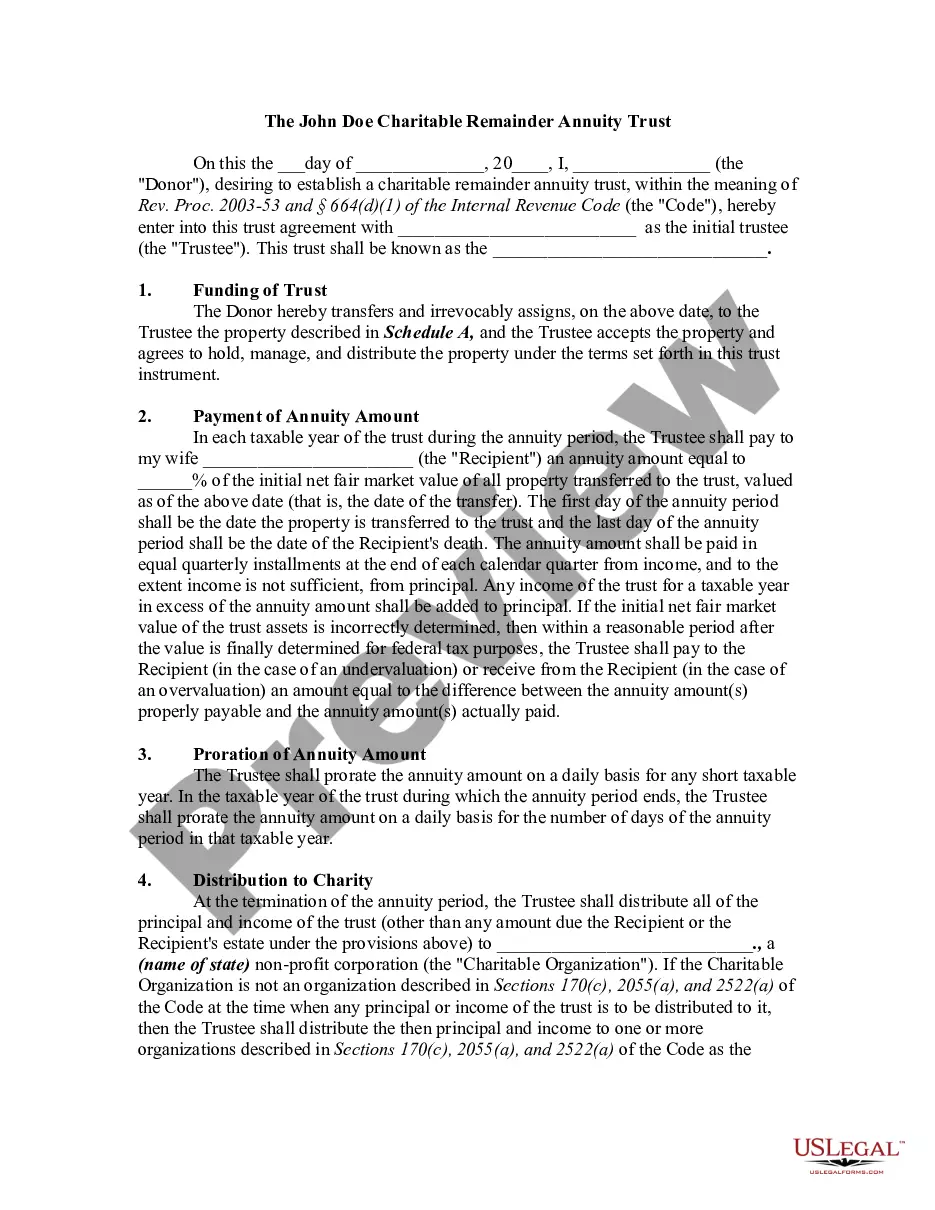
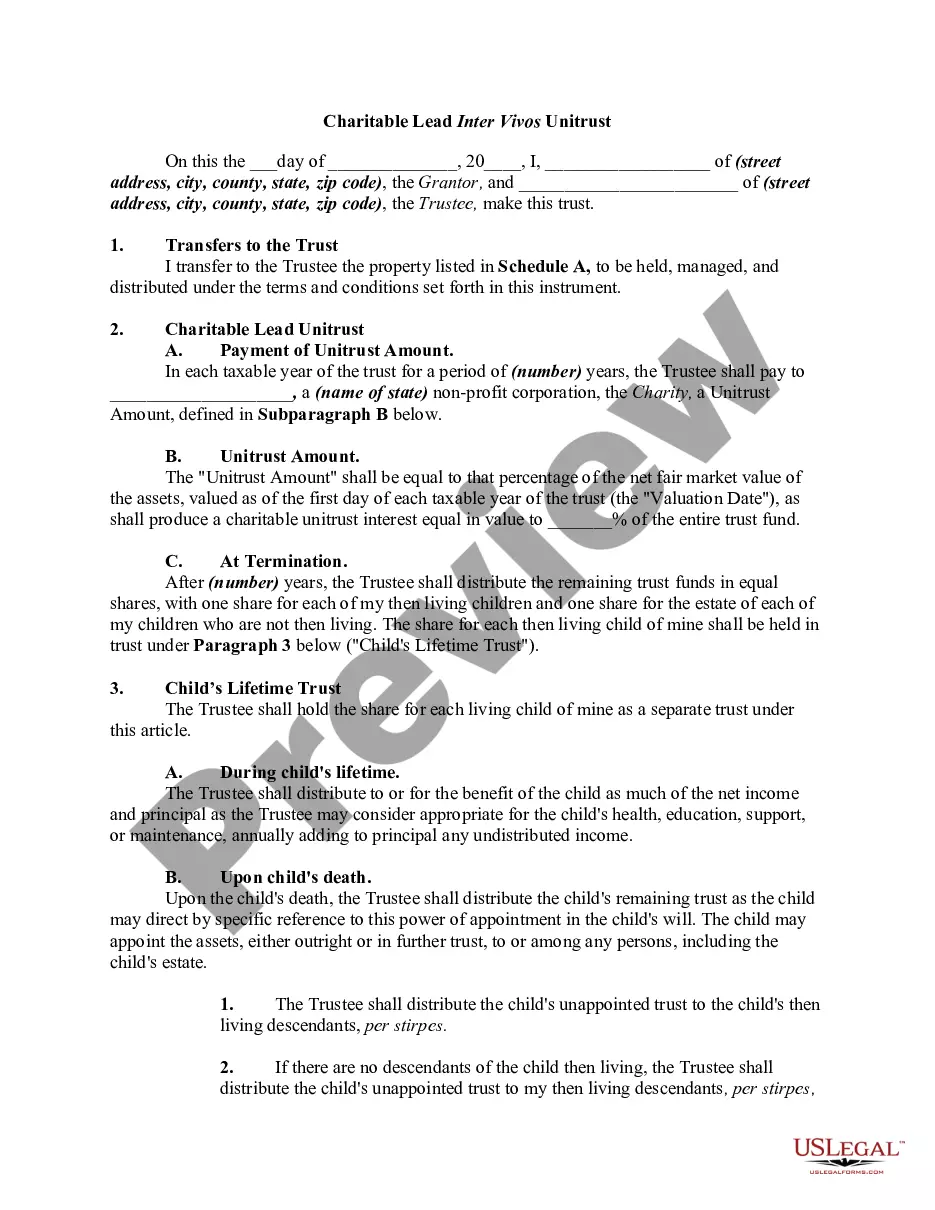
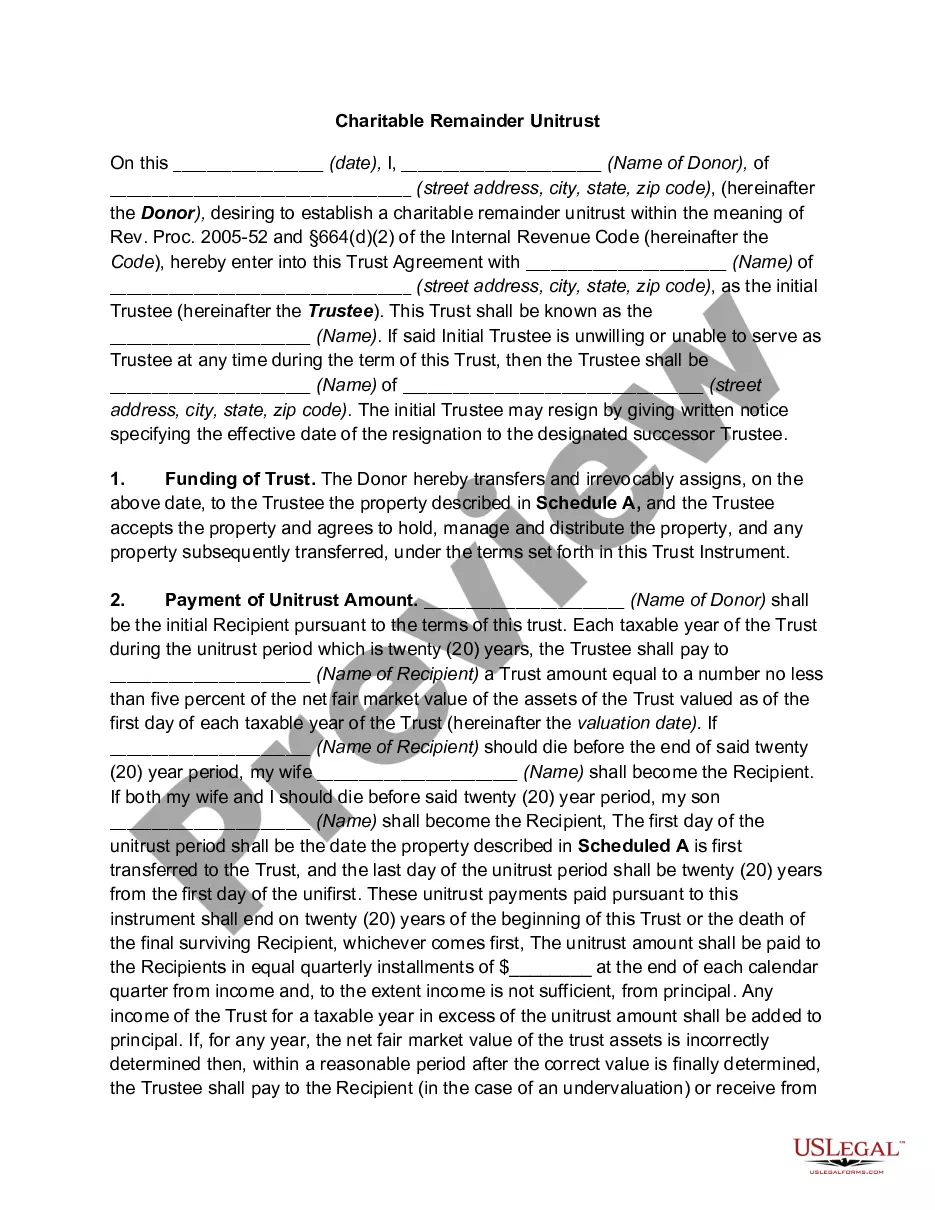
How to fill out Charitable Remainder Inter Vivos Unitrust Agreement?
- If you’re an existing user, log in to your account and select the form template you require. Don’t forget to check your subscription status.
- For new users, start by reviewing the form previews and descriptions to find the one that meets your specific legal needs.
- Should you find any discrepancies, utilize the search function to locate a more suitable template.
- Once you’ve selected the correct document, click the Buy Now button, choose your subscription plan, and create an account for full access.
- Complete the purchase process by entering your payment details through credit card or PayPal.
- Finally, download the document to your device and keep it accessible under the My Forms section for later use.
By following these steps, you can efficiently navigate the legal landscape of charitable remainder unitrusts while ensuring all documents are valid and easy to obtain.
Take control of your legal needs with US Legal Forms—your reliable partner in obtaining precise and legally sound documents.
Form popularity
FAQ
A charitable remainder trust can have various individuals or entities as trustees, including non-profit organizations or banks with trust departments. For a charitable remainder unitrust living with a foreigner, the selection of a knowledgeable trustee can make a significant difference. They should understand both U.S. trust laws and any relevant international regulations to safeguard the trust's integrity and effectiveness.
A trustee for a trust fund can be anyone who is legally able to serve in that capacity, provided they meet fiduciary responsibilities. This can include family members, friends, or professional advisors. In the context of a charitable remainder unitrust living with a foreigner, selecting someone with experience in international trusts will help manage complexities while ensuring that the trust's objectives are met.
The trustee of a charitable remainder trust can be an individual, a financial institution, or an organization tasked with managing the trust. For those considering a charitable remainder unitrust living with a foreigner, it's vital to choose a trustee familiar with both domestic and international laws. This knowledge ensures that the trust operates smoothly and meets all compliance and legal obligations.
A trustee of a charitable trust is typically an individual or entity appointed to manage the trust assets in accordance with the trust's terms. In the case of a charitable remainder unitrust living with a foreigner, the trustee may need to navigate additional regulations related to international law. This role is crucial, as the trustee ensures that the trust operates effectively, fulfilling its charitable purposes while adhering to legal requirements.
Yes, a remainder beneficiary can act as a trustee for a charitable remainder unitrust living with a foreigner. This arrangement allows the beneficiary to manage the trust assets while also benefiting from the trust upon its termination. It's essential to ensure that the trust's terms comply with legal and tax obligations, especially given the complexities introduced by having a foreign trustee.
The charitable remainder unitrust estate tax refers to any potential taxes on the trust's assets upon the death of the donor. If structured properly, these trusts often allow a portion of the assets to bypass estate taxation, benefiting both the heirs and the designated charity. Utilizing a charitable remainder unitrust can provide financial relief and support charitable organizations. This is particularly relevant for individuals involved in charitable remainder unitrust living with a foreigner, who may want to explore strategies to minimize tax impact.
Generally, you do not need to file a gift tax return solely for establishing a charitable remainder trust since it does not typically transfer ownership of assets. However, if you contribute more than the annual exclusion limit or if the trust involves additional complicated financial arrangements, it may need more scrutiny. It's wise to consult with a tax professional to navigate these situations, particularly in cases of charitable remainder unitrust living with a foreigner.
Charitable remainder unitrusts must meet specific IRS guidelines to maintain tax-exempt status. These rules include having a charitable beneficiary and providing lifetime income to the donor or another recipient. Additionally, the trust must distribute a minimum percentage of its assets annually, ensuring that it remains compliant. Understanding these rules is crucial, especially when managing charitable remainder unitrust living with a foreigner.
A charitable remainder unitrust is an investment tool that allows you to donate to a charity while still receiving some income from the investment during your lifetime. Essentially, you put assets into the trust, and it pays you a percentage of the value of those assets each year. After you pass away, the remaining assets go to the designated charity. This arrangement is especially beneficial for those considering charitable remainder unitrust living with a foreigner, as it can provide tax advantages.
Charitable remainder unitrust distributions must meet specific requirements to comply with IRS regulations. The distributions should be made at least annually and must be based on the fair market value of the trust’s assets, recalibrated each year. When living with a foreigner, you should ensure that all tax obligations are observed, making services like US Legal Forms useful for correctly managing this process.