Florida Quitclaim Deed for Trustee to Beneficiary
What this document covers
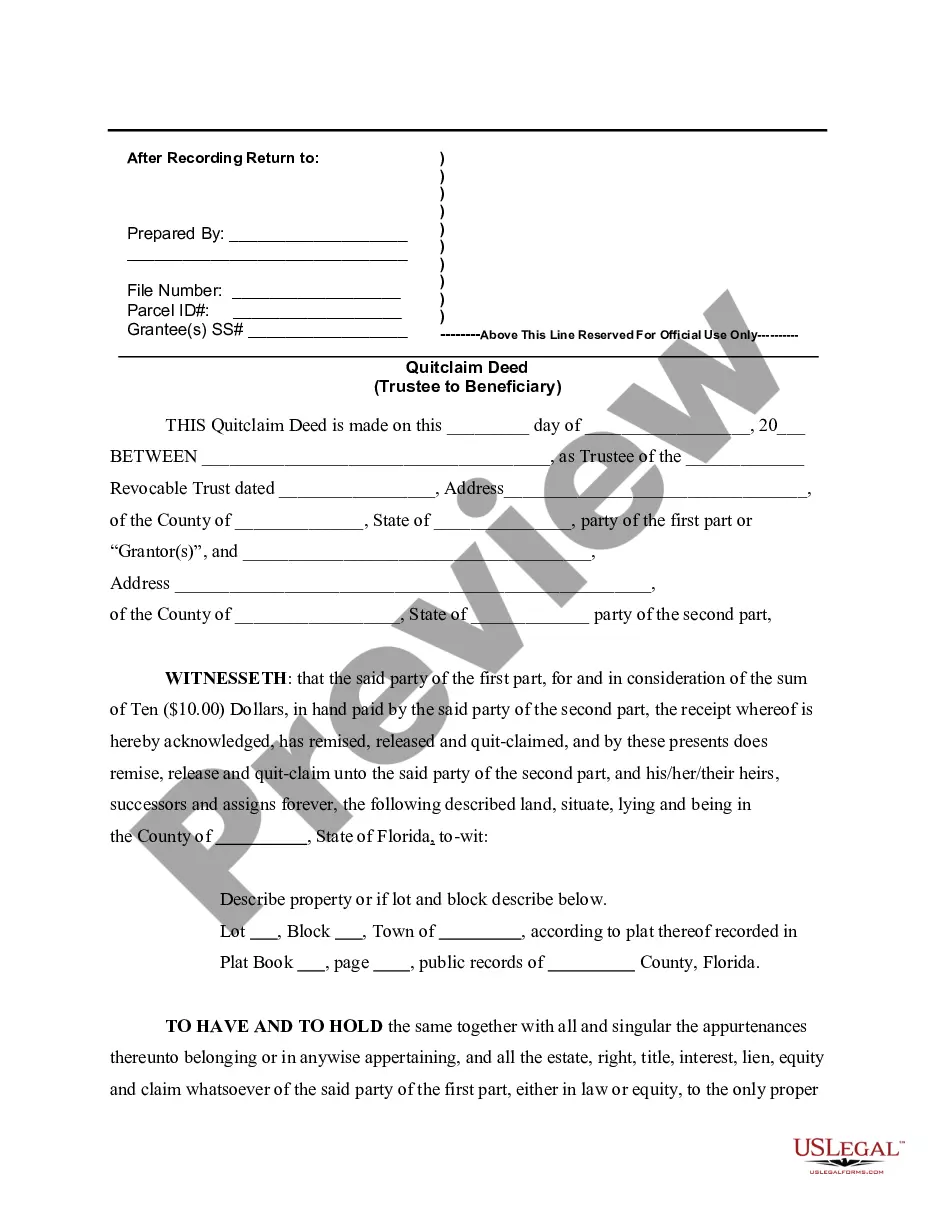
The Quitclaim Deed for Trustee to Beneficiary is a legal document used to transfer property ownership from a trustee of a revocable trust to a beneficiary. Unlike warranty deeds, this form does not guarantee that the property title is clear or free from claims. Instead, it simply allows the trustee to convey their interest in the property to the beneficiary, making it an essential tool in estate planning and trust management.
Main sections of this form
- The names and addresses of the grantor (trustee) and grantee (beneficiary).
- A description of the property being transferred, including parcel IDs and specific location details.
- The date of the transfer and the consideration amount (typically ten dollars).
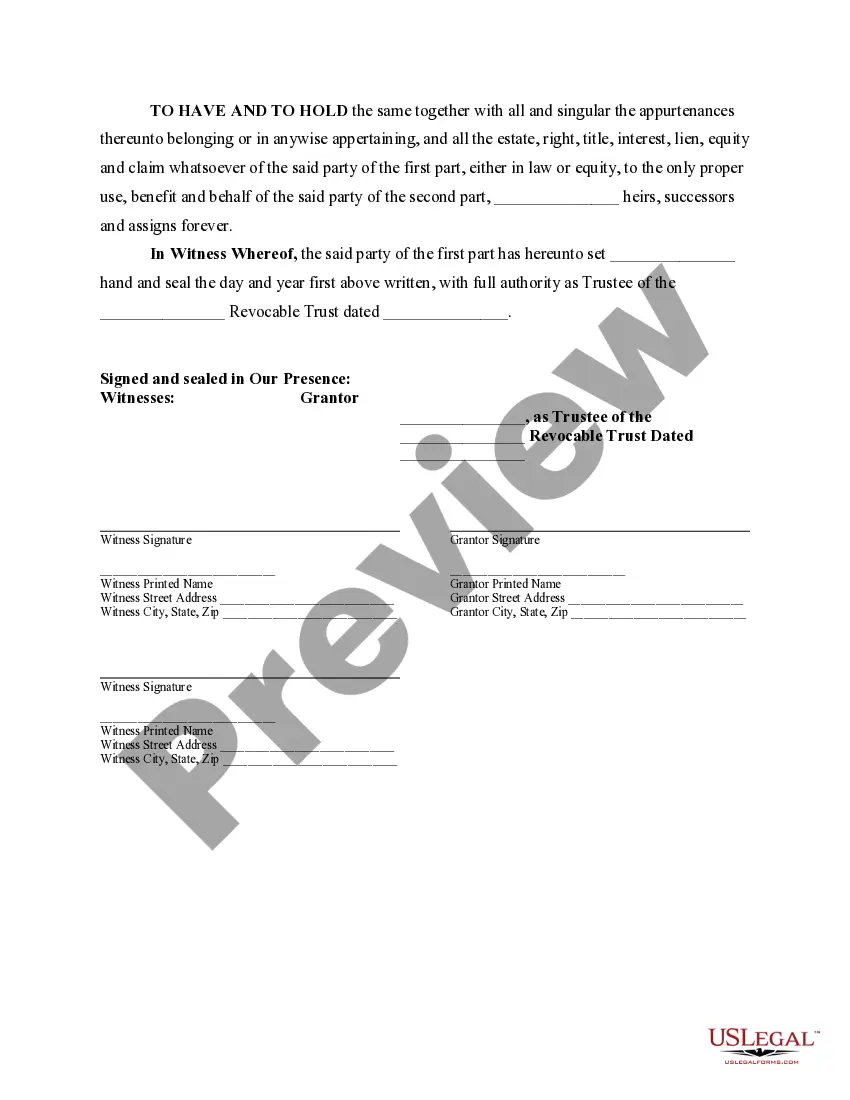
- Signature lines for the grantor and witnesses to affirm the transfer.
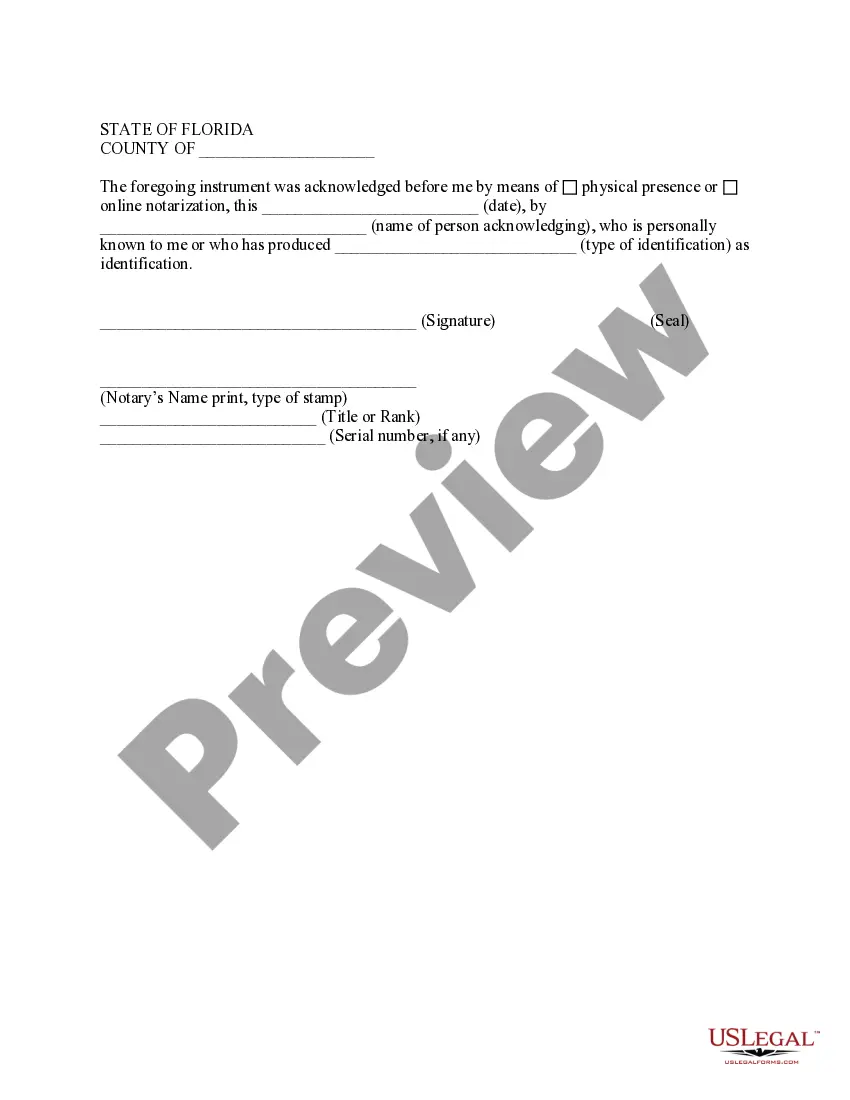
- Notarization section to validate the deed.





Common use cases
This form is needed when a trustee wishes to transfer property directly to a beneficiary as specified in a revocable trust. It is commonly used during estate settlements or when one party wants to formally convey their ownership rights without the complexities of warranty deeds.
Who this form is for
- Trustees managing property within a revocable trust.
- Beneficiaries receiving property as per the trust's terms.
- Individuals involved in estate planning or property transfer situations.
How to complete this form
- Identify the parties involved: enter the names and addresses of the trustee and beneficiary.
- Describe the property: fill in the parcel ID and provide a legal description of the property being transferred.
- Enter the transfer date and the sum of consideration, typically ten dollars.
- Ensure that the grantor signs the document in the presence of witnesses.
- Complete the notarization section to validate the deed.
Notarization guidance
Yes, this form must be notarized to be legally valid. Notarization verifies the identity of the signer and ensures that they understand the document. US Legal Forms offers integrated online notarization services, available twenty-four hours a day, providing a secure video call option without the need for travel.
Get your form ready online
Our built-in tools help you complete, sign, share, and store your documents in one place.
Make edits, fill in missing information, and update formatting in US Legal Forms—just like you would in MS Word.
Download a copy, print it, send it by email, or mail it via USPS—whatever works best for your next step.
Sign and collect signatures with our SignNow integration. Send to multiple recipients, set reminders, and more. Go Premium to unlock E-Sign.
If this form requires notarization, complete it online through a secure video call—no need to meet a notary in person or wait for an appointment.
We protect your documents and personal data by following strict security and privacy standards.

Make edits, fill in missing information, and update formatting in US Legal Forms—just like you would in MS Word.

Download a copy, print it, send it by email, or mail it via USPS—whatever works best for your next step.

Sign and collect signatures with our SignNow integration. Send to multiple recipients, set reminders, and more. Go Premium to unlock E-Sign.

If this form requires notarization, complete it online through a secure video call—no need to meet a notary in person or wait for an appointment.

We protect your documents and personal data by following strict security and privacy standards.
Mistakes to watch out for
- Failing to provide a complete legal description of the property.
- Not having the document signed in the presence of witnesses.
- Omitting notarization, which may invalidate the deed.
- Using incorrect or outdated forms that do not comply with current laws.
Benefits of using this form online
- Convenience of accessing and completing the form from home.
- Editable templates allow for customization to fit your specific situation.
- Secure storage of files and easy retrieval for future reference.
- Access to up-to-date legal content drafted by licensed attorneys.
Quick recap
- The Quitclaim Deed for Trustee to Beneficiary facilitates the transfer of property from a trustee to a beneficiary.
- Proper completion requires accurate identification of parties, property description, and notarization.
- Users should be mindful of legal requirements specific to their state, especially when handling property in Florida.
Looking for another form?
Form popularity
FAQ
Florida Quitclaim Deed for Trustee to Beneficiary is a legal document that transfers property from a trustee to a trust beneficiary, relinquishing any interest the trustee holds without guaranteeing title. It ensures the beneficiary officially receives their interest in the property in accordance with the trust terms and Florida practice for trust-based transfers.
In Florida, this quit claim deed should identify the trustee and beneficiary, describe the property, state a nominal consideration, and provide spaces for signatures and witnesses. It must include a notary acknowledgment and be executed by the parties with accurate names and addresses to ensure proper recording and transfer of the interest under the trust.
Yes. This form is used to transfer property from a trustee to a beneficiary under a trust in Florida. It relinquishes the trustee's interest without guaranteeing title, and the transfer follows the terms of the trust rather than providing title warranties.
Common mistakes include failing to correctly identify the trustee and beneficiary, omitting a complete legal property description, neglecting to state consideration, and skipping the notary acknowledgment or witness lines. These missteps can delay recording and undermine the deed's validity under Florida practice.
A quit claim deed may be voided if it is not properly executed, lacks a valid notary acknowledgment or proper witnesses, contains incorrect party names or property descriptions, or is delivered without proper execution. Always ensure the document reflects the correct trustees and beneficiaries and is properly witnessed.
It’s designed specifically for transferring property from a trustee to a beneficiary under a trust in Florida and names the trustee and beneficiary in the deed, rather than documenting a transfer between private individuals. Like standard quitclaim deeds, it does not guarantee title, but the trustee-to-beneficiary relationship is the key distinction.