Charitable Remainder Unitrust Living Purchase With The
Description
Get your form ready online
Our built-in tools help you complete, sign, share, and store your documents in one place.
Make edits, fill in missing information, and update formatting in US Legal Forms—just like you would in MS Word.
Download a copy, print it, send it by email, or mail it via USPS—whatever works best for your next step.
Sign and collect signatures with our SignNow integration. Send to multiple recipients, set reminders, and more. Go Premium to unlock E-Sign.
If this form requires notarization, complete it online through a secure video call—no need to meet a notary in person or wait for an appointment.
We protect your documents and personal data by following strict security and privacy standards.

Make edits, fill in missing information, and update formatting in US Legal Forms—just like you would in MS Word.

Download a copy, print it, send it by email, or mail it via USPS—whatever works best for your next step.

Sign and collect signatures with our SignNow integration. Send to multiple recipients, set reminders, and more. Go Premium to unlock E-Sign.

If this form requires notarization, complete it online through a secure video call—no need to meet a notary in person or wait for an appointment.

We protect your documents and personal data by following strict security and privacy standards.
Looking for another form?




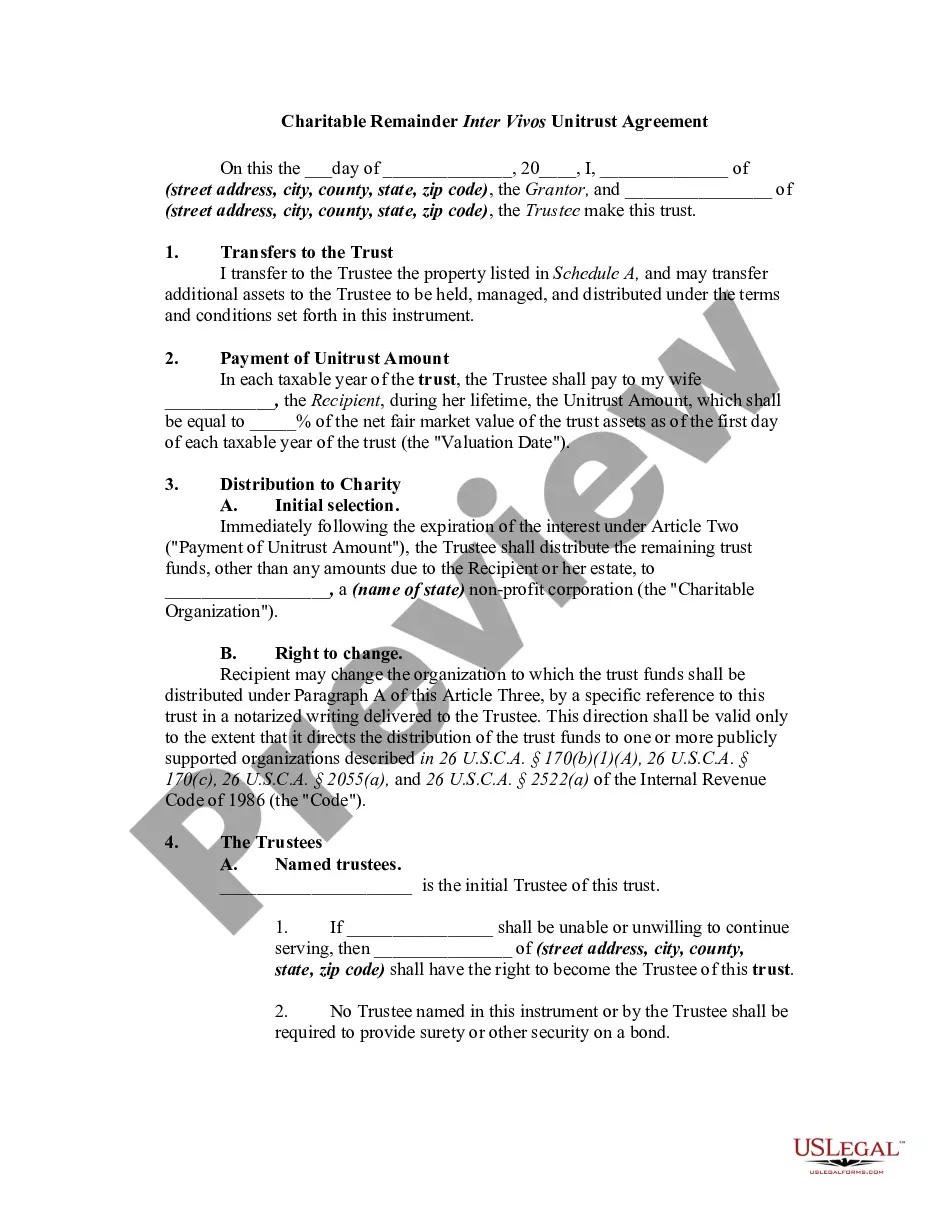
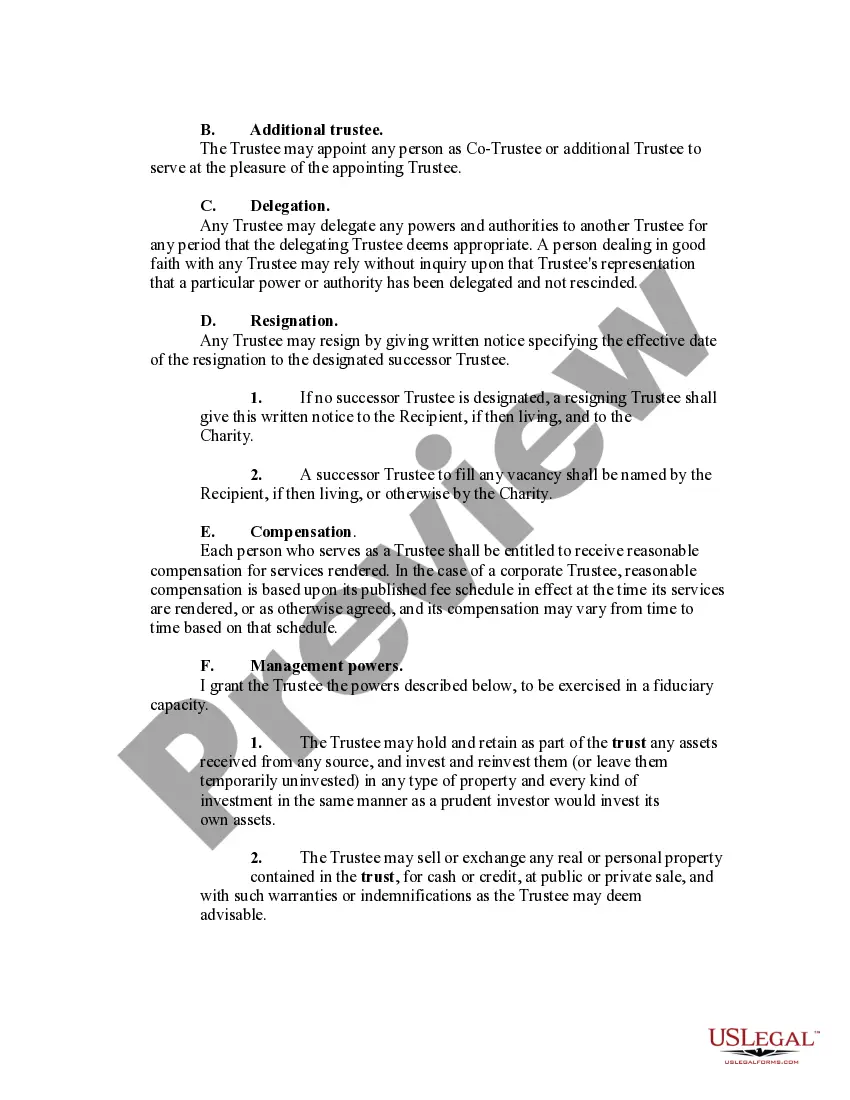
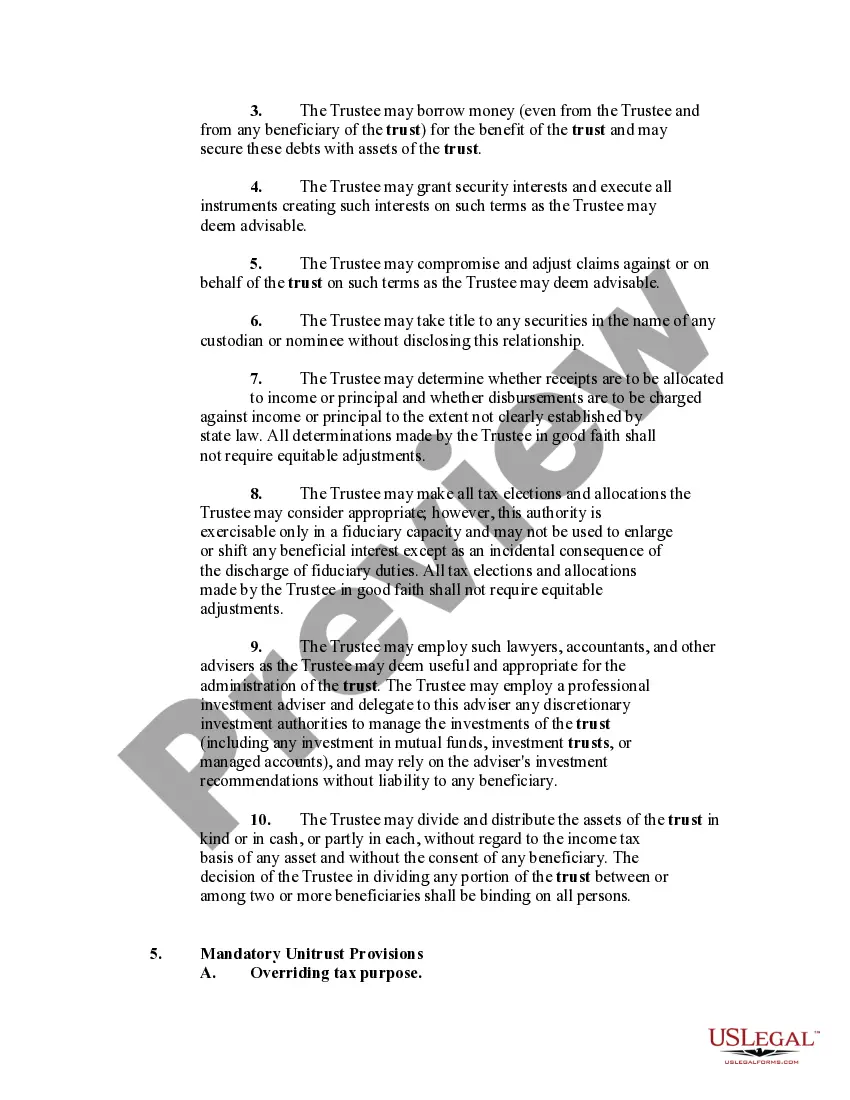
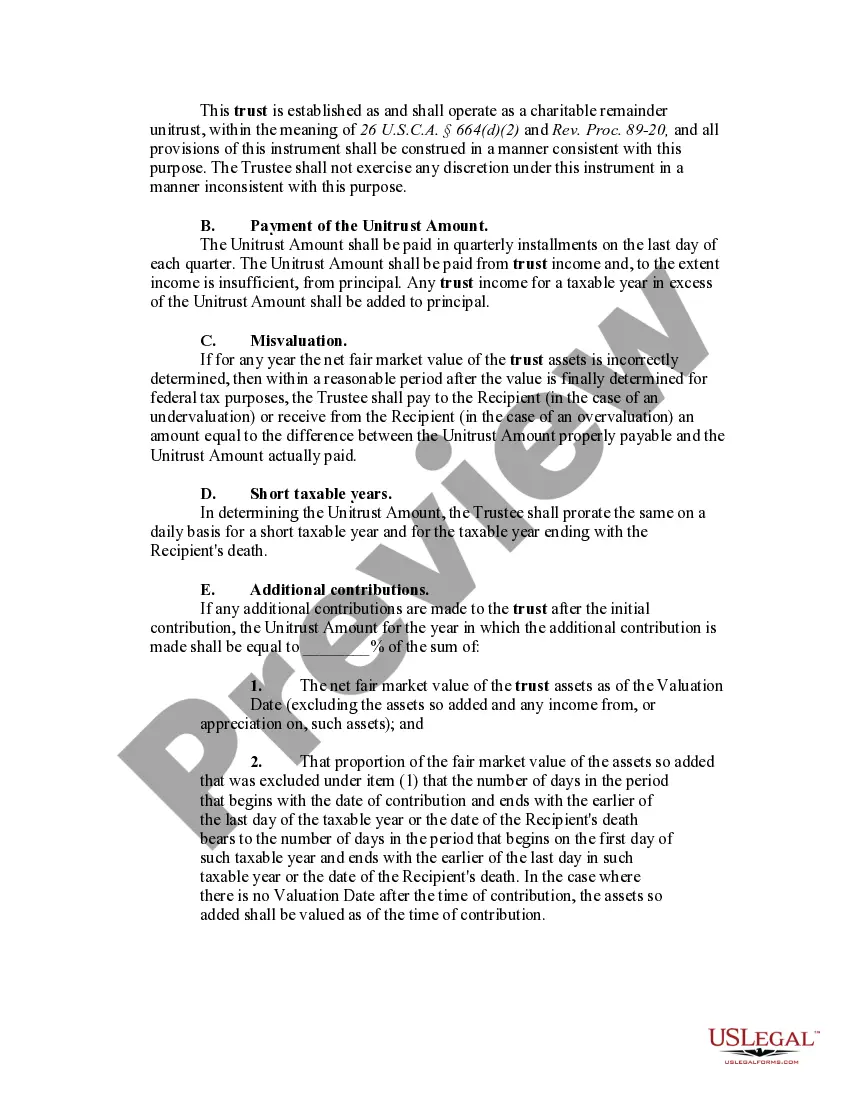
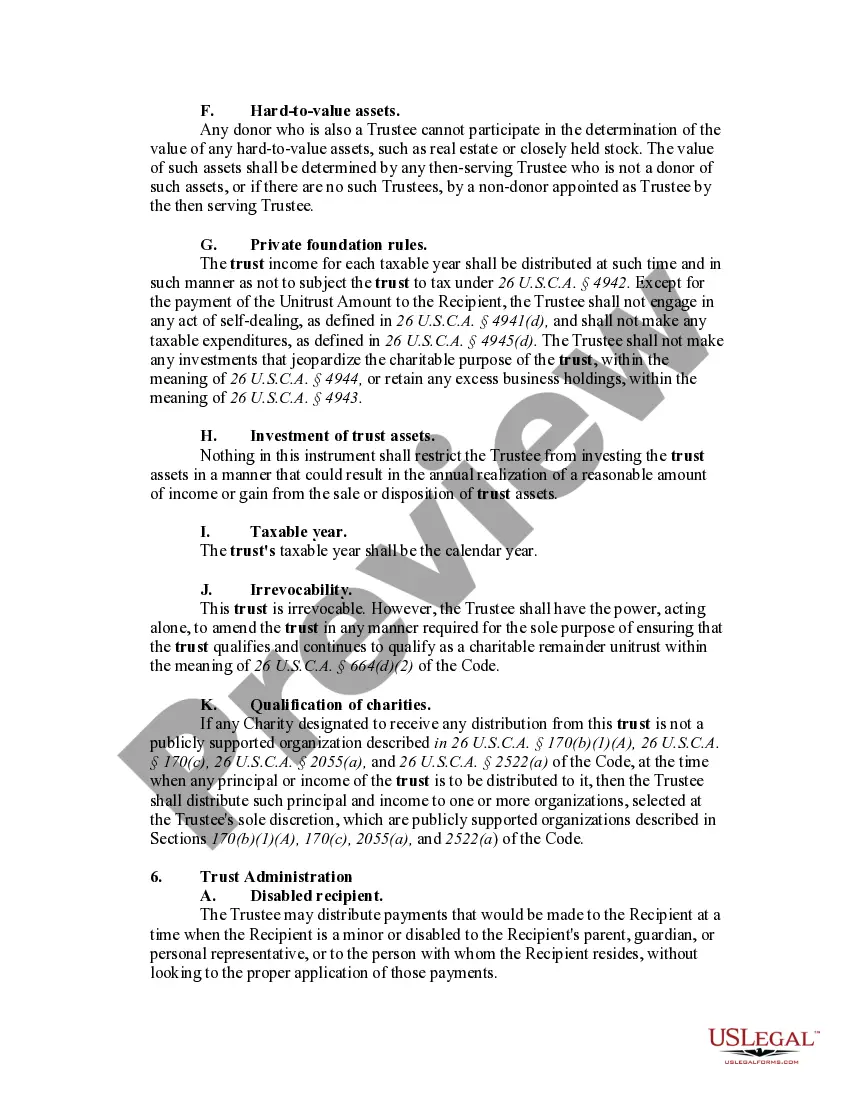
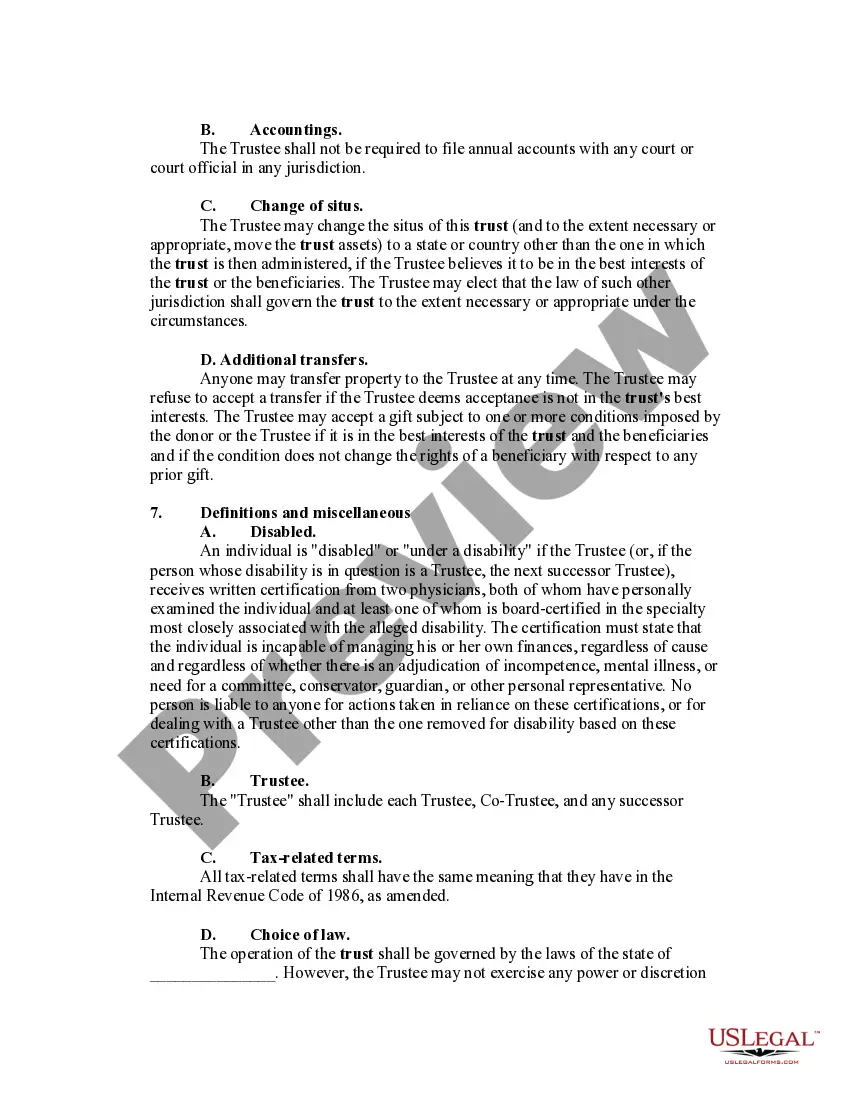
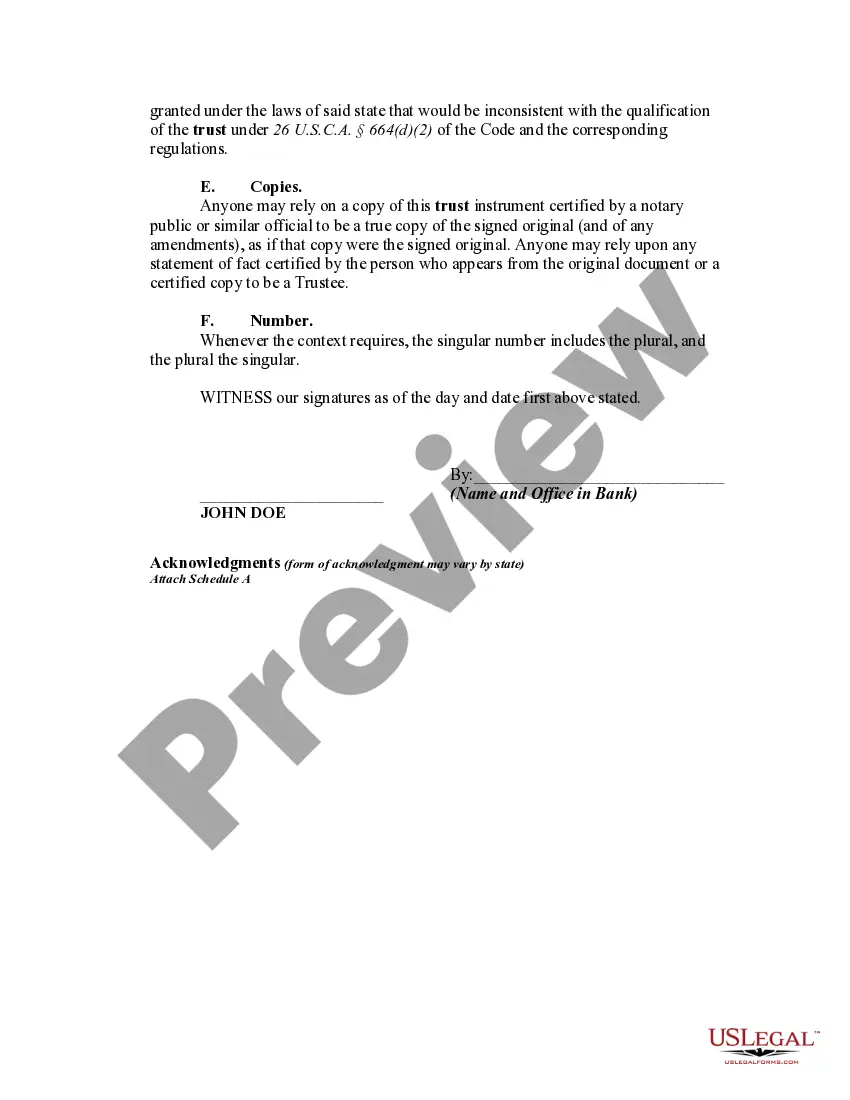
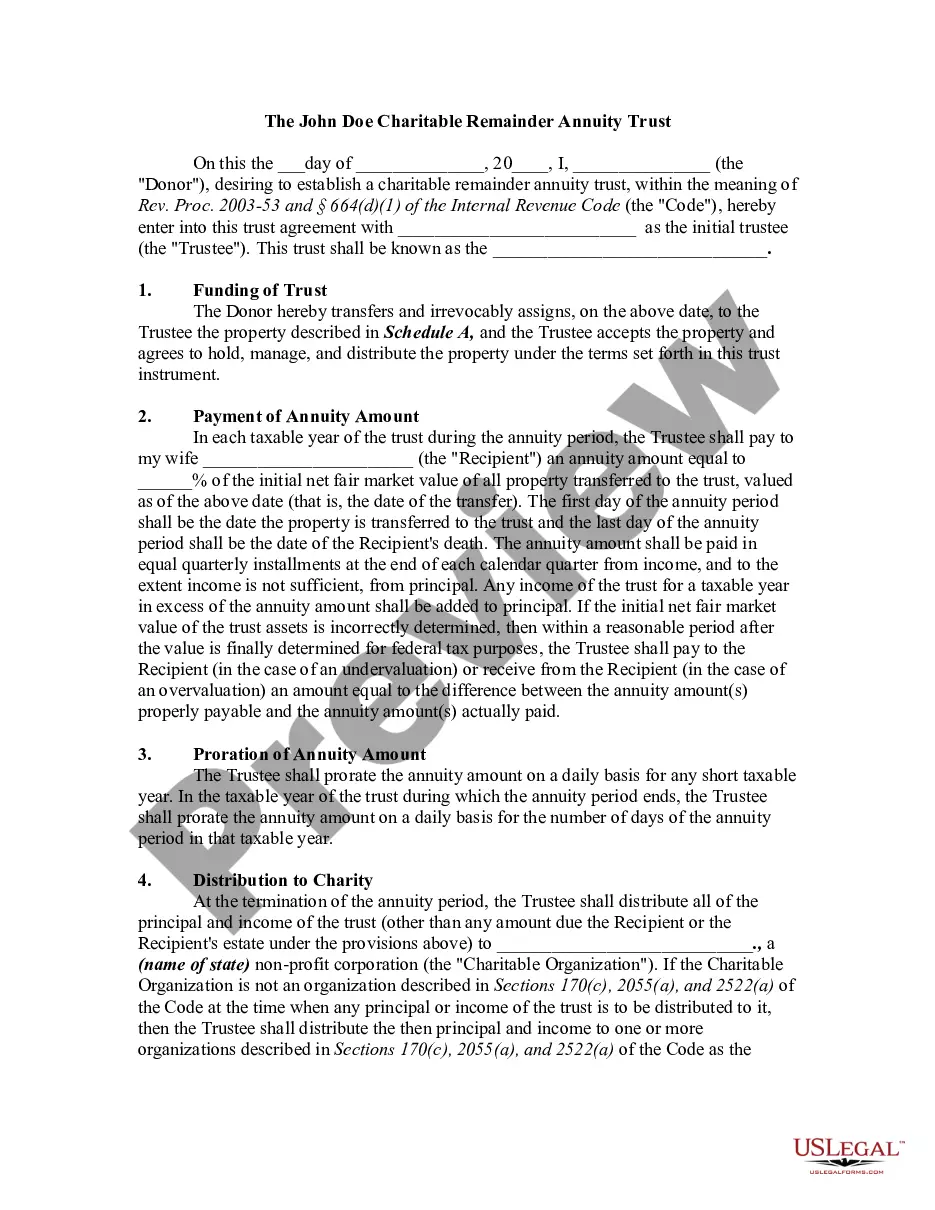
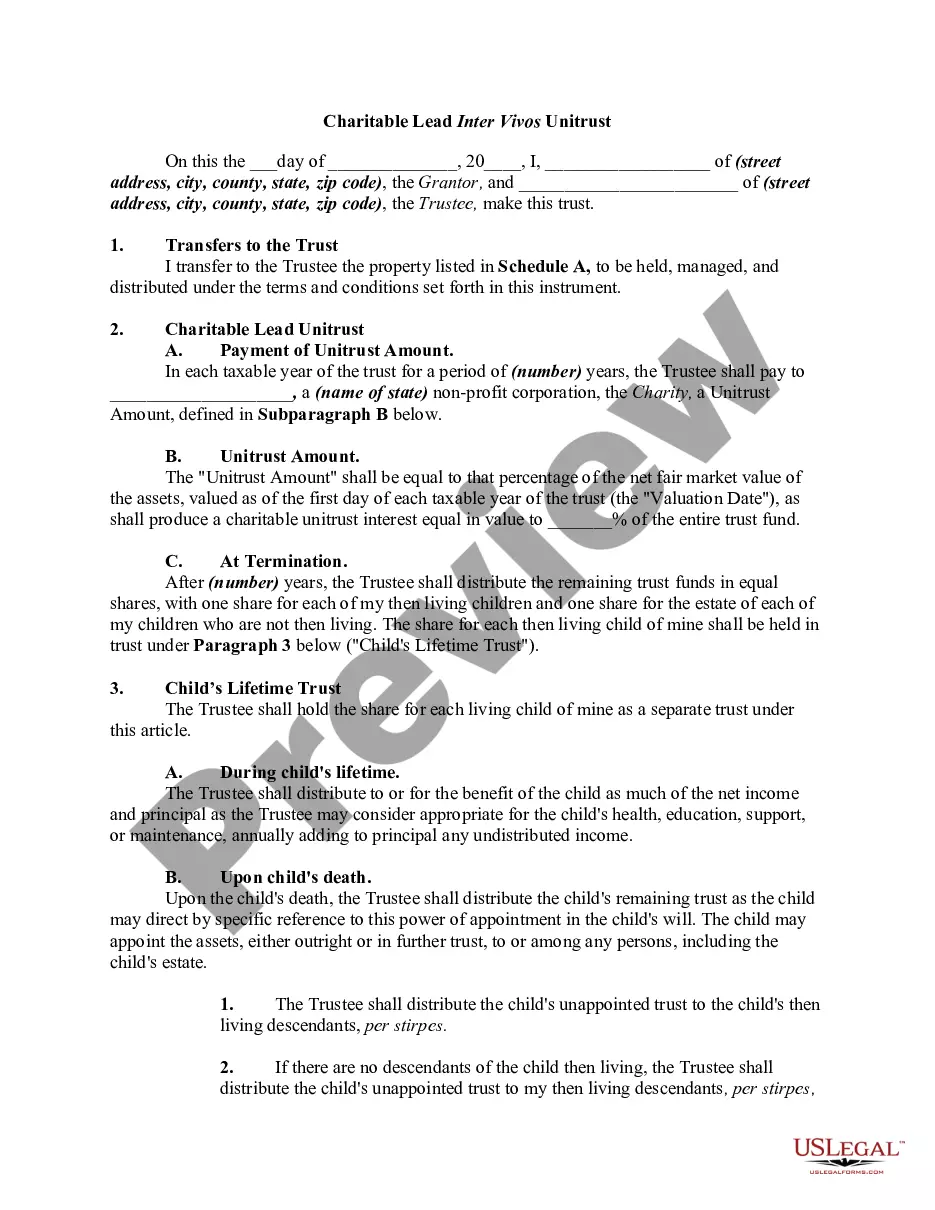
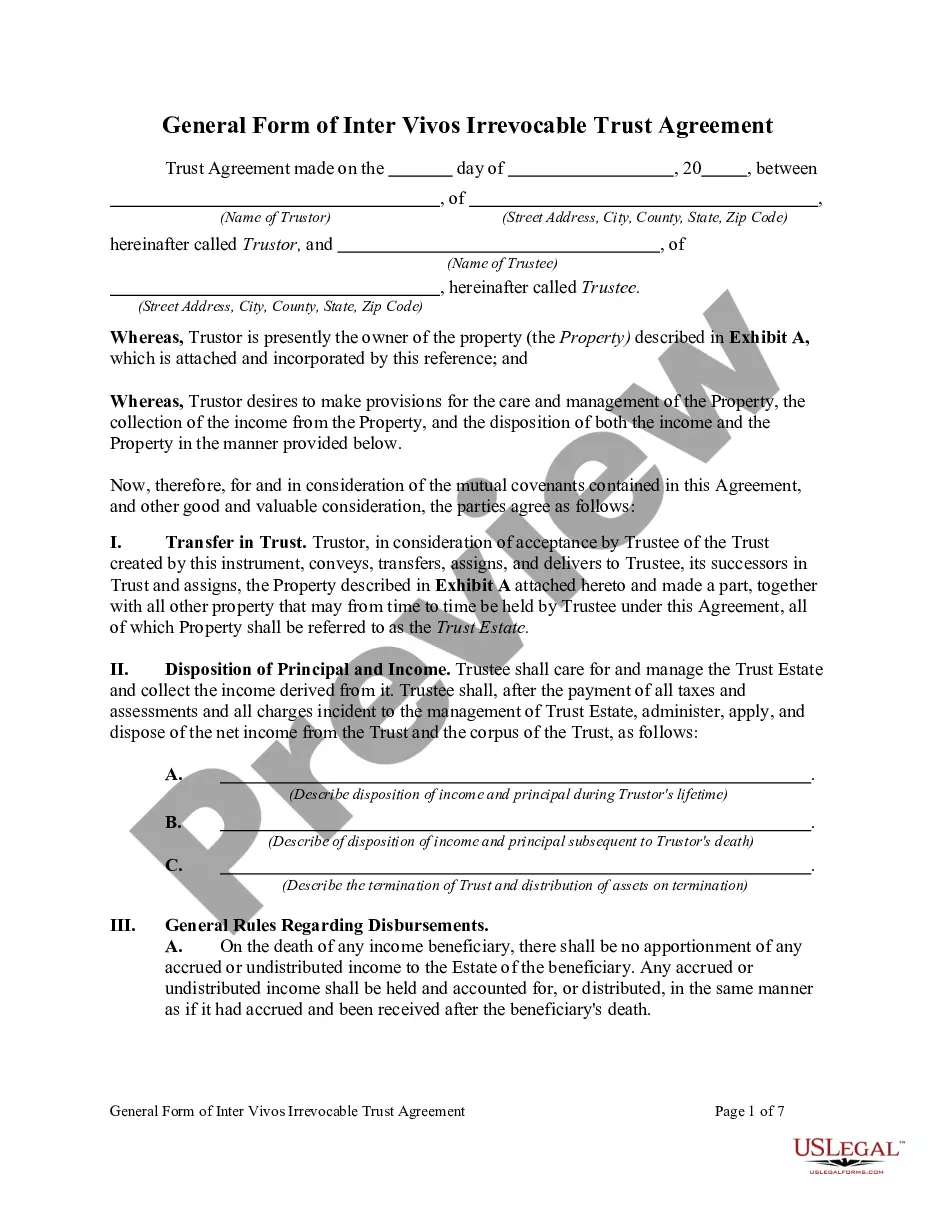
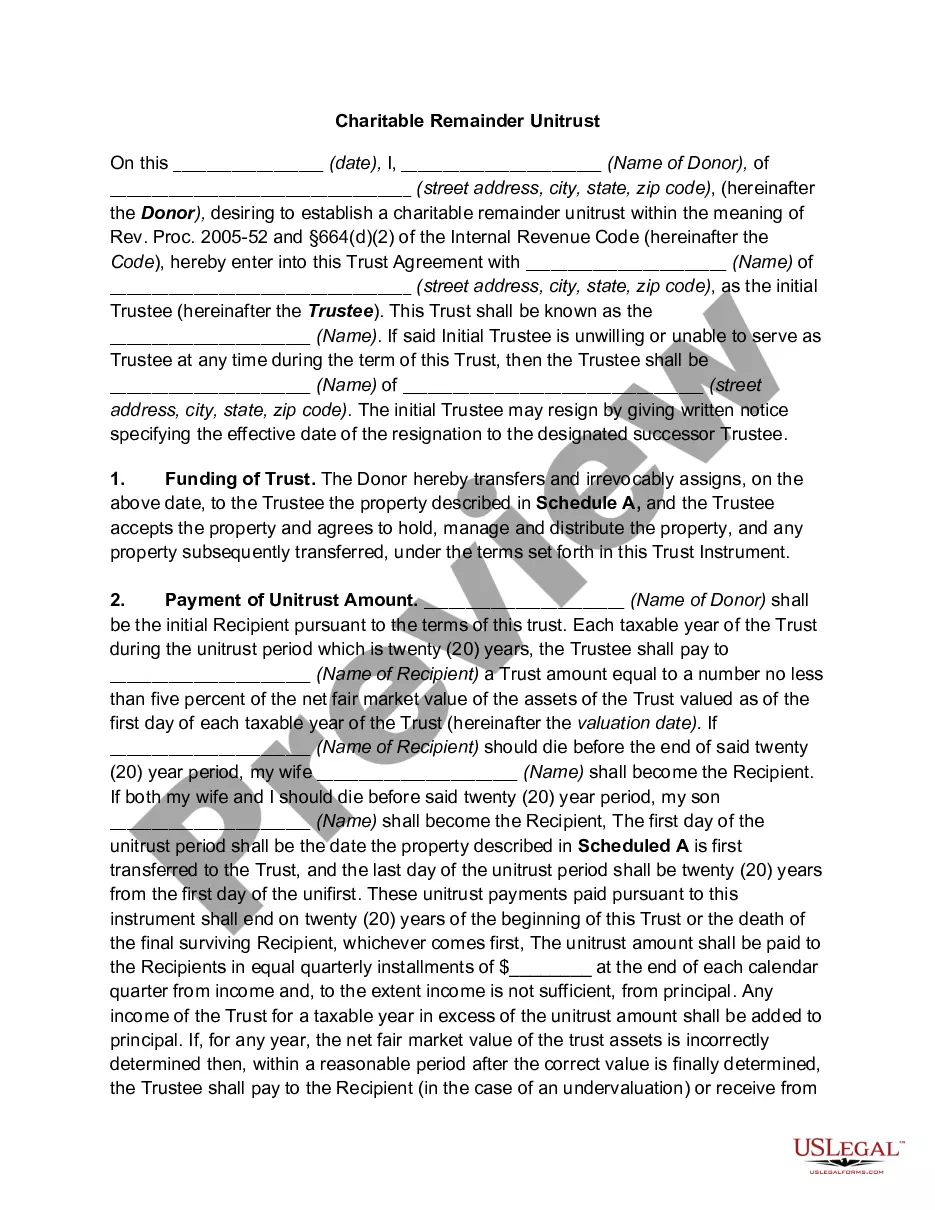
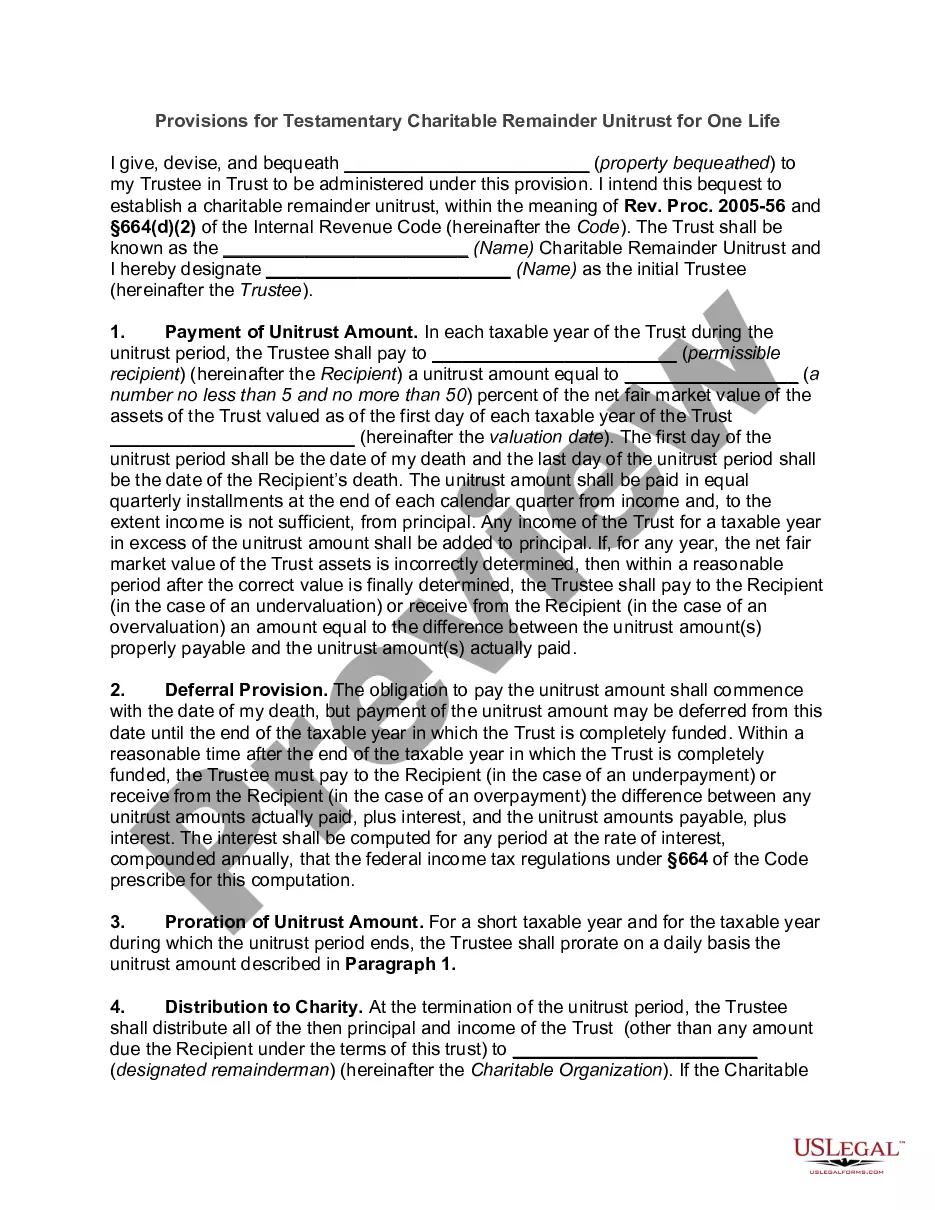
How to fill out Charitable Remainder Inter Vivos Unitrust Agreement?
- If you're a returning user, log into your account and download your desired form template by clicking the Download button. Ensure your subscription remains current, or renew it as needed.
- For first-time users, start by reviewing the Preview mode and form description to confirm you've selected the right template that aligns with your needs and jurisdiction requirements.
- If any discrepancies arise, use the Search tab above to find an alternative template that suits your criteria before proceeding.
- Click on the Buy Now button to select your preferred subscription plan. You'll need to register an account to gain access to the expansive library.
- Complete your purchase by entering your credit card information or using your PayPal account to finalize payment.
- After purchase, download your form to your device. You can access and manage your documents anytime in the My documents section of your profile.
In conclusion, US Legal Forms simplifies the legal document process with its vast collection of templates and expert assistance. By following these steps, you can ensure that your charitable remainder unitrust living purchase is smooth and straightforward.
Start leveraging the power of US Legal Forms today and secure your legal needs with confidence!
Form popularity
FAQ
To create a Charitable Remainder Unitrust, specific requirements must be met. The trust must provide for at least one charitable organization as a remainder beneficiary, and the income must be distributed to non-charitable beneficiaries for a minimum duration. Furthermore, the trust’s payout must be at least 5% and no more than 50% of its value. Meeting these criteria ensures your trust qualifies for tax benefits under IRS regulations.
Choosing between a Charitable Remainder Annuity Trust (CRAT) and a Charitable Remainder Unitrust (CRUT) depends on your goals. A CRAT provides fixed payments, which can offer stability, while a CRUT can adjust payments based on market value, making it suitable for those seeking potential growth. Understanding your financial needs and objectives will help you make an informed decision regarding which option aligns best with your charitable contributions.
Yes, you can create your own Charitable Remainder Trust, and it can be a great way to support charitable causes while receiving income. To form one, you usually need to draft a trust document clearly stating its terms and conditions. Uslegalforms can assist you in creating the necessary documents, guiding you through each step to ensure your Charitable Remainder Unitrust is legally sound.
A Charitable Remainder Trust (CRT) and a Charitable Lead Trust (CLT) serve different purposes. A CRT allows you to provide income to beneficiaries for a specified period, after which the remaining assets transfer to a charity. In contrast, a CLT distributes income to a charity for a set duration, with the remaining assets going to your heirs. Understanding these differences helps in choosing the right option for your financial and charitable goals.
Yes, a charitable remainder unitrust must file a Form 1041 if it has generated income for the fiscal year. This obligation exists to report income, deductions, and potential tax liabilities associated with the trust. Utilizing platforms like US Legal Forms can simplify the process and ensure proper filing.
A charitable remainder unitrust operates by allowing you to donate assets, while still receiving income throughout your lifetime. Typically, you receive payments based on a fixed percentage of the trust’s value, which is re-evaluated annually. When the trust term ends, the remaining assets are transferred to a charitable organization specified by you. This structure offers benefits not only to your finances but also enhances your charitable giving strategy.
Calculating the charitable tax deduction for a charitable remainder trust is crucial for maximizing tax benefits. Essentially, this deduction is determined by the present value of the charitable interest when the trust ends. To complete this calculation accurately, consider factors such as the payout percentage and the term of the trust. You might find that utilizing tools available on platforms like USLegalForms can simplify this process for you.
A unitrust serves as an essential financial tool for individuals seeking to benefit both their loved ones and charitable organizations. It allows you to receive a fixed percentage of the trust's value annually, providing steady income during your lifetime. Furthermore, the remaining assets will eventually fund a charitable cause you care about, ensuring your legacy lives on. Essentially, it's a fulfilling way to balance personal financial needs with philanthropic goals.
Charitable remainder trusts can be a good idea if you are looking for a way to give to charity while still generating income. They allow you to blend your philanthropic goals with your financial needs, providing you with both benefits. However, it’s crucial to assess your financial situation and long-term goals before committing. Consulting with a professional can help clarify whether this option aligns with your strategies.
In simple terms, a charitable remainder unitrust is a way to give to charity while still receiving income from your assets. You place assets in the trust, and it pays you a percentage of its annual value for a specific time frame. After that time, the remainder goes to a chosen charity. With this trust, you can enjoy certain tax benefits and make a lasting impact on a cause you care about.