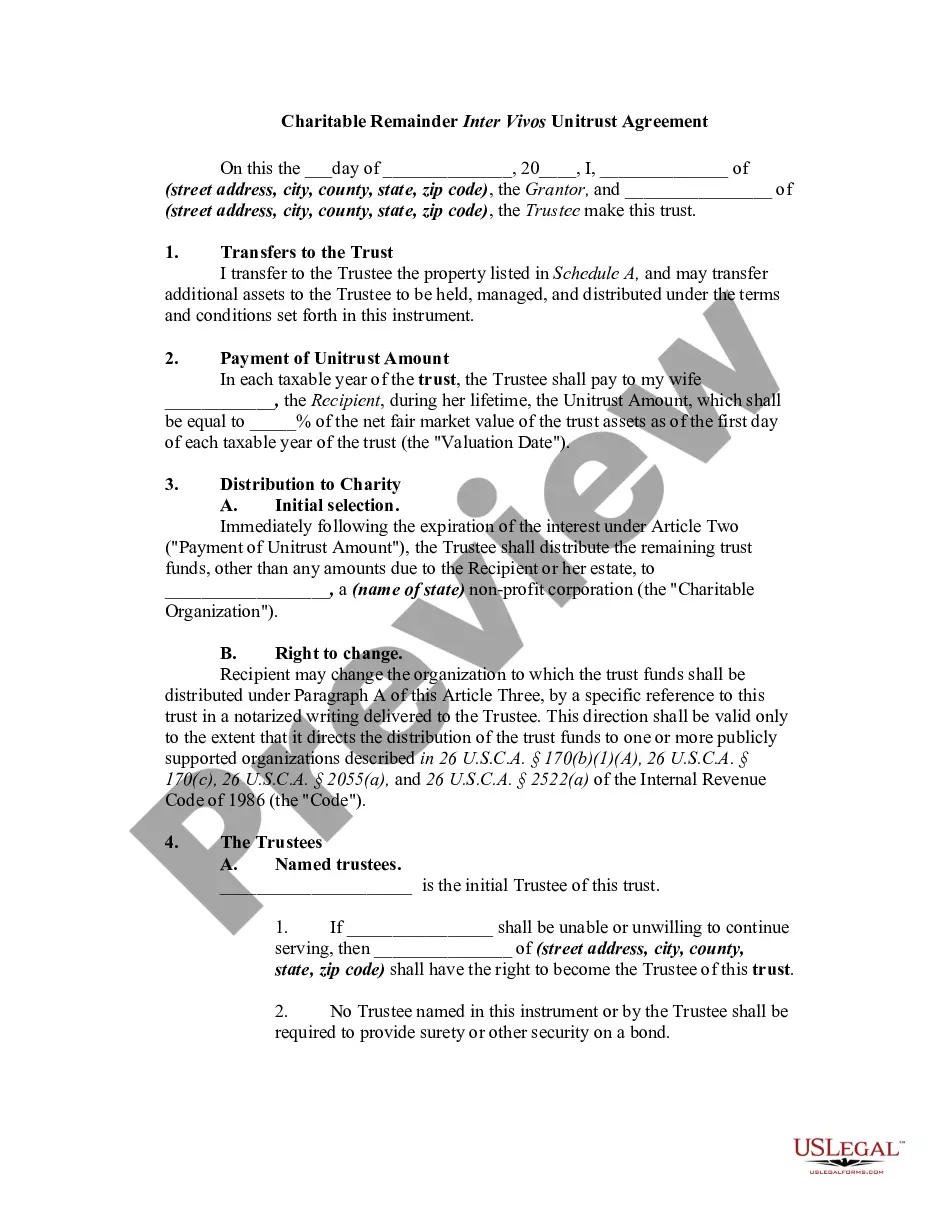
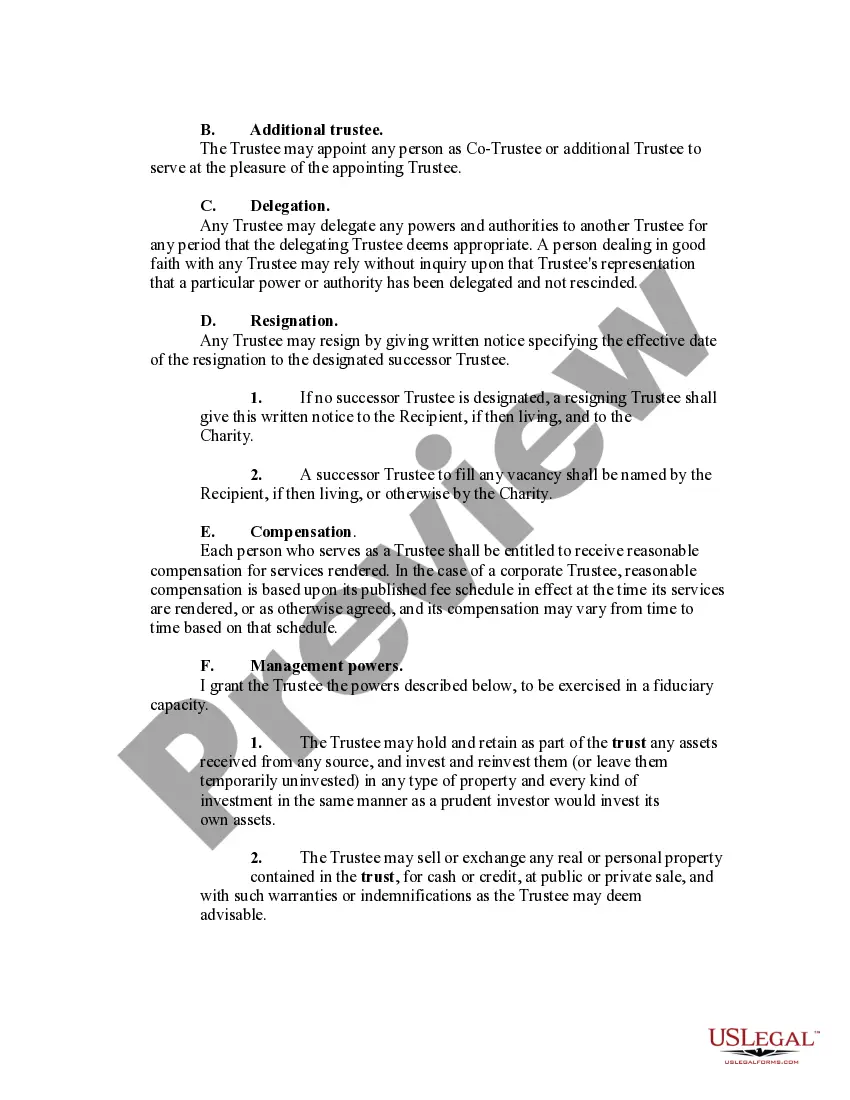
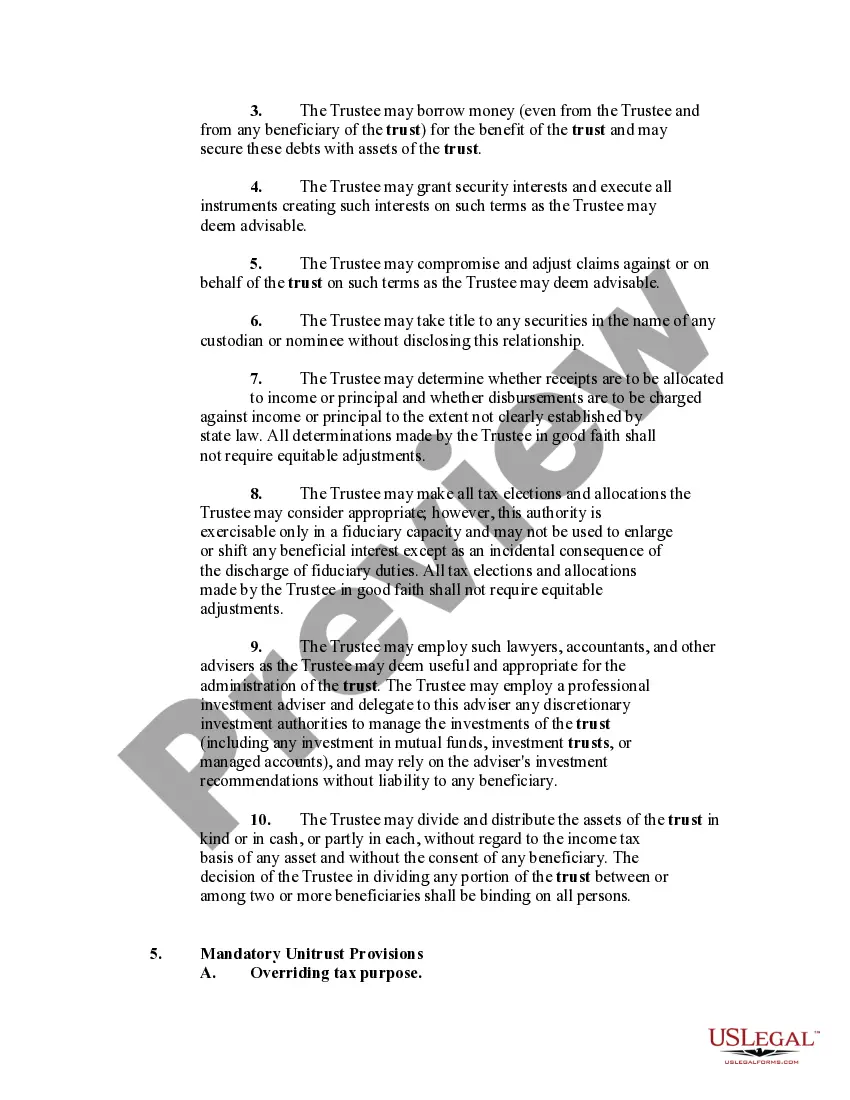
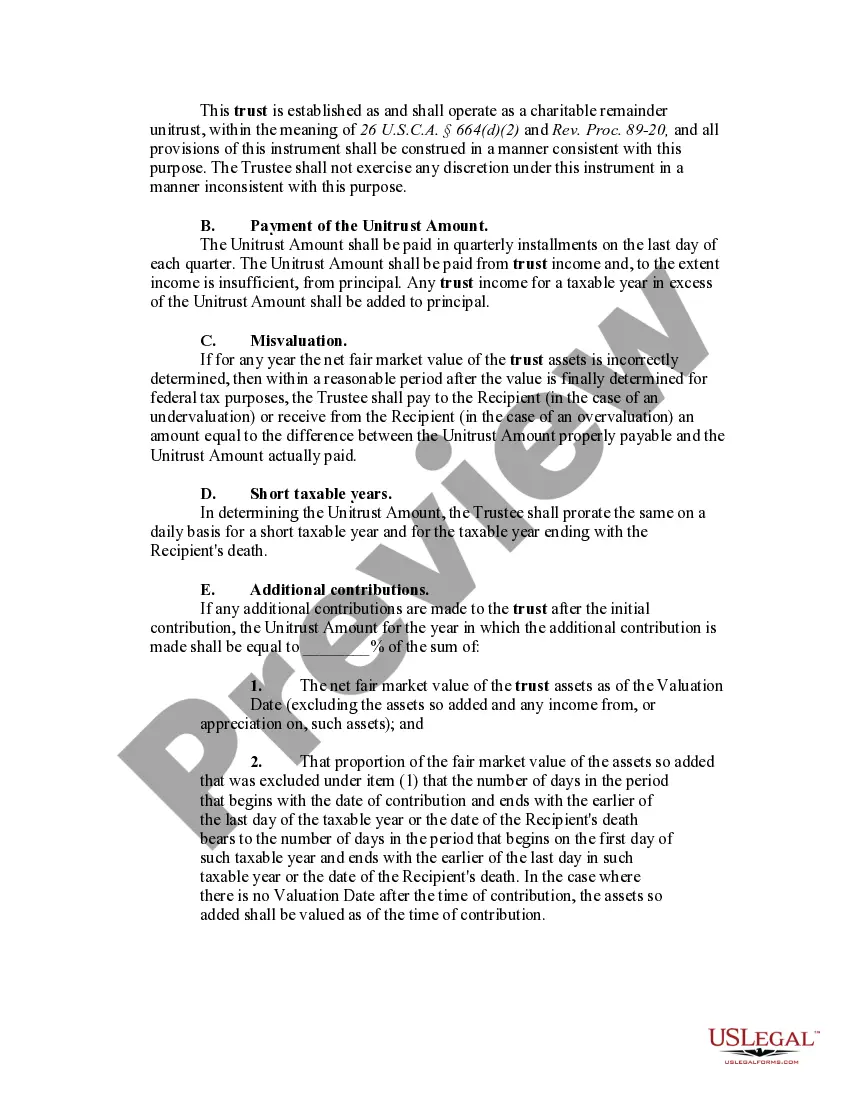
Charitable Remainder Unitrust Living Complete For The Future
Description
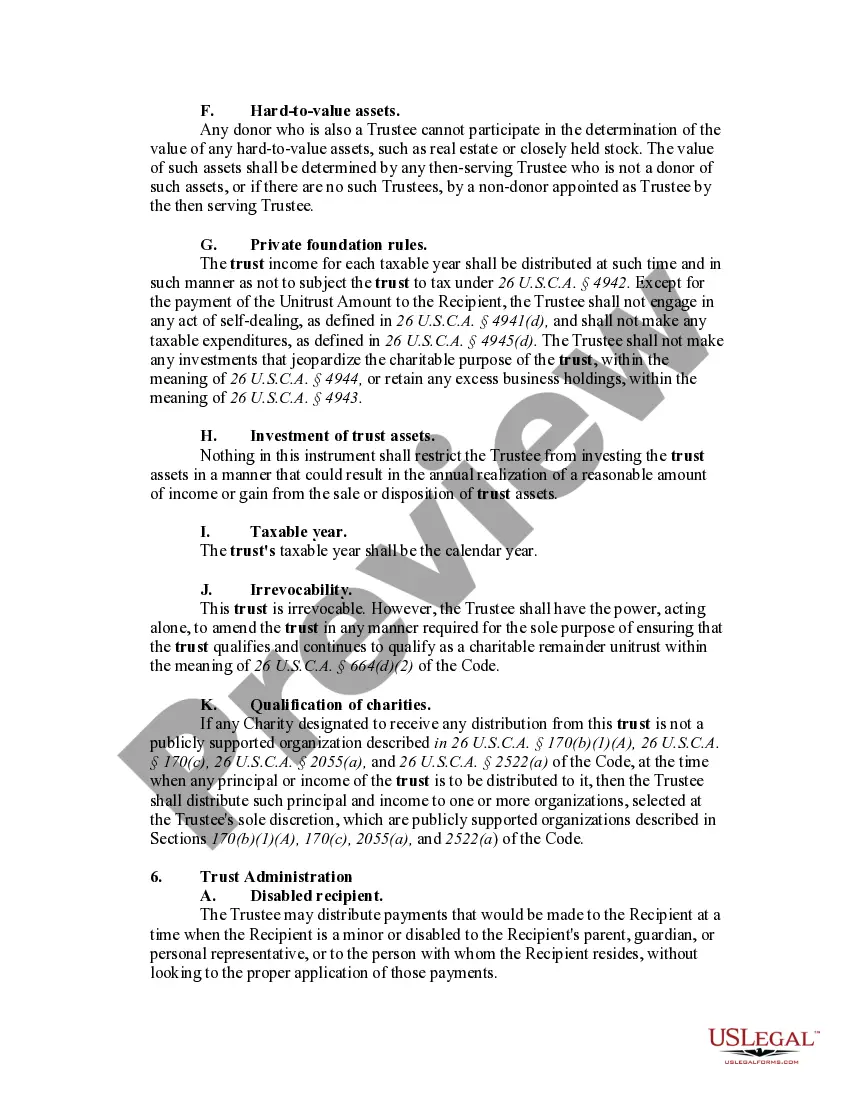
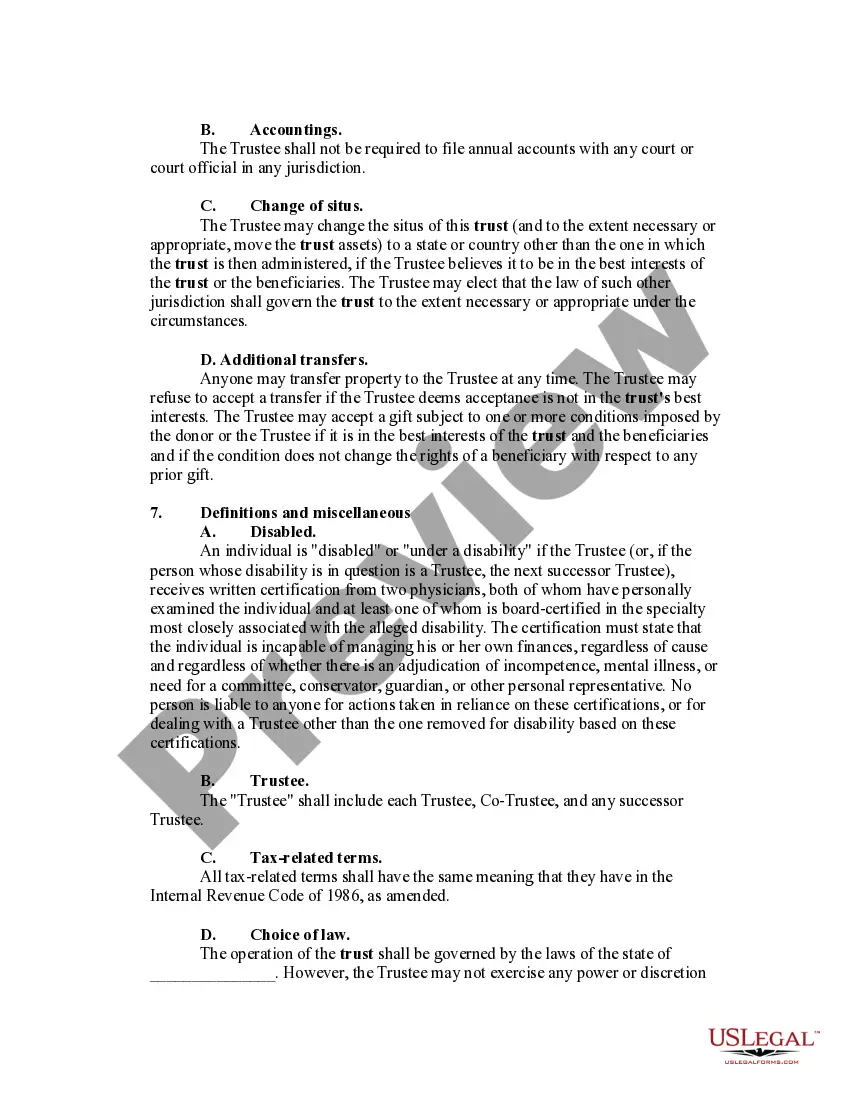
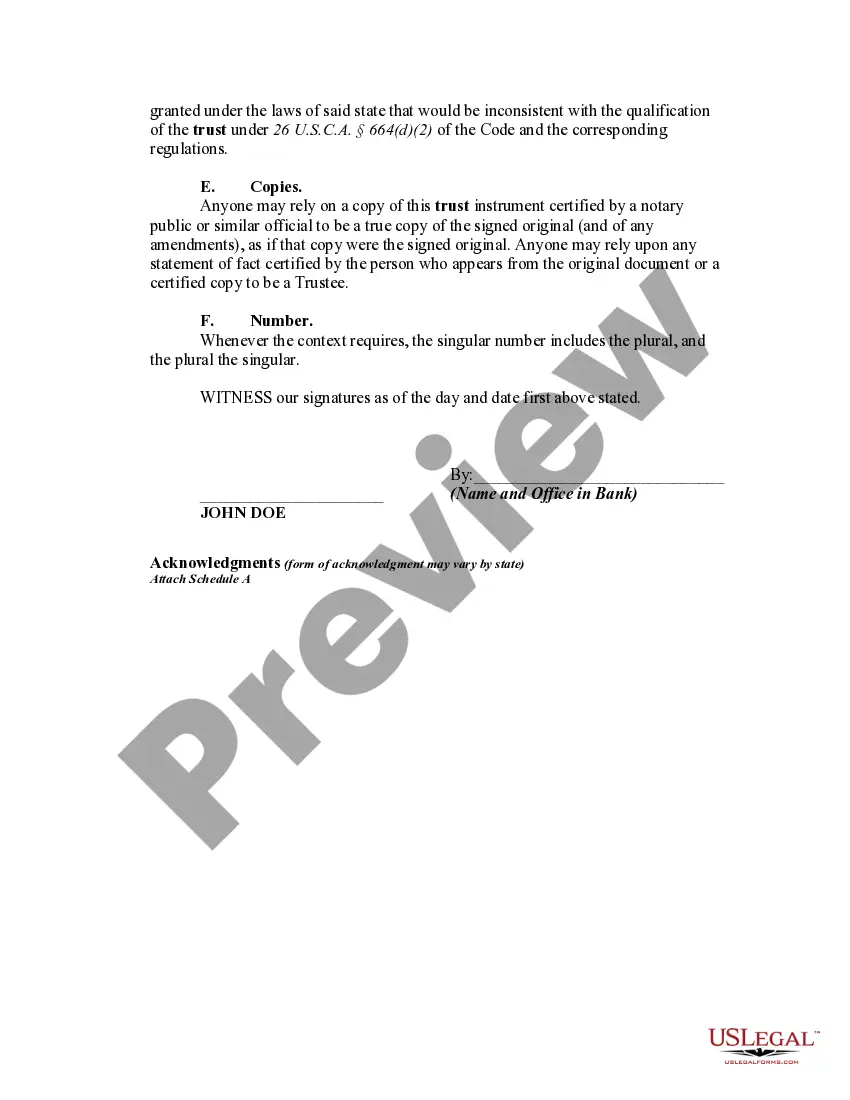
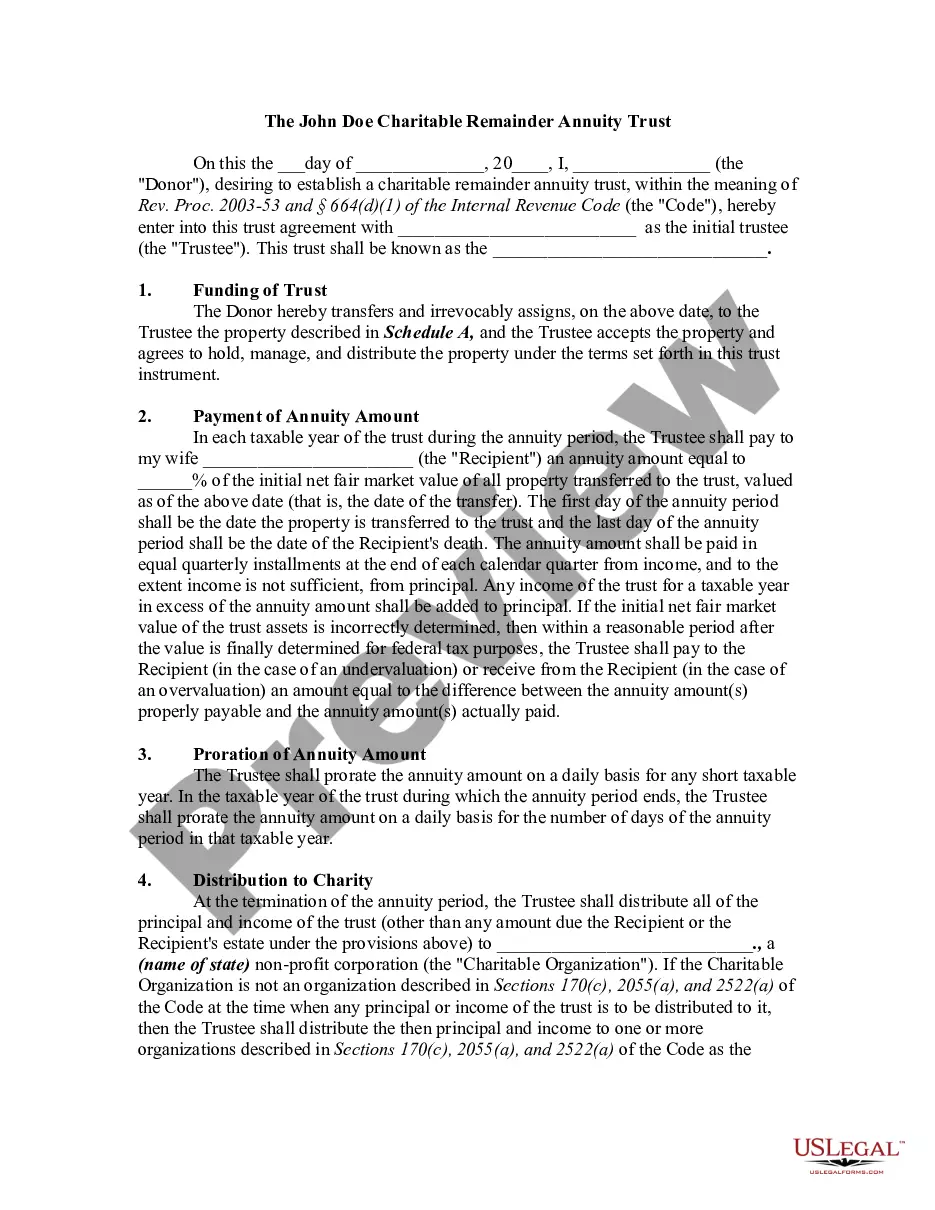
Get your form ready online
Our built-in tools help you complete, sign, share, and store your documents in one place.
Make edits, fill in missing information, and update formatting in US Legal Forms—just like you would in MS Word.
Download a copy, print it, send it by email, or mail it via USPS—whatever works best for your next step.
Sign and collect signatures with our SignNow integration. Send to multiple recipients, set reminders, and more. Go Premium to unlock E-Sign.
If this form requires notarization, complete it online through a secure video call—no need to meet a notary in person or wait for an appointment.
We protect your documents and personal data by following strict security and privacy standards.

Make edits, fill in missing information, and update formatting in US Legal Forms—just like you would in MS Word.

Download a copy, print it, send it by email, or mail it via USPS—whatever works best for your next step.

Sign and collect signatures with our SignNow integration. Send to multiple recipients, set reminders, and more. Go Premium to unlock E-Sign.

If this form requires notarization, complete it online through a secure video call—no need to meet a notary in person or wait for an appointment.

We protect your documents and personal data by following strict security and privacy standards.
Looking for another form?





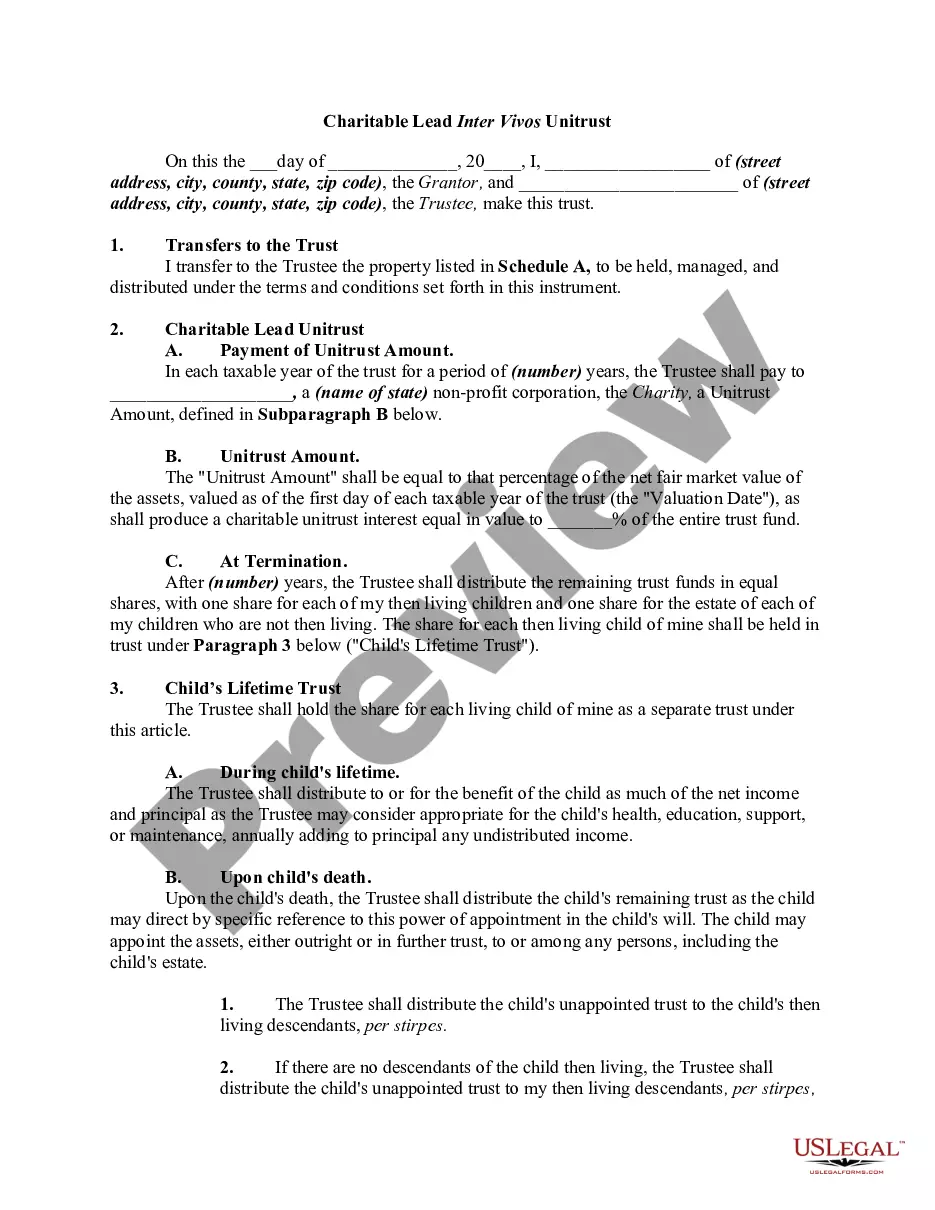
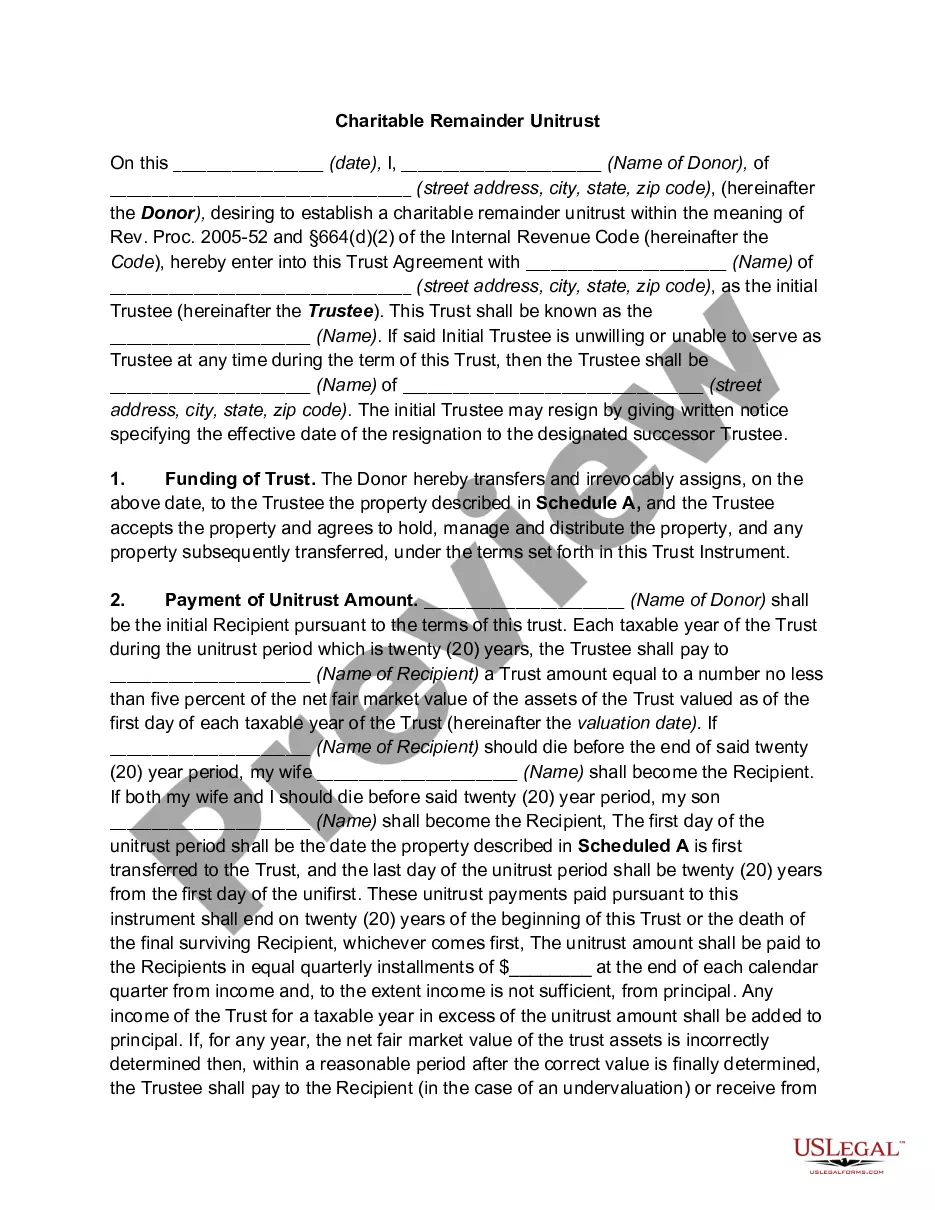
How to fill out Charitable Remainder Inter Vivos Unitrust Agreement?
- If you are a returning user, log in to your account to access your document library. Confirm that your subscription is active; renew if necessary.
- For first-time users, start by previewing the form to ensure it matches your needs and complies with local jurisdiction requirements.
- If required, conduct a search using the Search tab to find an appropriate form. Ensure the selected template meets your criteria.
- To purchase the document, click on the 'Buy Now' button and select a subscription plan. You'll need to create an account to access the full library.
- Complete your transaction by entering your payment information, either through a credit card or your PayPal account.
- After your purchase, download the form and save it to your device. You can revisit it anytime using the My documents section of your profile.
By leveraging US Legal Forms, you can rapidly acquire the legal templates you require. With their robust library of over 85,000 fillable forms, you’re equipped to ensure your documents are accurate and compliant.
Start today and explore the benefits of using US Legal Forms for your legal documentation needs. Your future planning deserves the best resources!
Form popularity
FAQ
Form 5227 must be filed by any charitable remainder trust that has been established or is still active. This includes trusts that have generated income or capital gains during the year. If you’re the trustee or responsible for the trust, it’s your duty to ensure compliance with this filing. If you need assistance, US Legal Forms can simplify the process by providing necessary resources.
The primary IRS form for a charitable trust, specifically a charitable remainder trust, is Form 5227. This form helps you report the trust’s income, distributions, and deductions. By completing this form accurately, you fulfill your tax obligations while maintaining a charitable remainder unitrust living complete for the future. For assistance in this area, consider using US Legal Forms for guidance.
Currently, Form 5227 cannot be filed electronically and must be submitted in paper format. It’s important to ensure that you send it to the correct address provided on the IRS website. While electronic filing is not an option, organizing your information digitally can help streamline the process. Utilizing services from US Legal Forms can also enhance your document management.
To close a charitable remainder trust, you'll need to address several administrative tasks, including distributing the remaining assets. It's important to follow the specific terms outlined in the trust agreement regarding distributions. Moreover, notifying beneficiaries and filing the final tax return is crucial to complete the process. Engaging with professionals or resources such as US Legal Forms can provide valuable support.
You must file a tax return for a charitable remainder trust if it has generated income during the year. Filing Form 5227 will help ensure proper compliance with IRS regulations. Organizing your financial records will make the process smoother. Platforms like US Legal Forms can assist you in preparing the necessary paperwork.
Yes, a charitable trust is required to file a tax return if it meets specific income thresholds. This is usually done by submitting Form 5227 to report income, deductions, and other relevant information. Ensuring compliance with filing obligations is essential for managing a charitable remainder unitrust living complete for the future. Consider using resources like US Legal Forms for guidance in filing.
The maximum term for a charitable remainder unitrust is 20 years, or it can be for the life of the income beneficiary. This structure allows beneficiaries to receive income for a specific period, while the remainder benefits a charity. Some individuals choose this option to ensure they leave a lasting impact while also securing income for themselves. Consult a legal advisor to explore options suitable for your situation.
To calculate the charitable tax deduction for a charitable remainder trust, you'll need to determine the present value of the charitable remainder interest. This involves assessing the payout rate, trust term, and donor's age. Utilizing tools and guidance from uslegalforms can greatly aid in ensuring that your charitable remainder unitrust living complete for the future is optimized for tax benefits.
From a charitable remainder trust, beneficiaries can typically withdraw an annual payment that meets IRS guidelines, often a fixed percentage of the trust's value. This percentage can range from 5% to 50%, depending on how the trust is set up. By planning wisely with a charitable remainder unitrust living complete for the future, you can enjoy a steady income stream while supporting your chosen charities.
The 10 rule for charitable remainder trusts stipulates that the present value of the charitable remainder interest must be at least 10% of the trust's total assets. This requirement ensures that a significant portion of the trust will eventually benefit charitable organizations. Designing a charitable remainder unitrust living complete for the future with this rule in mind allows you to balance income needs and charitable giving effectively.