Charitable Remainder Trust For Real Estate
Description
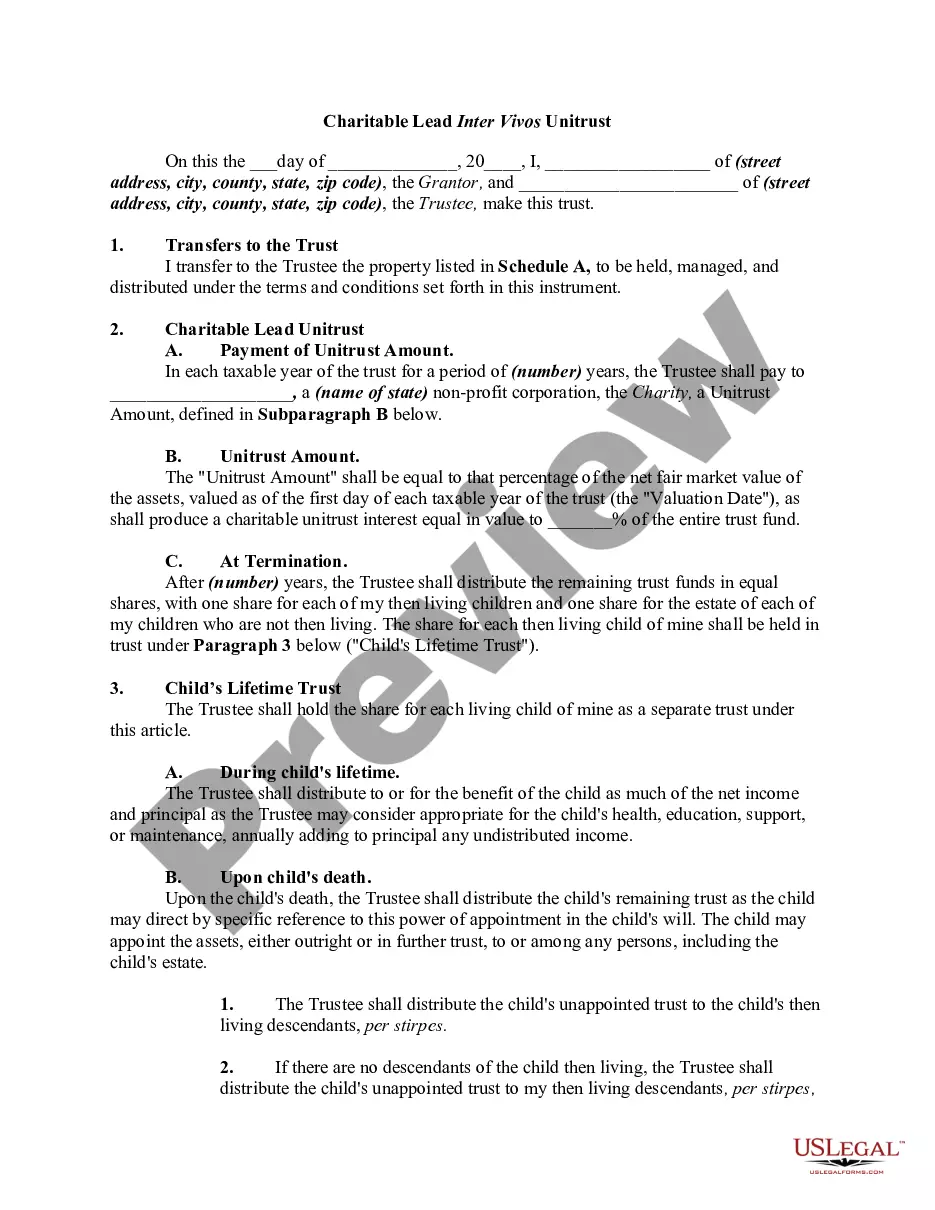
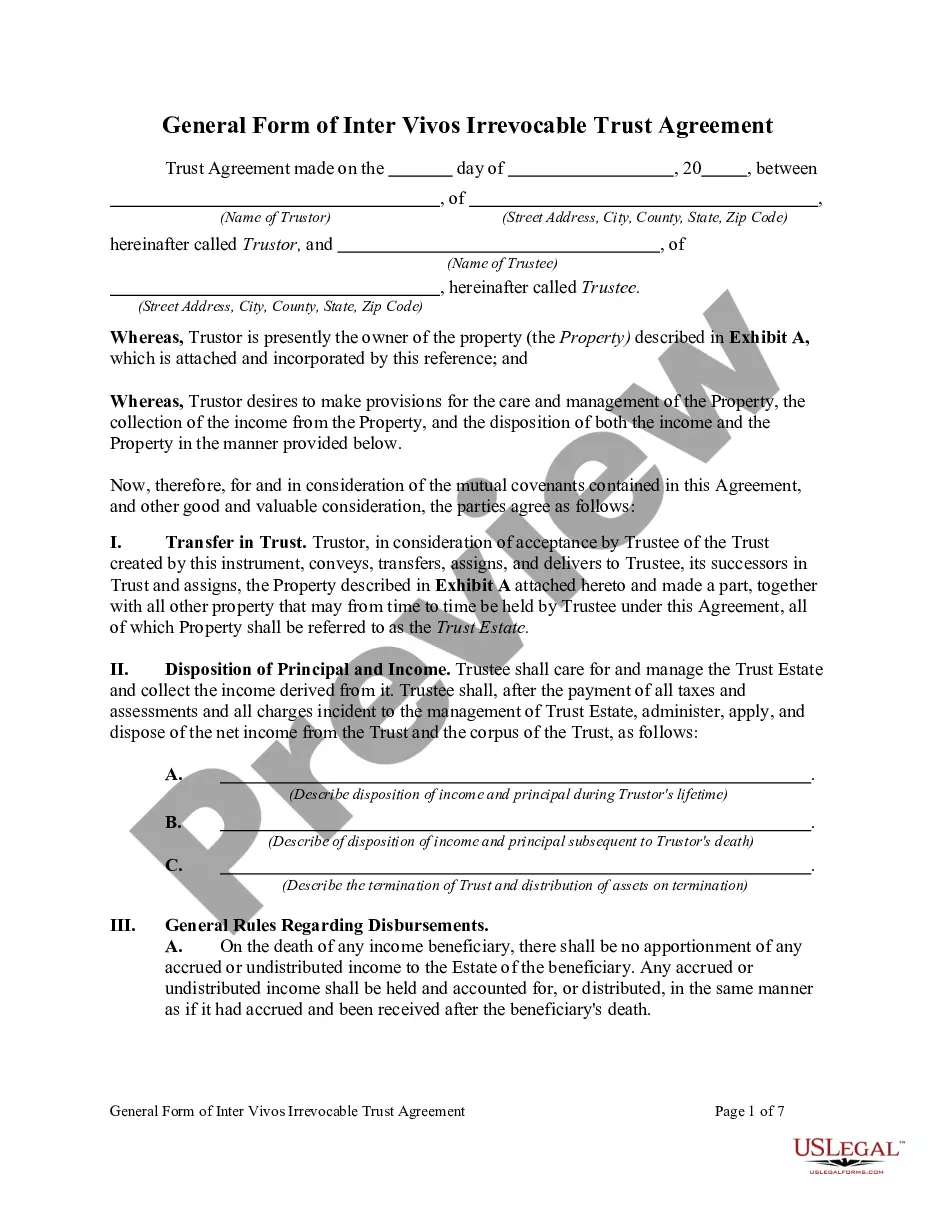
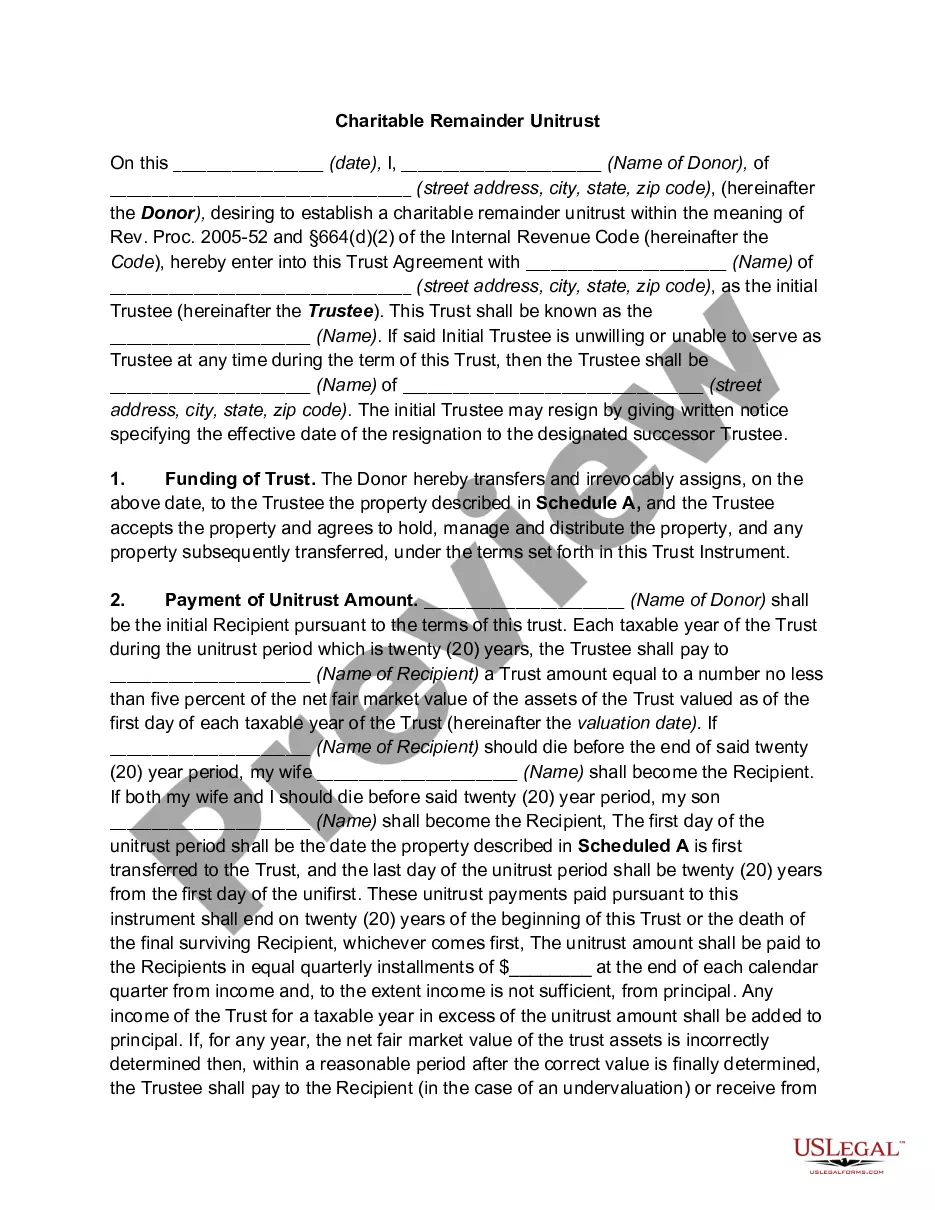
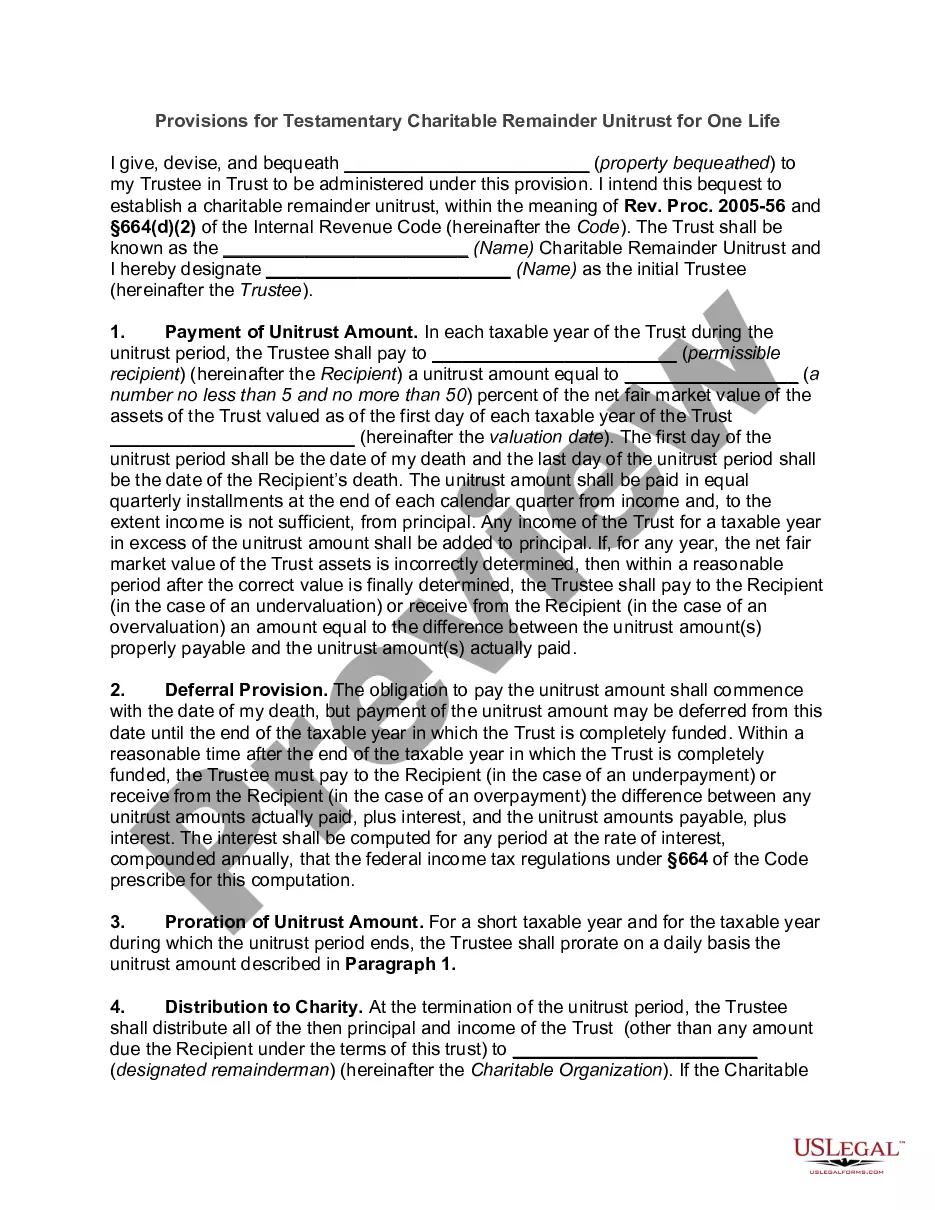
Get your form ready online
Our built-in tools help you complete, sign, share, and store your documents in one place.
Make edits, fill in missing information, and update formatting in US Legal Forms—just like you would in MS Word.
Download a copy, print it, send it by email, or mail it via USPS—whatever works best for your next step.
Sign and collect signatures with our SignNow integration. Send to multiple recipients, set reminders, and more. Go Premium to unlock E-Sign.
If this form requires notarization, complete it online through a secure video call—no need to meet a notary in person or wait for an appointment.
We protect your documents and personal data by following strict security and privacy standards.

Make edits, fill in missing information, and update formatting in US Legal Forms—just like you would in MS Word.

Download a copy, print it, send it by email, or mail it via USPS—whatever works best for your next step.

Sign and collect signatures with our SignNow integration. Send to multiple recipients, set reminders, and more. Go Premium to unlock E-Sign.

If this form requires notarization, complete it online through a secure video call—no need to meet a notary in person or wait for an appointment.

We protect your documents and personal data by following strict security and privacy standards.
Looking for another form?




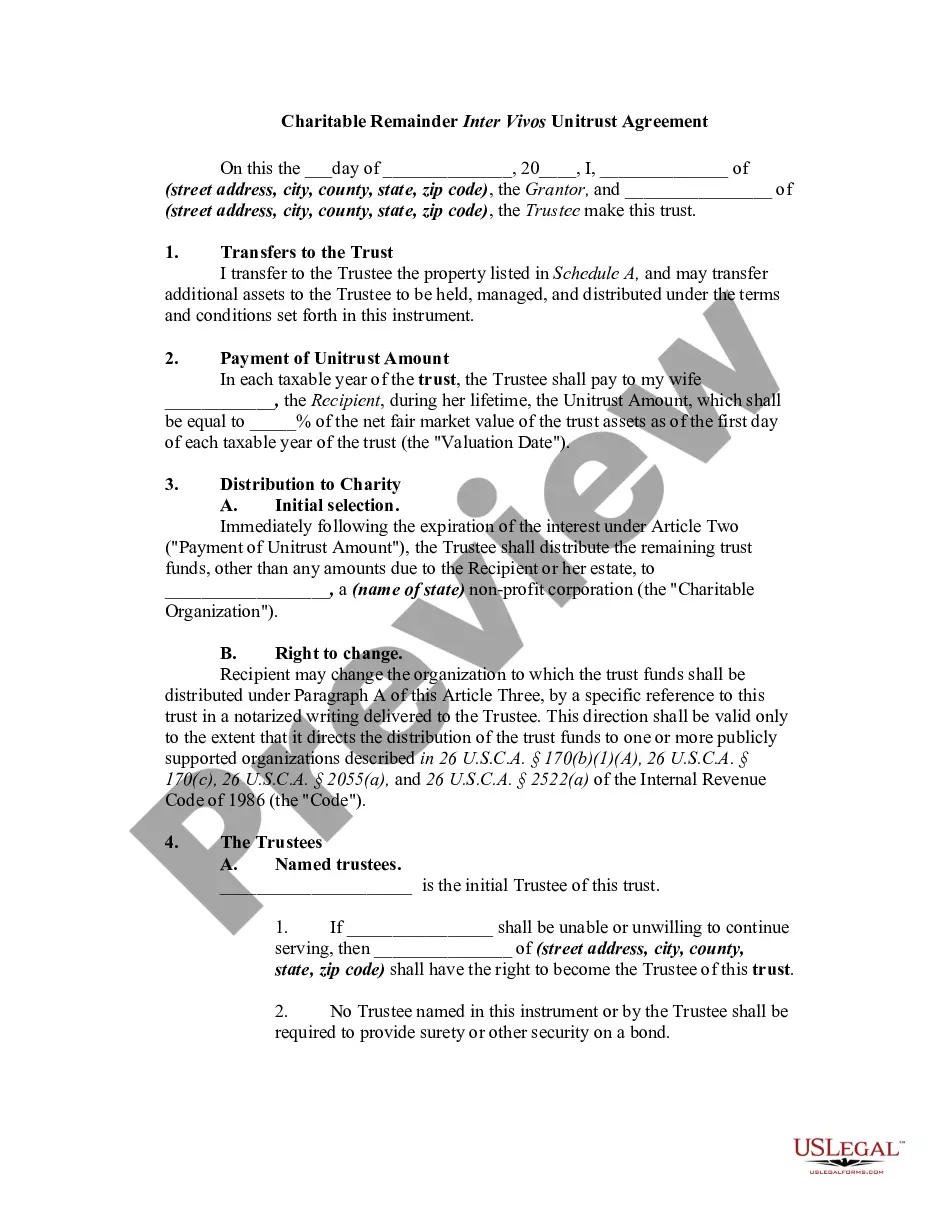
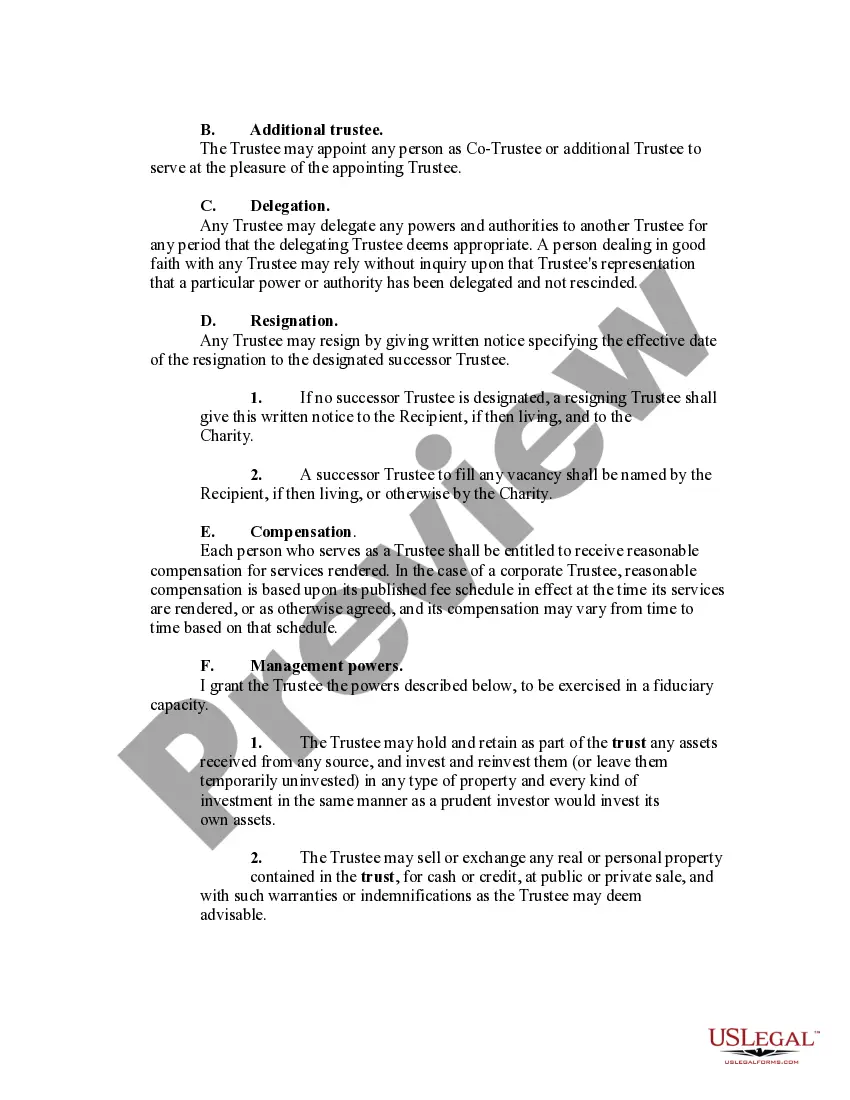
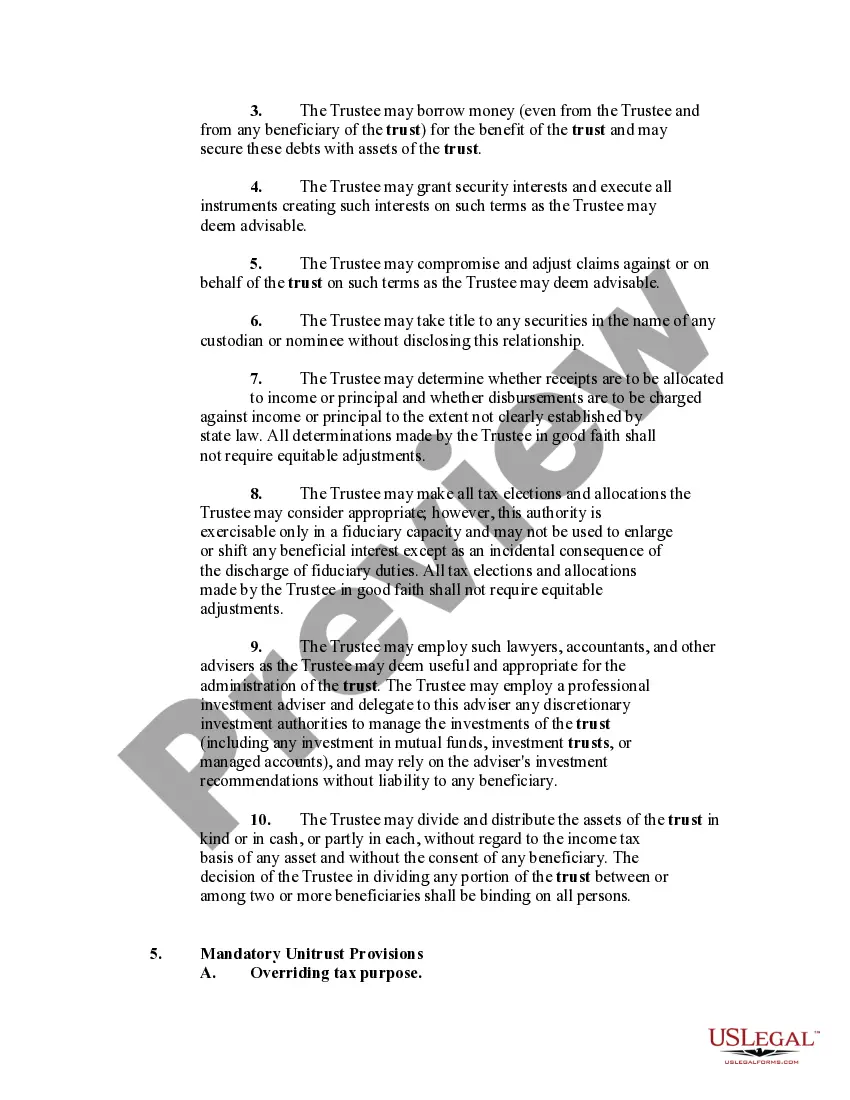
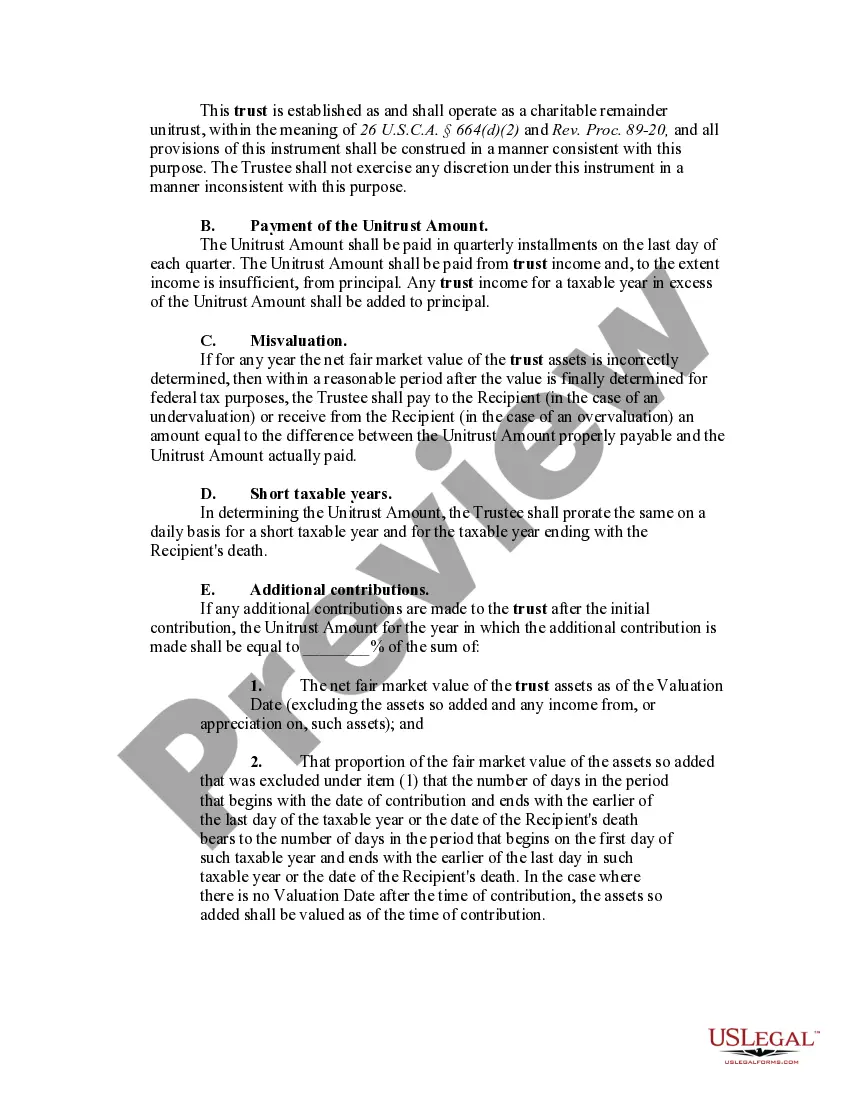
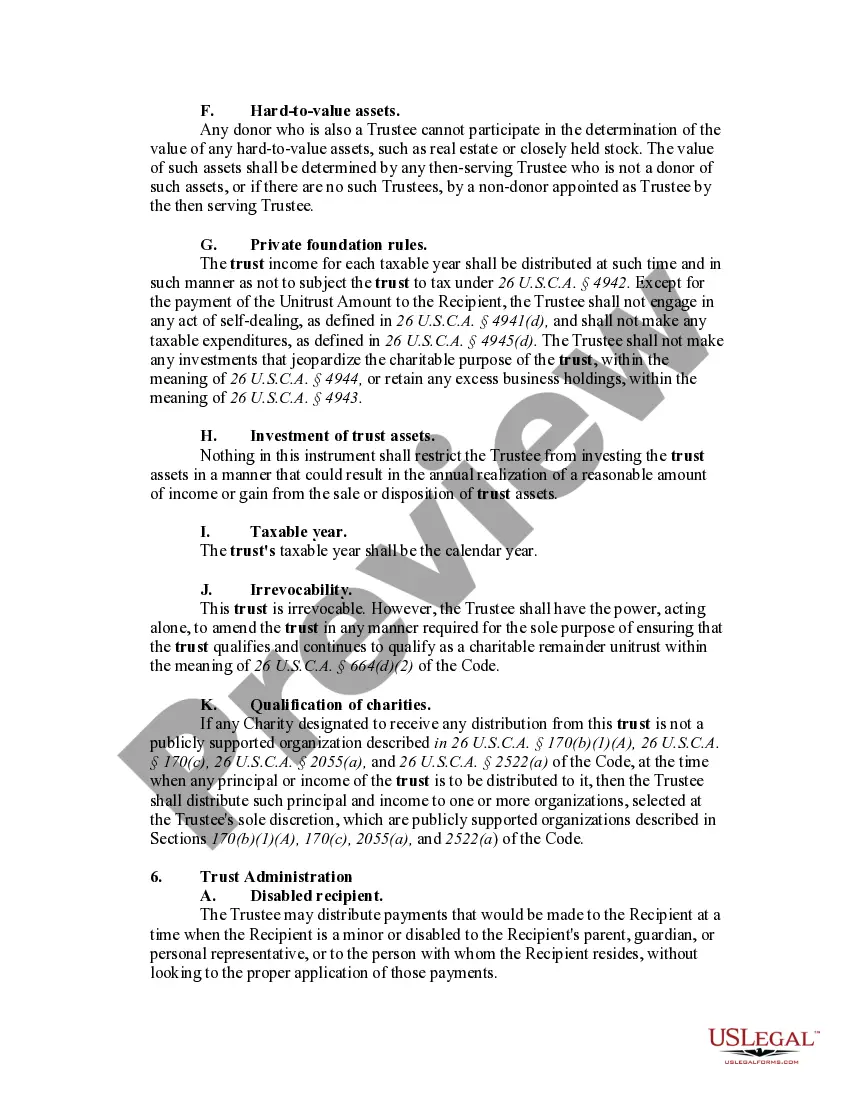
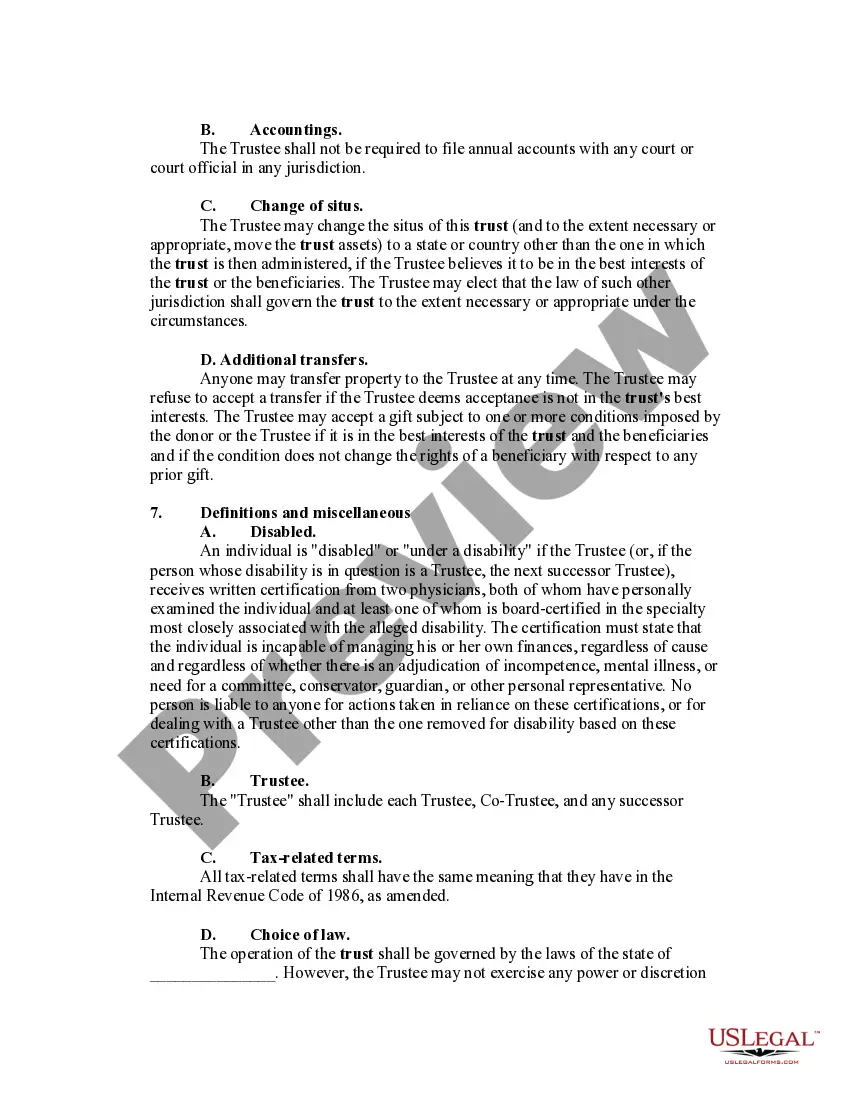
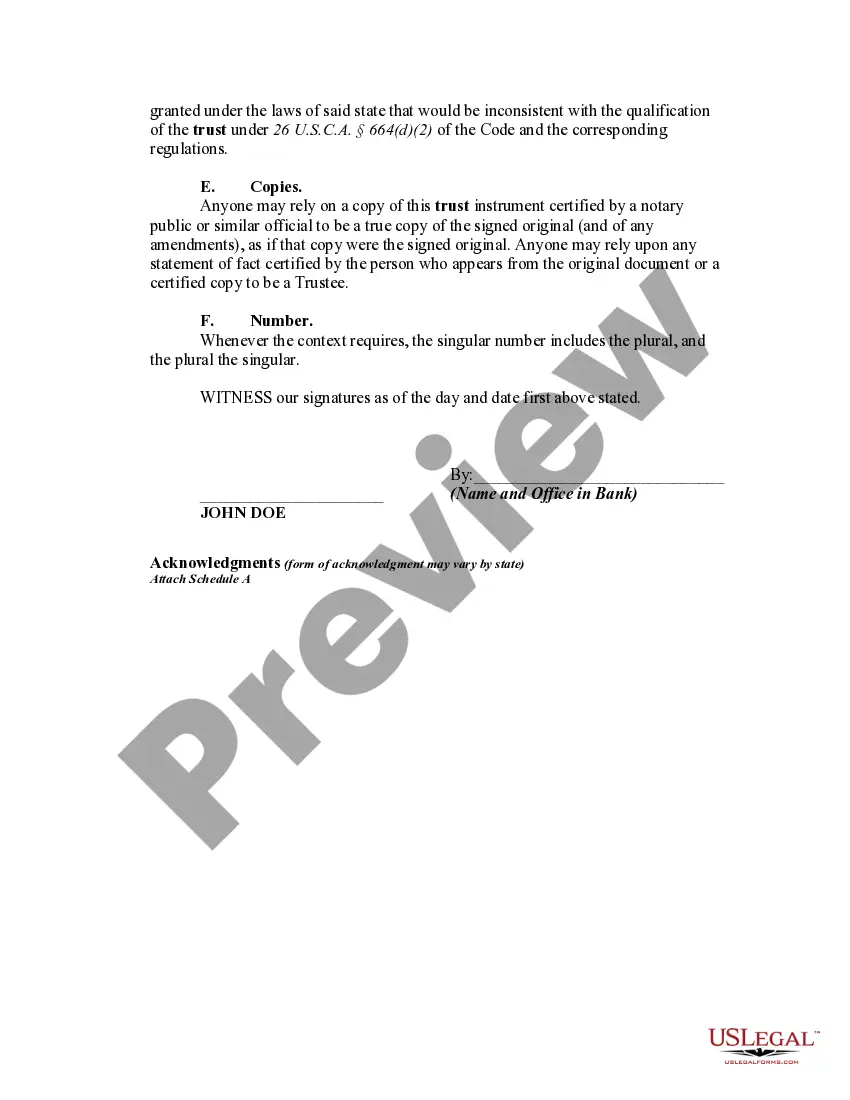
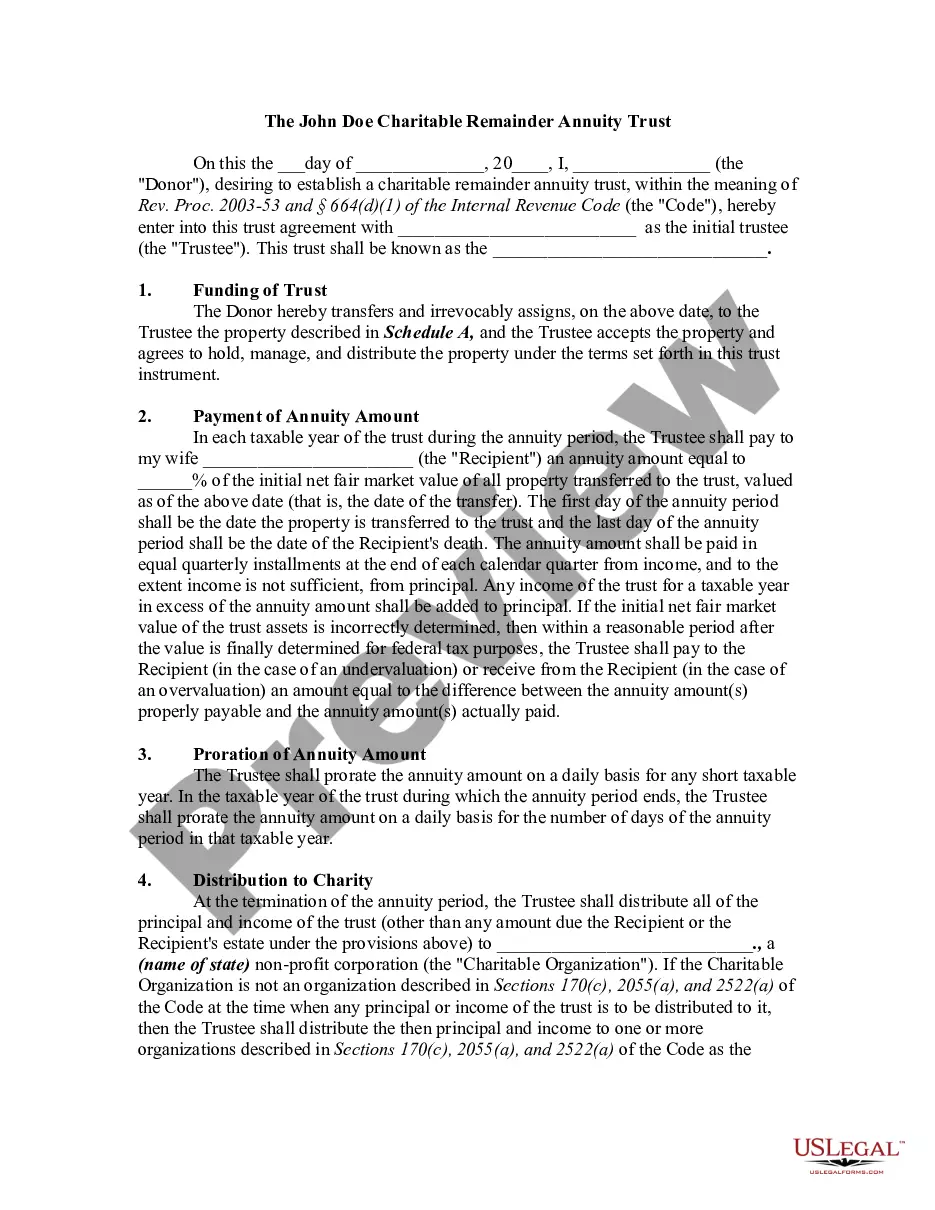
How to fill out Charitable Remainder Inter Vivos Unitrust Agreement?
- If you're an existing user, log into your account and select the desired template to download. Ensure your subscription is current and renew if necessary.
- For first-time users, begin by browsing the Preview mode to review the form descriptions. Confirm you select a template that suits your requirements and adheres to local regulations.
- Should you need a different document, use the Search tab to find additional templates. Once you identify the right one, proceed to the next step.
- Purchase your chosen document by clicking the Buy Now button. Select a subscription plan that works best for you, and create an account for full access.
- Finalize your transaction by entering your credit card information or opting to pay via PayPal.
- Download the completed form to your device, making it easy to fill out. You’ll also find it anytime in the My Forms section of your account.
By leveraging US Legal Forms, you can easily navigate the intricacies of creating a charitable remainder trust from real estate. Their extensive library and user-friendly interface are designed to assist you at every stage.
Don't miss the opportunity to manage your real estate assets effectively while contributing to charitable causes. Start your journey with US Legal Forms today!
Form popularity
FAQ
Yes, a trust fund can own real estate, including properties held within a charitable remainder trust for real estate. This setup allows the trust to manage and maintain the property while providing income to beneficiaries. Moreover, when structured correctly, it can offer significant tax benefits for both the grantor and the charitable organization involved. Exploring this aspect further can help optimize your estate planning and financial goals.
When considering a charitable remainder trust for real estate, it's essential to identify the benefits accurately. While many advantages exist, such as tax deductions and income streams, not every expectation might hold true. For example, a common misconception is that these trusts offer complete immunity from taxation on all income generated, which is not the case. Clarifying these details can improve your financial strategy.
To establish a charitable remainder trust for real estate, you must adhere to specific requirements. The trust needs to have a clear instrument that outlines its terms, naming both the charitable and non-charitable beneficiaries. Additionally, the trust must comply with IRS regulations to ensure that the tax benefits apply correctly. Understanding these requirements can guide you towards effectively utilizing a charitable remainder trust for real estate.
A trust can invest in real estate, and a charitable remainder trust for real estate is no exception. This type of trust provides a structured way to own property, ensuring that it generates income for beneficiaries and fulfills charitable goals. It is vital to understand the law surrounding trusts and real estate to maximize benefits. Using resources like UsLegalForms can simplify the process and enhance your understanding.
You can indeed put a house in a charitable remainder trust for real estate. This process allows you to retain an income stream from the property while donating the remainder to a charity after your passing. This arrangement can provide significant tax advantages for you and financial support for your chosen cause. Setting this up properly is crucial, so consider working with UsLegalForms for expert guidance.
Yes, a charitable foundation can own real estate, and it may even benefit from a charitable remainder trust for real estate. Owning property allows a foundation to generate revenue through rental income while also supporting its charitable mission. However, it is essential for foundations to manage real estate according to IRS regulations to maintain their tax-exempt status. Engaging with platforms like UsLegalForms can help ensure compliance.
Yes, a charitable remainder trust for real estate can invest, offering flexibility in how assets generate income. The trust can hold various investments, including stocks, bonds, and real property. However, the primary focus should always be on maximizing the return for charitable purposes. It's wise to consult with a financial advisor to tailor investments that meet both your goals and those of the charity.
Yes, a charitable trust can invest in real estate as part of its asset strategy. This investment helps support the trust's income-generating activities, which ultimately benefit the charitable cause. Choosing suitable real estate investments can enhance the yield and ensure that your charitable intentions are fulfilled.
To file a charitable remainder trust, you typically need to prepare and submit IRS Form 5227 along with other relevant documentation. The detailed process can vary based on your specific situation, so using a reliable platform like US Legal Forms can simplify the paperwork. This resource can guide you through the necessary steps to ensure compliance and accuracy.
Charitable donations made through a charitable remainder trust are generally excluded from estate tax. This exclusion can provide a significant financial advantage to your estate. By donating through a trust, you further ensure that your charitable intentions are fulfilled while reducing your tax burden.