Charitable Remainder Trust For Dummies
Description
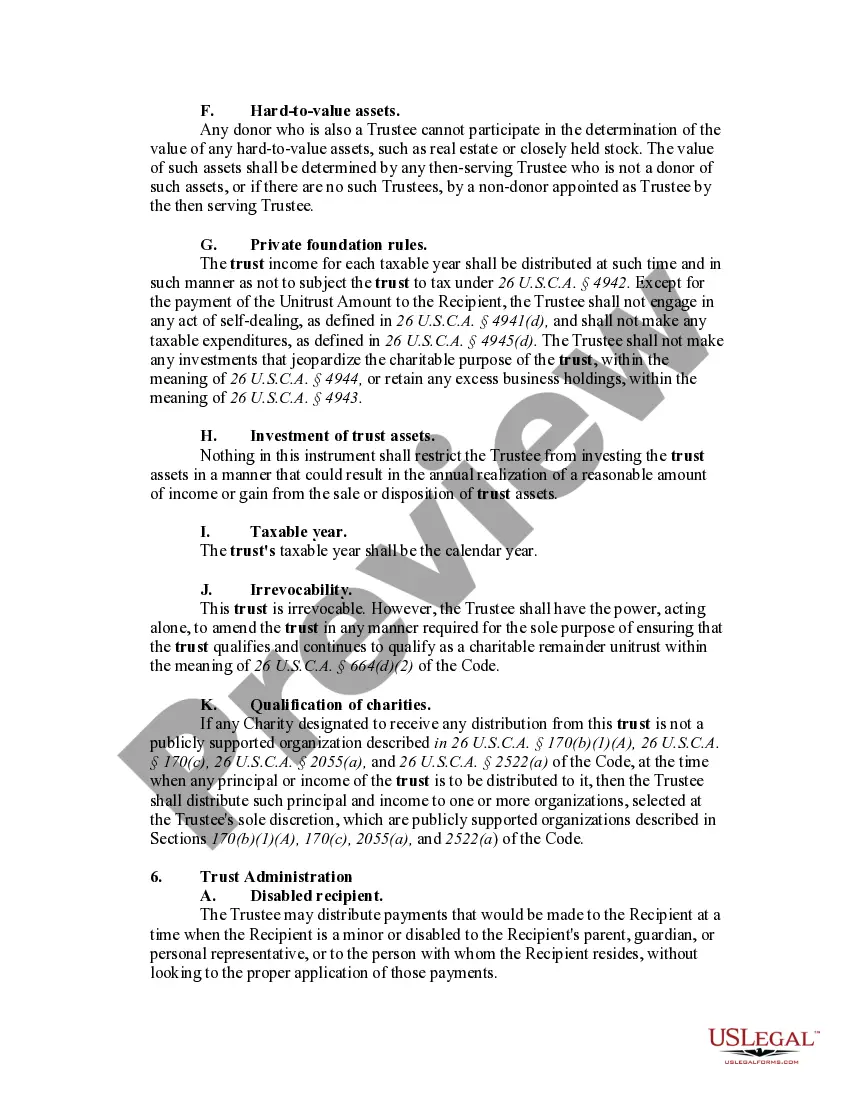
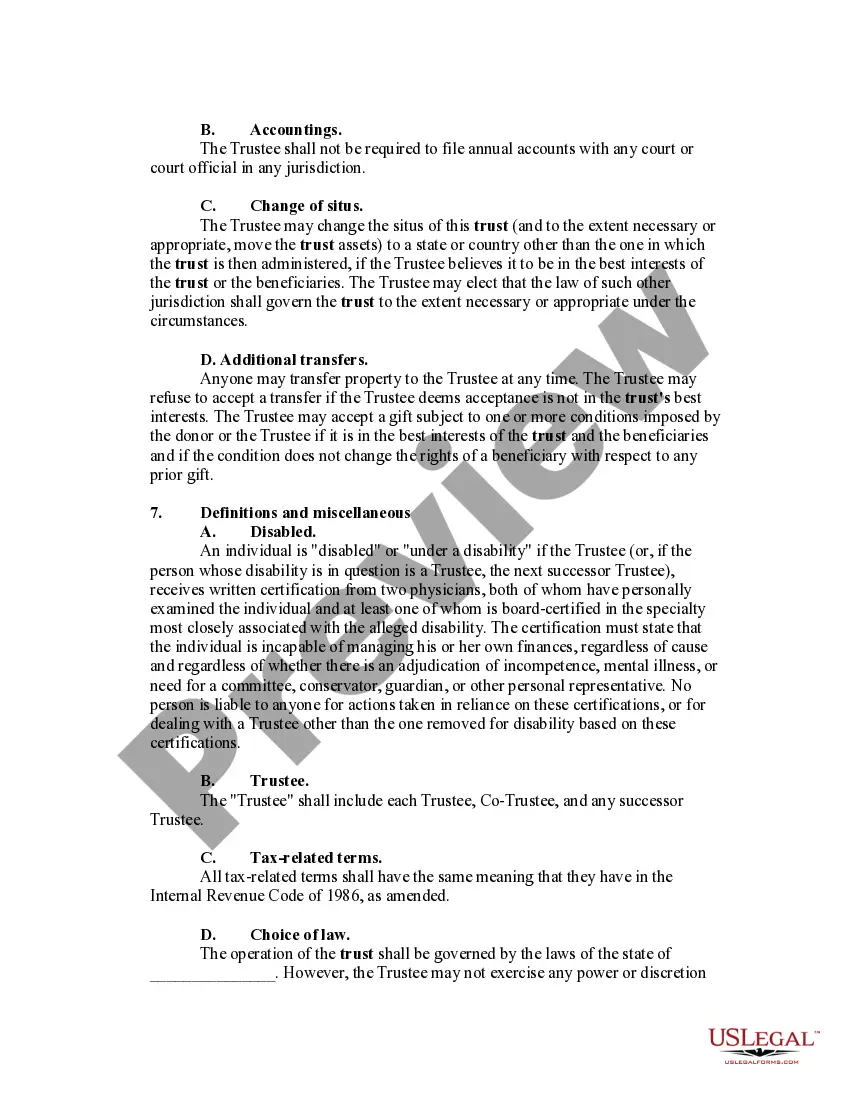
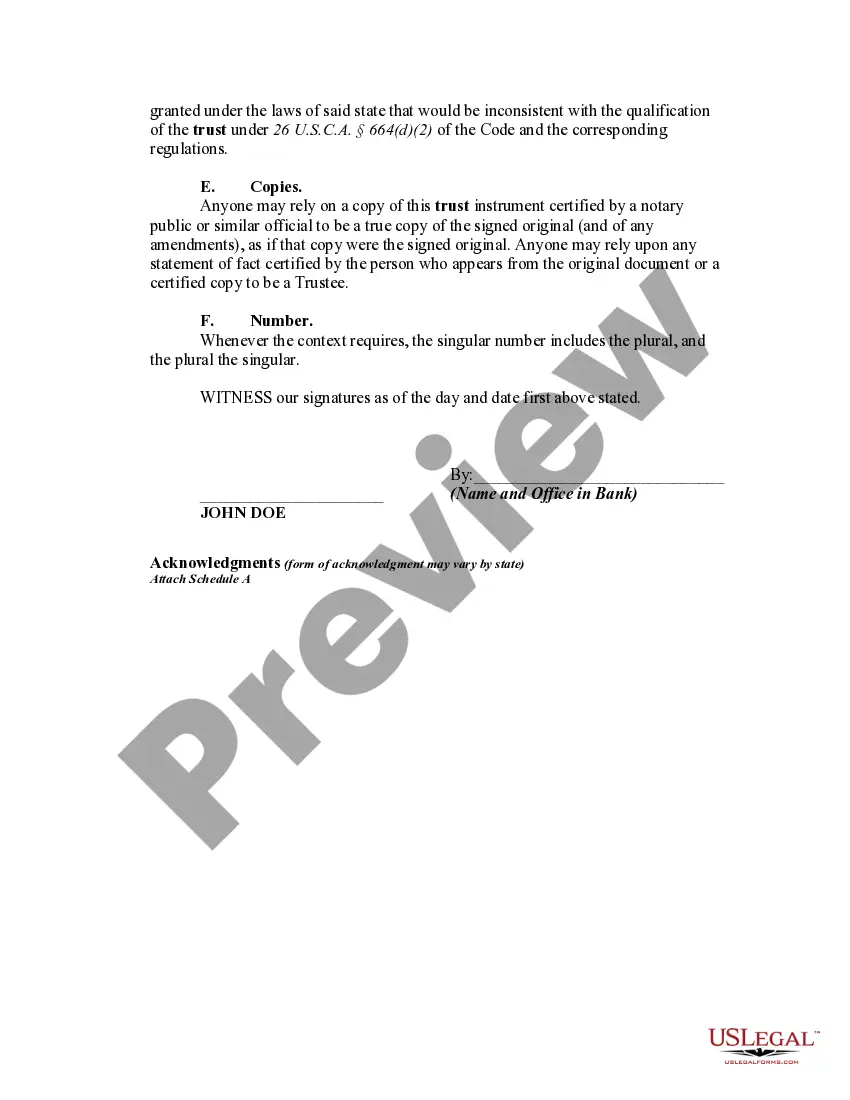
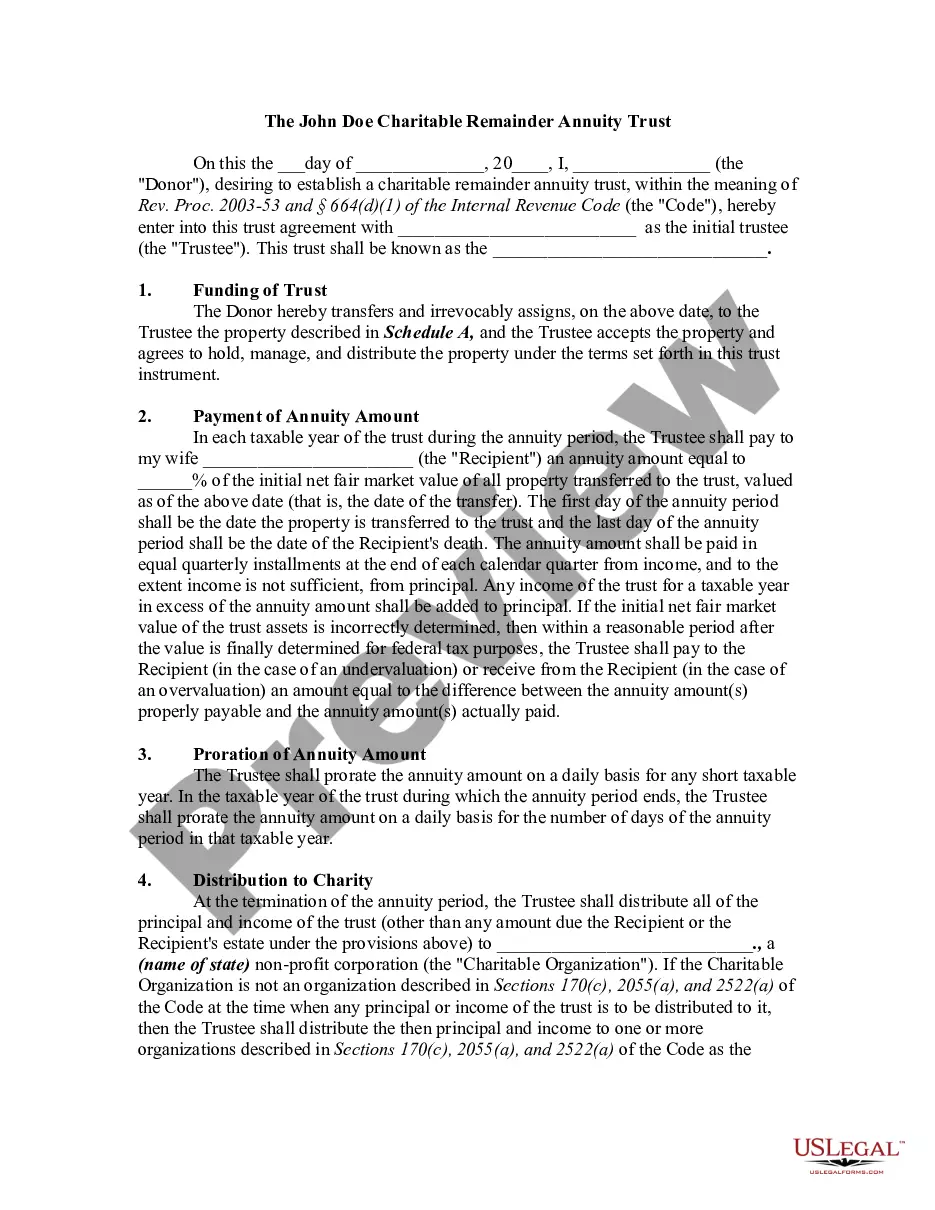
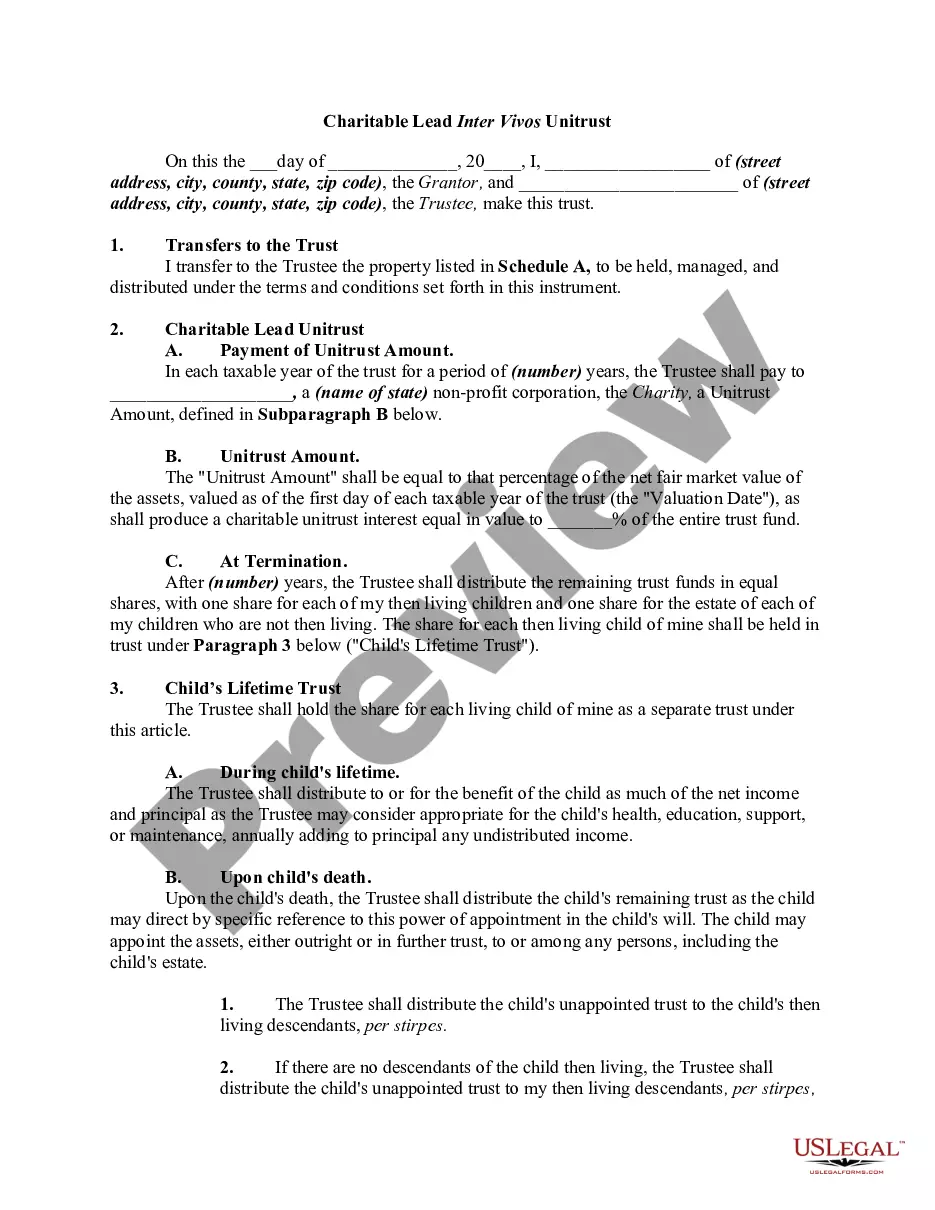
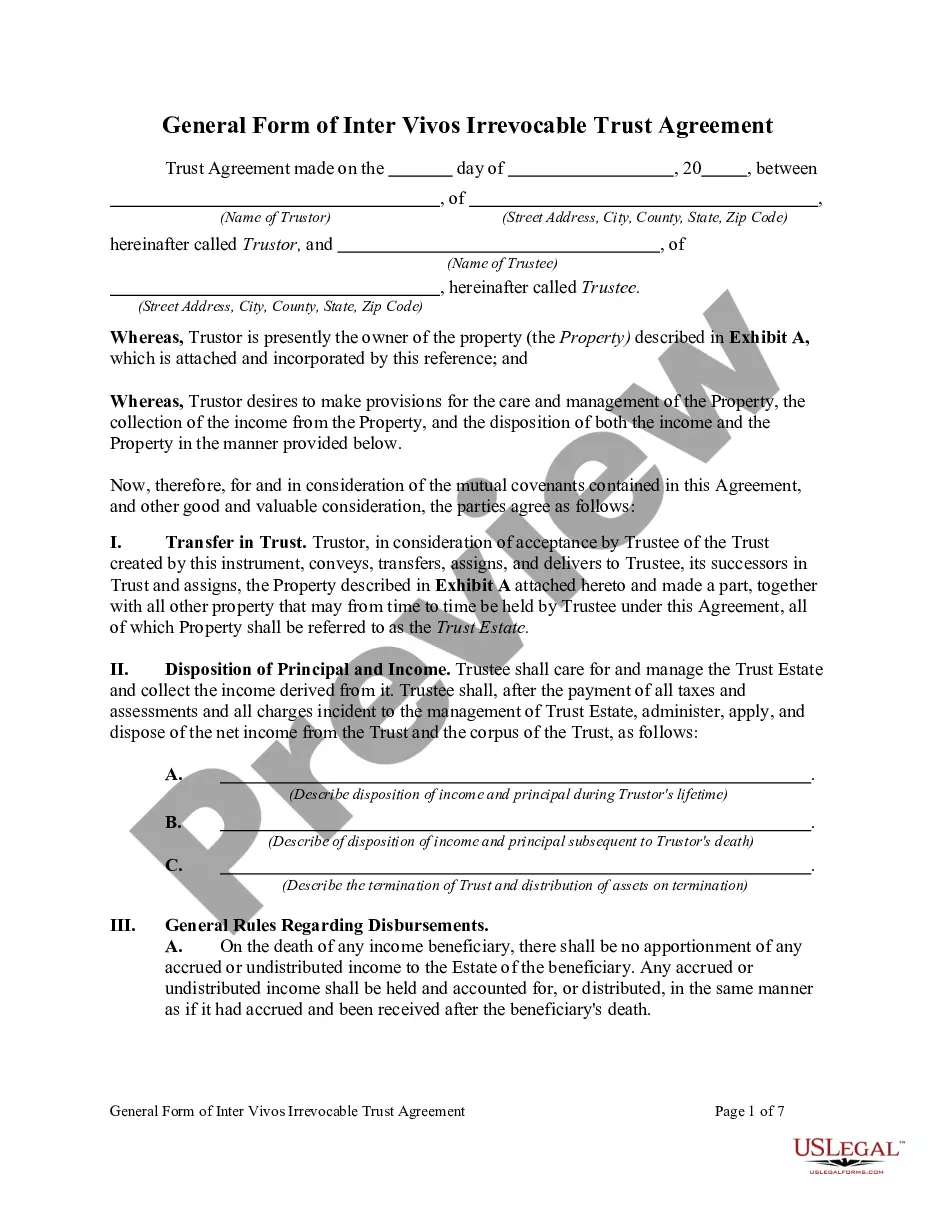
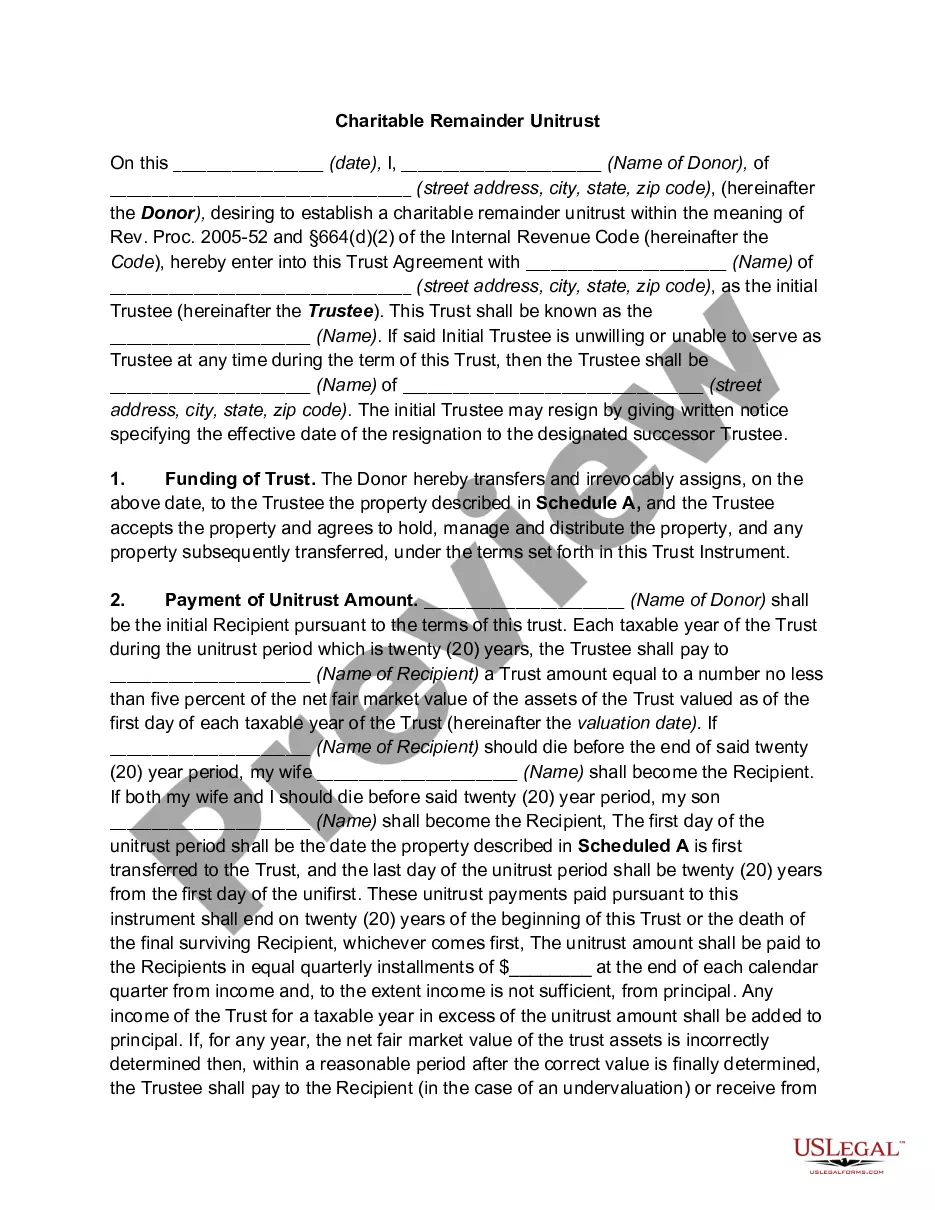
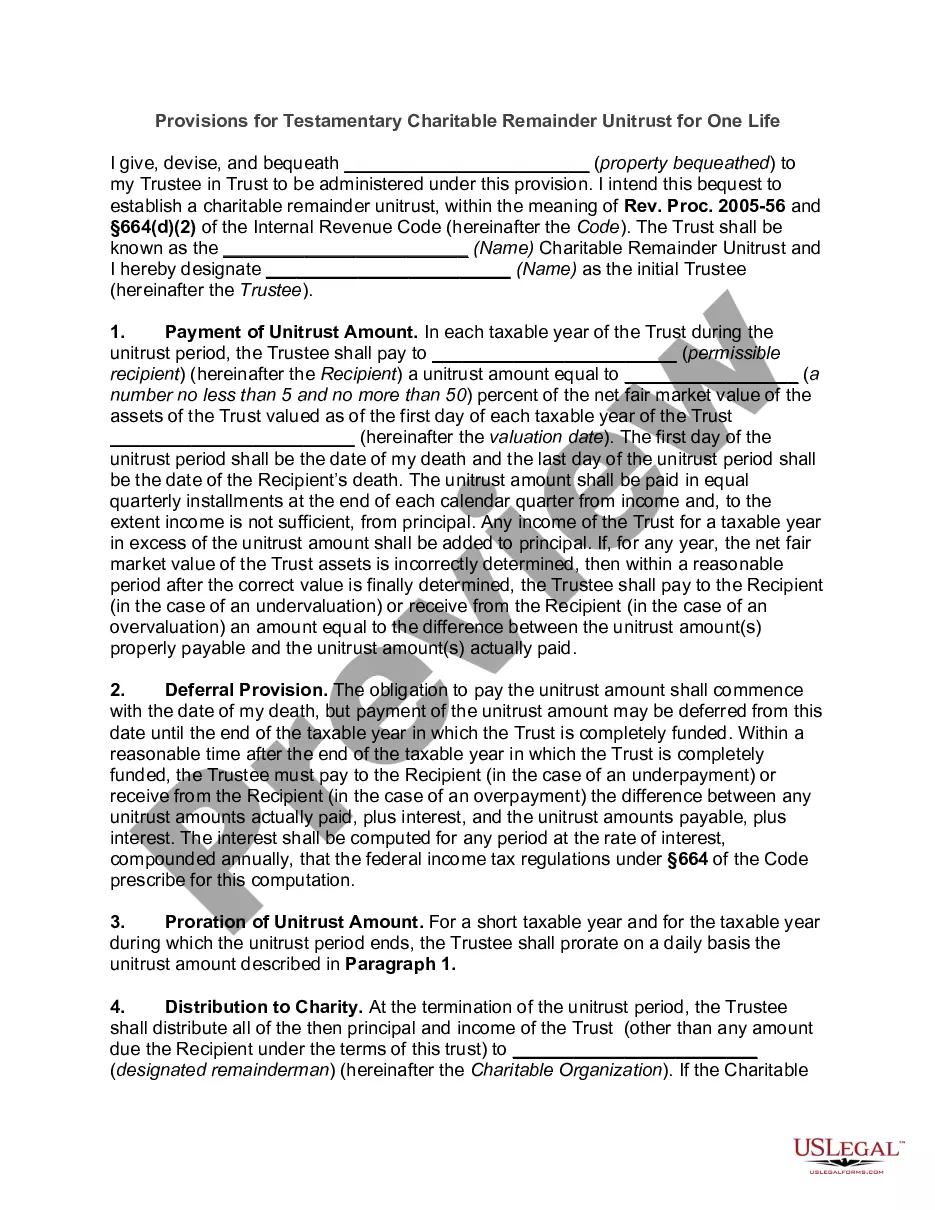
Get your form ready online
Our built-in tools help you complete, sign, share, and store your documents in one place.
Make edits, fill in missing information, and update formatting in US Legal Forms—just like you would in MS Word.
Download a copy, print it, send it by email, or mail it via USPS—whatever works best for your next step.
Sign and collect signatures with our SignNow integration. Send to multiple recipients, set reminders, and more. Go Premium to unlock E-Sign.
If this form requires notarization, complete it online through a secure video call—no need to meet a notary in person or wait for an appointment.
We protect your documents and personal data by following strict security and privacy standards.

Make edits, fill in missing information, and update formatting in US Legal Forms—just like you would in MS Word.

Download a copy, print it, send it by email, or mail it via USPS—whatever works best for your next step.

Sign and collect signatures with our SignNow integration. Send to multiple recipients, set reminders, and more. Go Premium to unlock E-Sign.

If this form requires notarization, complete it online through a secure video call—no need to meet a notary in person or wait for an appointment.

We protect your documents and personal data by following strict security and privacy standards.
Looking for another form?






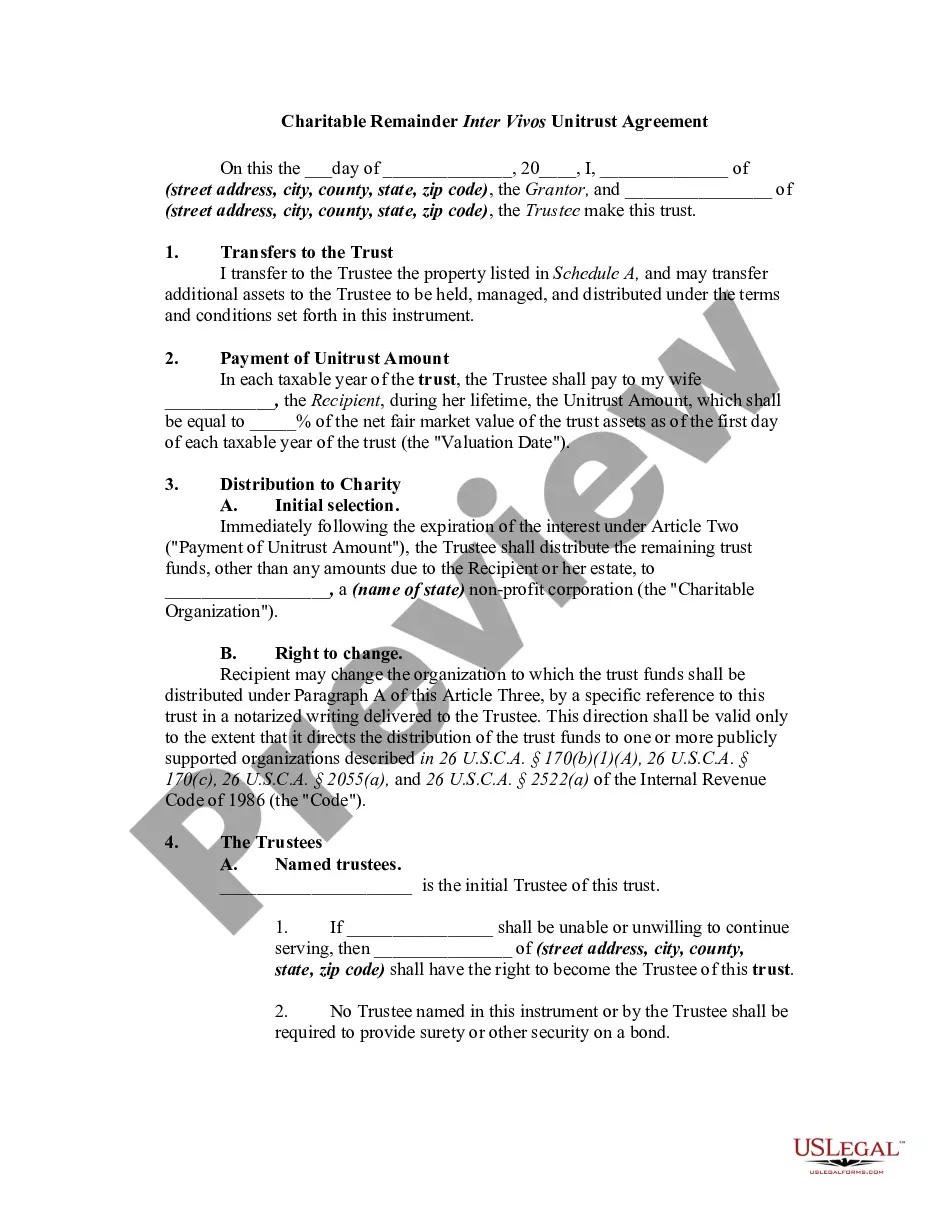
How to fill out Charitable Remainder Inter Vivos Unitrust Agreement?
Utilizing legal templates that align with federal and state regulations is essential, and the internet provides numerous alternatives to choose from.
However, why spend time searching for the appropriate Charitable Remainder Trust For Dummies sample online when the US Legal Forms online repository already gathers such templates in one location.
US Legal Forms is the largest online legal database with more than 85,000 fillable templates created by attorneys for every professional and personal circumstance.
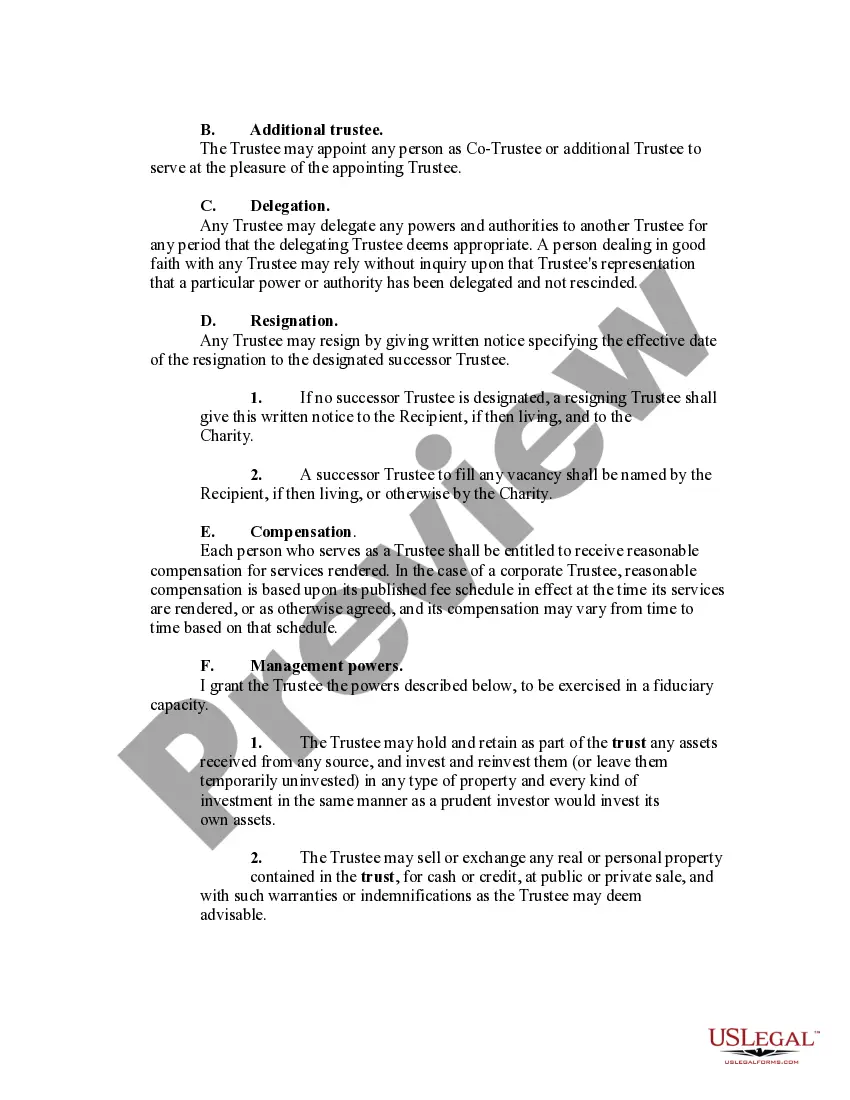
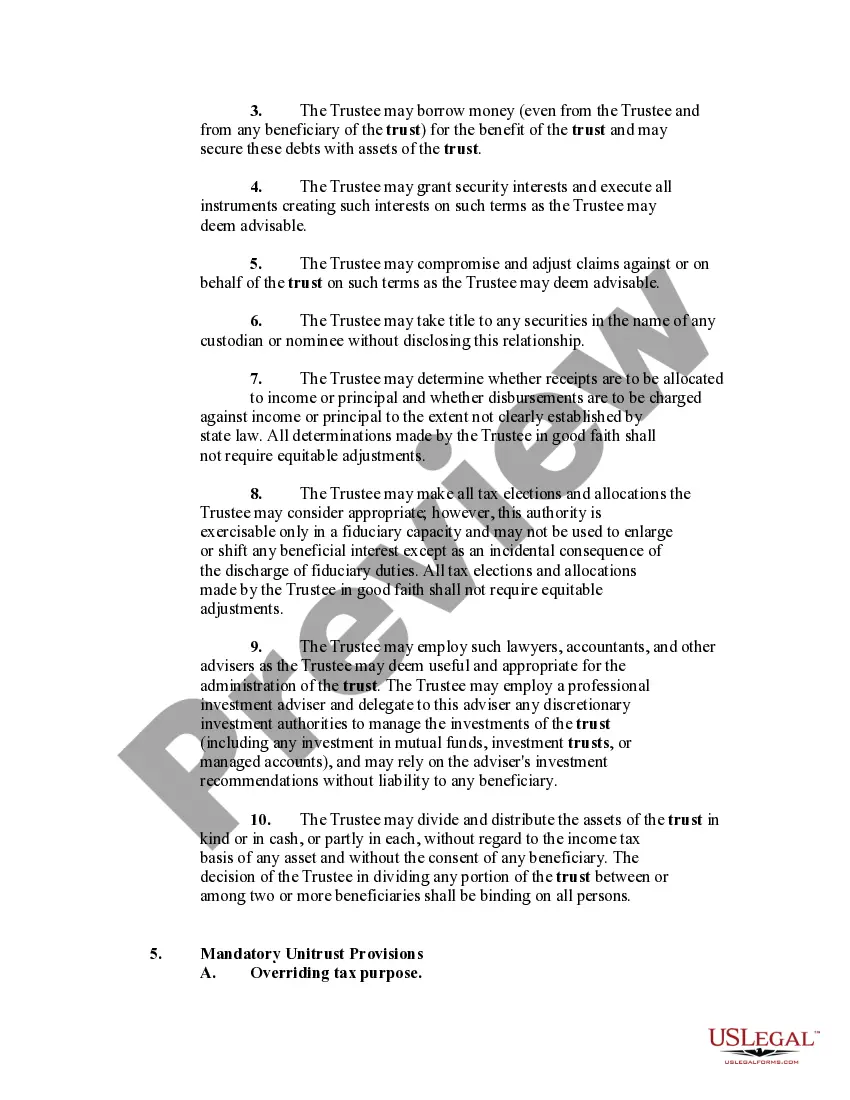
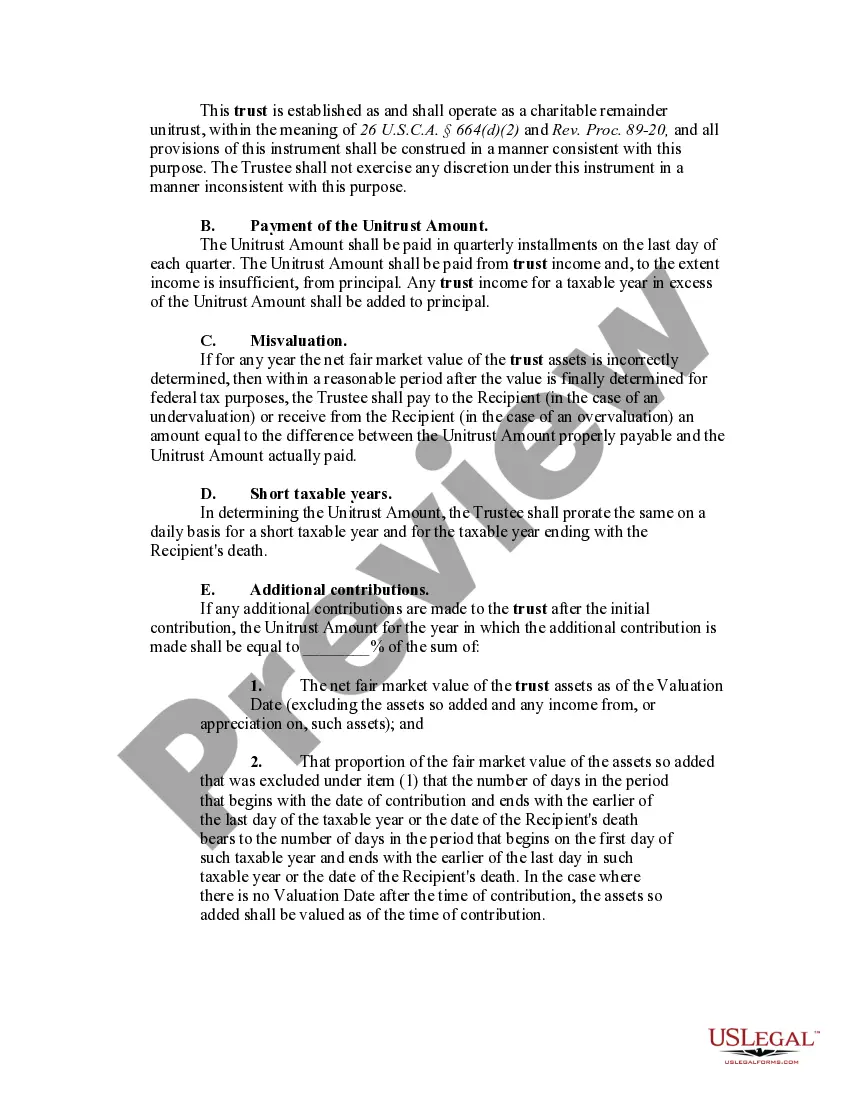
Review the template using the Preview option or through the text structure to ensure it satisfies your requirements.
- They are easy to navigate with all documents categorized by state and intended usage.
- Our experts keep abreast of legal changes, ensuring that your documents are consistently current and compliant when obtaining a Charitable Remainder Trust For Dummies from our platform.
- Obtaining a Charitable Remainder Trust For Dummies is simple and fast for both existing and new users.
- If you possess an account with an active subscription, Log In and download the required document sample in the appropriate format.
- If you’re visiting our site for the first time, follow the steps outlined below.
Form popularity
FAQ
A charitable remainder trust is a financial arrangement that allows you to donate assets while receiving income from them for a set time. As you explore this trust, remember that it can help you manage taxes while giving back to causes that matter to you. In simple terms, a charitable remainder trust lets you support charity and earn income, making it a win-win solution. For a deeper understanding, platforms like USLegalForms can guide you through the setup process seamlessly.
Charitable remainder trusts can be a smart choice for individuals looking to combine philanthropy with financial planning. By establishing a charitable remainder trust, you can donate assets, receive a potential tax deduction, and retain income for a specified period. This arrangement allows you to support your favorite charities while enjoying financial benefits. Thus, a charitable remainder trust for dummies can serve as a valuable tool in your charitable and financial journey.
A charitable remainder annuity trust is a type of charitable remainder trust that pays a fixed annuity to the grantor or beneficiaries for a specified term. This amount is set at the trust's creation and does not change, providing steady income over time. This structure appeals to individuals seeking predictable returns while supporting charitable causes. Learning about different trust types can empower you to make informed decisions about charitable remainder trusts for dummies.
The 5% rule for a charitable remainder trust refers to the income distribution rate, stating that a trust must provide a minimum annual payout of 5% of the trust's assets based on its fair market value. This rule helps ensure that the trust benefits both the grantor and the designated charities. Recognizing this requirement helps you manage payouts and ensure compliance effectively. For those familiarizing themselves with the concept, this is a vital aspect of understanding a charitable remainder trust for dummies.
To create a charitable remainder trust, you start by drafting a trust document with the help of a qualified attorney. This document outlines the specifics, such as the trust's terms, beneficiaries, and distribution plans. After the document is formalized, you will fund the trust with assets you wish to contribute. Utilizing resources like USLegalForms can simplify this process and guide you with templates and necessary documentation.
A charitable remainder trust for dummies operates by allowing you to donate assets to a trust, which then provides income to you or your beneficiaries for a specified period. After that period ends, the remaining assets in the trust go to a designated charity. This structure not only helps you achieve philanthropic goals but also provides tax benefits, including potential deductions. Using platforms like US Legal Forms can simplify the trust creation process and ensure compliance with legal requirements.
In a charitable remainder trust for dummies, the income generated by the trust is generally taxable to the income recipients. This means that the individual receiving income from the trust will be responsible for the income tax on those distributions. However, the charitable organizations listed as beneficiaries are not subject to income tax. Therefore, understanding these tax implications is crucial when considering the trust's structure.
A charitable remainder trust for dummies may have some potential pitfalls that you should be aware of. One common issue is the complexity of establishing and managing the trust, which can require legal and tax expertise. Additionally, if the trust's income is not properly managed, it may lead to unexpected tax consequences or lower-than-expected returns. It's important to consult with professionals to navigate these challenges effectively.
The 5% rule ensures that a charitable remainder trust distributes at least 5% of its fair market value to beneficiaries each year. This requirement maintains the trust's compliance with IRS standards and secures its charitable tax status. Understanding this rule is key for anyone considering a charitable remainder trust for dummies. For more details, leverage the tools at US Legal Forms.
The downsides of a charitable remainder trust include reduced control over your assets once they are placed in the trust. Additionally, fees for managing the trust can add up, impacting overall returns. It is also imperative to consider the implications of the trust on future financial planning. For a clearer view on these aspects of a charitable remainder trust for dummies, check resources at US Legal Forms.