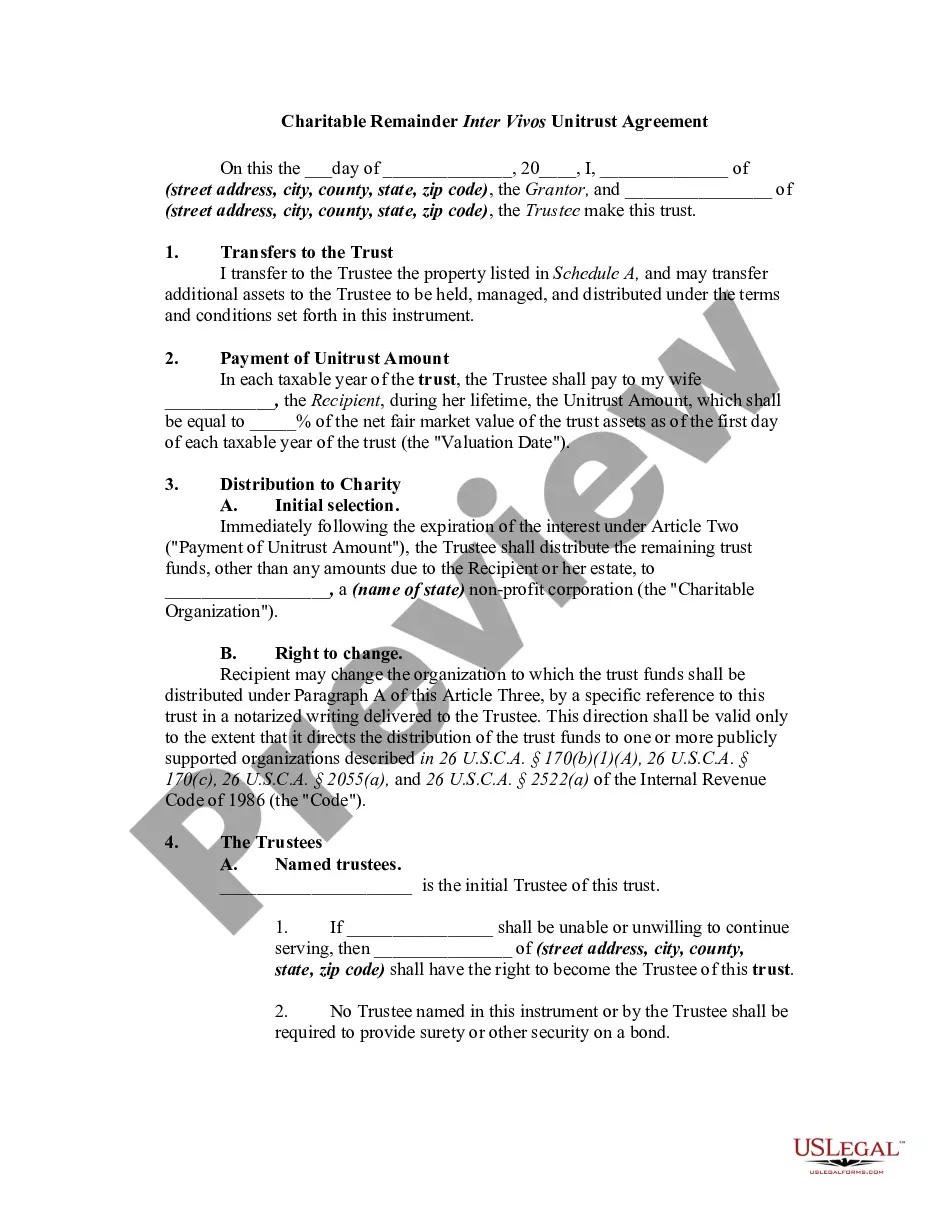
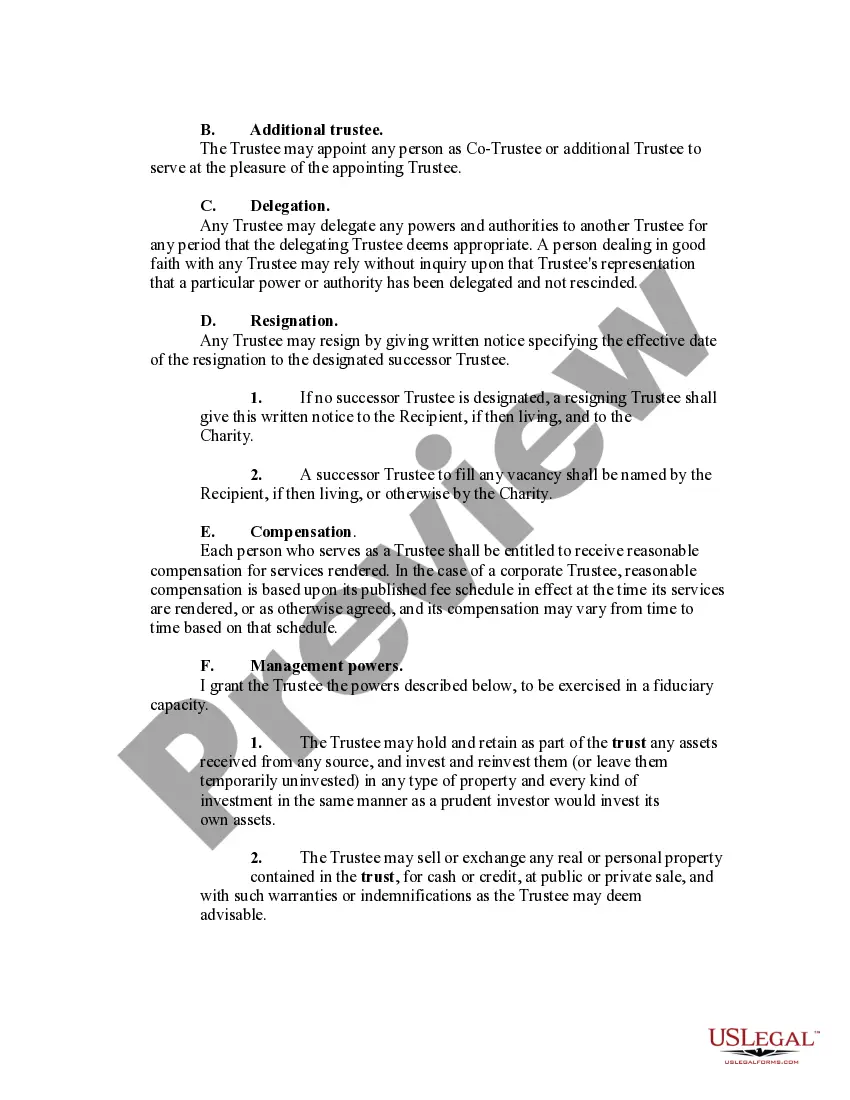
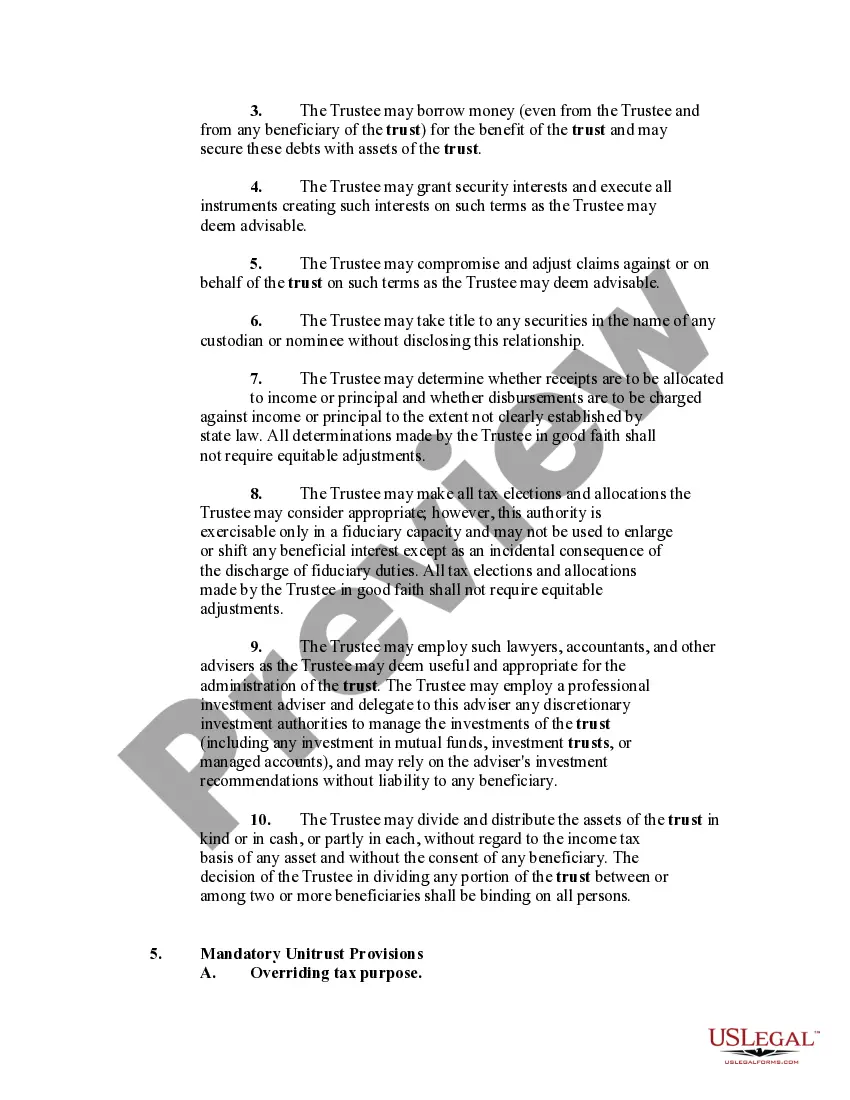
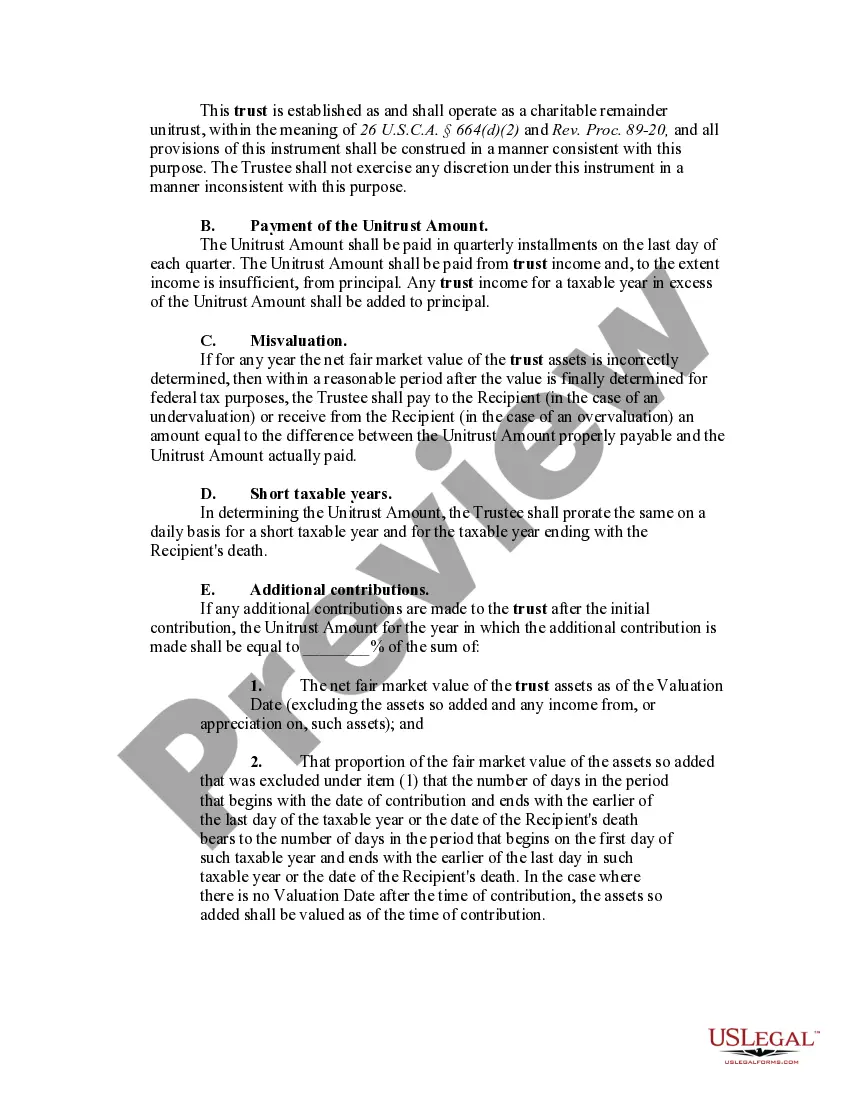
Charitable Remainder Trust Document With Life Estate
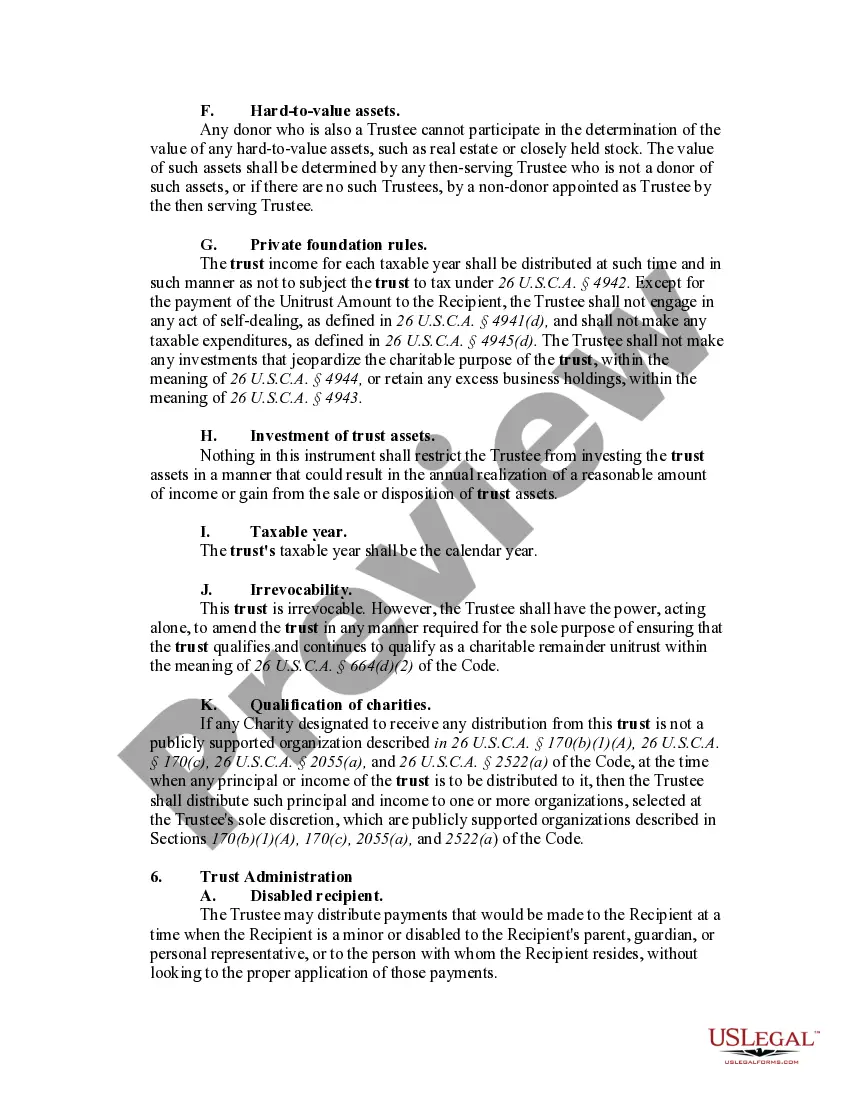
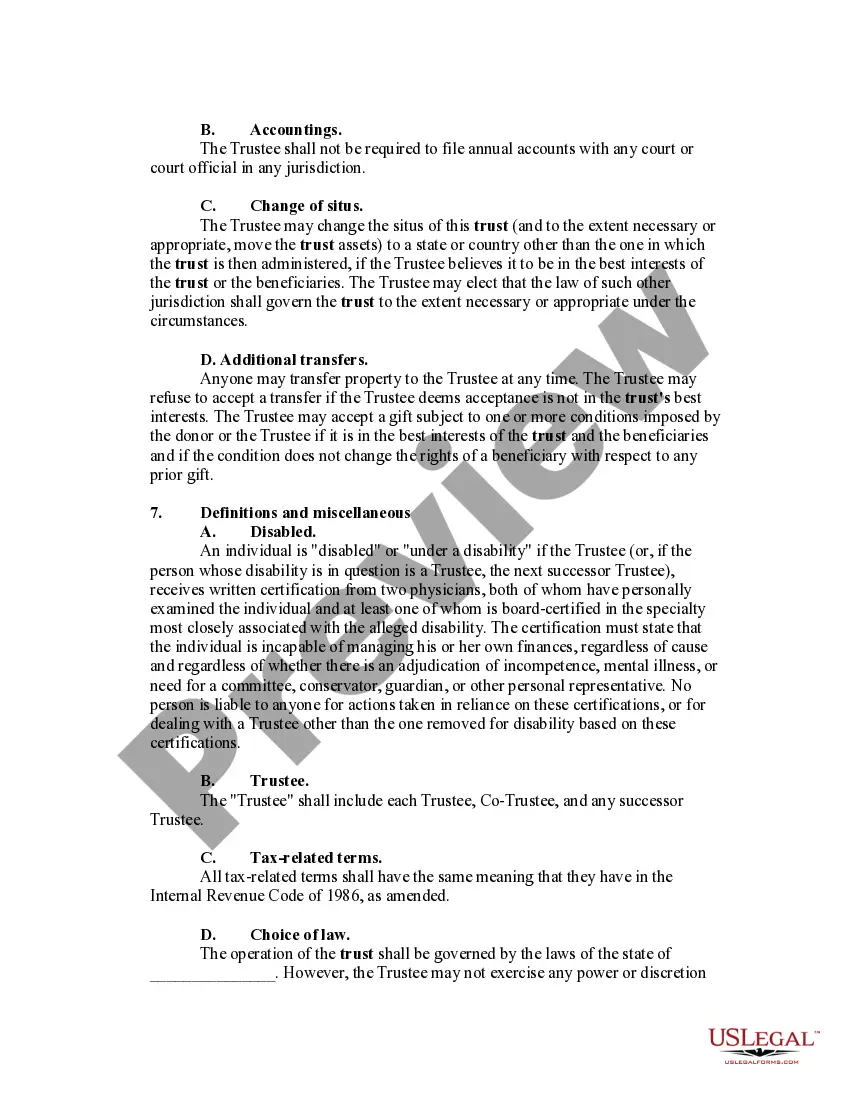
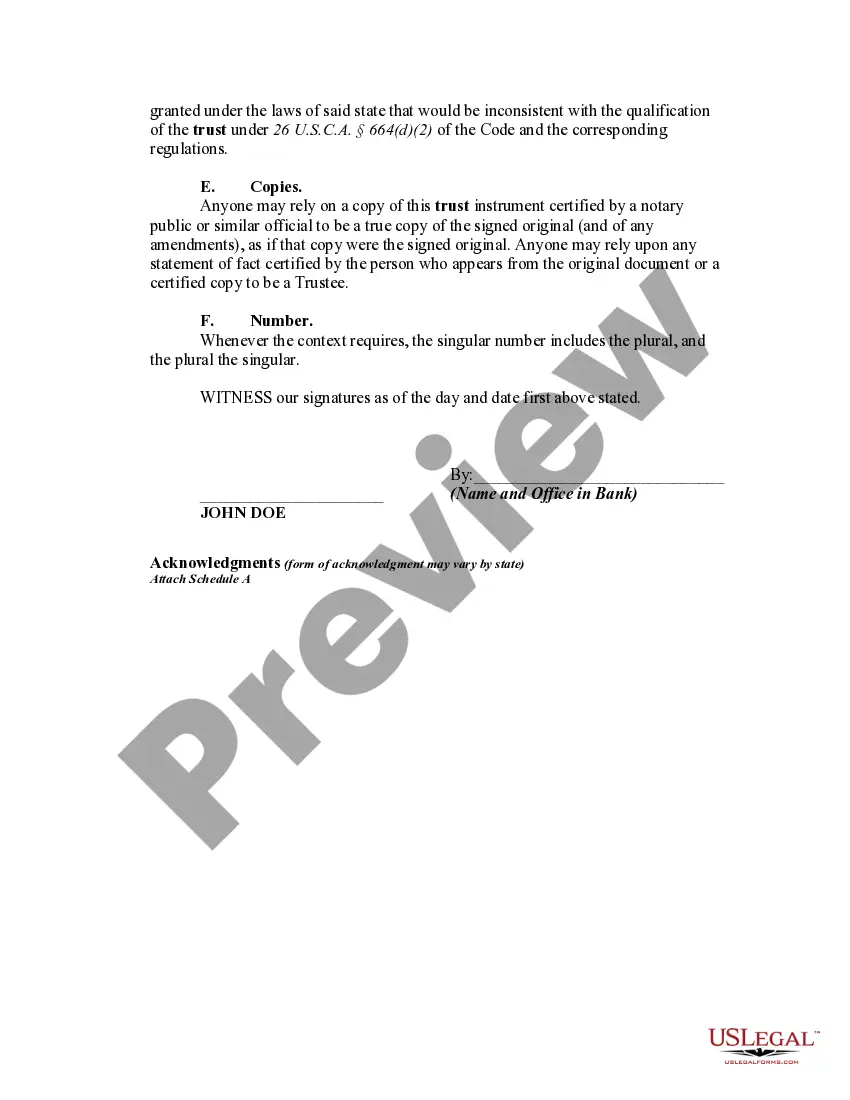
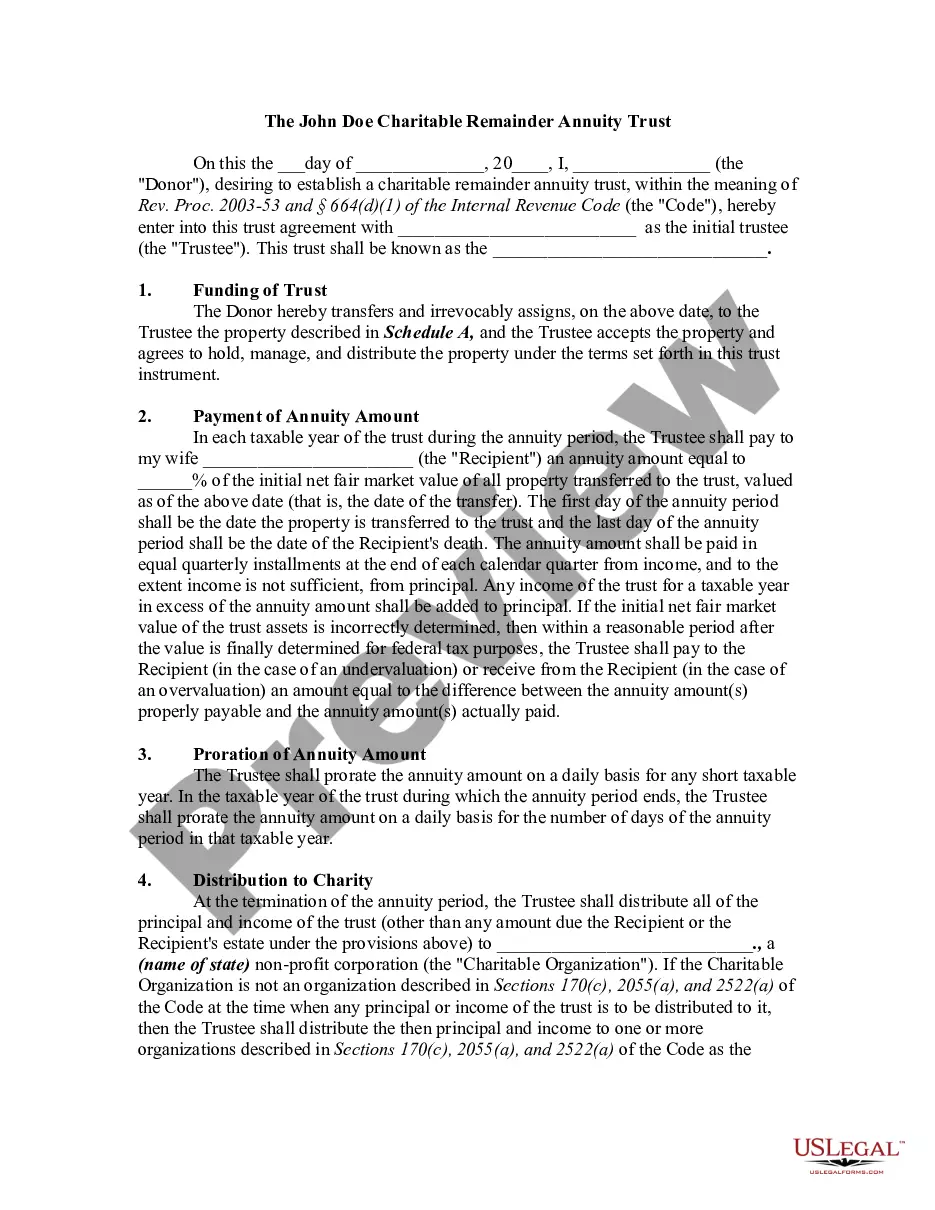
Description
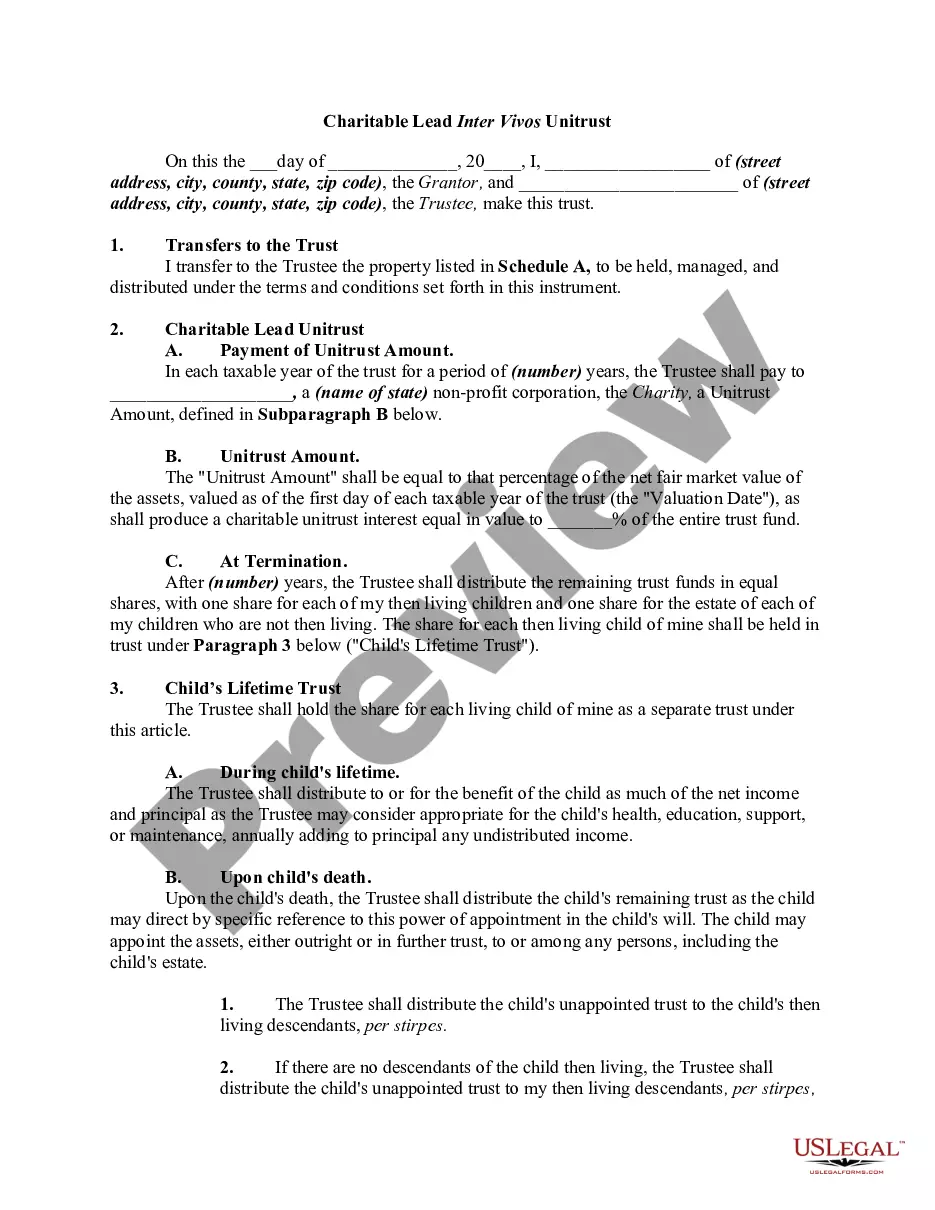
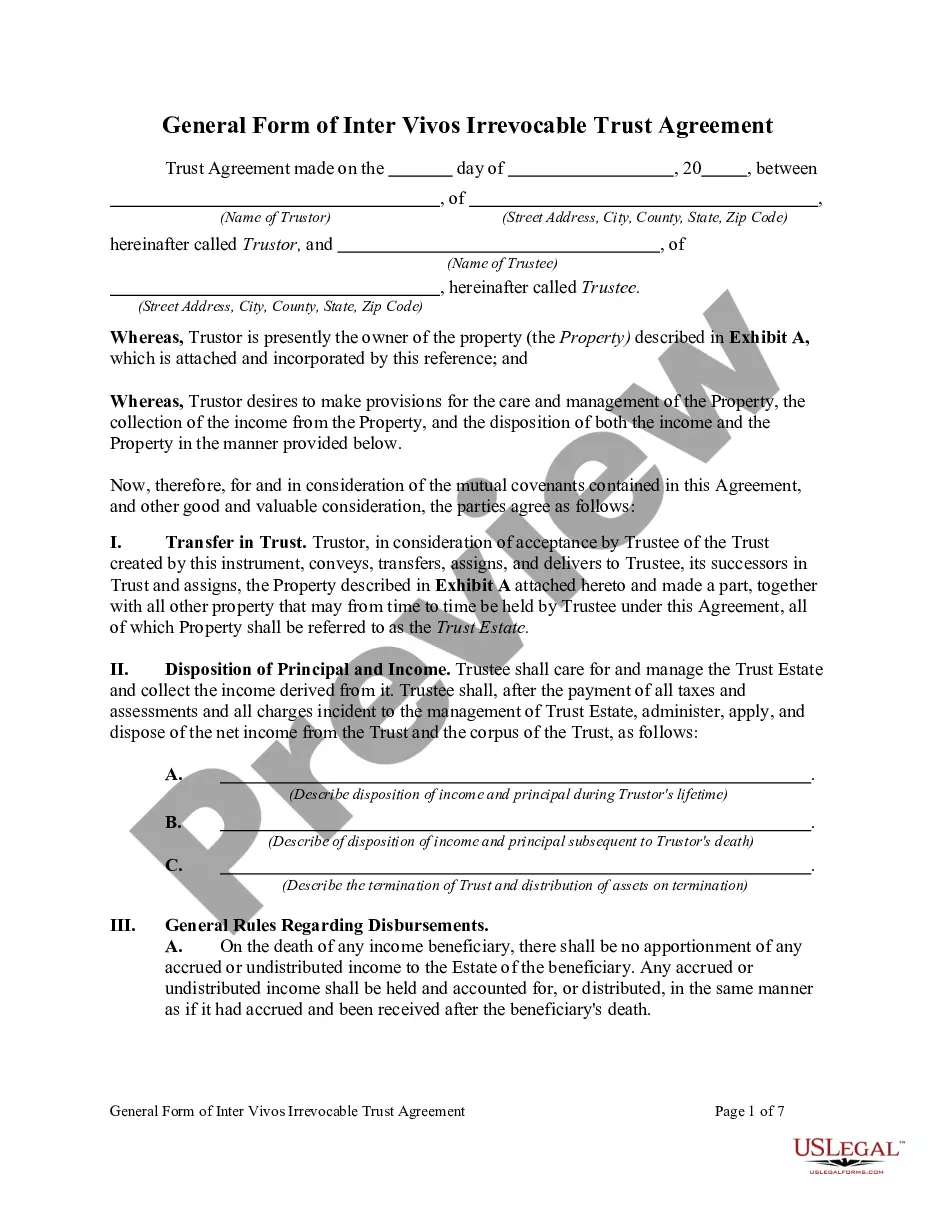
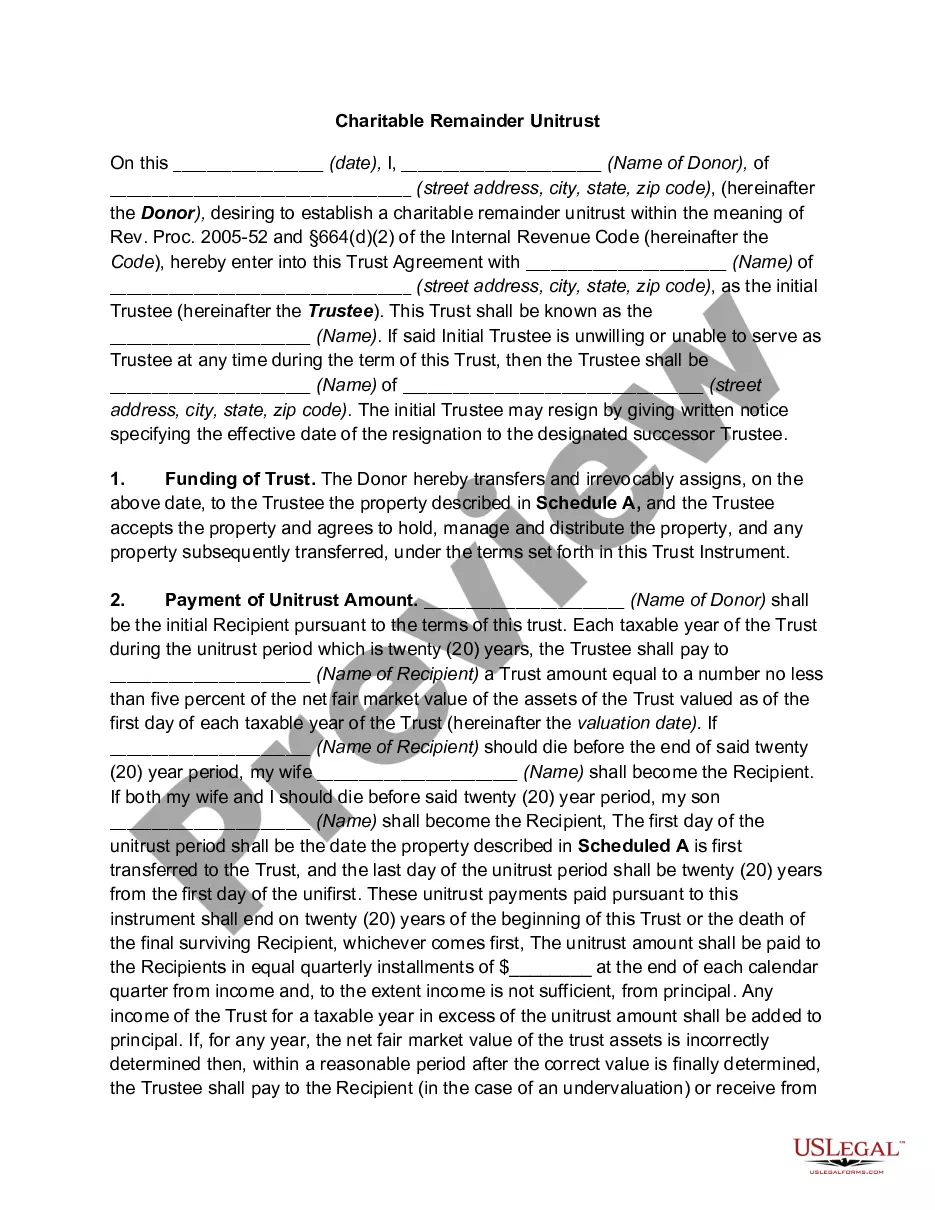
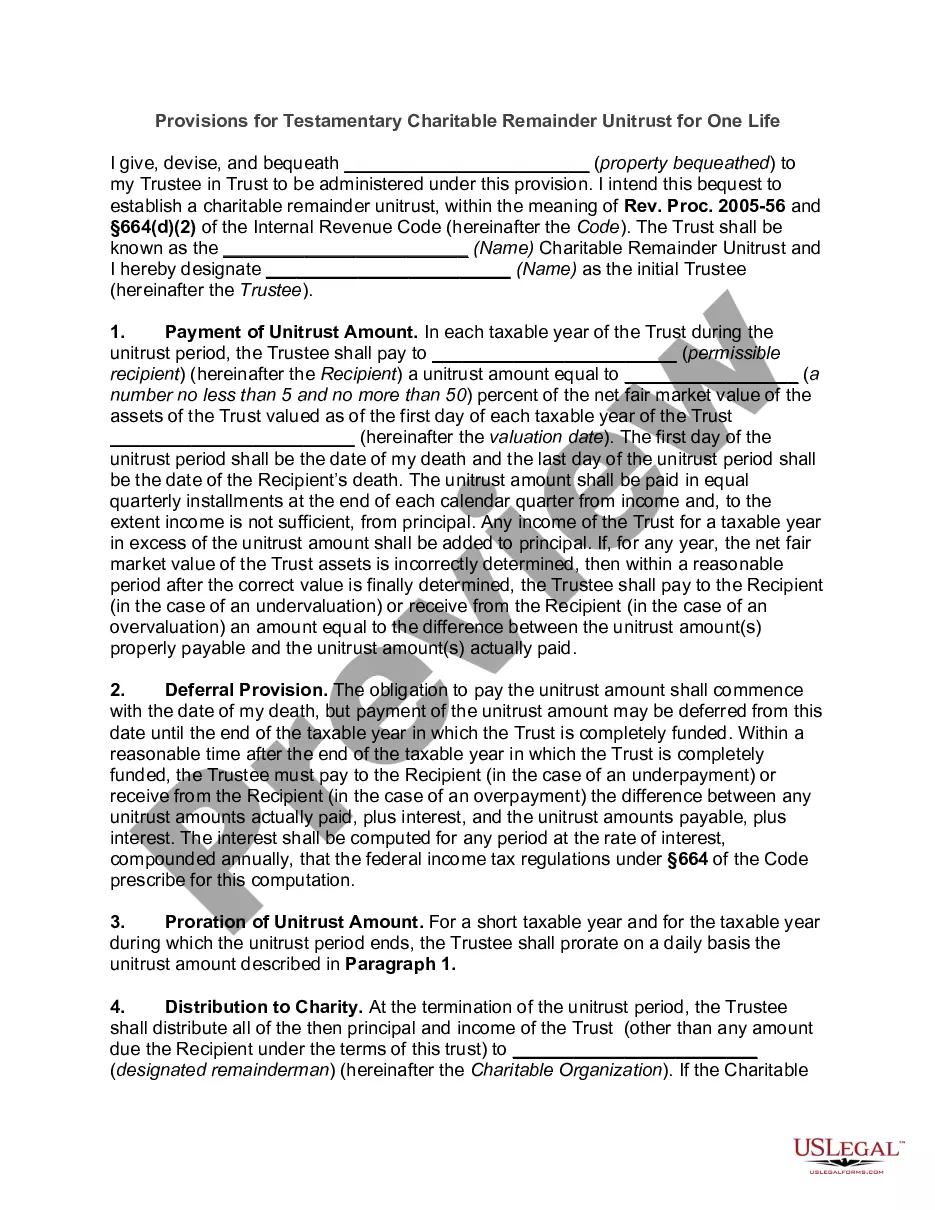
Get your form ready online
Our built-in tools help you complete, sign, share, and store your documents in one place.
Make edits, fill in missing information, and update formatting in US Legal Forms—just like you would in MS Word.
Download a copy, print it, send it by email, or mail it via USPS—whatever works best for your next step.
Sign and collect signatures with our SignNow integration. Send to multiple recipients, set reminders, and more. Go Premium to unlock E-Sign.
If this form requires notarization, complete it online through a secure video call—no need to meet a notary in person or wait for an appointment.
We protect your documents and personal data by following strict security and privacy standards.

Make edits, fill in missing information, and update formatting in US Legal Forms—just like you would in MS Word.

Download a copy, print it, send it by email, or mail it via USPS—whatever works best for your next step.

Sign and collect signatures with our SignNow integration. Send to multiple recipients, set reminders, and more. Go Premium to unlock E-Sign.

If this form requires notarization, complete it online through a secure video call—no need to meet a notary in person or wait for an appointment.

We protect your documents and personal data by following strict security and privacy standards.
Looking for another form?







How to fill out Charitable Remainder Inter Vivos Unitrust Agreement?
Legal document management can be mind-boggling, even for knowledgeable experts. When you are looking for a Charitable Remainder Trust Document With Life Estate and do not get the a chance to devote looking for the right and up-to-date version, the procedures can be stressful. A strong web form library could be a gamechanger for anyone who wants to handle these situations efficiently. US Legal Forms is a industry leader in web legal forms, with more than 85,000 state-specific legal forms available to you at any time.
With US Legal Forms, you are able to:
- Access state- or county-specific legal and business forms. US Legal Forms covers any needs you may have, from personal to organization documents, all-in-one location.
- Make use of advanced resources to finish and control your Charitable Remainder Trust Document With Life Estate
- Access a useful resource base of articles, tutorials and handbooks and resources relevant to your situation and needs
Help save time and effort looking for the documents you will need, and utilize US Legal Forms’ advanced search and Review feature to get Charitable Remainder Trust Document With Life Estate and download it. For those who have a subscription, log in to the US Legal Forms account, search for the form, and download it. Review your My Forms tab to see the documents you previously downloaded and also to control your folders as you see fit.
Should it be your first time with US Legal Forms, make an account and have unlimited use of all benefits of the library. Here are the steps to consider after downloading the form you want:
- Validate this is the right form by previewing it and reading through its description.
- Be sure that the sample is recognized in your state or county.
- Choose Buy Now when you are all set.
- Select a monthly subscription plan.
- Find the formatting you want, and Download, complete, eSign, print and send out your document.
Benefit from the US Legal Forms web library, backed with 25 years of experience and trustworthiness. Change your everyday document administration in to a easy and user-friendly process today.
Form popularity
FAQ
Transfer assets to the charitable remainder trust. When the trust ends, either upon death of the last income beneficiary or a specified period of time, any remaining assets are distributed to designated charitable beneficiaries.
Ruling 77-374. If an individual establishes a charitable remainder trust for his or her life only, the trust assets will be included in his or her gross estate under IRC section 2036. The amount included, however, will ?wash out? as an estate tax charitable deduction under IRC section 2055.
How to Set up a Charitable Remainder Trust Create a Charitable Remainder Trust. Check with the IRS that the charity you want to benefit is approved. Transfer assets into the Trust. Name the charity as Trustee. Create a provision that states who the lead beneficiary is - remember, this can be yourself or someone else.
The charitable remainder trust purchases the life insurance policy using money donated to it. Then, when the insured dies, the charitable remainder trust pays out a portion of benefits to the initial beneficiary for a set number of years or until he or she dies.
At the end of the term, the trust terminates and the non-charitable beneficiaries receive whatever assets remain in the trust. A CLAT files both a Form 1041 and a Form 5227.