Charitable Remainder Living Trust With Trust
Description
Get your form ready online
Our built-in tools help you complete, sign, share, and store your documents in one place.
Make edits, fill in missing information, and update formatting in US Legal Forms—just like you would in MS Word.
Download a copy, print it, send it by email, or mail it via USPS—whatever works best for your next step.
Sign and collect signatures with our SignNow integration. Send to multiple recipients, set reminders, and more. Go Premium to unlock E-Sign.
If this form requires notarization, complete it online through a secure video call—no need to meet a notary in person or wait for an appointment.
We protect your documents and personal data by following strict security and privacy standards.

Make edits, fill in missing information, and update formatting in US Legal Forms—just like you would in MS Word.

Download a copy, print it, send it by email, or mail it via USPS—whatever works best for your next step.

Sign and collect signatures with our SignNow integration. Send to multiple recipients, set reminders, and more. Go Premium to unlock E-Sign.

If this form requires notarization, complete it online through a secure video call—no need to meet a notary in person or wait for an appointment.

We protect your documents and personal data by following strict security and privacy standards.
Looking for another form?





How to fill out Charitable Remainder Inter Vivos Unitrust Agreement?
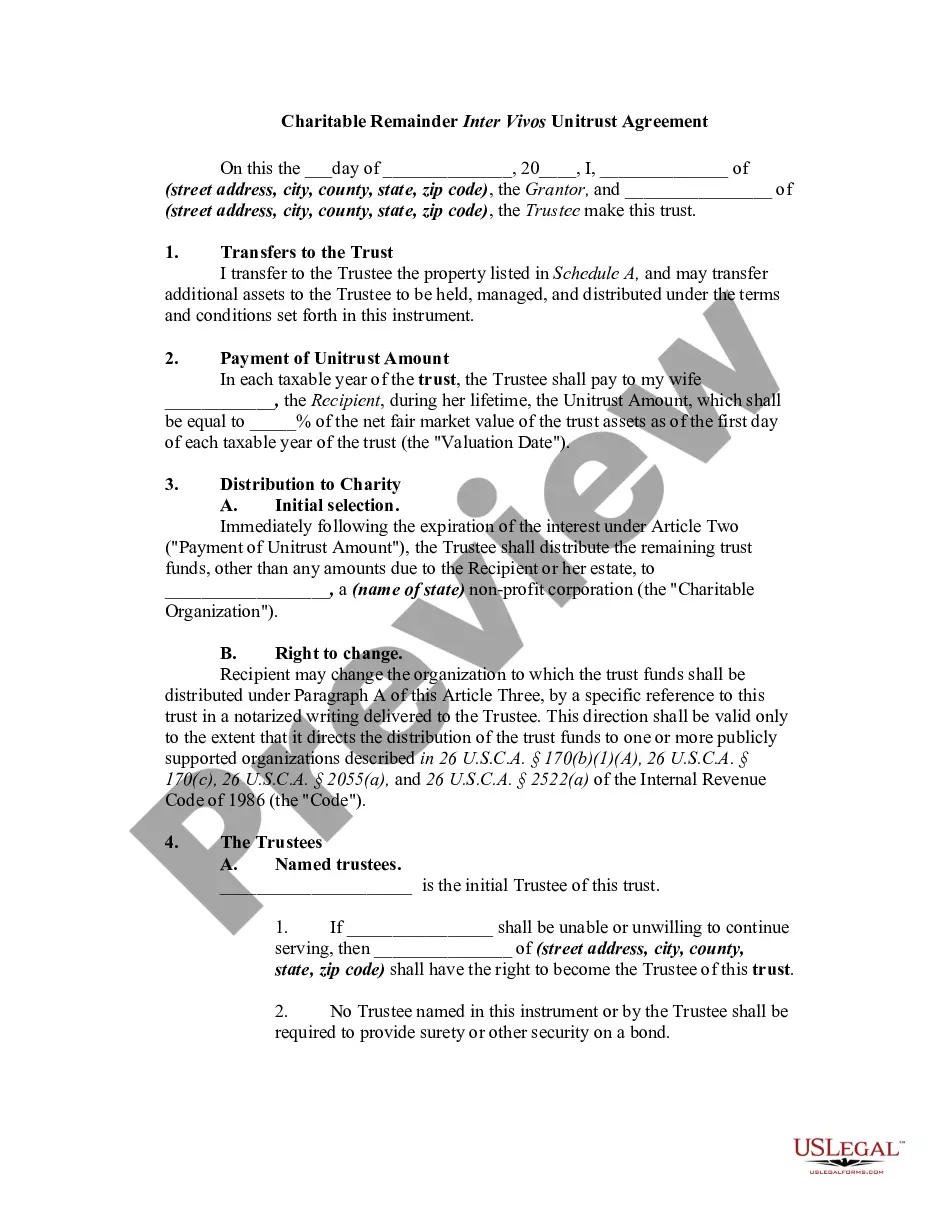
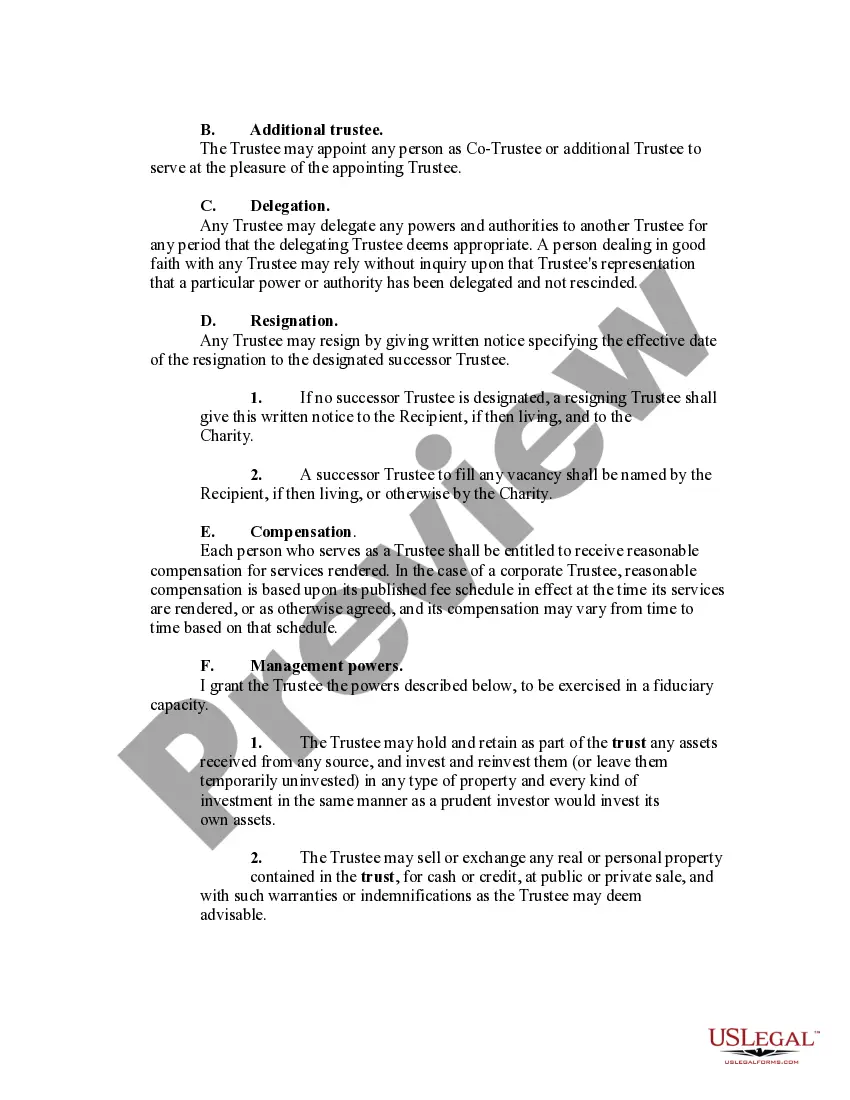
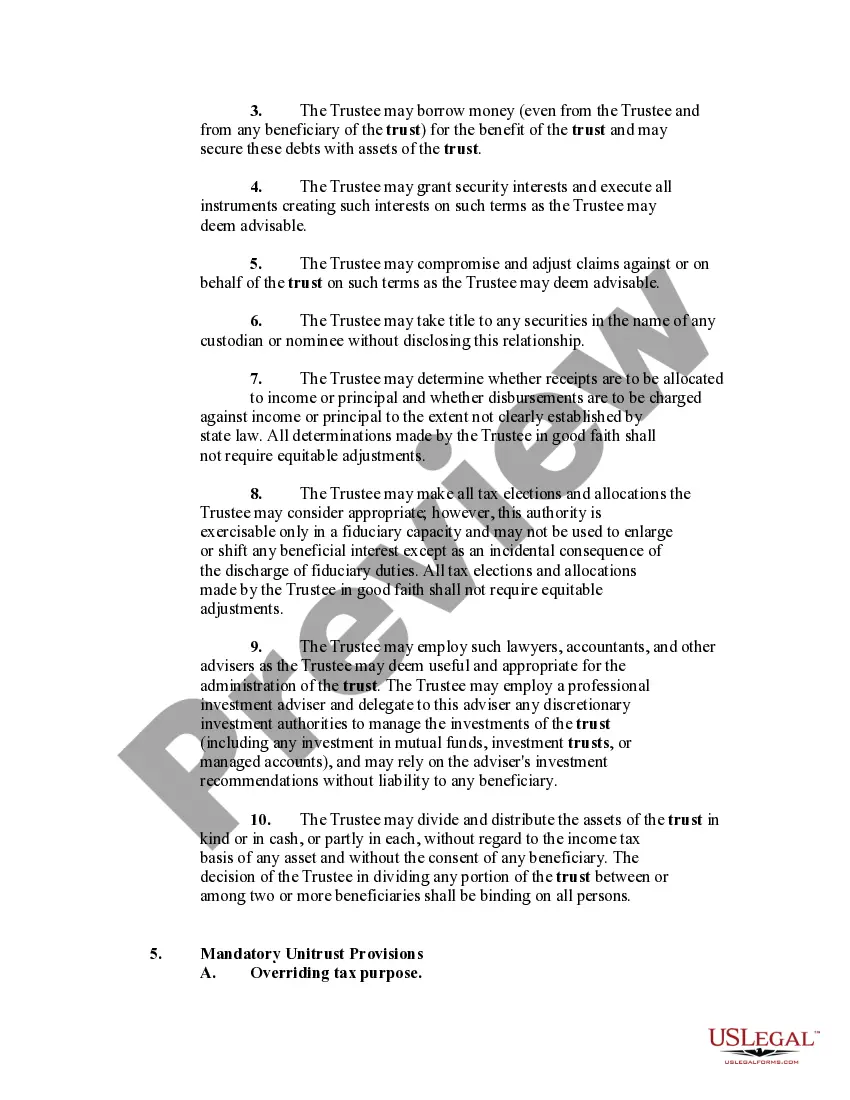
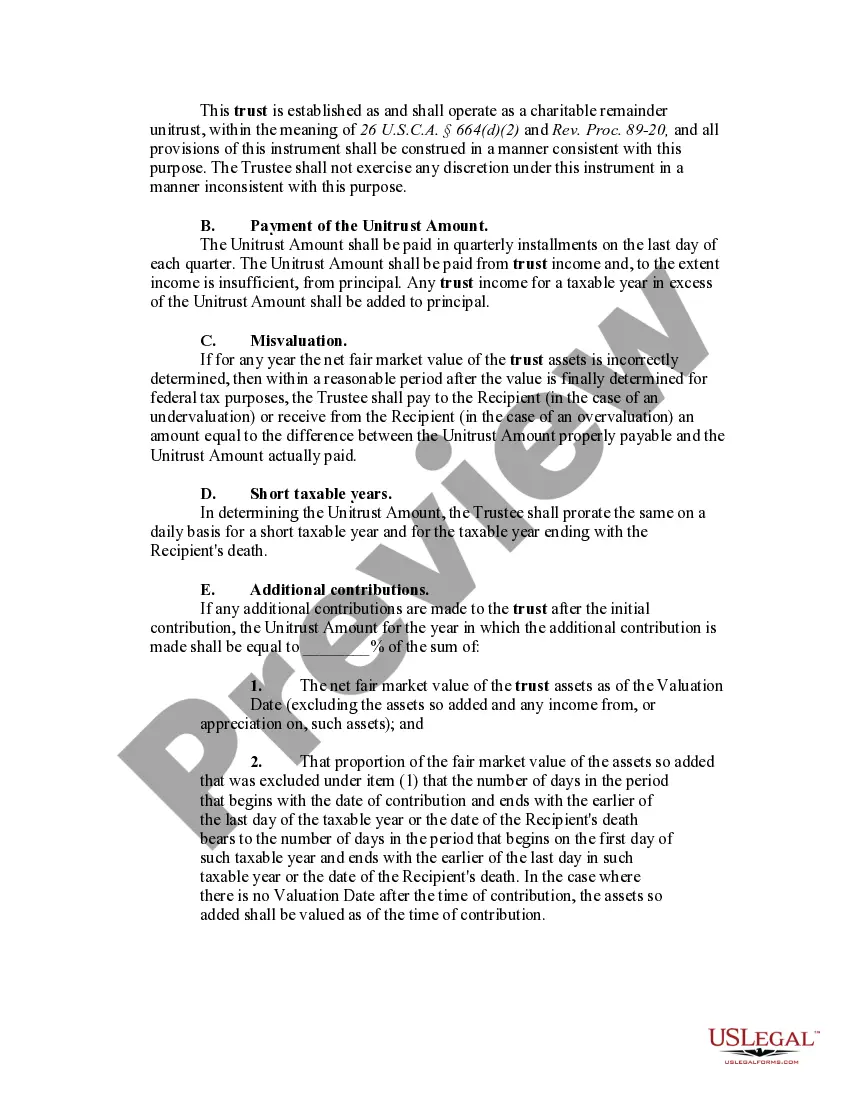
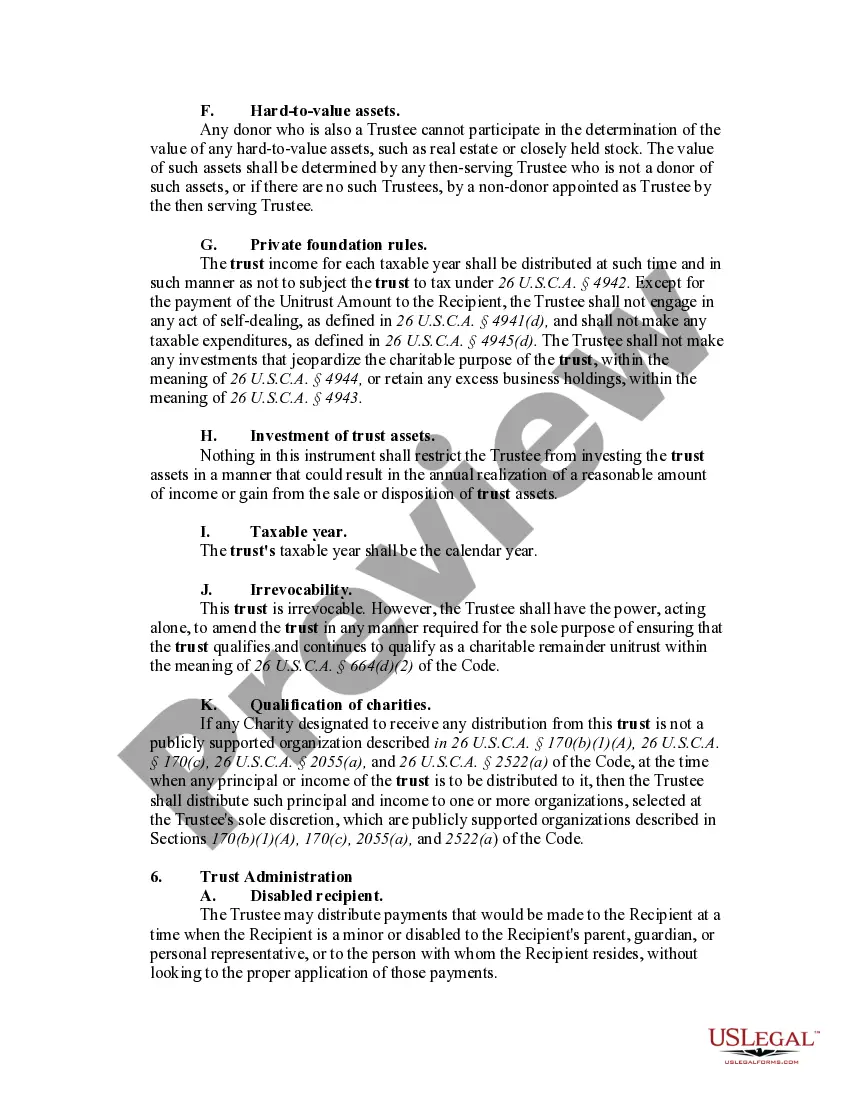
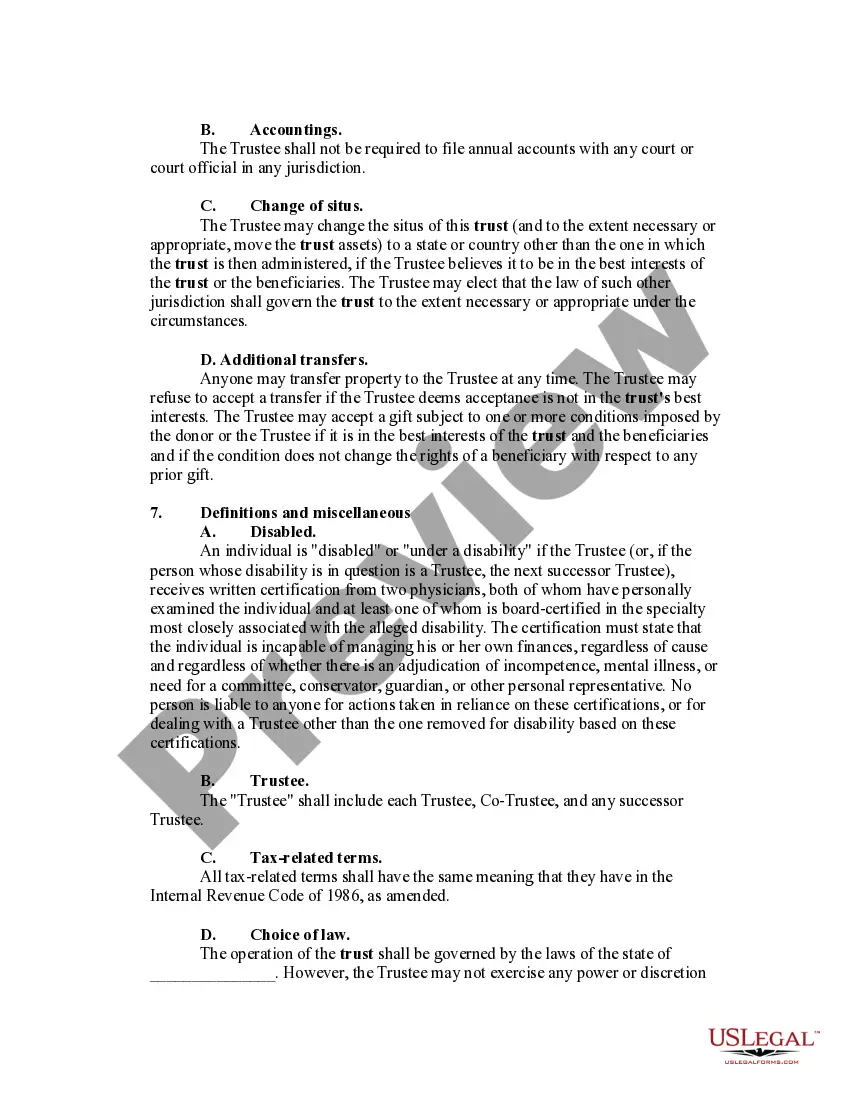
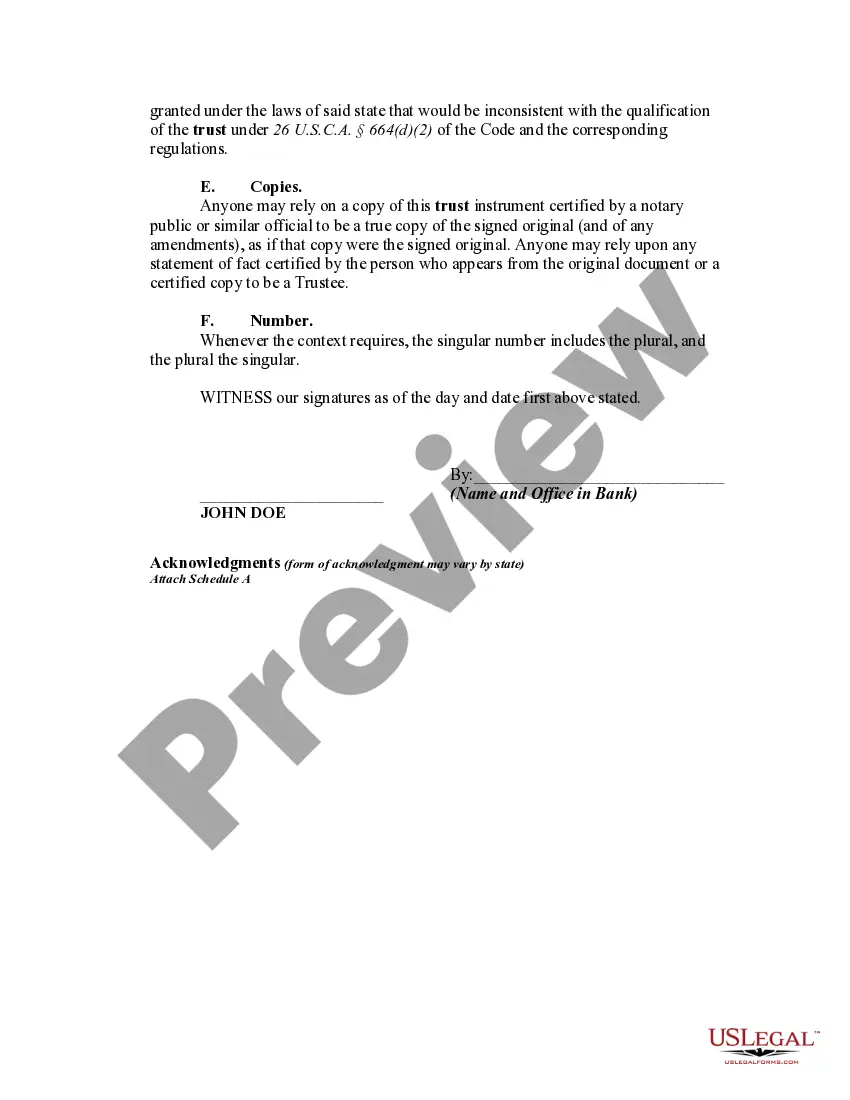
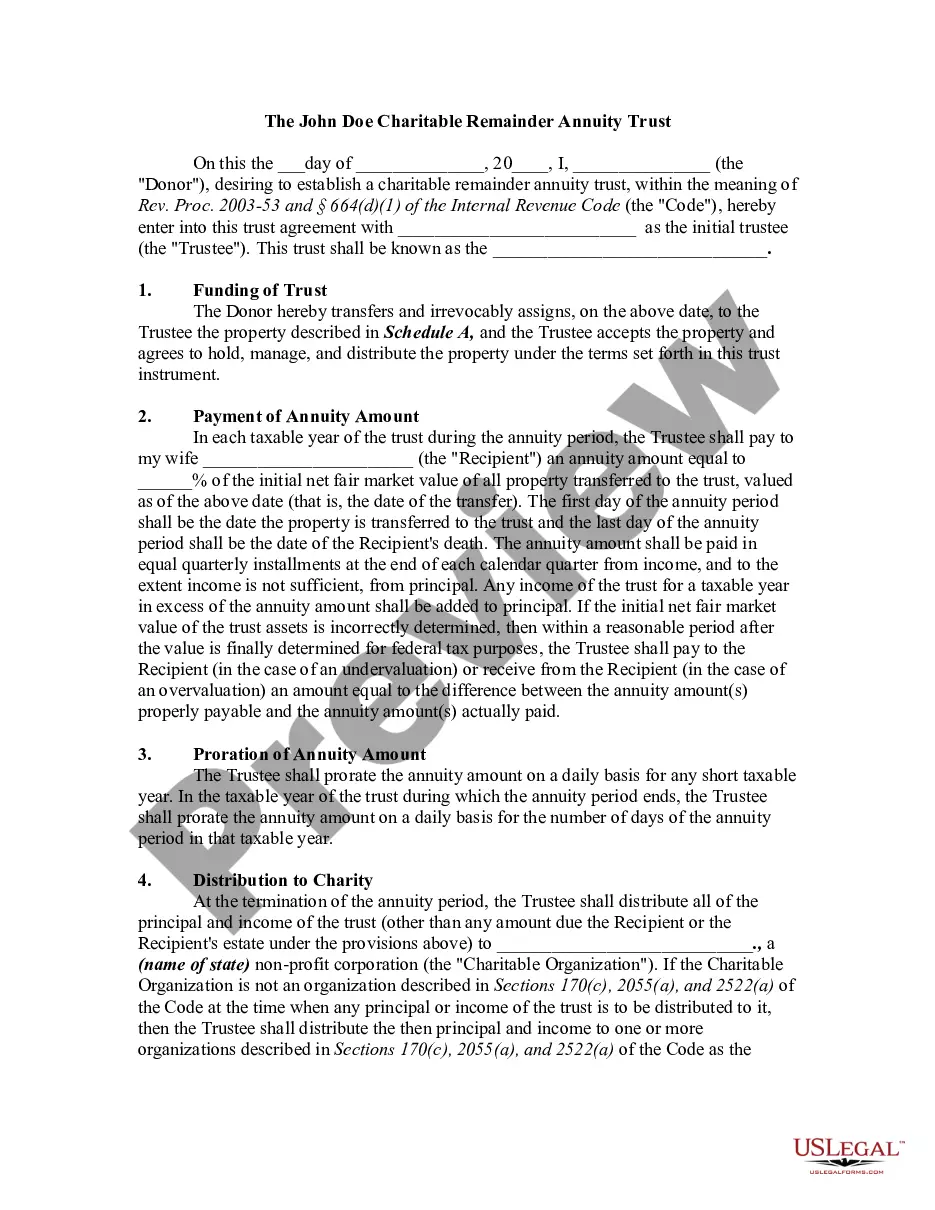
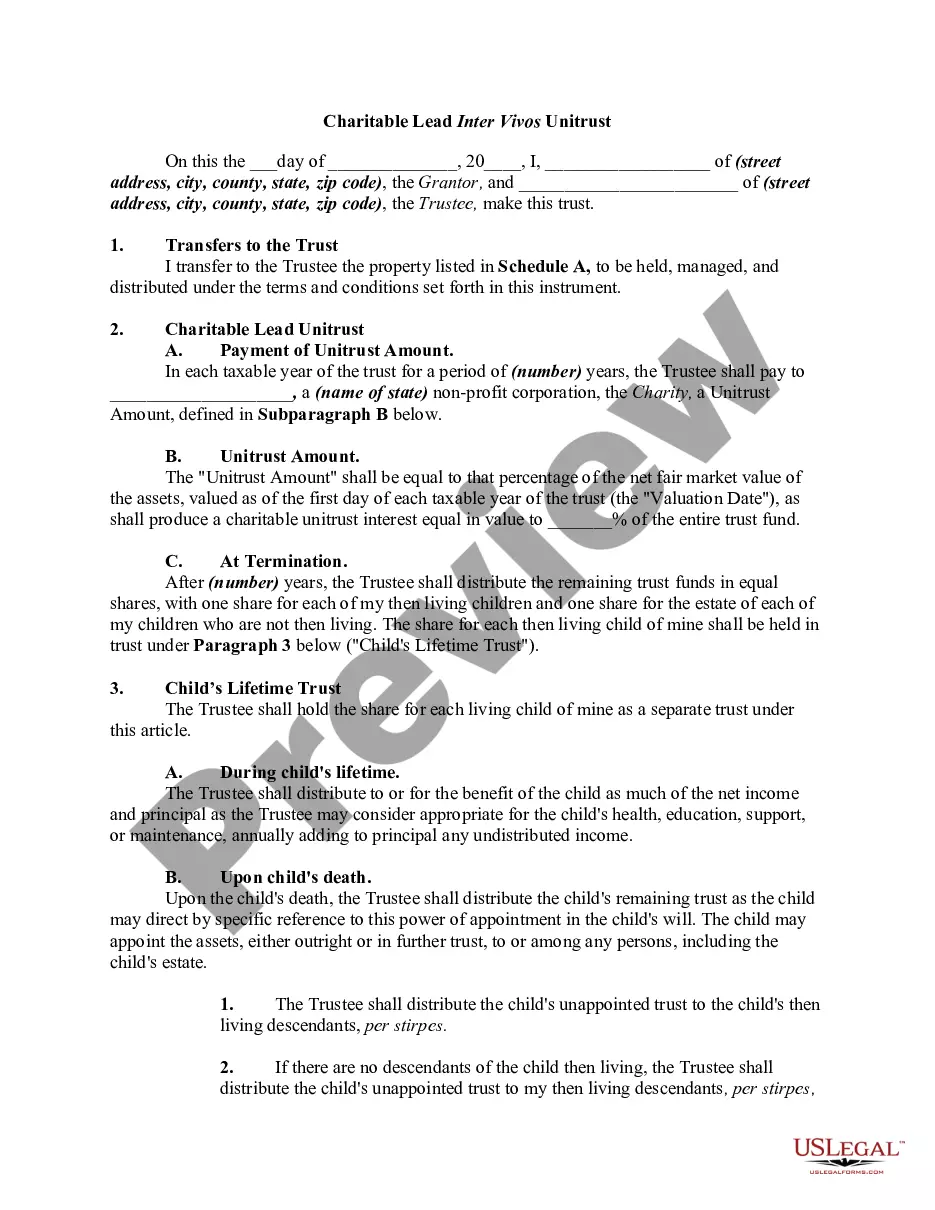
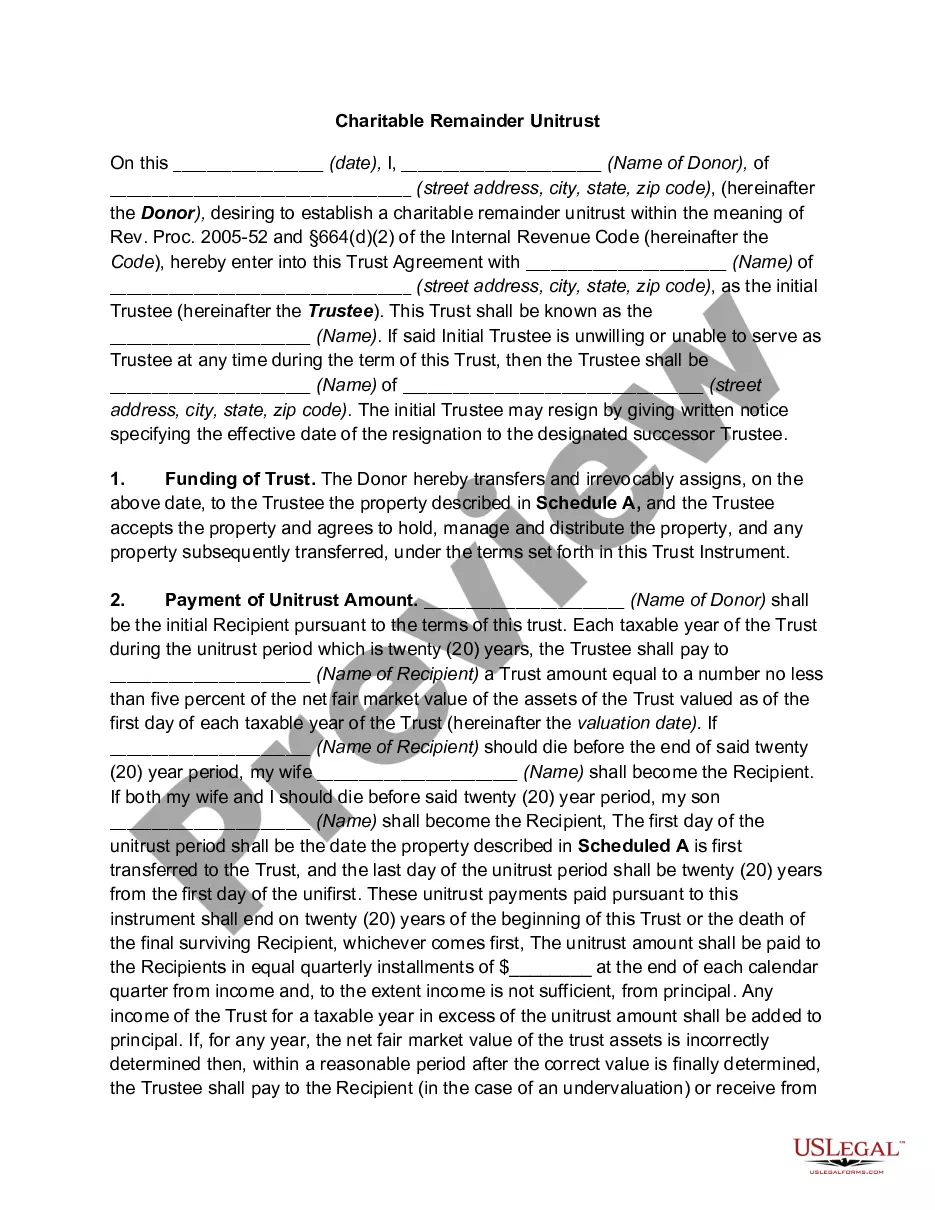
The Charitable Remainder Living Trust With Trust visible on this page is a reusable official template created by professional attorneys following federal and local regulations.
For over 25 years, US Legal Forms has offered individuals, entities, and legal professionals more than 85,000 confirmed, state-specific documents for any business and personal context. It’s the fastest, easiest, and most dependable method to acquire the paperwork you need, as the service ensures maximum data security and anti-malware safeguards.
Redownload your documents whenever necessary. Access the My documents section in your profile to retrieve any previously downloaded forms.
- Search for the document you need and evaluate it.
- Browse through the file you sought and preview it or check the form details to confirm it meets your needs. If it doesn’t, utilize the search feature to locate the correct one. Click Buy Now after identifying the template you seek.
- Register and Log In.
- Select the pricing option that suits your requirements and set up an account. Use PayPal or a credit card for a swift transaction. If you already possess an account, Log In and review your subscription to proceed.
- Acquire the editable template.
- Choose the format you desire for your Charitable Remainder Living Trust With Trust (PDF, DOCX, RTF) and download the example to your device.
- Fill out and sign the documents.
- Print the template to complete it manually. Alternatively, use an online multifunctional PDF editor to rapidly and accurately fill out and sign your form with a valid signature.
Form popularity
FAQ
To set up a charitable remainder living trust with trust, start by determining your charitable goals and the assets you wish to include. Next, consult with a legal or financial advisor to draft the trust document, ensuring it aligns with IRS regulations. Once the document is prepared, you will fund the trust with your selected assets and designate the charitable organization that will benefit from it. Platforms like US Legal Forms can simplify this process by providing templates and guidance tailored to your needs.
The 5% rule for a charitable remainder living trust with trust refers to the minimum payout requirement that a trust must meet to qualify for tax benefits. Specifically, the trust must distribute at least 5% of its value annually to the income beneficiary. This rule ensures that the trust provides a reasonable income while still allowing for a significant charitable contribution at the end of its term. Understanding this rule is crucial when setting up your charitable remainder trust.
A charitable remainder living trust with trust can provide significant benefits for both you and the charities you support. It allows you to receive income for a period, while also making a future donation to a charity of your choice. This arrangement can help you balance your financial goals with your philanthropic desires. Ultimately, the decision depends on your financial situation and charitable intentions.
The downsides of a charitable remainder living trust with trust include the irrevocability of the trust and the potential for higher administrative costs. Once established, you cannot change the terms or retrieve the assets, which can be a significant commitment. Additionally, if the trust does not perform well, the income generated may not meet your expectations, impacting your financial plans.
A charitable remainder unitrust (CRUT) can be a good idea if you wish to support charities while also receiving income from your assets. With a CRUT, the income distribution can vary based on the trust's value, which may offer advantages as your investments grow. However, it is crucial to understand the specific terms and conditions of a charitable remainder living trust with trust before proceeding.
A charitable trust, specifically a charitable remainder living trust with trust, is a type of living trust. While a living trust is created during your lifetime to manage and distribute assets, a charitable trust focuses on benefiting charitable organizations. You can establish a living trust that includes charitable components, allowing you to support causes you care about while also receiving potential tax benefits.
Banks may hesitate to work with irrevocable trusts, such as a charitable remainder living trust with trust, because these trusts limit the access or control over the assets. Once assets are placed in an irrevocable trust, the grantor cannot modify or revoke the trust. This can complicate transactions and create challenges for banks when assessing liquidity and risk.
One disadvantage of a charitable remainder living trust with trust is the potential loss of control over the assets. Once you transfer assets into the trust, you cannot easily retrieve them. Additionally, the charitable remainder living trust may incur administrative costs and fees that can reduce the overall benefits. It is essential to weigh these factors before establishing a trust.