Charitable Remainder Living Trust Formula
Description

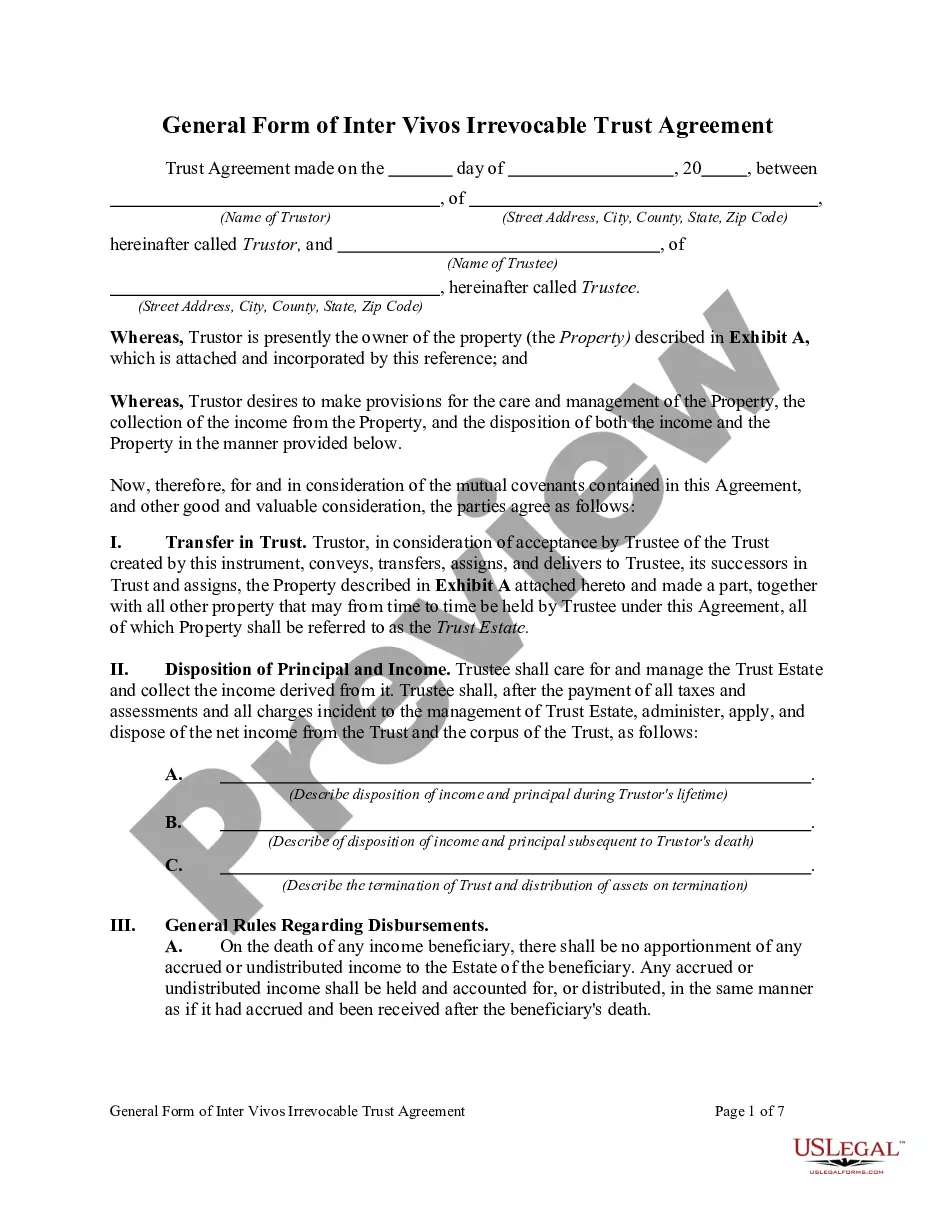
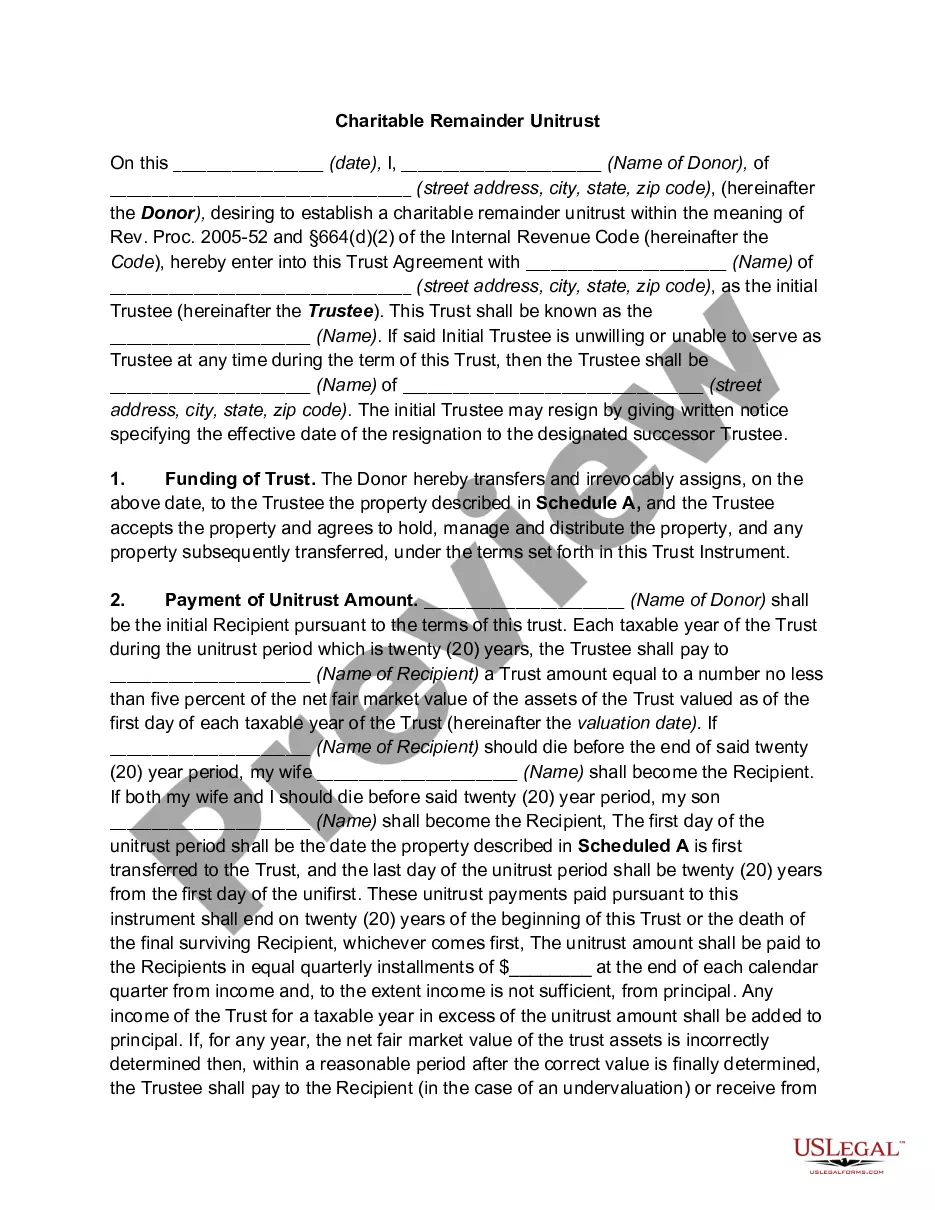
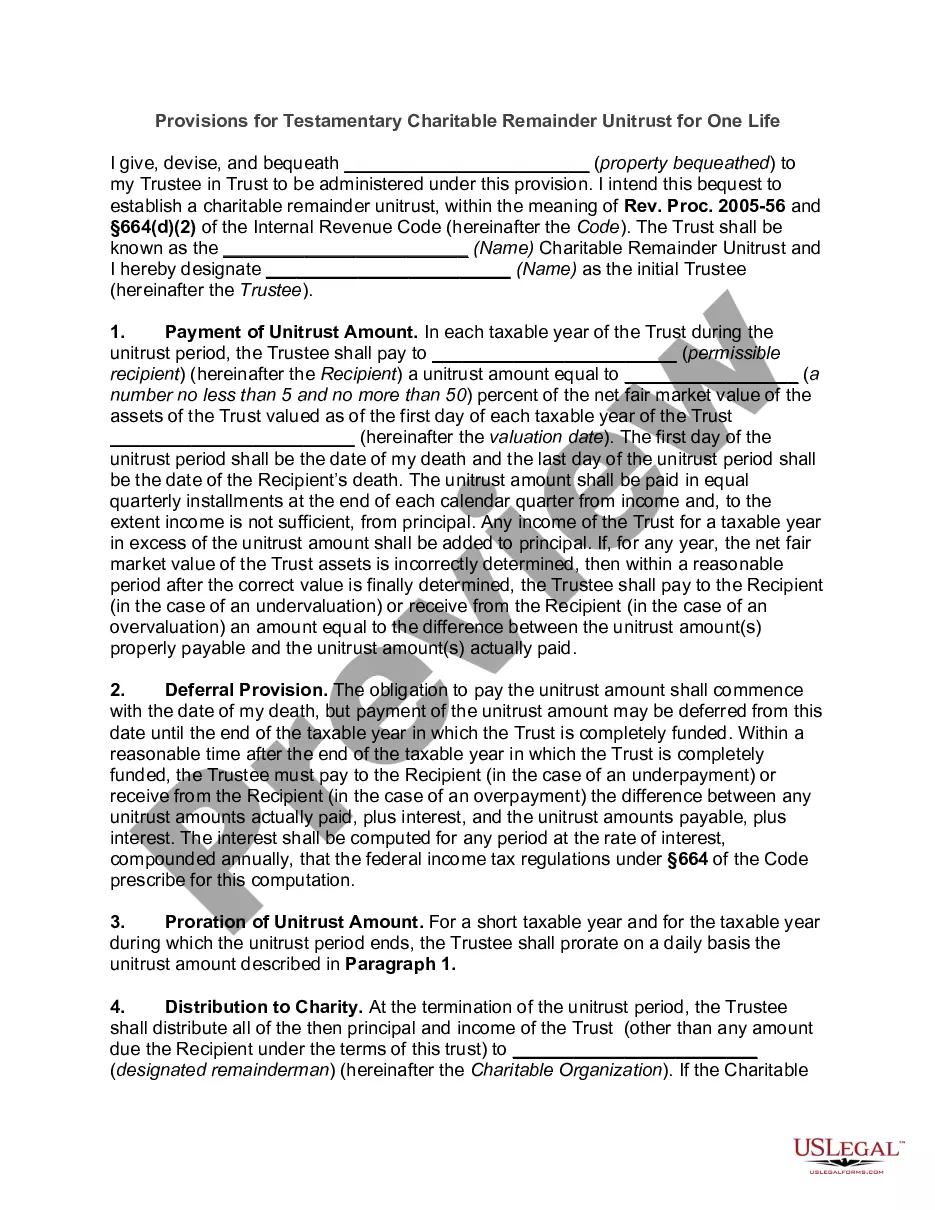
Get your form ready online
Our built-in tools help you complete, sign, share, and store your documents in one place.
Make edits, fill in missing information, and update formatting in US Legal Forms—just like you would in MS Word.
Download a copy, print it, send it by email, or mail it via USPS—whatever works best for your next step.
Sign and collect signatures with our SignNow integration. Send to multiple recipients, set reminders, and more. Go Premium to unlock E-Sign.
If this form requires notarization, complete it online through a secure video call—no need to meet a notary in person or wait for an appointment.
We protect your documents and personal data by following strict security and privacy standards.

Make edits, fill in missing information, and update formatting in US Legal Forms—just like you would in MS Word.

Download a copy, print it, send it by email, or mail it via USPS—whatever works best for your next step.

Sign and collect signatures with our SignNow integration. Send to multiple recipients, set reminders, and more. Go Premium to unlock E-Sign.

If this form requires notarization, complete it online through a secure video call—no need to meet a notary in person or wait for an appointment.

We protect your documents and personal data by following strict security and privacy standards.
Looking for another form?


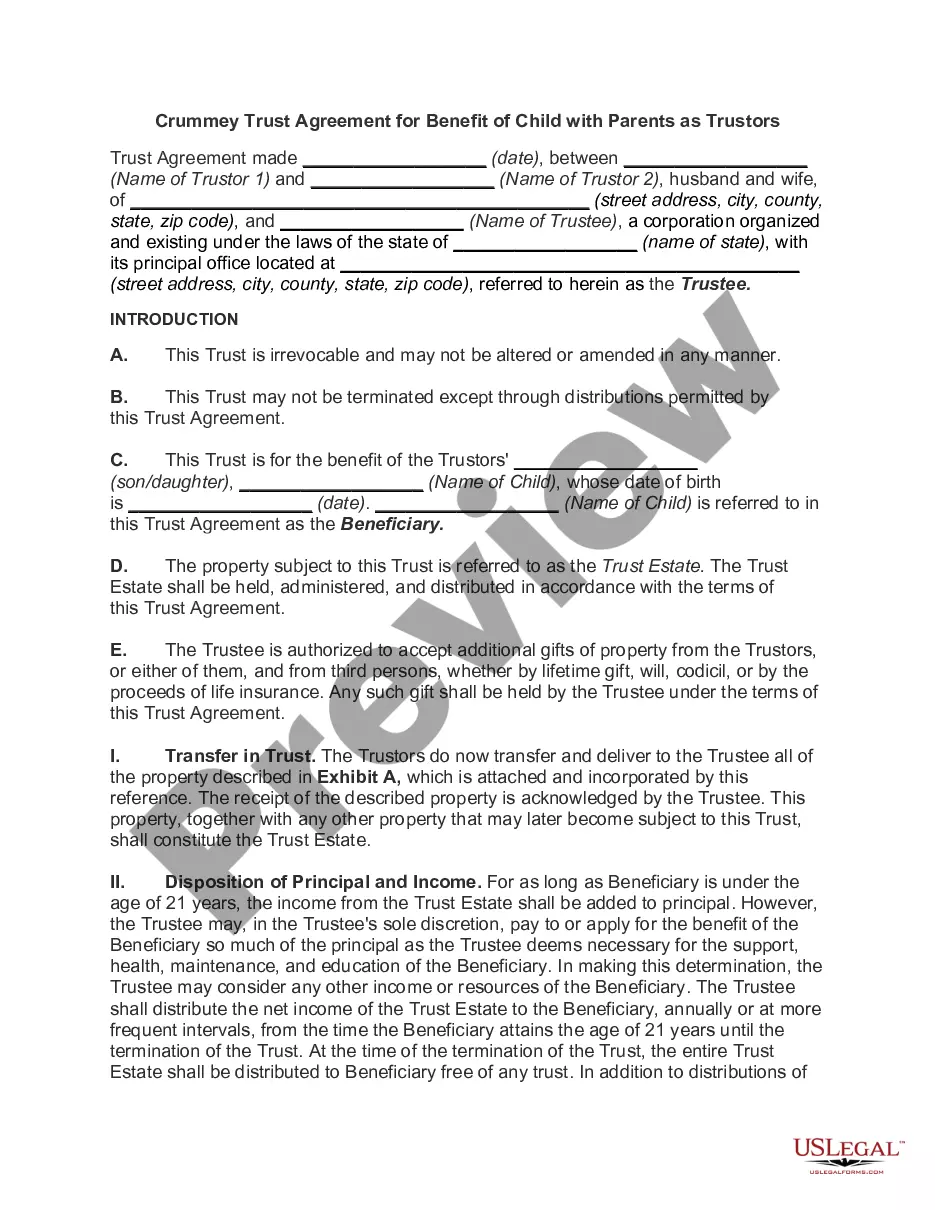





How to fill out Charitable Remainder Inter Vivos Unitrust Agreement?
Managing legal documents can be daunting, even for the most seasoned experts.
When you are interested in a Charitable Remainder Living Trust Formula and lack the time to find the proper and current version, the process can be challenging.
Leverage modern tools to fill out and manage your Charitable Remainder Living Trust Formula.
Access a wealth of articles, guides, and resources pertaining to your situation and requirements.
Confirm that it is the correct form by previewing it and reviewing its details.
- Save time and effort searching for the documents you require, and use US Legal Forms’ sophisticated search and Preview tools to locate the Charitable Remainder Living Trust Formula and download it.
- If you have a monthly subscription, Log In to your US Legal Forms account, locate the form, and download it.
- Check your My documents tab to see previously downloaded documents and manage your folders as desired.
- If this is your first experience with US Legal Forms, create an account and gain unlimited access to all platform benefits.
- Follow these steps after obtaining the form you need.
- Utilize a comprehensive online form library that can revolutionize how individuals approach these matters efficiently.
- US Legal Forms stands as a frontrunner in online legal documents, providing access to over 85,000 state-specific legal forms available anytime you need them.
- With US Legal Forms, you can access legal and business forms tailored to your state or county needs. Whether it's personal or corporate documentation, everything is available in one centralized location.
Form popularity
FAQ
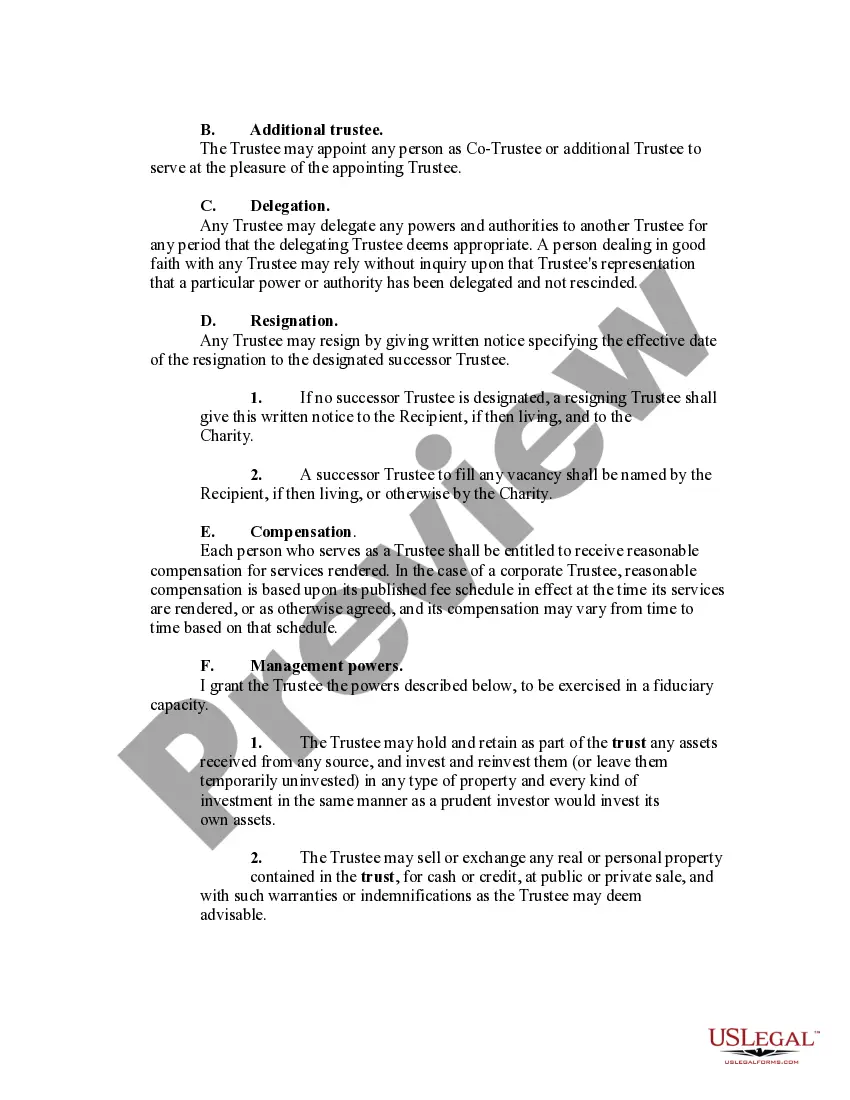
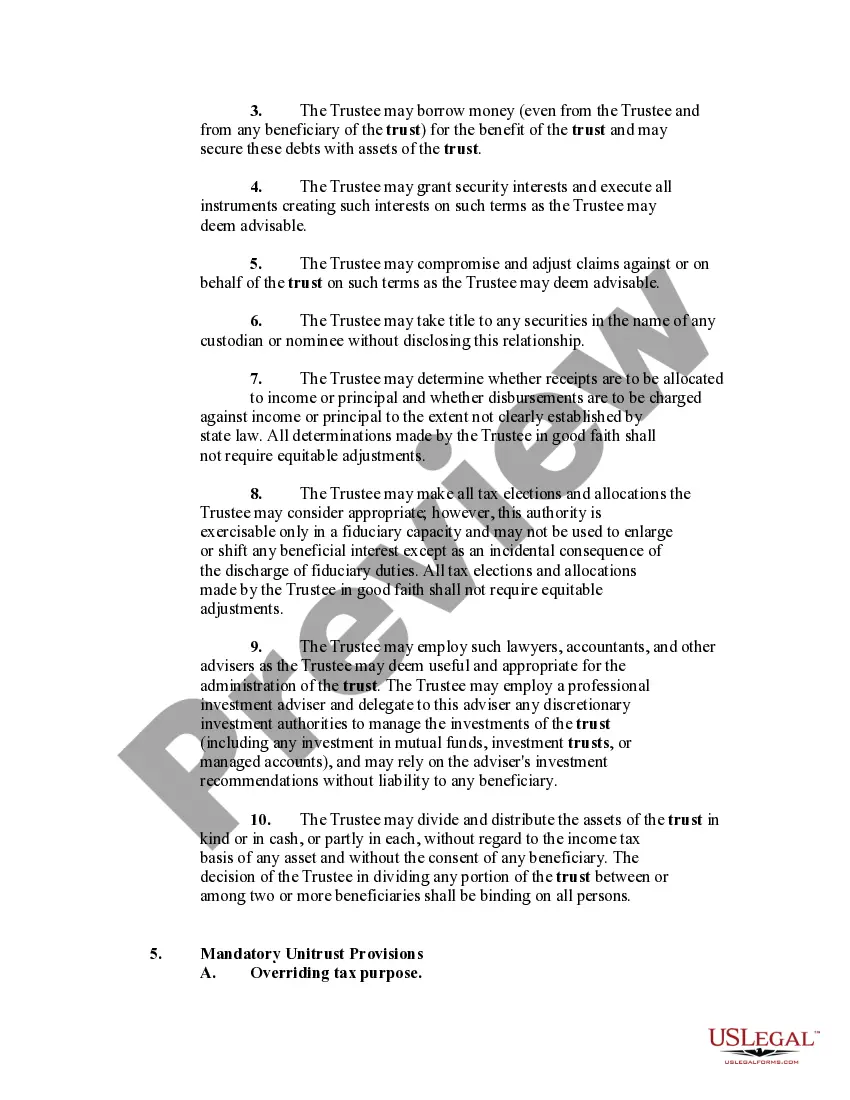
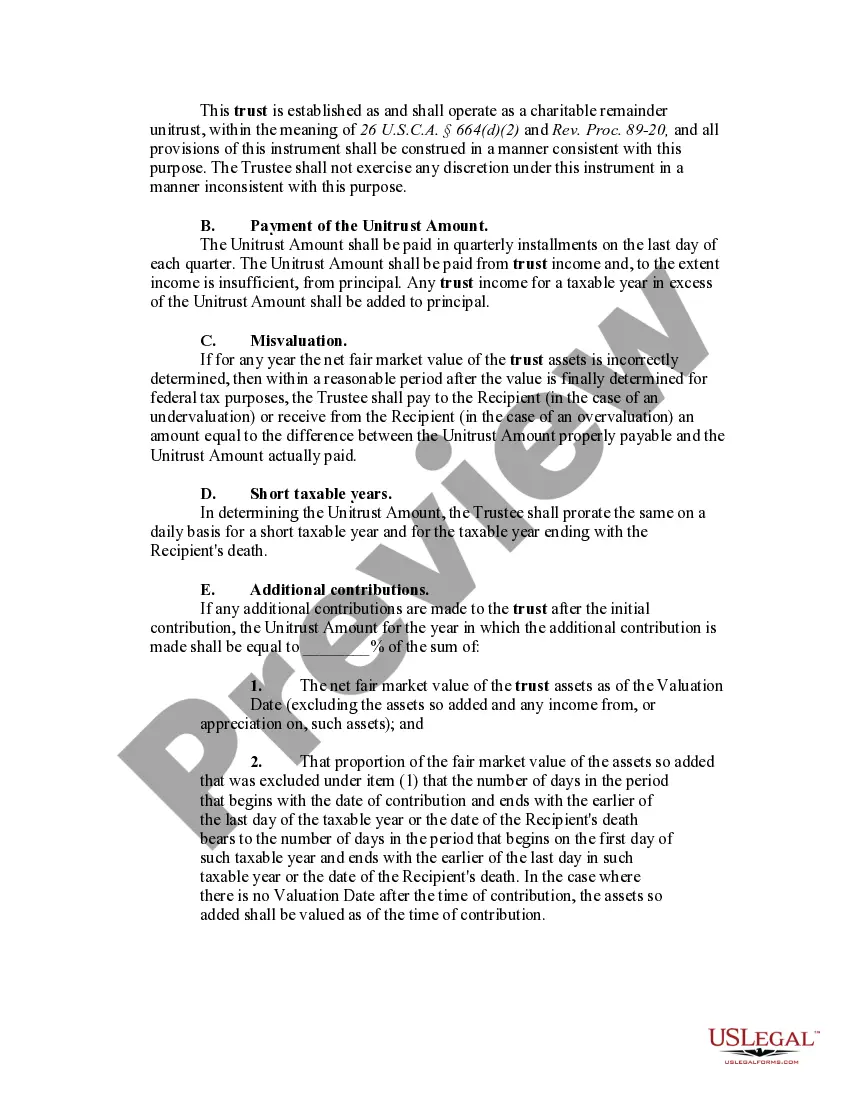
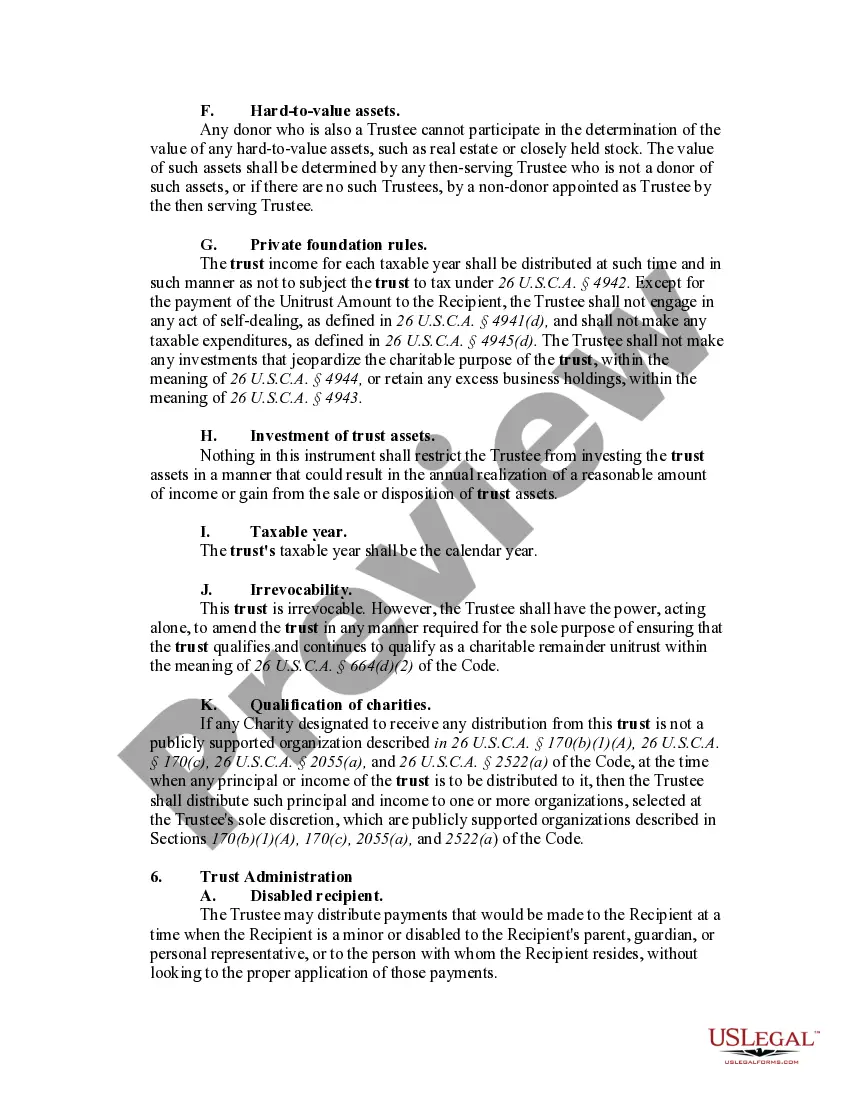
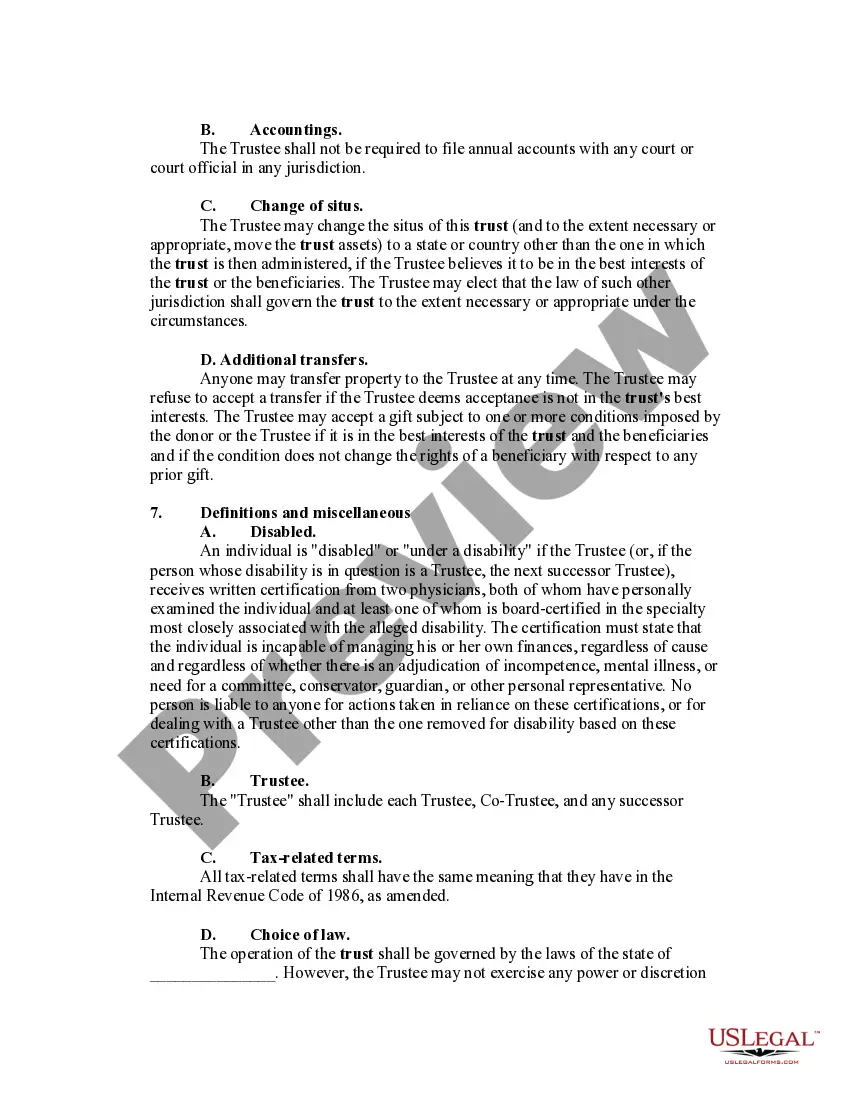
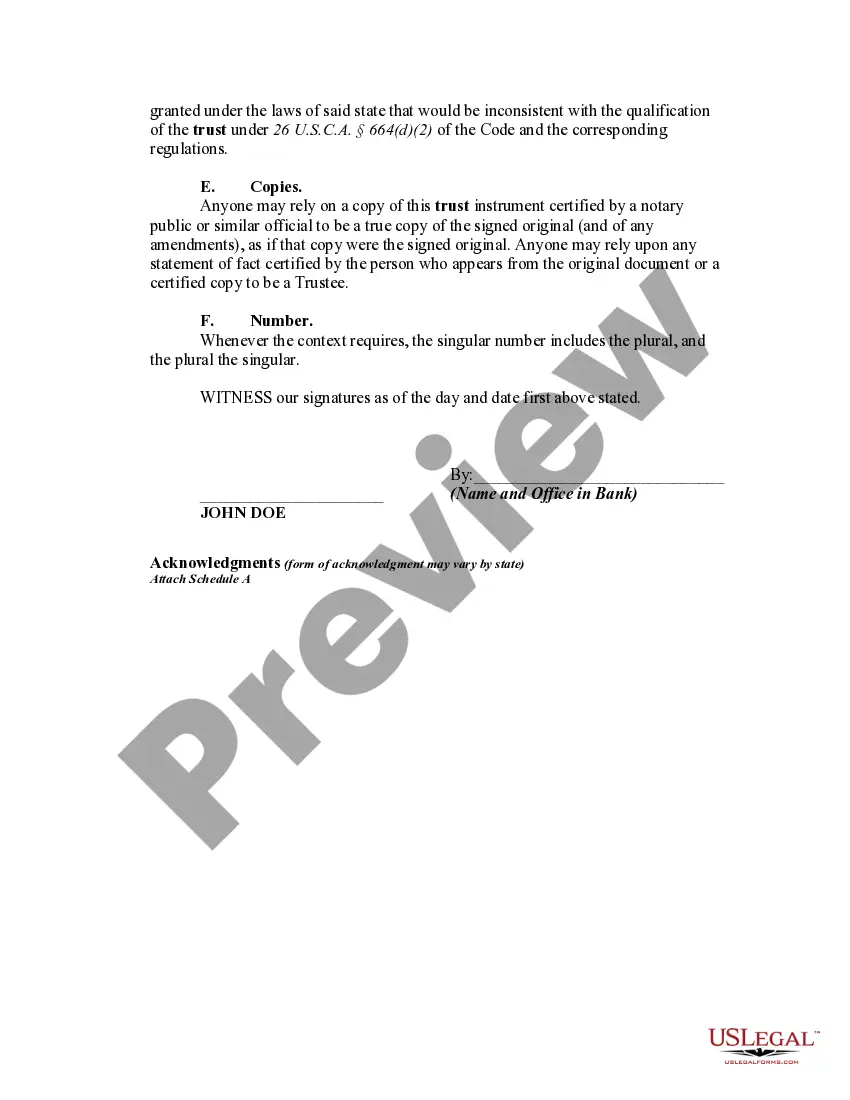
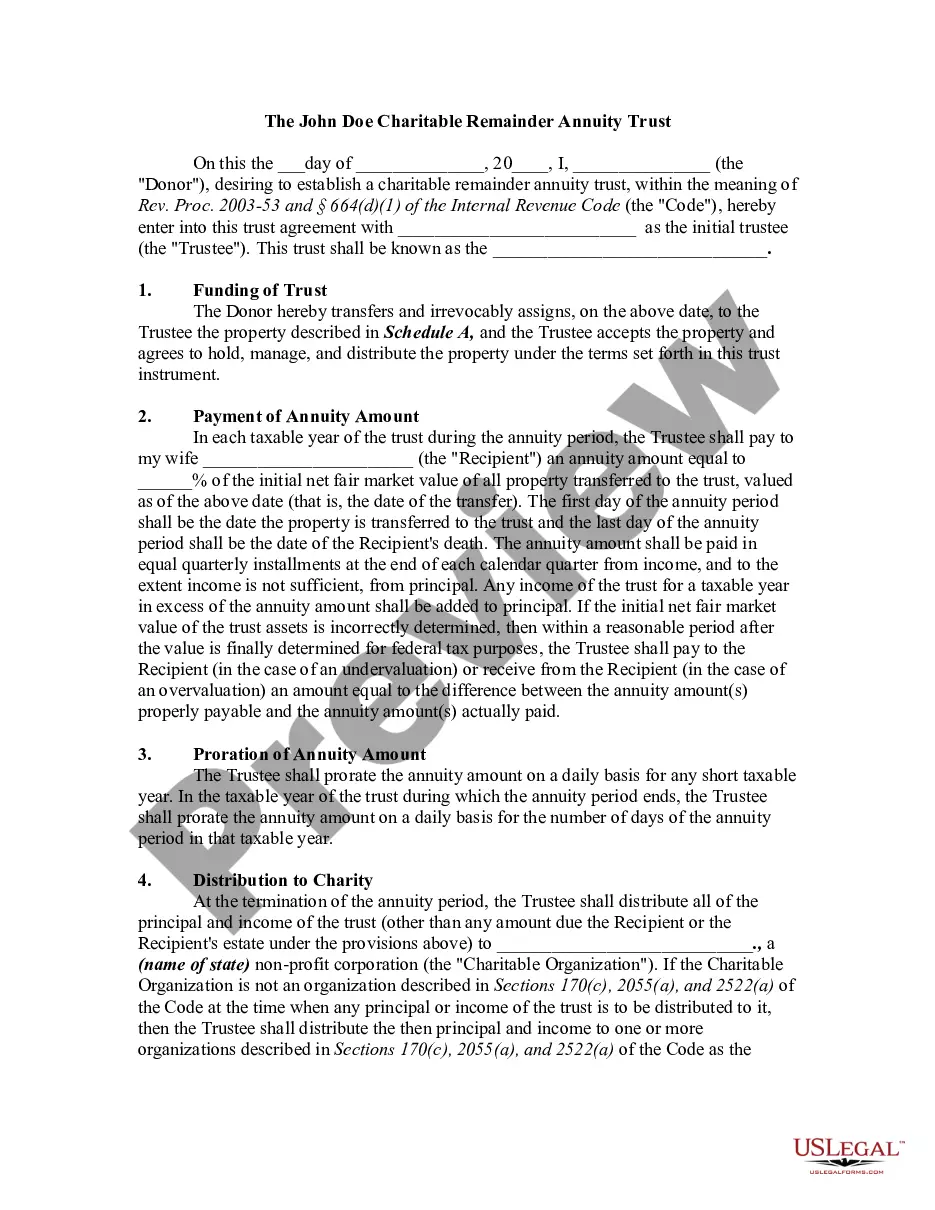
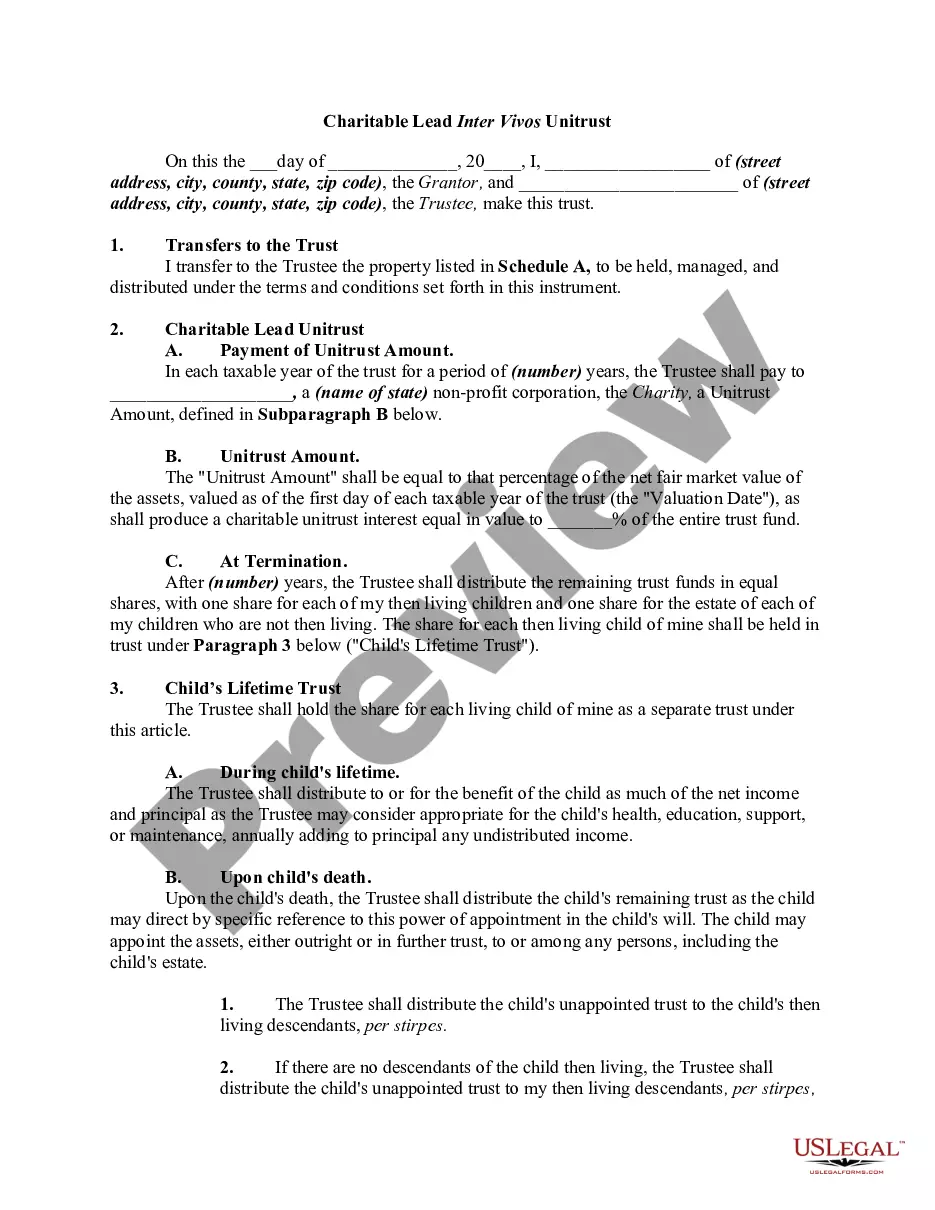
A Charitable Remainder Unitrust (CRUT) is a type of trust designed to provide income to the donor while benefiting a charity later. The donor contributes assets to the trust, receives annual income based on a fixed percentage of the trust's value, and when the trust term ends, the remaining assets go to the chosen charity. This arrangement combines financial support for the donor with the benefits of charitable giving, perfectly aligning with the charitable remainder living trust formula.
An example of a charitable remainder trust could involve a donor who places a piece of real estate into the trust. The trust then pays the donor income based on the property's value for a set number of years or until their death. After that period, the remaining value in the trust is transferred to a charitable organization. This approach illustrates the charitable remainder living trust formula, allowing for both income generation and charitable giving.
A Charitable Remainder Unitrust (CRUT) works by allowing you to donate assets to a trust while retaining the right to receive income from it. Initially, you receive income based on a percentage of the trust's value, which can grow over time as the trust assets appreciate. After your lifetime or a specified term, the remaining assets go to a charity of your choice. This straightforward process exemplifies the charitable remainder living trust formula.
You might consider an irrevocable trust for three main reasons: to protect assets from creditors, to minimize estate taxes, and to facilitate charitable giving. By placing assets in an irrevocable trust, you remove them from your taxable estate, which can lead to tax savings. Additionally, it ensures that your assets are used per your wishes, such as through the charitable remainder living trust formula, benefiting both your heirs and your chosen charities.
While a charitable remainder trust can offer tax benefits and charitable giving opportunities, it also has downsides. One significant concern is that once you set up the trust, it becomes irrevocable, meaning you cannot change your mind about how the assets are distributed. Additionally, the trust might incur administrative costs and require ongoing management, which can be burdensome. Understanding these factors is essential when considering the charitable remainder living trust formula.
Filing a charitable remainder trust (CRT) requires you to complete IRS Form 5227, which is used to report the income and distributions from the trust. Ensure that you follow the charitable remainder living trust formula to correctly calculate any distributions and tax liabilities. If you need assistance, consider using resources from uslegalforms to navigate the filing process efficiently.
Setting up a charitable remainder trust involves several steps, including selecting the assets to fund the trust and determining the charitable beneficiaries. You may want to consult with a financial advisor or attorney to ensure you follow the charitable remainder living trust formula accurately. Platforms like uslegalforms can provide you with the necessary forms and guidance to facilitate this process.
The trustee of the living trust is responsible for reporting the trust's income. This means that if you are the trustee, you will need to file IRS Form 1041 to report the income generated by the trust. Understanding the charitable remainder living trust formula can make this reporting more straightforward.
To declare income from a trust, start by compiling all income sources for the trust during the tax year. You will typically report this on IRS Form 1041, ensuring you adhere to the charitable remainder living trust formula if applicable. It's important to maintain accurate records to facilitate a smooth declaration process.
Yes, trust income must be reported to the IRS. The IRS requires that any income generated by a trust, including a living trust, be reported on the appropriate tax forms. Using the charitable remainder living trust formula can assist you in understanding how to properly allocate and report this income.