Charitable Form Trust Order With A Debit Card
Description
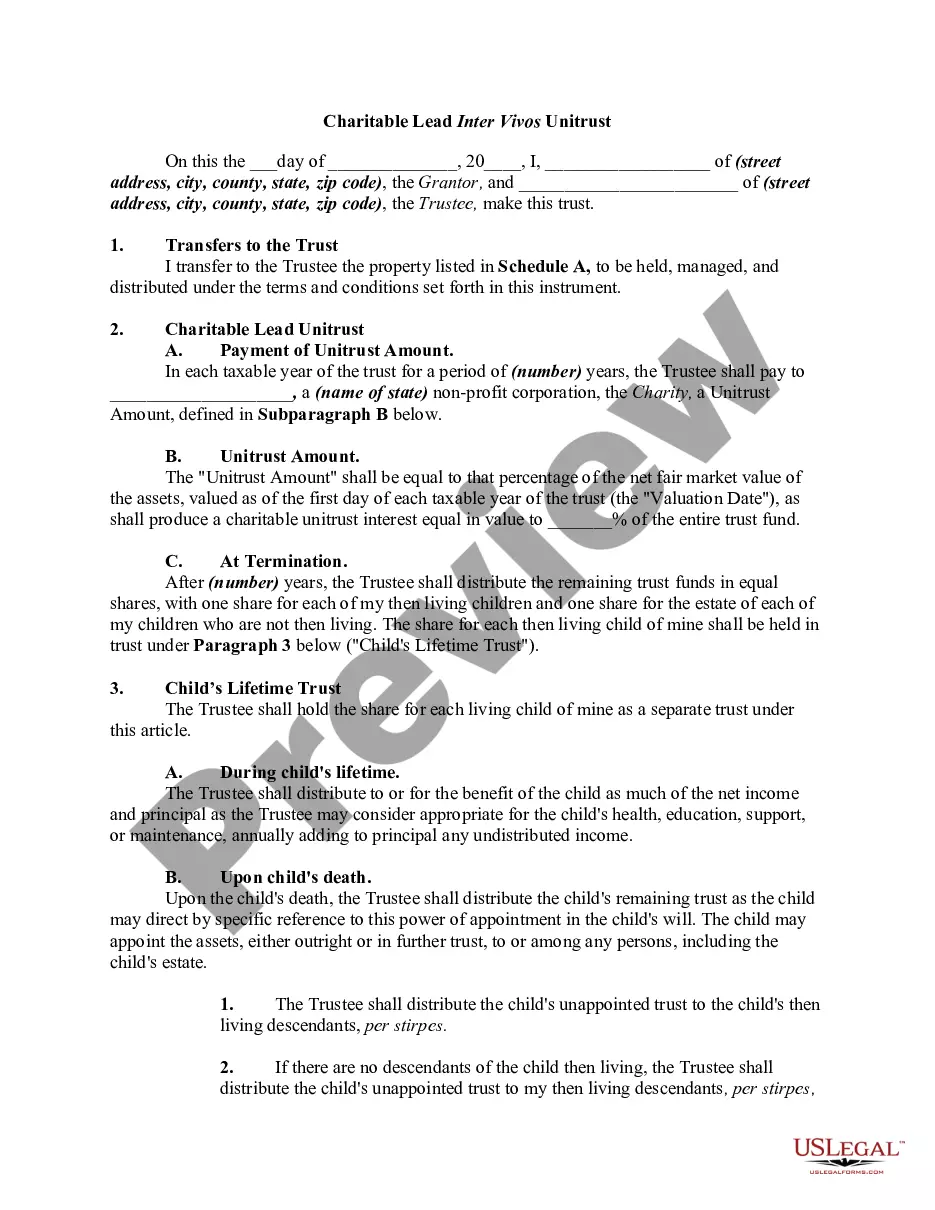
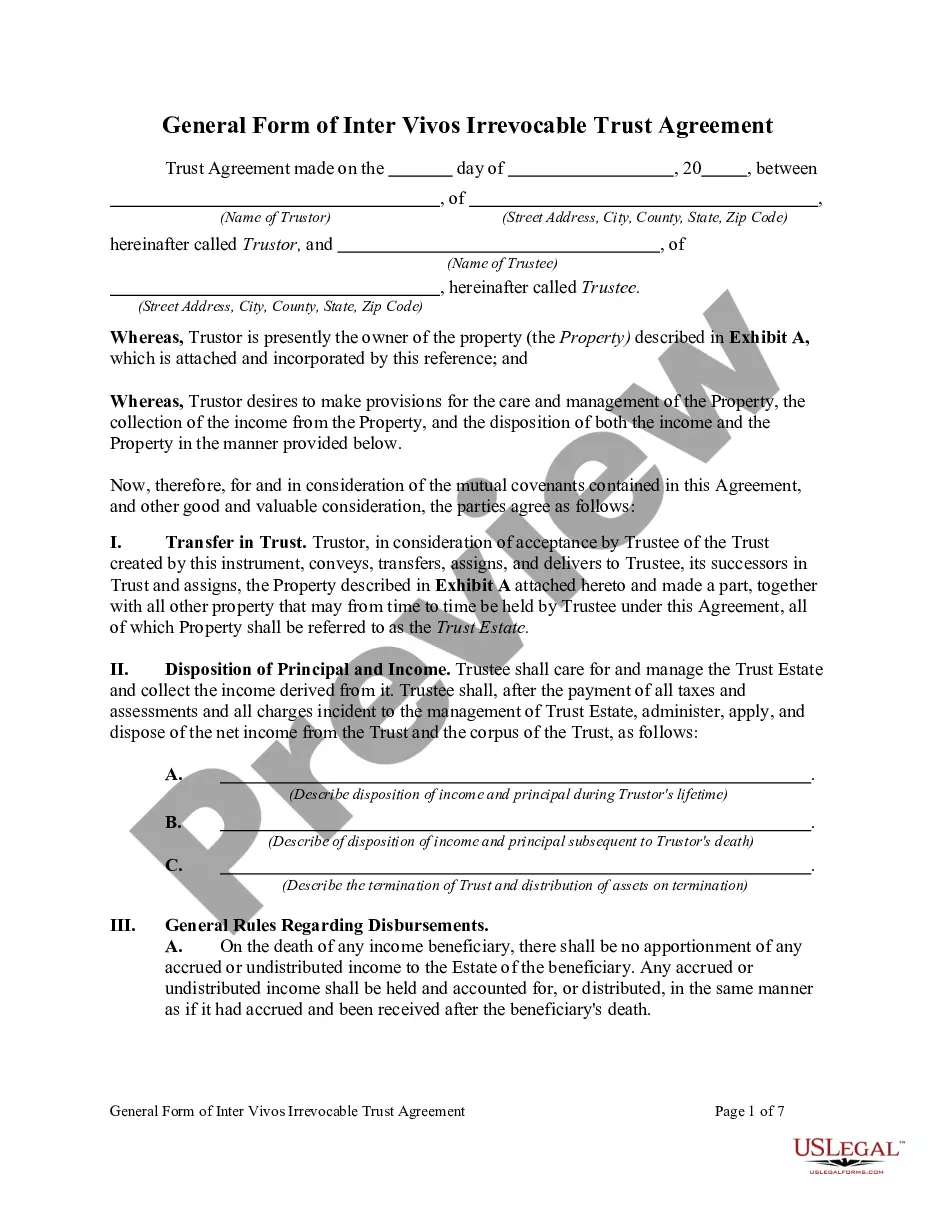
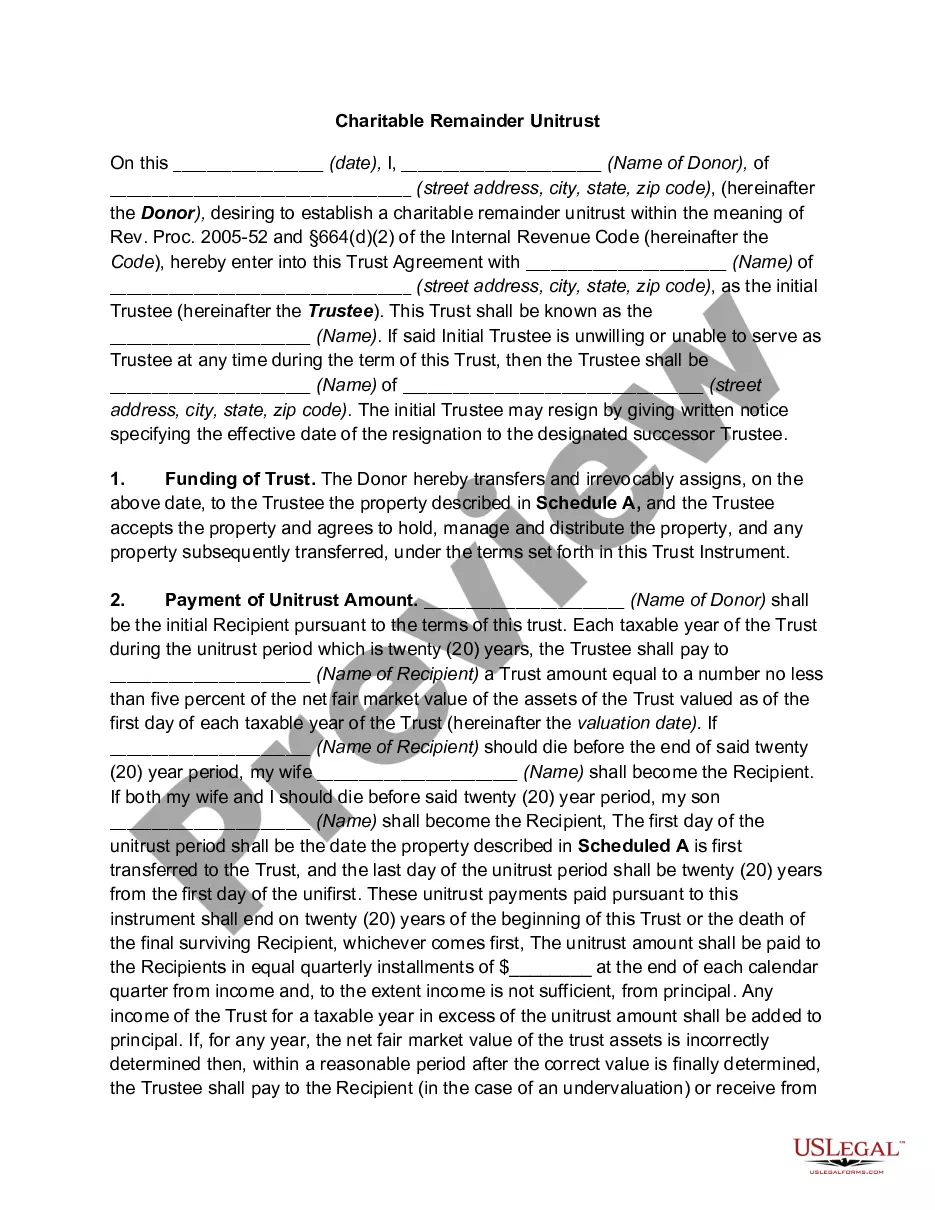
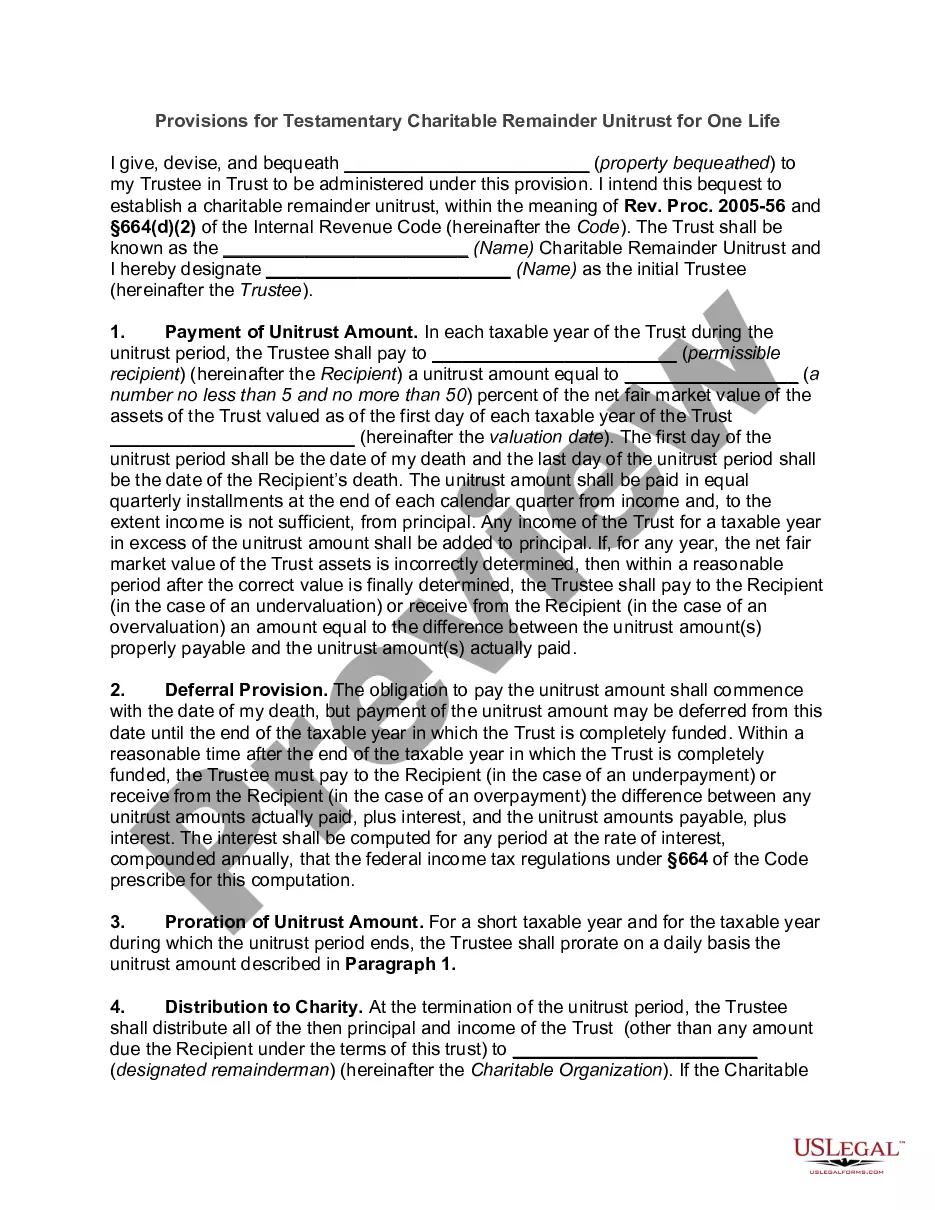
Get your form ready online
Our built-in tools help you complete, sign, share, and store your documents in one place.
Make edits, fill in missing information, and update formatting in US Legal Forms—just like you would in MS Word.
Download a copy, print it, send it by email, or mail it via USPS—whatever works best for your next step.
Sign and collect signatures with our SignNow integration. Send to multiple recipients, set reminders, and more. Go Premium to unlock E-Sign.
If this form requires notarization, complete it online through a secure video call—no need to meet a notary in person or wait for an appointment.
We protect your documents and personal data by following strict security and privacy standards.

Make edits, fill in missing information, and update formatting in US Legal Forms—just like you would in MS Word.

Download a copy, print it, send it by email, or mail it via USPS—whatever works best for your next step.

Sign and collect signatures with our SignNow integration. Send to multiple recipients, set reminders, and more. Go Premium to unlock E-Sign.

If this form requires notarization, complete it online through a secure video call—no need to meet a notary in person or wait for an appointment.

We protect your documents and personal data by following strict security and privacy standards.
Looking for another form?






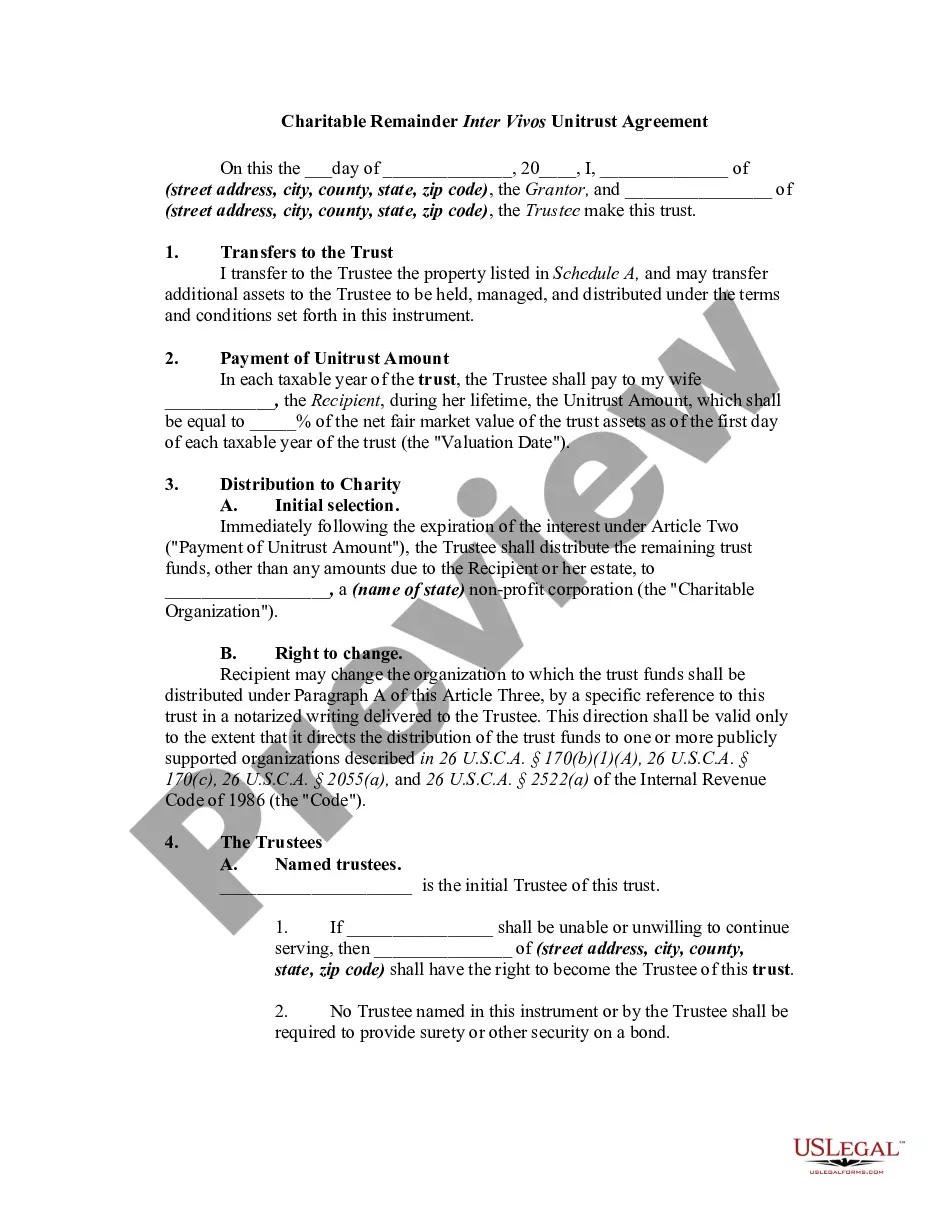
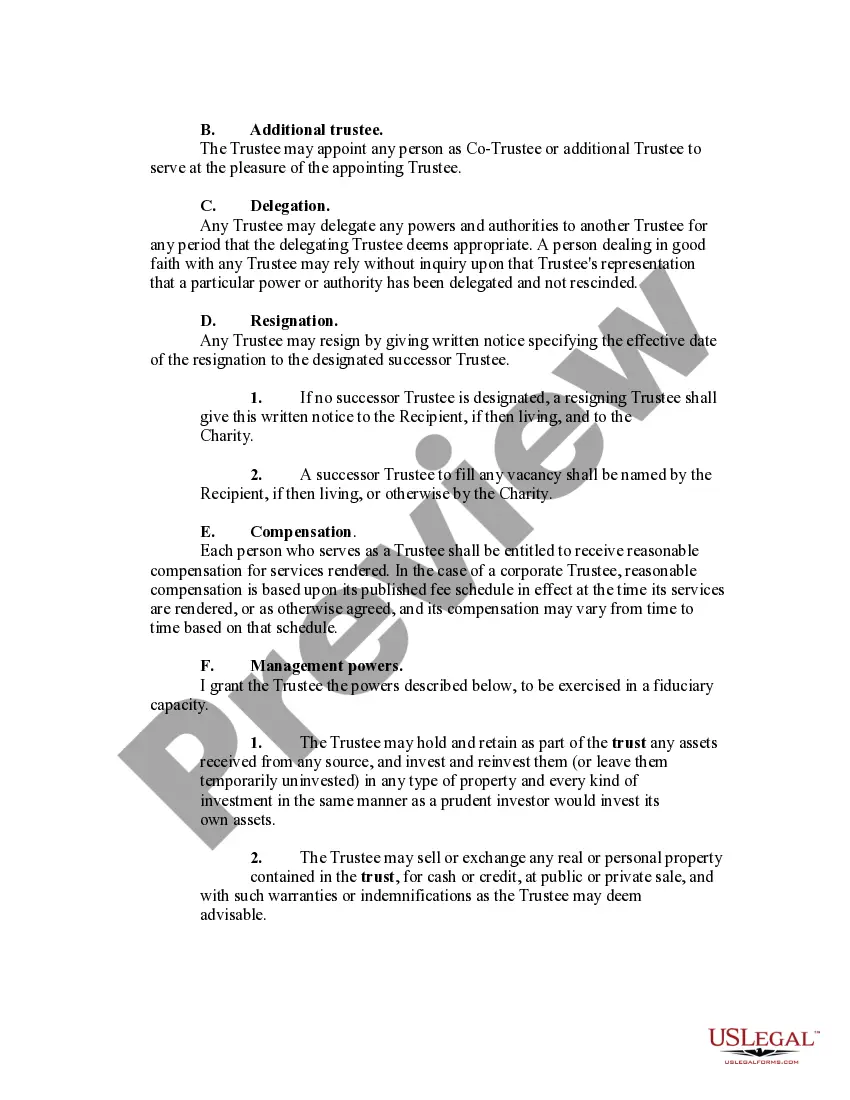
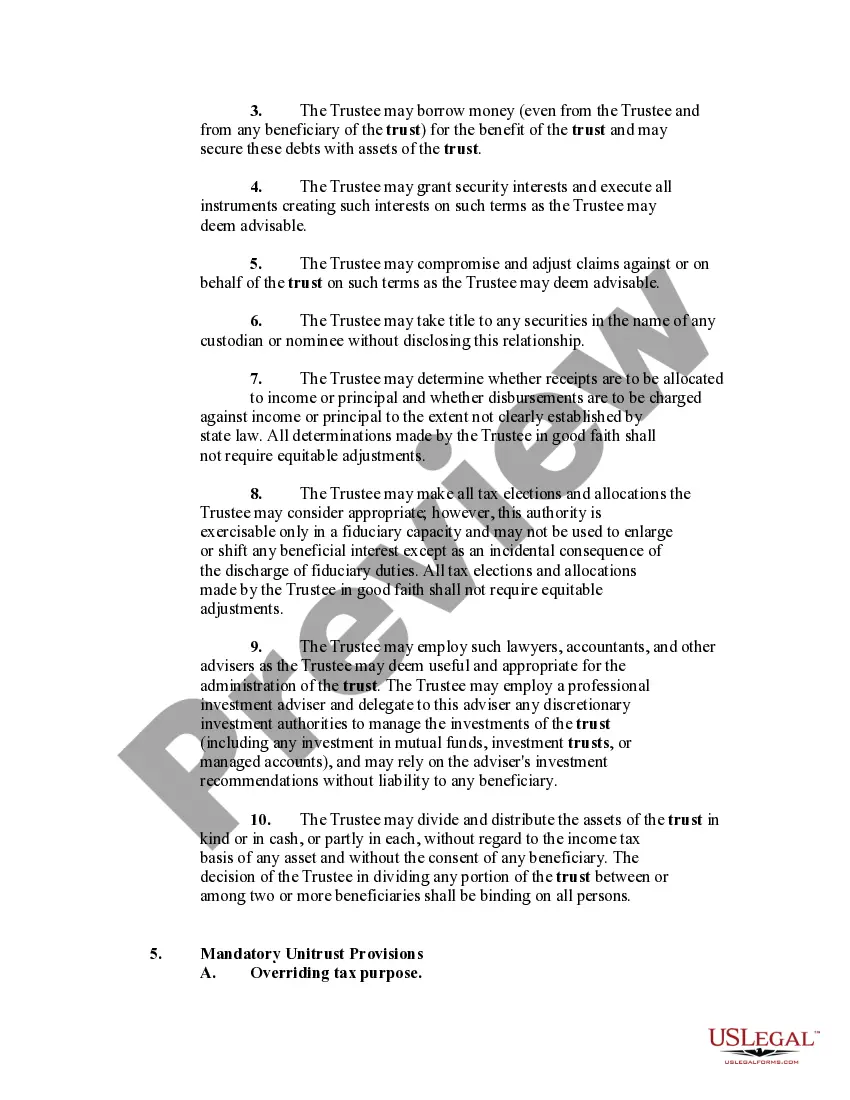
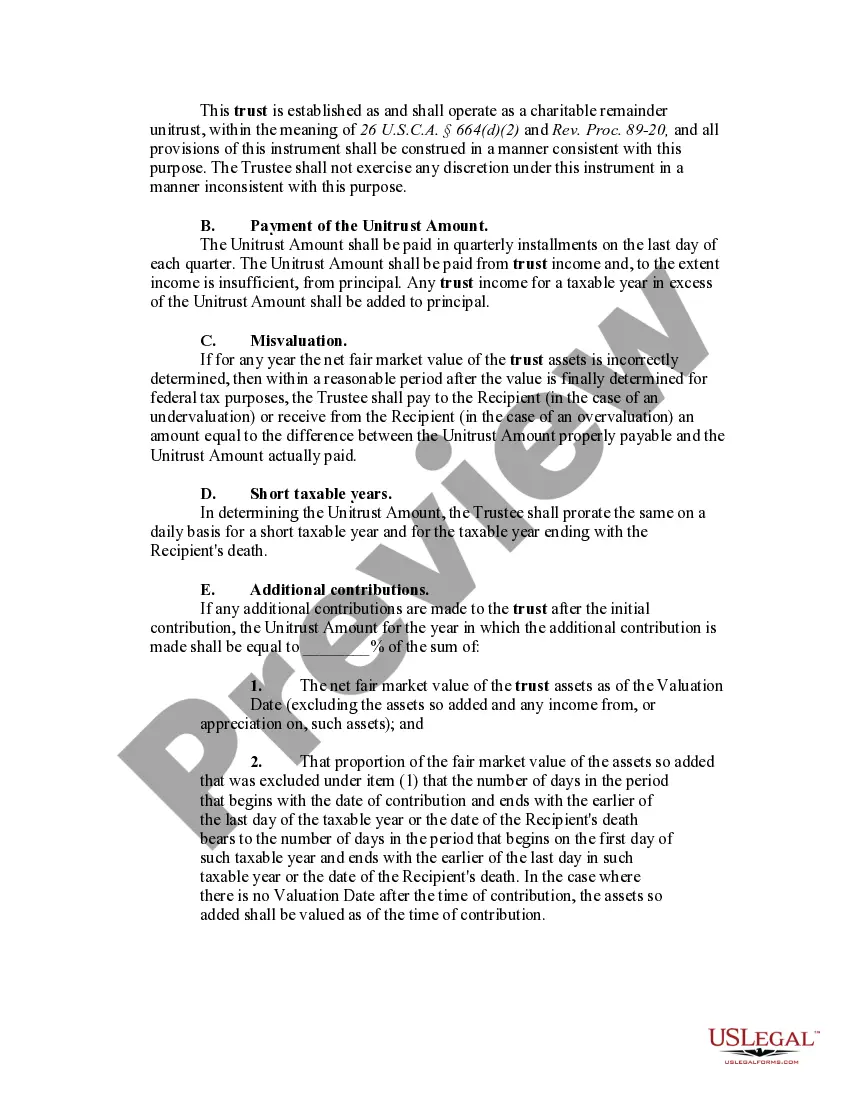
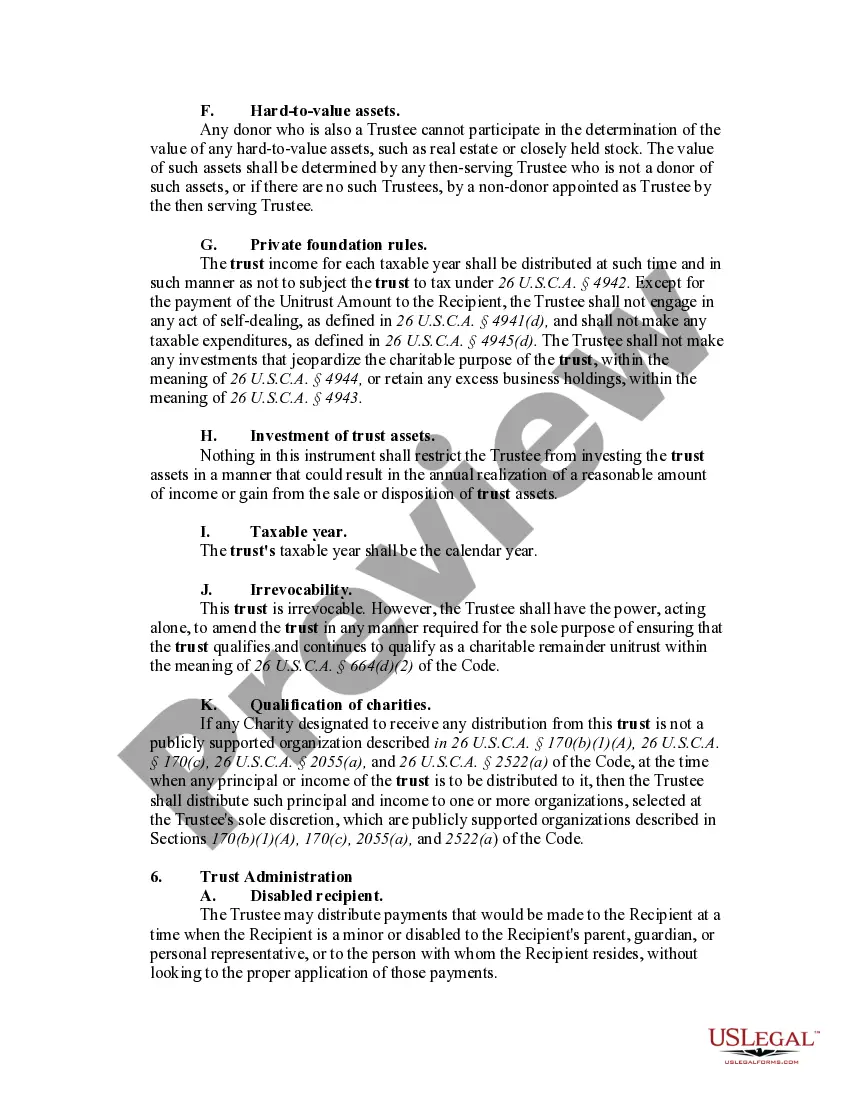
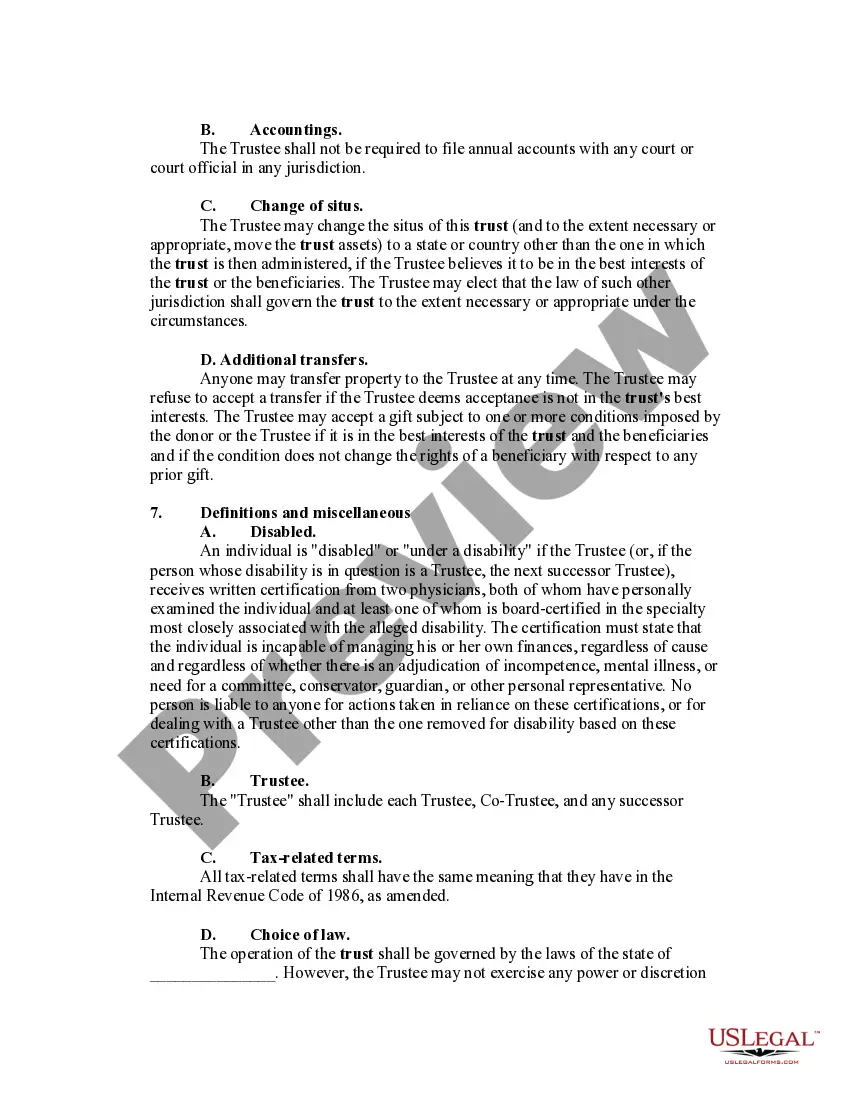
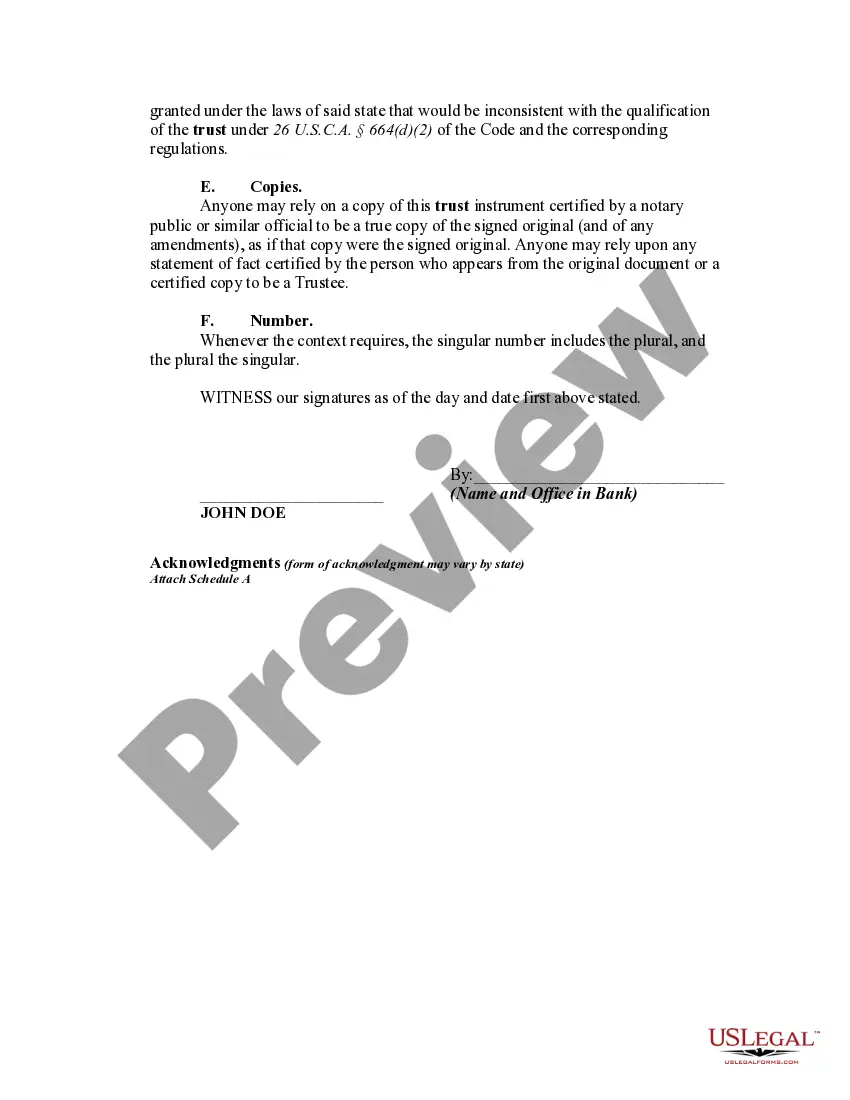
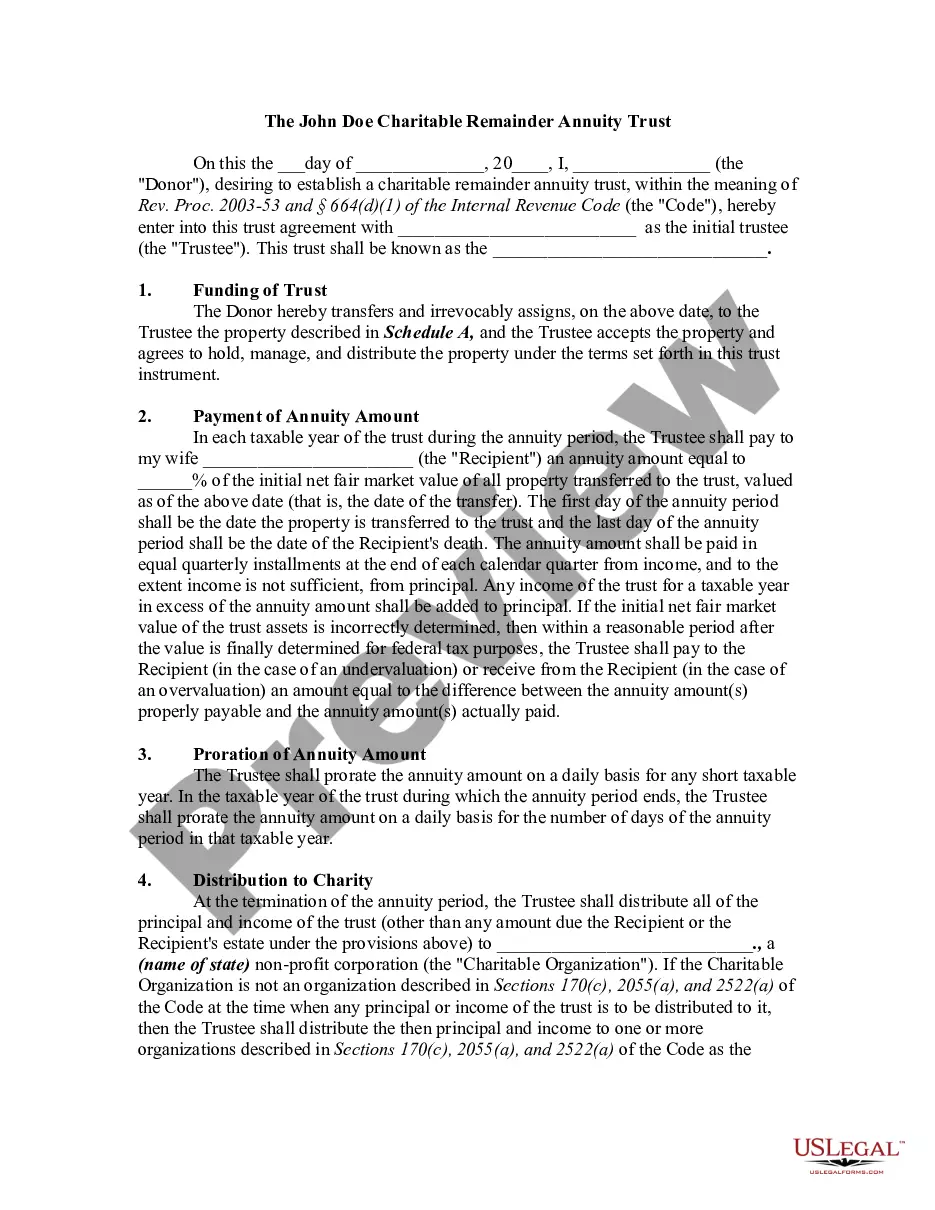
How to fill out Charitable Remainder Inter Vivos Unitrust Agreement?
- If you’re a returning user, log into your account and ensure your subscription is active. Download the template by clicking the Download button.
- For new users, start by browsing the extensive collection of forms. Use the Preview mode to ensure you select the correct document that adheres to your local jurisdiction.
- If the initial template does not meet your requirements, utilize the Search feature to find a more suitable option.
- Once you've selected the right form, click on the Buy Now button and choose your preferred subscription plan. You will need to create an account to gain access to the library.
- Proceed with the payment by entering your credit card details or using your PayPal account.
- Finally, download your completed form and access it at any time from the My Forms section in your profile.
US Legal Forms empowers users to complete legal documents quickly and accurately, boasting a vast selection of over 85,000 easily editable forms. Users also have access to premium experts to assist with form completion, ensuring that documents are both precise and compliant.
By following these straightforward steps, you can efficiently obtain your charitable form trust order with a debit card. Start today to simplify your legal document needs!
Form popularity
FAQ
Some forms, such as certain forms related to partnerships or estates, cannot be filed electronically due to IRS restrictions. Additionally, other tax situations may require paper filing. It is essential to check the IRS website or your tax software for the latest information. Staying informed is crucial when managing a charitable form trust order with a debit card.
You can file IRS Form 8283 electronically, provided your tax filing software allows for this option. Make sure to review your information for accuracy before submission, as this can expedite the process. Using a charitable form trust order with a debit card can also keep your documentation organized for e-filing.
Charitable trusts typically must file a tax return, particularly if they have taxable income or make distributions. The specific form required depends on the type of organization. Filing may seem daunting, but using platforms like uslegalforms can simplify managing your charitable form trust order with a debit card.
Yes, you can file a gift tax return electronically if you use tax software that supports it. However, the IRS specifies deadlines for filing, so make sure to complete it on time. This can provide peace of mind when you manage your charitable form trust order with a debit card, ensuring compliance with tax regulations.
Form 8283 is required when you claim a deduction for noncash contributions exceeding $500. You must complete this form and attach it to your tax return. Be mindful that an appraisal is necessary for items valued over $5,000. Utilizing a charitable form trust order with a debit card can streamline this reporting process.
Form 8283, which documents noncash charitable contributions, can indeed be electronically filed, but certain conditions apply. Your tax software must support e-filing for this form. Ensure all necessary information is accurate and complete to avoid delays. This can enhance your experience when managing your charitable form trust order with a debit card.
When you make charitable donations, you need to keep proper records for the IRS. Acceptable proof includes bank statements, canceled checks, or receipts that clearly show the donation amount and the charity's name. If you donate goods, a detailed list along with the charity's written acknowledgment is necessary. Using a charitable form trust order with a debit card may simplify tracking your contributions.
Claiming charitable donations without a receipt is possible under certain circumstances, especially for gifts under $250. However, without proof, you risk challenges to your claims during tax audits. When using a charitable form trust order with a debit card, you can ensure your donation records are transparent and verifiable. This method simplifies your records and positions you to claim your deductions confidently.
Receipt requirements for donations under $250 are typically more relaxed, but having one is beneficial. Although the IRS allows deductions without a receipt for smaller donations, documentation helps ensure accurate record-keeping. Using a charitable form trust order with a debit card can provide a reliable transaction record, which aids in verifying charitable contributions. It is always wise to maintain a clear record of your generosity.
Generating Form 5227, which reports the activities of a charitable trust, can be completed using tax software or through professional tax help. If you're using a charitable form trust order with a debit card, collecting all necessary information beforehand streamlines the process. It is crucial to provide accurate figures and descriptions of your charitable contributions. By using the right tools, you can simplify this reporting and focus on your charitable goals.