Charitable Form Trust File With Taxes
Description
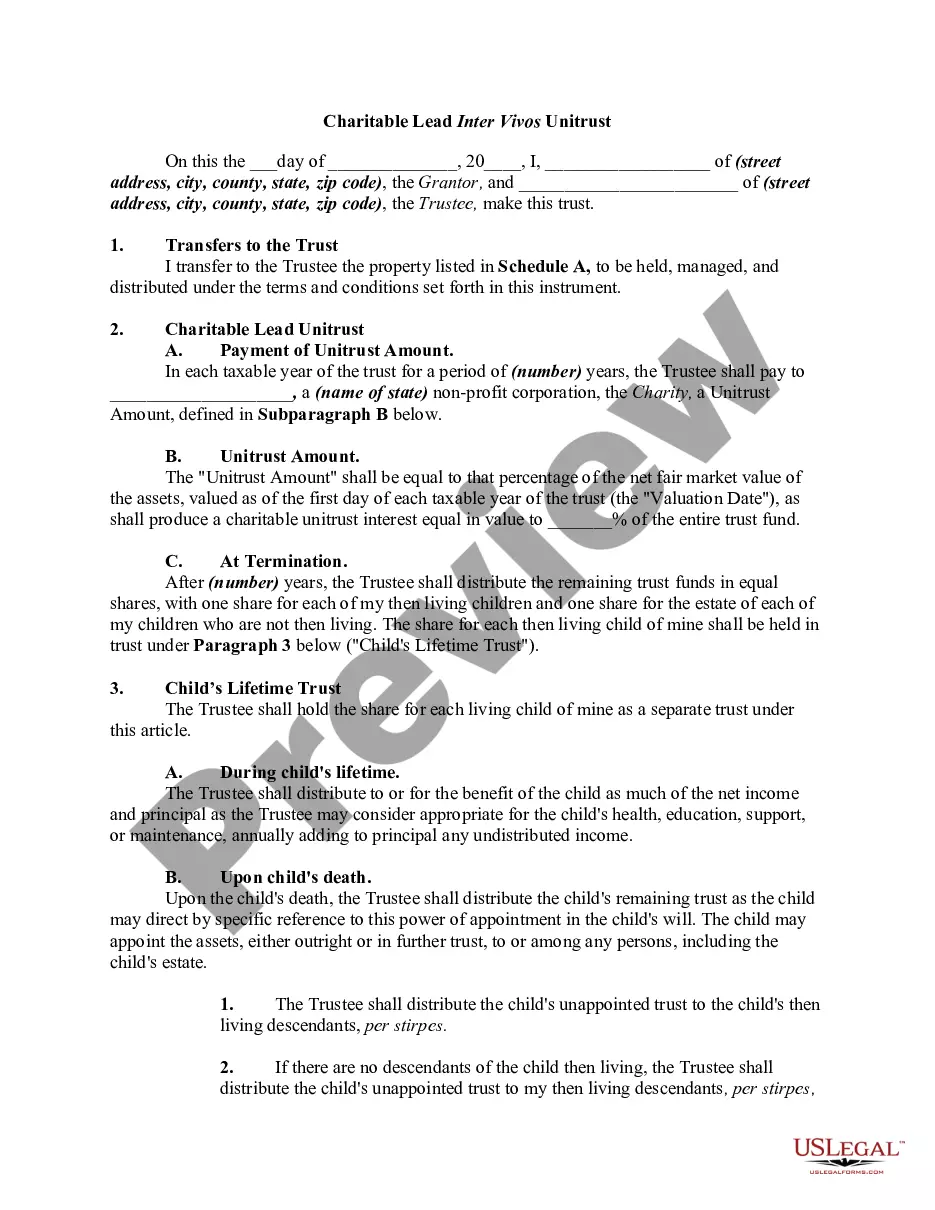
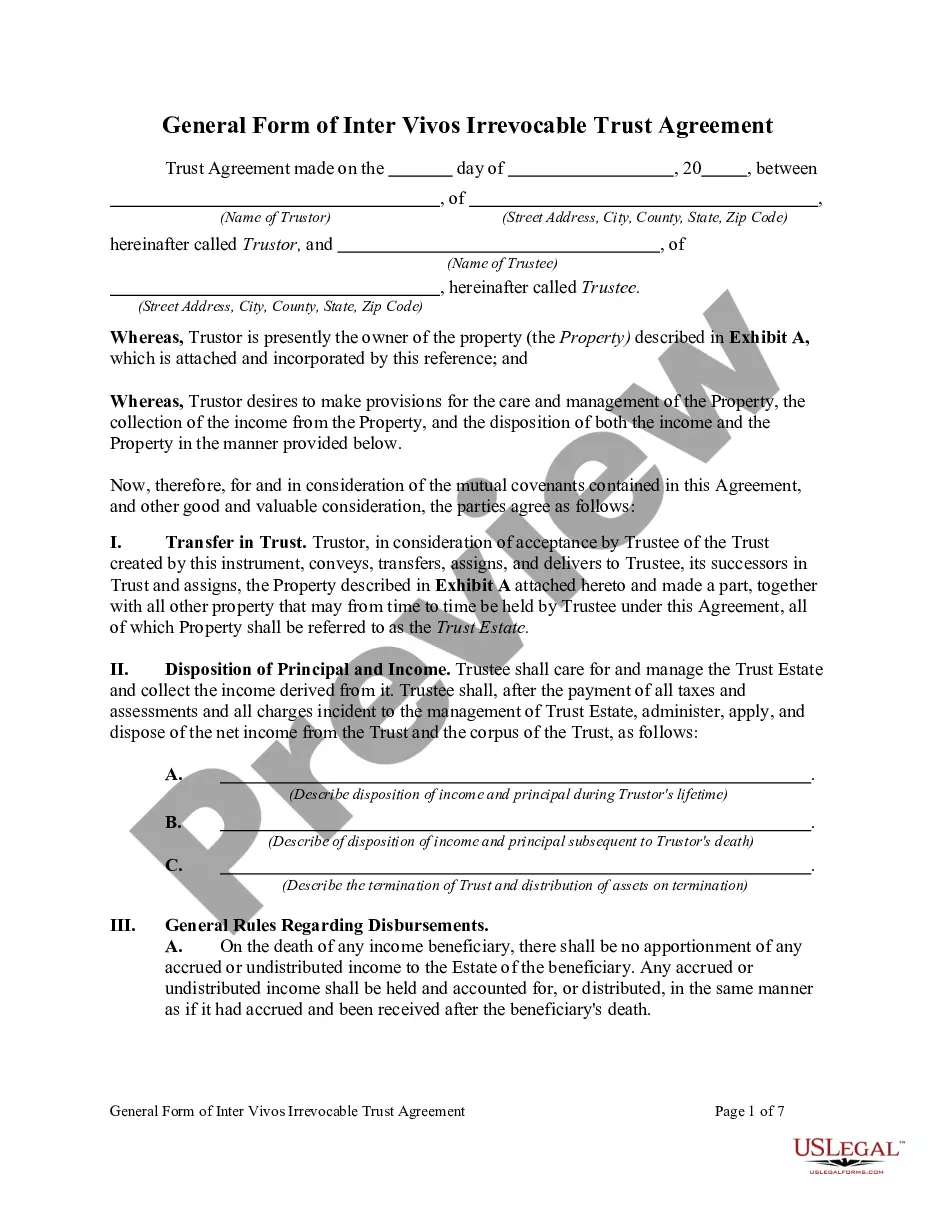
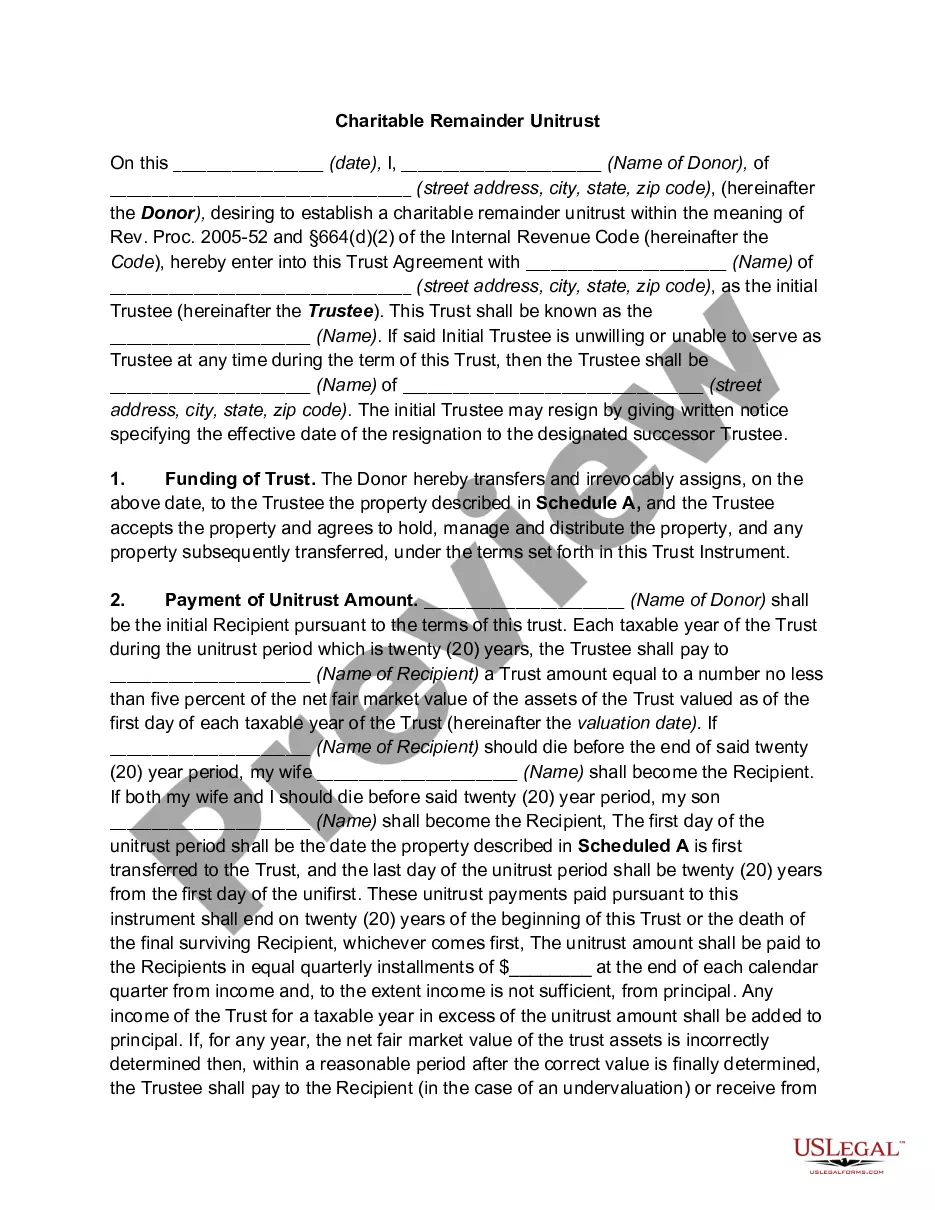
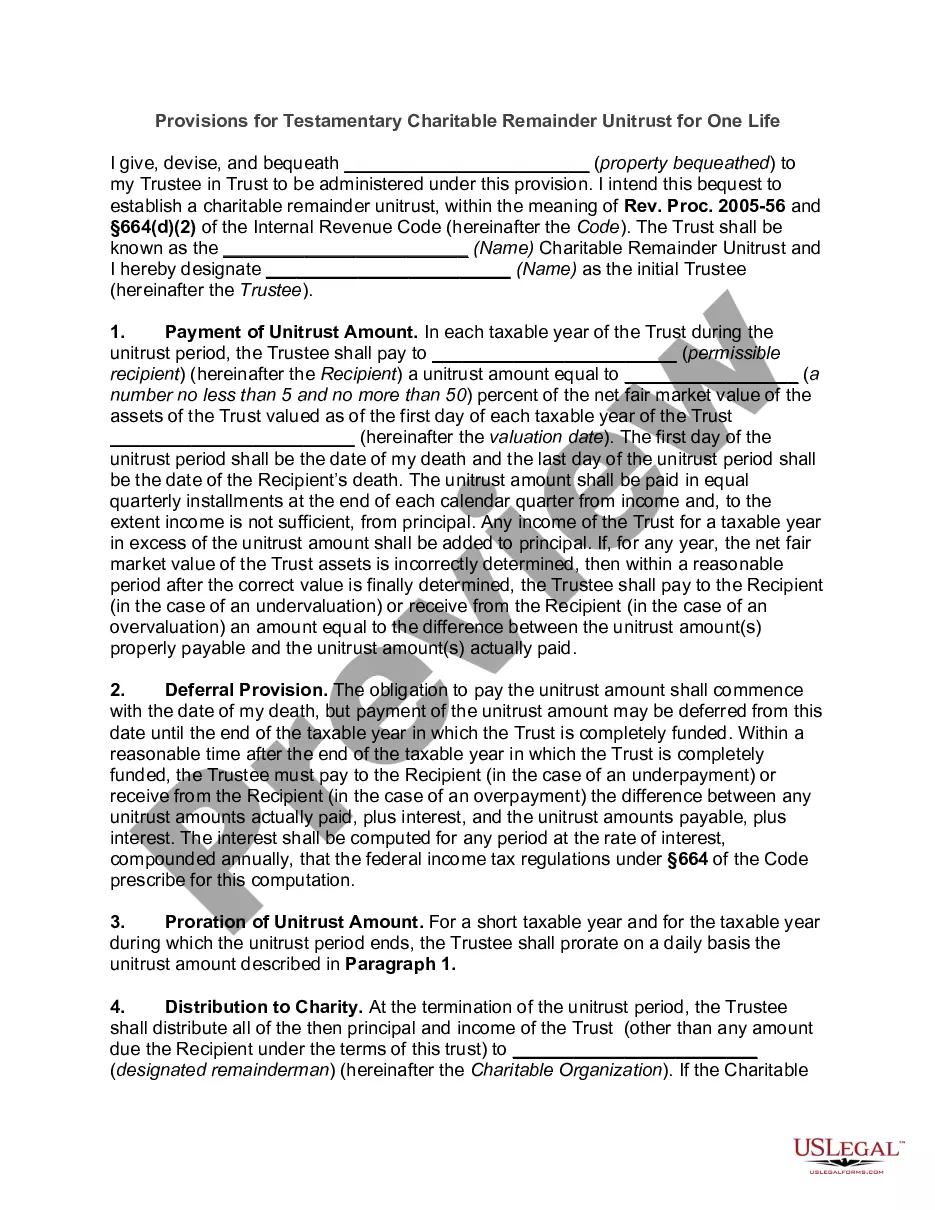
Get your form ready online
Our built-in tools help you complete, sign, share, and store your documents in one place.
Make edits, fill in missing information, and update formatting in US Legal Forms—just like you would in MS Word.
Download a copy, print it, send it by email, or mail it via USPS—whatever works best for your next step.
Sign and collect signatures with our SignNow integration. Send to multiple recipients, set reminders, and more. Go Premium to unlock E-Sign.
If this form requires notarization, complete it online through a secure video call—no need to meet a notary in person or wait for an appointment.
We protect your documents and personal data by following strict security and privacy standards.

Make edits, fill in missing information, and update formatting in US Legal Forms—just like you would in MS Word.

Download a copy, print it, send it by email, or mail it via USPS—whatever works best for your next step.

Sign and collect signatures with our SignNow integration. Send to multiple recipients, set reminders, and more. Go Premium to unlock E-Sign.

If this form requires notarization, complete it online through a secure video call—no need to meet a notary in person or wait for an appointment.

We protect your documents and personal data by following strict security and privacy standards.
Looking for another form?







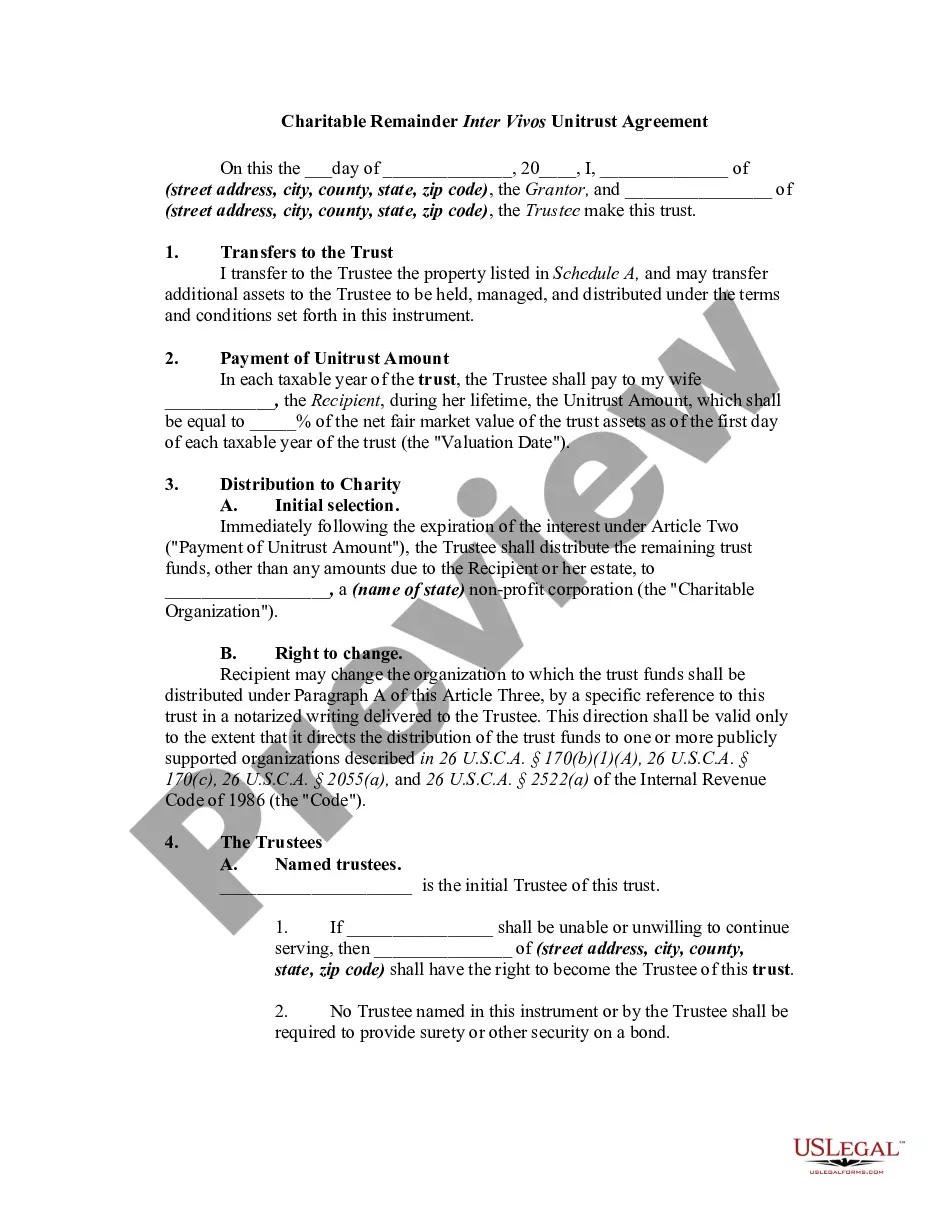
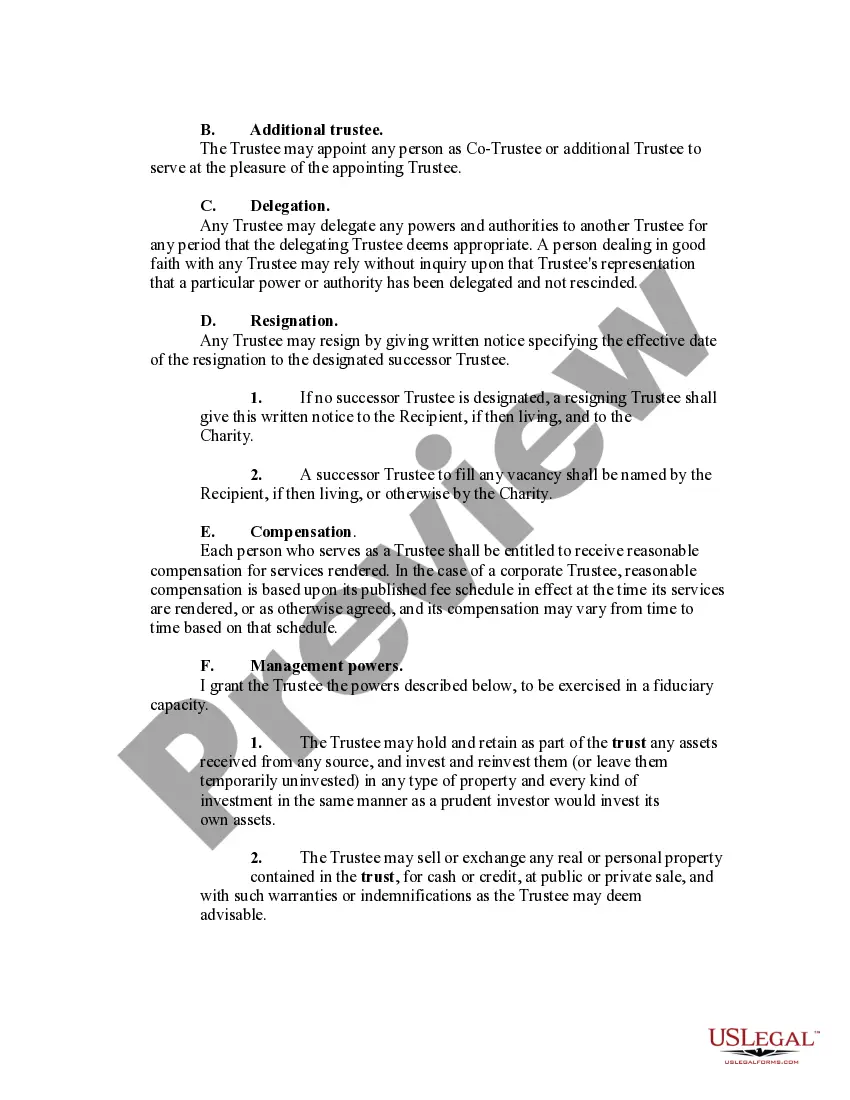
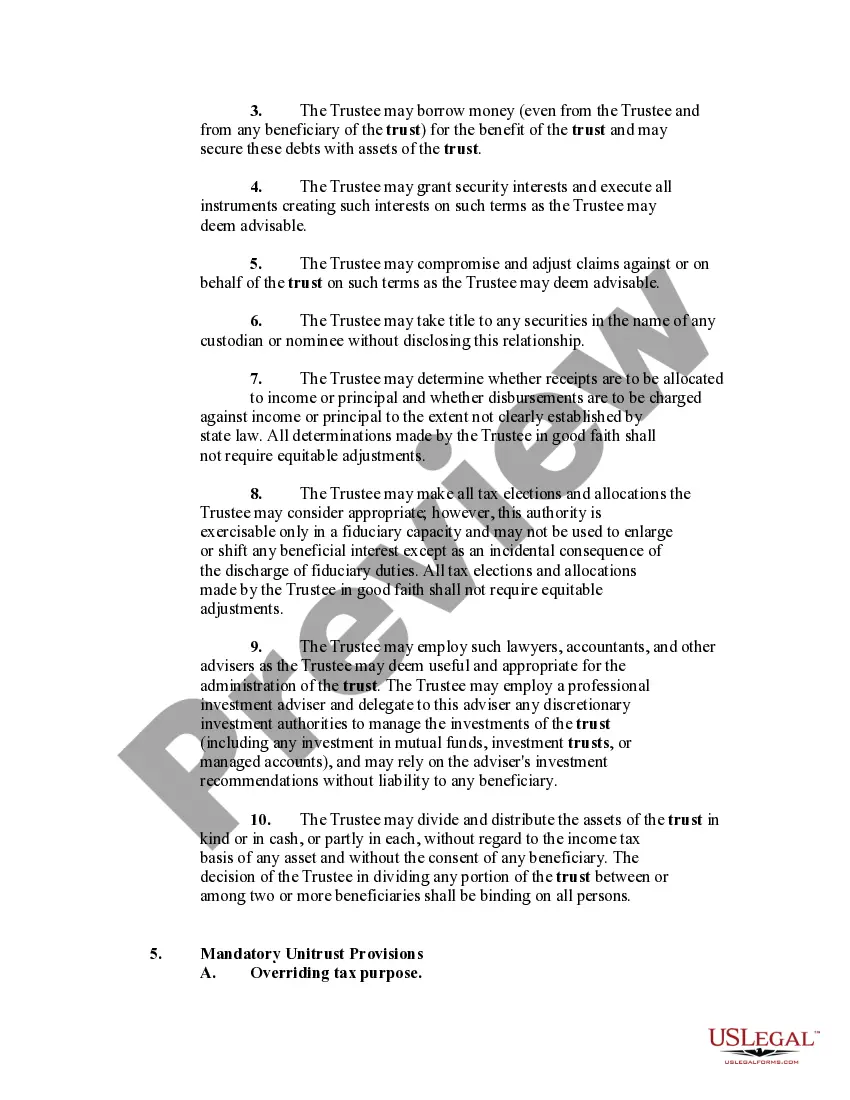
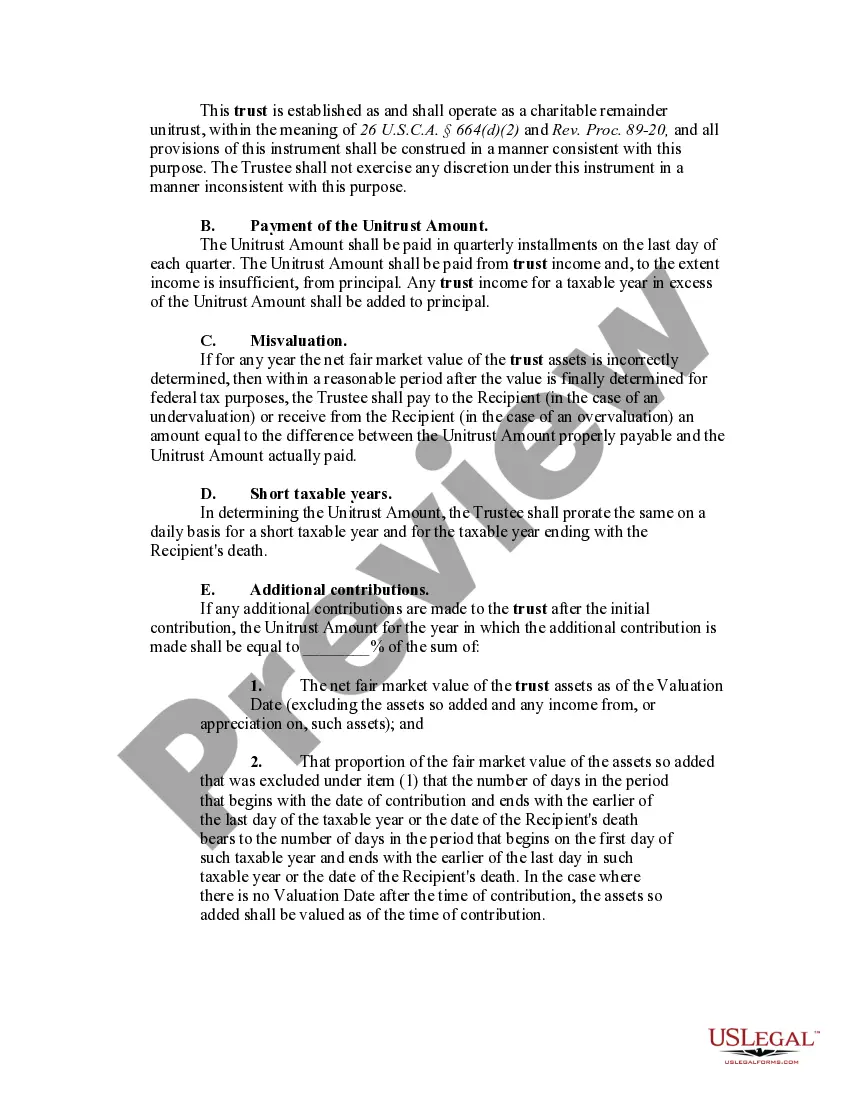
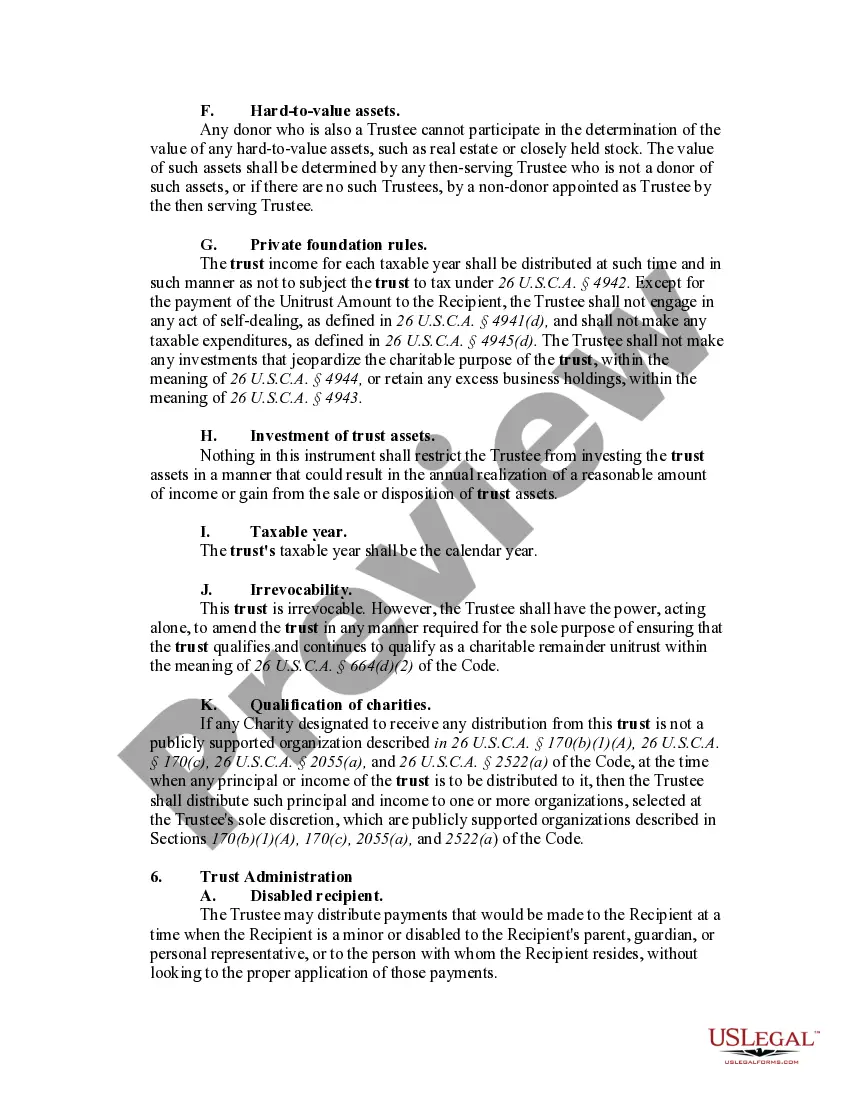
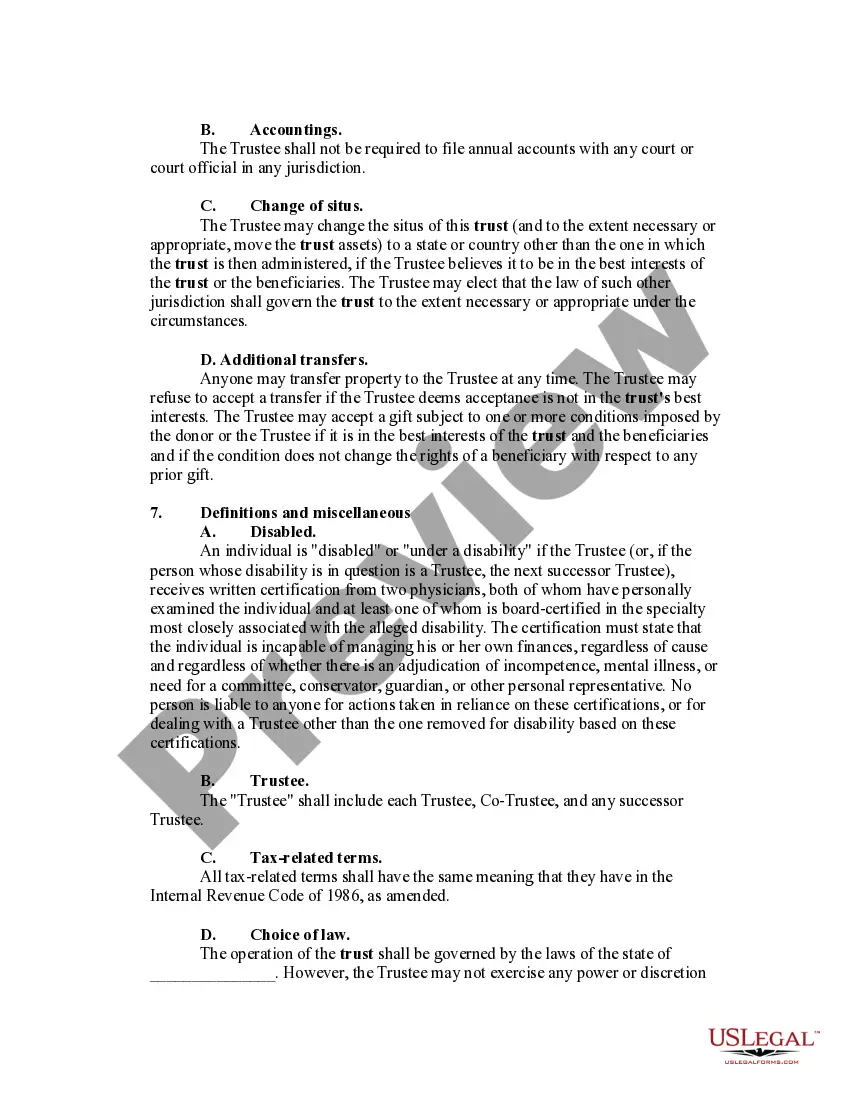
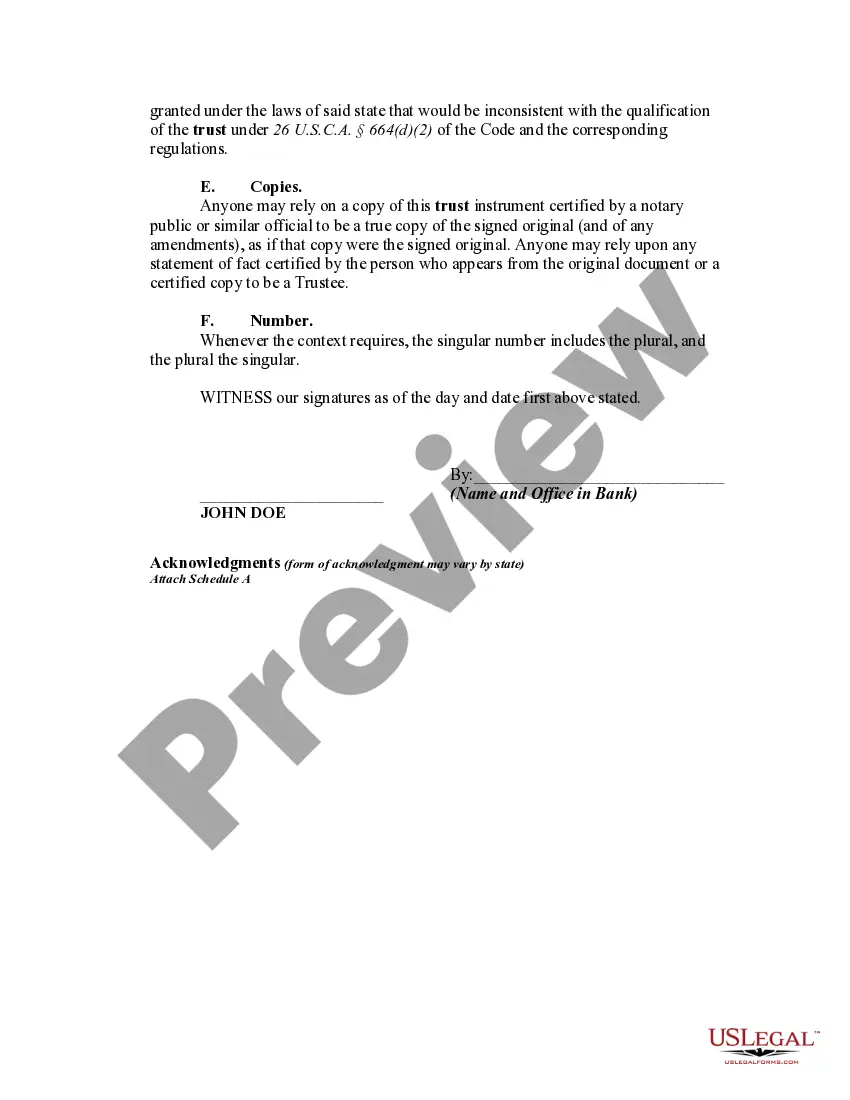
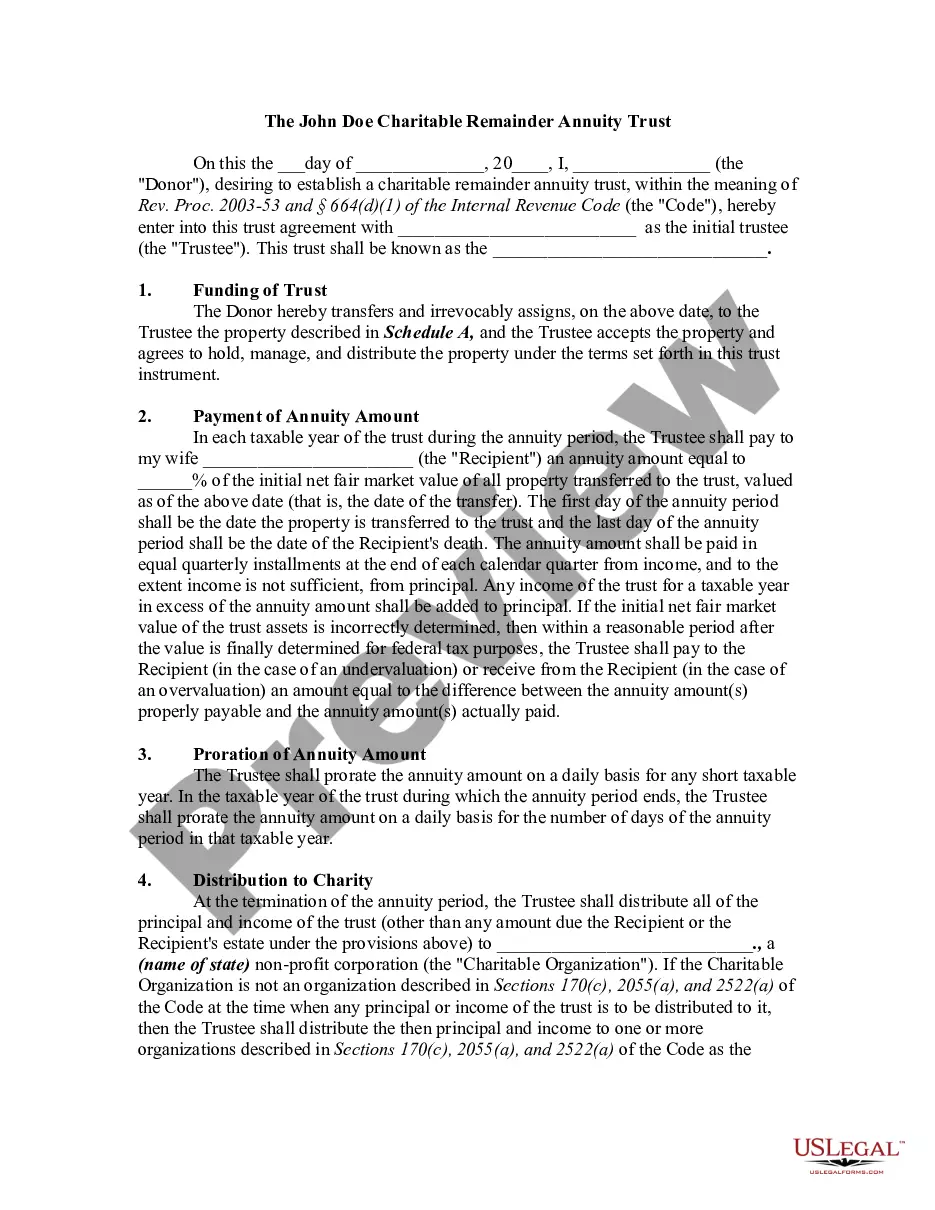
How to fill out Charitable Remainder Inter Vivos Unitrust Agreement?
- Log in to your US Legal Forms account. If you're a returning user, ensure your subscription is active. If not, renew it prior to proceeding.
- Preview the form that aligns with your charitable trust needs. Confirm it meets your local jurisdiction requirements.
- If needed, utilize the search feature to find an alternate template. Make sure it fits your specifications.
- Choose your preferred subscription plan and click 'Buy Now' to purchase the form.
- Complete the payment process using your credit card or PayPal account.
- Download the completed form to your device, ensuring you can access it anytime from the 'My Forms' section of your profile.
By following these steps, you can easily manage your charitable form trust while benefiting from the resources offered by US Legal Forms.
Start today and experience the peace of mind that comes with ensuring your legal documents are in order!
Form popularity
FAQ
Yes, trust income must be reported on tax returns to ensure compliance with IRS rules. The income generated by the trust usually gets reported on Form 1041, as mentioned earlier. Staying informed about how to manage this aspect will streamline your charitable form trust file with taxes. Consulting with tax professionals or using resources like USLegalForms can be beneficial.
The minimum income for a trust to file taxes generally depends on the type of trust and its structure. In many cases, if the trust earns $600 or more in gross income, it must file a tax return. Being aware of these thresholds is important when planning your charitable form trust file with taxes. You can find resources on platforms like USLegalForms to learn more about this.
Yes, a trust typically requires its own tax return if it has taxable income or if it has any current beneficiaries. Filing a separate return helps ensure compliance with tax regulations. It is a crucial step in properly managing your charitable form trust file with taxes. Platforms like USLegalForms can assist in preparing these returns accurately.
Whether your trust needs to file a tax return depends on its income level and type. Generally, if your trust generates income above a certain threshold, it will need to file a return. Understanding these requirements can help you strategically prepare your charitable form trust file with taxes. Utilizing platforms like USLegalForms can simplify this process.
Yes, a charitable remainder trust must file Form 1041, which is the U.S. Income Tax Return for Estates and Trusts. This form reports income, deductions, and credits of the trust. Keeping this in mind will help ensure accurate reporting for your charitable form trust file with taxes. Consulting tax professionals can provide additional guidance to meet your obligations.
To document charitable donations for taxes, you should keep detailed records of each gift you make. Gather receipts, acknowledgments from charitable organizations, and bank statements showing the transaction. It's important to ensure that these documents clearly indicate the amount donated and the charity's name. This process will help you when you are ready to file for your charitable form trust file with taxes.
Yes, a charitable trust must file a tax return if it has gross income of $600 or more in a tax year. This requirement helps the IRS monitor the financial activities of the trust and ensures that your charitable form trust files with taxes properly. Even if the trust does not owe any taxes, filing is necessary to maintain transparency and compliance. For assistance in navigating these requirements, consider utilizing the trusted resources available on US Legal Forms.
The IRS form you will need for a charitable trust is Form 1041, U.S. Income Tax Return for Estates and Trusts. This form is crucial when you file taxes as it helps you report the income, deductions, and credits of the charitable trust. Using this form ensures that your charitable form trust files with taxes accurately, maintaining compliance with IRS regulations. You can find resources and templates on the US Legal Forms platform to simplify this process.
For a trust, the primary tax form to file is Form 1041, used to report income, deductions, and credits for the trust. Additional forms may be necessary based on transactions and activities throughout the year. Using the uslegalforms platform can simplify the process, ensuring your charitable form trust file with taxes meets all IRS requirements comprehensively.
If a trust has no income, it may not be necessary to file Form 1041, but it is essential to understand the specific circumstances affecting your situation. The IRS has particular rules that govern this, and compliance is vital for maintaining the trust's good standing. If you need guidance on how to approach this, the uslegalforms platform can help clarify your filing requirements efficiently.