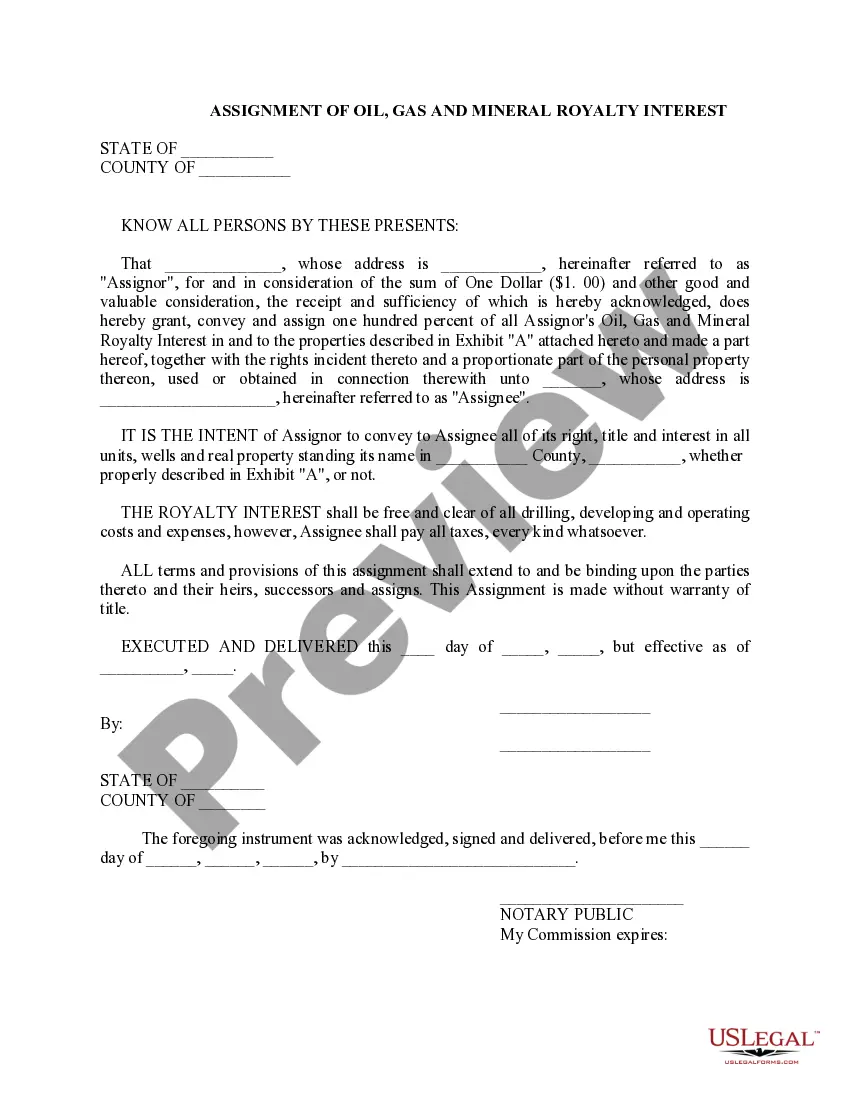
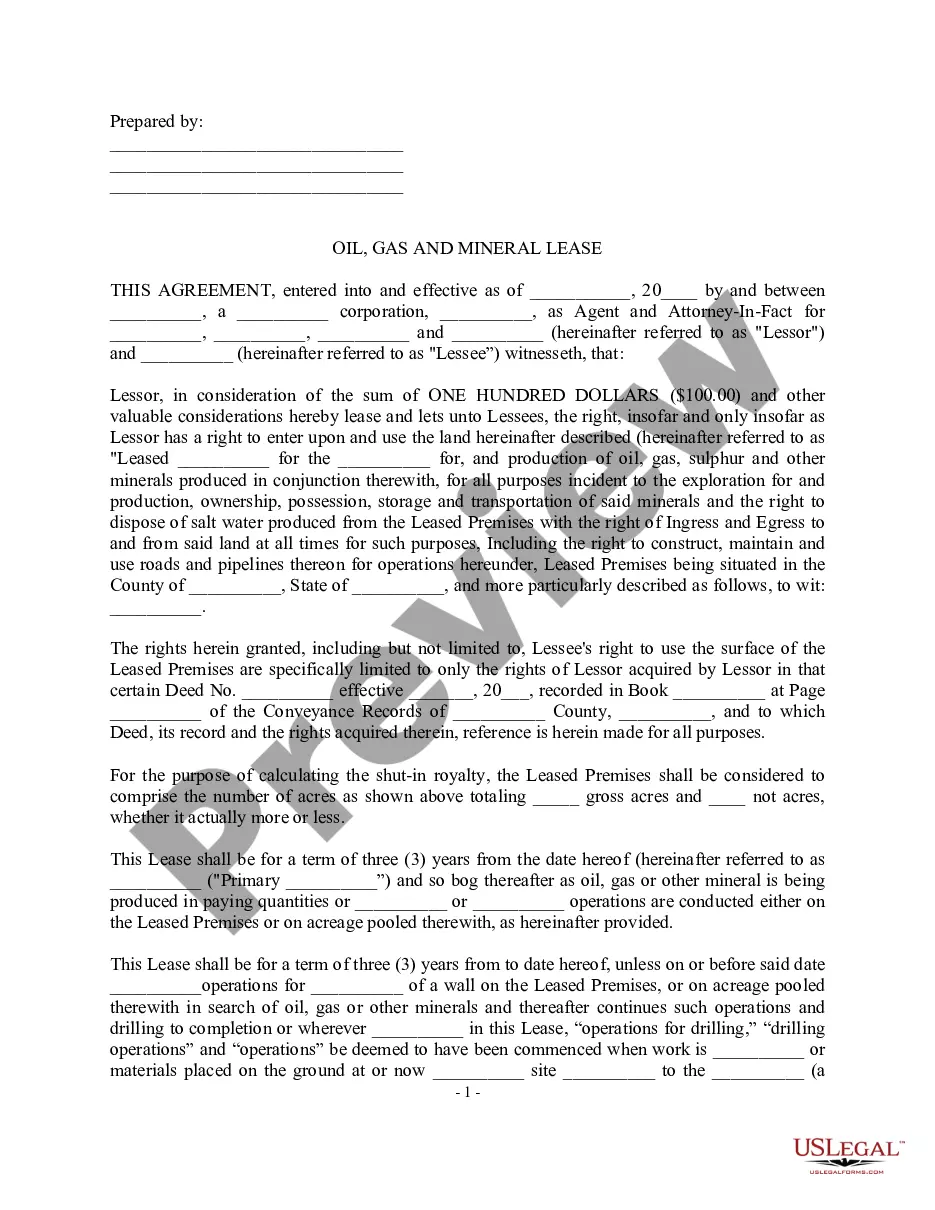
Oil Royalty Companies
Description
Get your form ready online
Our built-in tools help you complete, sign, share, and store your documents in one place.
Make edits, fill in missing information, and update formatting in US Legal Forms—just like you would in MS Word.
Download a copy, print it, send it by email, or mail it via USPS—whatever works best for your next step.
Sign and collect signatures with our SignNow integration. Send to multiple recipients, set reminders, and more. Go Premium to unlock E-Sign.
If this form requires notarization, complete it online through a secure video call—no need to meet a notary in person or wait for an appointment.
We protect your documents and personal data by following strict security and privacy standards.

Make edits, fill in missing information, and update formatting in US Legal Forms—just like you would in MS Word.

Download a copy, print it, send it by email, or mail it via USPS—whatever works best for your next step.

Sign and collect signatures with our SignNow integration. Send to multiple recipients, set reminders, and more. Go Premium to unlock E-Sign.

If this form requires notarization, complete it online through a secure video call—no need to meet a notary in person or wait for an appointment.

We protect your documents and personal data by following strict security and privacy standards.
Looking for another form?

How to fill out Oil, Gas And Mineral Royalty Transfer?
Regardless of whether it is for commercial reasons or personal affairs, everyone encounters the need to handle legal matters at some stage in their lives. Completing legal documents necessitates meticulous care, starting from selecting the correct form template.
For instance, if you choose an incorrect version of the Oil Royalty Companies document, it will be dismissed upon submission. Thus, it is crucial to acquire a reliable source of legal papers such as US Legal Forms.
With a vast catalog of US Legal Forms available, there is no need to waste time searching for the suitable sample online. Utilize the library’s user-friendly navigation to find the correct template for any scenario.
- Obtain the sample you require by using the search box or browsing the catalog.
- Verify the form’s description to confirm it corresponds to your circumstances, state, and locality.
- Click on the form’s preview to review it.
- If it is not the correct document, return to the search option to locate the Oil Royalty Companies template you need.
- Download the file once it fits your requirements.
- If you already possess a US Legal Forms account, simply click Log in to access previously saved documents in My documents.
- If you do not yet have an account, you may acquire the form by clicking Buy now.
- Choose the appropriate price option.
- Complete the account registration form.
- Select your payment method: you can opt for a credit card or PayPal account.
- Choose the file format you prefer and download the Oil Royalty Companies.
- Once it is saved, you can either fill out the form using editing software or print it and complete it by hand.
Form popularity
FAQ
To receive oil royalties, you typically need to have ownership of mineral rights. When oil companies extract resources from your land, they compensate you through royalties, which are a percentage of the profits. Engaging with reliable oil royalty companies can streamline this process by providing clear contracts and ensuring timely payments. Additionally, platforms like US Legal Forms can help you navigate the legal requirements and documentation needed to secure your royalties successfully.
Certain types of income are not taxable, such as gifts, inheritances, and some forms of life insurance payouts. However, when it comes to oil royalties, the income you earn is generally subject to tax. If you're facing confusion about taxation on different income types, platforms like uslegalforms can simplify the information for you.
Indeed, oil royalties are considered taxable income by the IRS. This includes all payments you receive from oil royalty companies, which you need to report on your tax return. Understanding this aspect of oil royalties will help you manage your income and plan for taxes effectively.
To receive royalties from oil and gas, you can enter into a lease agreement with oil royalty companies. This contract allows these companies to extract resources from your land or rights, in exchange for a portion of the profits. Investigating the terms and consulting professionals will help ensure you secure a fair deal.
While oil royalty companies may not issue a Form 1099-MISC for payments under $600, you're still required to report all income, regardless of the amount. This includes any royalties below that threshold. Staying compliant with tax laws ensures that you avoid any potential issues down the line.
To report oil royalties on your tax return, you'll typically use Schedule E, as this form is designed for supplemental income. You will enter the gross income from royalty payments, deduct any related expenses, and calculate your net income. If you're unsure, platforms like uslegalforms can guide you through the reporting process.
Yes, oil royalties are generally taxed as regular income. This means your royalty payments will be added to your total income, affecting your income tax bracket. Understanding how this works can help you plan your finances better, so consider consulting with tax professionals familiar with oil royalty companies.
When receiving income from oil royalty companies, you'll need to report it using IRS Form 1099-MISC. This form details the royalties you earned throughout the year. Oil royalty companies usually provide this form to you and the IRS, simplifying your tax reporting process.
Oil royalties are payments made to landowners or mineral rights holders for the extraction of oil from their property. These payments are typically a percentage of the revenue generated from the oil produced, providing a steady income stream for property owners. Oil royalty companies facilitate these transactions by connecting producers with landowners, ensuring fair compensation. By partnering with reputable oil royalty companies, you can navigate this complex landscape more effectively.
Oil royalty companies typically acquire rights to oil production on various properties, managing the operations while collecting revenue for their services. They play a crucial role in connecting landowners with energy companies, ensuring that royalty payments are distributed accurately and promptly. By outsourcing these responsibilities, landowners can enjoy the benefits of oil extraction without becoming directly involved. This model simplifies the process for all parties involved.