Employment Termination For Reasons
Description
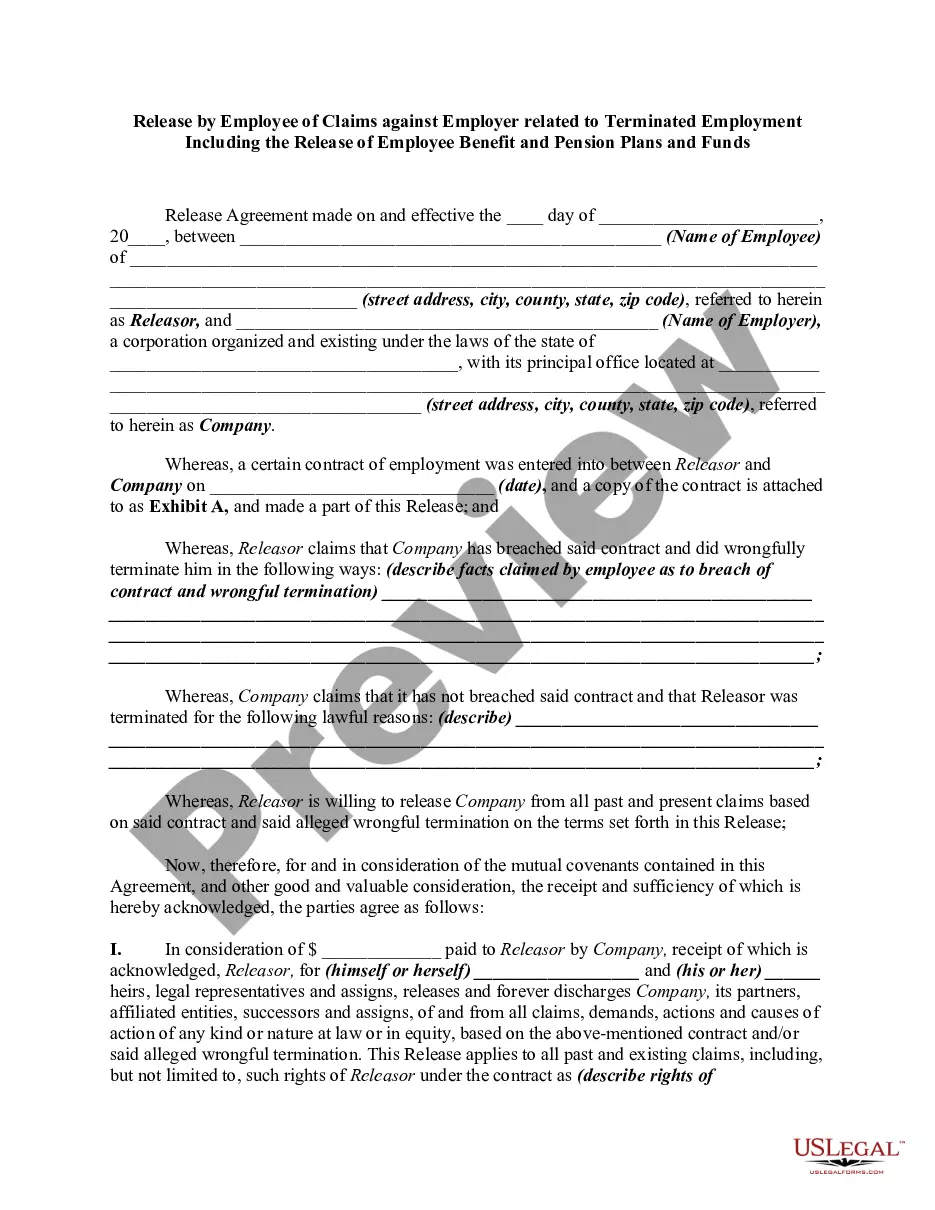
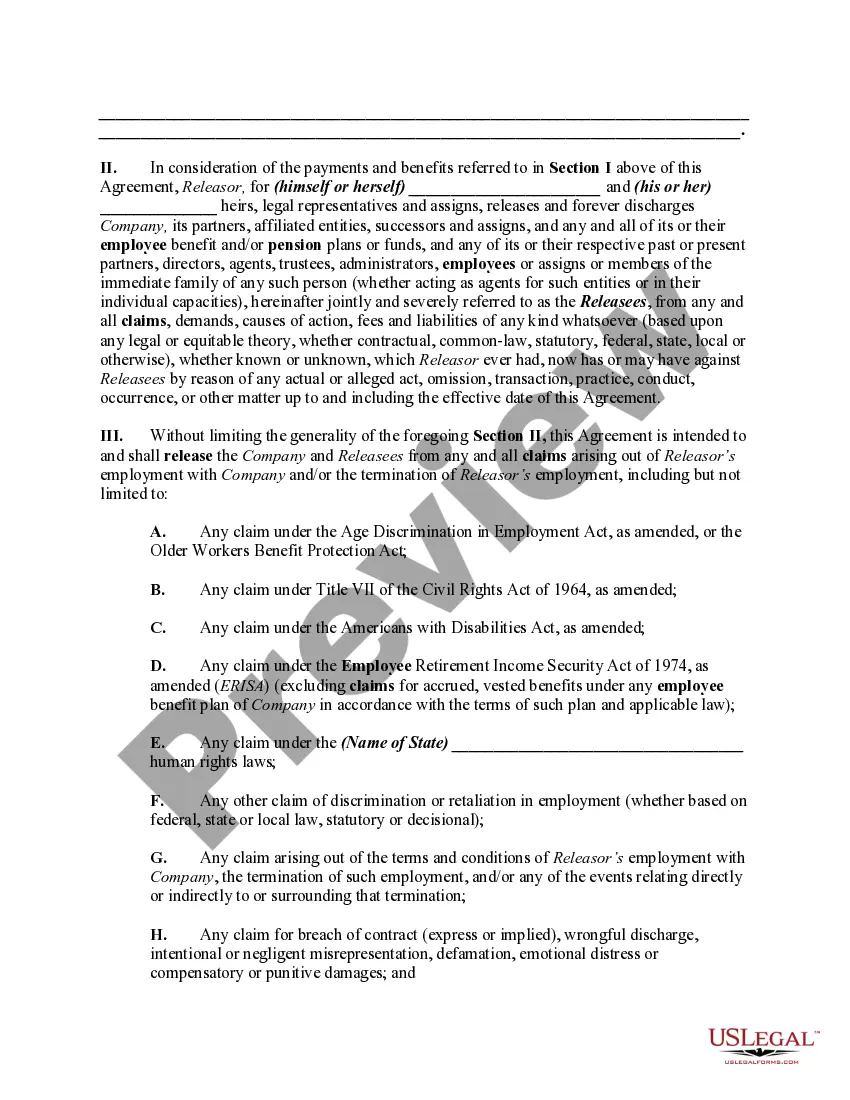
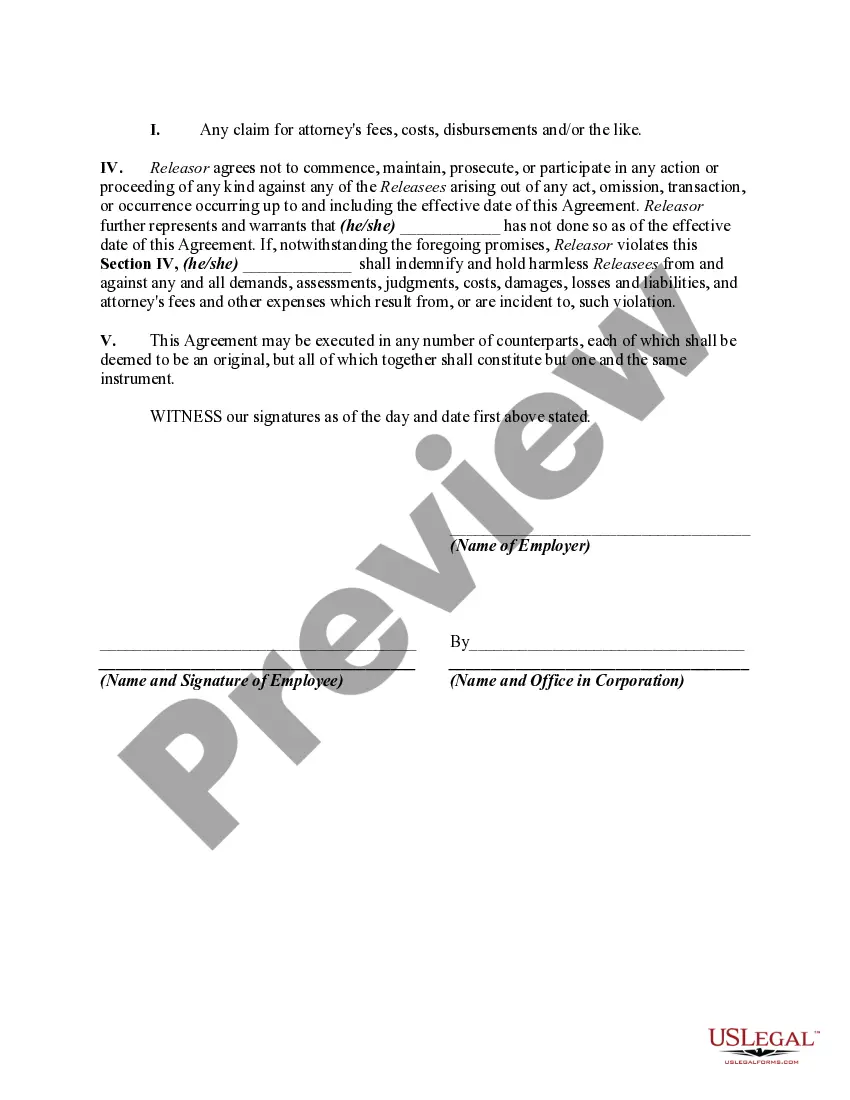
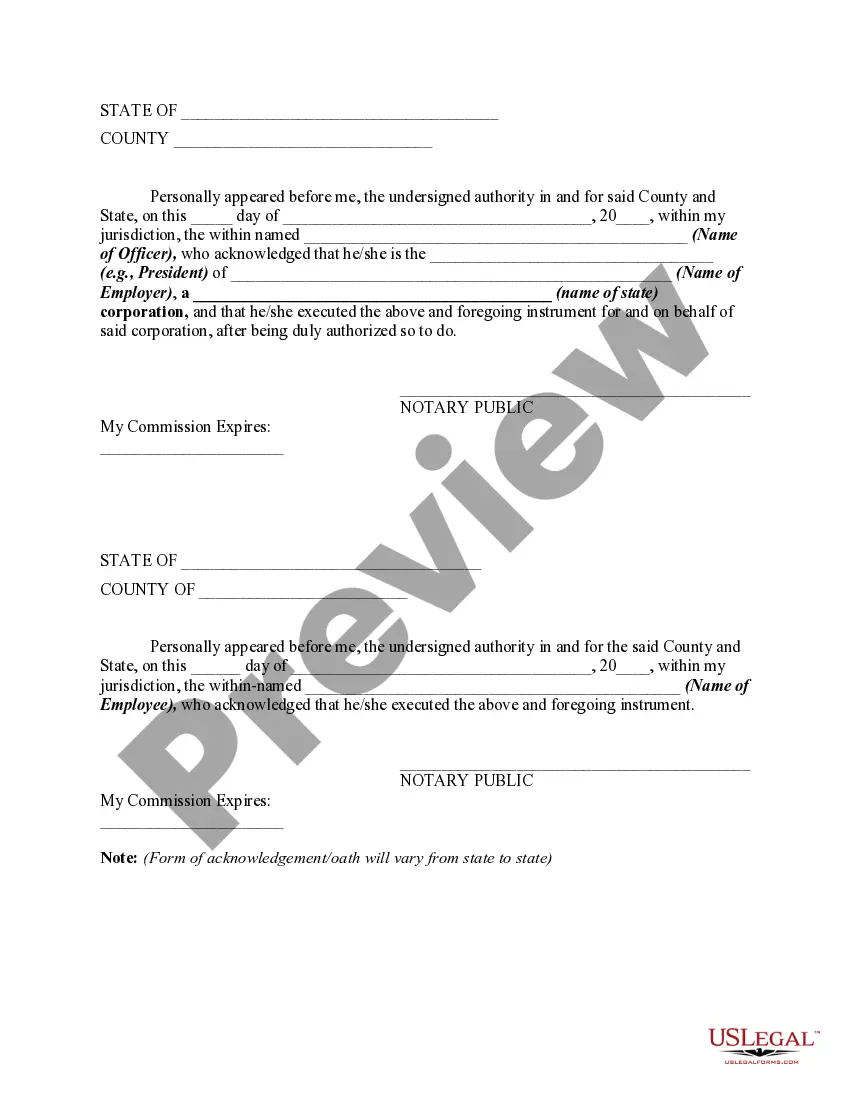
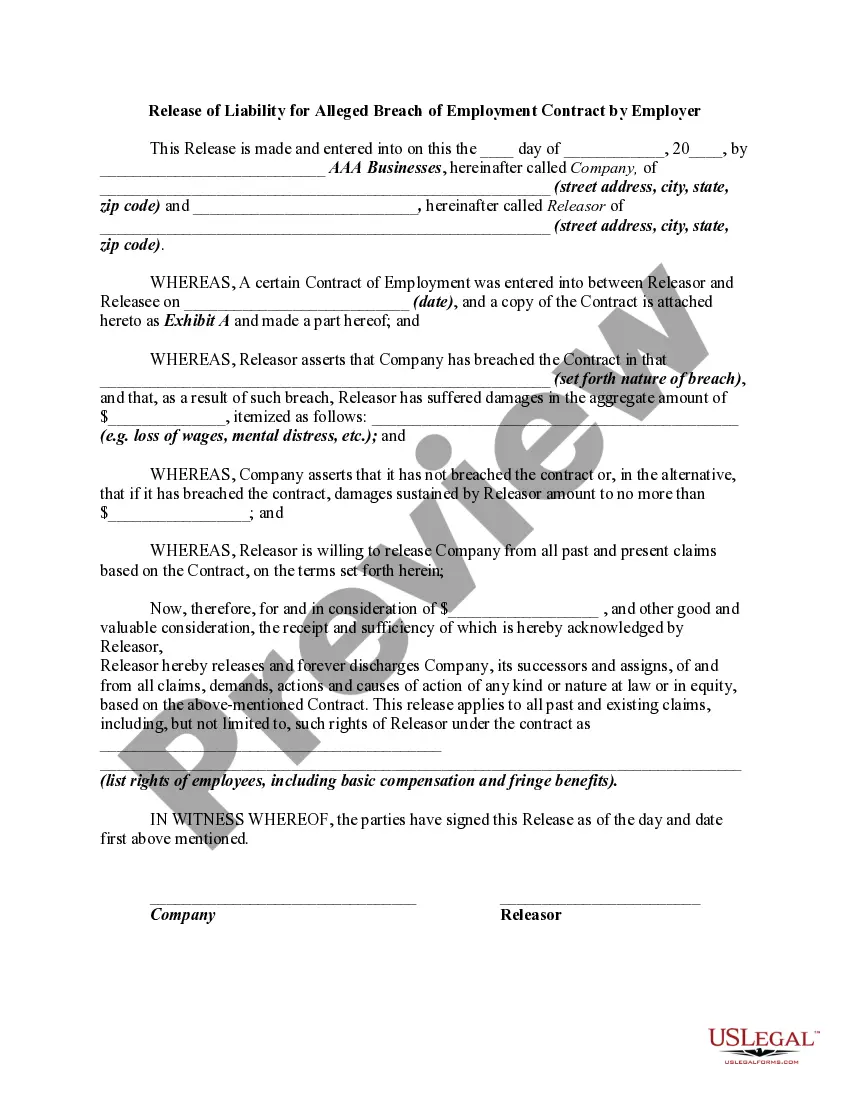
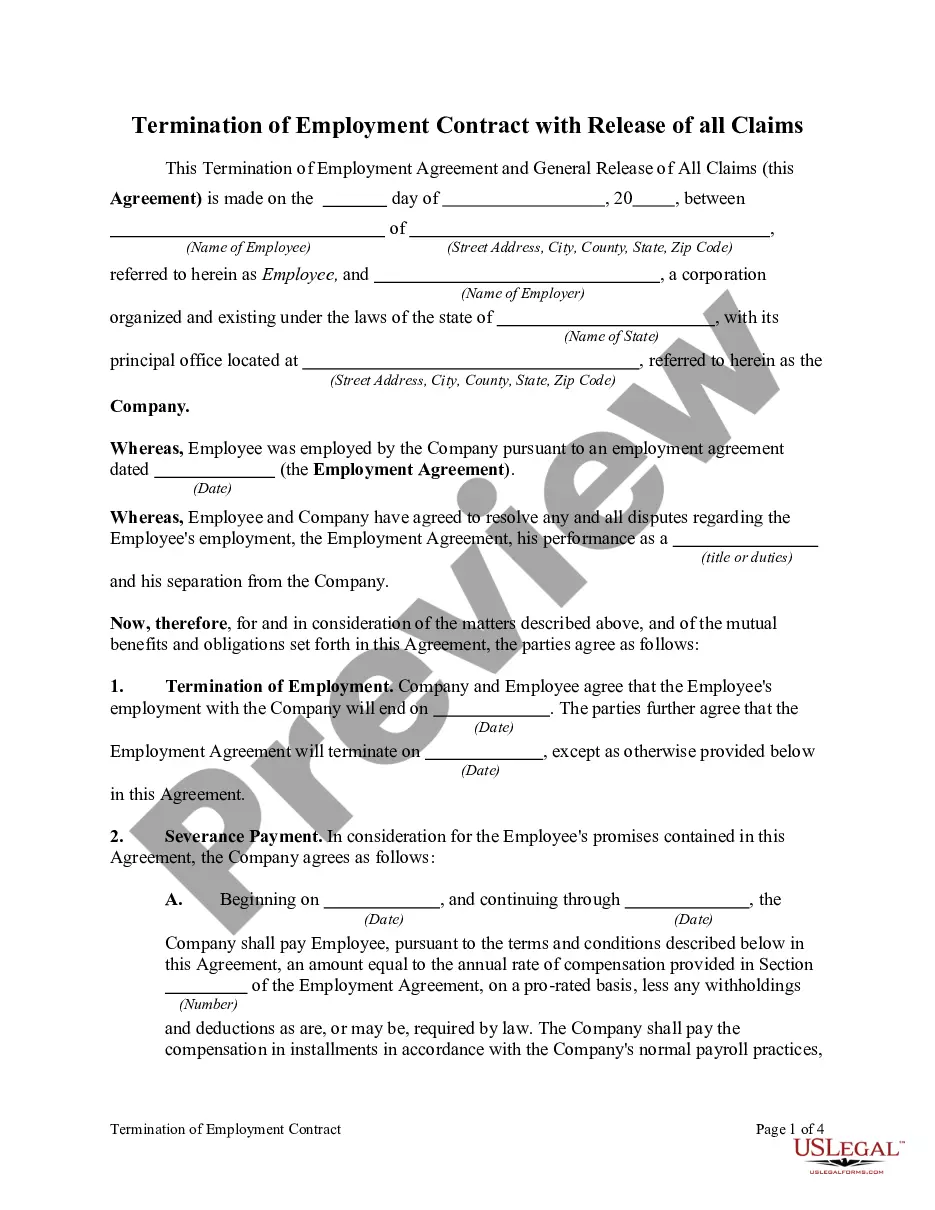
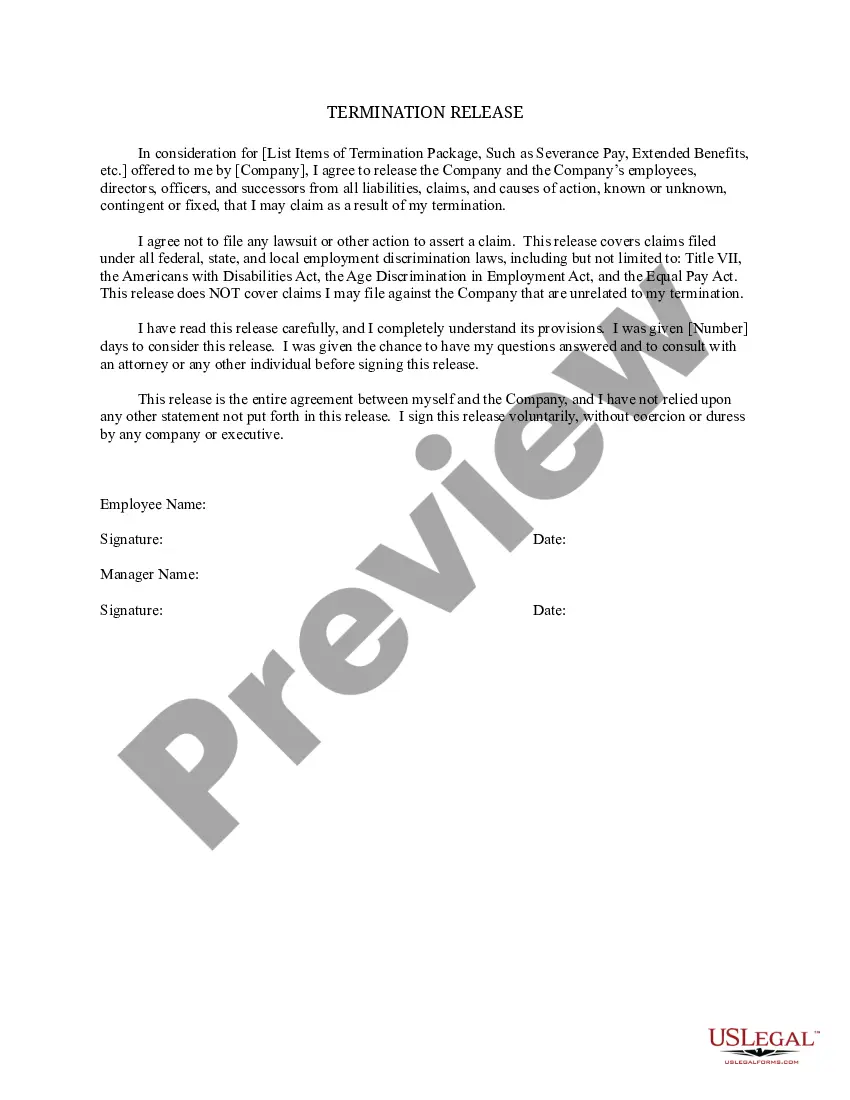
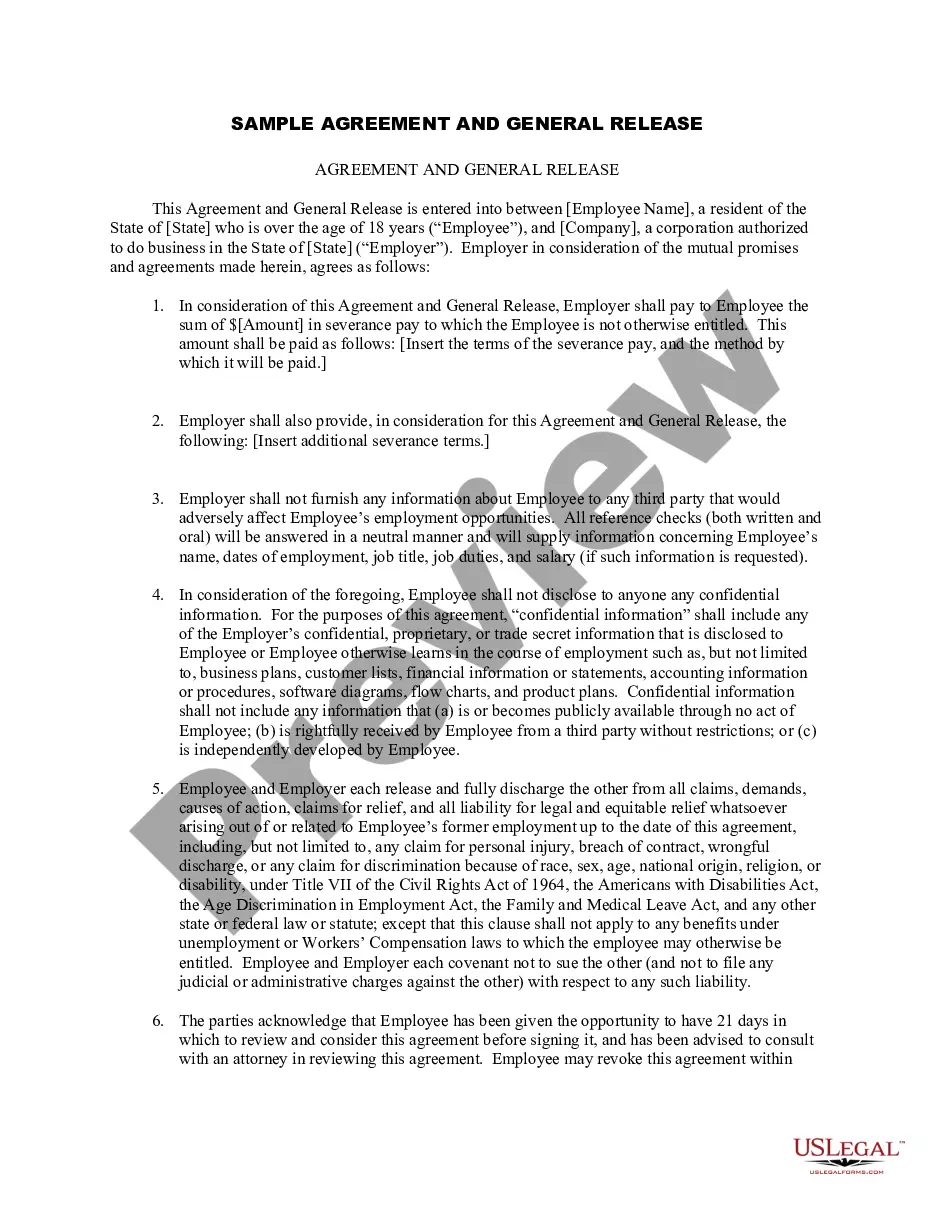
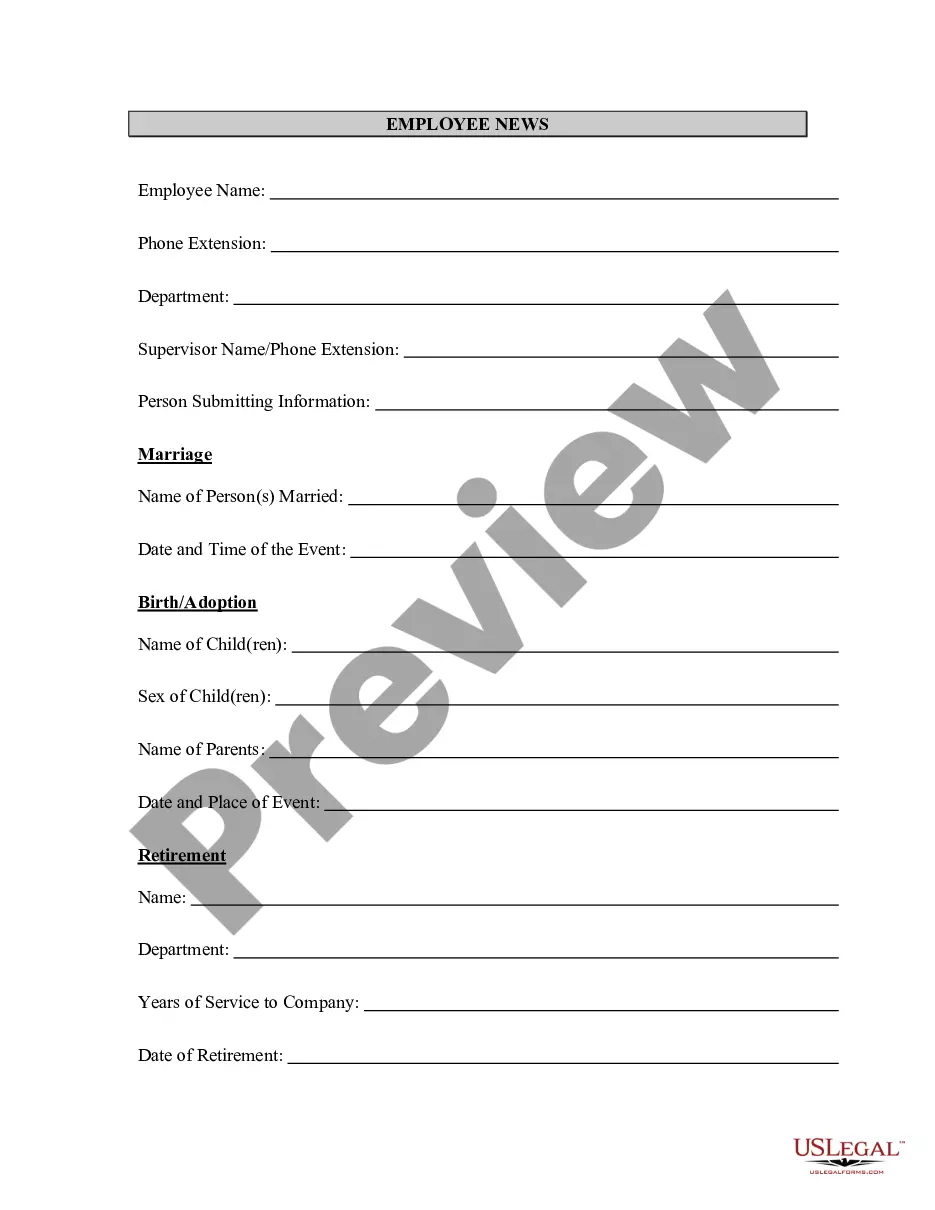
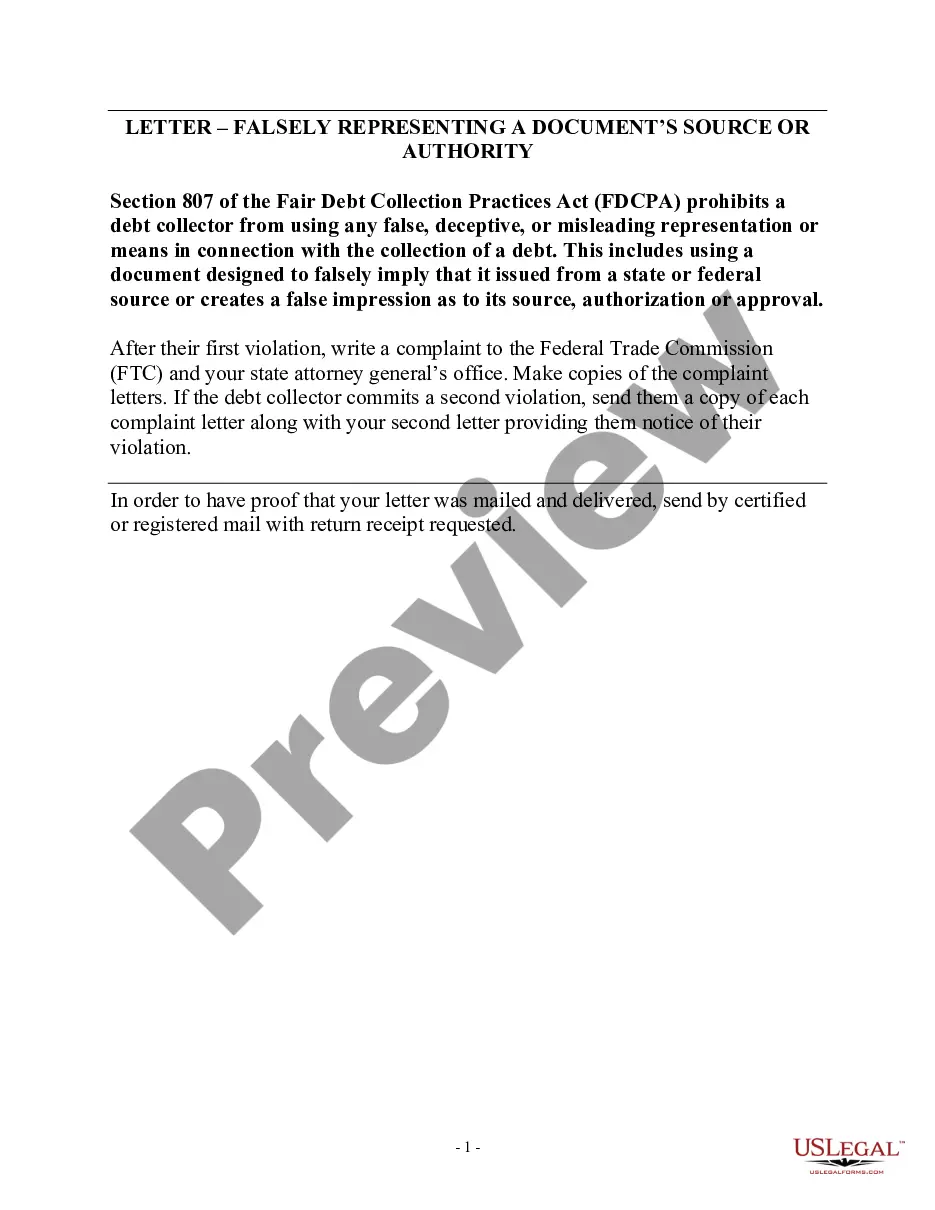


How to fill out Release By Employee Of Claims Against Employer Related To Terminated Employment Including The Release Of Employee Benefit And Pension Plans And Funds?
Navigating legal management can be perplexing, even for the most informed experts.
If you're searching for an Employment Termination For Reasons and don't have the opportunity to invest in finding the correct and current version, the process can be daunting.
With US Legal Forms, you gain the ability to.
Access a valuable collection of articles, tutorials, and guides relevant to your circumstances and requirements.
The following steps should be taken after downloading the desired form.
- Save time and energy in searching for the documents you require.
- Use US Legal Forms' sophisticated search and Preview tool to find Employment Termination For Reasons and acquire it.
- If you have a membership, Log In to your US Legal Forms account, look for the form, and obtain it.
- Check your My documents tab to review the documents you've previously saved and manage your folders as you wish.
- If this is your initial experience with US Legal Forms, create a complimentary account for unlimited access to all features of the platform.
- Utilize a comprehensive online form repository, which can be transformative for anyone aiming to handle these matters effectively.
- US Legal Forms stands as a frontrunner in digital legal forms, offering more than 85,000 state-specific templates at your disposal anytime.
- Leverage innovative features to fill out and manage your Employment Termination For Reasons.
Form popularity
FAQ
For-cause termination is typically justified by actions such as gross misconduct, violation of company policies, or unsatisfactory job performance. Employers must document these issues to substantiate the employment termination for reasons. Understanding the criteria for this type of termination can help employees recognize their rights and prepare for potential legal implications.
To ask for a reason for your termination, start by requesting a meeting with your former employer or HR representative. Clearly express your desire to understand the rationale behind your employment termination for reasons. It's important to approach this conversation professionally, ensuring that you remain calm and collected while asking for clarity on the situation.
Permanent Guardianship. Guardianship may be either temporary or permanent. A permanent guardianship is needed if the natural parents are not expected to be able to care for a child in the near future or if they have passed away. The advantage of a permanent guardianship is that it offers stability for the child.
Specific duties of a guardian of the person include: Take custody of the ward's person. Make provisions for the ward's care, comfort, and maintenance. Take any responsible action necessary to protect the ward from further mistreatment in instances where the guardian learns the ward is being mistreated.
Short-Term Temporary Guardianship A temporary guardianship may be arranged without a court order if: It is to last for 6 months or less; and. The parents sign and notarize a temporary guardianship agreement, and. If the child is 14 or older, the child will sign the agreement.
The appointed guardian must take an oath to uphold his or her duties. Guardians who will have control over the ward's assets and property, and some non-resident guardians, must file a bond approved by the clerk before receiving their authority. Certain individuals may be disqualified by statute to serve.
5) How long does guardianship last? The individual under guardianship remains under guardianship until their competency is restored through court proceedings, or until they die.
Depending on the situation, a court may grant this arrangement in many ways. In most cases, guardianship does not override parental rights. However, there are some instances where it does take precedence.
A guardian with full authority has the power to: Establish where the ward will live, within the state or elsewhere with court's permission; Arrange for the ward's medical care; Take care of the ward's personal effects (clothing, furniture, vehicles, personal items, etc.);
The key difference between being a legal guardian and having legal custody is in regard to the child's parentage. Custody describes a biological parent caring for a child, but guardianship is given to someone other than a biological parent.