Employee Stock Options
Description


Get your form ready online
Our built-in tools help you complete, sign, share, and store your documents in one place.
Make edits, fill in missing information, and update formatting in US Legal Forms—just like you would in MS Word.
Download a copy, print it, send it by email, or mail it via USPS—whatever works best for your next step.
Sign and collect signatures with our SignNow integration. Send to multiple recipients, set reminders, and more. Go Premium to unlock E-Sign.
If this form requires notarization, complete it online through a secure video call—no need to meet a notary in person or wait for an appointment.
We protect your documents and personal data by following strict security and privacy standards.

Make edits, fill in missing information, and update formatting in US Legal Forms—just like you would in MS Word.

Download a copy, print it, send it by email, or mail it via USPS—whatever works best for your next step.

Sign and collect signatures with our SignNow integration. Send to multiple recipients, set reminders, and more. Go Premium to unlock E-Sign.

If this form requires notarization, complete it online through a secure video call—no need to meet a notary in person or wait for an appointment.

We protect your documents and personal data by following strict security and privacy standards.
Looking for another form?
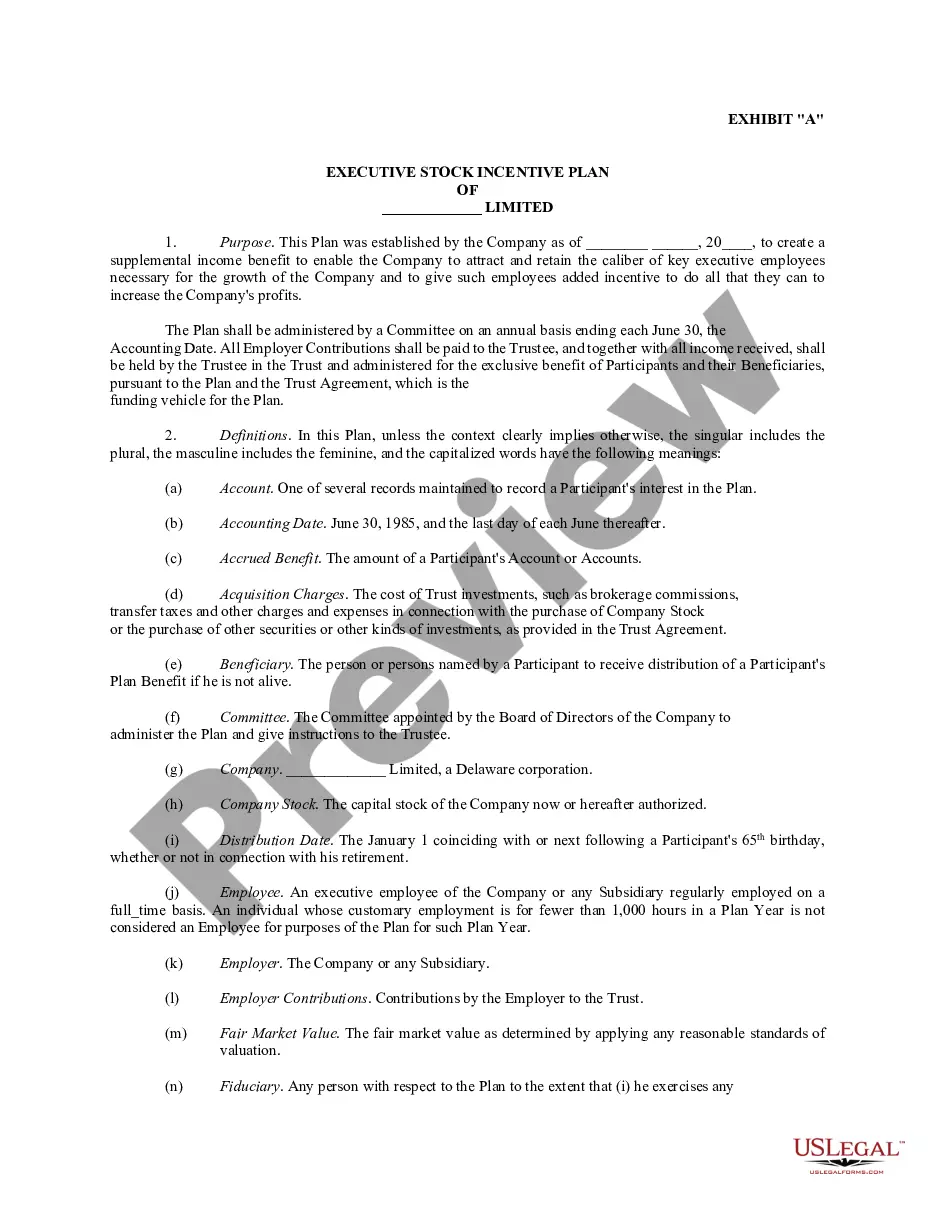
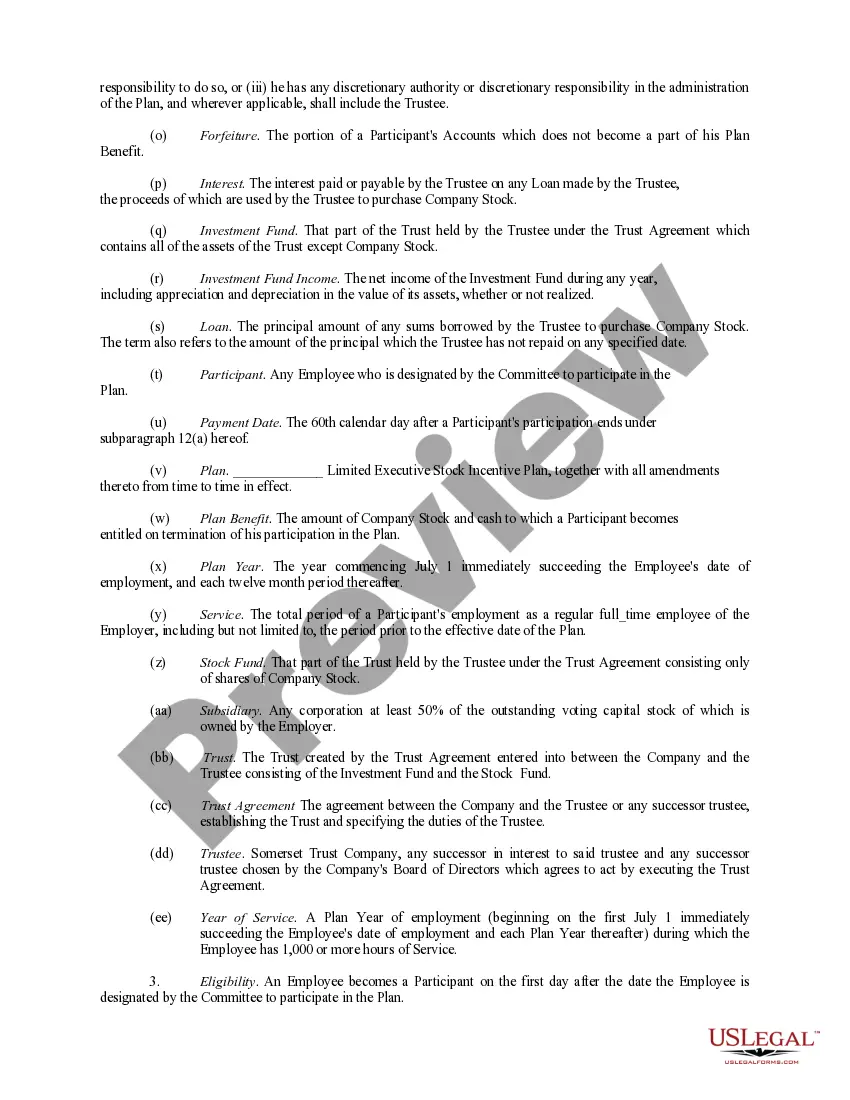
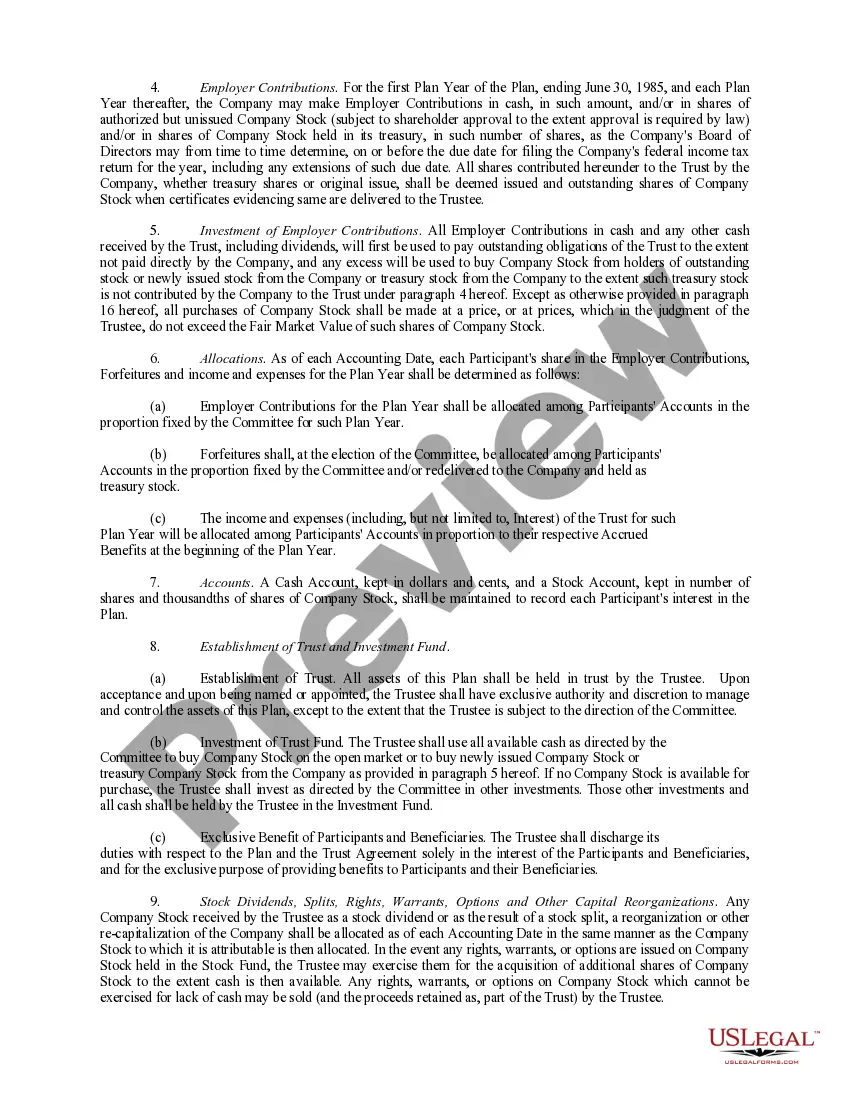
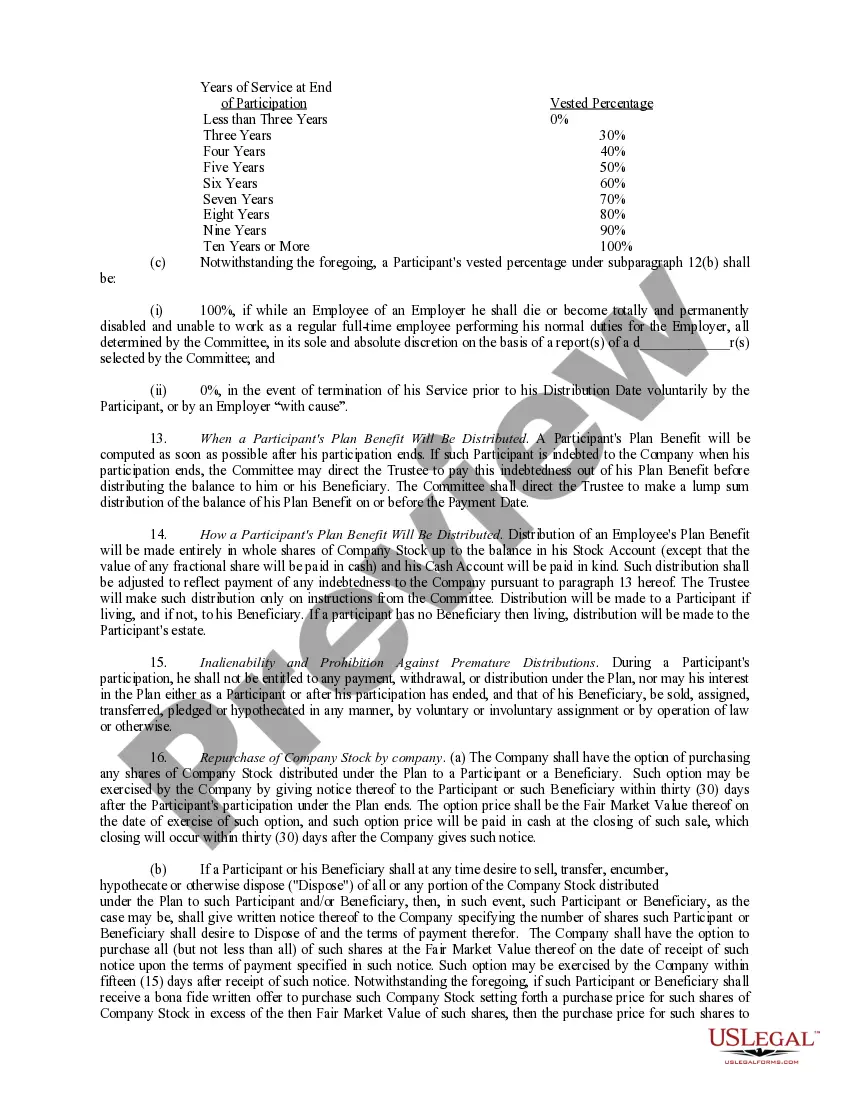
How to fill out Executive Employee Stock Incentive Plan?
- If you're a returning user, log in to your account and click the Download button to save the necessary form template. Ensure your subscription remains valid; if needed, renew it based on your payment plan.
- For first-time users, start by previewing the available forms. Check the descriptions thoroughly to confirm you've selected the right document that aligns with your needs and local jurisdiction.
- If the option isn’t suitable, utilize the Search tab at the top of the page to explore alternative templates that may meet your criteria.
- Once you find the correct document, click the Buy Now button and choose the subscription option that suits you. You'll need to register for an account to access the comprehensive library.
- Complete your purchase by providing your credit card information or utilizing PayPal for seamless payment.
- After your payment is processed, download your form. It will be available for you to complete and can also be accessed anytime through the My Forms section of your profile.
Obtaining employee stock options documents through US Legal Forms is simple and efficient, allowing you to focus on maximizing your financial benefits.
Ready to get started? Leverage US Legal Forms today to ensure you have the right documents and expert assistance for all your legal needs.
Form popularity
FAQ
Box 14 labeled 'Other' on your W-2 is used to report various types of compensation or deductions that do not have a specific box. For employee stock options, it may sometimes indicate the value of options or other benefits granted. It's important to consult with your HR department or a tax professional if you have questions about how this affects your reporting.
Box 12 Code V on the W-2 form indicates that you received income from Restricted Stock Units (RSUs). This income represents the value of the stocks you acquired and is typically included in your taxable income. Understanding this code ensures you correctly report your employee stock options and any related benefits when filing your taxes.
When reporting employee stock options on your W-2, your employer should list the income in Box 1. Additionally, if you exercised options during the tax year, you may see a reference in Box 12 with a specific code indicating the type of stock benefit. It's wise to review your W-2 carefully, as accurate reporting can affect your tax liability.
The $100,000 rule refers to the IRS regulation concerning incentive stock options (ISOs). This rule states that if the fair market value of your employee stock options exceeds $100,000 during any calendar year, the excess will be disqualified from ISO status. Keeping track of this limit is crucial to ensure you maximize your potential tax advantages when exercising employee stock options.
You typically report the income from employee stock options on your tax return, specifically on Form 1040. If your employer provides you with a W-2, they should include your stock option income in Box 1. It's essential to check the figures closely, as inaccuracies can lead to delays or complications with your tax filings.
Employee stock options come with specific requirements set by the employer. Generally, you must be employed with the company and meet any vesting criteria before you can exercise your options. It’s also essential to understand the associated tax implications and the timeframes in which you can exercise your options. If you're looking for detailed guidance, platforms like USLegalForms can help you navigate the complexities of employee stock options.
When negotiating a job offer, it’s essential to express your interest in employee stock options clearly. Consider discussing how these options align with your career goals and the value you bring to the company. You might say something like, ‘I believe having stock options would align my interests with the company's success.’ Presenting this in a positive manner can help initiate a meaningful conversation.
To obtain employee stock options, you usually need to be hired by a company that offers them as part of their benefits. During the hiring process, it’s common to discuss stock options, among other forms of compensation. If you are already working for a company, express interest in these options through your manager or human resources department. They can provide information about eligibility and the application process.
When you leave a company, the fate of your employee stock options often depends on the company’s specific policy. Generally, you may need to exercise your options within a limited timeframe, or you might lose them altogether, depending on the terms of your agreement. Understanding this aspect can help you plan ahead, ensuring you make the most out of your employee stock options before your departure. At US Legal Forms, you can find resources to clarify your rights and responsibilities regarding employee stock options.
To file employee stock options (ESOP), you'll typically begin with your employer providing necessary forms and documentation related to the stock option plan. You’ll need to report any income generated upon exercising the options on your tax return. It’s advisable to consult a tax professional to ensure you comply with all regulations. Remember, thorough record-keeping can make this process smoother.