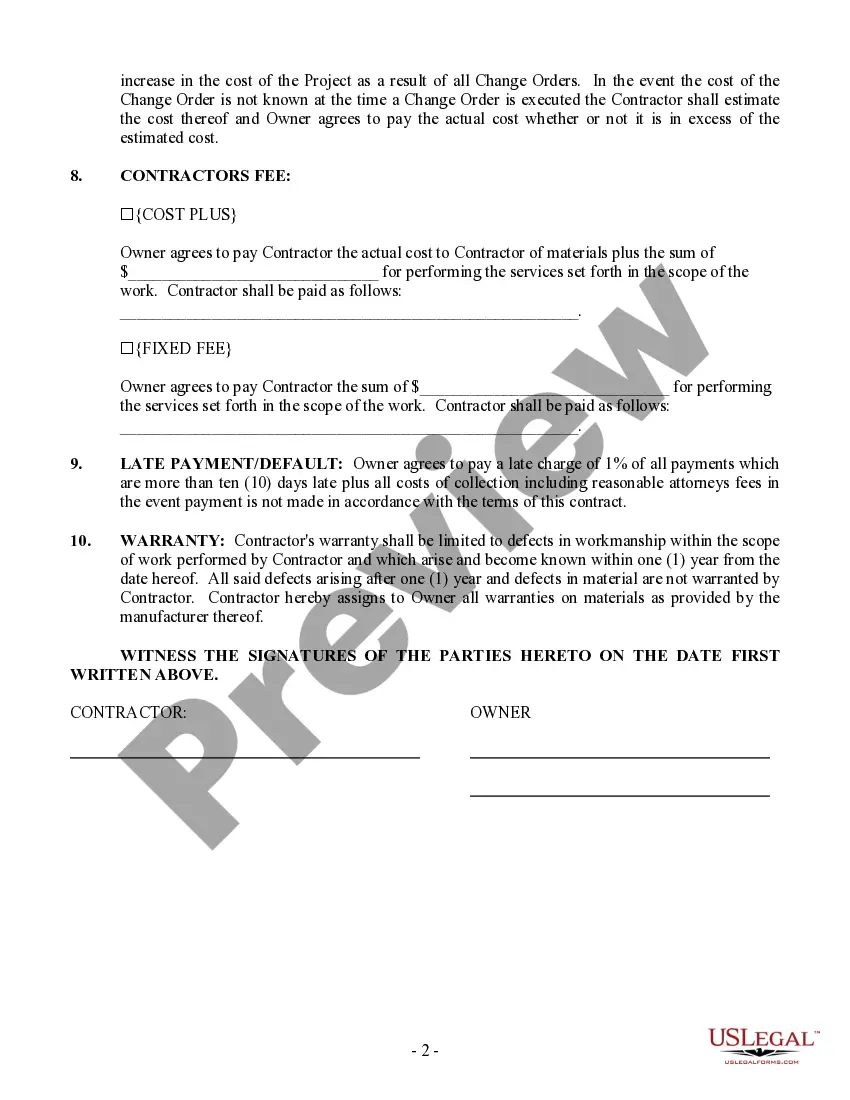
Contract Contractor Building For Rent In Los Angeles
Description

Get your form ready online
Our built-in tools help you complete, sign, share, and store your documents in one place.
Make edits, fill in missing information, and update formatting in US Legal Forms—just like you would in MS Word.
Download a copy, print it, send it by email, or mail it via USPS—whatever works best for your next step.
Sign and collect signatures with our SignNow integration. Send to multiple recipients, set reminders, and more. Go Premium to unlock E-Sign.
If this form requires notarization, complete it online through a secure video call—no need to meet a notary in person or wait for an appointment.
We protect your documents and personal data by following strict security and privacy standards.

Make edits, fill in missing information, and update formatting in US Legal Forms—just like you would in MS Word.

Download a copy, print it, send it by email, or mail it via USPS—whatever works best for your next step.

Sign and collect signatures with our SignNow integration. Send to multiple recipients, set reminders, and more. Go Premium to unlock E-Sign.

If this form requires notarization, complete it online through a secure video call—no need to meet a notary in person or wait for an appointment.

We protect your documents and personal data by following strict security and privacy standards.
Looking for another form?








Form popularity
FAQ
Independent contractors don't need a license to operate in the state of California, but they may have other requirements based on where they build their business. Still others will vary based on the kind of work you do.
How To Write A Construction Contract With 7 Steps Step 1: Define the Parties Involved. Step 2: Outline the Scope of Work. Step 3: Establish the Timeline. Step 4: Determine the Payment Terms. Step 5: Include Necessary Legal Clauses. Step 6: Address Change Orders and Modifications. Step 7: Sign and Execute the Contract.
Call the California Contractors State License Board (CSLB) at (800) 321-2752, or check their website. They license contractors who do home improvements or repairs costing $500 or more.
Residential contractor licenses A residential license is required for all residential projects that exceed $75,000. Residential property includes home improvements or the new building of one to four-unit family dwellings.
How To Get a Contractor's License in California in 6 Steps Identify the license classification you need. Meet the basic licensing requirements. Fill out the licensing application. Complete a background check. Pass the California contractor licensing exam. Submit bonding & insurance documents.
Give the contractor the notice of termination When terminating a contract, providing your contractor with a notice period of around two weeks or more displays professionalism and respect. Ideally, you should notify the contractor in writing and keep a copy for your records.
California Law Requires All Contractors to Have Licenses Additionally, it is illegal for a general contractor to hire an unlicensed subcontractor, and “Entering into a contract with a contractor while such contractor is unlicensed . . .
Initial Payment: $1,000 or 10% (whichever is less) Demo and Prep Work Completion: 20%
Hiring a Contractor Check the contractor's license. Only hire a licensed contractor. Get three bids. Find out if you need a building permit for your project. Get a written contract. You have three days to cancel. Keep the down payment small. Schedule your payments.
Legal Requirements: California law prohibits hiring unlicensed contractors for projects exceeding $500 in labor and materials costs. Contractor Licensing: Verify contractor licenses through the Contractors State License Board (CSLB) website before hiring.
