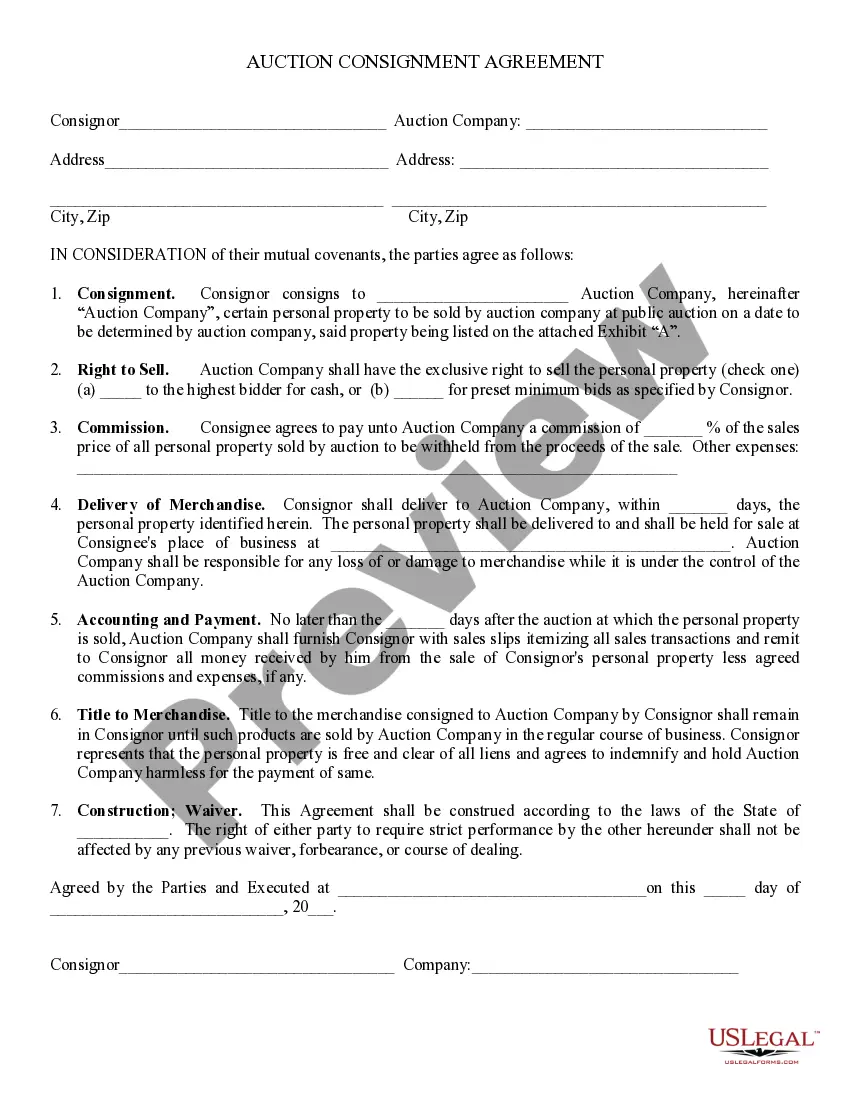
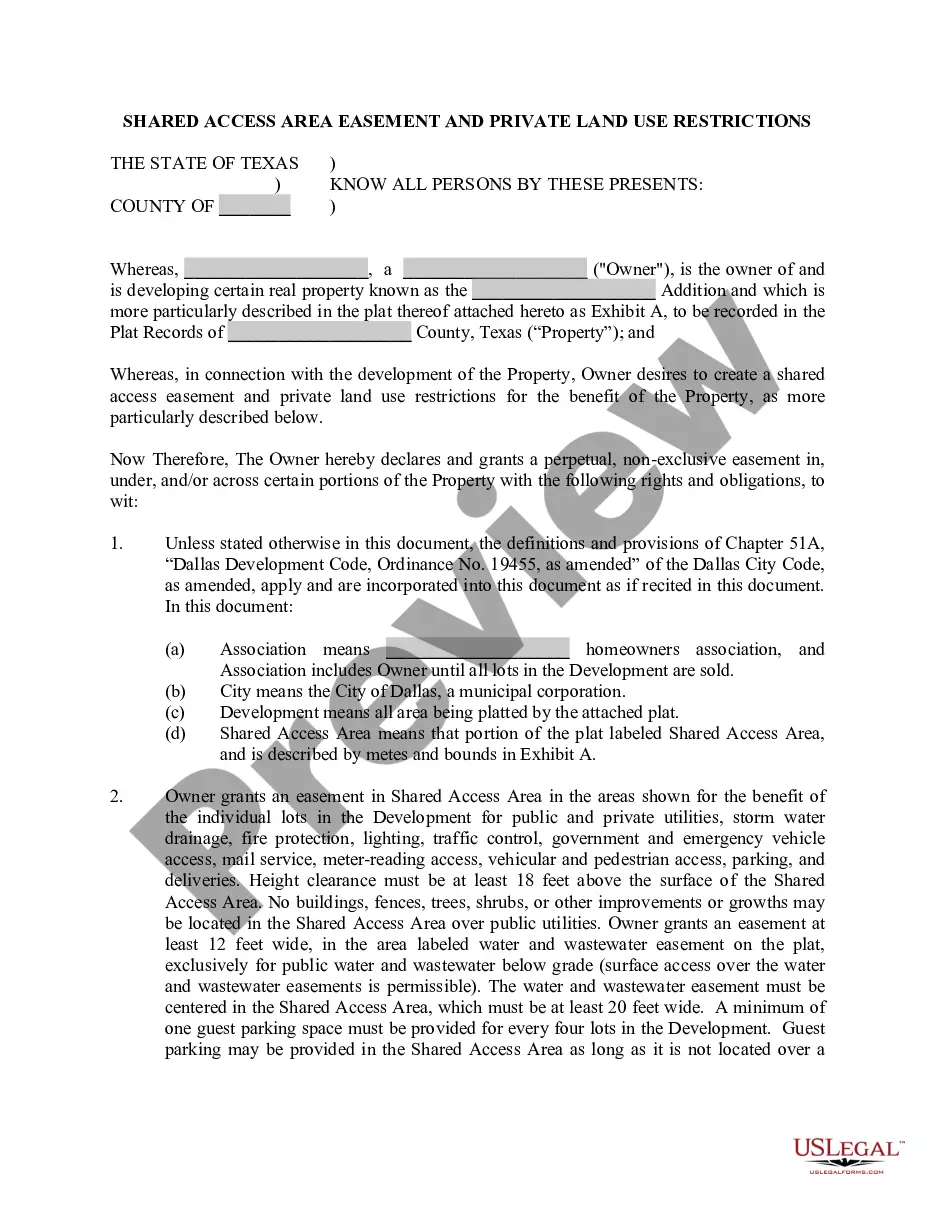
Consignment Agreement In Oracle Fusion In New York
Description

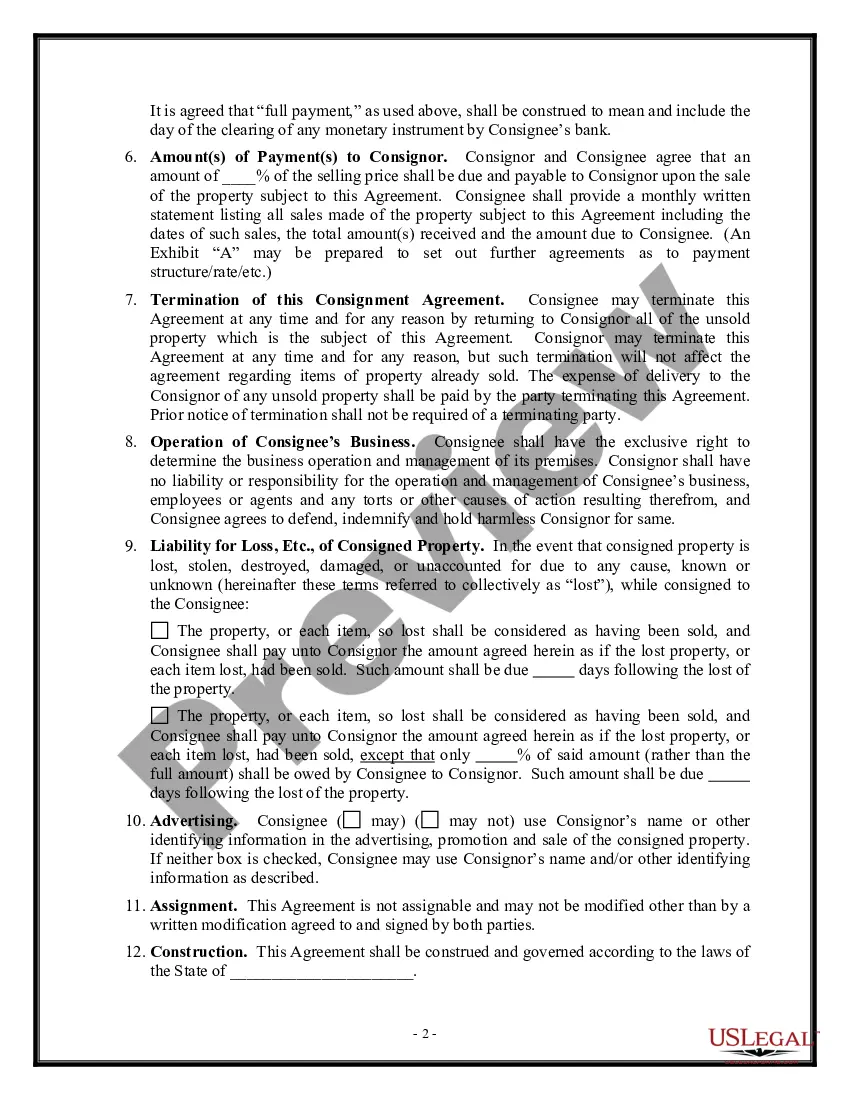
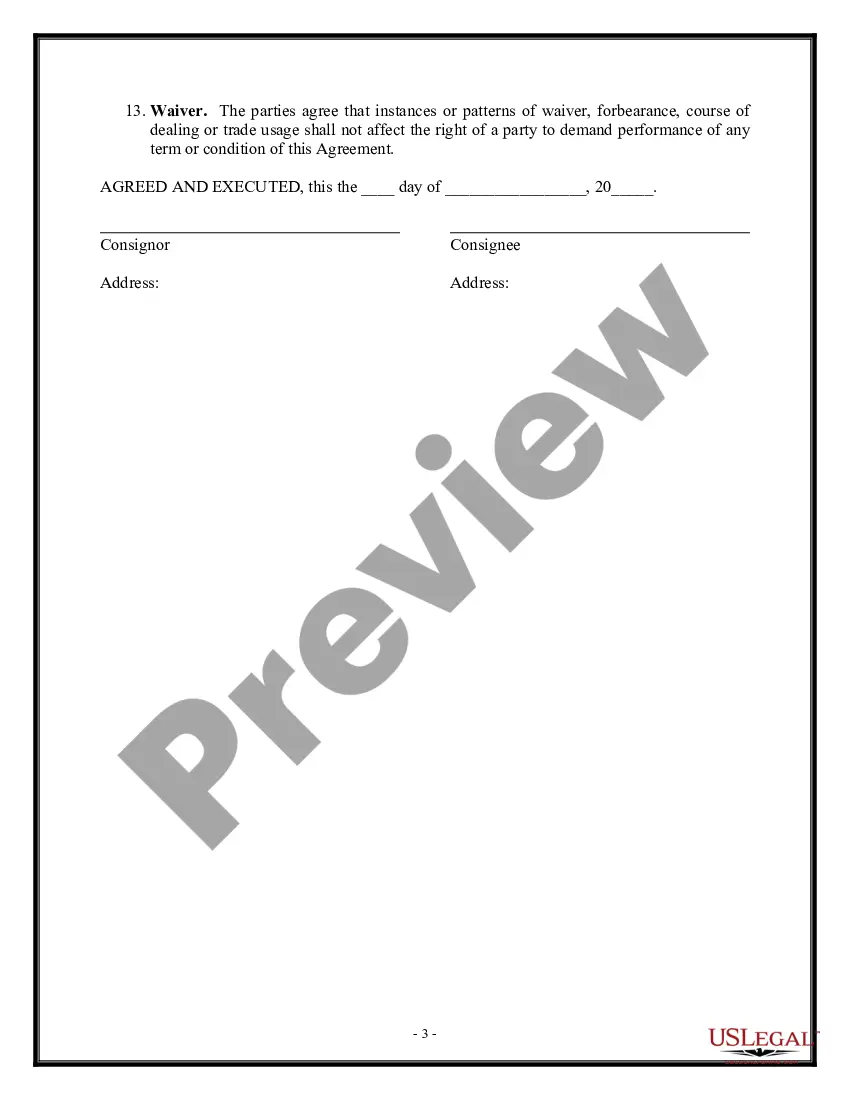
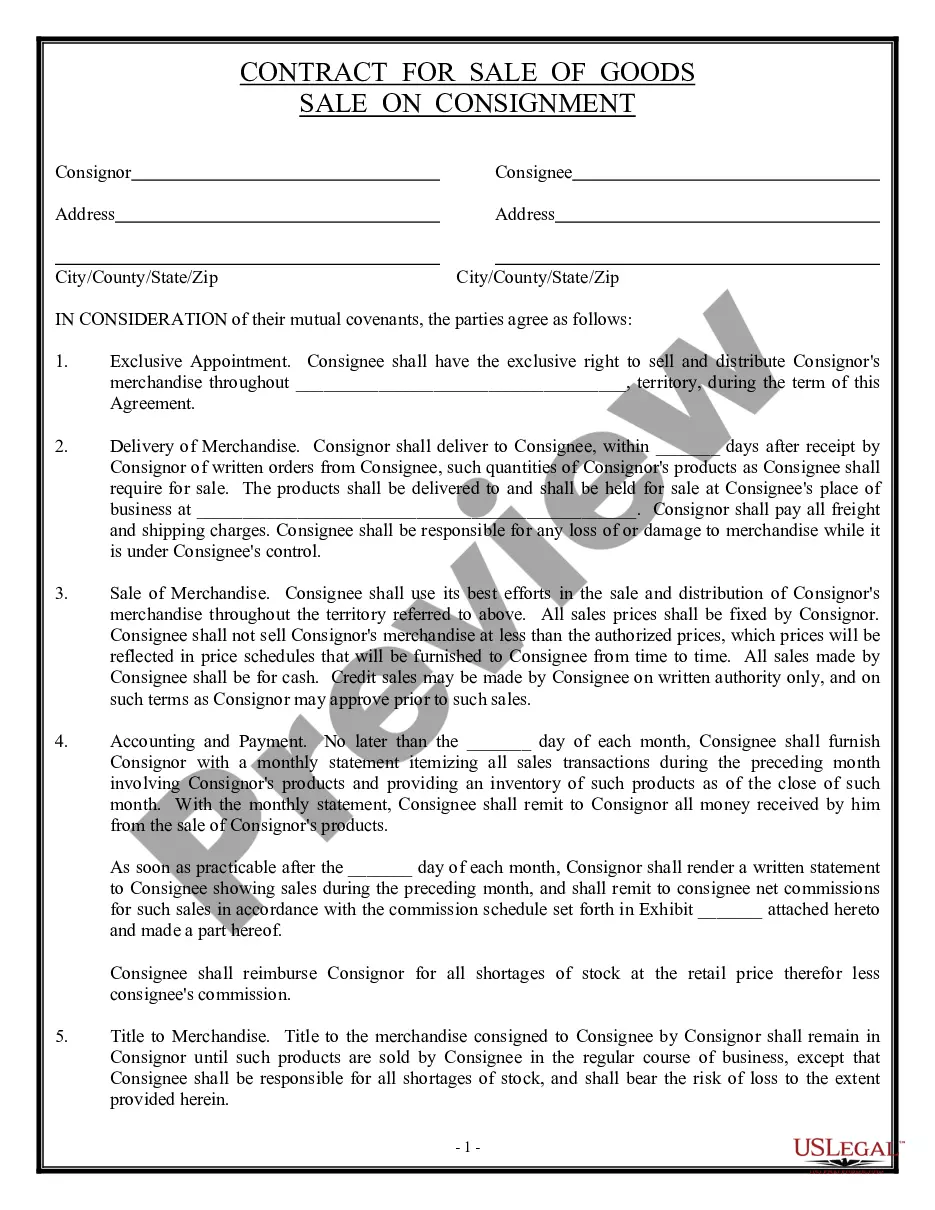
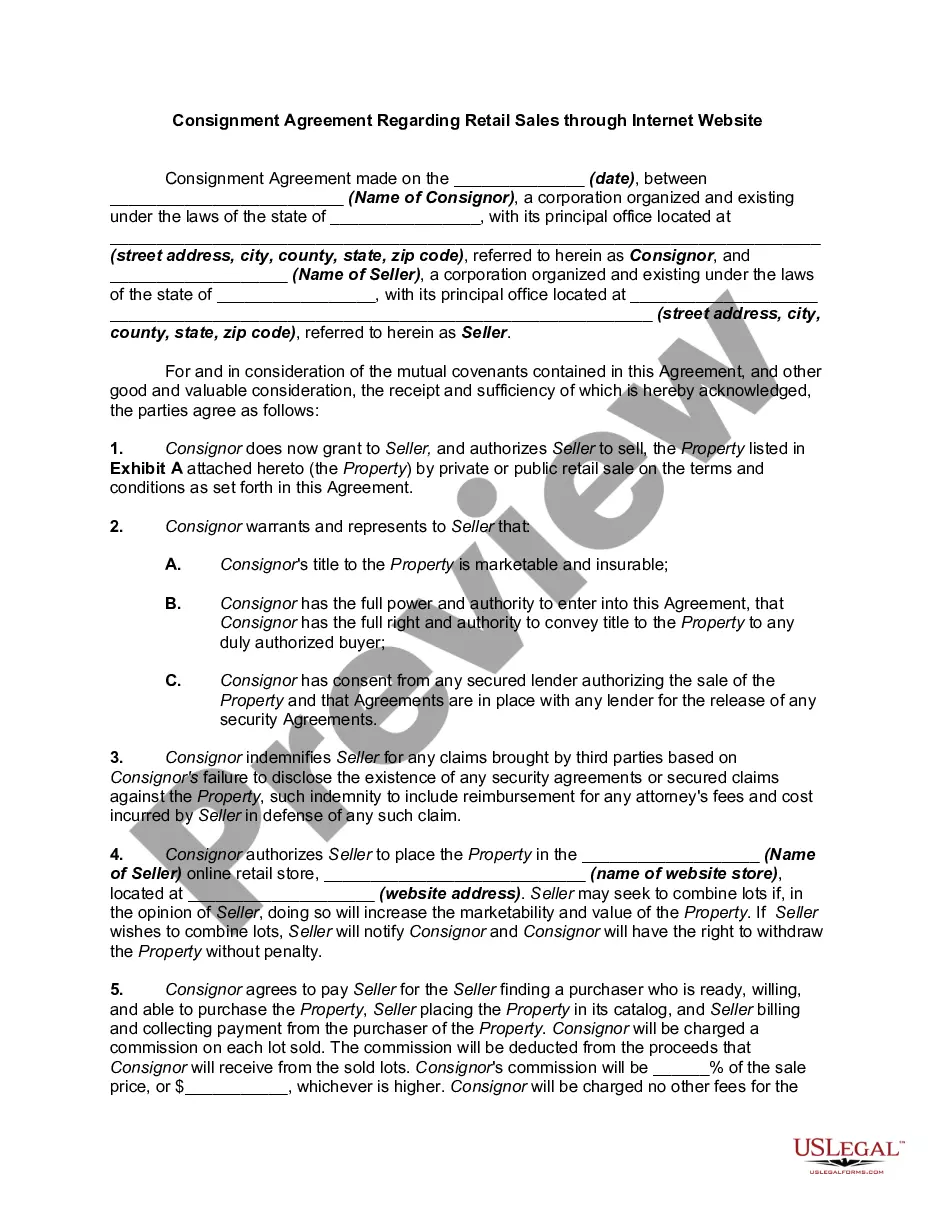
Get your form ready online
Our built-in tools help you complete, sign, share, and store your documents in one place.
Make edits, fill in missing information, and update formatting in US Legal Forms—just like you would in MS Word.
Download a copy, print it, send it by email, or mail it via USPS—whatever works best for your next step.
Sign and collect signatures with our SignNow integration. Send to multiple recipients, set reminders, and more. Go Premium to unlock E-Sign.
If this form requires notarization, complete it online through a secure video call—no need to meet a notary in person or wait for an appointment.
We protect your documents and personal data by following strict security and privacy standards.

Make edits, fill in missing information, and update formatting in US Legal Forms—just like you would in MS Word.

Download a copy, print it, send it by email, or mail it via USPS—whatever works best for your next step.

Sign and collect signatures with our SignNow integration. Send to multiple recipients, set reminders, and more. Go Premium to unlock E-Sign.

If this form requires notarization, complete it online through a secure video call—no need to meet a notary in person or wait for an appointment.

We protect your documents and personal data by following strict security and privacy standards.
Looking for another form?



Form popularity
FAQ
In a VMI solution, vendors actively manage the supply of inventory to target levels based on the buyer's forecast and actual consumption, while consignment inventory relates to inventory owned by the vendor but held at the buyer's warehouse with the buyer determining the inventory replenishment strategy.
The VMI process is a supply chain management strategy where a supplier manages the inventory at the customer's location. The inventory is owned either by the customer (VMI without consignment) or the supplier (VMI with consignment), but maintained by the supplier.
Consigned inventory refers to items that are in the possession of one party, but remain the property of another party by mutual agreement. The process of consigned inventory follows steps between the buyer and seller.
View Supplier Details In the Suppliers work area, click the Manage SAM Trading Partners task. On Manage SAM Trading Partners, select the UEI record for which you want to view the supplier details. From the More Actions menu, click View Supplier.
Overview of Importing Contracts Upload the source file to the file repository. Identify the target import objects. Map import object attributes to fields in the source file you uploaded. Schedule the import activity to populate the interface tables with the data. Import contract attachments (optional).
Learn about all that you need to do to set up Oracle Procurement Contracts. Configure Enterprise Contracts and create an implementation project. Define legal entities. Define business units and assign business function and optionally assign ledger and legal entity. Define item organizations. Define users.
Here are the essential components to include: Parties Involved: Names and contact information of the consignor and the consignee. Consigned Goods: Detailed description of the goods being consigned, including quantities and specifications. Consignment Period: Duration of the consignment arrangement.
Add a sales agreement to a sales order. Create a sales order. Set the Customer attribute to Computer Service and Rentals. Set the Sales Agreement attribute on the order header to 101. Add an item. Normally, you now click Submit. Add an item when the agreement on the order header is empty.
To import locations: Navigate to the Locations dictionary page. In the object selector, select Workspace. On the Locations page, select Import. In the Import Locations dialog box, select Browse, select a file, and select Import. Select Save.
