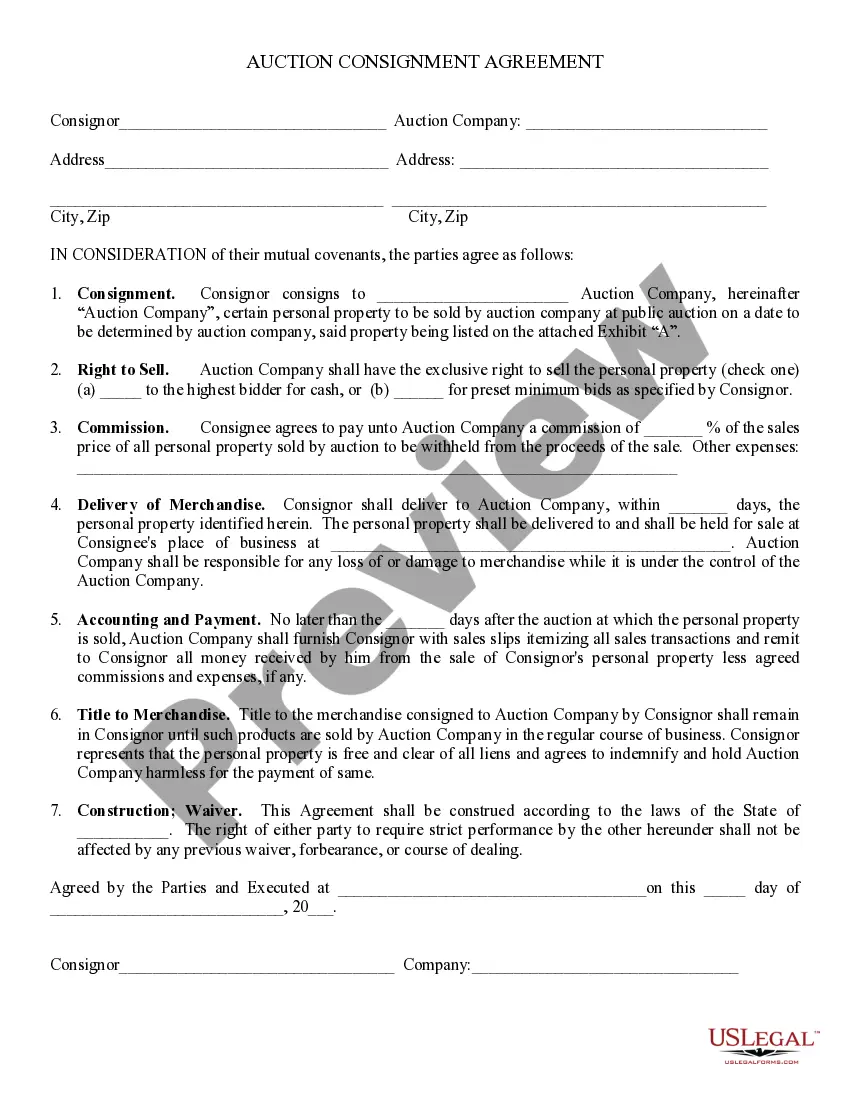
Consignment Contract For Crafters In Los Angeles
Description

Get your form ready online
Our built-in tools help you complete, sign, share, and store your documents in one place.
Make edits, fill in missing information, and update formatting in US Legal Forms—just like you would in MS Word.
Download a copy, print it, send it by email, or mail it via USPS—whatever works best for your next step.
Sign and collect signatures with our SignNow integration. Send to multiple recipients, set reminders, and more. Go Premium to unlock E-Sign.
If this form requires notarization, complete it online through a secure video call—no need to meet a notary in person or wait for an appointment.
We protect your documents and personal data by following strict security and privacy standards.

Make edits, fill in missing information, and update formatting in US Legal Forms—just like you would in MS Word.

Download a copy, print it, send it by email, or mail it via USPS—whatever works best for your next step.

Sign and collect signatures with our SignNow integration. Send to multiple recipients, set reminders, and more. Go Premium to unlock E-Sign.

If this form requires notarization, complete it online through a secure video call—no need to meet a notary in person or wait for an appointment.

We protect your documents and personal data by following strict security and privacy standards.
Looking for another form?



Form popularity
FAQ
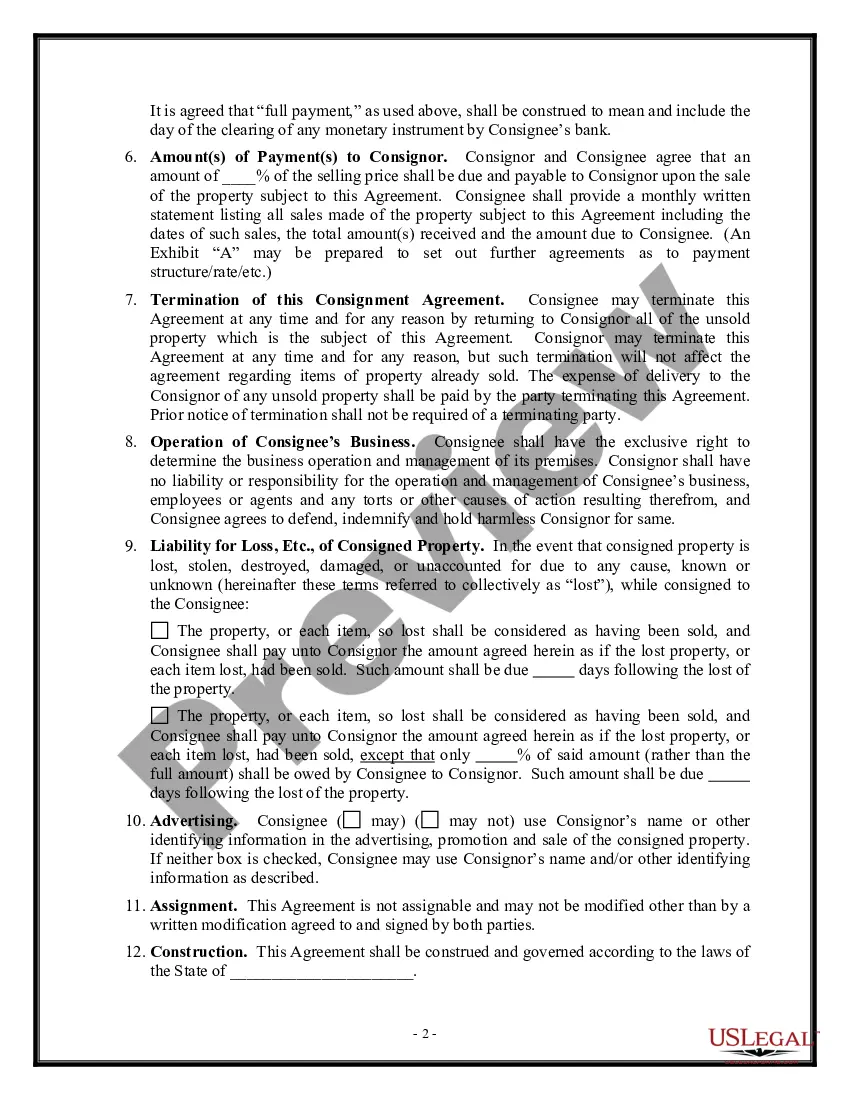
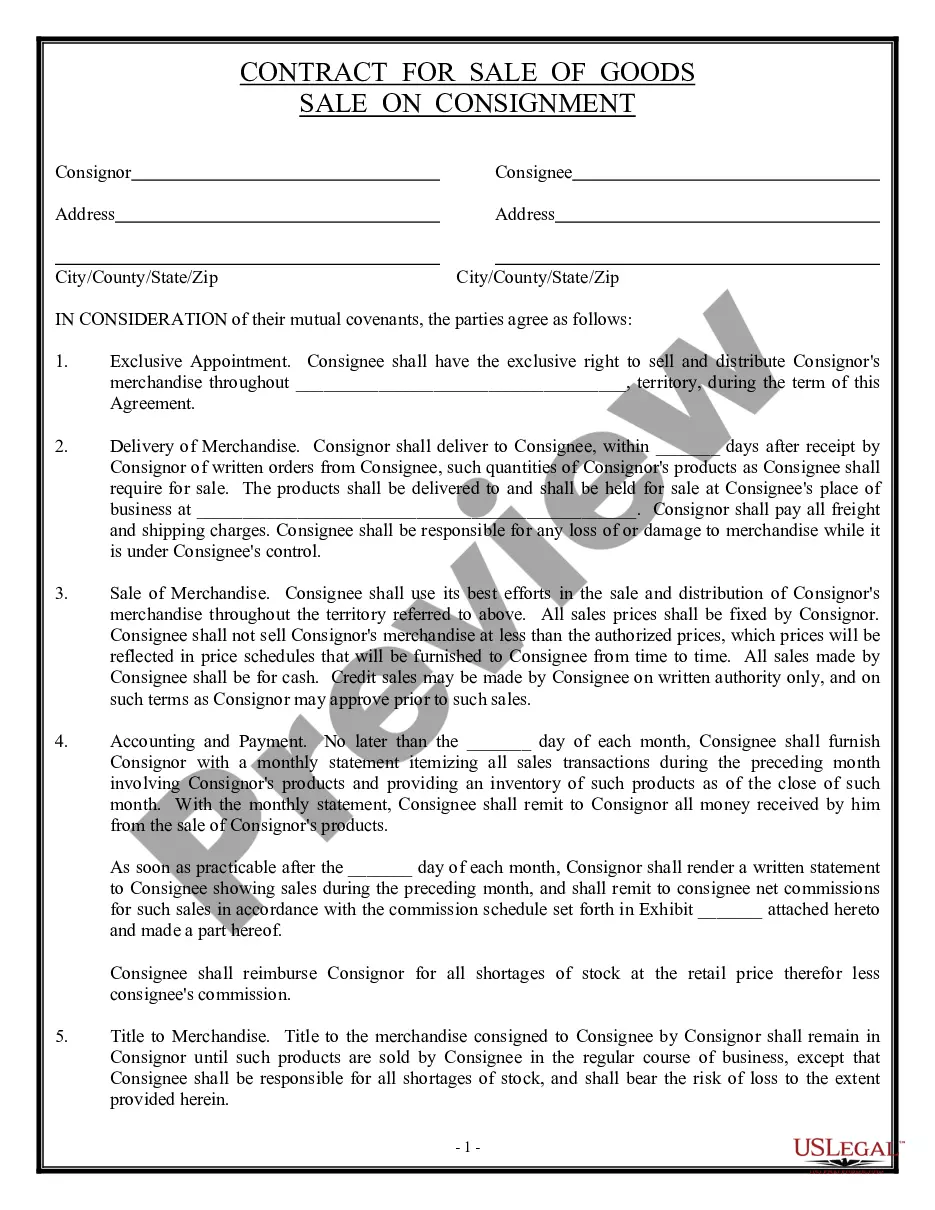
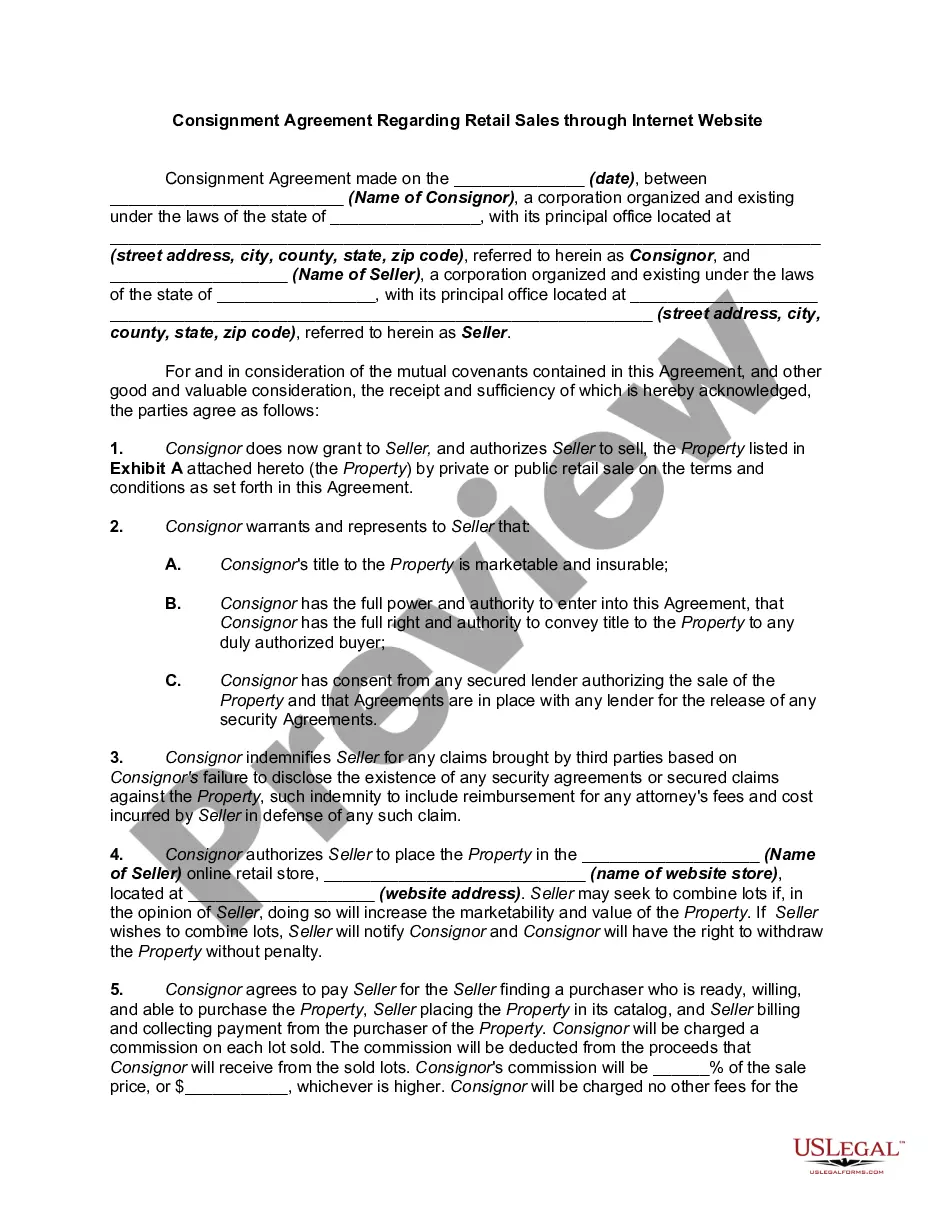
A consignment agreement is a legal contract between a consignor and a consignee, where the consignor provides goods to the consignee for sale. It details the terms and conditions for handling, selling, and potentially returning the goods, ensuring both parties' interests are protected.
How to write a contract agreement in 7 steps. Determine the type of contract required. Confirm the necessary parties. Choose someone to draft the contract. Write the contract with the proper formatting. Review the written contract with a lawyer. Send the contract agreement for review or revisions.
Important clauses in the artist agreement Parties. This clause defines the parties to the agreement, one would be the producer and the other would be the artist. Project. Payment/compensation. Service/work by an artist/engagement. Terms and conditions. Term/duration. Rights of the parties. Artists obligations.
Artist contracts usually include details regarding payment terms, compensation rates, royalties, and commissions. A contract also protects the intellectual property of the artist and may include rights to license, use, and exhibit the artwork or performance created.
A contract should state each party's obligations/responsibilities, the scope of work, and the agreement as to compensation. It does not have to be written in legalise unless you are spelling out terms for a complicated project. The contract should include all the agreements you have with the other party.
To help you get started, take a look at a few basic components to include in your contract so you can better protect your art business. Client Info. Project Info and Terms. Project Timeline. Costs and Payment Terms. Itemization. Artist's Rights. Cancellation Terms. Acceptance of Agreement.
A contract is mandatory for any commission. Write down every detail in the contract, such as the size and media of the artwork, your compensation, due dates for payments, who is responsible for framing, installation, delivery of the artwork, etc. If your client balks at signing a contract, WALK AWAY.
Here are the essential components to include: Parties Involved: Names and contact information of the consignor and the consignee. Consigned Goods: Detailed description of the goods being consigned, including quantities and specifications. Consignment Period: Duration of the consignment arrangement.
To consign is to 'deliver something to someone'. In terms of art, it's when the owner of the artwork - the consigner - consigns (gives) their artwork to a gallery or auction house via a specialist, with the intention of putting the work up for sale.
