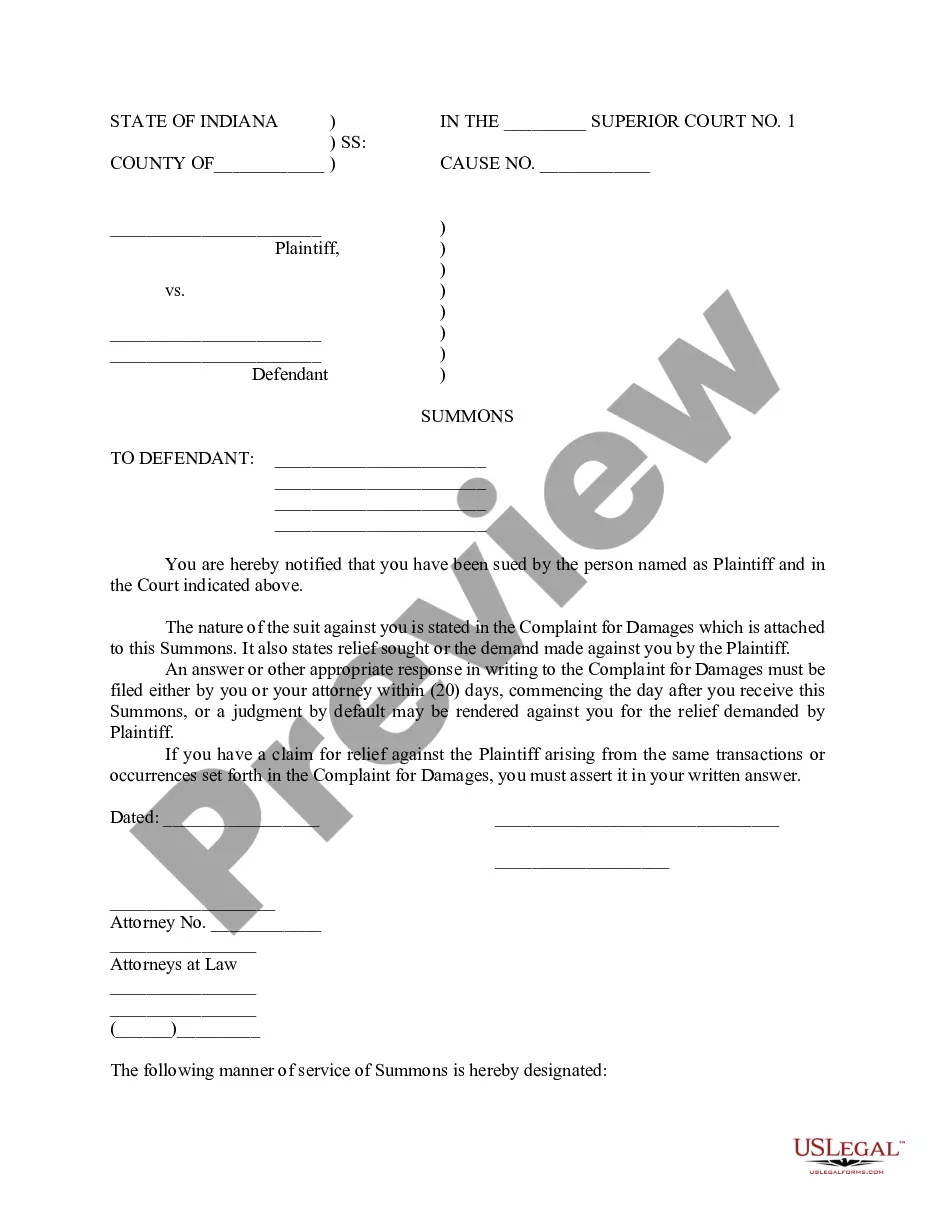
Arizona Construction Contract Cost Plus or Fixed Fee
What this document covers
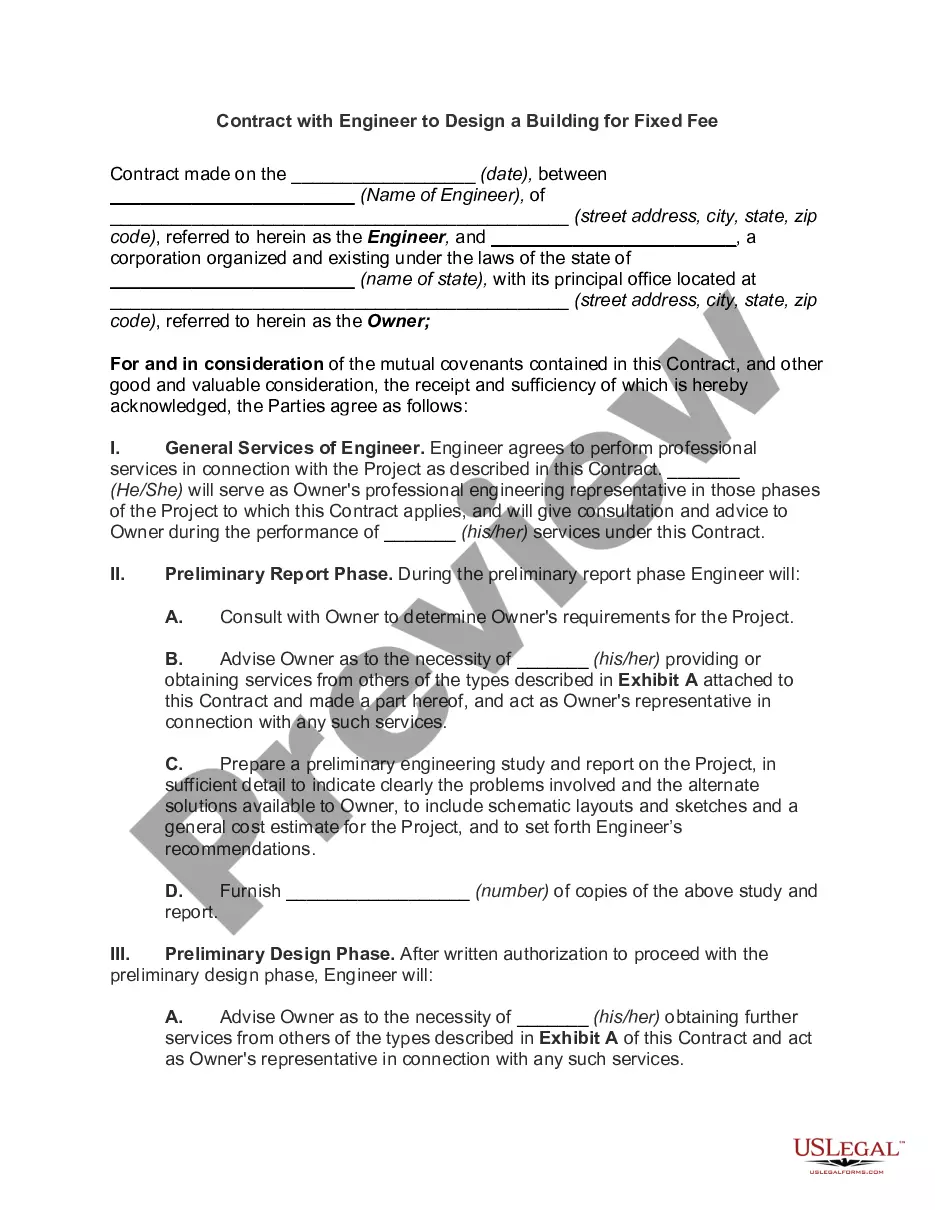
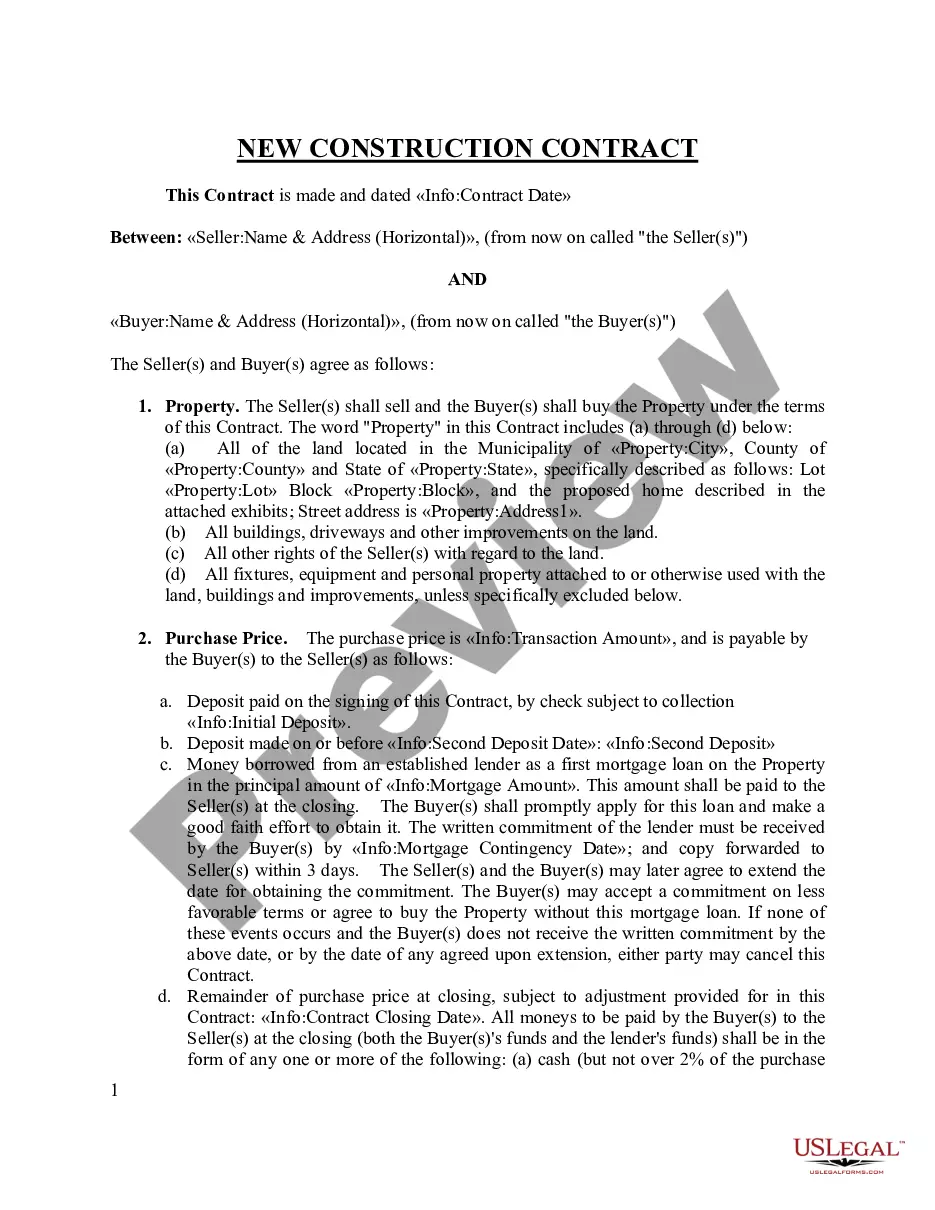
This form is a Construction Contract that allows parties to establish a payment arrangement based on either a cost plus or fixed fee basis. It includes essential terms and conditions that govern the scope of work, work site, warranties, and insurance requirements. This flexibility makes it distinct from other construction contracts, ensuring that both the owner and contractor are clear about their obligations and expectations in the construction project.
Form components explained
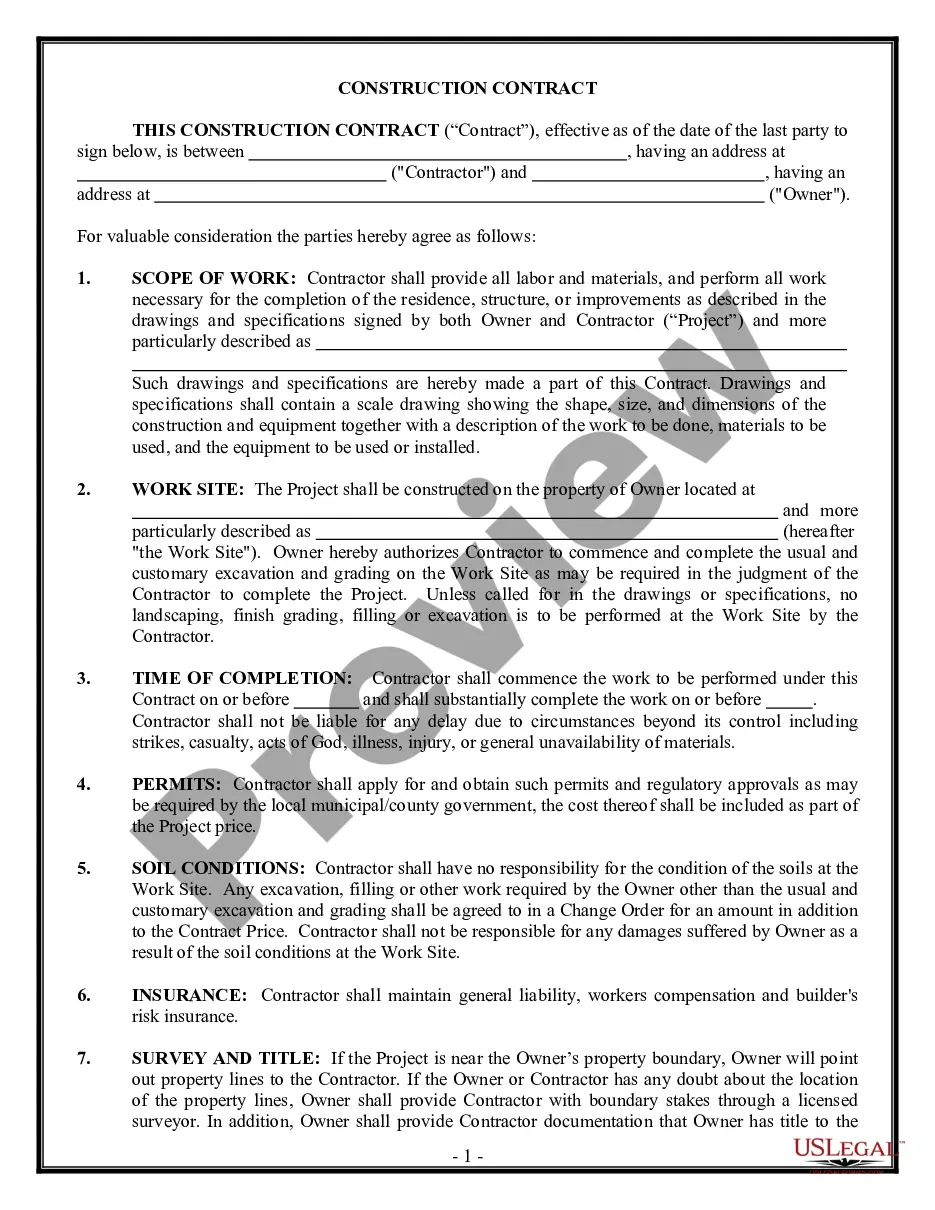
- Work site: Defines the location of the construction project.
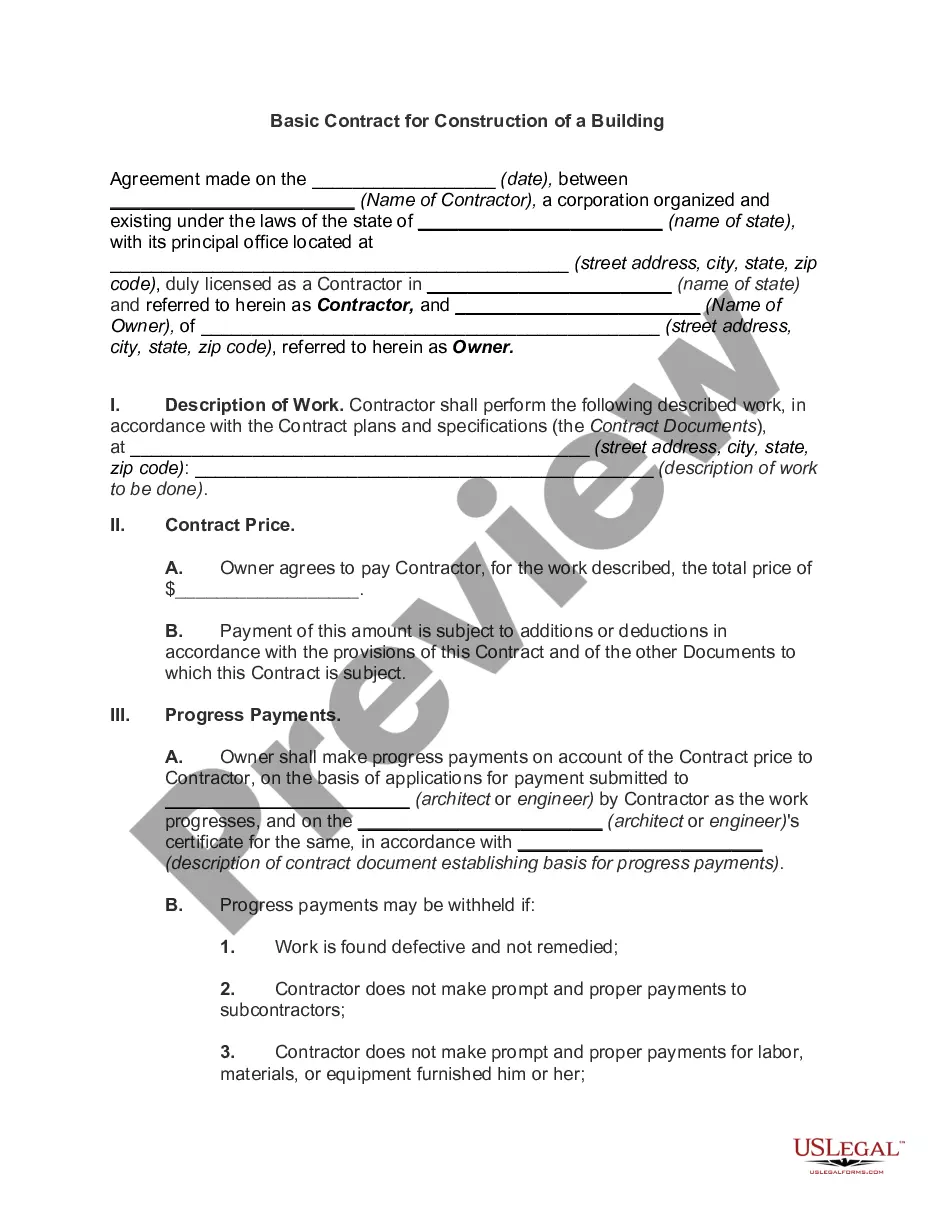
- Permits: Mandates that the contractor is responsible for obtaining necessary permits.
- Insurance: Requires the contractor to hold specific types of insurance for the duration of the project.
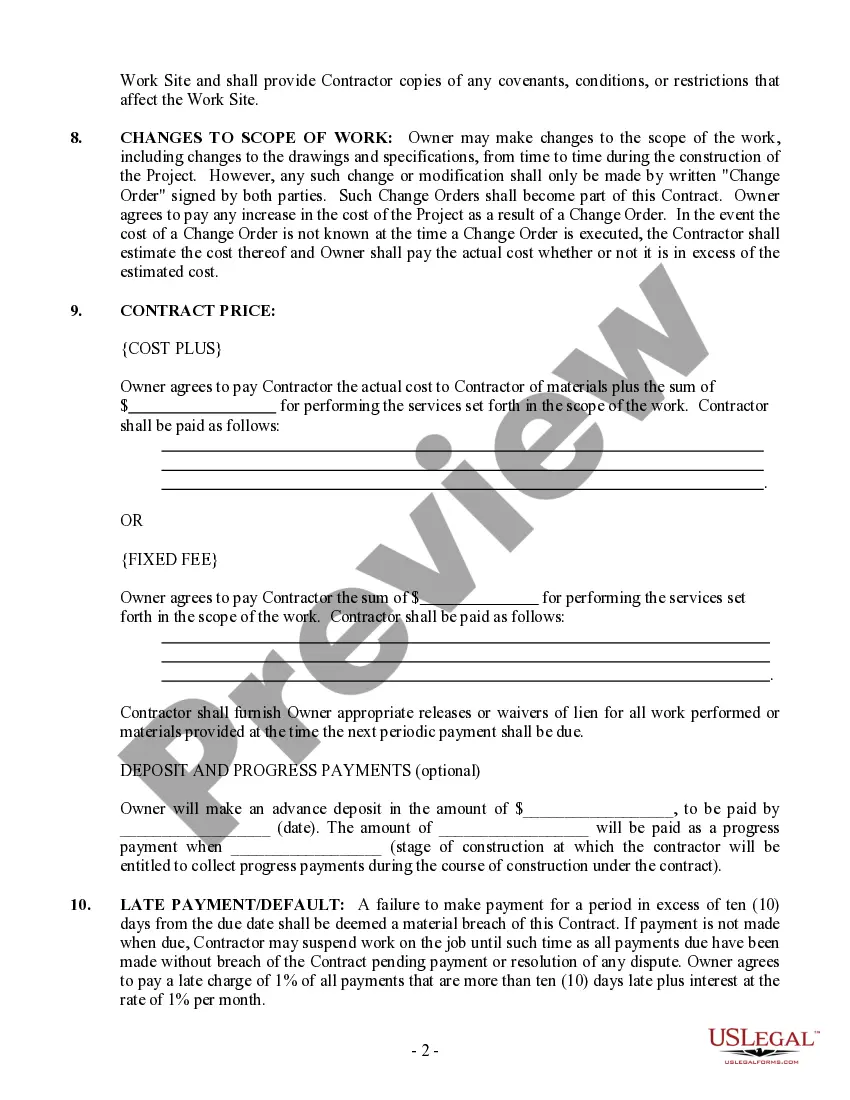
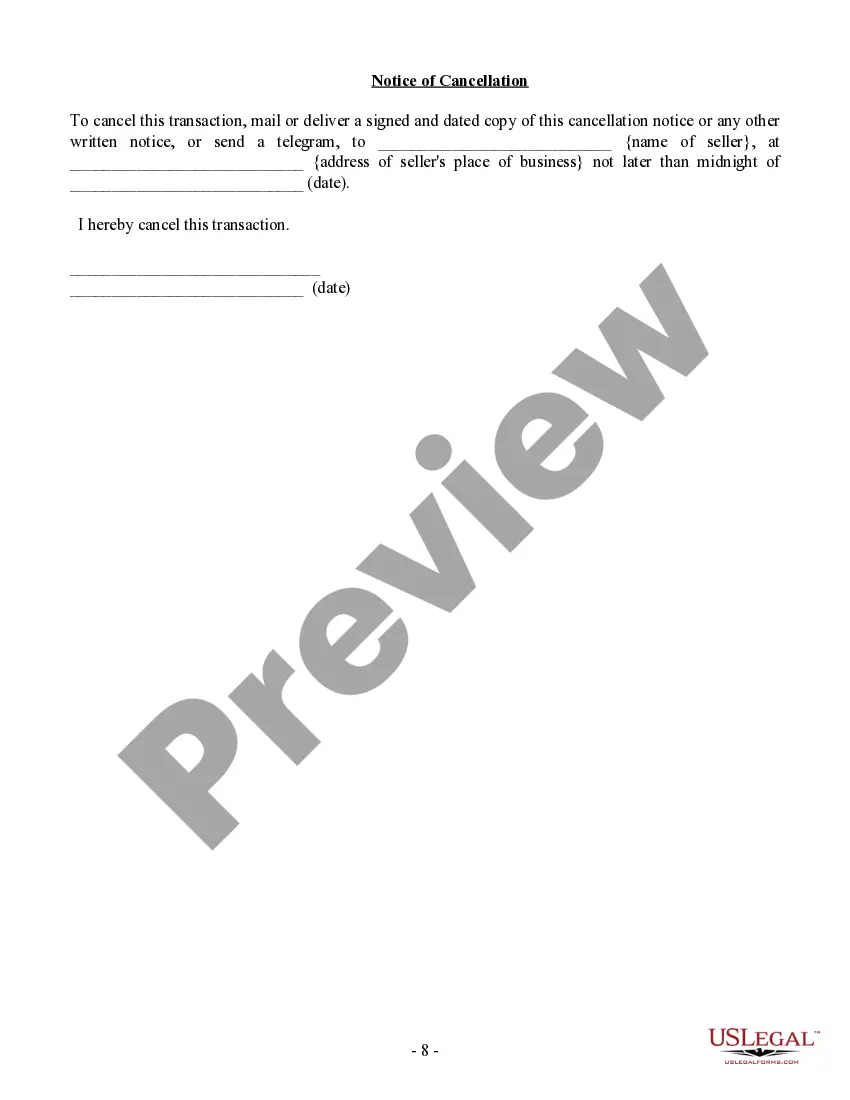
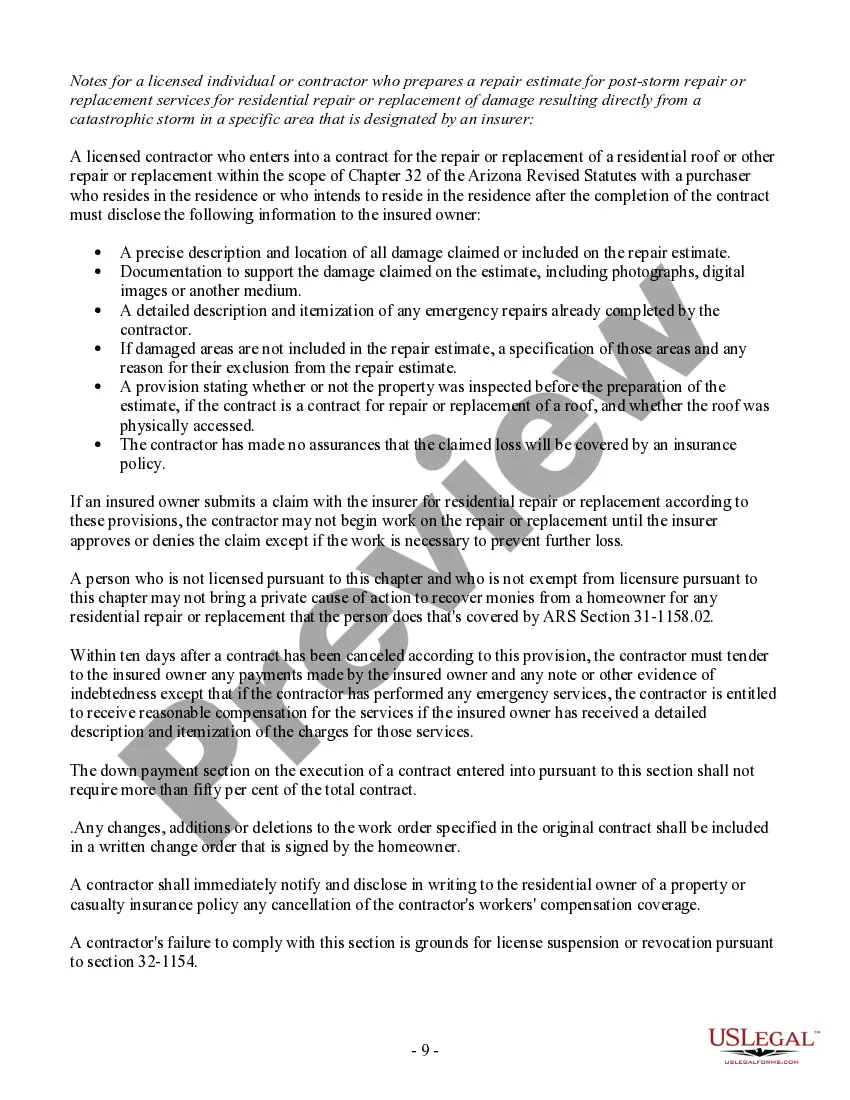
- Change orders: Details how modifications to the project scope are handled.
- Payment terms: Outlines conditions for making deposits and progress payments.
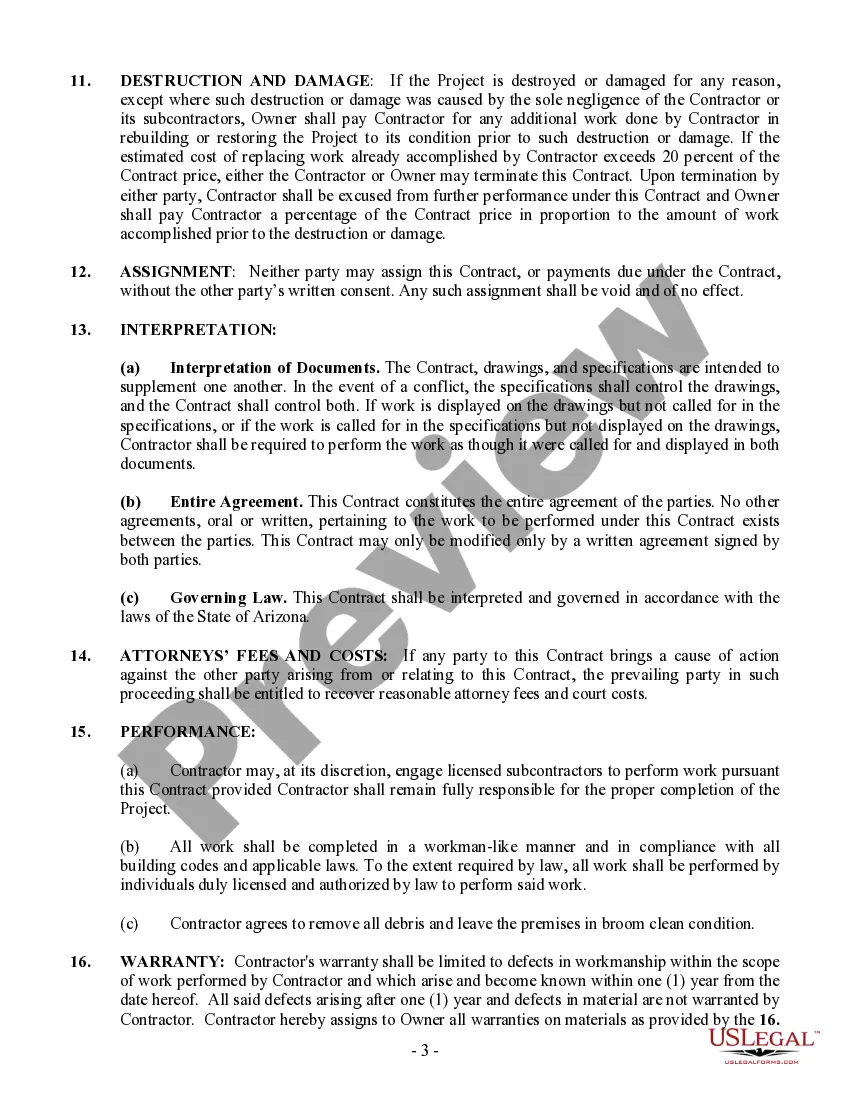
- Termination clause: Describes the conditions under which either party may terminate the contract due to damage or destruction of the project.
When to use this form
This form should be used when entering a construction contract where the payment structure needs to adapt based on actual costs incurred or where total project costs are predetermined. It is particularly useful for larger projects or where costs may fluctuate due to material or labor price changes. Homeowners and contractors can ensure clarity on responsibilities and liabilities by using this form.
Intended users of this form
This form is intended for:
- Property owners who are hiring contractors to perform construction work.
- Contractors who wish to establish clear terms for cost and fee arrangements with clients.
- Individuals or entities involved in construction projects in Arizona who need to formalize agreements regarding payment and scope of work.
Steps to complete this form
To complete this Construction Contract, follow these steps:
- Identify the parties involved: Fill in the names and contact details of the property owner and contractor.
- Specify the work site: Clearly state the location of the construction project.
- Detail the scope of work: Outline the responsibilities and expectations for both the contractor and owner.
- Enter payment details: Specify the payment structure, including deposit amounts and progress payment terms.
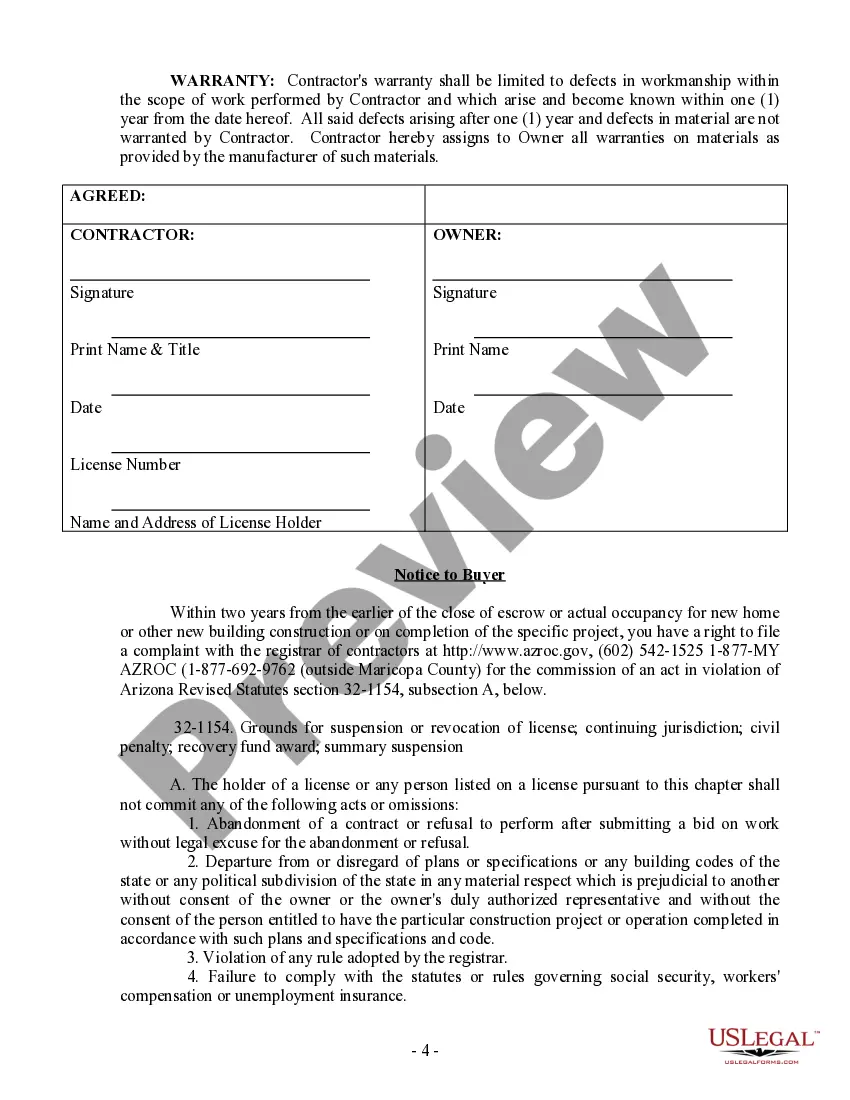
- Include signatures: Ensure both parties sign and date the contract to make it legally binding.
Does this document require notarization?
This form does not typically require notarization to be legally valid. However, some jurisdictions or document types may still require it. US Legal Forms provides secure online notarization powered by Notarize, available 24/7 for added convenience.
Get your form ready online
Our built-in tools help you complete, sign, share, and store your documents in one place.
Make edits, fill in missing information, and update formatting in US Legal Forms—just like you would in MS Word.
Download a copy, print it, send it by email, or mail it via USPS—whatever works best for your next step.
Sign and collect signatures with our SignNow integration. Send to multiple recipients, set reminders, and more. Go Premium to unlock E-Sign.
If this form requires notarization, complete it online through a secure video call—no need to meet a notary in person or wait for an appointment.
We protect your documents and personal data by following strict security and privacy standards.

Make edits, fill in missing information, and update formatting in US Legal Forms—just like you would in MS Word.

Download a copy, print it, send it by email, or mail it via USPS—whatever works best for your next step.

Sign and collect signatures with our SignNow integration. Send to multiple recipients, set reminders, and more. Go Premium to unlock E-Sign.

If this form requires notarization, complete it online through a secure video call—no need to meet a notary in person or wait for an appointment.

We protect your documents and personal data by following strict security and privacy standards.
Avoid these common issues
- Failing to obtain necessary permits before starting construction.
- Not clearly defining the scope of work, leading to potential disputes.
- Neglecting to secure appropriate insurance coverage for the construction project.
- Overlooking the need for written change orders for modifications to the project scope.
Advantages of online completion
- Convenience of downloadable templates that can be completed at your own pace.
- Integrated guidelines specifically written by licensed attorneys to ensure legality and compliance.
- Editability allows customization to meet specific project needs and circumstances.
- Reliable format that assures both parties understand their obligations.
- This contract is legally binding once signed by both the owner and the contractor.
- It is enforceable in accordance with Arizona state laws.
- Properly executed change orders are critical for legal compliance should adjustments to the scope arise.
Key takeaways
- The Construction Contract allows for flexible payment arrangements based on actual costs or a fixed fee.
- All parties should ensure clarity on the projectâs scope and responsibilities to minimize disputes.
- Obtaining necessary permits and maintaining insurance is a must for legal compliance.
- Standard procedures for change orders must be followed to ensure enforceability.
Looking for another form?
Form popularity
FAQ
Cost Plus Contract Disadvantages For the buyer, the major disadvantage of this type of contract is the risk for paying much more than expected on materials. The contractor also has less incentive to be efficient since they will profit either way.
A cost-plus contract is an agreement to reimburse a company for expenses incurred plus a specific amount of profit, usually stated as a percentage of the contract's full price.
A Cost-Based Pricing Example Suppose that a company sells a product for $1, and that $1 includes all the costs that go into making and marketing the product. The company may then add a percentage on top of that $1 as the "plus" part of cost-plus pricing. That portion of the price is the company's profit.
Cost-plus-fixed-fee tends to me more advantageous to the buyer as opposed to the seller as it caps the fee and the fee will not swell or grow based on the future expansion or fluctuations of the budget. However, it also can protect the seller because, in the event the budget tightens, it provides a fixed fee.
In the cost plus a percentage arrangement, the contractor bills the client for his direct costs for labor, materials, and subs, plus a percentage to cover his overhead and profit. Markups might range anywhere from 10% to 25%.
A fixed price contract sets a total price for all construction-related activities during a project. Many fixed price contracts include benefits for early termination and penalties for a late termination to give the contractors incentives to ensure the project is completed on time and within scope.
A cost-plus contract, also known as a cost-reimbursement contract, is a form of contract wherein the contractor is paid for all of their construction-related expenses. Plus, the contractor is paid a specific agreed-upon amount for profit.
A fixed-price contract is a type of contract where the payment amount does not depend on resources used or time expended. This is opposed to a cost-plus contract, which is intended to cover the costs with additional profit made.