Consignment Form Template With Payment
Description

Get your form ready online
Our built-in tools help you complete, sign, share, and store your documents in one place.
Make edits, fill in missing information, and update formatting in US Legal Forms—just like you would in MS Word.
Download a copy, print it, send it by email, or mail it via USPS—whatever works best for your next step.
Sign and collect signatures with our SignNow integration. Send to multiple recipients, set reminders, and more. Go Premium to unlock E-Sign.
If this form requires notarization, complete it online through a secure video call—no need to meet a notary in person or wait for an appointment.
We protect your documents and personal data by following strict security and privacy standards.

Make edits, fill in missing information, and update formatting in US Legal Forms—just like you would in MS Word.

Download a copy, print it, send it by email, or mail it via USPS—whatever works best for your next step.

Sign and collect signatures with our SignNow integration. Send to multiple recipients, set reminders, and more. Go Premium to unlock E-Sign.

If this form requires notarization, complete it online through a secure video call—no need to meet a notary in person or wait for an appointment.

We protect your documents and personal data by following strict security and privacy standards.
Looking for another form?
How to fill out Consignment Agreement?
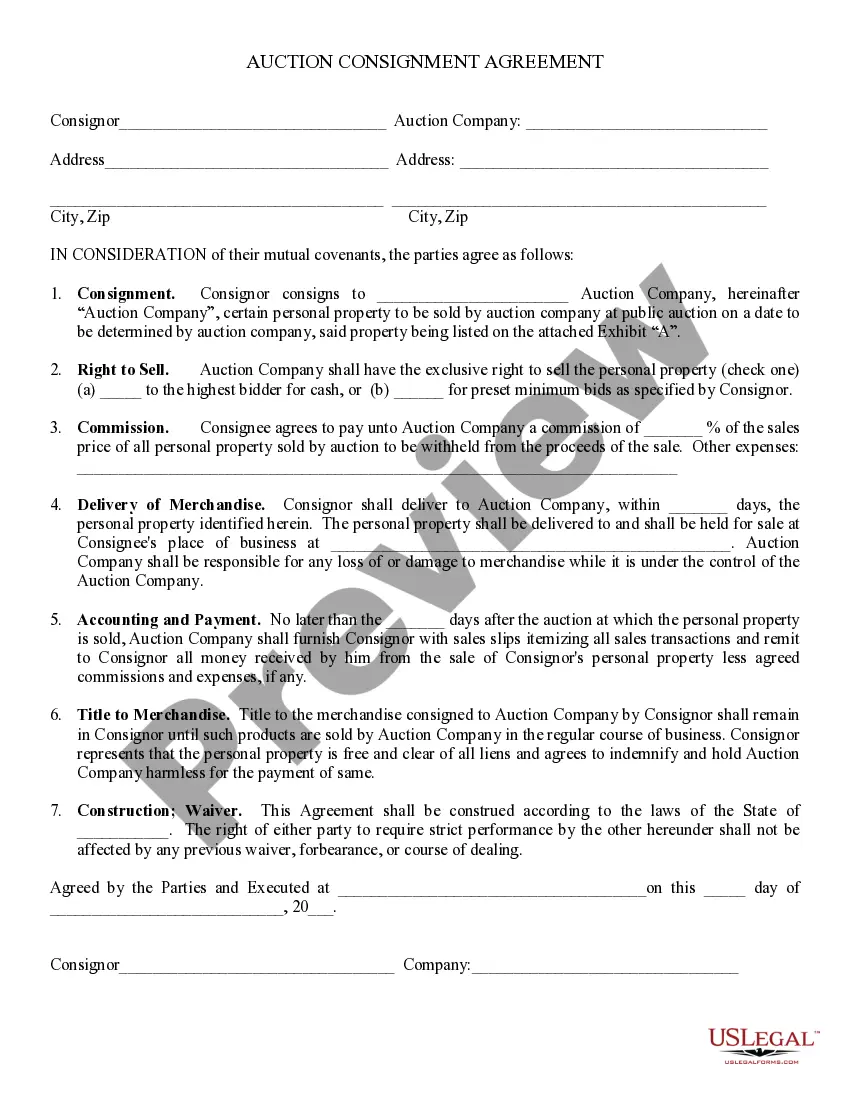
The Consignment Form Template With Payment displayed on this page is a reusable legal document created by expert attorneys in compliance with federal and state laws.
For over 25 years, US Legal Forms has supplied individuals, businesses, and legal practitioners with more than 85,000 validated, state-specific forms for any business and personal circumstance. It’s the quickest, simplest, and most dependable method to acquire the documents you require, as the service ensures bank-level data security and anti-malware safeguards.
Register for US Legal Forms to have authenticated legal templates for all of life's situations readily available.
- Search for the document you require and examine it.
- Sign up and Log In.
- Obtain the fillable template.
- Complete and sign the document.
- Download your documents one more time.
Form popularity
FAQ
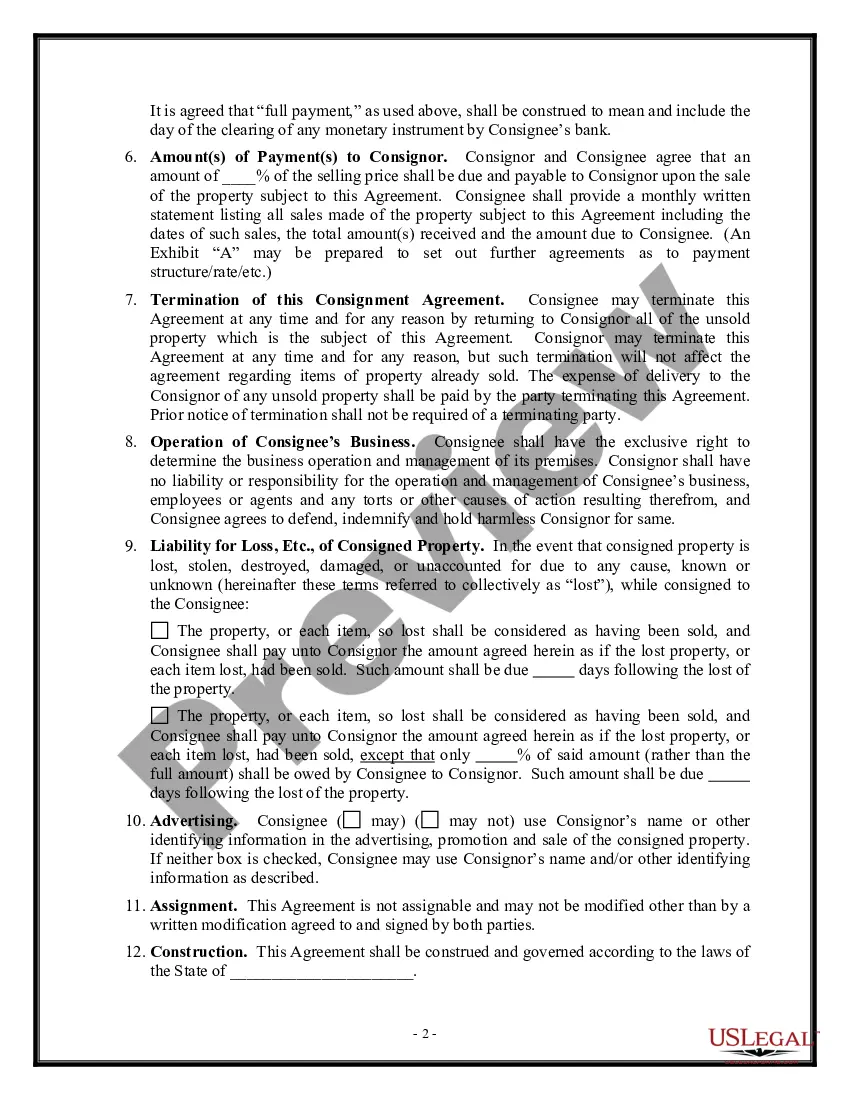
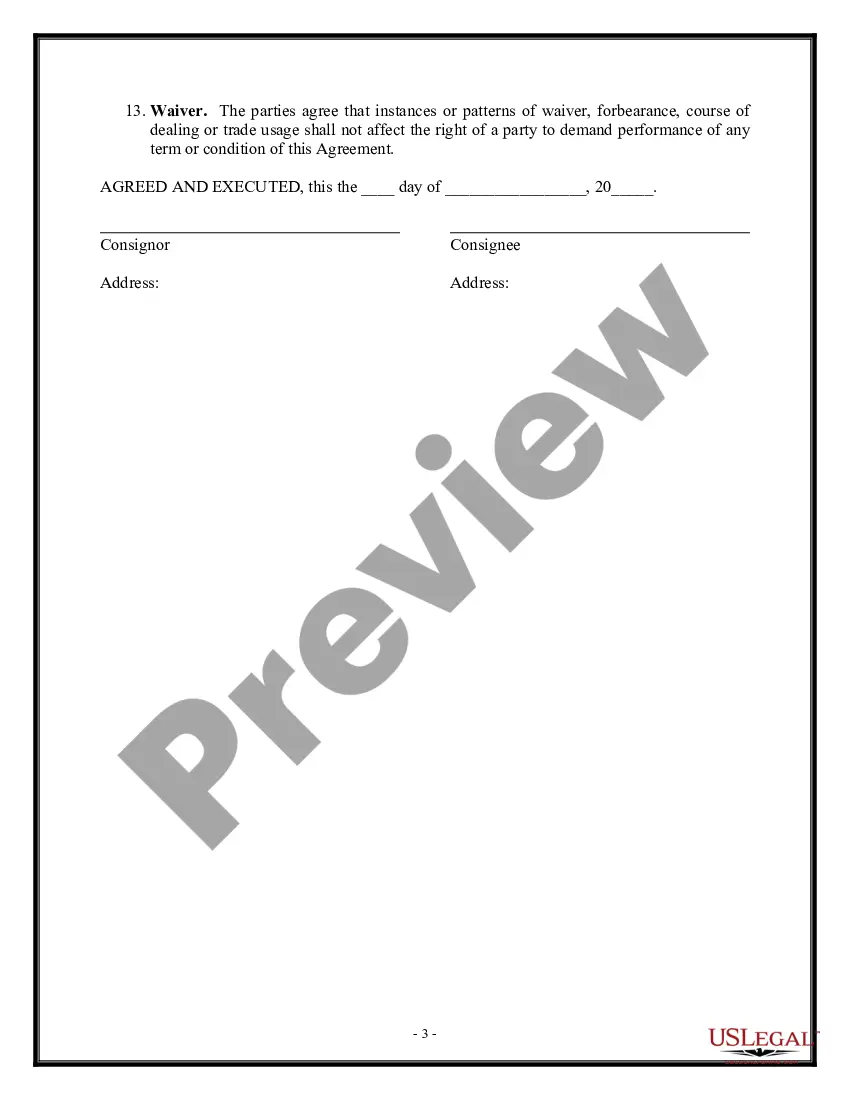
Payment terms for consignment typically include the percentage of sales that the consignee retains and when payments are issued. Using a consignment form template with payment terms ensures that all parties agree on how and when funds will be transferred. This template can specify conditions such as payment frequency and any fees associated with the consignment. Clear payment terms help maintain a smooth business relationship.
Creating a simple payment agreement involves defining the payment amount, due dates, and preferred payment methods. You can use a consignment form template with payment specifications to ensure all critical details are captured. This template can simplify the process, making it easy for you and the other party to understand your financial responsibilities. A clear agreement fosters trust and reduces the chances of misunderstandings.
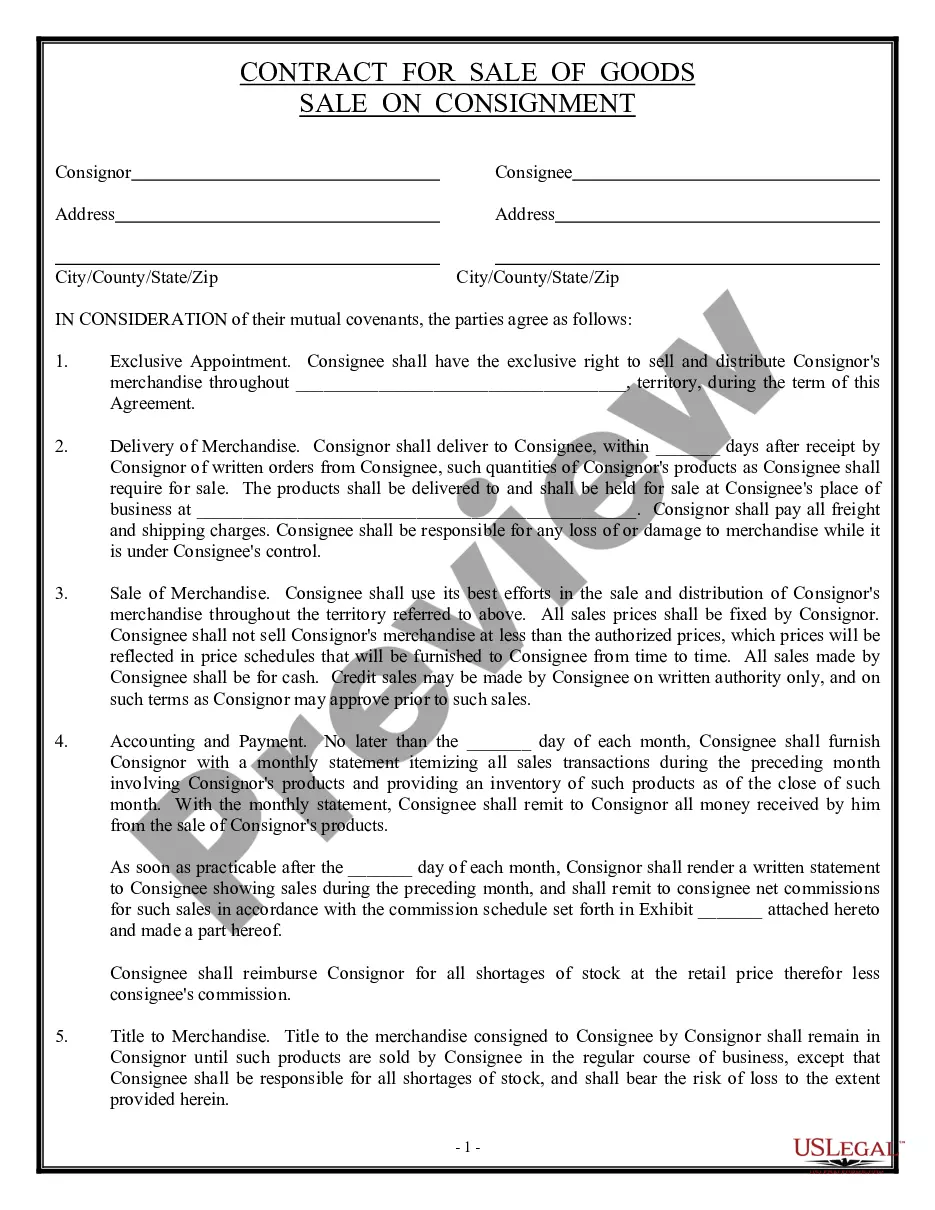
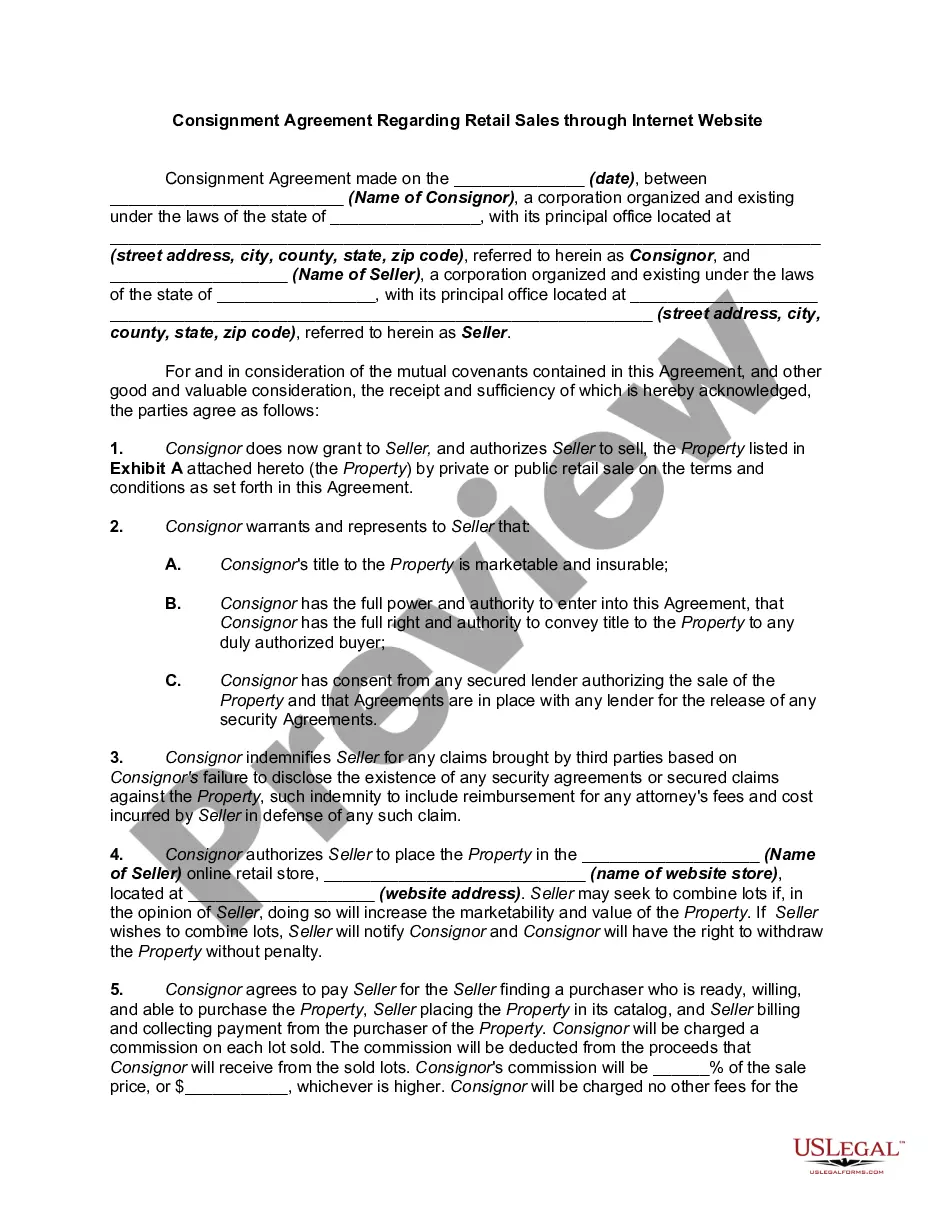
A consignment agreement should clearly outline the terms between the consignor and the consignee. Key elements include the item description, the duration of the consignment, and the commission structure. Additionally, a consignment form template with payment details can streamline the financial aspects, ensuring both parties understand their obligations. This clarity helps prevent disputes and promotes a successful consignment process.
Consignment occurs when the the owner of goods (the "consignor," for example an artist, craftsperson, or a dealer) provides goods to a store or gallery (the consignee), who agrees to pay the consignor the proceeds from a sale minus the consignee's commission (typically 40% to 50% of the sale price).
3. Consignment agreement instructions Introduction of Parties. Identifies the parties and the date of the agreement. ... Recitals. ... Section 1: Consigned property. ... Section 2: Delivery of goods. ... Section 3: Consignment period. ... Section 4: Efforts to sell. ... Section 5: Title to products. ... Section 6: Payment; commission.
For example, a consignment store might sell previously owned prom dresses by offering to pay a 20% revenue fee to anyone who wants to sell a dress through their store. Some examples of goods you may often see for sale using the consignment business model include: Antiques and collectibles. Magazines and newspapers.
Consignment is an arrangement in which goods are left with a third party to sell. The party that sells the goods on consignment receives a portion of the profits, either as a flat rate fee or commission. Selling via a consignment arrangement can be a low-commission, low-time-investment way of selling items or services.