Roommate Agreement Ideas In Texas
Description

Get your form ready online
Our built-in tools help you complete, sign, share, and store your documents in one place.
Make edits, fill in missing information, and update formatting in US Legal Forms—just like you would in MS Word.
Download a copy, print it, send it by email, or mail it via USPS—whatever works best for your next step.
Sign and collect signatures with our SignNow integration. Send to multiple recipients, set reminders, and more. Go Premium to unlock E-Sign.
If this form requires notarization, complete it online through a secure video call—no need to meet a notary in person or wait for an appointment.
We protect your documents and personal data by following strict security and privacy standards.

Make edits, fill in missing information, and update formatting in US Legal Forms—just like you would in MS Word.

Download a copy, print it, send it by email, or mail it via USPS—whatever works best for your next step.

Sign and collect signatures with our SignNow integration. Send to multiple recipients, set reminders, and more. Go Premium to unlock E-Sign.

If this form requires notarization, complete it online through a secure video call—no need to meet a notary in person or wait for an appointment.

We protect your documents and personal data by following strict security and privacy standards.
Looking for another form?








Form popularity
FAQ
Yes, you can add a tenant to an existing lease. While it's not the most simple process, it's not uncommon for a tenant to request to add a roommate or partner to their lease agreement. However, a lease is a legally binding agreement, so it's crucial to ensure each tenant is listed within the contract.
A Texas standard residential lease agreement is a document used by a landlord renting property to a tenant for monthly payment under typical conditions. Most agreements of this type are for a fixed term, usually one year.
As a tenant, you are legally responsible for the lease agreement that you signed with the landlord and property owner. While you can choose to live with someone who is not on the lease, some potential complications and risks come with this choice. The landlord could choose to have the non-tenant evicted.
Create a list of house rules with your roommates and agree on how you'll handle monthly rent payments. Decide how you'll be sharing food, utility, and furniture costs, and try to balance out how much each roommate spends. Use digital payment apps for splitting expenses or set up a shared bank account.
Respect personal space and agree on quiet hours to ensure a peaceful living environment. Share household chores and manage guest policies to prevent conflicts. Handle shared expenses transparently and foster effective communication for conflict resolution. Respect privacy and balance social time with personal time.
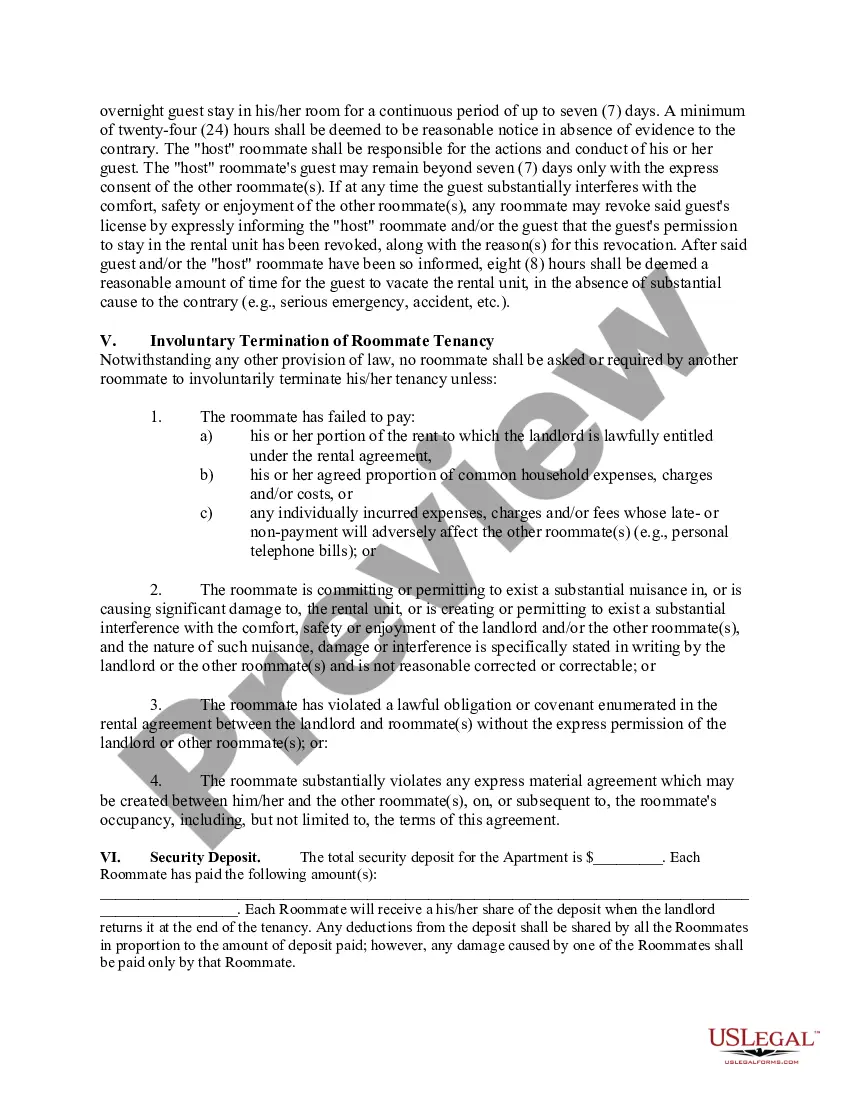
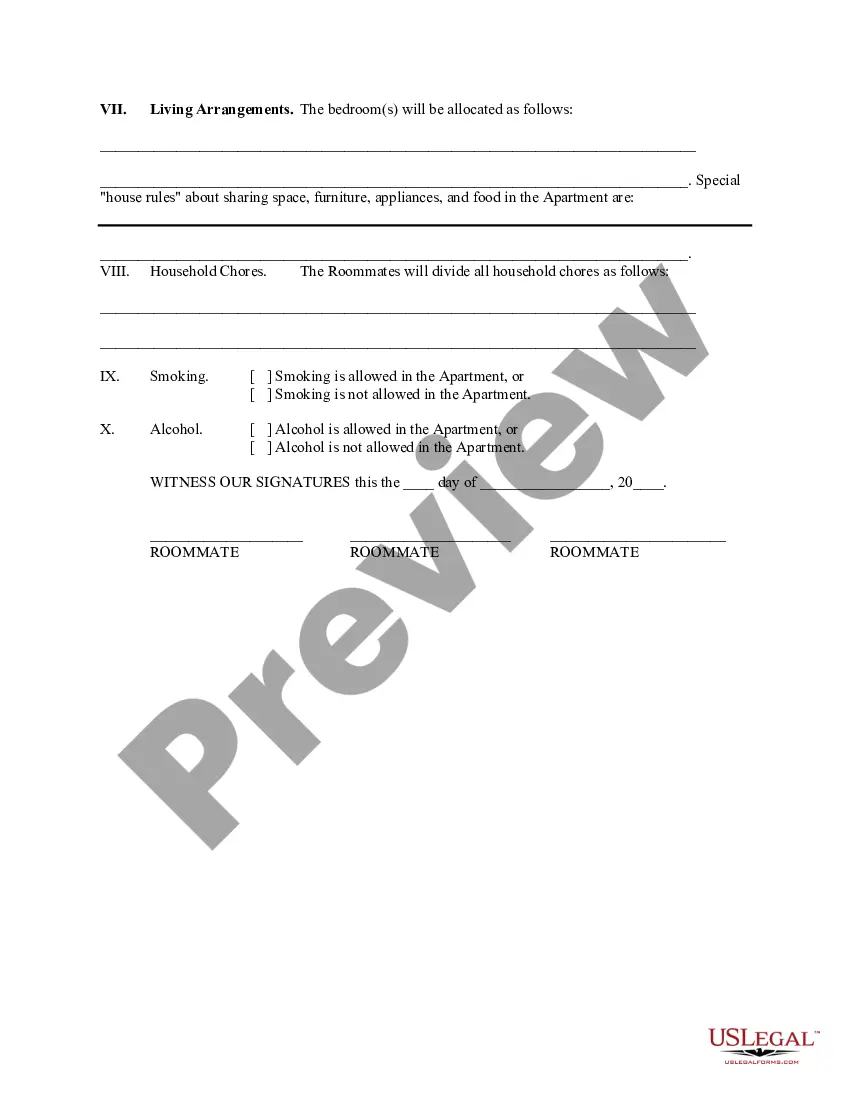
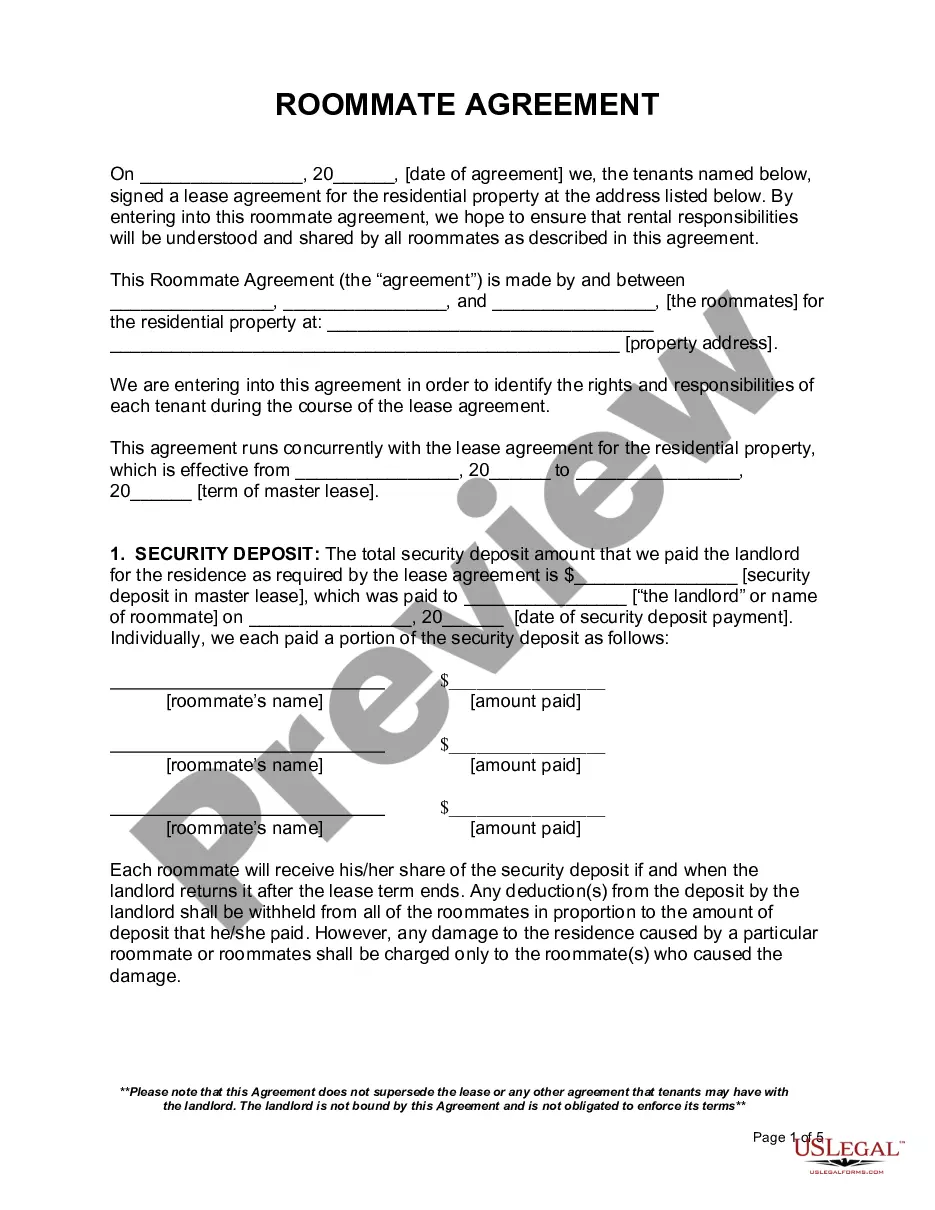
What do I include in a Roommate Agreement? Information about the property, roommates, and original lease. Term or length of the agreement. Rent responsibilities. Security deposit details. Responsibilities for utilities and household costs. House rules, roommate duties, and restrictions. Rules for termination of tenancy.
Name: Print the name of each roommate listed on the lease. Eligibility Status: Circle the status that makes each person eligible for the apartment. Departure Date, if leaving: For the person leaving, list a date that the person will be moving out of the apartment.
Respect personal space and agree on quiet hours to ensure a peaceful living environment. Share household chores and manage guest policies to prevent conflicts. Handle shared expenses transparently and foster effective communication for conflict resolution. Respect privacy and balance social time with personal time.
You probably don't expect to sue your roommate someday. Yet, it does happen. An agreement creates expectations to keep the living arrangement fair. They also provide protection and peace of mind because they are legally binding.
