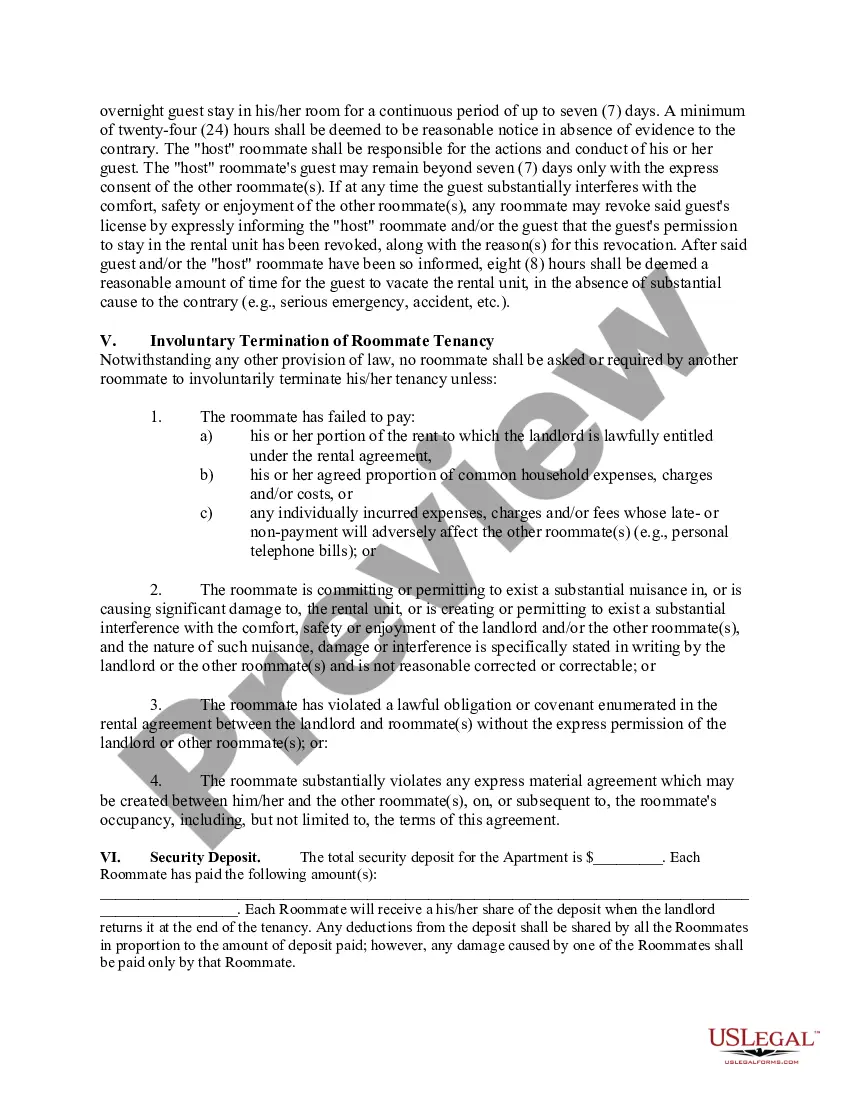
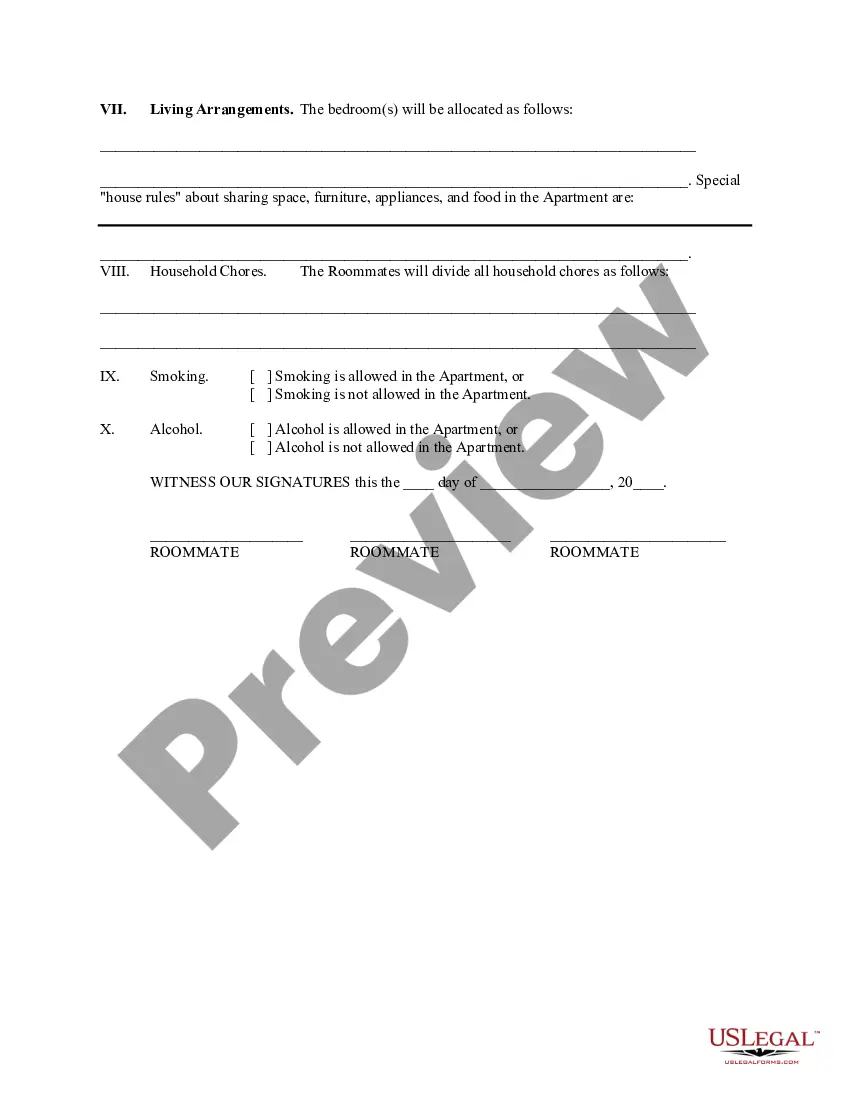
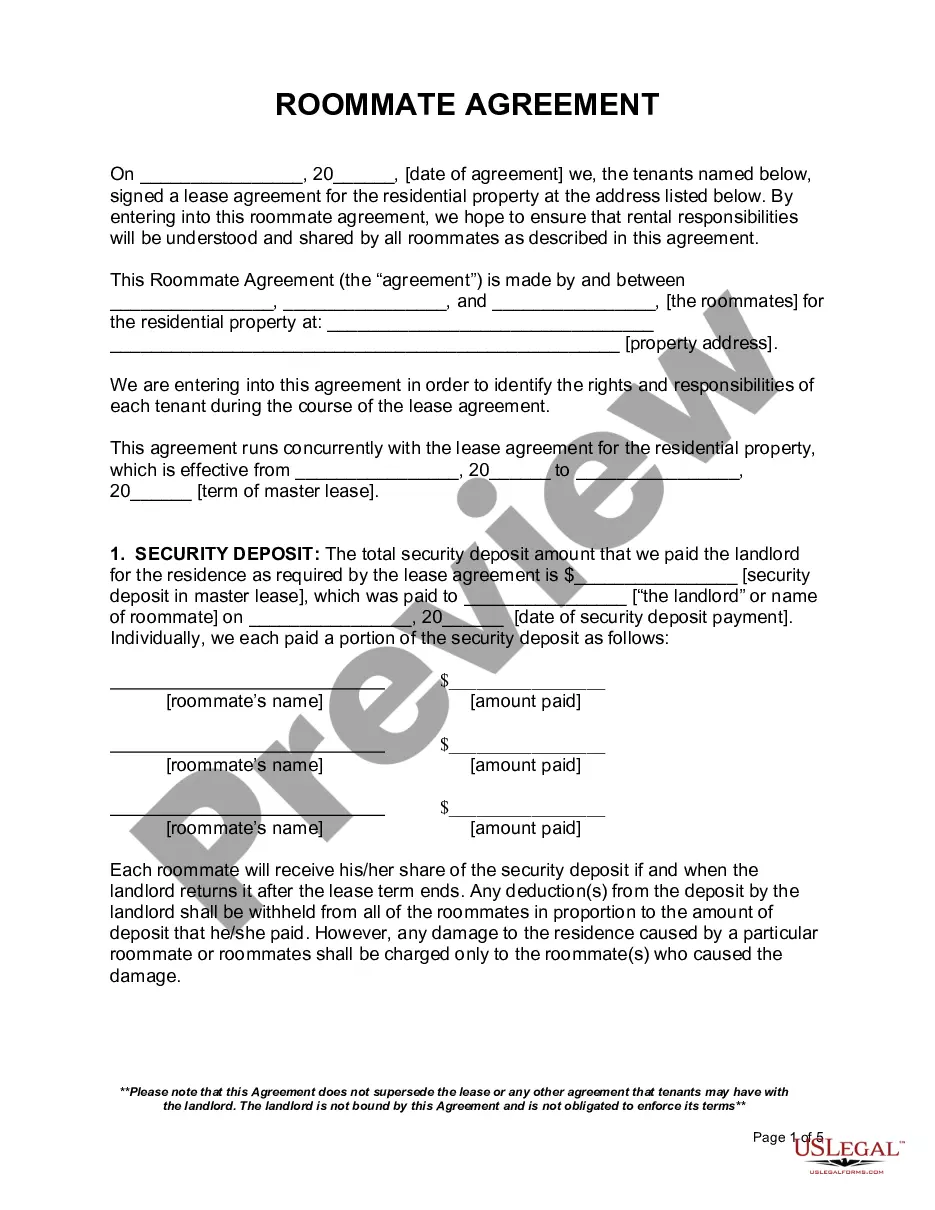
Sample Lease Agreement For Roommate In Phoenix
Description

Get your form ready online
Our built-in tools help you complete, sign, share, and store your documents in one place.
Make edits, fill in missing information, and update formatting in US Legal Forms—just like you would in MS Word.
Download a copy, print it, send it by email, or mail it via USPS—whatever works best for your next step.
Sign and collect signatures with our SignNow integration. Send to multiple recipients, set reminders, and more. Go Premium to unlock E-Sign.
If this form requires notarization, complete it online through a secure video call—no need to meet a notary in person or wait for an appointment.
We protect your documents and personal data by following strict security and privacy standards.

Make edits, fill in missing information, and update formatting in US Legal Forms—just like you would in MS Word.

Download a copy, print it, send it by email, or mail it via USPS—whatever works best for your next step.

Sign and collect signatures with our SignNow integration. Send to multiple recipients, set reminders, and more. Go Premium to unlock E-Sign.

If this form requires notarization, complete it online through a secure video call—no need to meet a notary in person or wait for an appointment.

We protect your documents and personal data by following strict security and privacy standards.
Looking for another form?









Form popularity
FAQ
In Arizona all that is required is a 30 day notice on a month to month. It's basically as if no lease is in place, that's what a month to month tenancy is. 30 days is all that is required in Arizona.
No, lease agreements don't have to be notarized in Arizona. A lease can be notarized if the tenant and landlord want it to be. It is not, however, required by law for the rental agreement to be legally binding.
Answer: As a general rule, the answer is yes. Under the Arizona Residential Landlord and Tenant Act, a verbal rental agreement concerning the use and occupancy of a dwelling unit is just as enforceable as a written rental agreement (or lease) is (A.R.S. 33-1310(13)).
Significant changes, such as the amounts of rent or late fees, would effectively create a new tenancy. In that circumstance, a minimum 30-day notice must be given to not renew the month-to-month tenancy under A.R.S.
There is no law regulating what kind of advance notice, if any, is required to stay on or vacate when the lease ends. On occasion a lease will state that it automatically renews unless either party gives notice otherwise. More frequently, a 30-day or 60-day notice must be provided by one party to the other.
The landlord must give the tenant written notice of his or her intent to immediately terminate the rental agreement. The landlord can file the eviction action the same day the tenant receives the notice of immediate termination.
C. A tenant from month to month shall give ten days notice, and a tenant on a semimonthly basis shall give five days notice, of his intention to terminate possession of the premises.
If no time frame is established in the rental agreement, the agreement becomes a month-to-month agreement. A.R.S. § 33-1314(D). To terminate a month-to-month rental agreement, a landlord or a tenant must give 30 days notice in writing before the next rent payment would normally be due.
In order to complete an online notarization in Arizona, you'll need the following: An original, unsigned document (Don't sign it before uploading! ... A computer, iPhone, or Android phone with audio and video capabilities. A valid government–issued photo ID. A U.S. social security number for secure identity verification.
