Roommate Form Contract With Roommate In Massachusetts
Description

Get your form ready online
Our built-in tools help you complete, sign, share, and store your documents in one place.
Make edits, fill in missing information, and update formatting in US Legal Forms—just like you would in MS Word.
Download a copy, print it, send it by email, or mail it via USPS—whatever works best for your next step.
Sign and collect signatures with our SignNow integration. Send to multiple recipients, set reminders, and more. Go Premium to unlock E-Sign.
If this form requires notarization, complete it online through a secure video call—no need to meet a notary in person or wait for an appointment.
We protect your documents and personal data by following strict security and privacy standards.

Make edits, fill in missing information, and update formatting in US Legal Forms—just like you would in MS Word.

Download a copy, print it, send it by email, or mail it via USPS—whatever works best for your next step.

Sign and collect signatures with our SignNow integration. Send to multiple recipients, set reminders, and more. Go Premium to unlock E-Sign.

If this form requires notarization, complete it online through a secure video call—no need to meet a notary in person or wait for an appointment.

We protect your documents and personal data by following strict security and privacy standards.
Looking for another form?










Form popularity
FAQ
A Massachusetts month-to-month rental agreement creates a short-term lease that allows a tenant to lease a residential property until canceled. Either the landlord or tenant can cancel the agreement by providing sufficient notice of at least 30 days.
The most commonly used Massachusetts lease agreement is the Standard Form of Lease. This document covers essential details such as rent amount, lease duration, security deposit, maintenance responsibilities, property managers, and other crucial provisions.
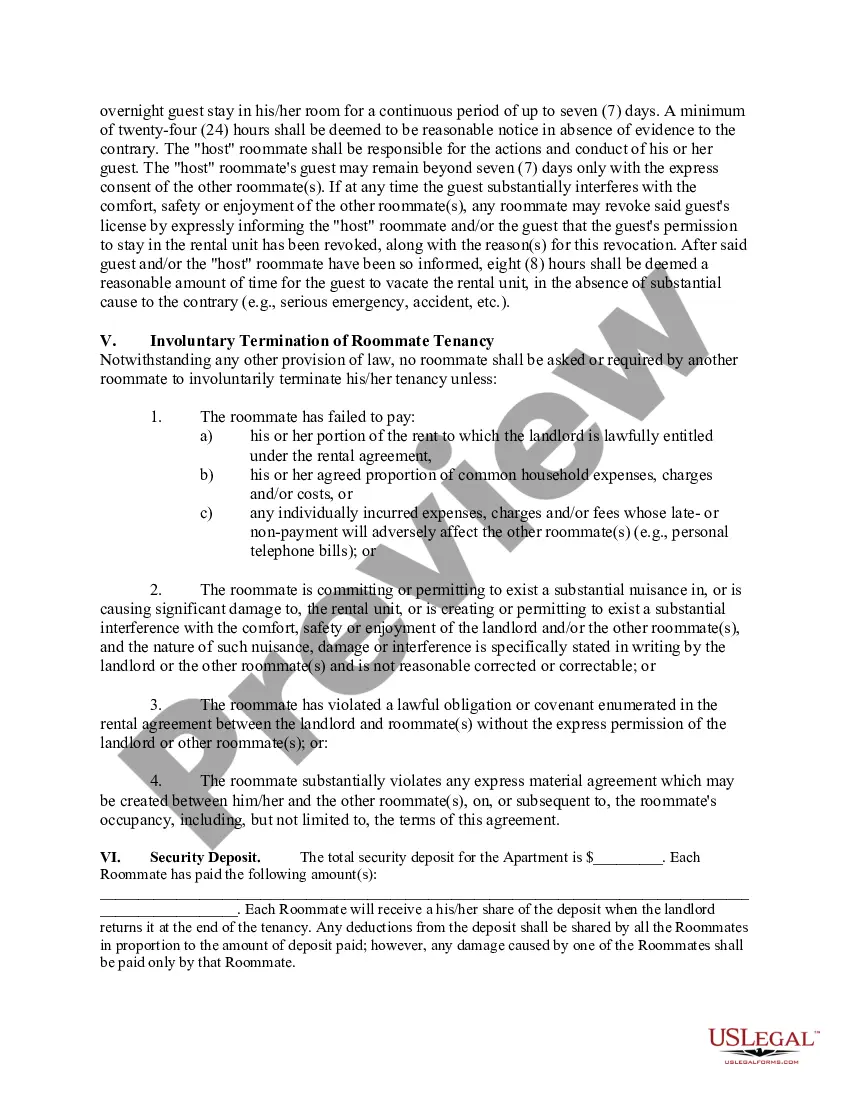
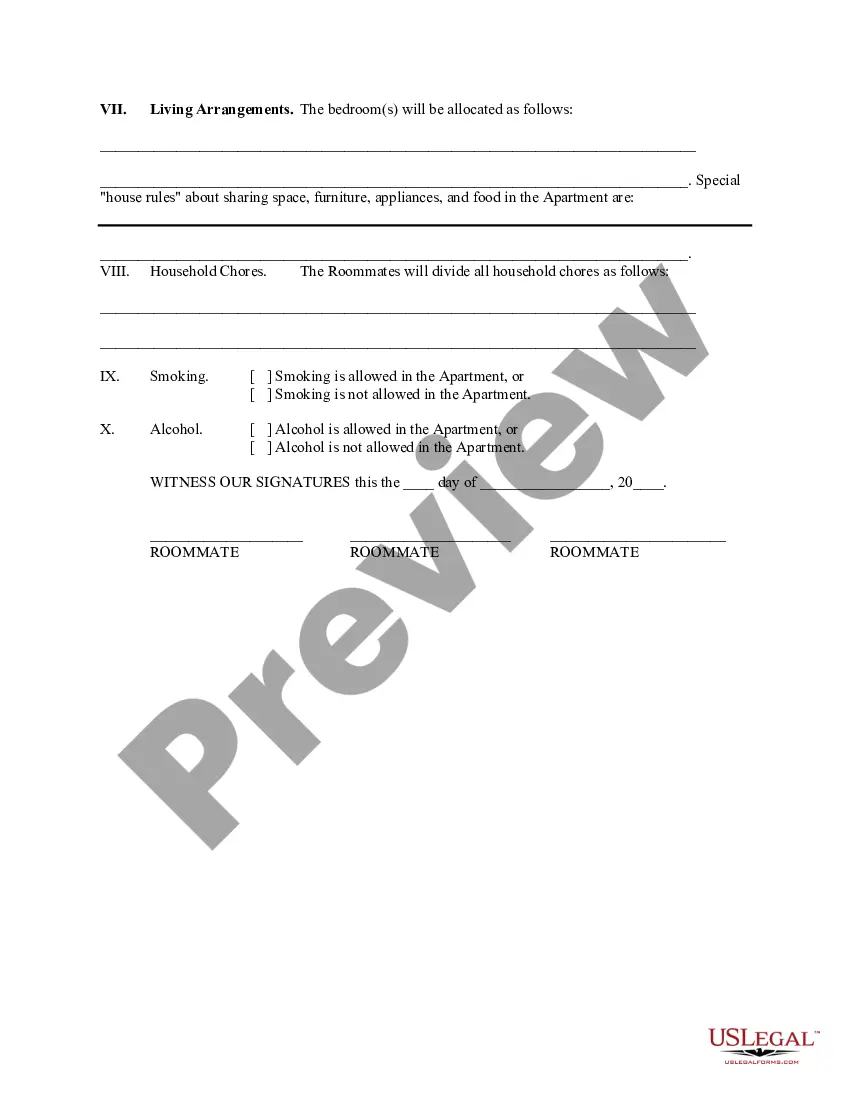
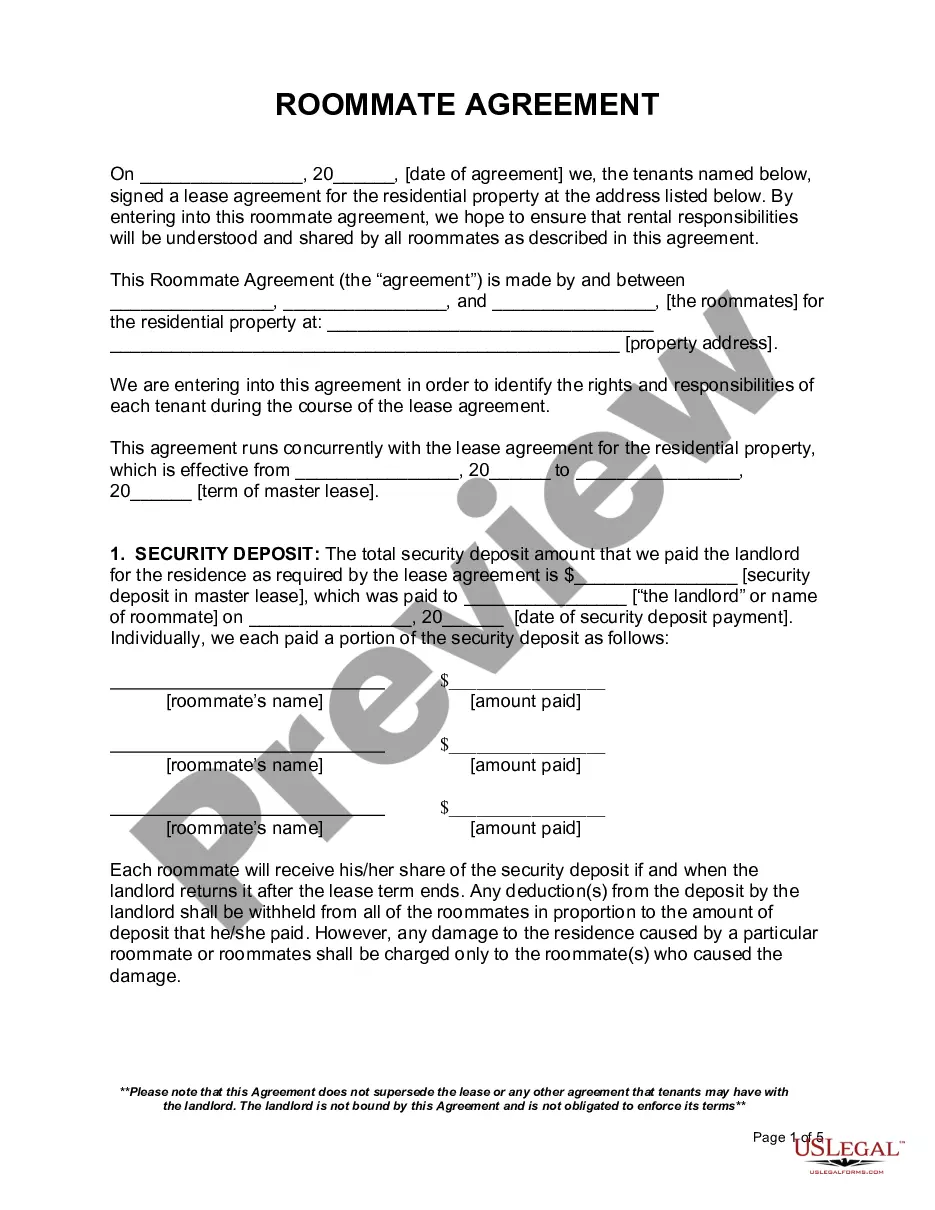
A Washington room rental agreement is a formal document detailing the guidelines and duties for several tenants residing together in a single unit or property. Every individual involved must review and consent to the contents of the document, and each roommate must sign the agreement.
If you have a roommate or a family member who is listed as a tenant on the lease, s/he will still be bound by the lease even if you are allowed to get out of it.
term lease is the most traditional lease. They're called fixed term because tenants and landlords are agreeing to abide by the lease for a fixed amount of time, normally six to 14 months.
Head to your local Housing Court, and fill out and file what is known as a Summary Process Summons and Complaint. Make sure you bring multiple copies of the notice you already gave your roommate, as well as any written lease agreement you two have, and your own lease agreement with your landlord.
It is a legally binding contract detailing the responsibilities both the landlord and the tenant promise to uphold. In addition to specifics like amenities, renovations and other apartment features, the lease includes legal details like: Grounds for lease termination and eviction.
Any guest residing at the property for more than 14 days in a six-month period or spending more than 7 nights consecutively will be considered a tenant. This person must be added to the lease agreement.
Massachusetts law typically mandates that tenants obtain written consent from their landlord before subletting. Without it, tenants risk eviction or legal disputes. Legal considerations also extend to ensuring that the sublease agreement does not violate state regulations.
In Massachusetts, if you and your roommate are both on a lease, you don't have the legal power to evict them. If you are the only one on the lease, however, it's possible to evict your roommate—although they must be violating their rental agreement somehow.
