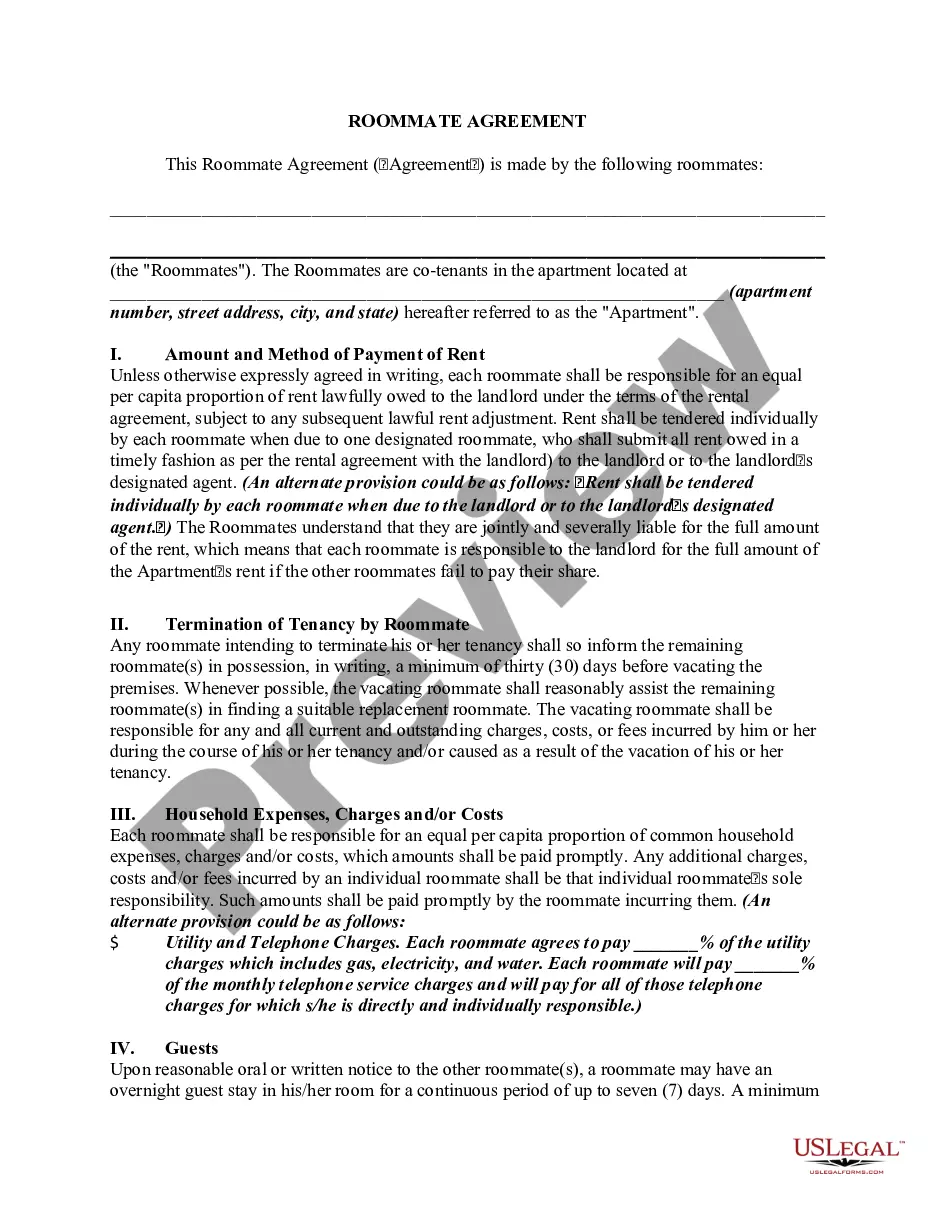
Roommate Agreement For Couples With Different Last Names In Dallas
Description

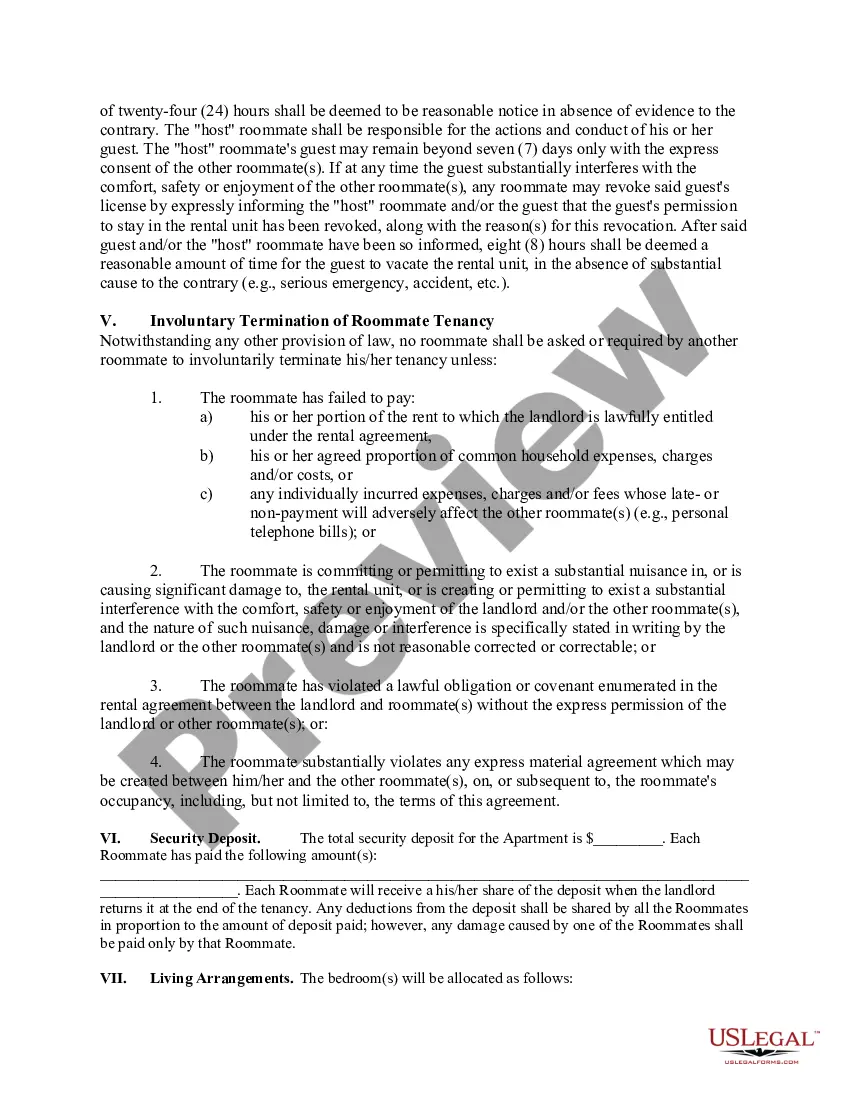
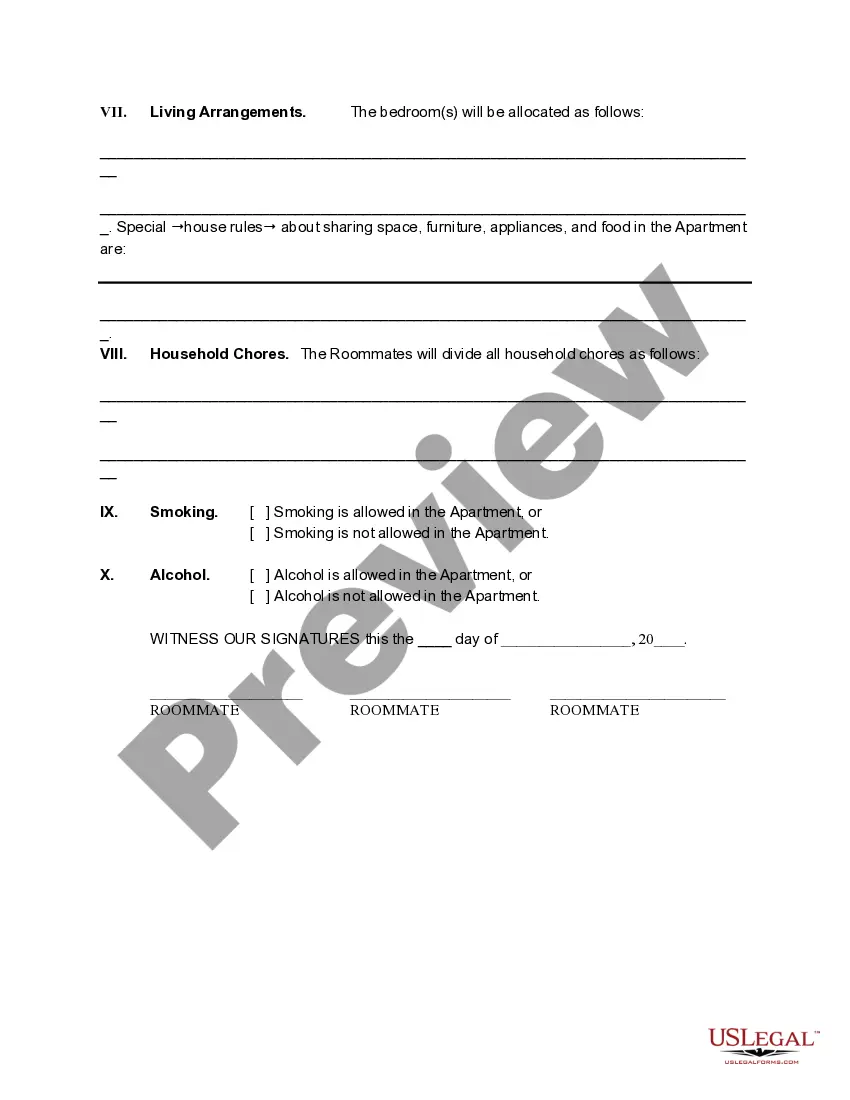

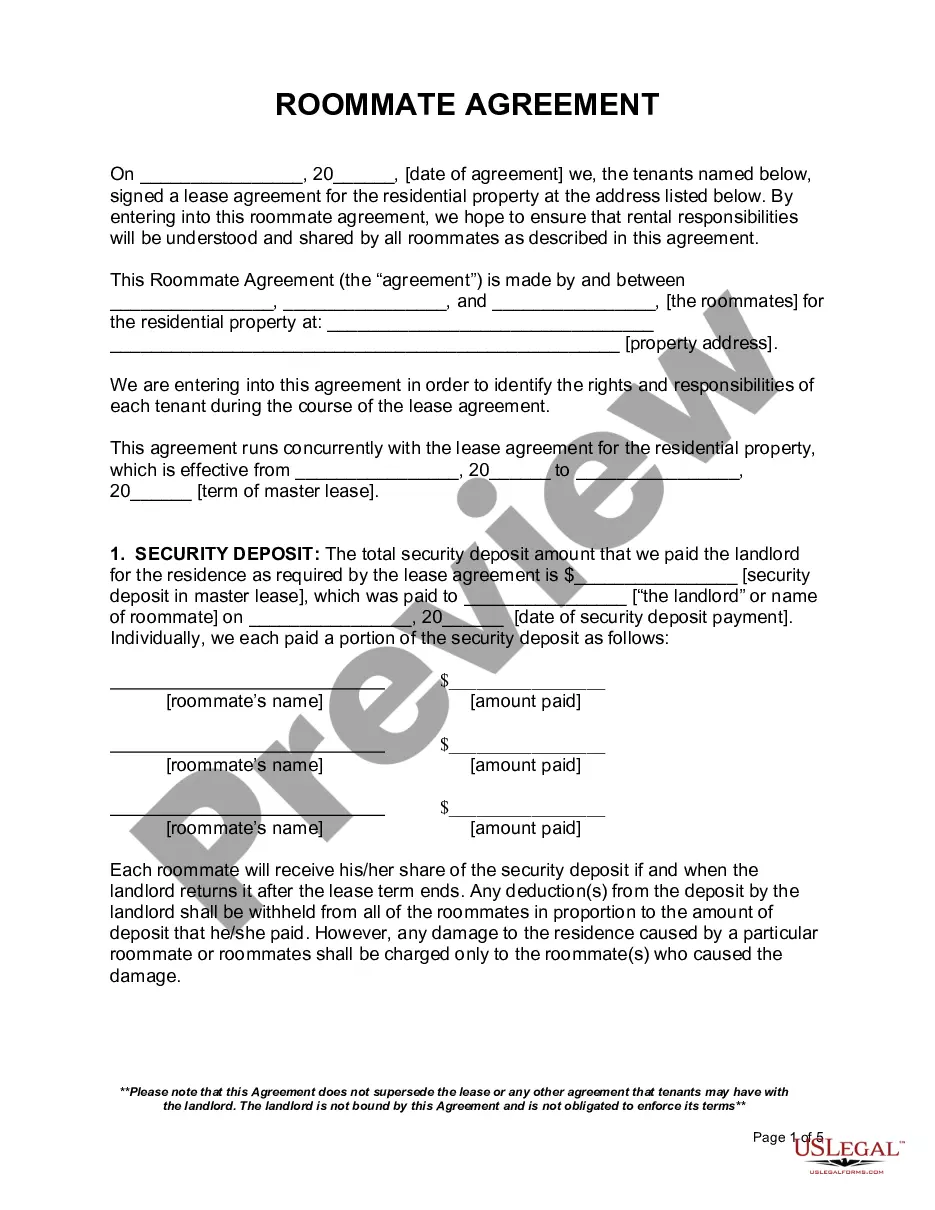
Get your form ready online
Our built-in tools help you complete, sign, share, and store your documents in one place.
Make edits, fill in missing information, and update formatting in US Legal Forms—just like you would in MS Word.
Download a copy, print it, send it by email, or mail it via USPS—whatever works best for your next step.
Sign and collect signatures with our SignNow integration. Send to multiple recipients, set reminders, and more. Go Premium to unlock E-Sign.
If this form requires notarization, complete it online through a secure video call—no need to meet a notary in person or wait for an appointment.
We protect your documents and personal data by following strict security and privacy standards.

Make edits, fill in missing information, and update formatting in US Legal Forms—just like you would in MS Word.

Download a copy, print it, send it by email, or mail it via USPS—whatever works best for your next step.

Sign and collect signatures with our SignNow integration. Send to multiple recipients, set reminders, and more. Go Premium to unlock E-Sign.

If this form requires notarization, complete it online through a secure video call—no need to meet a notary in person or wait for an appointment.

We protect your documents and personal data by following strict security and privacy standards.
Looking for another form?




Form popularity
FAQ
As a tenant, you are legally responsible for the lease agreement that you signed with the landlord and property owner. While you can choose to live with someone who is not on the lease, some potential complications and risks come with this choice. The landlord could choose to have the non-tenant evicted.
There is no express time frame but typically if they are permanently on premises beyond a week or two they can claim rights. As far as them leaving, yes, if they refuse to leave on their own, you would need to obtain a court ordered eviction.
Any roommate who is named as a tenant in the tenancy agreement is presumptively a tenant with rights and obligations under the Act; whether any roommate is a tenant or not is ultimately a legal determination that can only be made by a Residential Tenancy Branch arbitrator who will weigh the factors in favour and ...
If your name nor signature is nowhere on the lease or you live with the owner of the property, yes they can ask you to leave. No 'eviction' is needed if you never had a contract. If you don't go they can have you warned off the property and can file a violation for trespassing if you come back.
If the person refuses to leave, they may need to be evicted using the same procedure a landlord would use to evict a tenant. Under Texas law, there are specific steps to take to get a tenant to move out. Terminating the lease agreement begins with giving the tenant a written notice to vacate.
You give him a written notice to move, allowing him one month as required by Texas law and specifying the date on which his tenancy will end. If he refuses to leave after that month, your recourse would be to file for an eviction in court.
Because leases in Texas do not have to be written, a spoken agreement allowing someone to stay at a house may constitute a lease. This would give the person some protections as a tenant. Attorneys typically recommend that the safest way to remove a guest who doesn't have a lease is through the formal eviction process.
A roommate arrangement is when multiple adults occupy a single unit together. In most cases, the renters are not related, but siblings and cousins can be roommates as well. With a traditional roommate arrangement, all roommates share a single lease.
An at-will tenant must be given at least 3 days' notice to vacate, ing to Texas Property Code Section 94.005(b). If the tenant does not move out in the time specified in the notice to vacate, the next step is to file an eviction suit in justice court.
