Condo Common Elements For Sale In Tarrant
Description



Get your form ready online
Our built-in tools help you complete, sign, share, and store your documents in one place.
Make edits, fill in missing information, and update formatting in US Legal Forms—just like you would in MS Word.
Download a copy, print it, send it by email, or mail it via USPS—whatever works best for your next step.
Sign and collect signatures with our SignNow integration. Send to multiple recipients, set reminders, and more. Go Premium to unlock E-Sign.
If this form requires notarization, complete it online through a secure video call—no need to meet a notary in person or wait for an appointment.
We protect your documents and personal data by following strict security and privacy standards.

Make edits, fill in missing information, and update formatting in US Legal Forms—just like you would in MS Word.

Download a copy, print it, send it by email, or mail it via USPS—whatever works best for your next step.

Sign and collect signatures with our SignNow integration. Send to multiple recipients, set reminders, and more. Go Premium to unlock E-Sign.

If this form requires notarization, complete it online through a secure video call—no need to meet a notary in person or wait for an appointment.

We protect your documents and personal data by following strict security and privacy standards.
Looking for another form?








Form popularity
FAQ
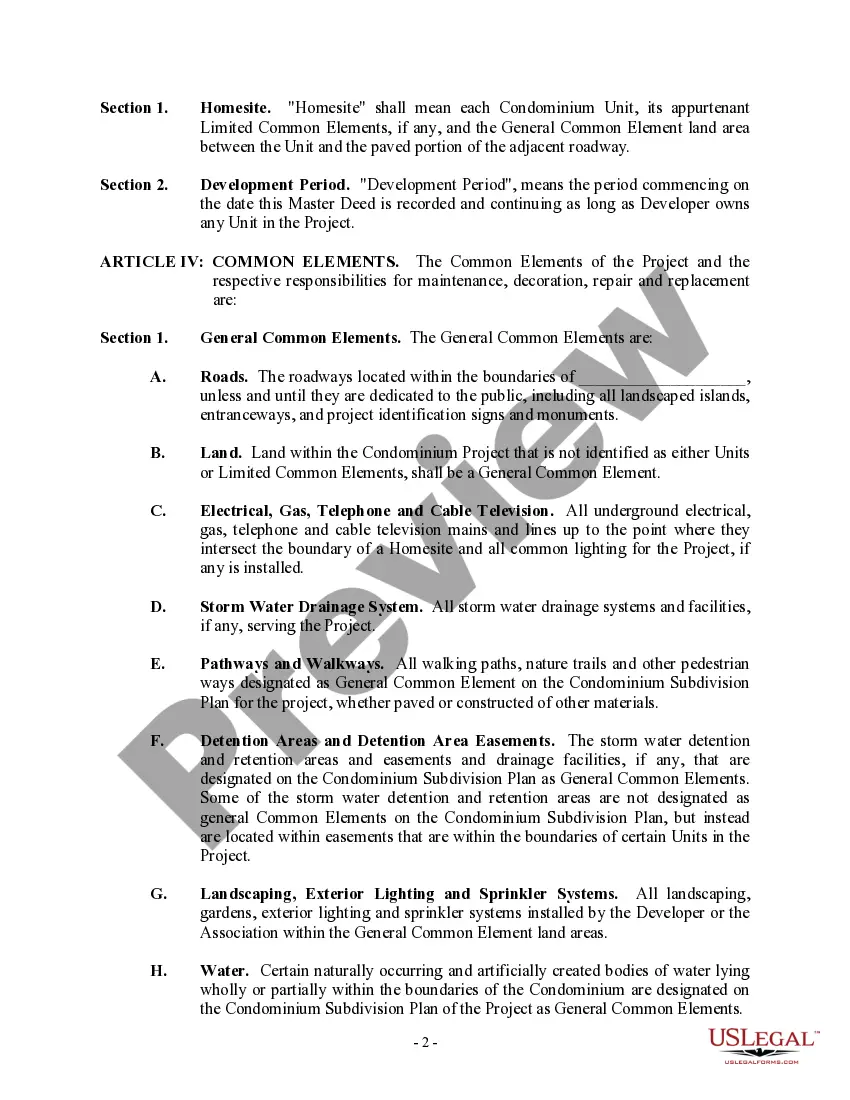
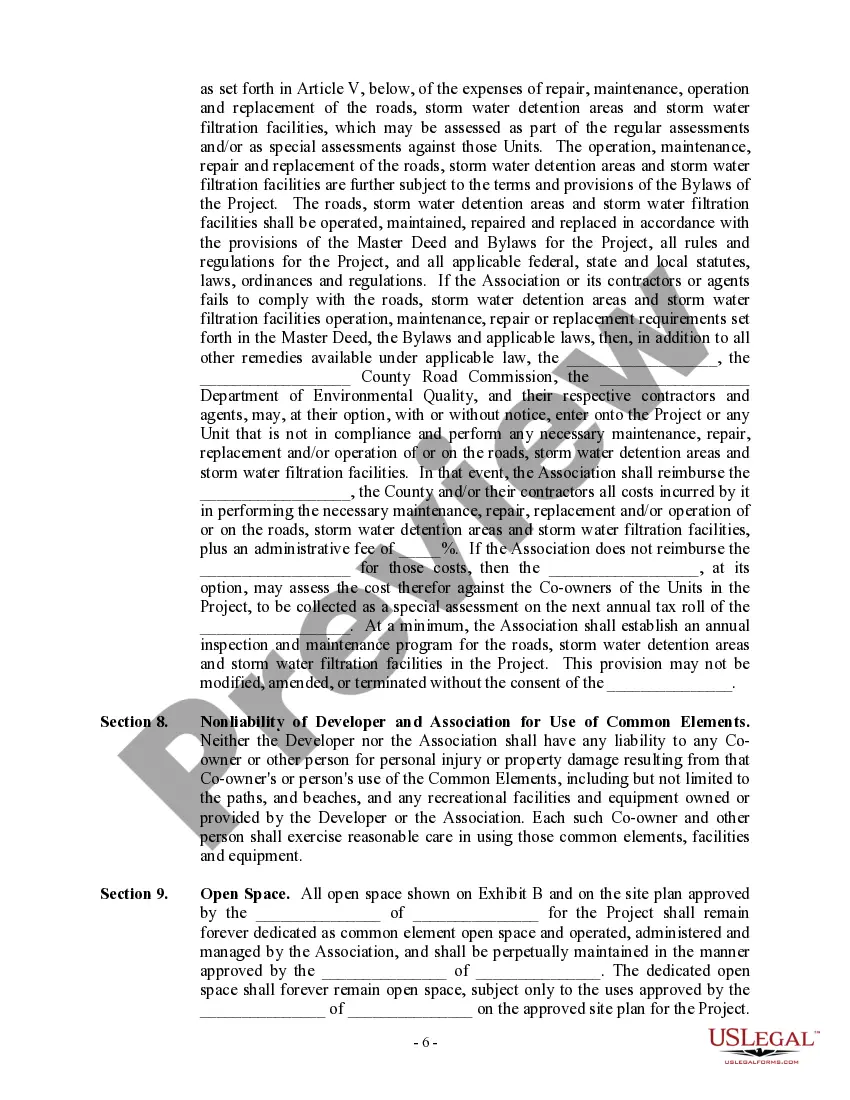
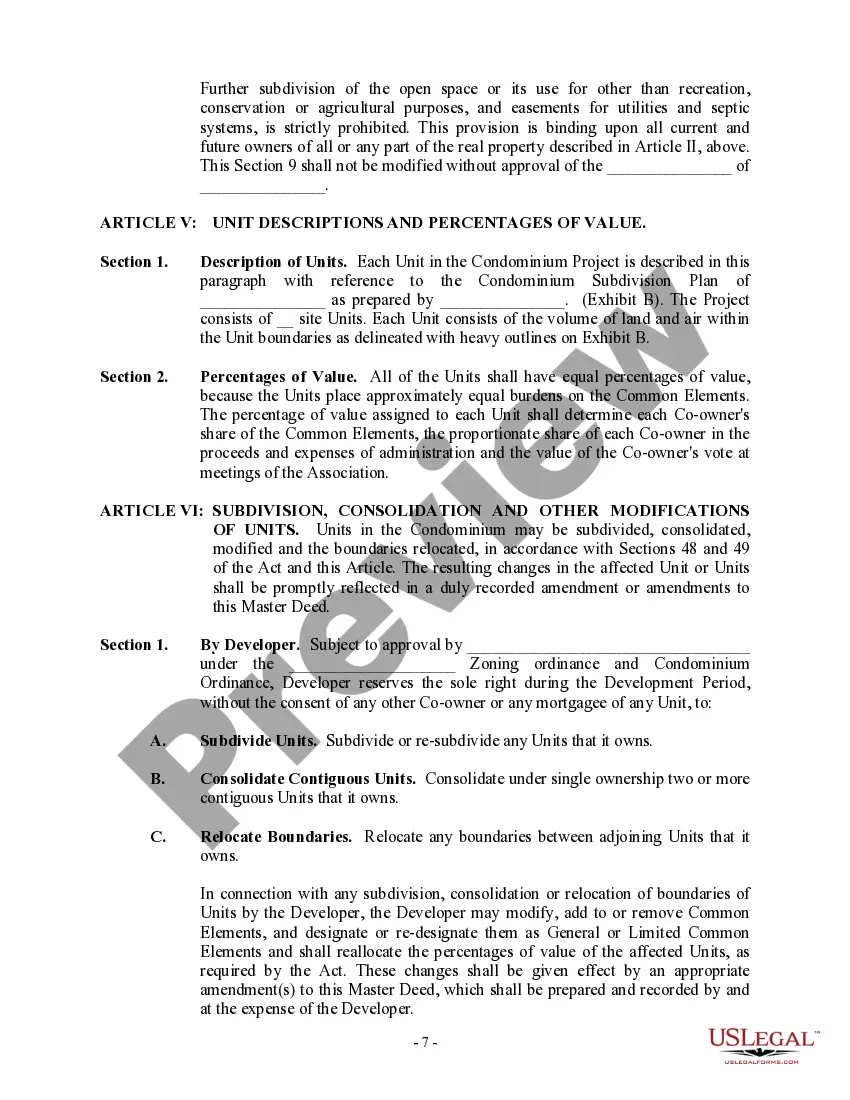
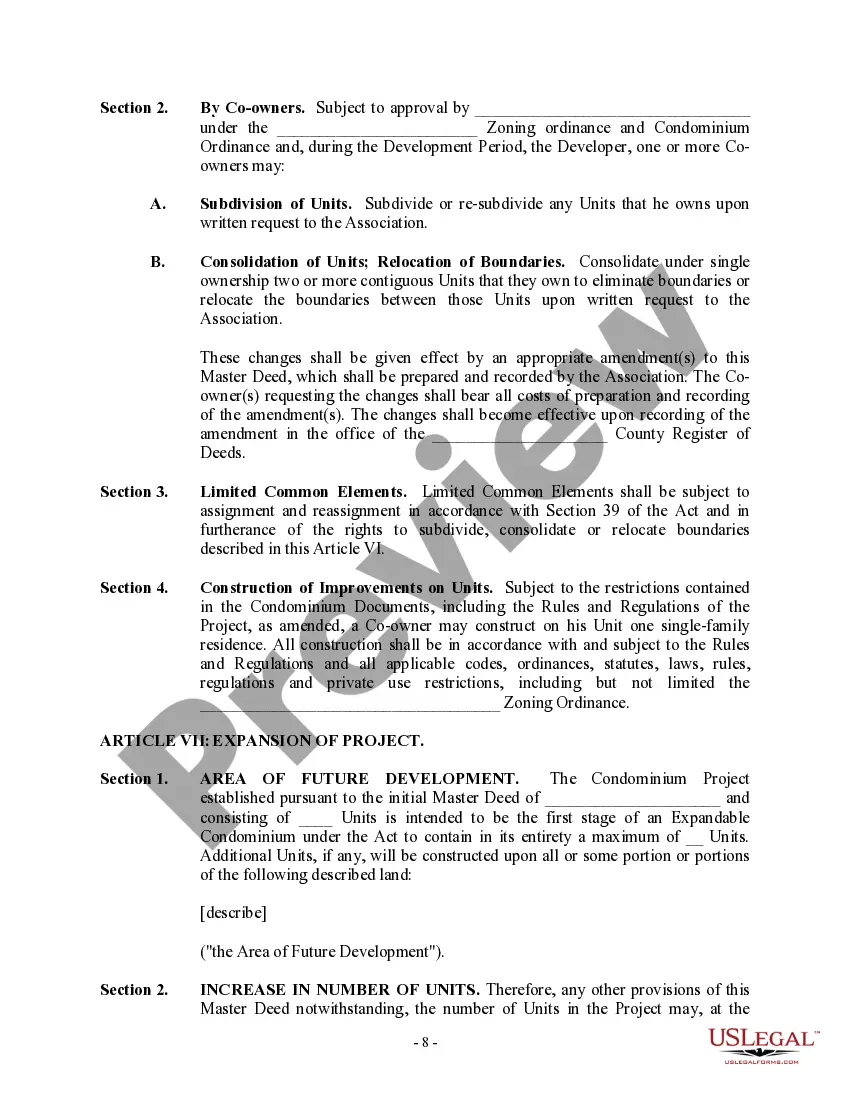
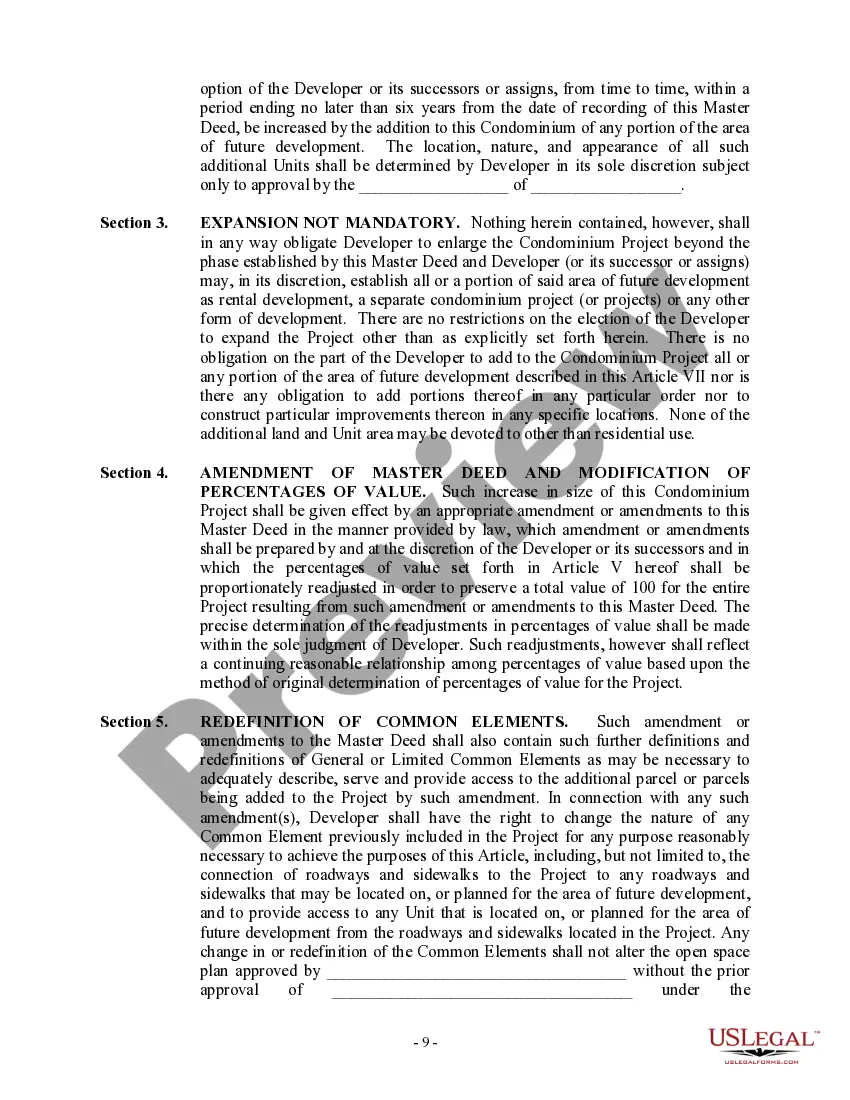
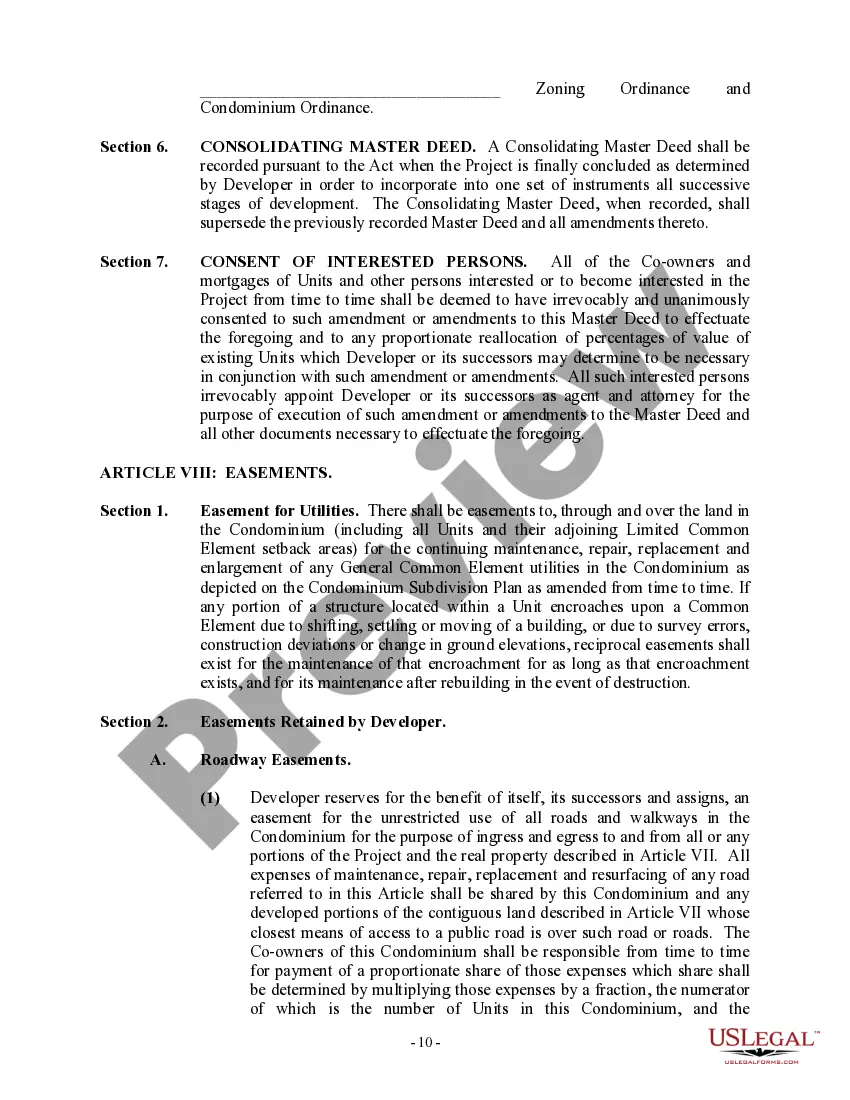
In a inium development, each property owner has an individual interest in a defined parcel of property, and shares in the ownership (typically as tenant-in-common) of various common spaces and facilities.
With regular iniums, the unit owner usually owns the internal unit space and a share of the corporation; the corporation owns the exterior of the building land and common area; in the case of a freehold inium the owner owns the land and building and the corporation owns common shared roadways and amenities.
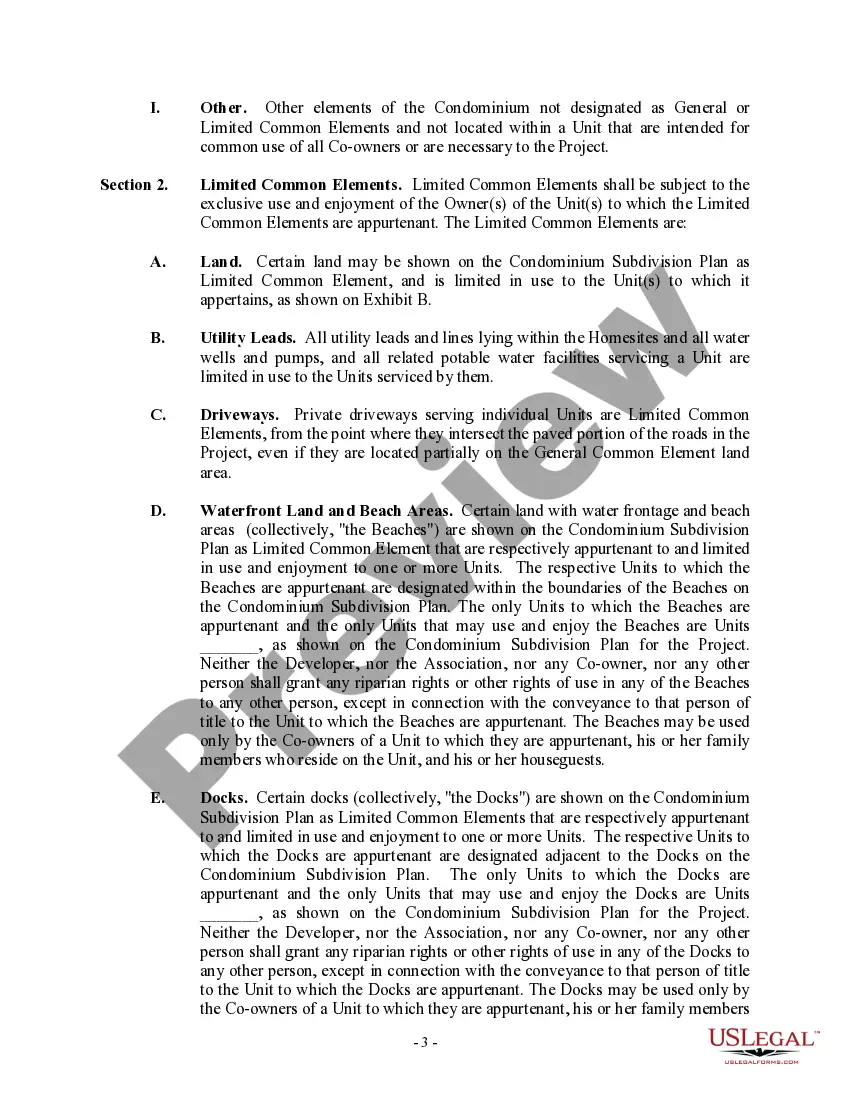
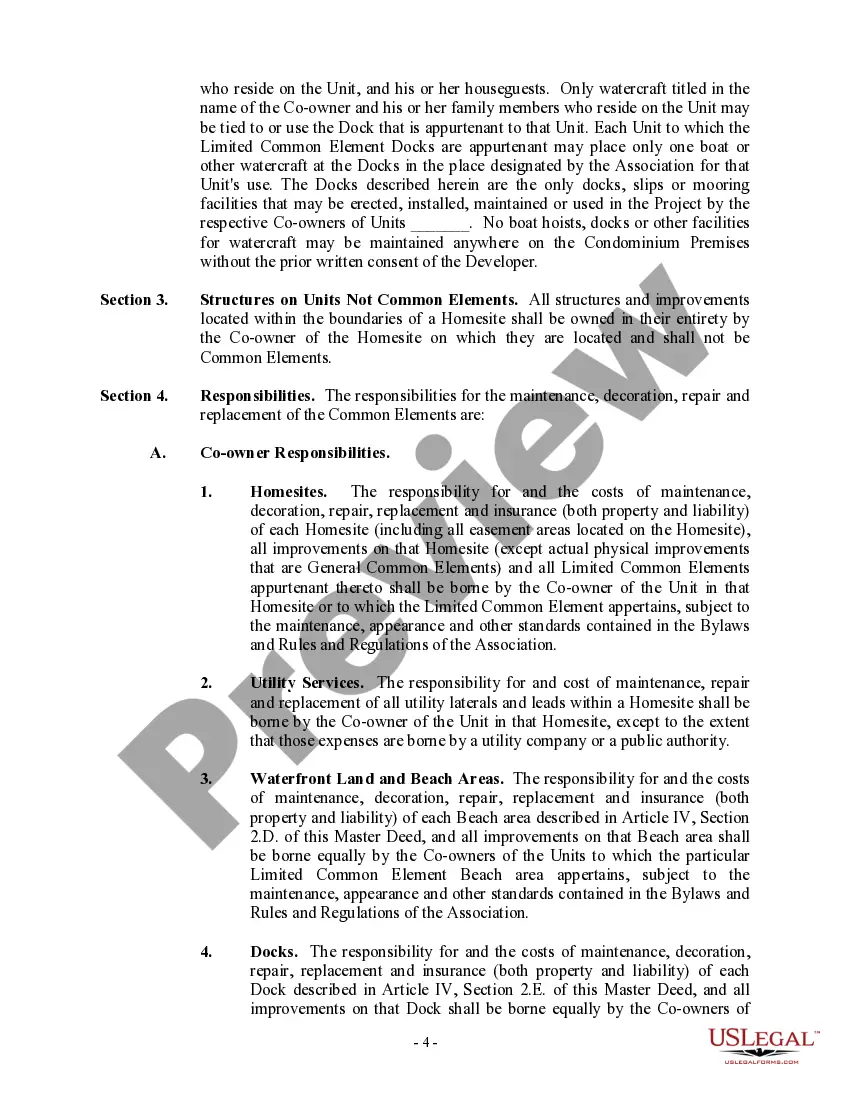
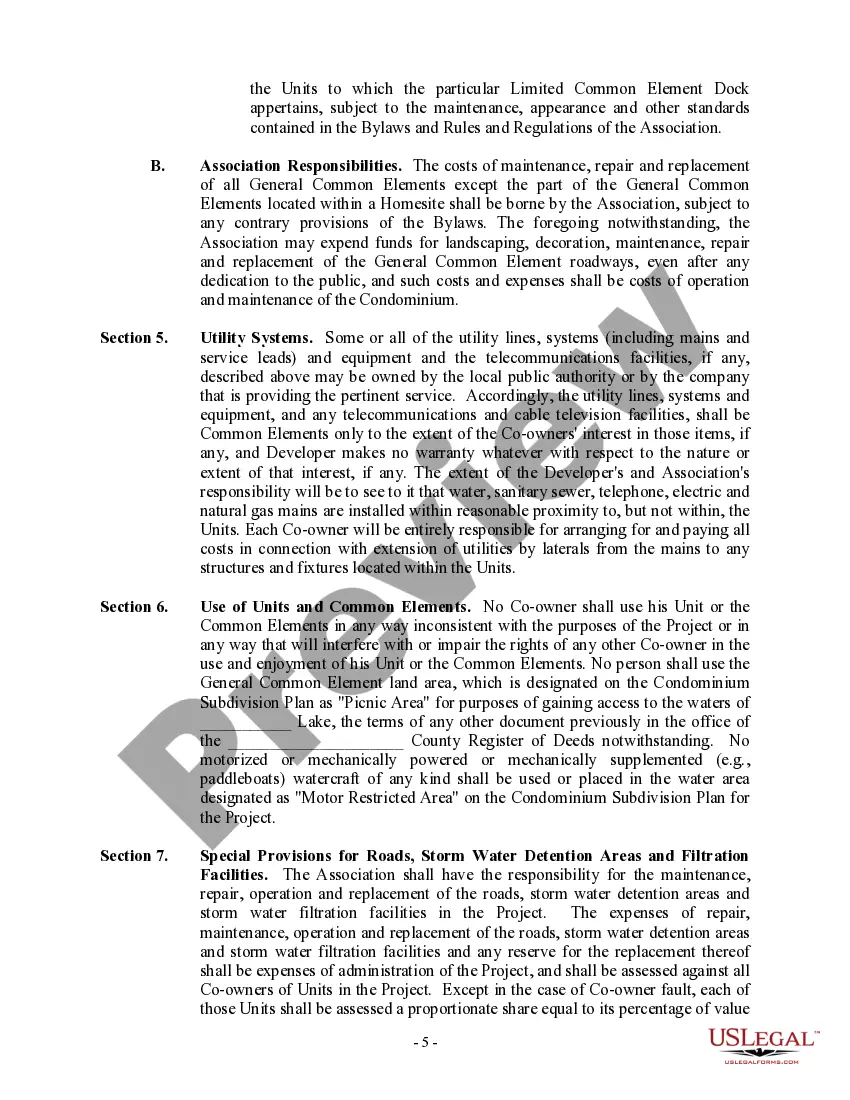
Condo Associations are generally responsible for the maintenance and upkeep of common elements and limited common elements.
In inium Associations, individual unit owners jointly own an undivided share of the common elements. In simpler terms, if you live in a 100-unit inium building, each unit owner possesses a 1/100th share of all the common elements.
The Act defines a inium as “that form of ownership of real property created pursuant to this chapter, which is comprised entirely of units that may be owned by one or more persons, and in which there is, appurtenant to each unit, an undivided share in common elements.” As the shares are undivided, the separate ...
Common Elements of the inium Corporation are the land and structures in the inium Corporation other than the units themselves, such as the exterior landscaped areas, recreational facilities, parking garage, hallways, elevators, corridors, public washrooms, lobby areas, driveways, garbage rooms, electrical ...
Board Members and Officers. (a) Except as provided by the declaration, bylaws, or this chapter, the board shall act in all instances on behalf of the association if in the good-faith judgment of the board the action is reasonable.
Kitchen appliances within the units are not considered part of the common elements of a inium project since they are typically owned and maintained by individual unit owners. Swimming pools and greenbelt areas are examples of common elements as they are shared facilities within the inium project.
Residential inium, the Common Elements may include the land, the exterior and common areas of buildings (entranceway, halls, elevator, meeting room, etc.), landscaping, roads, any outside parking areas, outdoor lighting, any recreational facilities (swimming pool, tennis courts, clubhouse, etc.)
Section 82.113 - Association's Lien for Assessments (a) An assessment levied by the association against a unit or unit owner is a personal obligation of the unit owner and is secured by a continuing lien on the unit and on rents and insurance proceeds received by the unit owner and relating to the owner's unit.
