Letter Speaking Engagement With Meaning In Maricopa
Description
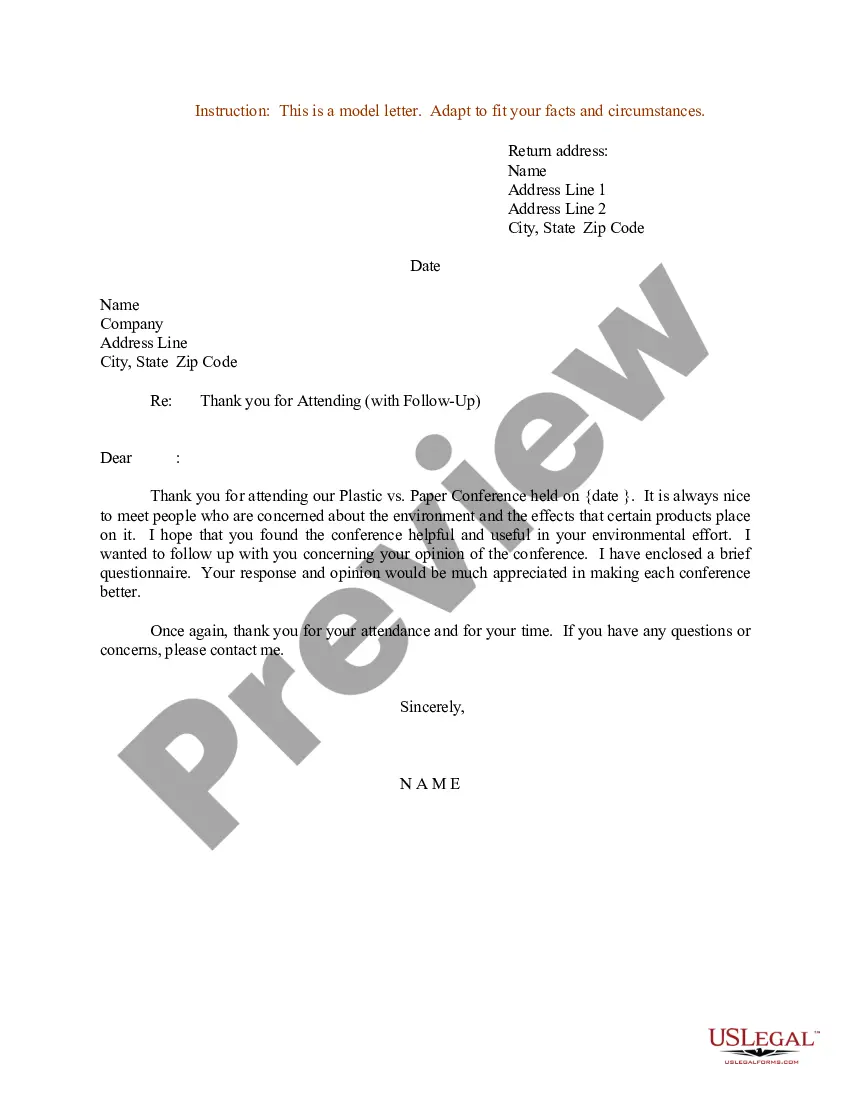
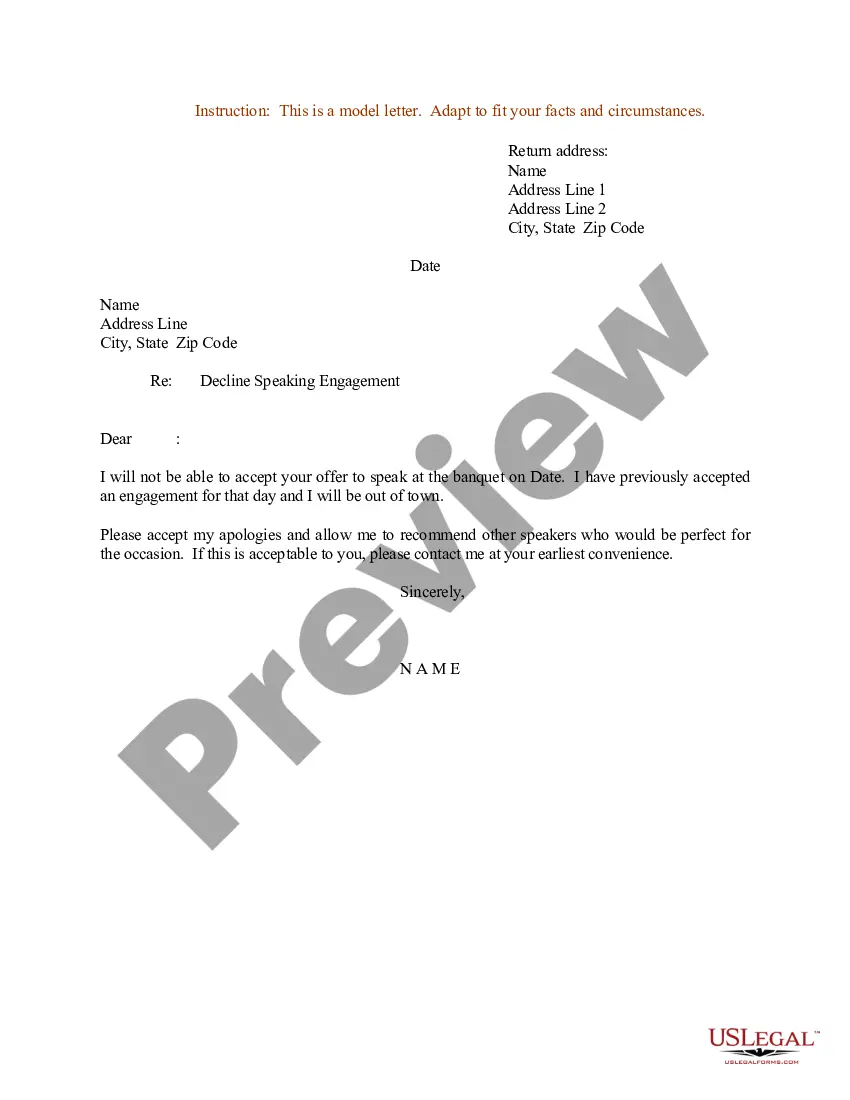
Get your form ready online
Our built-in tools help you complete, sign, share, and store your documents in one place.
Make edits, fill in missing information, and update formatting in US Legal Forms—just like you would in MS Word.
Download a copy, print it, send it by email, or mail it via USPS—whatever works best for your next step.
Sign and collect signatures with our SignNow integration. Send to multiple recipients, set reminders, and more. Go Premium to unlock E-Sign.
If this form requires notarization, complete it online through a secure video call—no need to meet a notary in person or wait for an appointment.
We protect your documents and personal data by following strict security and privacy standards.

Make edits, fill in missing information, and update formatting in US Legal Forms—just like you would in MS Word.

Download a copy, print it, send it by email, or mail it via USPS—whatever works best for your next step.

Sign and collect signatures with our SignNow integration. Send to multiple recipients, set reminders, and more. Go Premium to unlock E-Sign.

If this form requires notarization, complete it online through a secure video call—no need to meet a notary in person or wait for an appointment.

We protect your documents and personal data by following strict security and privacy standards.
Looking for another form?






Form popularity
FAQ
There are five main speech organizational patterns: topical, spatial, chronological, problem-solution, and causal. A speaker should choose the organizational pattern that makes the most logical sense for the speech's main idea or central purpose.
In addition, this chapter explores the five categories of audience analysis: (1) the situational analysis, (2) the demographic analysis, (3) the psychological analysis, (4) the multicultural analysis, and (5) the topic interest and prior knowledge analysis.
Audience analysis includes considering your audience's demographic information, such as the gender, age, marital status, race, and ethnicity. Another less obvious demographic factor is socioeconomic status, which refers to a combination of income, wealth, education level, and occupational prestige.
The Most Important Thing to Analyze: The Speech Objectives What is the speaker's goal? Is it to educate, to motivate, to persuade, or to entertain? What is the primary message being delivered? Why is this person delivering this speech? Are they the right person? Was the objective achieved?
Extemporaneous Speaking Know your speech topic. Research your topic. Create a timeline – research, writing, peer-review, practicing, editing, practicing again. Create note cards to guide your speech. Practice, practice, practice. Know the difference between a memorized speech/monologue and dialogue.
Persuasive speeches “intend to influence the beliefs, attitudes, values, and acts of others.” Unlike an informative speech, where the speaker is charged with making some information known to an audience, in a persuasive speech the speaker attempts to influence people to think or behave in a particular way.
Informal Audience Analysis Methods A good speaker will observe an audience's nonverbal cues such as posture, or how well members of the audience are listening or maintaining eye contact with the speaker. Other factors, such as the setting, may also influence an audience's attitude toward a speaker.
Your request can be submitted at our front counter, mailed to the Maricopa Municipal Court, 39600 W Civic Center Plaza, Maricopa, AZ 85138 or emailed. The form must be filled out completely otherwise it will not be processed. Your request must specify your name/agency and information requested.
To request public records of the Superior Court or Judicial Branch in Maricopa County as defined by Arizona Supreme Court Rule 123 (Public Access to the Judicial Records of the State of Arizona), please email PublicRecords@jbazmc.maricopa.
Submit an online Public Records Request. Email the Public Records team detailing your request. Call 602-506-1974 to speak with a member of the Public Records team.

