Contract With Training In Minnesota
Description

Get your form ready online
Our built-in tools help you complete, sign, share, and store your documents in one place.
Make edits, fill in missing information, and update formatting in US Legal Forms—just like you would in MS Word.
Download a copy, print it, send it by email, or mail it via USPS—whatever works best for your next step.
Sign and collect signatures with our SignNow integration. Send to multiple recipients, set reminders, and more. Go Premium to unlock E-Sign.
If this form requires notarization, complete it online through a secure video call—no need to meet a notary in person or wait for an appointment.
We protect your documents and personal data by following strict security and privacy standards.

Make edits, fill in missing information, and update formatting in US Legal Forms—just like you would in MS Word.

Download a copy, print it, send it by email, or mail it via USPS—whatever works best for your next step.

Sign and collect signatures with our SignNow integration. Send to multiple recipients, set reminders, and more. Go Premium to unlock E-Sign.

If this form requires notarization, complete it online through a secure video call—no need to meet a notary in person or wait for an appointment.

We protect your documents and personal data by following strict security and privacy standards.
Looking for another form?


Form popularity
FAQ
Training agreements provide legal protection for employers. They can include clauses that allow employees to repay training expenses if they quit the company within a specific timeframe. This ensures the company can avoid the financial burden of training employees who end up leaving for other opportunities.
It is illegal for an employer to classify a worker as an independent contractor if the worker qualifies as an employee. An employer also cannot make a worker an independent contractor by having workers to sign a contract saying that they are independent contractors, when in reality they are employees.
A Minnesota independent contractor agreement is a written contract between a contractor and the entity that hired them. In addition to compensation, a contractor agreement also covers taxes, insurance, expenses, licenses, workers' compensation, and the contractor's status.
Right-To-Know applies to all employers in Minnesota with the exception of federal agencies. The intent of this standard is to ensure that employees are aware of dangers they may be exposed to from hazardous substances, harmful physical agents, or infectious agents in their workplaces.
You may be eligible for benefits some weeks while working in self-employment and not others. To be eligible for benefits for any week, you must meet three requirements: Work less than 32 hours (in any combination of employment, self-employment, or volunteer work) and earn less than your weekly benefit amount.
How to draft a contract between two parties: A step-by-step checklist Know your parties. Agree on the terms. Set clear boundaries. Spell out the consequences. Specify how you will resolve disputes. Cover confidentiality. Check the legality of the contract. Open it up to negotiation.
7 simple ways to impress while doing a training contract Communicate. Have good attention to detail. Take notes. Work hard. Be proactive. Build your network. Go above and beyond.
An agreement and a contract share the fundamental purpose of establishing mutual obligations between parties, yet they differ in their legal implications and formalities.
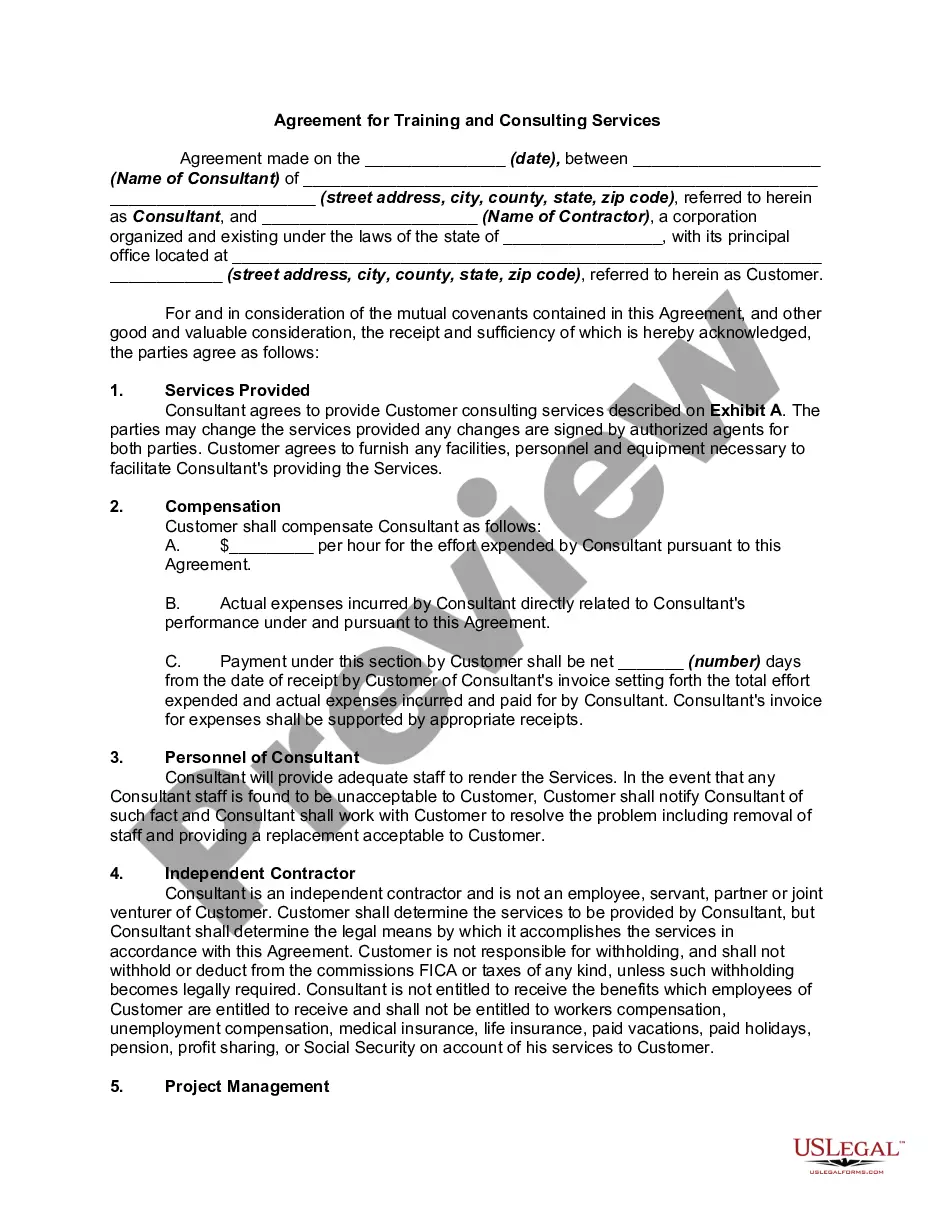
A training agreement is a written document, or contract, that specifies the conditions under which an employee will receive training from their employer. It typically includes details about the employee training programs, such as: The training duration. The costs involved.
Training agreements provide legal protection for employers. They can include clauses that allow employees to repay training expenses if they quit the company within a specific timeframe. This ensures the company can avoid the financial burden of training employees who end up leaving for other opportunities.
