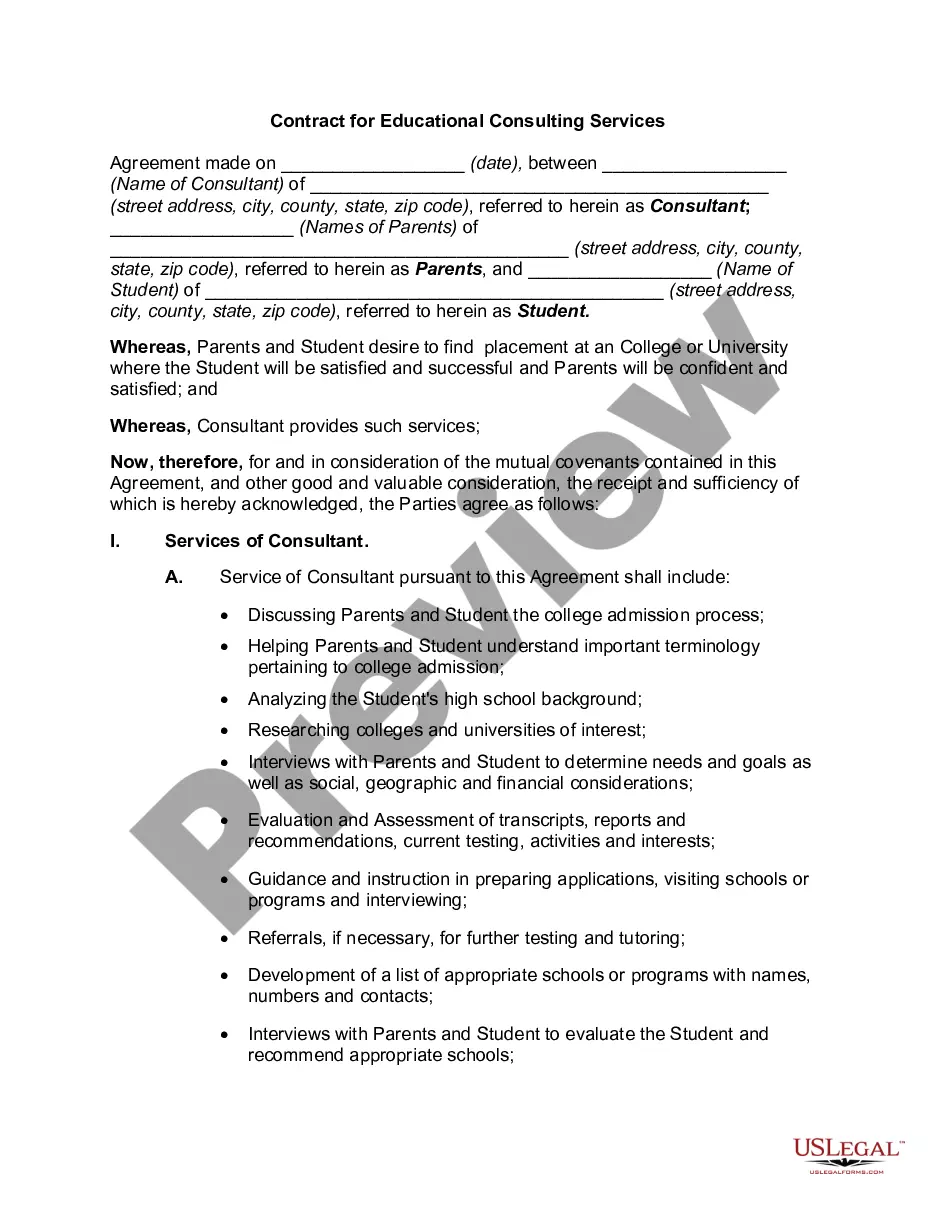
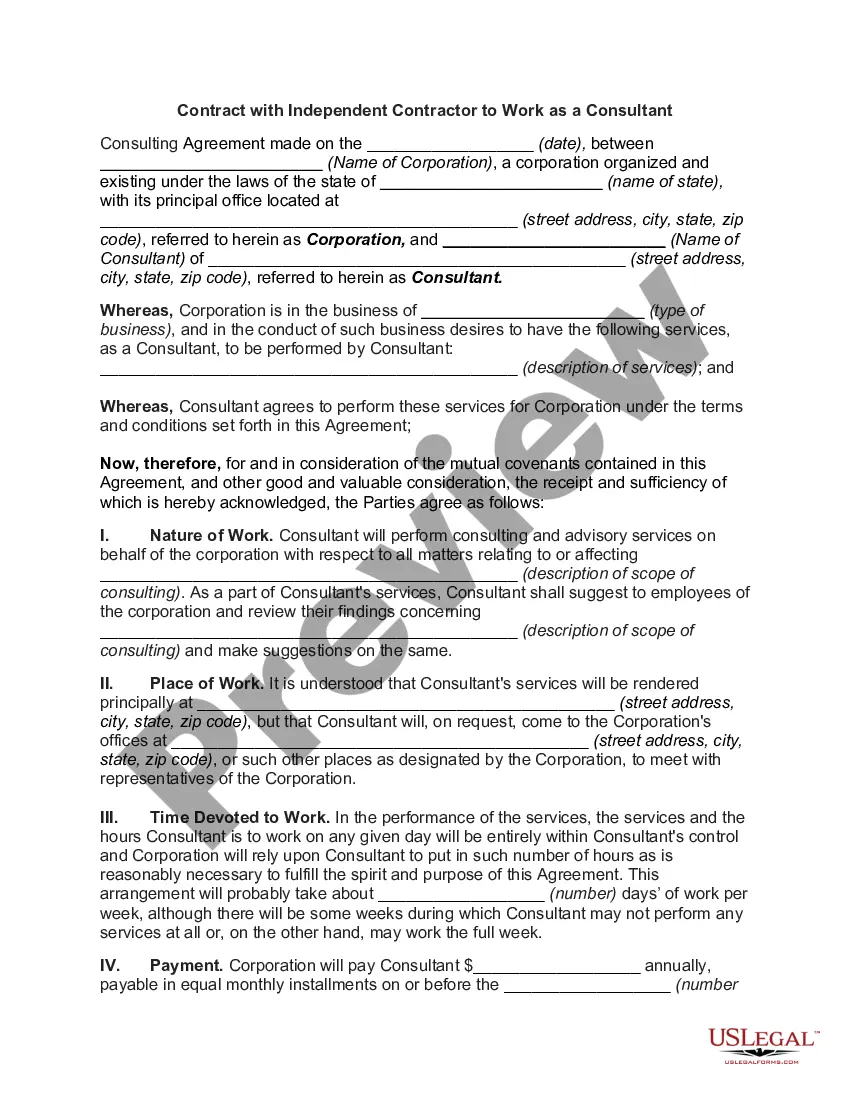
Consultant Work Contract For Employees In Florida
Description

Get your form ready online
Our built-in tools help you complete, sign, share, and store your documents in one place.
Make edits, fill in missing information, and update formatting in US Legal Forms—just like you would in MS Word.
Download a copy, print it, send it by email, or mail it via USPS—whatever works best for your next step.
Sign and collect signatures with our SignNow integration. Send to multiple recipients, set reminders, and more. Go Premium to unlock E-Sign.
If this form requires notarization, complete it online through a secure video call—no need to meet a notary in person or wait for an appointment.
We protect your documents and personal data by following strict security and privacy standards.

Make edits, fill in missing information, and update formatting in US Legal Forms—just like you would in MS Word.

Download a copy, print it, send it by email, or mail it via USPS—whatever works best for your next step.

Sign and collect signatures with our SignNow integration. Send to multiple recipients, set reminders, and more. Go Premium to unlock E-Sign.

If this form requires notarization, complete it online through a secure video call—no need to meet a notary in person or wait for an appointment.

We protect your documents and personal data by following strict security and privacy standards.
Looking for another form?








Form popularity
FAQ
Contents Decide if a consulting career is right for you. Confirm that you're qualified to be a consultant. Choose the consulting industry niche that's right for you. Conduct market research. Create a business plan. Register your business. Build a website and online presence. Obtain resources and assets.
A consulting contract should offer a detailed description of the duties you will perform and the deliverables you promise the client. The agreement may also explain how much work you will perform at the client's office and how often you will work remotely.
The qualifications to get a contract job as a DevOps engineer typically include a bachelor's degree in a technical discipline plus several years of experience with software development and operations. Many people in this field gain experience in full-time positions before working as independent contractors.
Consulting Agreements detail the terms of specific engagements, ensuring that both parties are aligned on expectations, deliverables, and compensation. SOWs, on the other hand, provide granular detail on project tasks, timelines, and milestones, making them indispensable for project management and accountability.
Contracts come in various forms but require elements like Legality, Capacity, Offer, Consideration, Intention, Certainty, and Acceptance to be legally valid and enforceable. Missing any element can render the contract unenforceable.
Like other independent contractors, consultants are not full-time employees. Working with and paying them requires a different kind of legal documentation. This document is called a consulting agreement.
Use these steps to help you get your first consulting contract: Consider your areas of expertise. In order to book a contract, you need to know what areas you can train in. Target companies in your area. Meet with the owner. Prove your knowledge. Get the contract. Ask for a referral and testimonial.
Getting into Consulting: A Step-by-Step Guide Step 1: Self-Assessment. Step 2: Choose Your Consulting Niche. Step 3: Educational Preparation. Step 4: Gain Industry Experience. Step 5: Develop Analytical and Soft Skills. Step 6: Build a Strong Resume and Online Presence. Step 7: Networking and Building Relationships.
Leverage your professional network, join industry-specific job boards, and attend relevant conferences and events. Utilize LinkedIn to showcase your expertise and connect with potential clients. Additionally, consider working with staffing agencies that specialize in contract placements.
Here are six best practices to write a consulting contract that defines your project scope and protects both you and your business. Define Duties, Deliverables, and Roles. Prepare for Potential Risk. Specify Project Milestones and Engagement Time. Identify Expenses and Outline Payment Terms. Specify Product Ownership.
