Ford Long Term Lease In Clark
Description
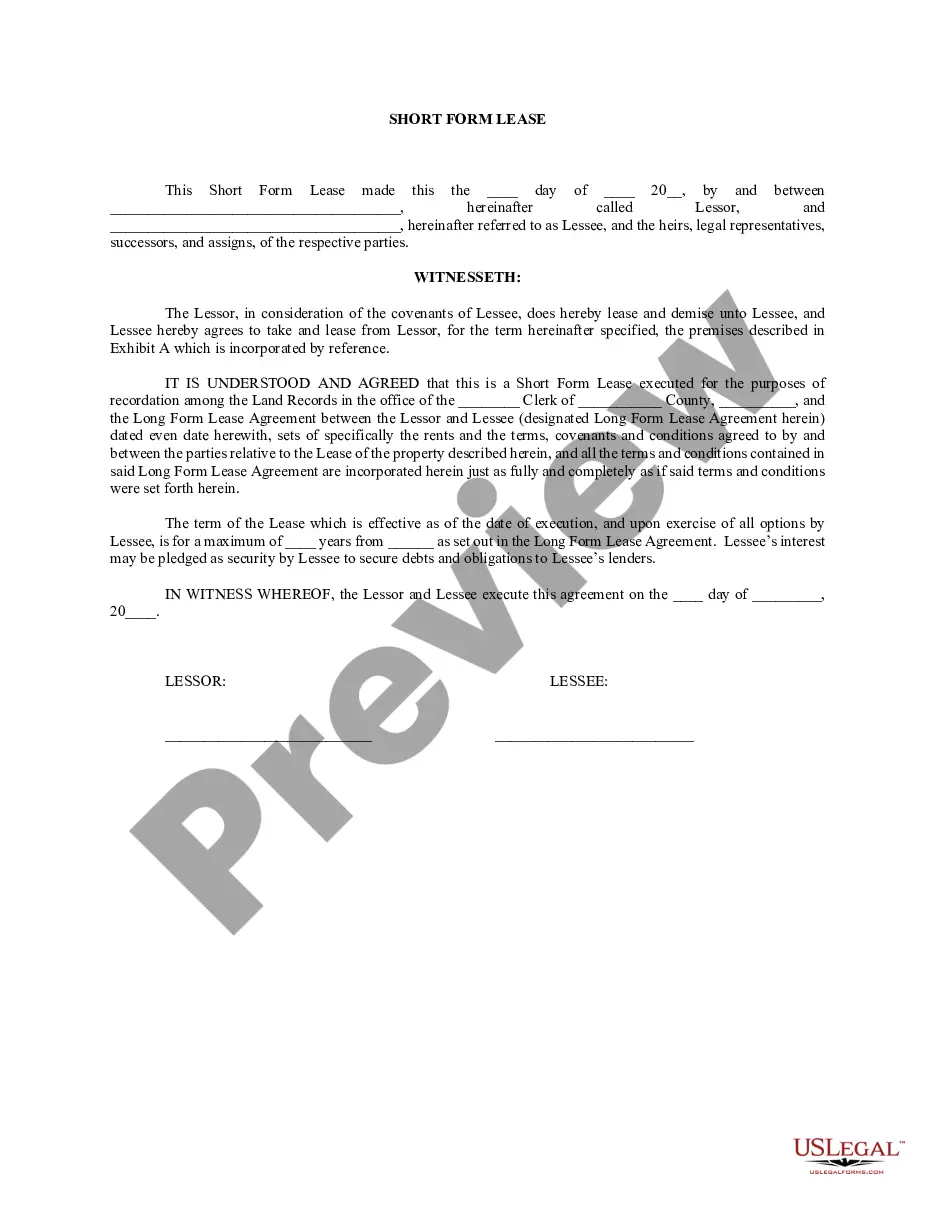
Get your form ready online
Our built-in tools help you complete, sign, share, and store your documents in one place.
Make edits, fill in missing information, and update formatting in US Legal Forms—just like you would in MS Word.
Download a copy, print it, send it by email, or mail it via USPS—whatever works best for your next step.
Sign and collect signatures with our SignNow integration. Send to multiple recipients, set reminders, and more. Go Premium to unlock E-Sign.
If this form requires notarization, complete it online through a secure video call—no need to meet a notary in person or wait for an appointment.
We protect your documents and personal data by following strict security and privacy standards.

Make edits, fill in missing information, and update formatting in US Legal Forms—just like you would in MS Word.

Download a copy, print it, send it by email, or mail it via USPS—whatever works best for your next step.

Sign and collect signatures with our SignNow integration. Send to multiple recipients, set reminders, and more. Go Premium to unlock E-Sign.

If this form requires notarization, complete it online through a secure video call—no need to meet a notary in person or wait for an appointment.

We protect your documents and personal data by following strict security and privacy standards.
Looking for another form?








Form popularity
FAQ
Benefits of Extending a Ford Lease If you're happy with your current vehicle and not ready to lease or finance a new model, a lease extension lets you keep driving it without a long-term commitment. Lease extensions also allow for time to explore other vehicle options if you're unsure what you want next.
Some car manufacturers, including Audi Financial, Acura Financial, BMW Financial Services, and Ford Credit, have partial or complete restrictions on third-party lease buyouts. GM Financial and Honda have also joined the list of brands that don't allow you to sell your lease outside the brand.
In some cases, you might have the option to extend your Ford lease. This is a good choice if you are not ready to commit to a new vehicle. Speak to our finance professionals for more information about lease extensions.
In summary, while there are benefits to leasing, the primary disadvantage is that you do not gain ownership or build equity over time, leading to a situation where you have ongoing payments with no eventual payoff.
How to Calculate a Lease Buyout Determine the residual value of the vehicle. Determine the actual value of the vehicle. Compare the residual value and the actual value. Account for license and registration fees. Account for sales tax.
A car lease from Proctor Honda ranges from 2 - 5 years in length, and is measured in months (ex: 3 years would be a 36 month lease). Shorter term leases (less than 2 years) may be available through subleasing websites, but are not available through the dealership. The most common terms for a car lease are 2-3 years.
Generally 48 months is the ``sweet spot'' for leasing, but if you want a newer car - sooner - then go for the 36 month lease instead.
A vehicle lease is a long-term rental. A lease usually lasts from two to five years. In a lease, you do not own the vehicle. You rent it and can choose to buy it at the end of the lease.
