Boat Contract With America In Fulton
Description

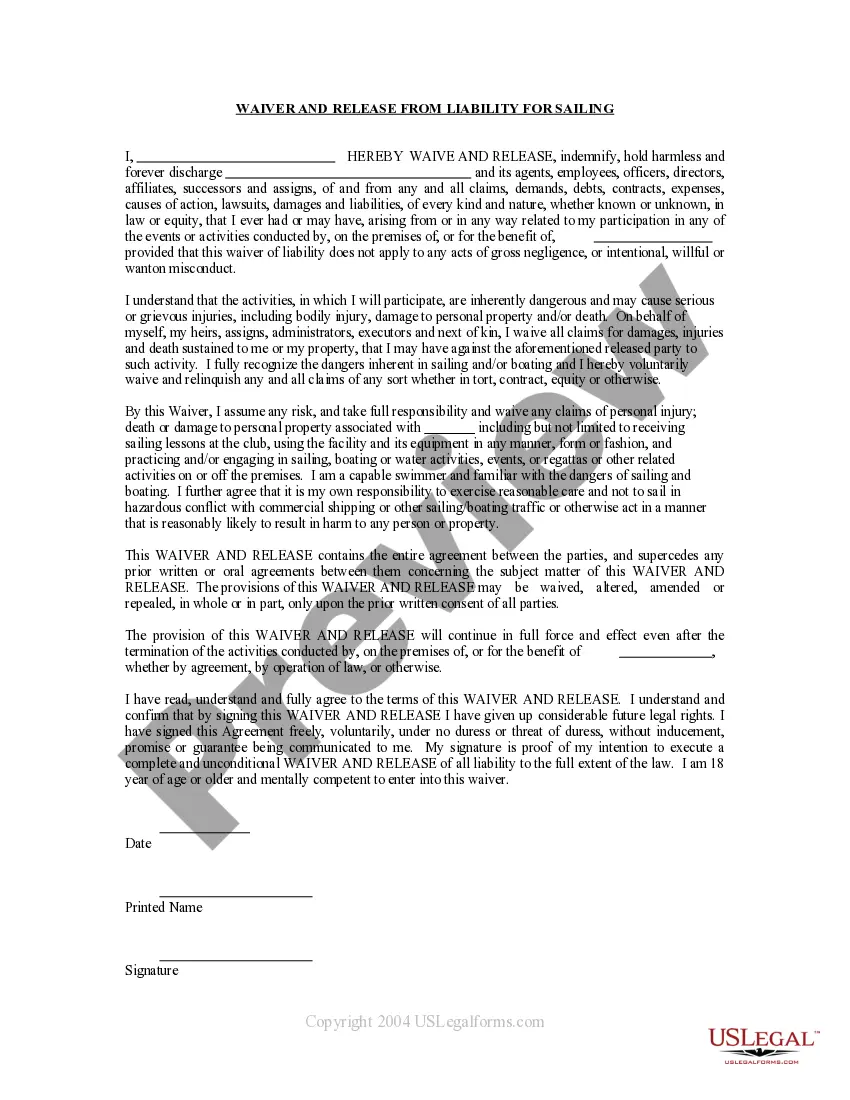
Get your form ready online
Our built-in tools help you complete, sign, share, and store your documents in one place.
Make edits, fill in missing information, and update formatting in US Legal Forms—just like you would in MS Word.
Download a copy, print it, send it by email, or mail it via USPS—whatever works best for your next step.
Sign and collect signatures with our SignNow integration. Send to multiple recipients, set reminders, and more. Go Premium to unlock E-Sign.
If this form requires notarization, complete it online through a secure video call—no need to meet a notary in person or wait for an appointment.
We protect your documents and personal data by following strict security and privacy standards.

Make edits, fill in missing information, and update formatting in US Legal Forms—just like you would in MS Word.

Download a copy, print it, send it by email, or mail it via USPS—whatever works best for your next step.

Sign and collect signatures with our SignNow integration. Send to multiple recipients, set reminders, and more. Go Premium to unlock E-Sign.

If this form requires notarization, complete it online through a secure video call—no need to meet a notary in person or wait for an appointment.

We protect your documents and personal data by following strict security and privacy standards.
Looking for another form?


Form popularity
FAQ
Robert Fulton (November 14, 1765 – February 24, 1815) was an American engineer and inventor who is widely credited with developing the world's first commercially successful steamboat, the North River Steamboat (also known as Clermont).
An unsung jack-of-all-trades built America's first steam-powered boat, envisioning open access to the new nation's natural resources. While the credit usually goes to inventor Robert Fulton, John Fitch was actually the inventor of America's first steamboat.
Fulton's innovation left quite a legacy. Steamboat travel was instrumental to the industrial revolution in America, helping manufacturers transport raw materials and finished goods quickly. It also opened up the American continent to exploration, settlement, and exploitation.
In 1804, Fulton returned to England, where he began to build submarines for the British Navy to use against the French. These included "torpedoes," floating mines that were launched, rather than propelling themselves. In a field test, Fulton blew a 300-ton ship in half.
Robert Fulton's steamboat was important because it made transportation and trade by the river more feasible. Before the steamboat, most trade/travel was done by wind-powered sailboats, whose speed depended on weather conditions and river currents. Most rivers travel north to south, making upstream travel agonizing.
In 1800, Fulton had been commissioned by Napoleon Bonaparte, leader of France, to attempt to design a submarine; he then produced Nautilus, the first practical submarine in history. Fulton is also credited with inventing some of the world's earliest naval torpedoes for use by the Royal Navy.
American Robert Fulton / Nationality
Robert Fulton was an artist, inventor and engineer best known for his pioneering development of a practical steamboat. In 1807 Fulton launched his 146-foot steamboat the North River Steamboat of Clermont. By 1810, three of Fulton's boats were in operation on the Hudson and Rariton Rivers.
Yes. All states that have mandatory boater education requirements will accept your states Boater Education Card. Likewise, your state will accept boating education cards that are issued by states that meet NASBLA requirements.
