Dissolution of Pooled Unit (By Unit Owners)
What is this form?
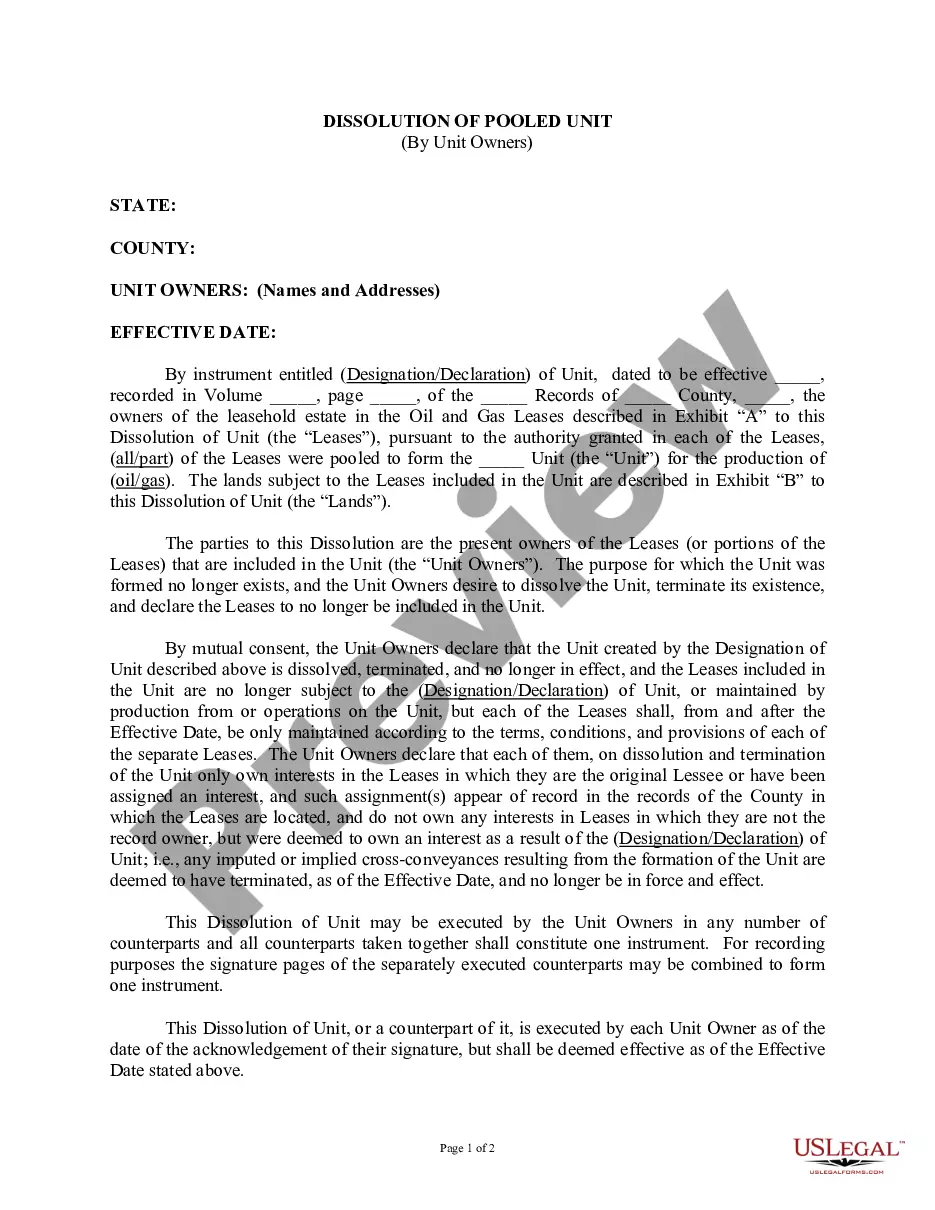
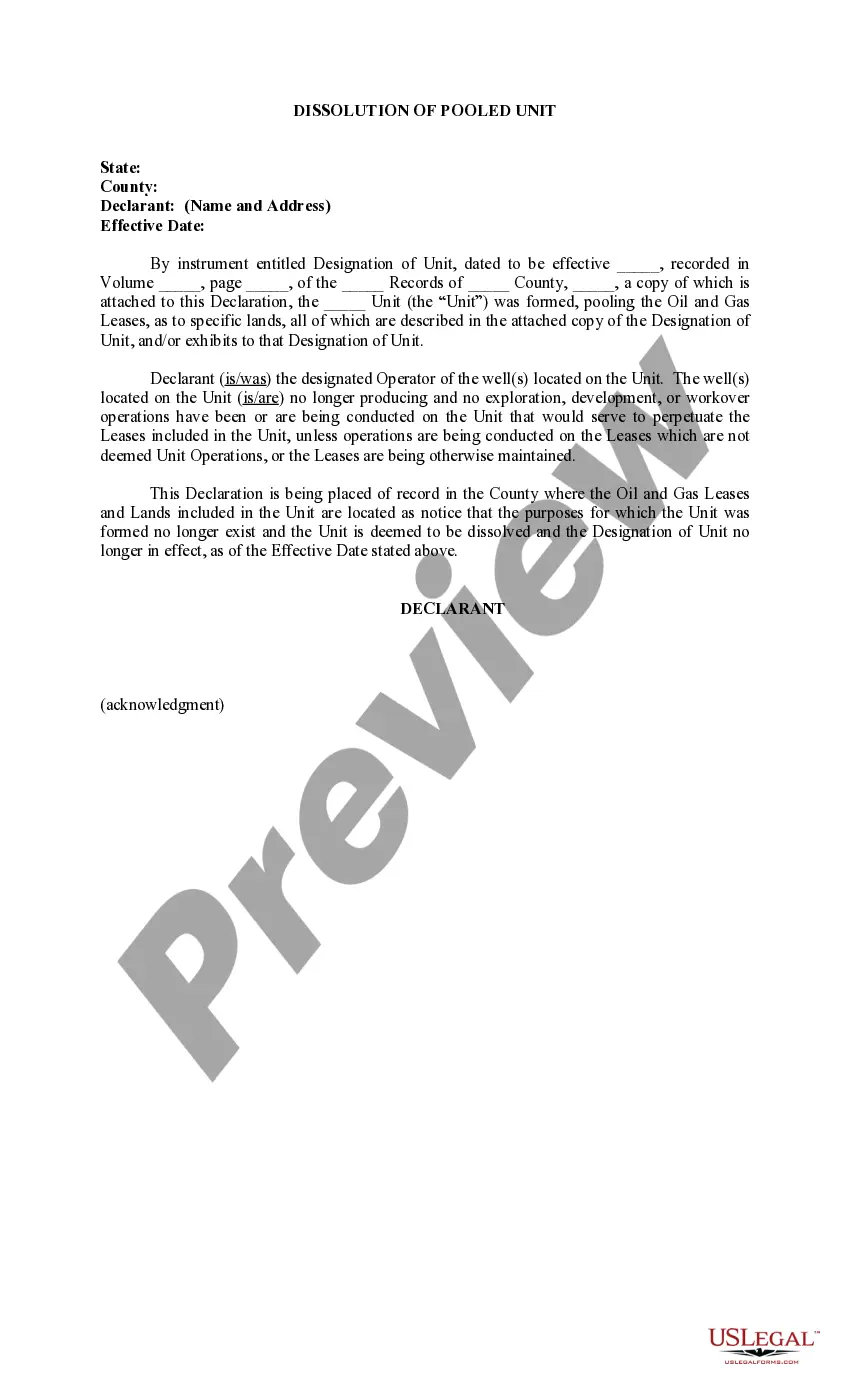
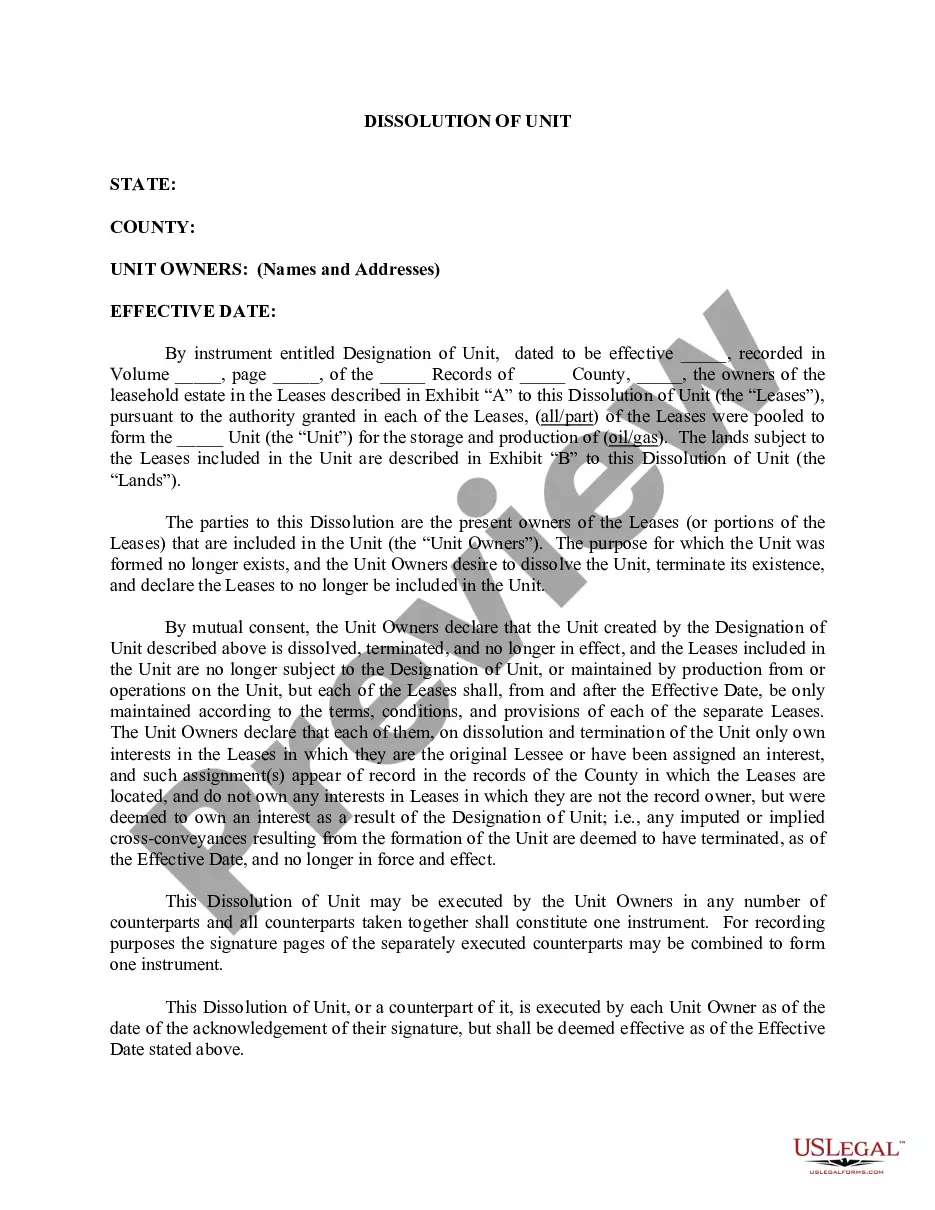
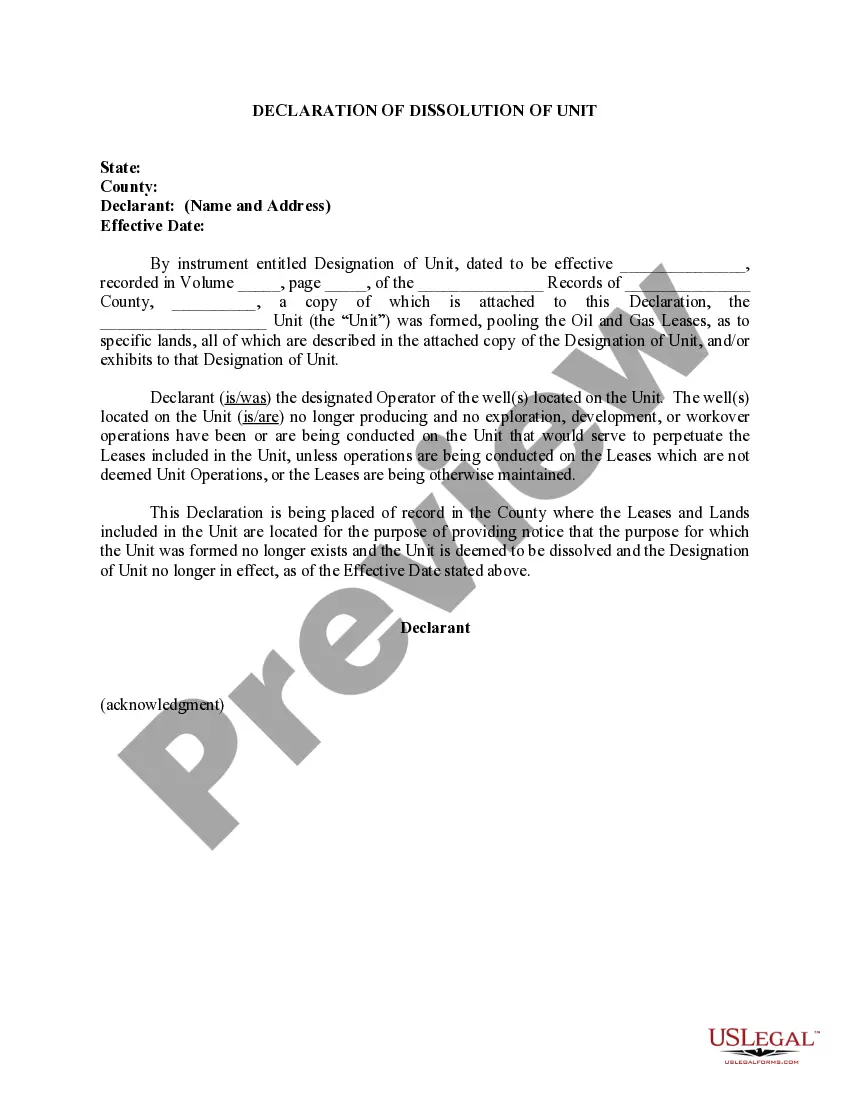
The Dissolution of Pooled Unit form allows unit owners to formally dissolve a pooled unit arrangement. This form is essential for those who wish to terminate the shared interests in oil and gas leases that were previously pooled for production. Unlike other forms that establish or modify pooled units, this form specifically addresses the termination of such agreements, providing a clear legal pathway for unit owners to revert to their independent interests in the leases involved.
Form components explained
- Identification of the state and county where the unit is located.
- Names and addresses of the unit owners involved in the dissolution.
- Effective date of the dissolution.
- Reference to the original designation or declaration of the pooled unit.
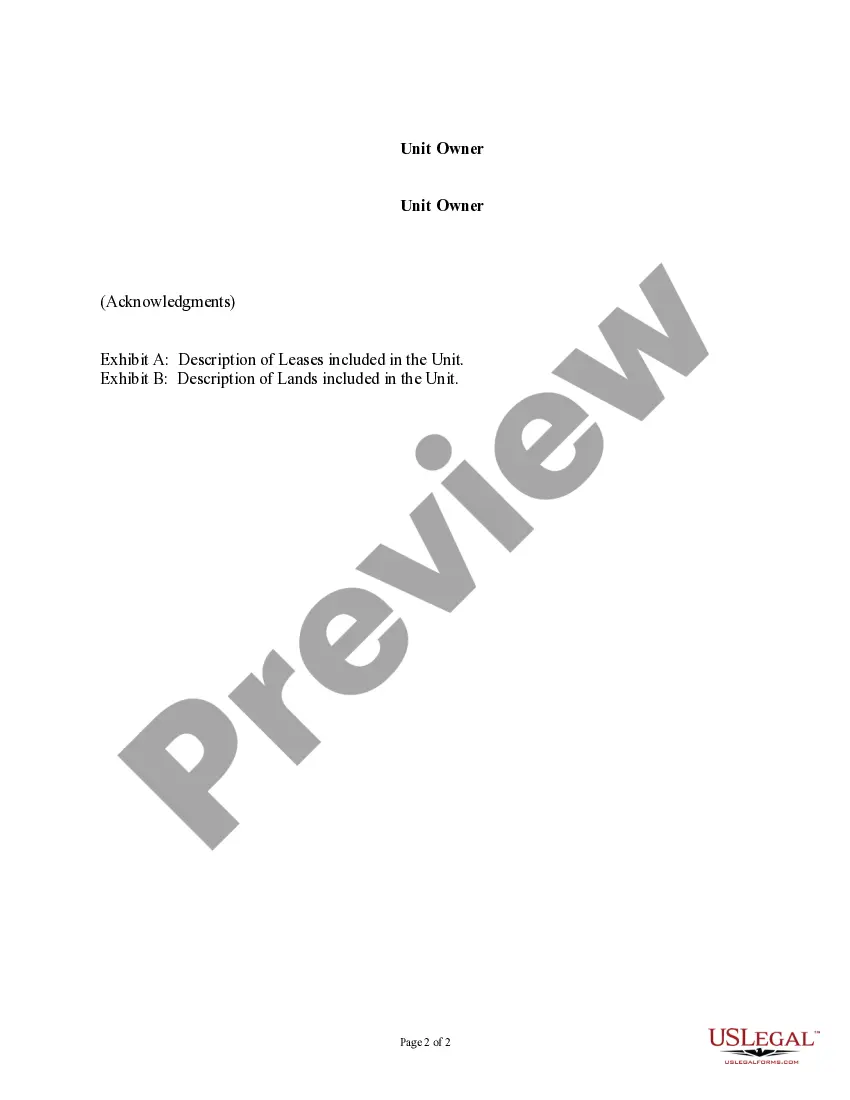
- Details about the oil and gas leases being dissolved, including their descriptions in the provided exhibits.
- Signatures of unit owners, acknowledging the dissolution.
Situations where this form applies
This form is useful in scenarios where unit owners collectively decide that the purpose of their pooled unit is no longer valid or necessary. For instance, if production has ceased or the goals of the pooling have been met, unit owners may choose to dissolve the arrangement to reclaim individual ownership of their leases.
Intended users of this form
- Unit owners who are currently part of a pooled unit for oil and gas production.
- Property owners who wish to terminate shared lease agreements to regain individual control.
- Individuals with legal interests in oil and gas leases seeking to clarify ownership status post-dissolution.
Instructions for completing this form
- Identify the current state and county for the pooled unit.
- List all unit owners, including their names and addresses.
- Enter the effective date of dissolution.
- Refer to the original designation or declaration of the pooled unit.
- Complete the section detailing the leases and lands involved, as described in the exhibits.
- Gather signatures from all unit owners, ensuring each acknowledges the dissolution.
Notarization guidance
This form does not typically require notarization unless specified by local law. However, always verify with local regulations to ensure compliance.
Get your form ready online
Our built-in tools help you complete, sign, share, and store your documents in one place.
Make edits, fill in missing information, and update formatting in US Legal Forms—just like you would in MS Word.
Download a copy, print it, send it by email, or mail it via USPS—whatever works best for your next step.
Sign and collect signatures with our SignNow integration. Send to multiple recipients, set reminders, and more. Go Premium to unlock E-Sign.
If this form requires notarization, complete it online through a secure video call—no need to meet a notary in person or wait for an appointment.
We protect your documents and personal data by following strict security and privacy standards.

Make edits, fill in missing information, and update formatting in US Legal Forms—just like you would in MS Word.

Download a copy, print it, send it by email, or mail it via USPS—whatever works best for your next step.

Sign and collect signatures with our SignNow integration. Send to multiple recipients, set reminders, and more. Go Premium to unlock E-Sign.

If this form requires notarization, complete it online through a secure video call—no need to meet a notary in person or wait for an appointment.

We protect your documents and personal data by following strict security and privacy standards.
Avoid these common issues
- Not including all unit owners' names and addresses, which can lead to invalidation of the form.
- Failing to specify an effective date for the dissolution.
- Neglecting to complete the exhibits detailing the leases and lands involved.
- Not collecting required signatures from all unit owners.
Advantages of online completion
- Quick access to downloadable templates drafted by licensed attorneys.
- Easy to edit and customize for specific needs without legal jargon.
- Secure and reliable, ensuring compliance with legal standards.
Legal use & context
- The dissolution of a pooled unit must comply with the terms of the original pooling agreements.
- Unit owners may face legal consequences if the dissolution is not executed following applicable laws.
- Understanding the implications of dissolving a pooled unit can help owners protect their interests in the leases involved.
Looking for another form?



Form popularity
FAQ
It also records a "Declaration of Pooling" or similarly named document in the land records office at the local Courthouse. The declaration shows the boundaries of the pooling unit and identifies all the landowners and amount of property each landowner actually has in the unit.
Pooling is the combination of all or portions of multiple oil and gas leases to form a unit for the drilling of a single oil and/or gas well.The oil and gas company can lease these under separate leases and separate terms and then pool these parcels to drill the well.
Net revenue is the amount that is shared among the property owners. To determine net revenue interest, multiply the royalty interest by the owner's shared interest. For example, if you have a 5/16 royalty, your net royalty interest would be 25% multiplied by 5/16, which equals 7.8125% calculated to four decimal places.
As noted above, while pooling focuses on efficiently combining lands for the purpose of obtaining a drilling permit to drill a single well, unitization focuses on the combination of interests covering a larger area to facilitate development of all or part of a common source of supply (i.e. a field/reservoir).
The specific provisions of the laws vary from state to state, but drillers are generally allowed to extract minerals from a large area or "pool"--in most states a minimum of 640 acres--if leases have been negotiated for a certain percentage of that land. The company can then harvest gas from the entire area.
Pooling Clause: Joining the Leased Land with Other Land The area formed is called a pool or sometimes a pooled unit. Pooling permits the lessee to prevent waste by avoiding unnecessary drilling and to protect the correlative rights of the mineral owners in the common reservoir.
Use this formula to calculate your decimal share of royalties from the producing well: (Mineral Interest Share) times (Royalty Rate) = (Royalty Share Decimal). Example 1: (1/3 x 100% mineral interest) times (1/8 Royalty Rate) = 1/3 x 1/8 = 1/24 = 0.04166667 RI.
The oil and gas leases being used by companies leasing in the Marcellus shale include a provision that allows the gas company to combine, or pool, the landowner's acreage with property from other leased landowners to form a production unit.
Once a Pooling Order is entered, you will receive a copy of the Order, which will state your options as an owner of an interest in the unit. Typically, the Order will afford you a number of options of a cash bonus and royalty payments on production based on the fair market value of your interest.
Forced Pooling (sometimes called Statutory or Compulsory Pooling) is a legal mechanism that allows oil and gas operators to drill wells when they are unable to get 100% of the mineral interests to commit to support the drilling of a well.