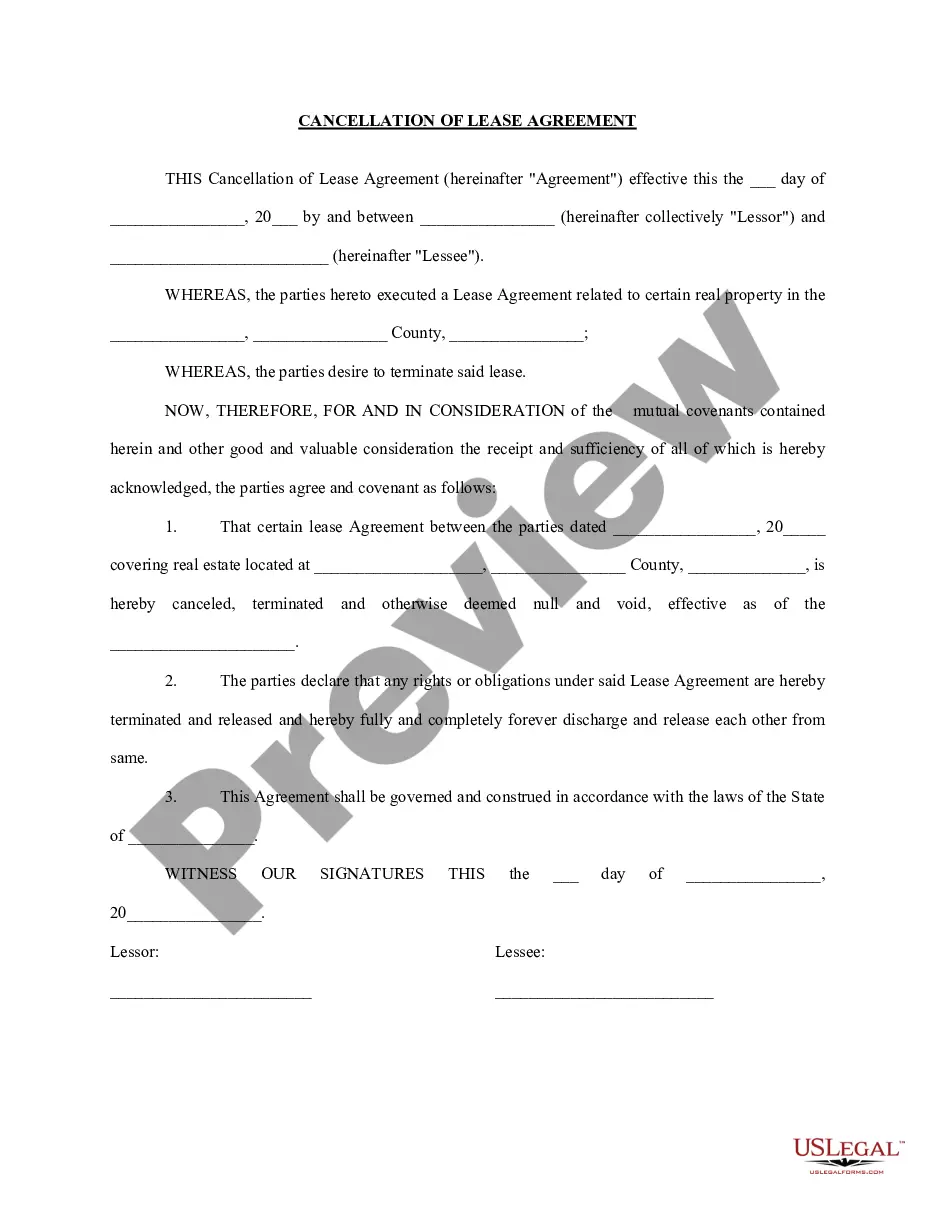
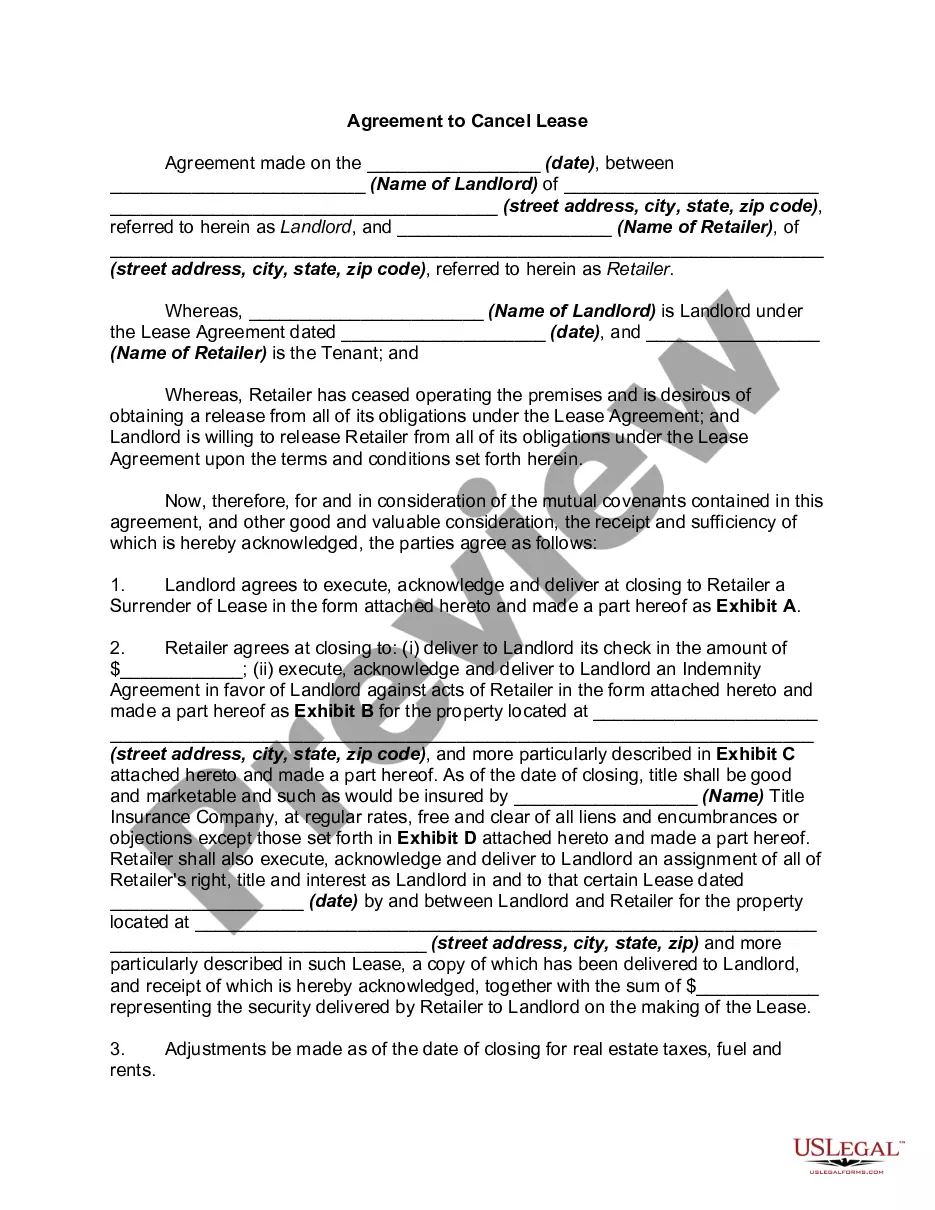
Cancelling Lease Template With Sprint In Nevada
Description
Get your form ready online
Our built-in tools help you complete, sign, share, and store your documents in one place.
Make edits, fill in missing information, and update formatting in US Legal Forms—just like you would in MS Word.
Download a copy, print it, send it by email, or mail it via USPS—whatever works best for your next step.
Sign and collect signatures with our SignNow integration. Send to multiple recipients, set reminders, and more. Go Premium to unlock E-Sign.
If this form requires notarization, complete it online through a secure video call—no need to meet a notary in person or wait for an appointment.
We protect your documents and personal data by following strict security and privacy standards.

Make edits, fill in missing information, and update formatting in US Legal Forms—just like you would in MS Word.

Download a copy, print it, send it by email, or mail it via USPS—whatever works best for your next step.

Sign and collect signatures with our SignNow integration. Send to multiple recipients, set reminders, and more. Go Premium to unlock E-Sign.

If this form requires notarization, complete it online through a secure video call—no need to meet a notary in person or wait for an appointment.

We protect your documents and personal data by following strict security and privacy standards.
Looking for another form?










Form popularity
FAQ
Your landlord must give you 60 days written notice before increasing rent on month-to-month tenancies. Late fees can't be more than 5% of your periodic rent. Your security deposit can't be more than three times your rent.
The landlord tenant laws that allow you to break a lease are different from state to state. In many places, you can get out of your lease without penalty for a number of reasons, such as domestic violence, an unsafe environment, or if you've been called up for military service.
If you have a good relationship with your landlord or a good reason to terminate your lease, your landlord may hear you out and waive some of the penalties. Be polite, give as much notice as possible and offer to help find a new renter for your space — that may be enough to end your lease without consequences.
The landlord and tenant can mutually agree to end the lease at any point. This agreement is called a mutual termination. The mutual termination is a negotiated agreement, and it can end the lease on whatever terms are agreeable to both parties.
A lease will automatically come to an end if the tenant moves out on the last day of the lease. If you have security and you stay on then the lease continues on the same terms until either party serves a statutory notice, and the rent is payable until the end of the notice period.
Writing the Lease Termination Letter Addressing the Landlord or Management. Clear Statement of Termination. Reasons for Termination (If Any) ... Reference to Lease Clauses. Forwarding Address and Contact Information. Signature and Name.
A tenant can terminate a lease at the end of its period if they wish. ing to landlord-tenant law, the tenant must give the landlord the following amounts of notice. Weekly Leases - Seven days of notice. Monthly Leases - 30 days of notice.
I hope this email finds you well. I'm writing to let you know that I've decided to end my tenancy at (property address). My last day in the property will be (date), which gives you (insert notice period, eg, 30 days') notice as per our agreement.
I wish to inform you that I will be terminating my lease on date you plan to terminate. This letter provides the necessary notice of required notice as outlined in the lease. I will move out my belongings and return my keys to address of property management office by date you plan to terminate.
