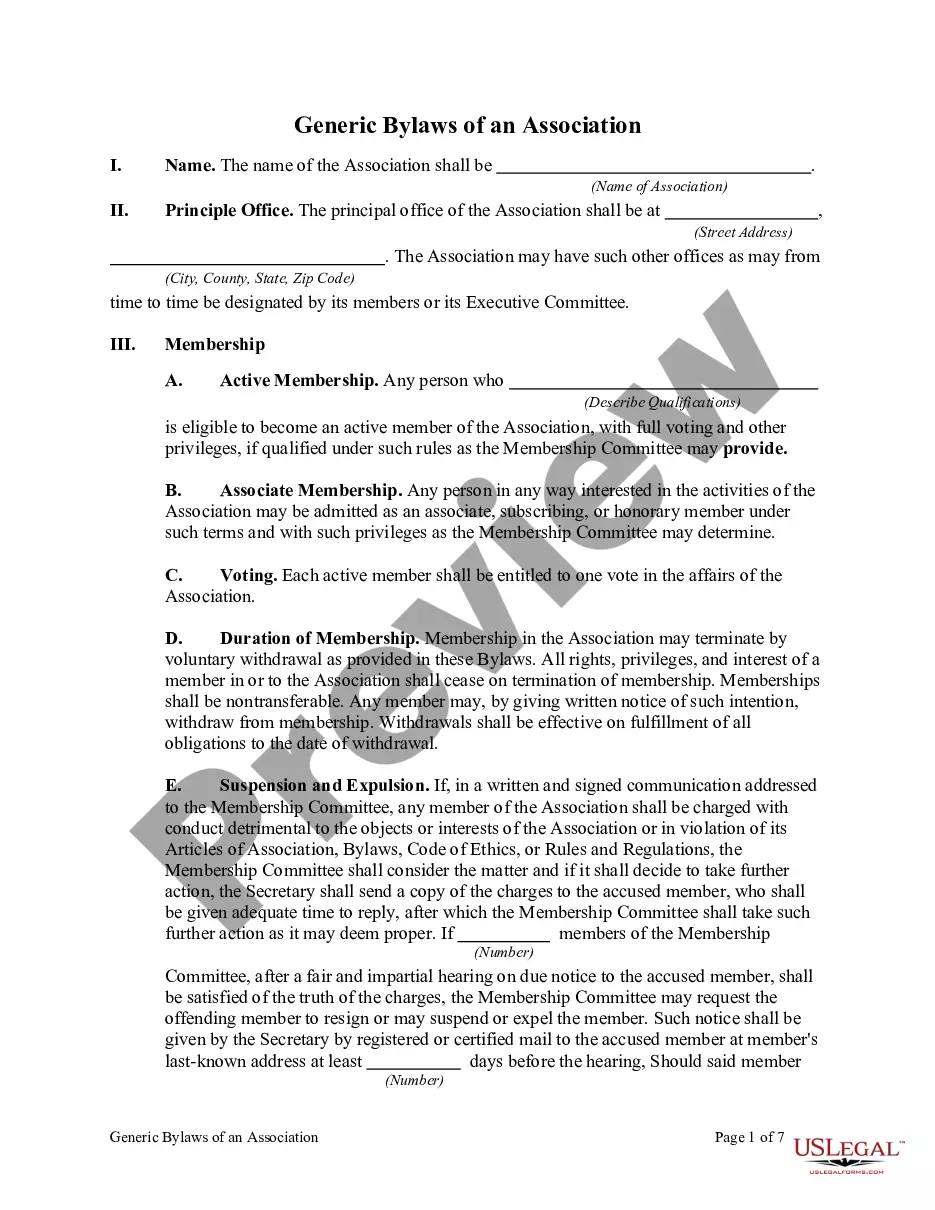
Hoa Bylaws In Texas In Salt Lake
Description


Get your form ready online
Our built-in tools help you complete, sign, share, and store your documents in one place.
Make edits, fill in missing information, and update formatting in US Legal Forms—just like you would in MS Word.
Download a copy, print it, send it by email, or mail it via USPS—whatever works best for your next step.
Sign and collect signatures with our SignNow integration. Send to multiple recipients, set reminders, and more. Go Premium to unlock E-Sign.
If this form requires notarization, complete it online through a secure video call—no need to meet a notary in person or wait for an appointment.
We protect your documents and personal data by following strict security and privacy standards.

Make edits, fill in missing information, and update formatting in US Legal Forms—just like you would in MS Word.

Download a copy, print it, send it by email, or mail it via USPS—whatever works best for your next step.

Sign and collect signatures with our SignNow integration. Send to multiple recipients, set reminders, and more. Go Premium to unlock E-Sign.

If this form requires notarization, complete it online through a secure video call—no need to meet a notary in person or wait for an appointment.

We protect your documents and personal data by following strict security and privacy standards.
Looking for another form?







Form popularity
FAQ
Texas law places limits on HOA power, including restrictions on their ability to prohibit certain types of construction like solar panels and rules against unreasonable fines or foreclosure practices. The exact limitations are outlined in state statutes, which are intended to protect homeowners' rights.
Other rules apply to the use of the facilities and the adherence to certain architectural guidelines. Anyone who doesn't comply with these laws may be subject to fines, but the HOA can't evict them. These fines, along with unpaid HOA fees, can lead to the removal of non-compliant homeowners from a community.
Most HOA documents are public record, including governing documents. Some states only require the HOA to make certain documents public, while others can be kept confidential.
Starting January 1, 2024, the HOA fines associated with things like overgrown landscaping, parking violation, house alterations and more become clearer. "Sometimes it's a matter of lack of communication that happens in some HOAs,” he said. “And the intent of this bill is to make sure that that communication happens."
Texas law places limits on HOA power, including restrictions on their ability to prohibit certain types of construction like solar panels and rules against unreasonable fines or foreclosure practices. The exact limitations are outlined in state statutes, which are intended to protect homeowners' rights.
Disclosure Requirements Disclosure is mandated by law, often through public records and real property records. Before purchasing a home, buyers must receive a set of documents detailing the HOA's health, such as its covenants, conditions, restrictions, bylaws, rules, and financial statements.
Depending on the organizational form of the entity, however, the home or property owners' association may not be required to register with the secretary of state.
Texas law places limits on HOA power, including restrictions on their ability to prohibit certain types of construction like solar panels and rules against unreasonable fines or foreclosure practices. The exact limitations are outlined in state statutes, which are intended to protect homeowners' rights.
HOA board members in Texas can be sued personally if they engage in negligent, willful misconduct, bad faith, fraud, criminal activity or actions beyond their board authority.
There is no Texas state agency that oversees property owners' associations. Talking to the board or checking the association's rules can sometimes resolve misunderstandings and disagreements. The association's governing documents will often provide a way to submit a complaint directly to the association.