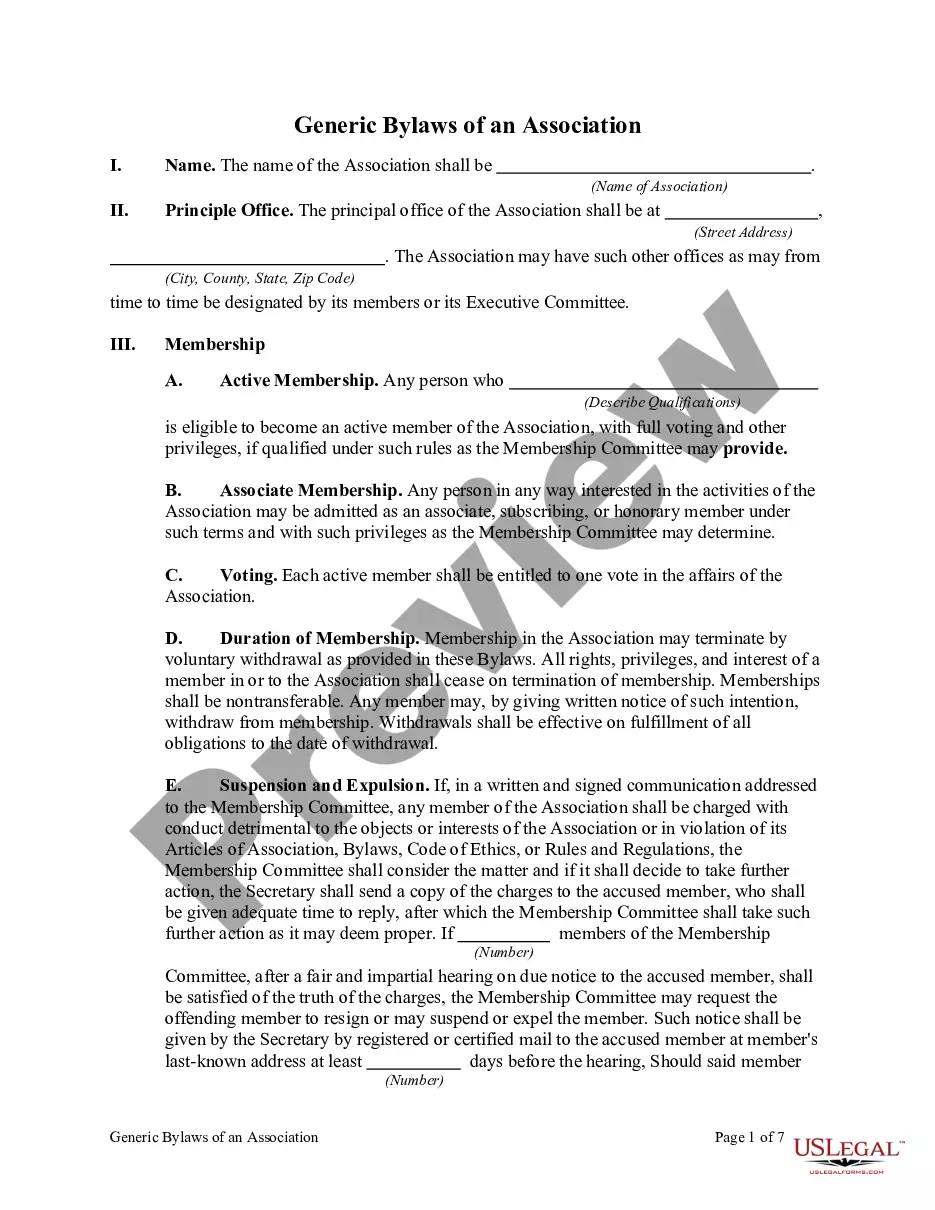
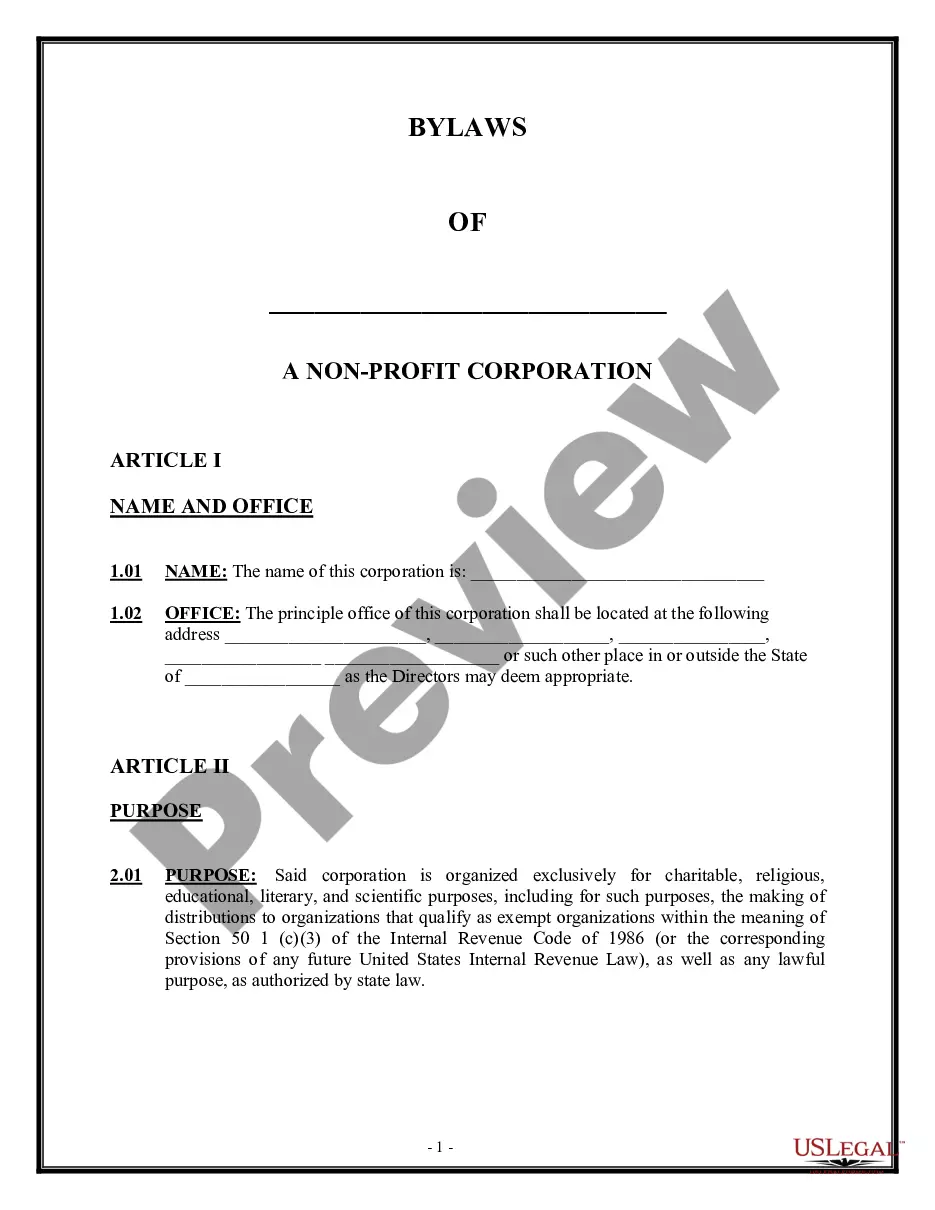
Nonprofit Bylaws Template For 501c3 In Pima
Description

Get your form ready online
Our built-in tools help you complete, sign, share, and store your documents in one place.
Make edits, fill in missing information, and update formatting in US Legal Forms—just like you would in MS Word.
Download a copy, print it, send it by email, or mail it via USPS—whatever works best for your next step.
Sign and collect signatures with our SignNow integration. Send to multiple recipients, set reminders, and more. Go Premium to unlock E-Sign.
If this form requires notarization, complete it online through a secure video call—no need to meet a notary in person or wait for an appointment.
We protect your documents and personal data by following strict security and privacy standards.

Make edits, fill in missing information, and update formatting in US Legal Forms—just like you would in MS Word.

Download a copy, print it, send it by email, or mail it via USPS—whatever works best for your next step.

Sign and collect signatures with our SignNow integration. Send to multiple recipients, set reminders, and more. Go Premium to unlock E-Sign.

If this form requires notarization, complete it online through a secure video call—no need to meet a notary in person or wait for an appointment.

We protect your documents and personal data by following strict security and privacy standards.
Looking for another form?




Form popularity
FAQ
10 steps for writing bylaws for an association Research. Form a committee. Create the structure. Outline your organization's key roles and responsibilities. Establish your meeting rules. Define your membership. Address finances. Outline the amendment process.
Nonprofit Bylaws Tips and Best Practices Get help. Make them public. Don't include information that changes frequently. Tailor them. Know the difference between “shall” and “may” ... Don't be too ambitious. Review them regularly. Name and purpose.
Like the Constitution, your bylaws should deal with only the highest level of governing issues such as: Organizational purpose, board structure, officer position descriptions and responsibilities, terms of board service, officer/board member succession and removal, official meeting requirements, membership provisions, ...
Here are some examples of provisions that nonprofit organizations should avoid including in their bylaws. Organizational Policies and Procedures. Specifically Targeted Policies that Adversely Affect Future Boards. Provisions that Violate State Laws. Inconsistencies with the Articles of Incorporation.
Arizona does not provide an overall exemption from TPT and use tax for nonprofit organizations. Generally, sales made to churches, schools and other non-profit organizations are subject to TPT and use tax.
You must have at least one director who will serve a term of one year. They don't need to live in Arizona and there are no membership requirements. Be aware that the IRS requires you to have at least three directors over the age of 18 when you apply for tax-exempt status.
In Arizona, you can convert an LLC into a nonprofit corporation by filing a Statement of Conversion. However, it's not as easy as just filing a form. You first need the approval of all LLC members, and you'll need to draft Articles of Incorporation and nonprofit bylaws as well.
501(c)(3) entities are typically classified into three major categories: Public Charities: These receive a significant portion of their income from the public or governmental grants. Examples include churches, schools, hospitals, and broadly-supported charities.
How to Start a Nonprofit in Arizona Name Your Organization. Recruit Incorporators and Initial Directors. Appoint a Registered Agent. Prepare and File Articles of Incorporation. Publish Incorporation. File Initial Report. Obtain an Employer Identification Number (EIN) ... Store Nonprofit Records.