Agreement Between Partnership For Restaurant Business In Utah
Description



Get your form ready online
Our built-in tools help you complete, sign, share, and store your documents in one place.
Make edits, fill in missing information, and update formatting in US Legal Forms—just like you would in MS Word.
Download a copy, print it, send it by email, or mail it via USPS—whatever works best for your next step.
Sign and collect signatures with our SignNow integration. Send to multiple recipients, set reminders, and more. Go Premium to unlock E-Sign.
If this form requires notarization, complete it online through a secure video call—no need to meet a notary in person or wait for an appointment.
We protect your documents and personal data by following strict security and privacy standards.

Make edits, fill in missing information, and update formatting in US Legal Forms—just like you would in MS Word.

Download a copy, print it, send it by email, or mail it via USPS—whatever works best for your next step.

Sign and collect signatures with our SignNow integration. Send to multiple recipients, set reminders, and more. Go Premium to unlock E-Sign.

If this form requires notarization, complete it online through a secure video call—no need to meet a notary in person or wait for an appointment.

We protect your documents and personal data by following strict security and privacy standards.
Looking for another form?









Form popularity
FAQ
Kickstart your new business in minutes There are three relatively common partnership types: general partnership (GP), limited partnership (LP) and limited liability partnership (LLP). A fourth, the limited liability limited partnership (LLLP), is not recognized in all states.
4, there are 4 essential elements of partnership: That it is the result of an agreement, between two or more persons. That it is formed to carry on a business. That the persons concerned agree to share the profits of the business. That the business is to be carried on by all or any of them acting for all.
Over the years, we have found it useful to talk about the four D's: divorce, death, disagreement and disability. This is a handy way of reminding business people about some of the most crucial issues they face in their relationships with other business people.
There are four main types of business partnerships: Strategic alliances. Coopetition. Joint ventures. Buyer-supplier relationships.
There are three relatively common partnership types: general partnership (GP), limited partnership (LP) and limited liability partnership (LLP). A fourth, the limited liability limited partnership (LLLP), is not recognized in all states.
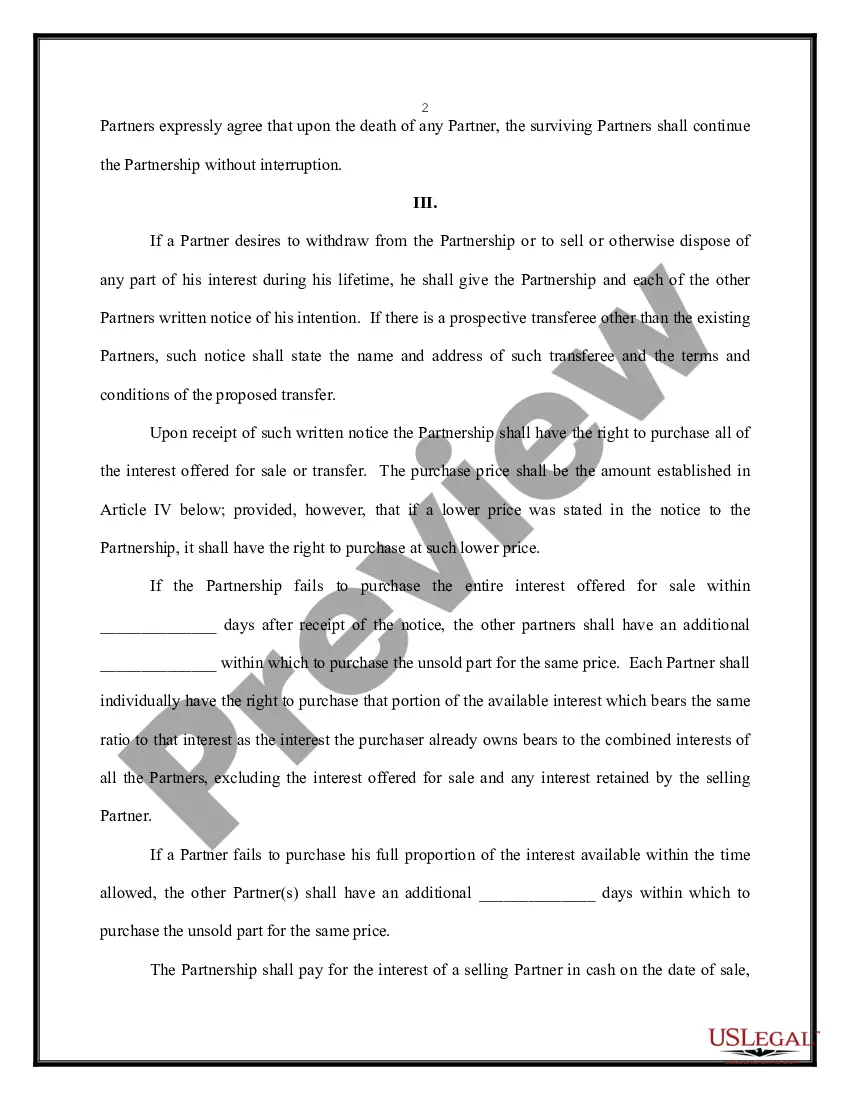
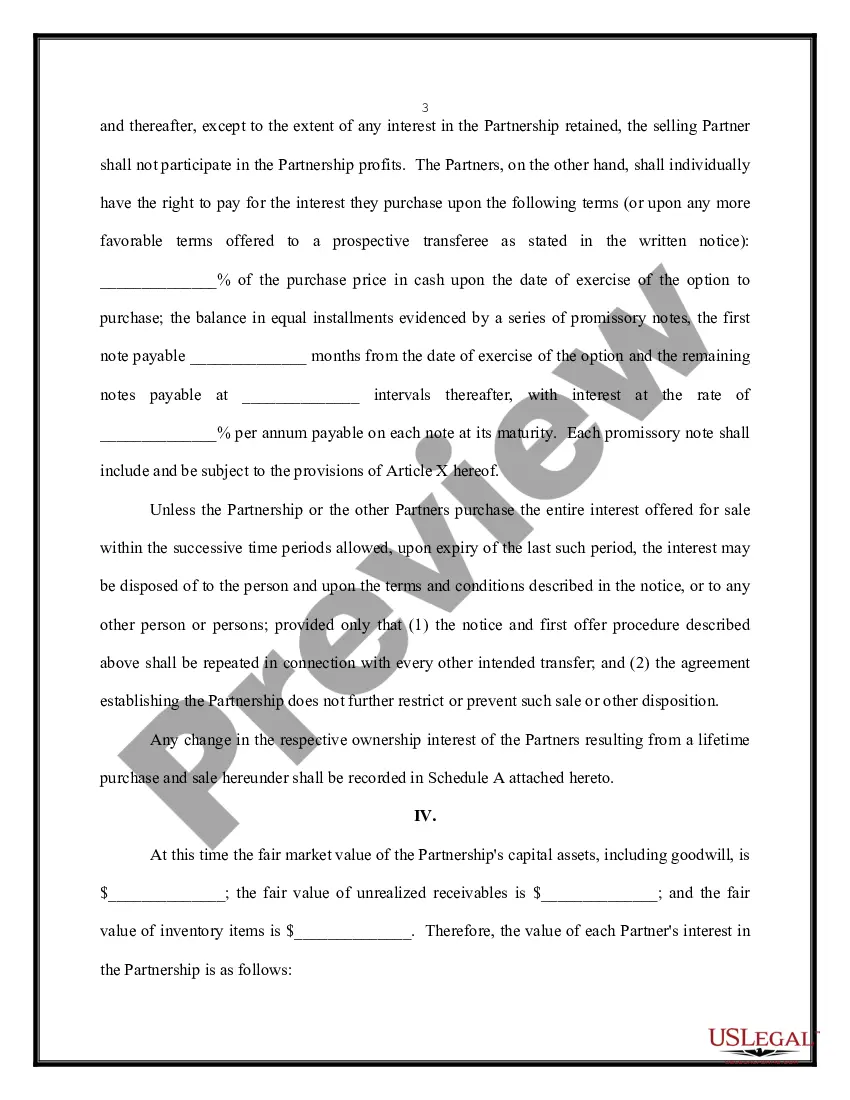
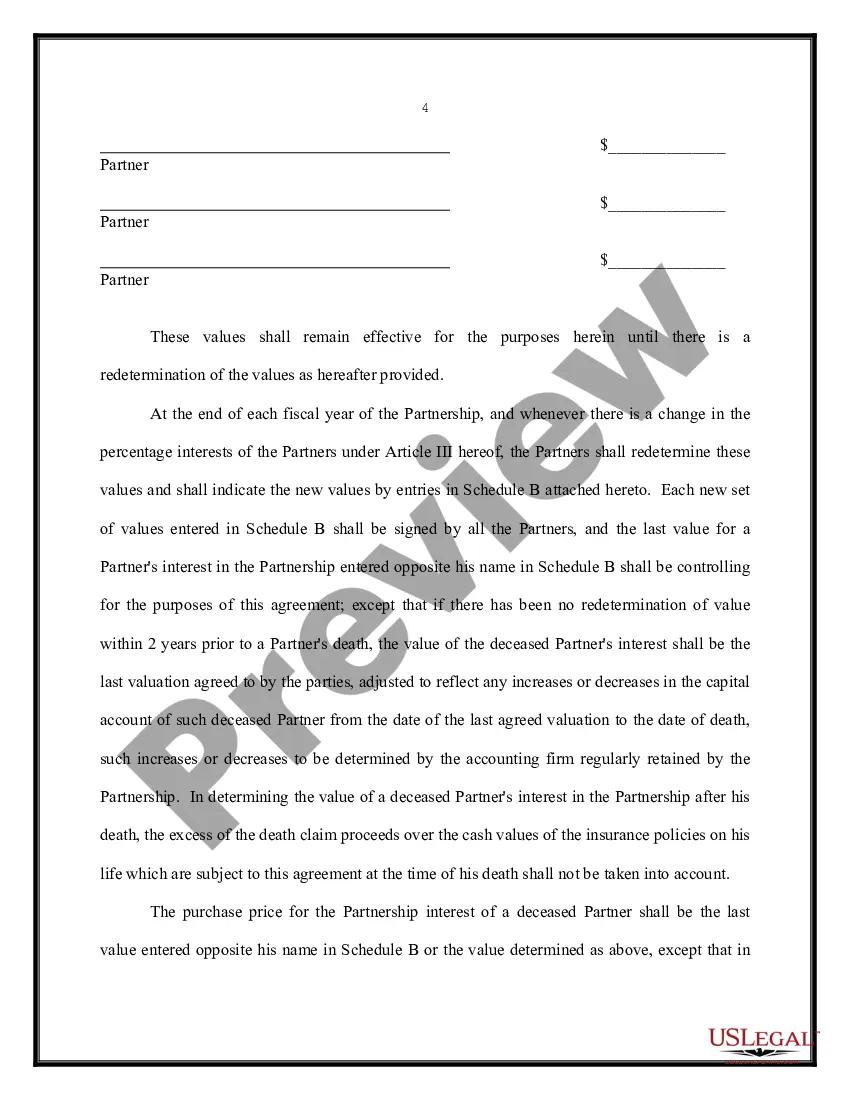
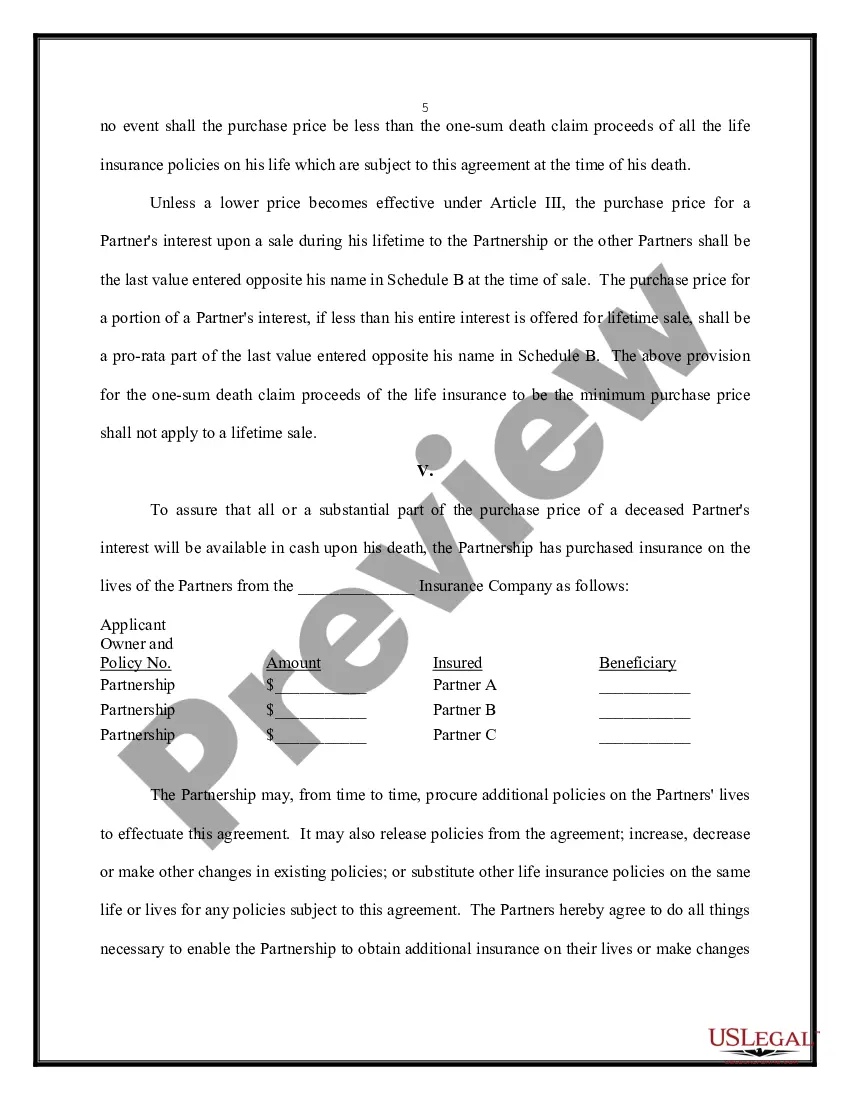
The parties hereto hereby form a Partnership under the name and style of _______________________________________________ (hereafter referred to as "the Partnership") to own real property, develop real property, and thereafter to manage, operate, develop, mortgage, lease or sell real property and do all other lawful ...
How to Write a Partnership Agreement Define Partnership Structure. Outline Capital Contributions and Ownership. Detail Profit, Loss, and Distribution Arrangements. Set Decision-Making and Management Protocols. Plan for Changes and Contingencies. Include Legal Provisions and Finalize the Agreement.
How to form a partnership in Utah Step 1: Select a business name. Step 2: Register the business name. Step 3: Complete required paperwork. Step 4: Determine if you need an EIN, additional licenses, or tax IDs. Step 5: Get your day-to-day business affairs in order.
In the partnership world, this translates to 80% (or more) of revenue often being generated by only 20% of partners. Typically, a small group of top-performing partners drive the majority of results. The remaining partners, though greater in number, contribute a smaller portion of the overall revenue.
