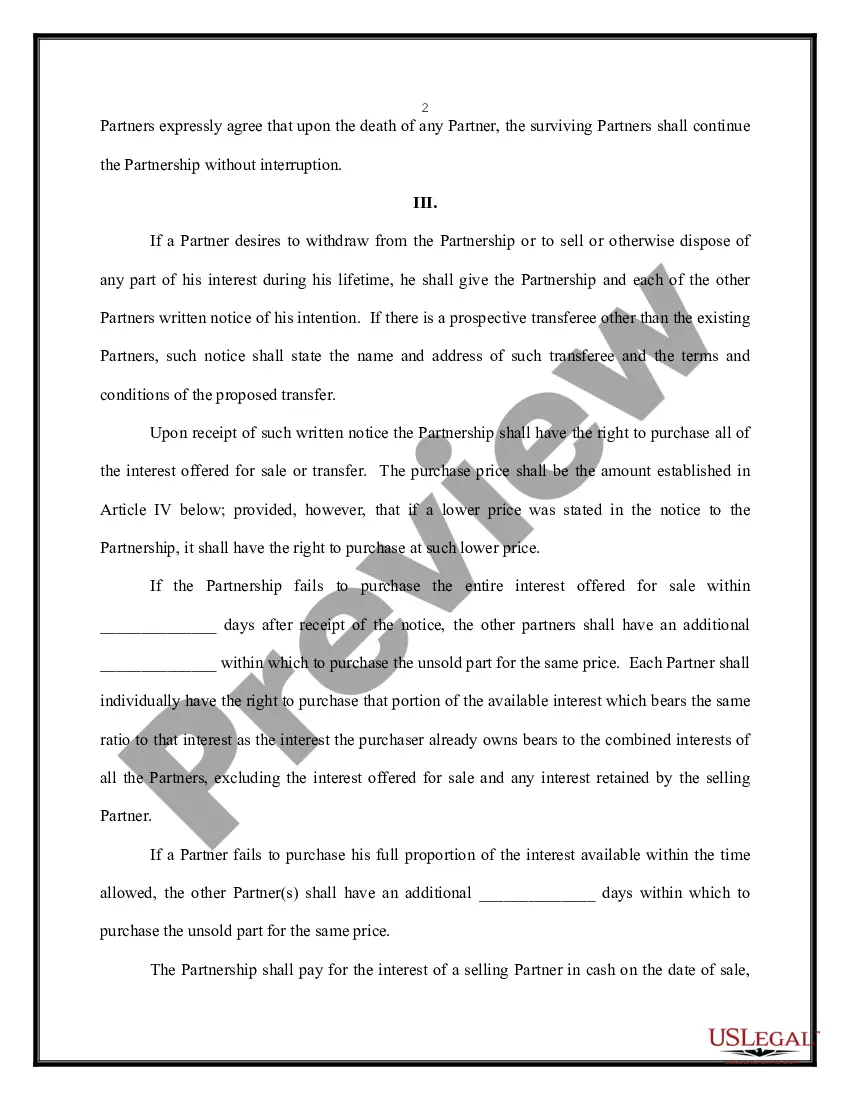
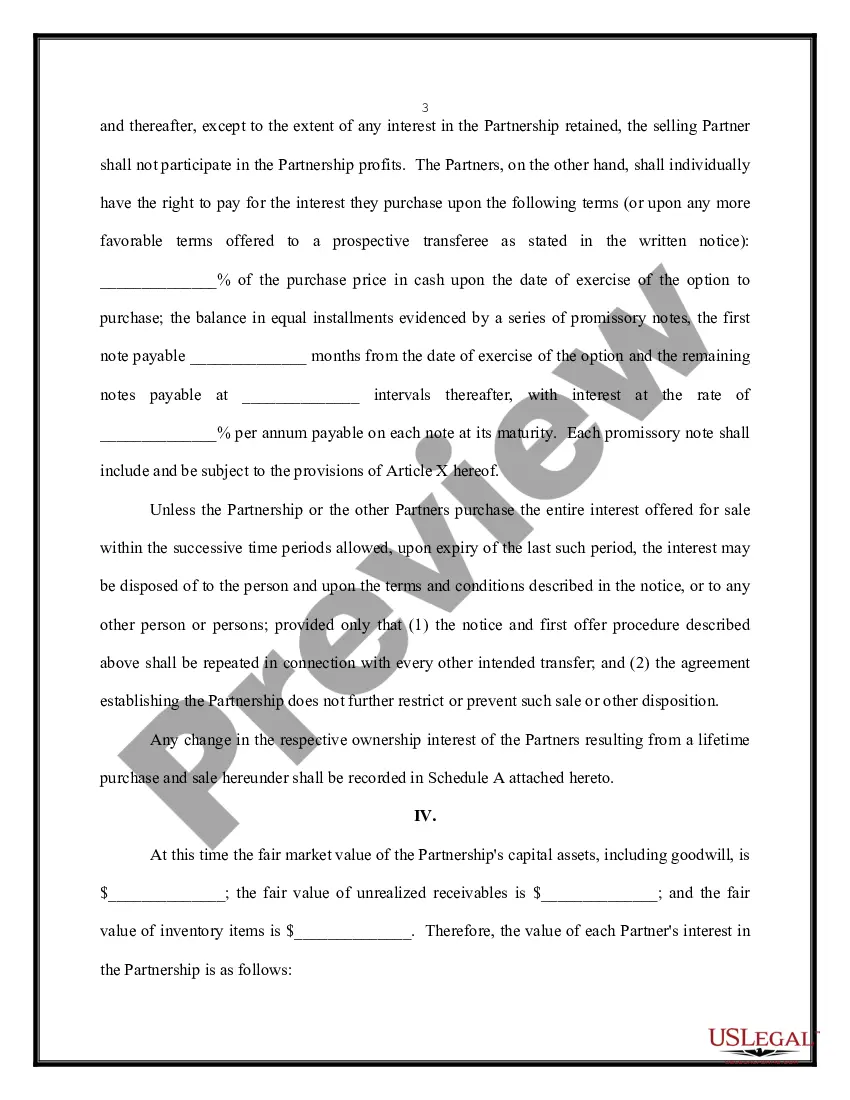
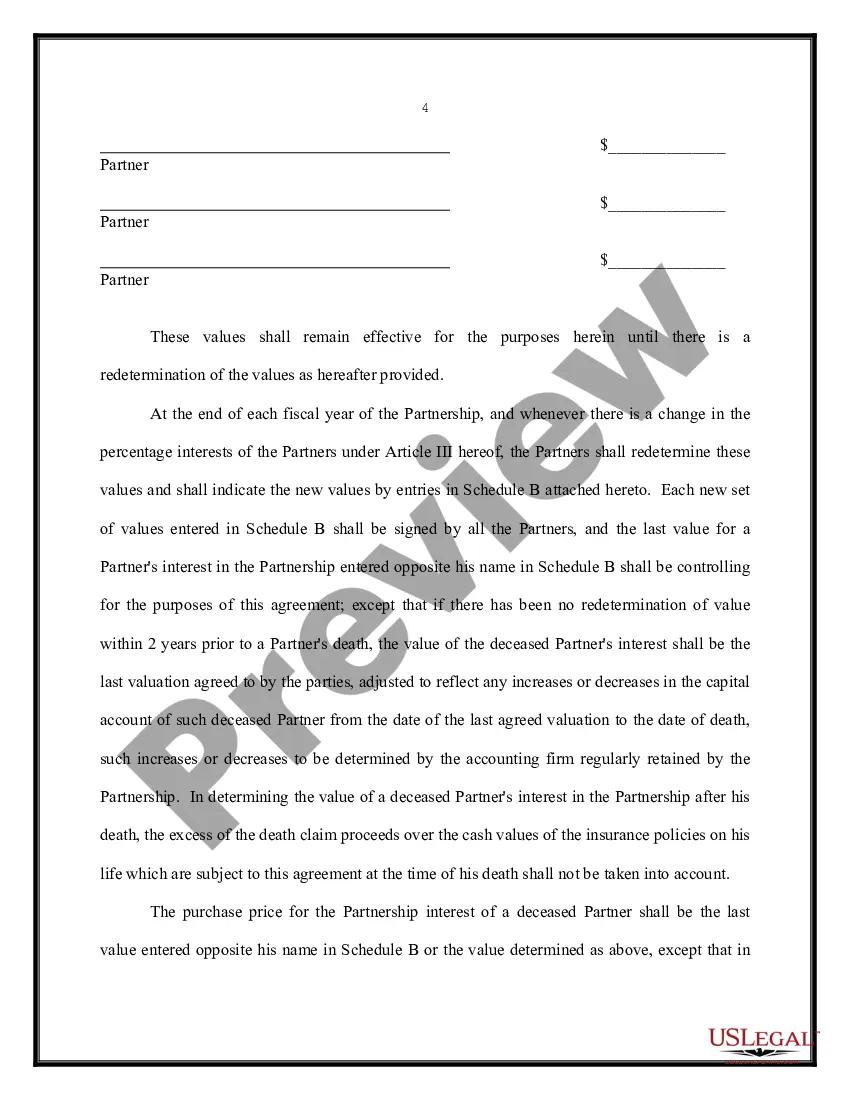
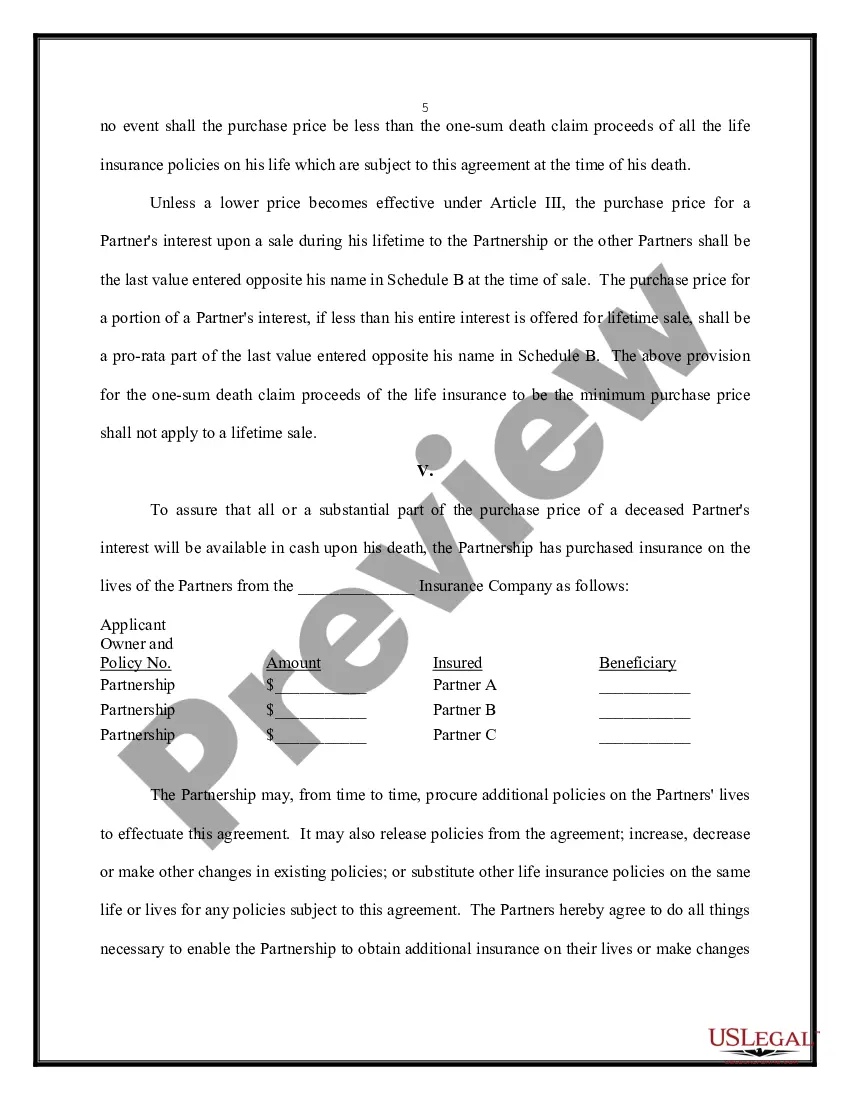
Agreement Between Partnership For Dissolution In Illinois
Description



Get your form ready online
Our built-in tools help you complete, sign, share, and store your documents in one place.
Make edits, fill in missing information, and update formatting in US Legal Forms—just like you would in MS Word.
Download a copy, print it, send it by email, or mail it via USPS—whatever works best for your next step.
Sign and collect signatures with our SignNow integration. Send to multiple recipients, set reminders, and more. Go Premium to unlock E-Sign.
If this form requires notarization, complete it online through a secure video call—no need to meet a notary in person or wait for an appointment.
We protect your documents and personal data by following strict security and privacy standards.

Make edits, fill in missing information, and update formatting in US Legal Forms—just like you would in MS Word.

Download a copy, print it, send it by email, or mail it via USPS—whatever works best for your next step.

Sign and collect signatures with our SignNow integration. Send to multiple recipients, set reminders, and more. Go Premium to unlock E-Sign.

If this form requires notarization, complete it online through a secure video call—no need to meet a notary in person or wait for an appointment.

We protect your documents and personal data by following strict security and privacy standards.
Looking for another form?







Form popularity
FAQ
Ways of Dissolving a Partnership Firm. When partners mutually agreed. Compulsory dissolution. Dissolution depending on certain contingent events. Dissolution by notice. Dissolution by Court. Transfer of interest or equity to the third party. Partners still liable to third parties.
Regarding obligations, if your partner decides to leave the business, she may still be responsible for her share of the debts and obligations incurred by the partnership up until the time of dissolution. This includes both financial obligations and contractual obligations to customers, suppliers, or employees.
Dissolving a partnership firm ends both the business and partner relationships, while dissolving a partnership only changes terms. Firms can dissolve by mutual agreement, compulsory reasons, specific contingencies, or court order.
Typically speaking, partnerships involving only two members are those that come to an end when one partner leaves. Still, partnerships with more than one member may also dissolve when one particular member leaves, depending on the circumstances of the partnership and the importance of the leaving associate.
As far as the state of Illinois is concerned, there is a process for officially dissolving your business. You will need to file a document called Articles of Dissolution with the Secretary of State. If you fail to notify the state and simply stop renewing your registration, Illinois will dissolve the business for you.
Dissolving the Partnership If a partner's departure triggers an end to the partnership, the partners will need to follow a dissolution procedure. In this case, the partnership will settle its debts and distribute any remaining assets to the partners—including the withdrawing partner—ing to their capital accounts.
When a partnership dissolves, the individuals involved are no longer partners in a legal sense, but the partnership continues until all debts are settled, the business is legally terminated and the remaining company assets are distributed. Read more about strategic partnerships.
The dissolution process involves settling the firm's debts, distributing assets among the partners, and completing necessary legal formalities. It marks the end of the firm's existence and requires compliance with specific legal procedures to avoid future liabilities.
A partner might leave (or "dissociate" from) a partnership voluntarily or involuntarily. When a partner exits the business, the partnership can either continue or dissolve (end), depending on what the partnership agreement or state law allows or requires.
A partnership agreement need only be a contract/agreement signed by the parties (sometimes referred to as a simple contract 'under hand') unless there is some part of the agreement that relates to the transfer of property, in which case the agreement must take the form of a deed note 5.
