Border Lines With In Utah
Description


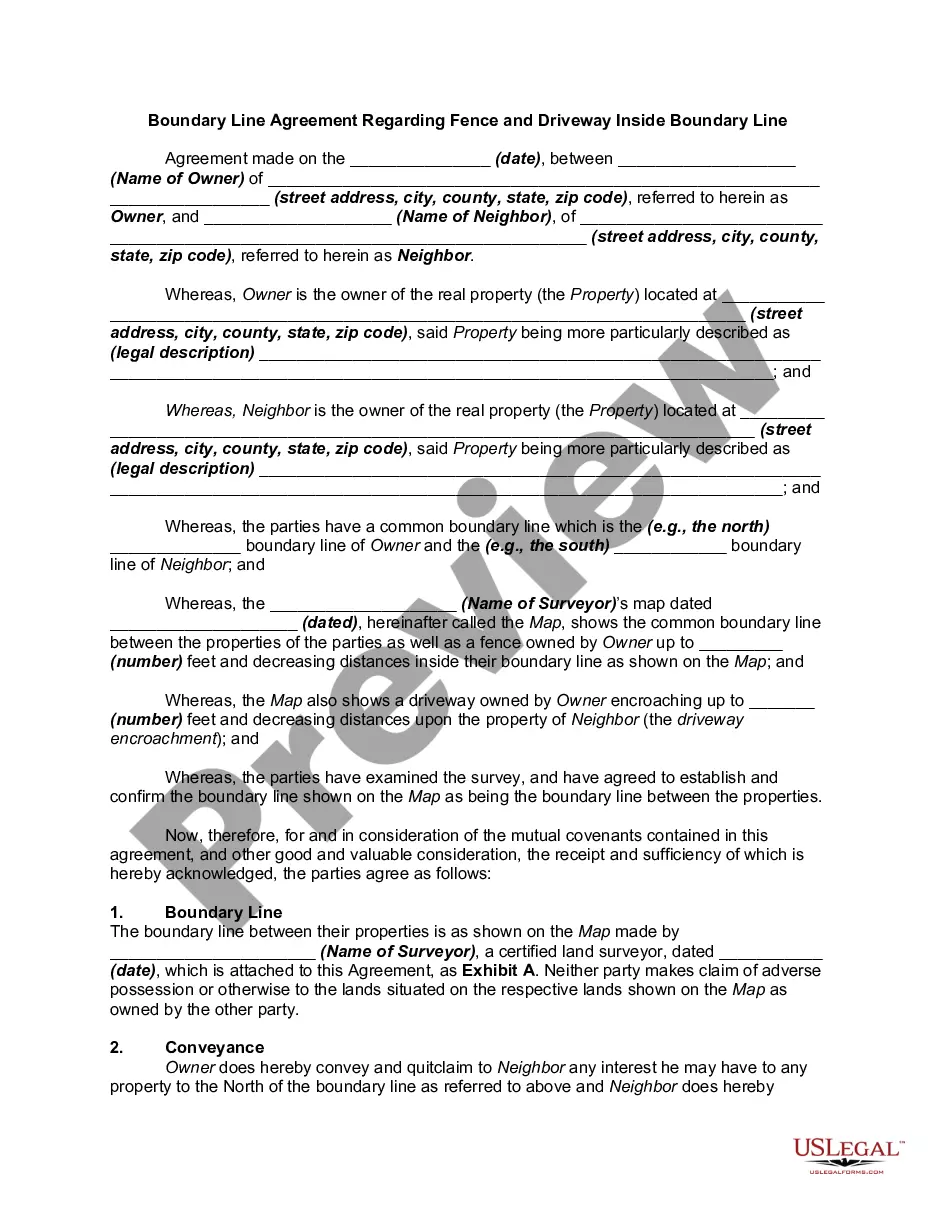
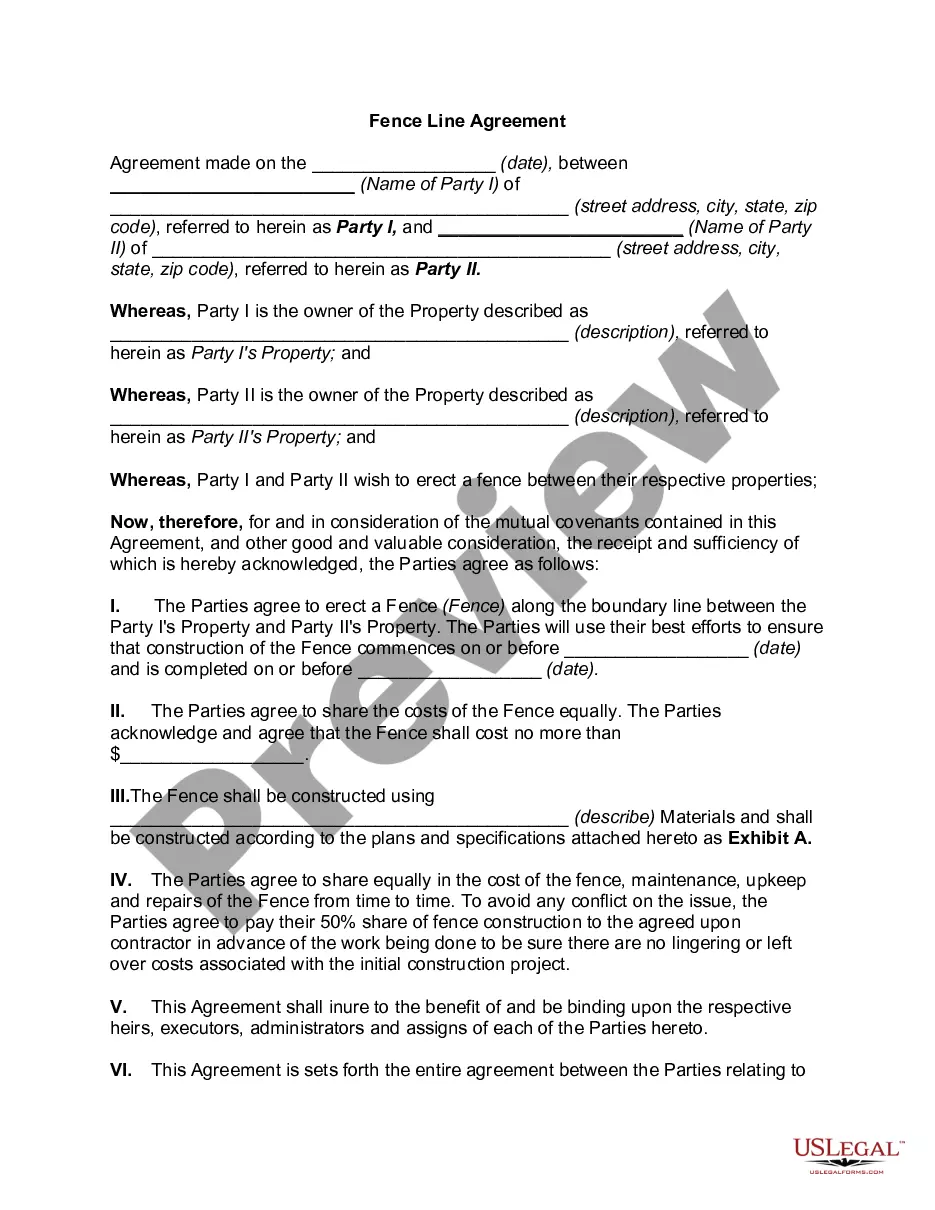
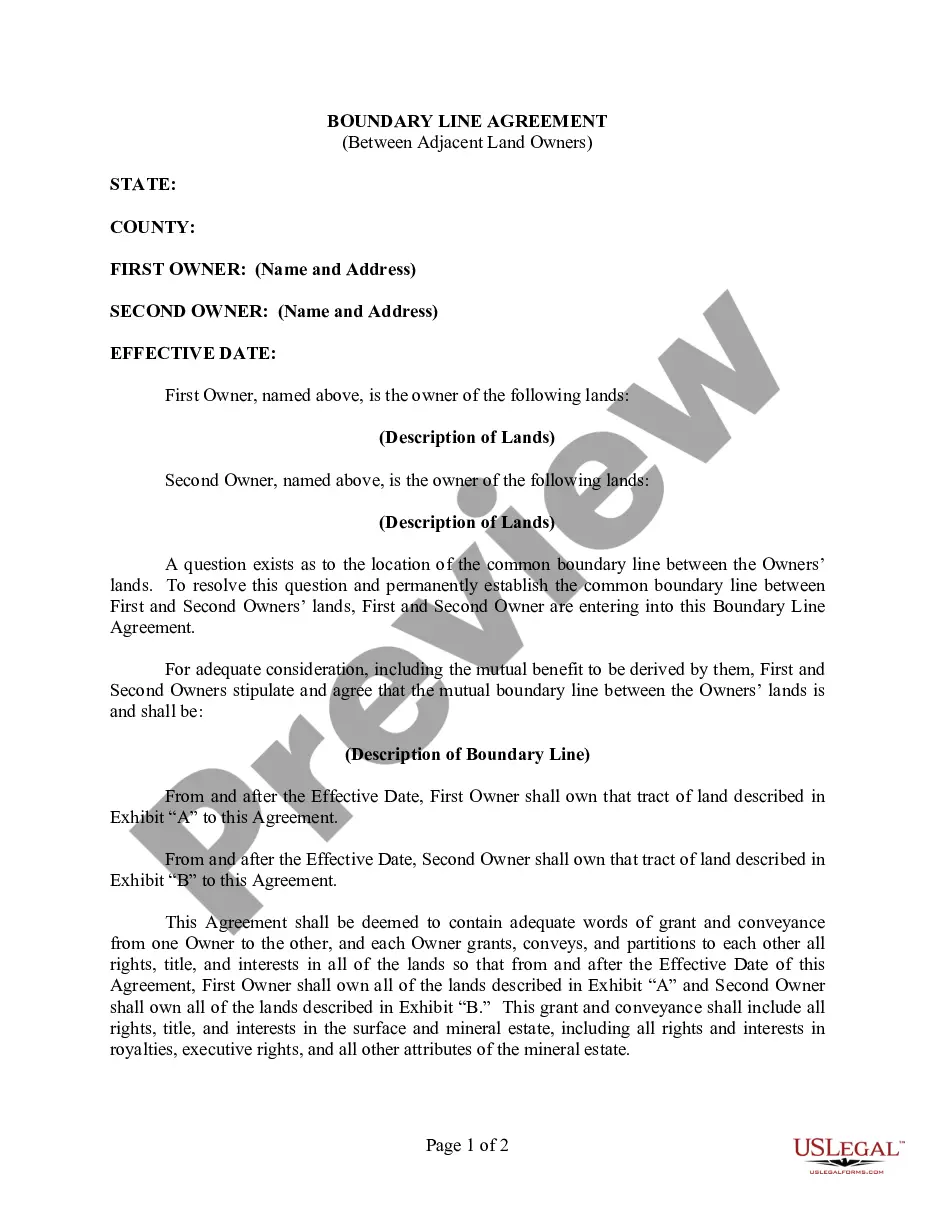
Get your form ready online
Our built-in tools help you complete, sign, share, and store your documents in one place.
Make edits, fill in missing information, and update formatting in US Legal Forms—just like you would in MS Word.
Download a copy, print it, send it by email, or mail it via USPS—whatever works best for your next step.
Sign and collect signatures with our SignNow integration. Send to multiple recipients, set reminders, and more. Go Premium to unlock E-Sign.
If this form requires notarization, complete it online through a secure video call—no need to meet a notary in person or wait for an appointment.
We protect your documents and personal data by following strict security and privacy standards.

Make edits, fill in missing information, and update formatting in US Legal Forms—just like you would in MS Word.

Download a copy, print it, send it by email, or mail it via USPS—whatever works best for your next step.

Sign and collect signatures with our SignNow integration. Send to multiple recipients, set reminders, and more. Go Premium to unlock E-Sign.

If this form requires notarization, complete it online through a secure video call—no need to meet a notary in person or wait for an appointment.

We protect your documents and personal data by following strict security and privacy standards.
Looking for another form?
Form popularity
FAQ
Industry Utah / Motto
Utah is a state in the western United States. It is one of the Mountain States, sharing the Four Corners region with Arizona, Colorado, and New Mexico. It also borders Wyoming to the northeast, Idaho to the north, and Nevada to the west.
West: Includes Alaska, Arizona, California, Colorado, Hawaii, Idaho, Montana, Nevada, New Mexico, Oregon, Utah, Washington, and Wyoming.
The Boundary by Acquiescence theory provides that a long-standing marker indicating where property owners understand a boundary to be located becomes the actual boundary, even if a survey places it elsewhere.
Three primary physiographic regions, each with unique topographic, geologic, and geomorphic characteristics, extend into Utah. They include the Colorado Plateau, the Basin and Range, and the Middle Rocky Mountains.
Utah covers an area of 84,899 sq mi (219,890 km2). It is one of the Four Corners states and is bordered by Idaho in the north, Wyoming in the north and east, Colorado in the east, at a single point by New Mexico to the southeast, by Arizona in the south, and by Nevada in the west.
Eleven states are in the West region. They are Colorado, Wyoming, Idaho, Montana, Washington, Oregon, Utah, Nevada, California, Alaska, and Hawaii. The climate in this region varies.
The West, region, western U.S., mostly west of the Great Plains and including, by federal government definition, Alaska, Arizona, California, Hawaii, Idaho, Montana, Nevada, New Mexico, Oregon, Utah, Washington, and Wyoming.
Dating back to Utah Territorial days, Utah has been a fence-in state. This means those who own or care for livestock have the primary responsibility to ensure livestock does not trespass onto another's property. Fence-out, on the other hand, largely pertains to open range lands.
A dashed white line between lanes of traffic means that you may cross it to change lanes if it is safe. A solid white line between lanes of traffic means that you should stay in your lane unless a special situation requires you to change lanes."
