Boundary In Lines In Minnesota
Description



Get your form ready online
Our built-in tools help you complete, sign, share, and store your documents in one place.
Make edits, fill in missing information, and update formatting in US Legal Forms—just like you would in MS Word.
Download a copy, print it, send it by email, or mail it via USPS—whatever works best for your next step.
Sign and collect signatures with our SignNow integration. Send to multiple recipients, set reminders, and more. Go Premium to unlock E-Sign.
If this form requires notarization, complete it online through a secure video call—no need to meet a notary in person or wait for an appointment.
We protect your documents and personal data by following strict security and privacy standards.

Make edits, fill in missing information, and update formatting in US Legal Forms—just like you would in MS Word.

Download a copy, print it, send it by email, or mail it via USPS—whatever works best for your next step.

Sign and collect signatures with our SignNow integration. Send to multiple recipients, set reminders, and more. Go Premium to unlock E-Sign.

If this form requires notarization, complete it online through a secure video call—no need to meet a notary in person or wait for an appointment.

We protect your documents and personal data by following strict security and privacy standards.
Looking for another form?







Form popularity
FAQ
Communities. The following communities are located anywhere from two to twenty miles from the boundary waters: Ely, Cook, Grand Marais, and Tofte in Minnesota and Atikokan in Ontario.
The Boundary Waters Canoe Area is in the northern third of the Superior National Forest in northeastern Minnesota. More than 1 million acres, it extends nearly 150 miles along the international boundary adjacent to Canada's Quetico Provincial Park and is bordered on the west by Voyageurs National Park.
However, they are technically carnivores, and do feed on grubs, ants, bees, snakes, mice and birds. Not to be confused with the more dangerous grizzly bear, which is not found in the Boundary Waters and Quetico, Black Bears not only come in black, but also brown and cinnamon colors.
Iowa is to the south, North Dakota and South Dakota are to the west, and the Canadian provinces of Ontario and Manitoba are to the north. With 86,943 square miles (225,180 km2), or approximately 2.25% of the United States, Minnesota is the 12th-largest state.
You may use two lines through the ice except on designated trout lakes and streams. On designated trout lakes and streams, only one line is allowed at any time. More than one line may be allowed on border waters and Lake Superior.
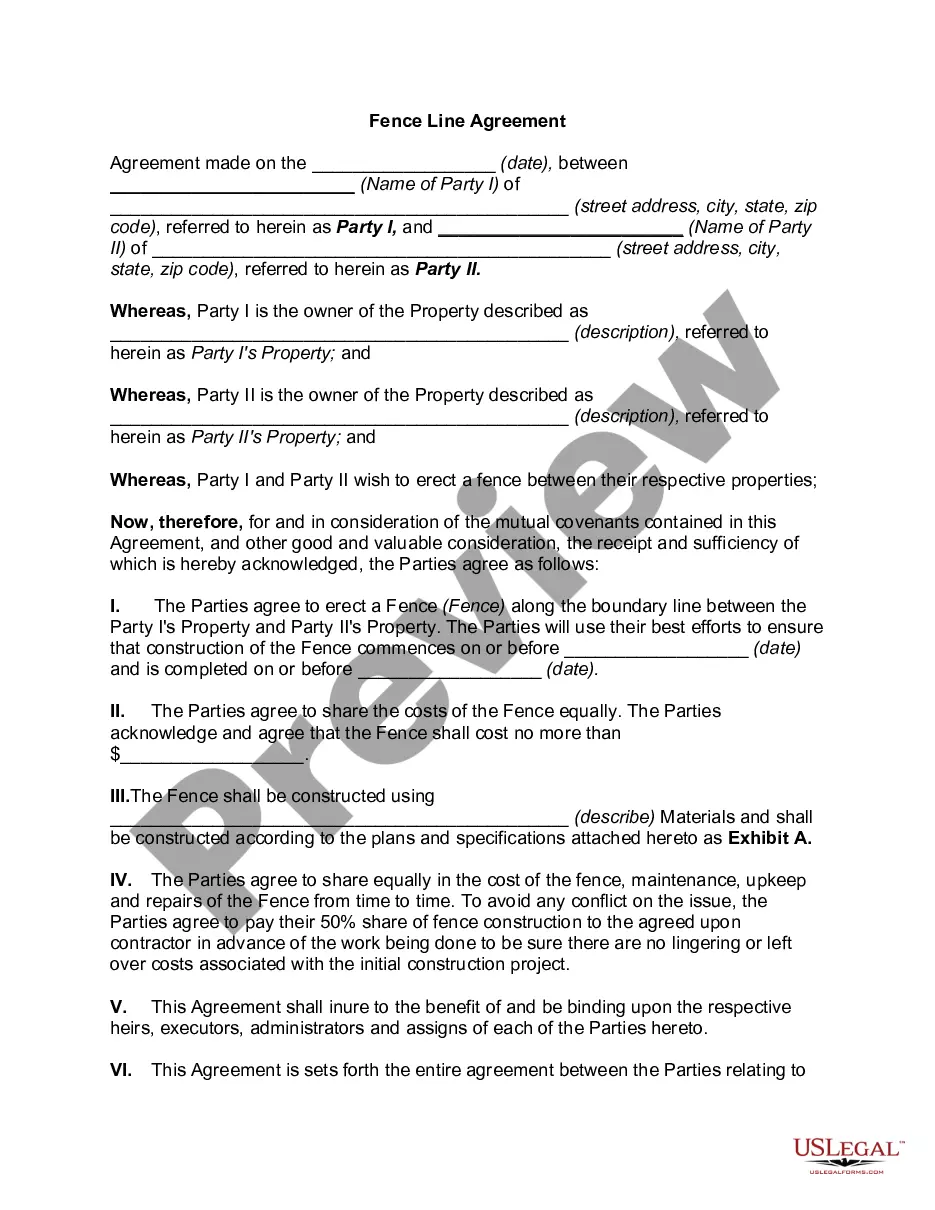
When a fence is on the property line between you and adjoining landowners (a “partition fence”), Minnesota statutes say that expenses should be shared for installation and repair costs. If a dispute arises, the party who pays for the fence is entitled to recover half of their costs from the non-paying homeowner.
The Boundary Waters Canoe Area is in the northern third of the Superior National Forest in northeastern Minnesota. More than 1 million acres, it extends nearly 150 miles along the international boundary adjacent to Canada's Quetico Provincial Park and is bordered on the west by Voyageurs National Park.
Maintaining Distance from the Property Line This helps prevent disputes and allows for maintenance on both sides of the fence without encroaching on the neighbor's land. A common practice is to build the fence 2-8 inches away from the property line, depending on local regulations and personal preferences.
They can be established through visible features, such as roads, ditches or fences, but they also may be imperceptible. Ask Your Mortgage Or Title Company. Look For Property Markers. Look For Hidden Survey Pins. Refer To Physical Markers. Visit Your Local Zoning Office. Measure Your Property Yourself.
561.02 MALICIOUSLY MAINTAINED STRUCTURE. Any fence, or any other structure, maliciously ed or maintained for the purpose of annoying the owners or occupants of adjoining property shall be deemed a private nuisance.
