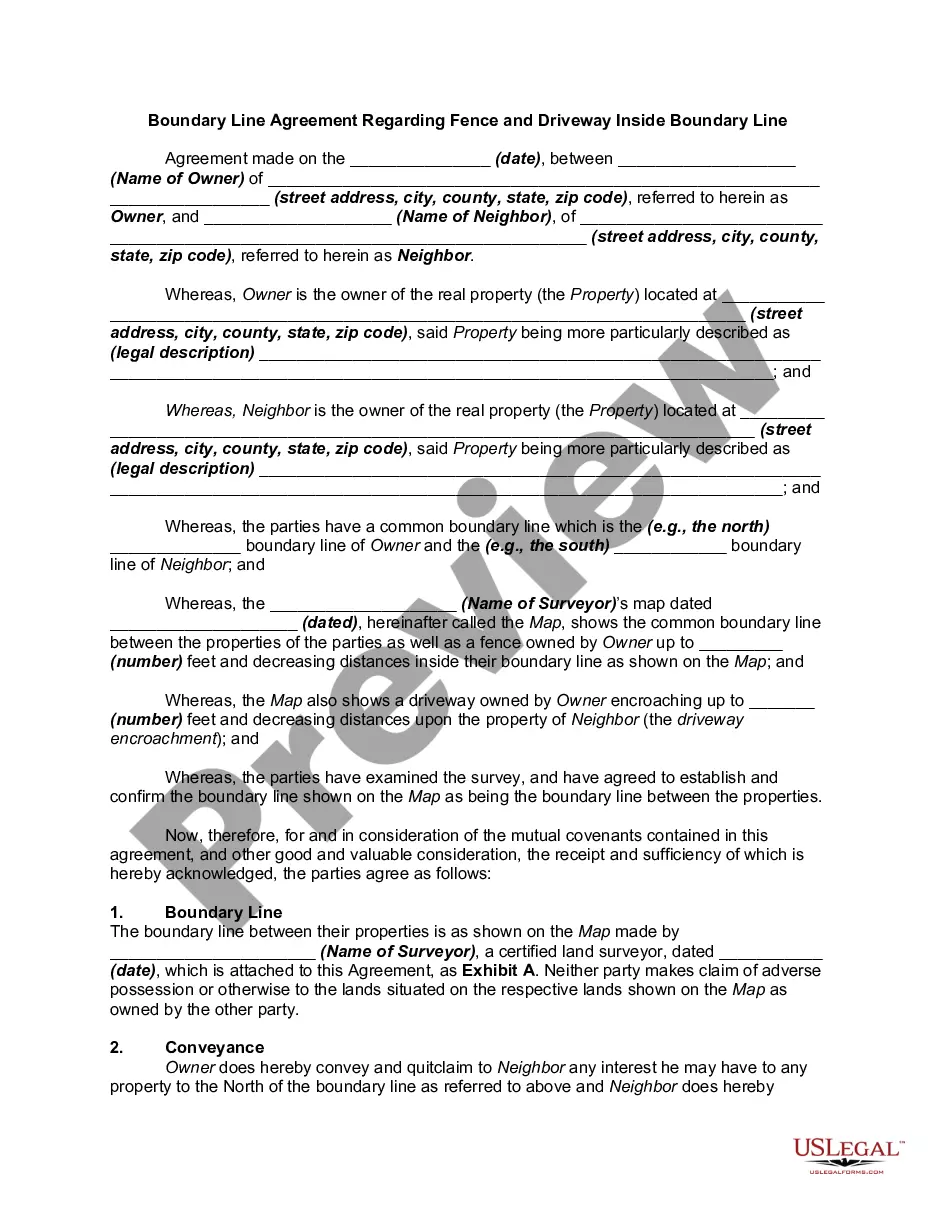
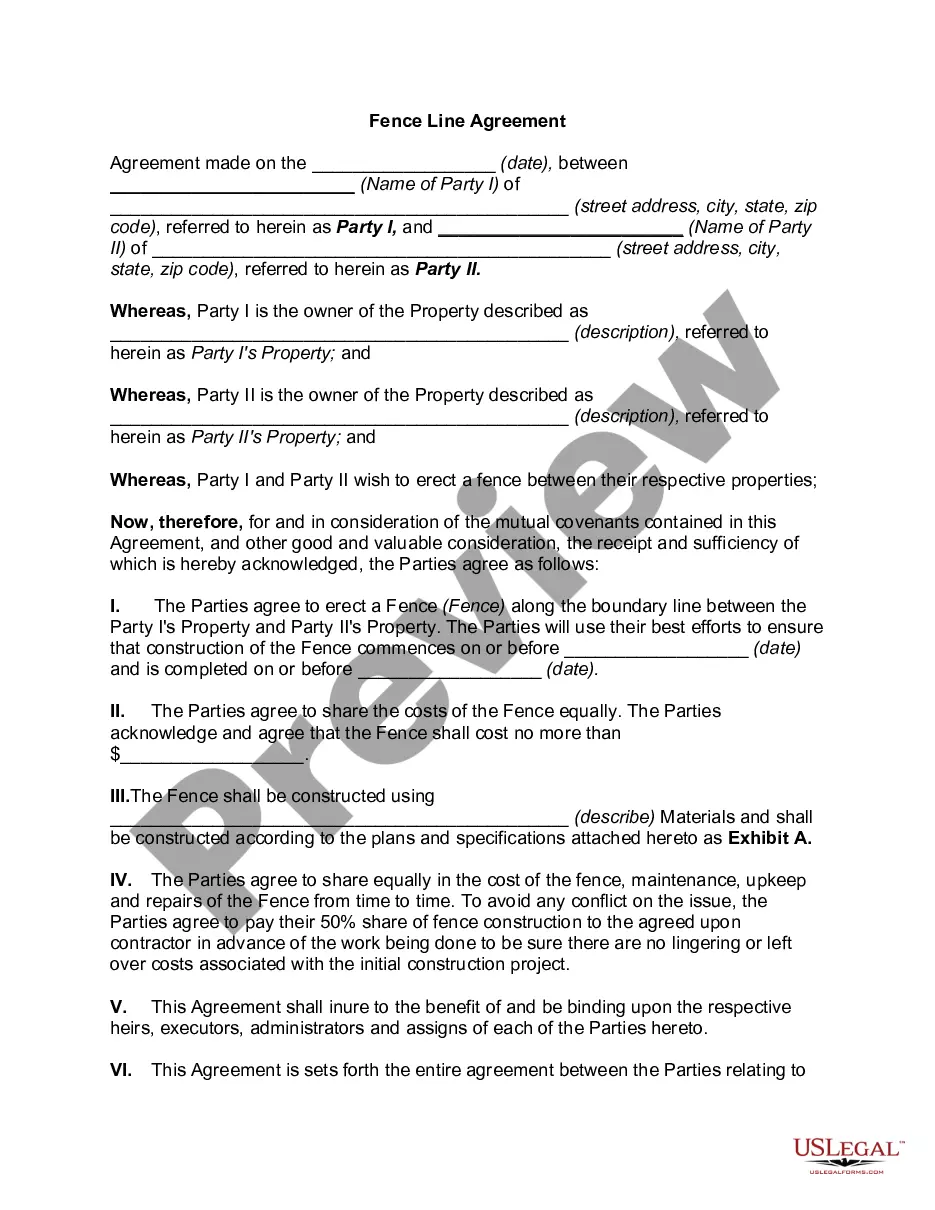
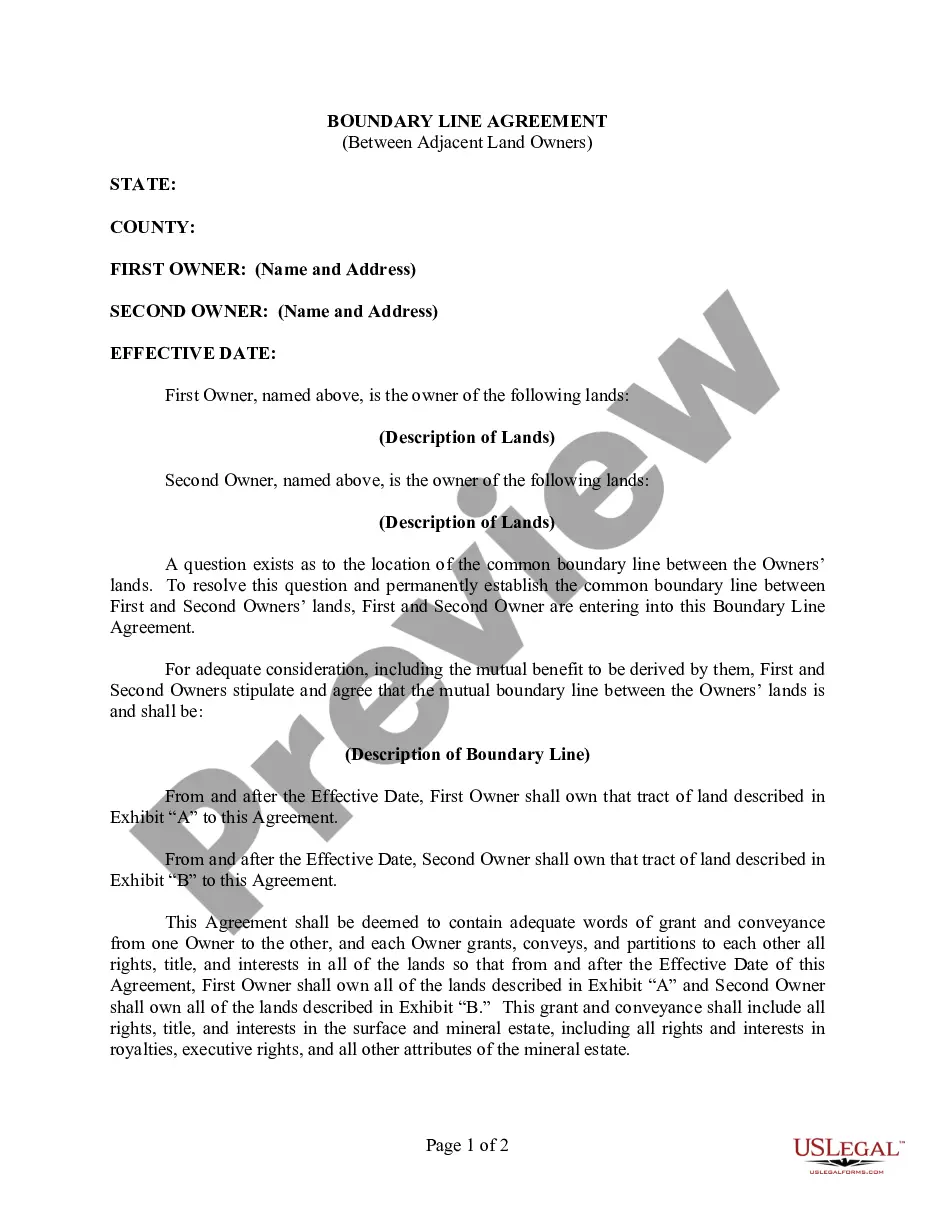
Boundary Lines For Project In Illinois
Description


Get your form ready online
Our built-in tools help you complete, sign, share, and store your documents in one place.
Make edits, fill in missing information, and update formatting in US Legal Forms—just like you would in MS Word.
Download a copy, print it, send it by email, or mail it via USPS—whatever works best for your next step.
Sign and collect signatures with our SignNow integration. Send to multiple recipients, set reminders, and more. Go Premium to unlock E-Sign.
If this form requires notarization, complete it online through a secure video call—no need to meet a notary in person or wait for an appointment.
We protect your documents and personal data by following strict security and privacy standards.

Make edits, fill in missing information, and update formatting in US Legal Forms—just like you would in MS Word.

Download a copy, print it, send it by email, or mail it via USPS—whatever works best for your next step.

Sign and collect signatures with our SignNow integration. Send to multiple recipients, set reminders, and more. Go Premium to unlock E-Sign.

If this form requires notarization, complete it online through a secure video call—no need to meet a notary in person or wait for an appointment.

We protect your documents and personal data by following strict security and privacy standards.
Looking for another form?







Form popularity
FAQ
The front setback is commonly 10 feet, the sides four feet, and the back setback is 10 feet. The distance may also differ ing to the building type. It is imperative to determine the property line of your property before you put up any structures on it.
Around the rest of the perimeter of your property (side & rear) the height limit is 8-feet. Use of barbed wire, electrified fences, or sharp spikes are prohibited. You may build your fence right up to the property line, but you must not cross over the line.
Setback Requirements The setback requirement is the distance between the property line and the fence. The setback requirement varies depending on the height of the fence and the property's location. In general, in residential districts, you can build a fence anywhere between 2 to 8 inches inside your boundary.
Code enforcement officials review construction documents and monitor construction of new and existing buildings and structures for code compliance.
Yes, as long as they do not damage your fence they may.
Big cities, attractive towns, and farmland, highlight the landscape of the state. Illinois is probably best known for Chicago, a world-class city regarded as the cultural heart of the USA with a broad economic base.
ILLINOIS: From the Illini Indian word meaning "men" or "warriors,” supplemented by the French adjective ending "ois..” INDIANA: Presumably named from the fact that the land lying along the Ohio River was purchased from the Indians. Others claim it was named for the Indian tribes who settled in western Pennsylvania.
Unauthorized use is prohibited. Illinois is bordered by Wisconsin in the north; Lake Michigan, Indiana, and Kentucky in the east; Kentucky and Missouri in the south; and Missouri and Iowa in the west.
Kentucky, officially the Commonwealth of Kentucky, is a landlocked state in the Southeastern region of the United States. It borders Illinois, Indiana, and Ohio to the north, West Virginia to the northeast, Virginia to the east, Tennessee to the south, and Missouri to the west.
The Illini Hundreds of years ago many different Native Americans lived in Illinois. Some of them were the Sauk, Mesquakie, Potawatomi, Kickapoo, and Winnebago. The state is named after one tribe, the Illiniwek. The Illiniwek were composed of twelve smaller tribes.
