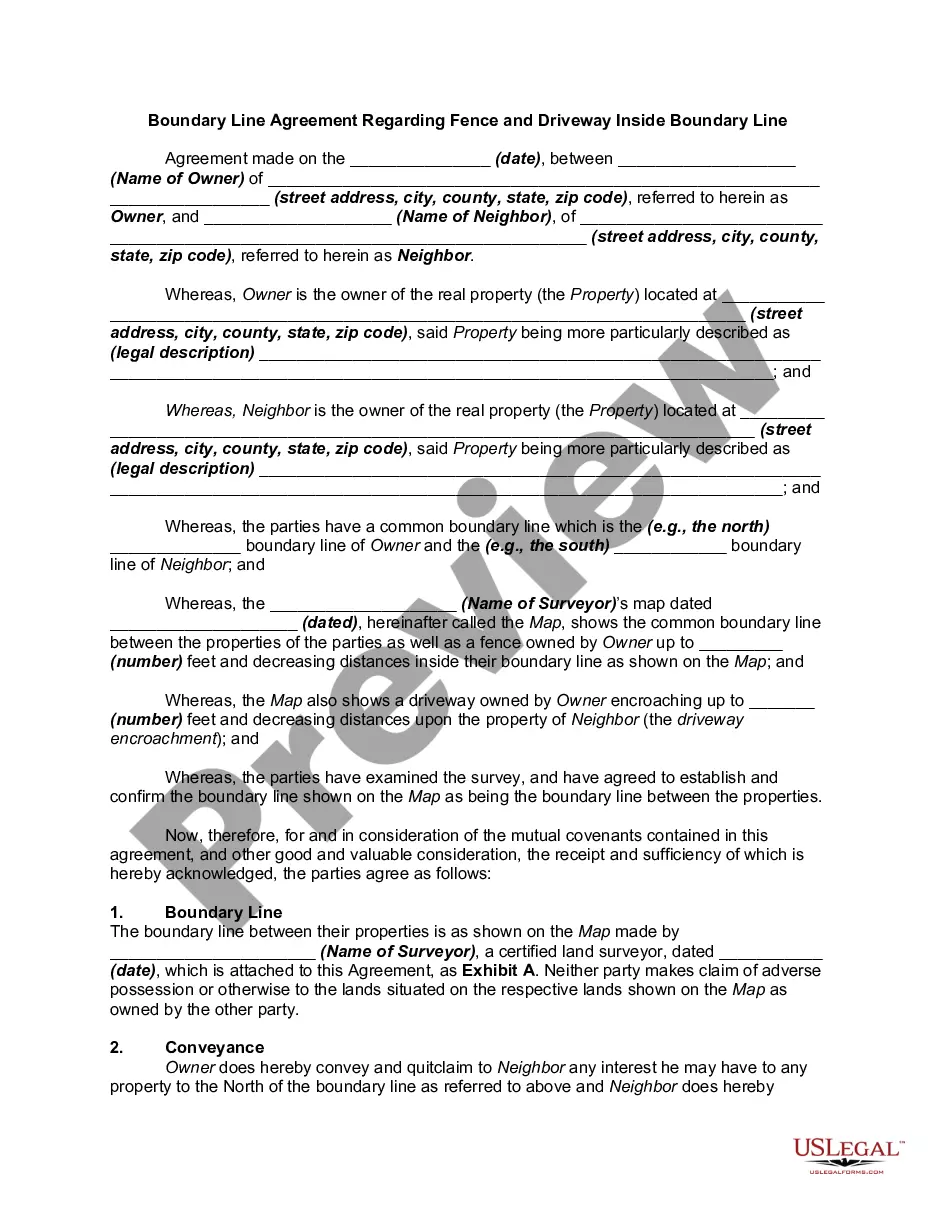
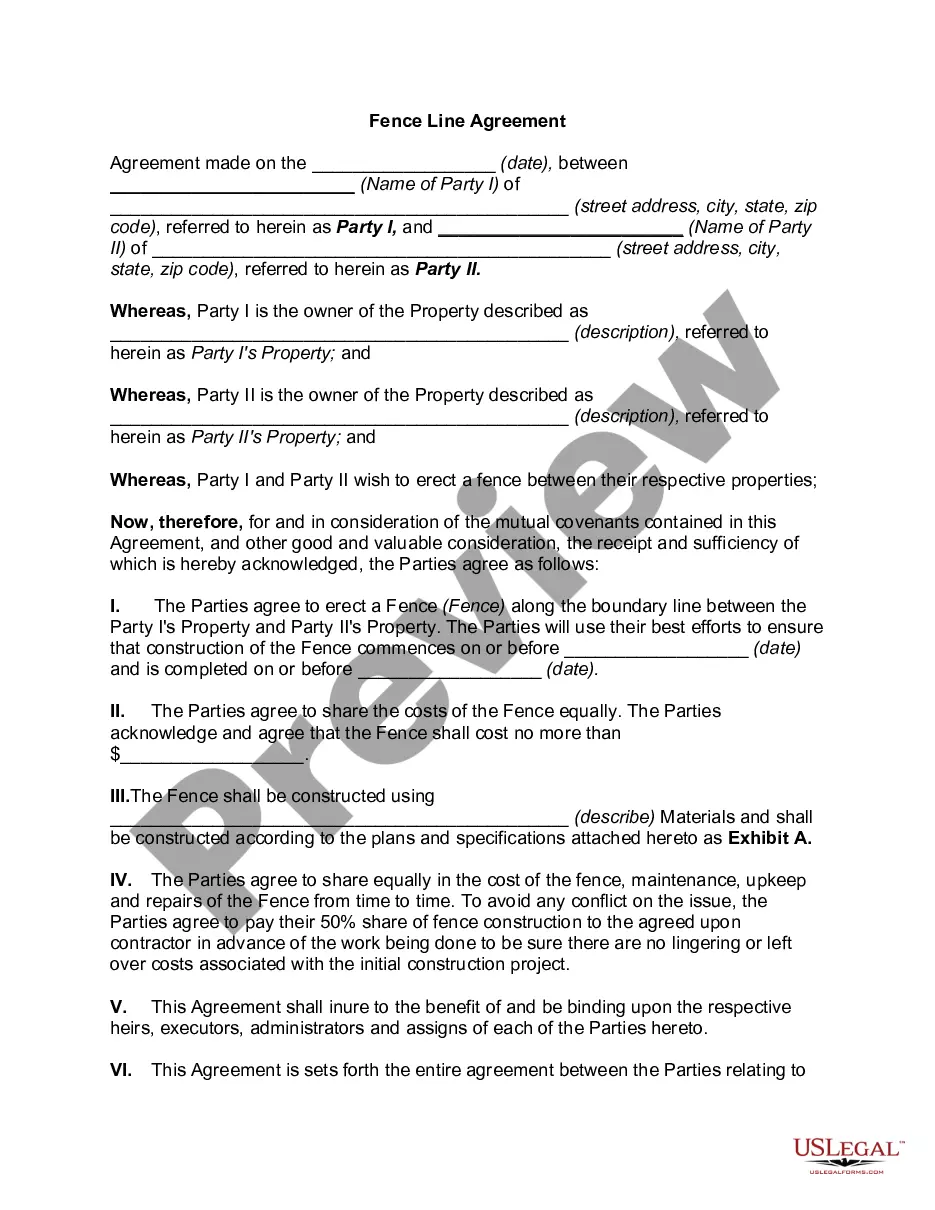
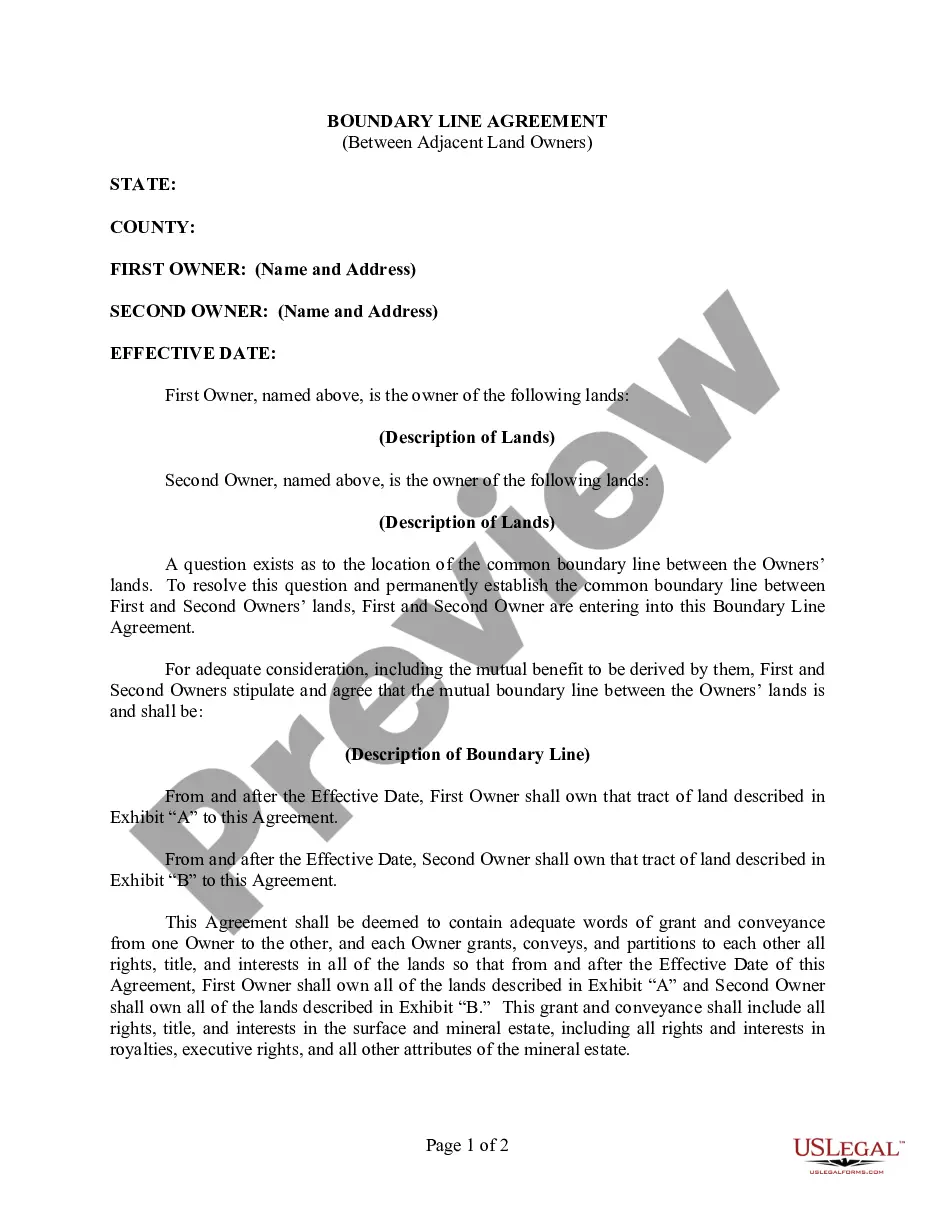
Boundary Line For In Contra Costa
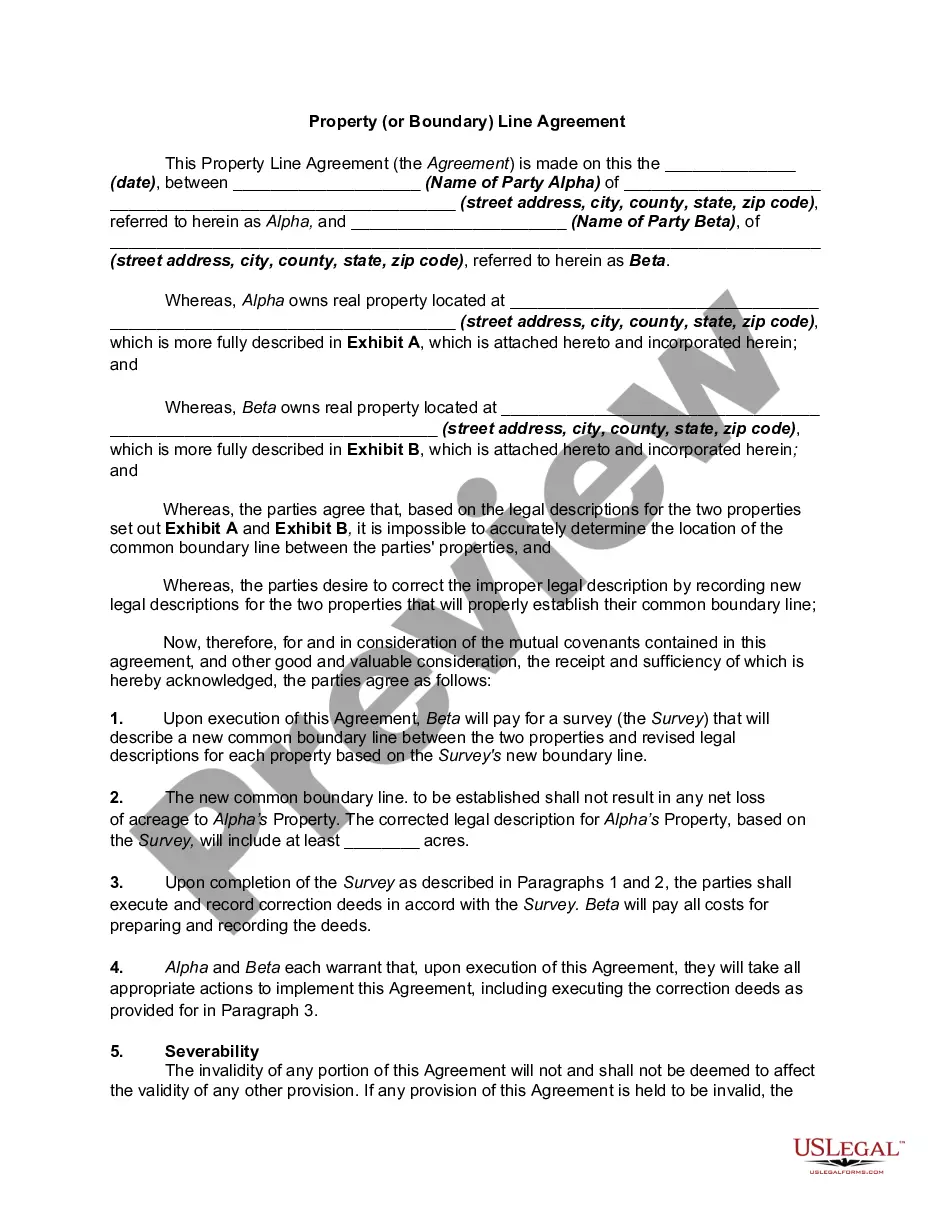
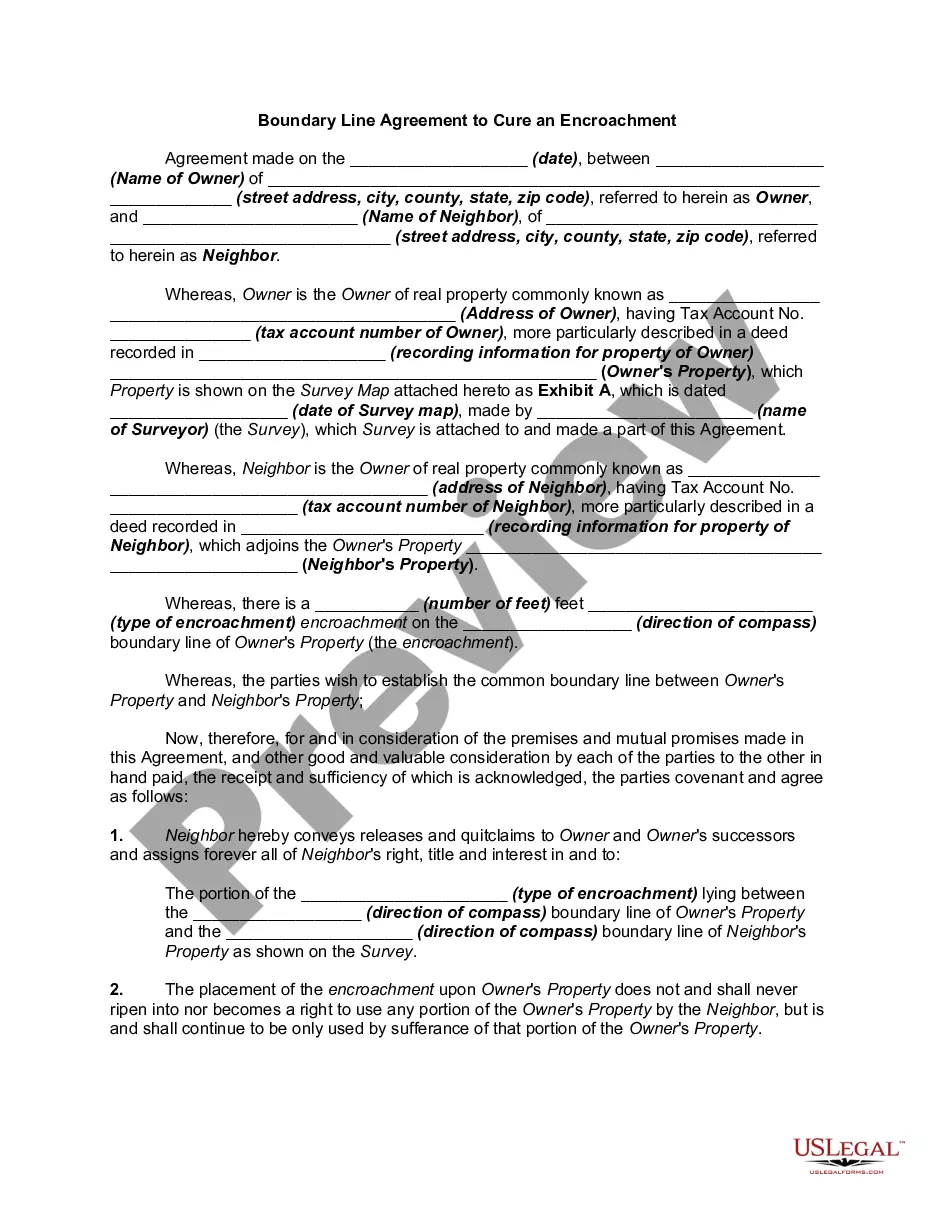
Description


Get your form ready online
Our built-in tools help you complete, sign, share, and store your documents in one place.
Make edits, fill in missing information, and update formatting in US Legal Forms—just like you would in MS Word.
Download a copy, print it, send it by email, or mail it via USPS—whatever works best for your next step.
Sign and collect signatures with our SignNow integration. Send to multiple recipients, set reminders, and more. Go Premium to unlock E-Sign.
If this form requires notarization, complete it online through a secure video call—no need to meet a notary in person or wait for an appointment.
We protect your documents and personal data by following strict security and privacy standards.

Make edits, fill in missing information, and update formatting in US Legal Forms—just like you would in MS Word.

Download a copy, print it, send it by email, or mail it via USPS—whatever works best for your next step.

Sign and collect signatures with our SignNow integration. Send to multiple recipients, set reminders, and more. Go Premium to unlock E-Sign.

If this form requires notarization, complete it online through a secure video call—no need to meet a notary in person or wait for an appointment.

We protect your documents and personal data by following strict security and privacy standards.
Looking for another form?









Form popularity
FAQ
A variance is a request for relief from the strict application of zoning regulations to alleviate an unusual hardship to a particular property. For example, a homeowner may request that a room addition be permitted closer to the property line than the Zoning Ordinance would normally allow.
Over the phone You can also call the Contra Costa Crisis Center at 211, 1-800-833-2900, or text HOPE to 20121.
Ing to AB-1482, the Tenant Protection Act of 2019, landlords in California are only permitted to increase rent by 5% plus 10% or the annual inflation rate, whichever is lower.
Storage sheds, tool sheds and play houses that have a foot print of less than 120 square feet do not require a building permit however do have other restrictions. .
Per the California Residential Code detached accessory structure not exceeding 120 square feet does not require a building permit if there is no plumbing, electrical, and or mechanical equipment. Please note, Sheds and/or Structures under 120 square feet do require a Planning Permit.
Storage sheds that are less than 120 square feet and eight feet in height do not require a building permit, but still require Planning Division approval through an over-the-counter application called a Zoning Clearance.
8. Do I need a permit for a storage shed or small building? One-story detached accessory buildings used as tool and storage sheds, playhouses, and similar uses, provided the floor area does not exceed 120 square feet, do not require a Building Permit (per California Building Code 105.2 "Work Exempt from Permit").
In Contra Costa County, the median income for a family of four is $147,900/year (as of June 2023). Here are examples of who needs affordable housing: ➢ A single person earning $24/hour ($50,000/year) would be considered Very Low-Income at 50% of the area median income or AMI.
Loans above $1,209,750 for 1-unit properties in Contra Costa County are considered jumbo loans. Jumbo loans can have more difficult qualifying requirements, such as mandatory reserve funds and lower maximum debt-to-income ratios.
An area, identified through official public policy, within which urban development will be allowed during a specified time period.
