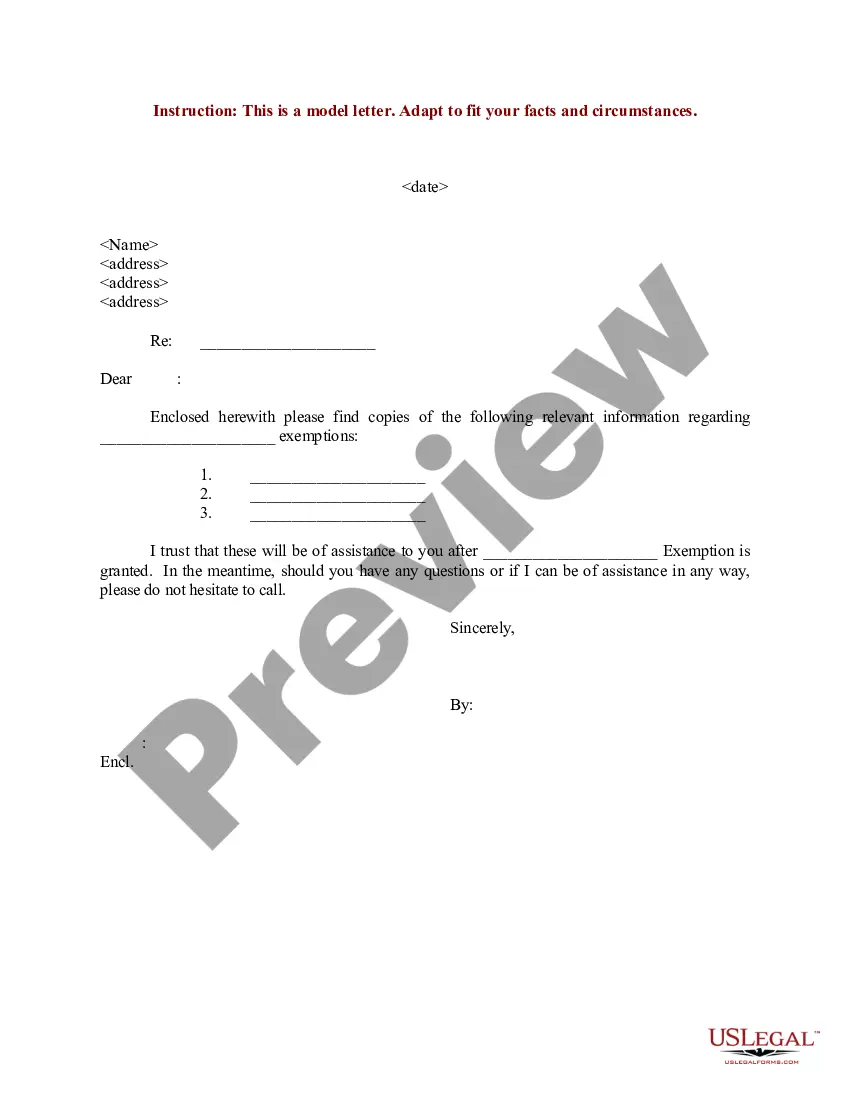
Letter Settlement Estate Sample For Trust In Michigan
Description


Get your form ready online
Our built-in tools help you complete, sign, share, and store your documents in one place.
Make edits, fill in missing information, and update formatting in US Legal Forms—just like you would in MS Word.
Download a copy, print it, send it by email, or mail it via USPS—whatever works best for your next step.
Sign and collect signatures with our SignNow integration. Send to multiple recipients, set reminders, and more. Go Premium to unlock E-Sign.
If this form requires notarization, complete it online through a secure video call—no need to meet a notary in person or wait for an appointment.
We protect your documents and personal data by following strict security and privacy standards.

Make edits, fill in missing information, and update formatting in US Legal Forms—just like you would in MS Word.

Download a copy, print it, send it by email, or mail it via USPS—whatever works best for your next step.

Sign and collect signatures with our SignNow integration. Send to multiple recipients, set reminders, and more. Go Premium to unlock E-Sign.

If this form requires notarization, complete it online through a secure video call—no need to meet a notary in person or wait for an appointment.

We protect your documents and personal data by following strict security and privacy standards.
Looking for another form?






Form popularity
FAQ
Yes. Under the Supervision of Trustees for Charitable Purposes Act, a charitable trustee must register a charitable trust within two months of receiving assets. Thus, for a revocable trust with charitable beneficiaries, a trustee has two months following the death of the grantor within which to register.
When an estate is under unsupervised administration, it can be closed with a Petition for Complete Estate Settlement . Or you can use the Sworn Statement to Close Unsupervised Administration to close the estate. But you will also need to file a Certificate of Completion .
(g) That, if the estate is not settled within 1 year after the personal representative's appointment, within 28 days after the anniversary of the appointment, the personal representative must file with the court and send to each interested person a notice that the estate remains under administration and must specify ...
Use the following steps to set it up. Step 1: Choose between individual or joint trust. Step 2: Decide what property to include in the trust. Step 3: Choose a trustee. Step 4: Decide who will be the trust's beneficiaries. Step 5: Create a living trust document. Step 6: Sign the trust document in front of a notary public.
If a trust instrument or certificate of trust under section 7913 of the estates and protected individuals code, 1998 PA 386, MCL 700.7913, accompanies an instrument as described in section 1, the trust instrument or certificate of trust under section 7913 of the estates and protected individuals code, 1998 PA 386, MCL ...
The forms must be filed in the probate court. See also indexes for general, general civil, and general probate forms for other forms which are used in probate estate and trust proceedings as appropriate.
Selecting the wrong trustee is easily the biggest blunder parents can make when setting up a trust fund. As estate planning attorneys, we've seen first-hand how this critical error undermines so many parents' good intentions.

