Directors Rules In Phoenix
Description


Get your form ready online
Our built-in tools help you complete, sign, share, and store your documents in one place.
Make edits, fill in missing information, and update formatting in US Legal Forms—just like you would in MS Word.
Download a copy, print it, send it by email, or mail it via USPS—whatever works best for your next step.
Sign and collect signatures with our SignNow integration. Send to multiple recipients, set reminders, and more. Go Premium to unlock E-Sign.
If this form requires notarization, complete it online through a secure video call—no need to meet a notary in person or wait for an appointment.
We protect your documents and personal data by following strict security and privacy standards.
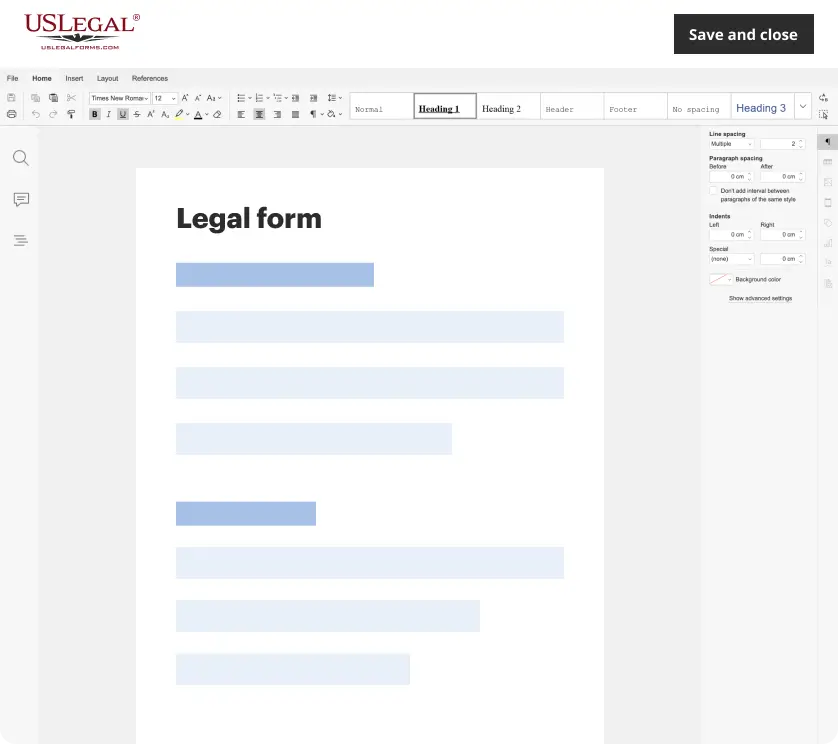
Make edits, fill in missing information, and update formatting in US Legal Forms—just like you would in MS Word.
Download a copy, print it, send it by email, or mail it via USPS—whatever works best for your next step.
Sign and collect signatures with our SignNow integration. Send to multiple recipients, set reminders, and more. Go Premium to unlock E-Sign.

If this form requires notarization, complete it online through a secure video call—no need to meet a notary in person or wait for an appointment.
We protect your documents and personal data by following strict security and privacy standards.
Looking for another form?



Form popularity
FAQ
General Motors, an example of a phoenix company (vis a vis Motors Liquidation Company, the "original" General Motors).
A phoenix company is one that literally 'rises from the ashes' of another company, when existing directors buy the underlying assets.
A phoenix company describes a business that has been purchased out a formal insolvency process such as administration or liquidation, often by the existing directors. The term refers to a phoenix rising from the ashes, but there are strict rules that govern the use of this process.
By forming a phoenix company, the insolvent company's business is transferred to the new entity, without transferral of its debts. They can begin to trade while formal insolvency proceedings relating to the original insolvent company are launched.
In general, they begin trading after the insolvent business and the company's assets have been purchased. This is part of the administration or liquidation process by shareholders or company directors. There are multiple regulations surrounding the launch of a phoenix company.
Phoenix companies often arise after liquidation or administration. In liquidation, the company ceases trading, and assets are sold to repay creditors. Administration aims to rescue the company or achieve better outcomes for creditors, often through a structured sale to a phoenix company.
Phoenixing causes significant harm to the community because: Employees miss out on wages, superannuation and entitlements. Other businesses are put at a competitive disadvantage. Suppliers or sub-contractors are left unpaid.
About illegal phoenix activity Illegal phoenix activity is when a company is liquidated, wound up or abandoned to avoid paying its debts. A new company is then started to continue the same business activities without the debt. Illegal phoenix activity can occur in any industry or location.
A phoenix company describes a business that has been purchased out a formal insolvency process such as administration or liquidation, often by the existing directors. The term refers to a phoenix rising from the ashes, but there are strict rules that govern the use of this process.
