Listing Agreement Real Estate With Multiple Owners In Middlesex
Description


Get your form ready online
Our built-in tools help you complete, sign, share, and store your documents in one place.
Make edits, fill in missing information, and update formatting in US Legal Forms—just like you would in MS Word.
Download a copy, print it, send it by email, or mail it via USPS—whatever works best for your next step.
Sign and collect signatures with our SignNow integration. Send to multiple recipients, set reminders, and more. Go Premium to unlock E-Sign.
If this form requires notarization, complete it online through a secure video call—no need to meet a notary in person or wait for an appointment.
We protect your documents and personal data by following strict security and privacy standards.

Make edits, fill in missing information, and update formatting in US Legal Forms—just like you would in MS Word.

Download a copy, print it, send it by email, or mail it via USPS—whatever works best for your next step.

Sign and collect signatures with our SignNow integration. Send to multiple recipients, set reminders, and more. Go Premium to unlock E-Sign.

If this form requires notarization, complete it online through a secure video call—no need to meet a notary in person or wait for an appointment.

We protect your documents and personal data by following strict security and privacy standards.
Looking for another form?



Form popularity
FAQ
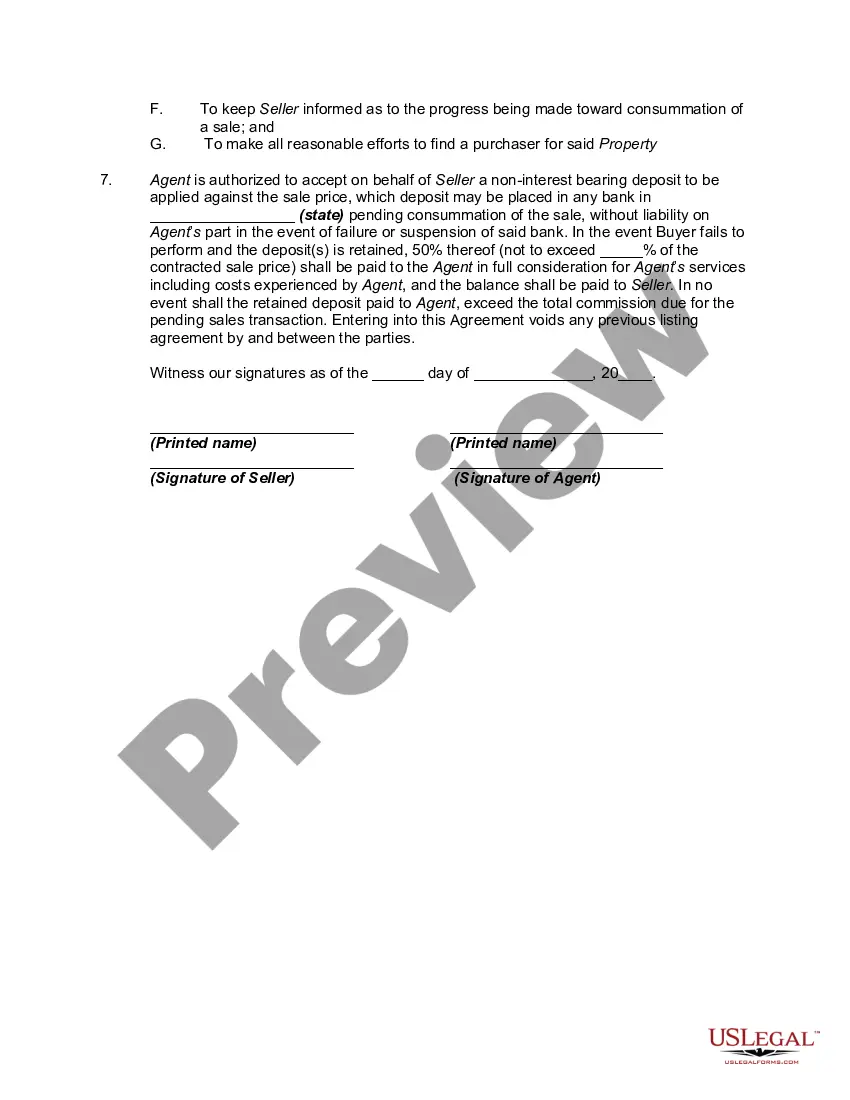
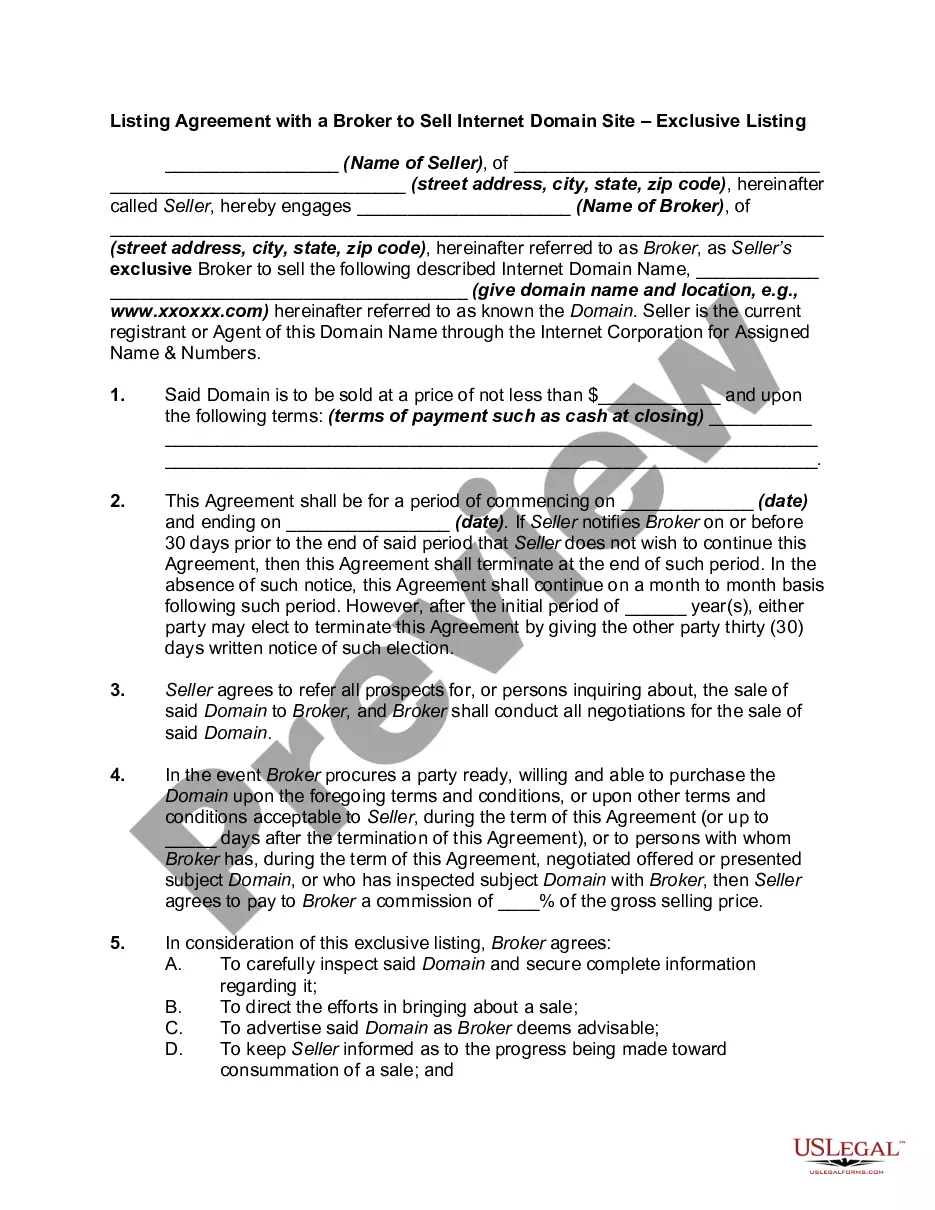
An exclusive listing usually describes a duration in which the agent is going to be given the exclusive rights to sell the home. In most cases it is three months, but the agreement can be modified, depending on the market and interest in the home.
The most common is the Exclusive Right to Sell or Lease Listing Agreement. The means there is an agency agreement between the seller and the broker, granting the broker the exclusive right to represent the seller in the sale or lease of the seller's property.
2. Exclusive right to sell listing agreement. An exclusive right to sell listing is the most widely-used listing agreement. Under this agreement, the broker has the exclusive right to market the property for a specified period of time.
The most commonly used form of real estate listing agreement is the exclusive authorization and right to sell listing. This type of listing gives the real estate agent the exclusive right to represent the seller and earn a commission if the property is sold during a specified period, regardless of who finds the buyer.
Exclusive Rights-to-Sell Listing This gives the real estate agent the exclusive rights to market your home and list it on MLS. They will receive the full commission as long the home is sold within the designated timeframe. This is the preferred agreement for most real estate agents.
The exclusive right-to-represent contract is the most common buyer representation agreement and best protects the agent. Buyer's agents make significant time and resource investments.
Two Realtors can't sell the house at the same time as the decision to accept an offer is decided by the homeowner. Two Realtors can simultaneously present offers, but they both can't sell it. But it's not like their contracts would allow for that.
MLS access is only available to licensed real estate agents and brokers and is designed to safeguard sensitive details like sellers' and buyers' personal information, security codes, and showing schedules. This exclusivity also stems from the financial costs associated with maintaining the MLS.
The exclusive right to sell listing agreement is the most common type of agreement in real estate. Under this arrangement, the broker is given exclusive rights to market the property for a set period.
