Agent For Commercial Lease In Michigan
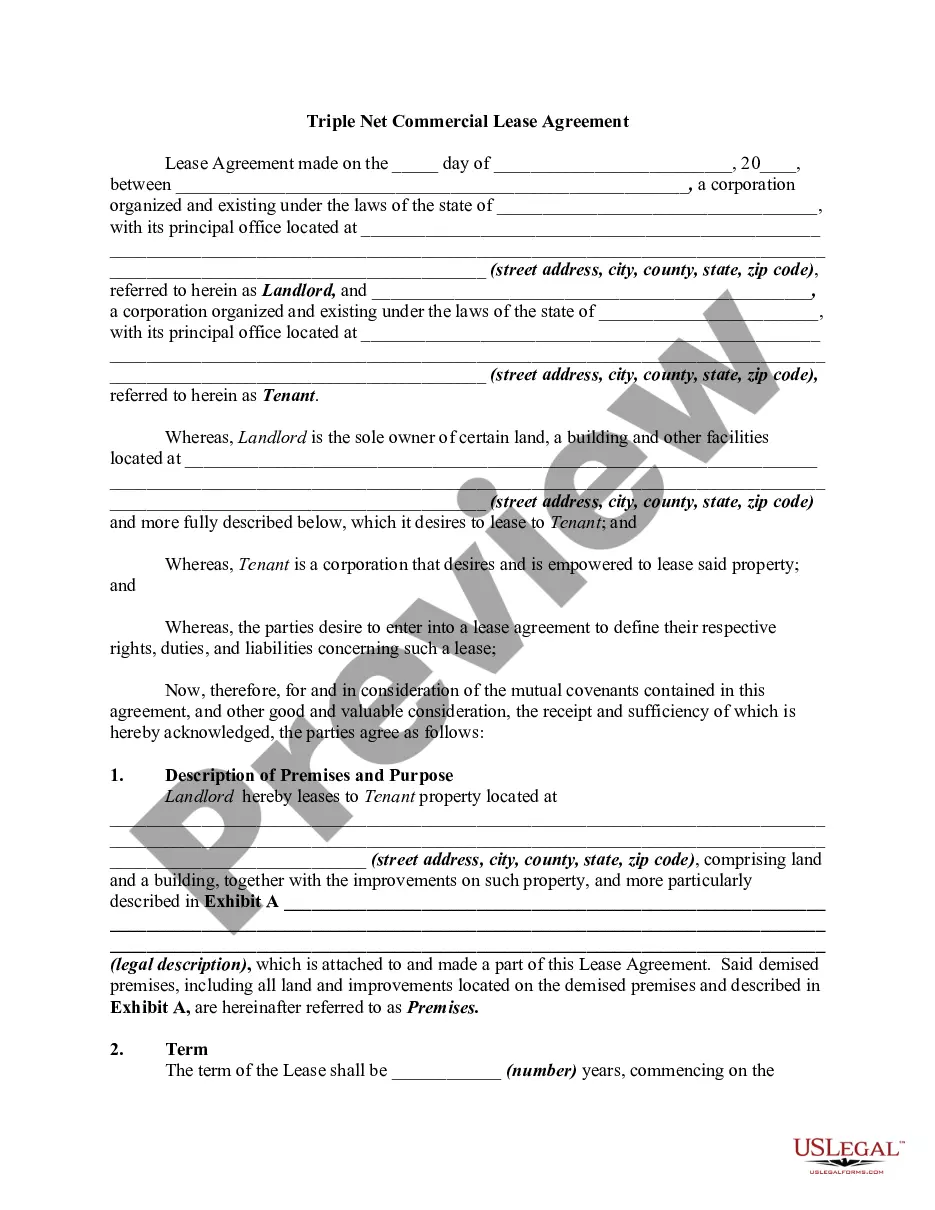
Description


Get your form ready online
Our built-in tools help you complete, sign, share, and store your documents in one place.
Make edits, fill in missing information, and update formatting in US Legal Forms—just like you would in MS Word.
Download a copy, print it, send it by email, or mail it via USPS—whatever works best for your next step.
Sign and collect signatures with our SignNow integration. Send to multiple recipients, set reminders, and more. Go Premium to unlock E-Sign.
If this form requires notarization, complete it online through a secure video call—no need to meet a notary in person or wait for an appointment.
We protect your documents and personal data by following strict security and privacy standards.

Make edits, fill in missing information, and update formatting in US Legal Forms—just like you would in MS Word.

Download a copy, print it, send it by email, or mail it via USPS—whatever works best for your next step.

Sign and collect signatures with our SignNow integration. Send to multiple recipients, set reminders, and more. Go Premium to unlock E-Sign.

If this form requires notarization, complete it online through a secure video call—no need to meet a notary in person or wait for an appointment.

We protect your documents and personal data by following strict security and privacy standards.
Looking for another form?







Form popularity
FAQ
An assignment transfers one party's interest and obligations under a lease to another party. During these tenant transfers, the new tenant takes on the lease responsibilities, including paying rent and property maintenance of the leased premises, and the original tenant is released from most of their duties.
Businesses may consider lease assignment for various reasons, such as relocation, financial constraints, or changes in business needs. For instance, a company experiencing rapid growth may seek more extensive premises, making lease assignment an attractive option to exit the current arrangement.
Review the Lease Agreement. The assignor (current tenant) should review the existing lease agreement to understand the terms and conditions associated with the lease assignment. Obtain Landlord's Consent. Negotiate Terms. Deed of Assignment. Land Registry Notification. Completion and Handover.
Educational Requirements and Academic Pathways In many states, Leasing Agents must obtain a real estate license, which involves completing pre-licensing courses and passing a state exam. Continuing education courses are also important to stay updated on real estate laws, regulations, and market trends.
In Michigan, property managers must often operate under a real estate broker's license if they are handling lease negotiations or property rentals. They must be at least 18 years old, complete 40 hours of pre-licensing coursework, and pass the real estate examination.
No. Michigan Lease Agreements do not need to be notarized. The Rental Contract is legally binding as long as it's signed by both the Landlord, or the lessor, and the Tenant, or the lessee.
The primary difference between a leasing agent and a property manager lies in the scope of their responsibilities. While leasing agents focus on the initial tenant placement, property managers handle the ongoing management of the property and tenant relationships.
Gross Lease: In gross leases, the landlord will be responsible for paying all of the expenses surrounding the property, including property taxes, area expenses, and insurance. On the other hand, the tenant will only be responsible for paying monthly rent.
An assignment is a full transfer of the lease between the tenant and the assignee. Therefore, since the tenant no longer has any ownership interest in the property, there is no longer any relationship between the landlord and the tenant as far as the property ownership is concerned.
Negotiating a favorable lease agreement is crucial for any business owner seeking to lease commercial space. However, the intricate world of commercial real estate leases can be difficult to navigate without the necessary expertise. This is where a commercial real estate agency can be of great assistance.