Proof Of Residency Without Mail In Pennsylvania
Description
Get your form ready online
Our built-in tools help you complete, sign, share, and store your documents in one place.
Make edits, fill in missing information, and update formatting in US Legal Forms—just like you would in MS Word.
Download a copy, print it, send it by email, or mail it via USPS—whatever works best for your next step.
Sign and collect signatures with our SignNow integration. Send to multiple recipients, set reminders, and more. Go Premium to unlock E-Sign.
If this form requires notarization, complete it online through a secure video call—no need to meet a notary in person or wait for an appointment.
We protect your documents and personal data by following strict security and privacy standards.

Make edits, fill in missing information, and update formatting in US Legal Forms—just like you would in MS Word.

Download a copy, print it, send it by email, or mail it via USPS—whatever works best for your next step.

Sign and collect signatures with our SignNow integration. Send to multiple recipients, set reminders, and more. Go Premium to unlock E-Sign.

If this form requires notarization, complete it online through a secure video call—no need to meet a notary in person or wait for an appointment.

We protect your documents and personal data by following strict security and privacy standards.
Looking for another form?


Form popularity
FAQ
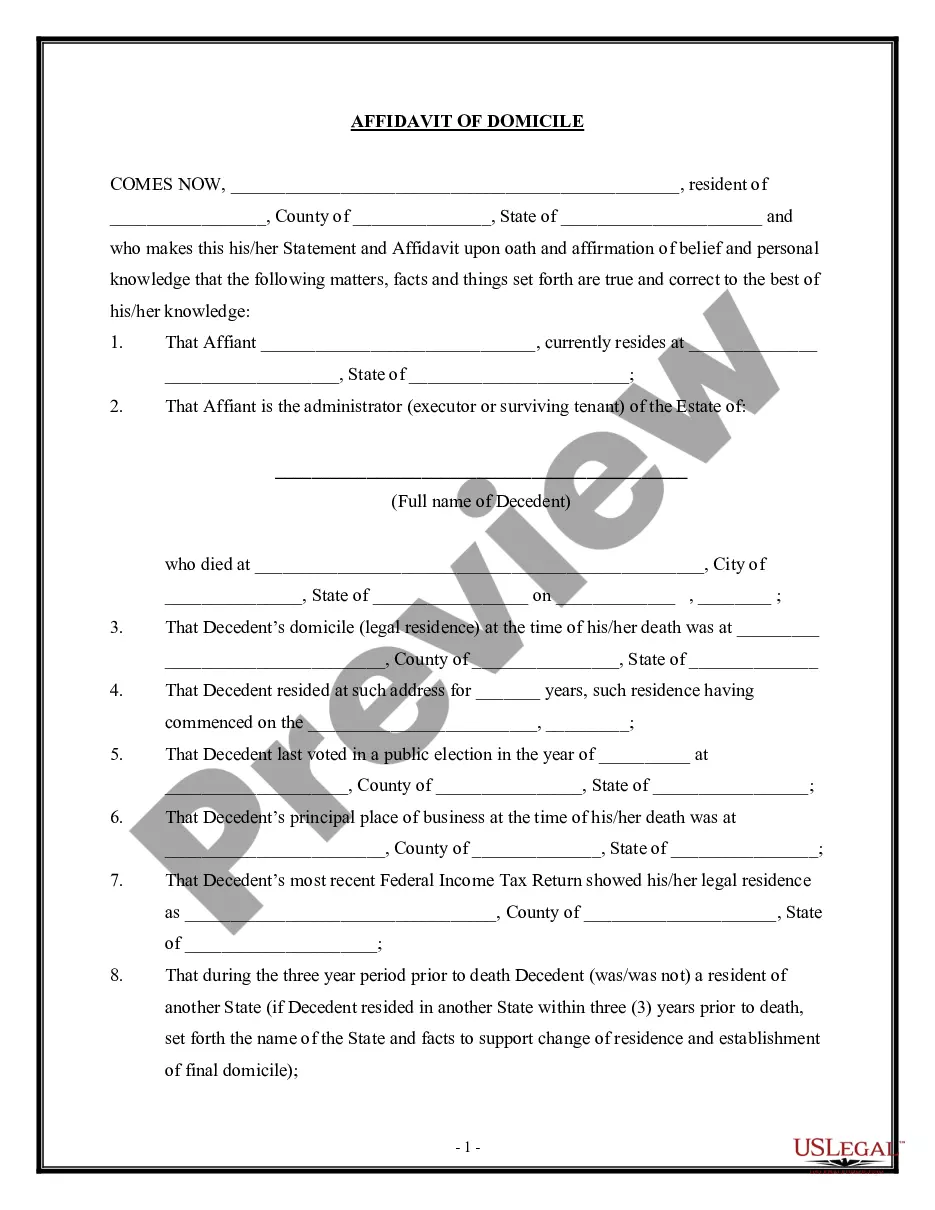
The following things can be used to prove an individual's residence: A rent receipt. A receipt for mortgage or utility payments. A deed. A lease agreement. A driver's license. A church record. An affidavit from someone who knows the applicant. A tax office record.
Two acceptable proofs of residency in Pennsylvania, such as: Utility bills. Bank statement.
A utility bill, credit card statement, lease agreement or mortgage statement will all work to prove residency. If you've gone paperless, print a billing statement from your online account.
In order to do this, the only documents that may be used to identify the individual making the application are a valid PA Photo Driver's License, a valid PA Photo Identification Card, a valid PA Photo Exempt Driver's License, a valid PA Photo Exempt Identification Card, a valid Pennsylvania 15-day temporary internet ...
A receipt for mortgage or utility payments. A deed. A lease agreement. A driver's license.
Proof of your Pennsylvania Residency PA vehicle registration card. Auto insurance card. A computer-generated utility bill showing your name and address.
An individual is considered a resident rather than a part- year resident if that person was physically present in PA for at least 183 days or more and maintained a permanent place of abode in PA at any time during the tax year.
The following things can be used to prove an individual's residence: A rent receipt. A receipt for mortgage or utility payments. A deed. A lease agreement. A driver's license. A church record. An affidavit from someone who knows the applicant. A tax office record.

