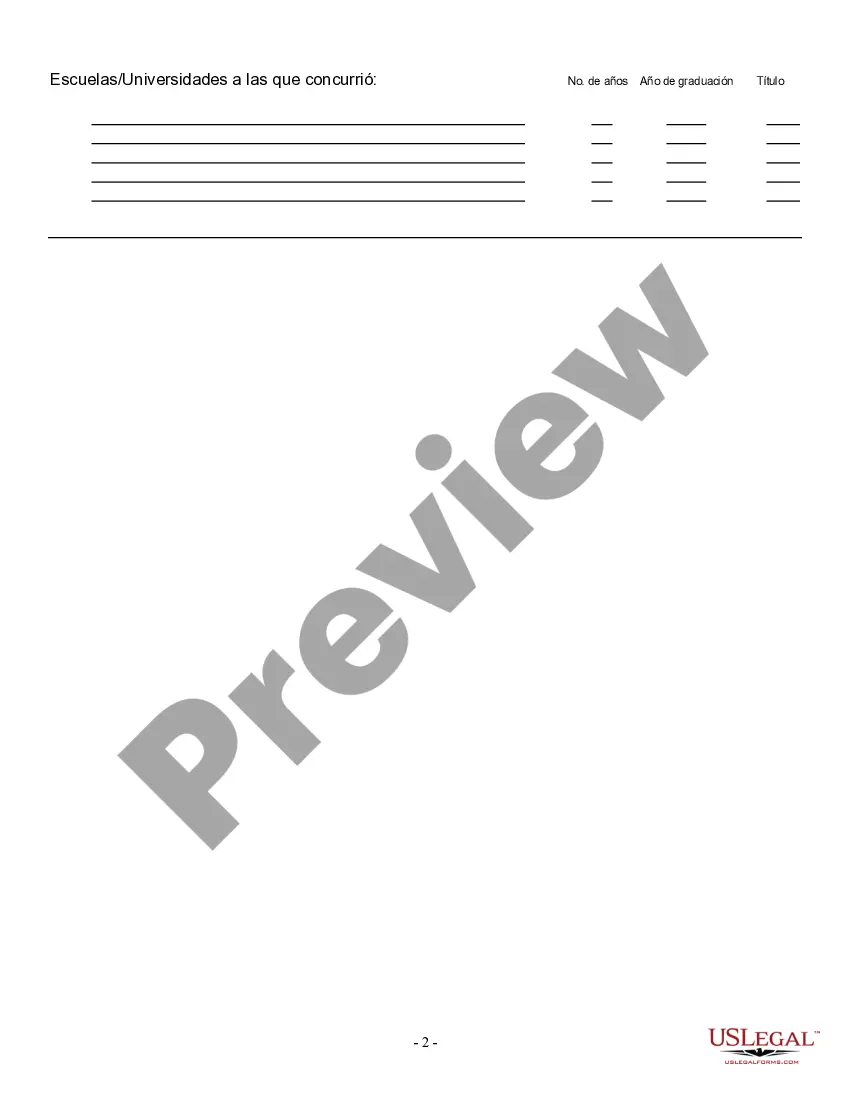
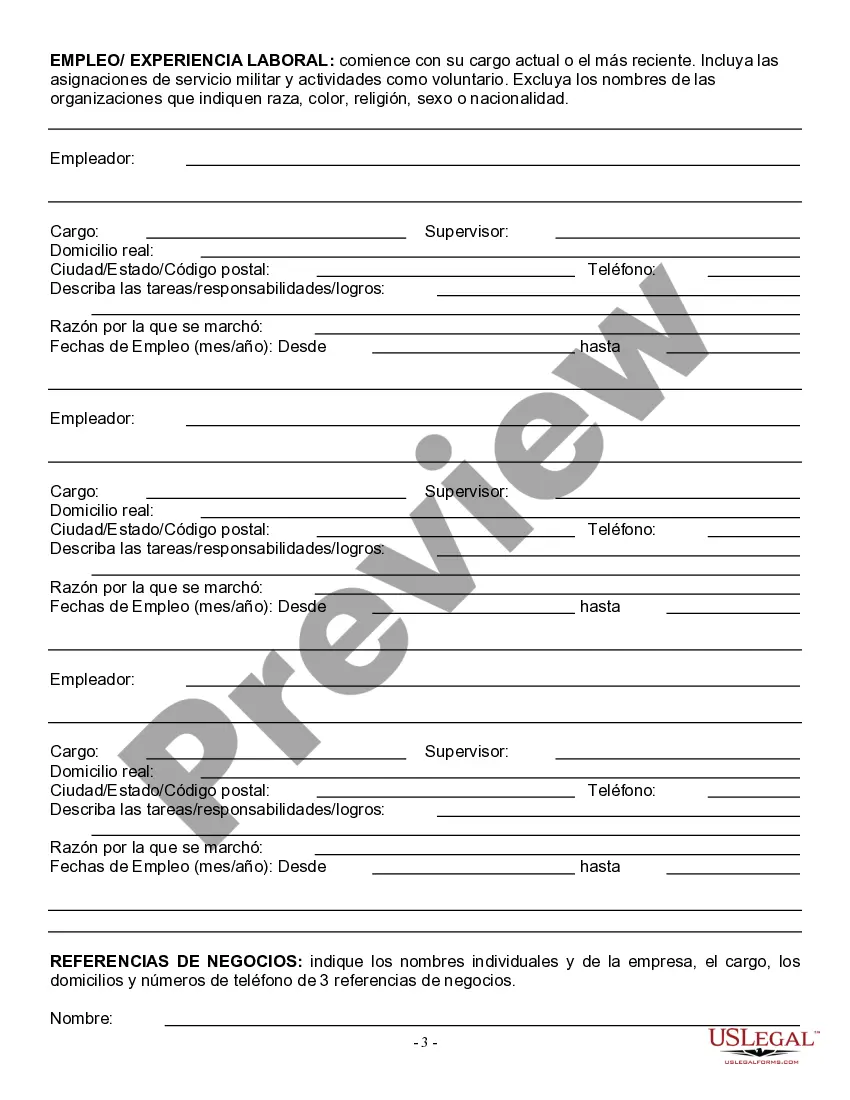
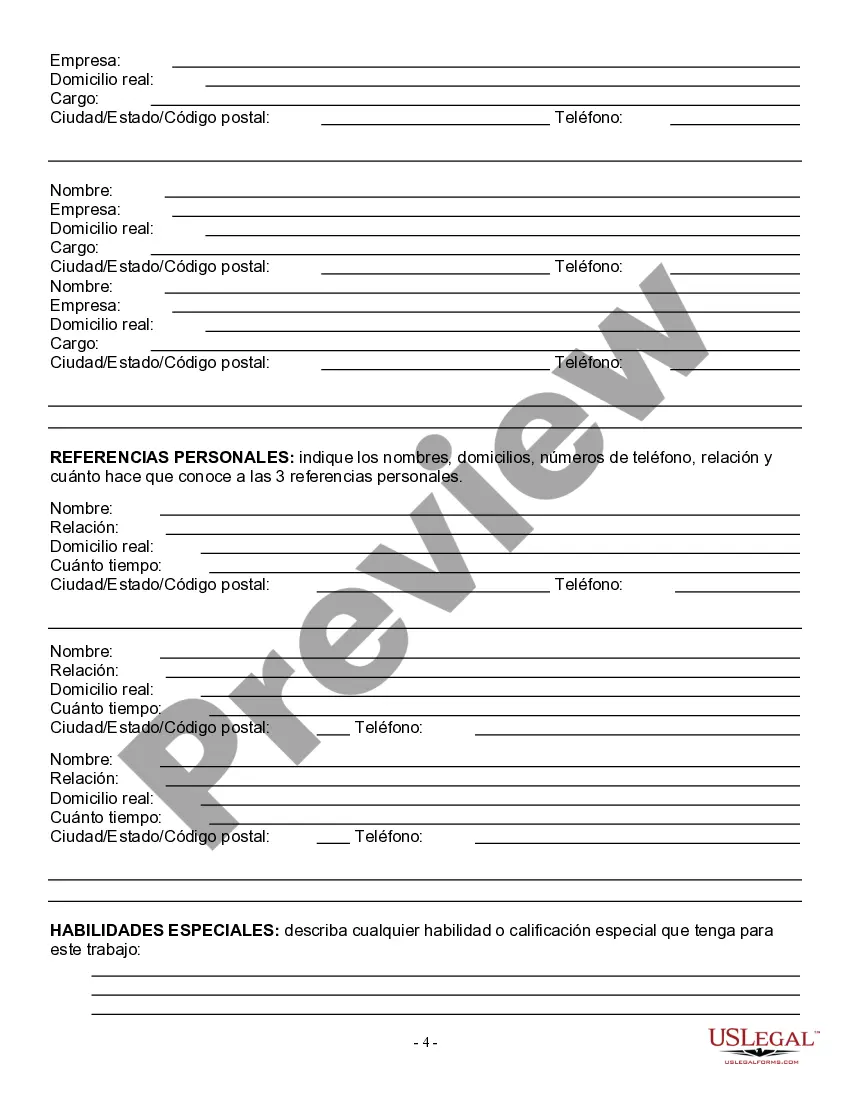
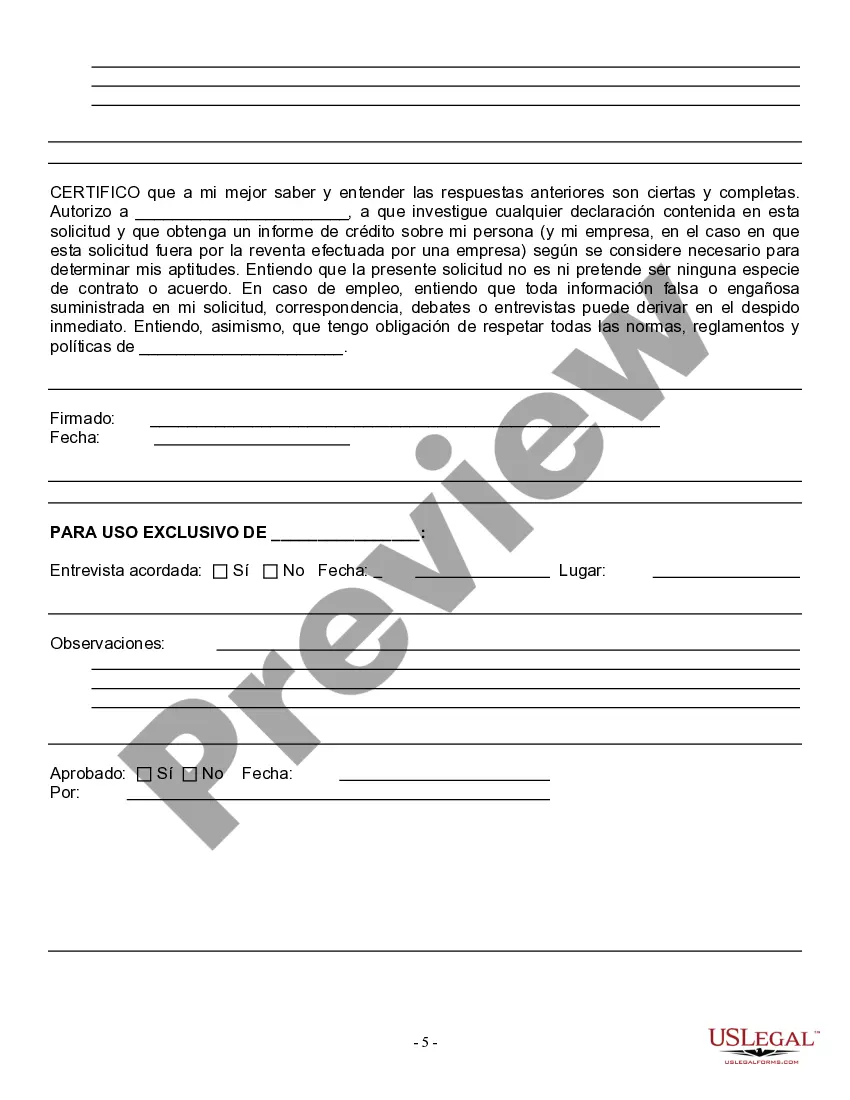
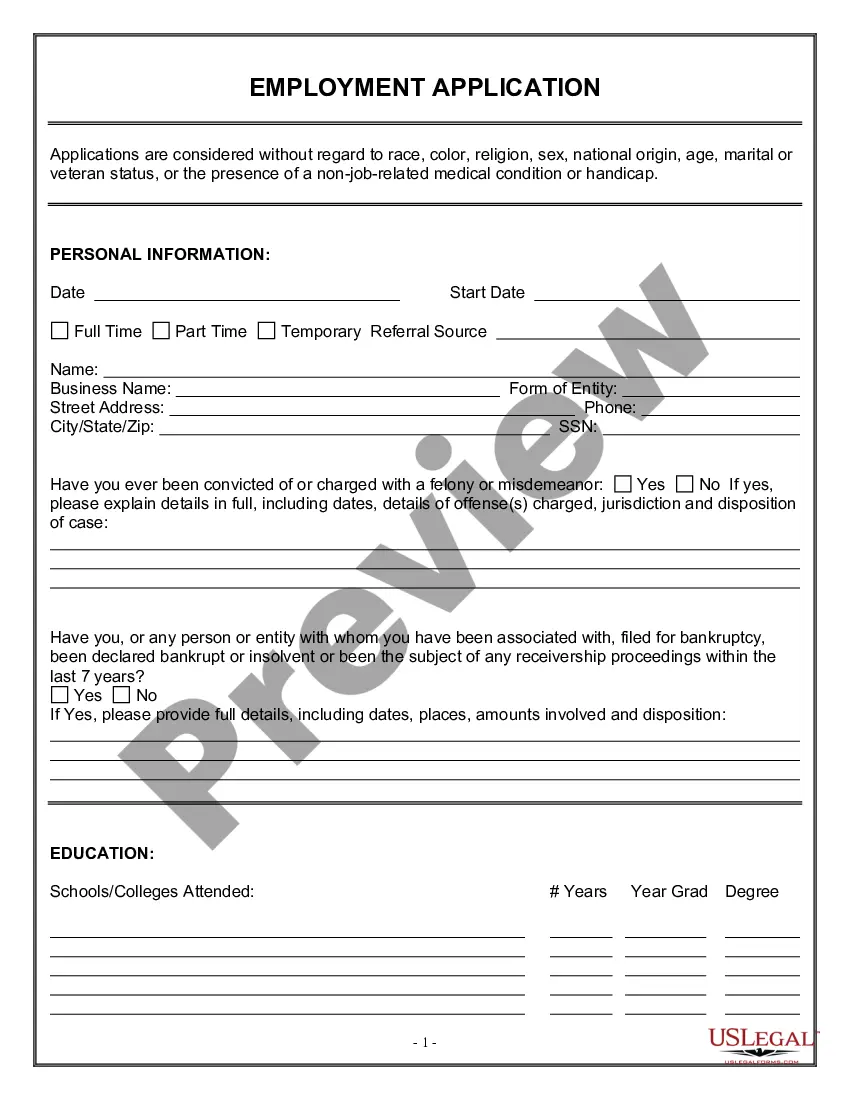
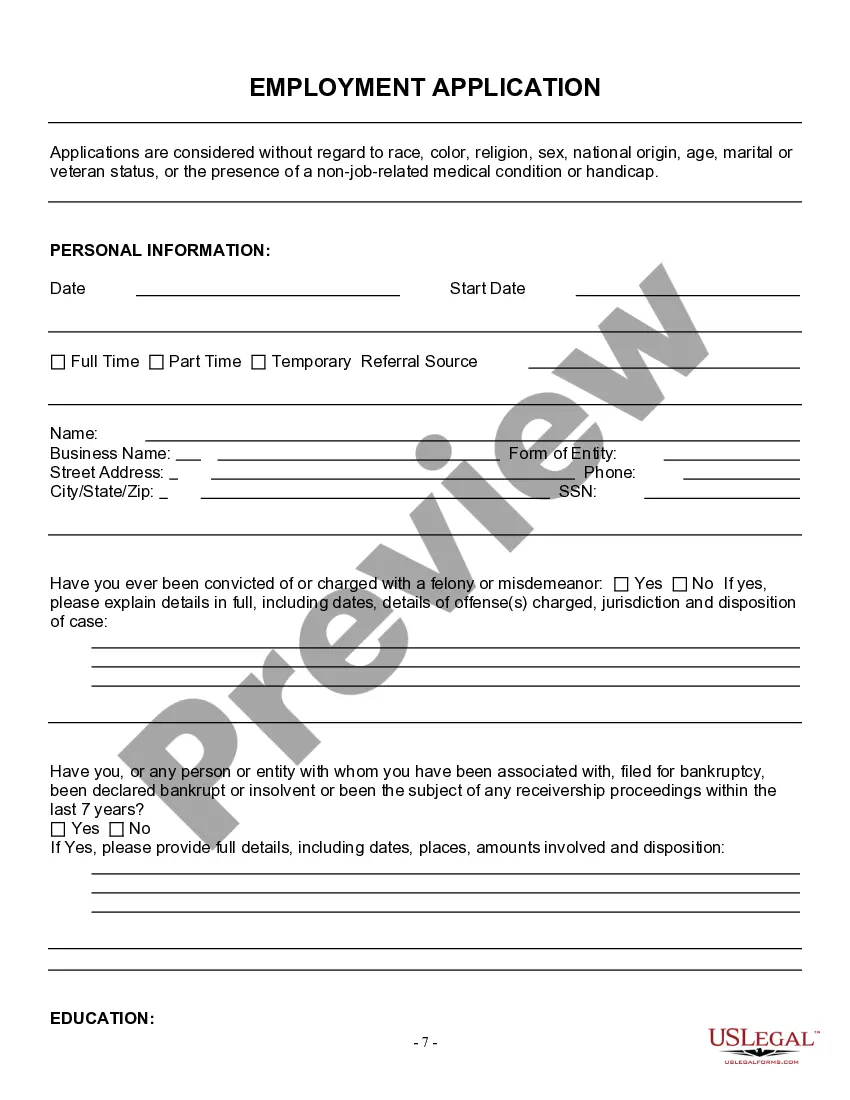
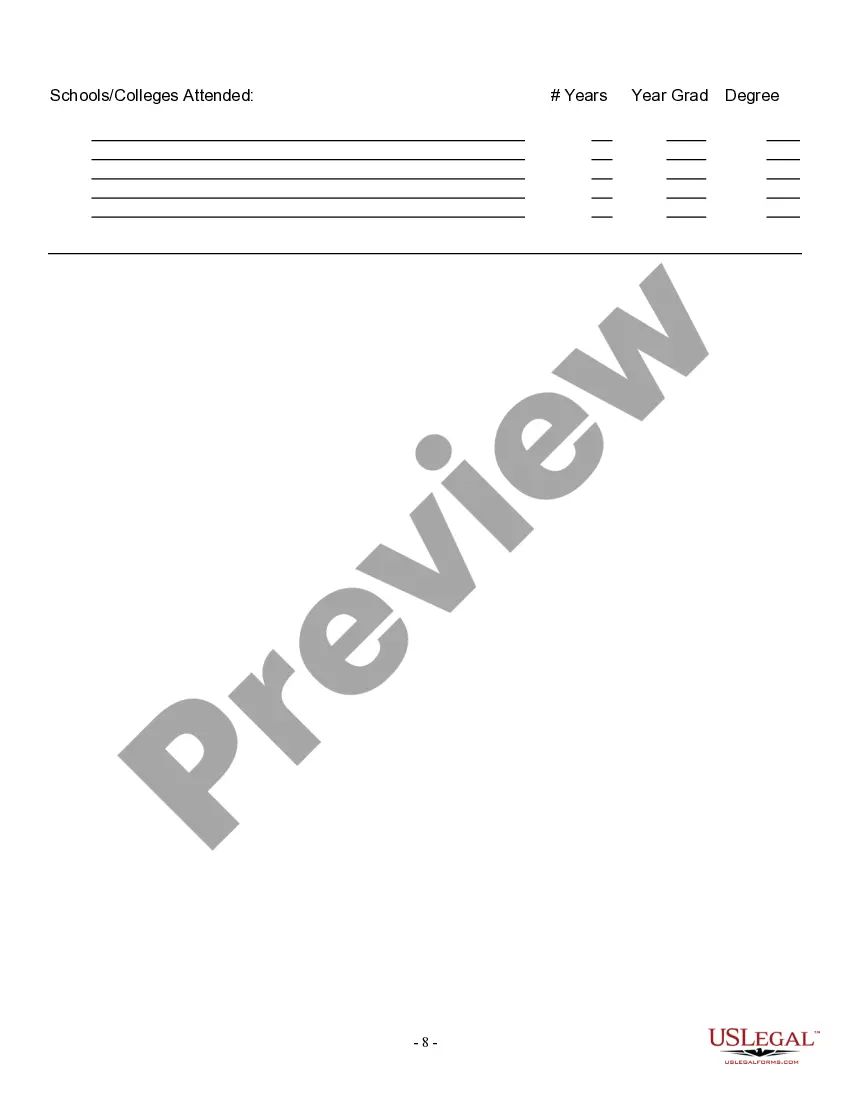
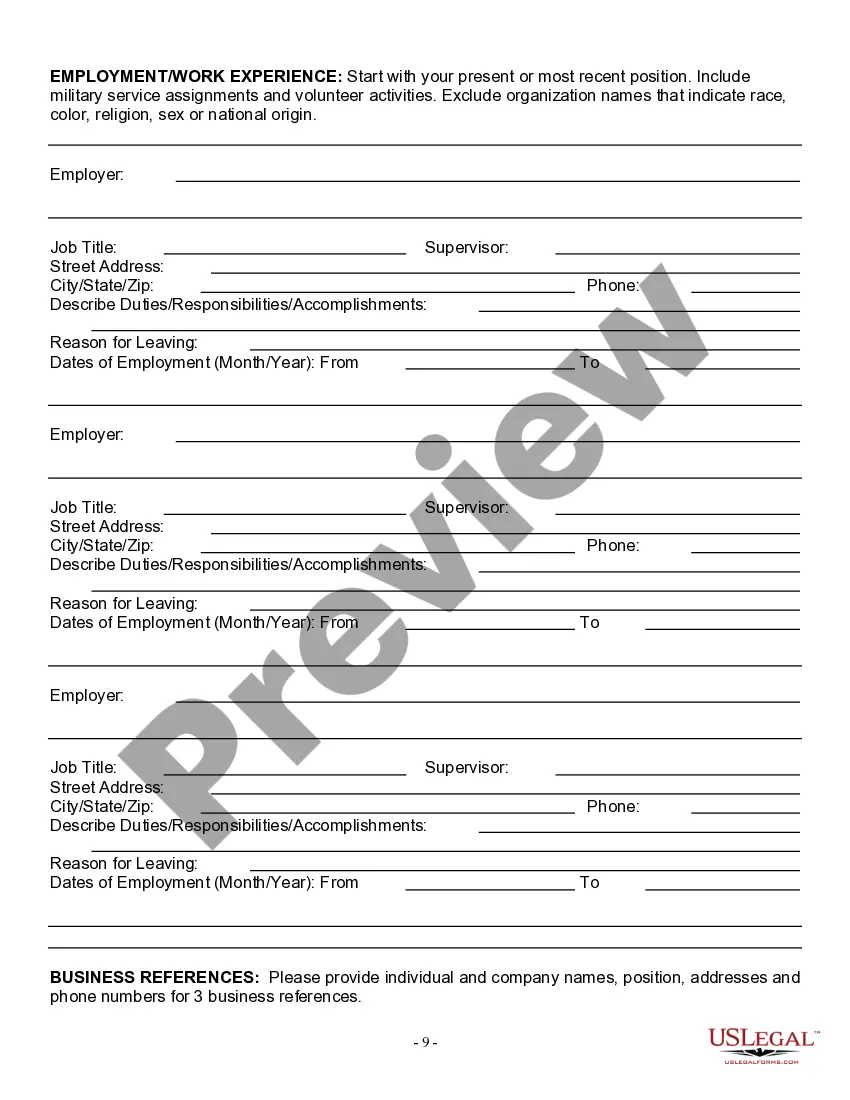
Spanish Employment Application With At-will Statement In Florida
Description

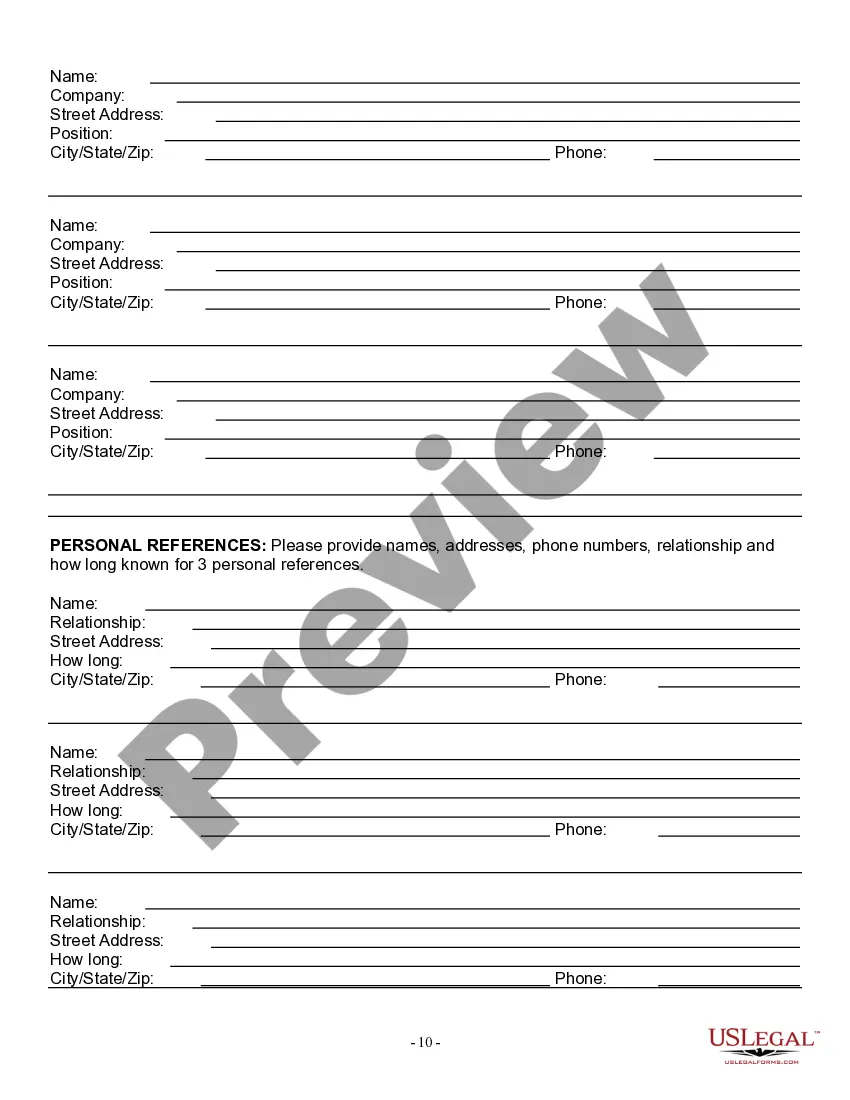


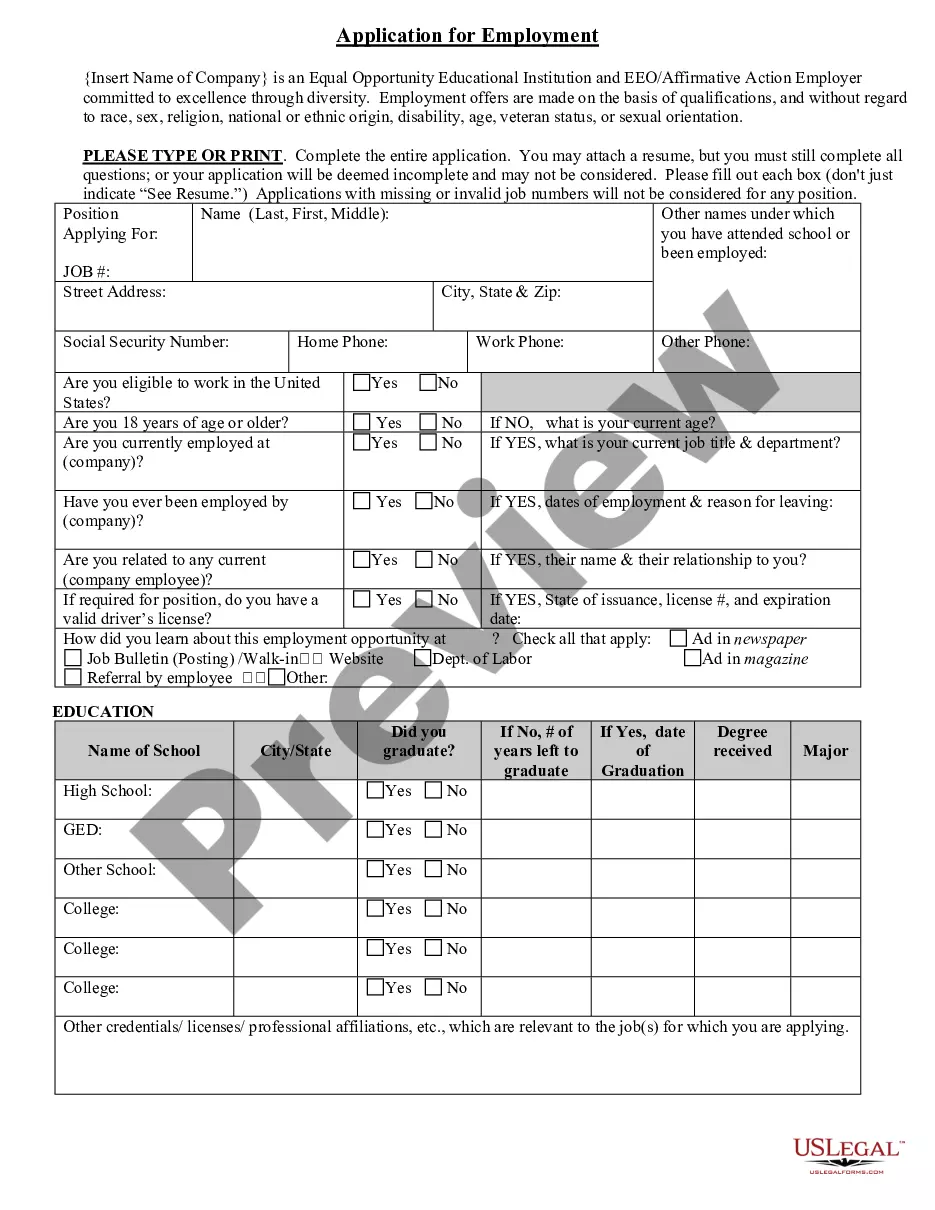

Get your form ready online
Our built-in tools help you complete, sign, share, and store your documents in one place.
Make edits, fill in missing information, and update formatting in US Legal Forms—just like you would in MS Word.
Download a copy, print it, send it by email, or mail it via USPS—whatever works best for your next step.
Sign and collect signatures with our SignNow integration. Send to multiple recipients, set reminders, and more. Go Premium to unlock E-Sign.
If this form requires notarization, complete it online through a secure video call—no need to meet a notary in person or wait for an appointment.
We protect your documents and personal data by following strict security and privacy standards.

Make edits, fill in missing information, and update formatting in US Legal Forms—just like you would in MS Word.

Download a copy, print it, send it by email, or mail it via USPS—whatever works best for your next step.

Sign and collect signatures with our SignNow integration. Send to multiple recipients, set reminders, and more. Go Premium to unlock E-Sign.

If this form requires notarization, complete it online through a secure video call—no need to meet a notary in person or wait for an appointment.

We protect your documents and personal data by following strict security and privacy standards.
Looking for another form?






Form popularity
FAQ
Firing a worker due to his or her age, race, sexual orientation or religious beliefs are at will employment exceptions in Florida because they break federal and state law on discriminatory employment practices.
The Form I-9 process, managed by the U.S. Citizenship and Immigration Services , will help you verify your employee's identity and employment authorization.
Employers in the US can hire foreign workers for temporary or seasonal jobs through the Department of Labor's (DOL) H-2A and H-2B programs when there are no US workers available to do the work. Before hiring foreign workers, employers must get approval from several government agencies.
Florida is what's known as an “at-will” employment state. This means you can quit a job or be fired from a job for any reason, as long as it does not run afoul of discrimination laws and certain other legal requirements.
In Florida, employment is “at will”, meaning that either the employer or the employee can end the employment relationship at any time without reason unless you have an employment contract or union agreement governing the terms of your employment or work for a government employer.
Required documents National visa application form. . Photograph. Valid, unexpired passport. Copy of the AUTORIZACIÓN DE RESIDENCIA Y TRABAJO POR CUENTA AJENA. Work contract. Criminal record check certificate. Medical certificate. Proof of residence in the consular district.
The standard “two weeks' notice” is not required. (Although, unless you are leaving a hostile environment or unsafe working conditions, agreeing to a “notice” work period when quitting is usually better than burning bridges.)
At-will employment is the law of the land throughout much of the United States. Even though Florida is an at-will employment state, an employee may be protected against firing without cause by an employment contract or union agreement or if they work for the government.
No. The employer can demand that applicants be bilingual as a condition of employment.
Many courts and governmental agencies consider language discrimination to be a kind of discrimination on the basis of national origin, which is prohibited by federal and California law.
