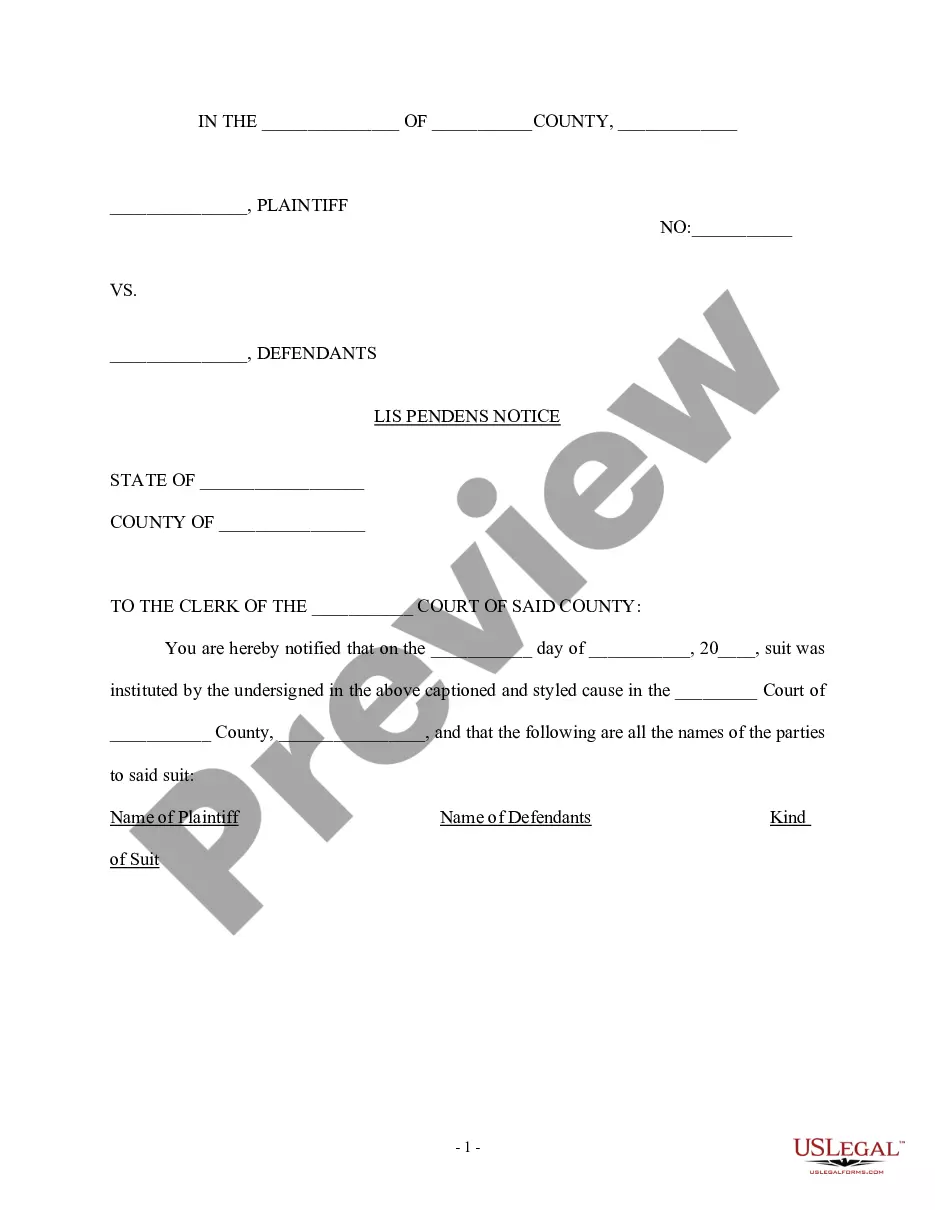
Lis Pendens Florida List In Phoenix
Description

Get your form ready online
Our built-in tools help you complete, sign, share, and store your documents in one place.
Make edits, fill in missing information, and update formatting in US Legal Forms—just like you would in MS Word.
Download a copy, print it, send it by email, or mail it via USPS—whatever works best for your next step.
Sign and collect signatures with our SignNow integration. Send to multiple recipients, set reminders, and more. Go Premium to unlock E-Sign.
If this form requires notarization, complete it online through a secure video call—no need to meet a notary in person or wait for an appointment.
We protect your documents and personal data by following strict security and privacy standards.

Make edits, fill in missing information, and update formatting in US Legal Forms—just like you would in MS Word.

Download a copy, print it, send it by email, or mail it via USPS—whatever works best for your next step.

Sign and collect signatures with our SignNow integration. Send to multiple recipients, set reminders, and more. Go Premium to unlock E-Sign.

If this form requires notarization, complete it online through a secure video call—no need to meet a notary in person or wait for an appointment.

We protect your documents and personal data by following strict security and privacy standards.
Looking for another form?




Form popularity
FAQ
A notice of lis pendens must contain the following: a. The names of the parties. b. The date of the institution of the action, the date of the clerk's electronic receipt, or the case number of the action. c. The name of the court in which it is pending. d. A description of the property involved or to be affected. e.
A lis pendens is a common tool used in Florida to put third parties on notice of a pending lawsuit against real estate. If filed properly, a lis pendens protects the plaintiff in a lawsuit from any intervening liens on the property filed after the lis pendens.
The suit or proceeding must be pending before a competent court of jurisdiction. A right to immovable property is directly or specifically involved in the suit. The suit or proceeding must not be collusive. The property in dispute must be transferred or otherwise dealt with by any party to suit.
Contrary to popular belief a lis pendens does not actually prevent the owner from selling the property. The titleholder can still sell the land and transfer the deed, but most title companies will not provide insurance and closing agents may not close without the lien being bonded.
Go to the Clerk of Court and Comptroller's website and search in recorded documents for a Lis Pendens against this property. You must search by owner's name. This can be tricky because the owner may own multiple properties and there may be hundreds of recorded documents with that name if it is a common name.
(2) A notice of lis pendens is not effectual for any purpose beyond 1 year from the commencement of the action and will expire at that time, unless the relief sought is disclosed by the pending pleading to be founded on a duly recorded instrument or on a lien claimed under part I of chapter 713 against the property ...
In Latin, the term lis pendens means pending litigation; it is a legal notice recorded for the public disclosure that a lawsuit is ongoing and claims a specific property. Such an action is called a “notice of pendency of action” under California Code of Civil Procedure § 405.2.
Short Answer: After filing a lis pendens, property sales may stall due to legal disputes impacting the title. Misfiling can result in sanctions or slander of title damages. Removal involves court-ordered expungement or voluntary discharge.
The party seeking to dissolve the lis pendens must file a motion defining why the lis pendens is neither one of right nor one with a nexus to the real property. The movant will normally also ask for a bond in the event that the judge does find a nexus exists.
A lis pendens notice will be recorded in the county public records, and a copy of the notice will be sent to the property owner.

