Registering A Lis Pendens In The Registry Of Deeds In Broward
Description
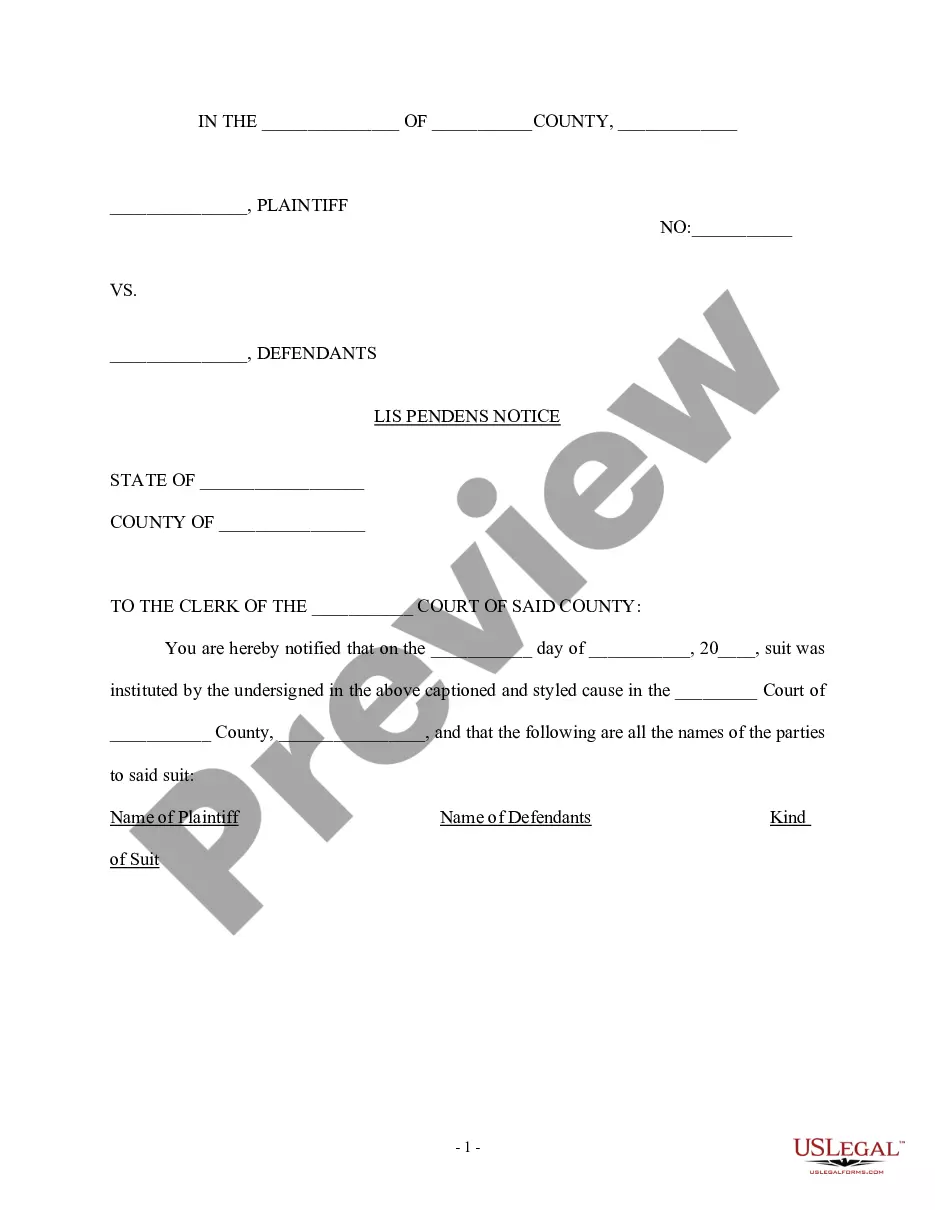

Get your form ready online
Our built-in tools help you complete, sign, share, and store your documents in one place.
Make edits, fill in missing information, and update formatting in US Legal Forms—just like you would in MS Word.
Download a copy, print it, send it by email, or mail it via USPS—whatever works best for your next step.
Sign and collect signatures with our SignNow integration. Send to multiple recipients, set reminders, and more. Go Premium to unlock E-Sign.
If this form requires notarization, complete it online through a secure video call—no need to meet a notary in person or wait for an appointment.
We protect your documents and personal data by following strict security and privacy standards.

Make edits, fill in missing information, and update formatting in US Legal Forms—just like you would in MS Word.

Download a copy, print it, send it by email, or mail it via USPS—whatever works best for your next step.

Sign and collect signatures with our SignNow integration. Send to multiple recipients, set reminders, and more. Go Premium to unlock E-Sign.

If this form requires notarization, complete it online through a secure video call—no need to meet a notary in person or wait for an appointment.

We protect your documents and personal data by following strict security and privacy standards.
Looking for another form?







Form popularity
FAQ
Under Florida law, an unrecorded deed that is notarized and delivered, will be valid as between the parties (the grantor and grantee). However, as far as creditors or purchasers, an unrecorded deed is void because there was no notice of the transaction.
A person can file a quitclaim deed by (1) entering the relevant information on a quitclaim deed form, (2) signing the deed with two witnesses and a notary, and (3) recording the deed at the county comptroller's office. In Florida, quitclaim deeds must have the name and address of both the grantor and the grantee.
If you do not know the property owner, you can call the Broward County Property Appraiser at 954-357-6830, or visit the Broward County Property Appraiser's website and search by street address to find out who owns a property.
Lack of Proper Execution: In Florida, a deed must be signed by the Grantor(s) (commonly the seller(s)), notarized, and witnessed by two disinterested people (the notary may act as one witness). Failure to meet these formal requirements can render the deed invalid.
Recording a Deed Must present a photocopy of a government issued photo identification for each grantor(s) and grantee(s) listed on the deed. "Prepared by" statement (name and address of the "natural" person preparing the Deed) Grantor(s) (Sellers-Party Giving Title) names legibly printed in the body of the deed.
The Notice of Commencement must be recorded with Broward County Records, Taxes and Treasury Division, or in the office of the clerk where the real property is located.
Copies of recorded deeds and mortgages related to Broward properties are available online at the Broward County Records Division website. You may search for deeds, mortgages, liens, release of liens, court judgments, condo declarations, and various other recorded documents on their website.
You may also contact the Broward County Call Center at 954-831-4000 for further assistance. If you are not able to locate a copy of the survey, you should contact a survey company for information about obtaining a new survey for your property.
IMPORTANT: Deeds related to Broward County properties must be recorded with the Broward County Records Division in downtown Fort Lauderdale. Click here to visit their website.
The Broward County Records, Taxes and Treasury Division: places or “records” official documents, such as deeds, into the Official Record. maintains a searchable database of recorded documents, including deeds, at our offices at the Broward County Governmental Center, 115 S. Andrews Ave., Fort Lauderdale.

