Patent Use Can For Known Compound In North Carolina

State:
Multi-State
Control #:
US-003HB
Format:
Word; 
PDF; 
Rich Text
187 downloads

Description

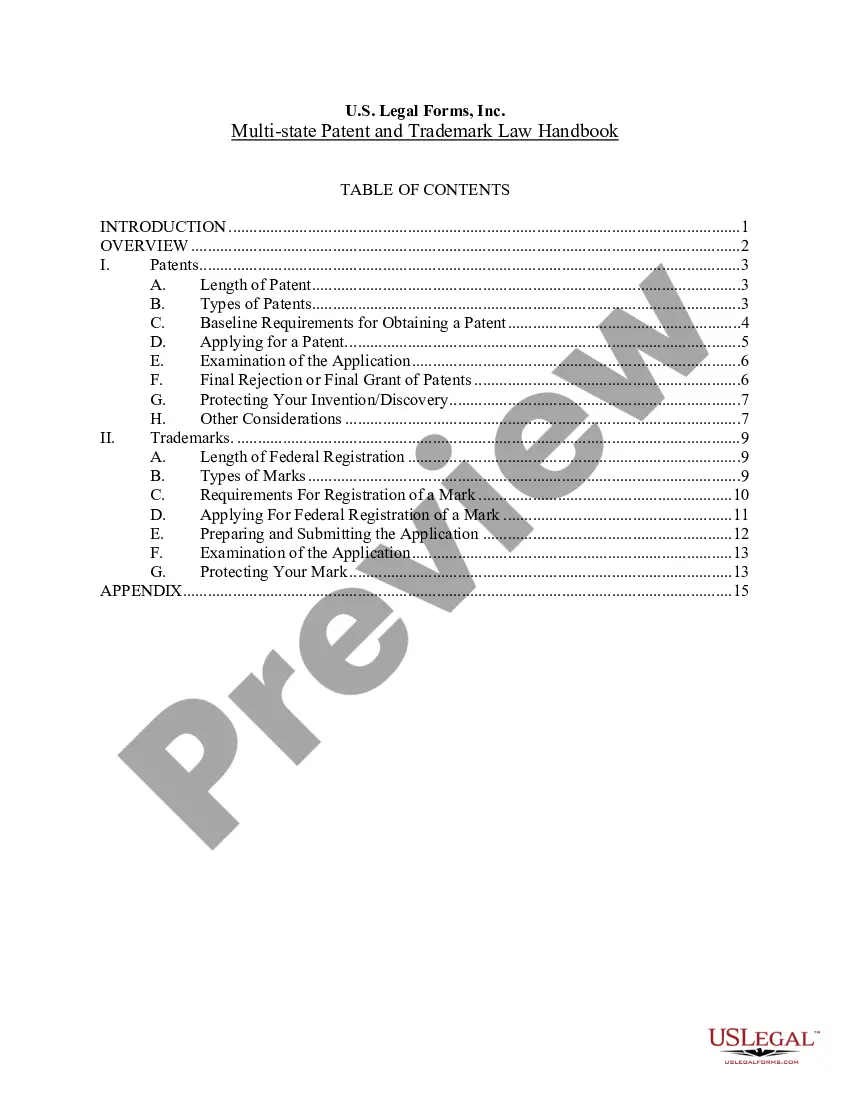
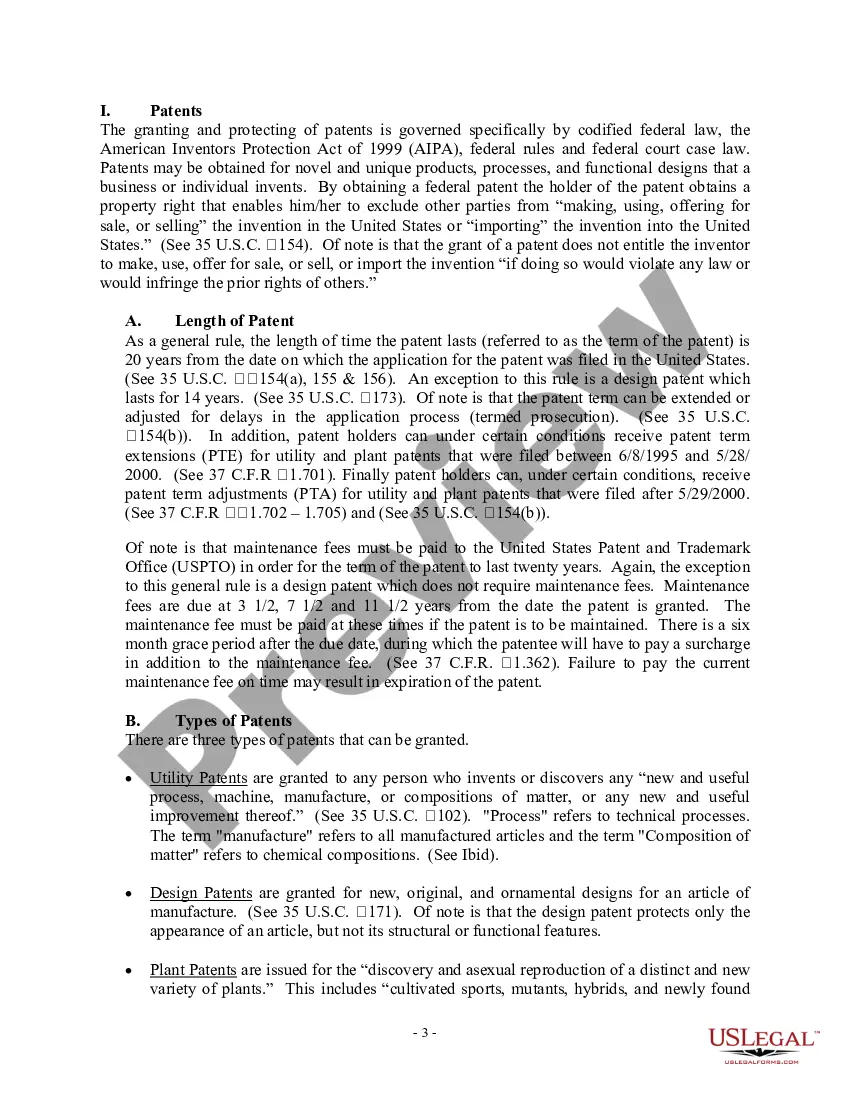
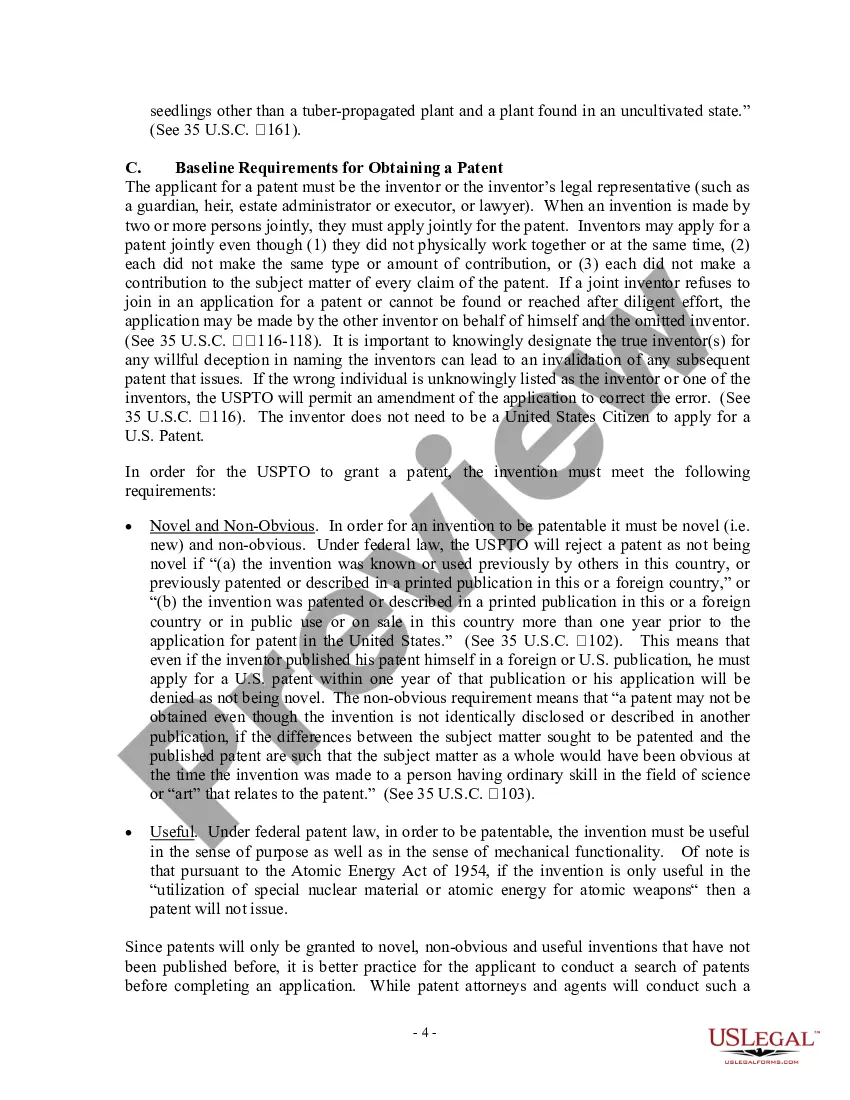
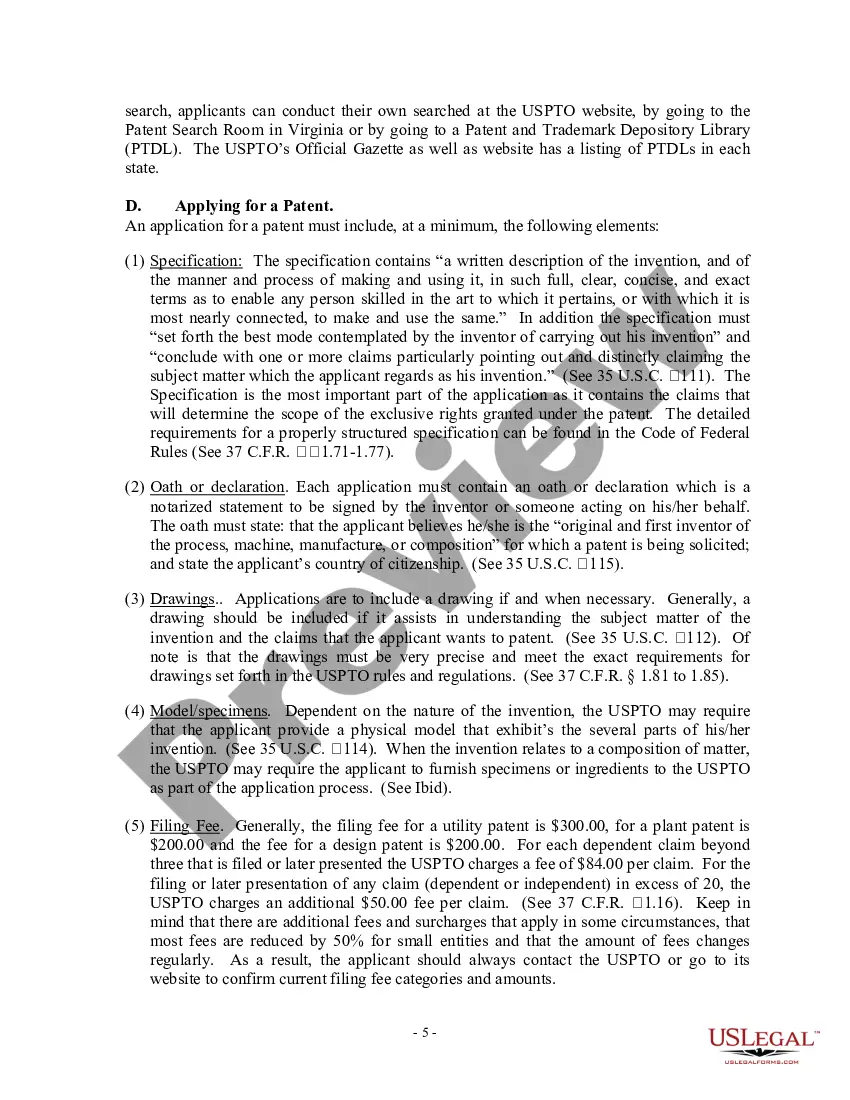
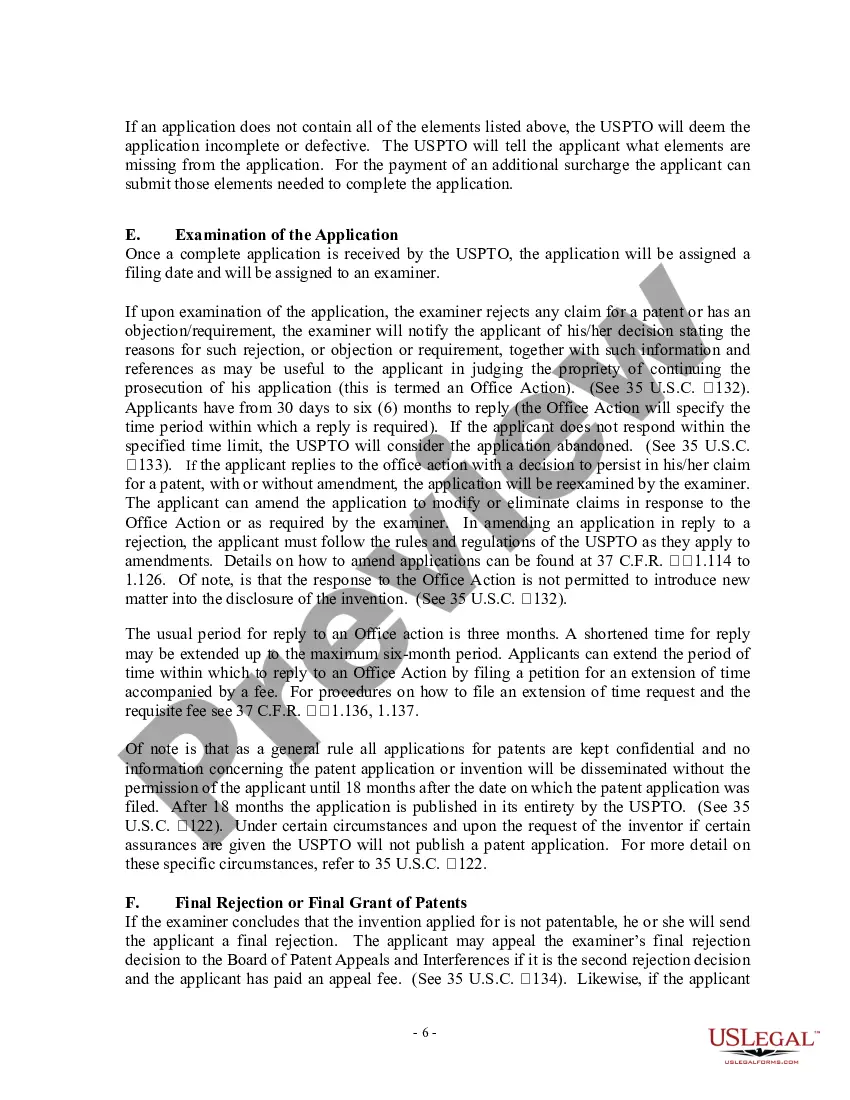
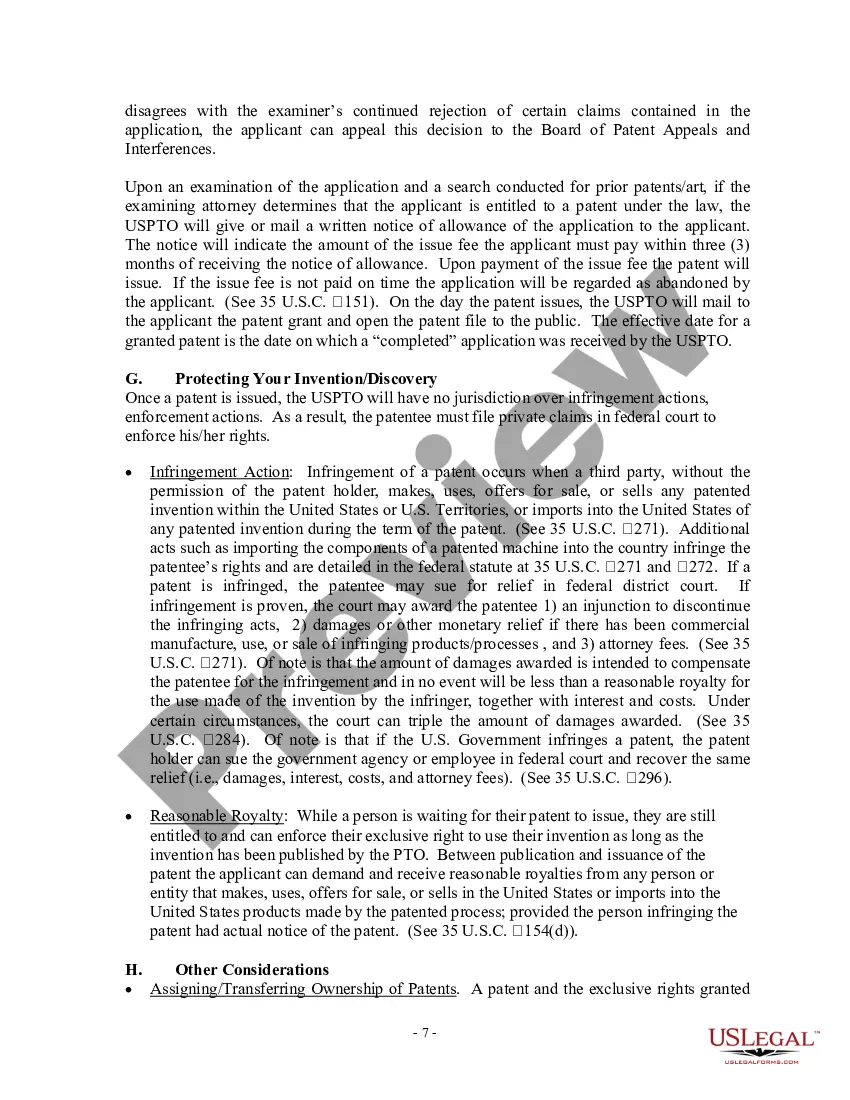
The Patent use can for known compound in North Carolina form is designed for individuals and businesses seeking legal protections for their inventions involving known compounds. It encapsulates key features such as defining the patent's exclusivity rights, detailing its term duration, which typically lasts for 20 years, and delineating the types of patents available, such as utility, design, and plant patents. Users are guided through filling and editing instructions, emphasizing the necessity of including specifications, drawings, and a filing fee, while ensuring a clear representation of their invention. This form serves various target audiences, including attorneys, partners, owners, associates, paralegals, and legal assistants, aiding them in understanding the intricacies involved in obtaining patent rights. Particularly, it allows for the effective use and enforcement of patent rights specific to known compounds, ensuring that users are informed of the requirements and potential legal complexities involved in patent application processes. The form emphasizes user responsibilities in maintaining patent rights, covering critical aspects like maintenance fees and the procedure for responding to any examination office actions from the USPTO.
Free preview
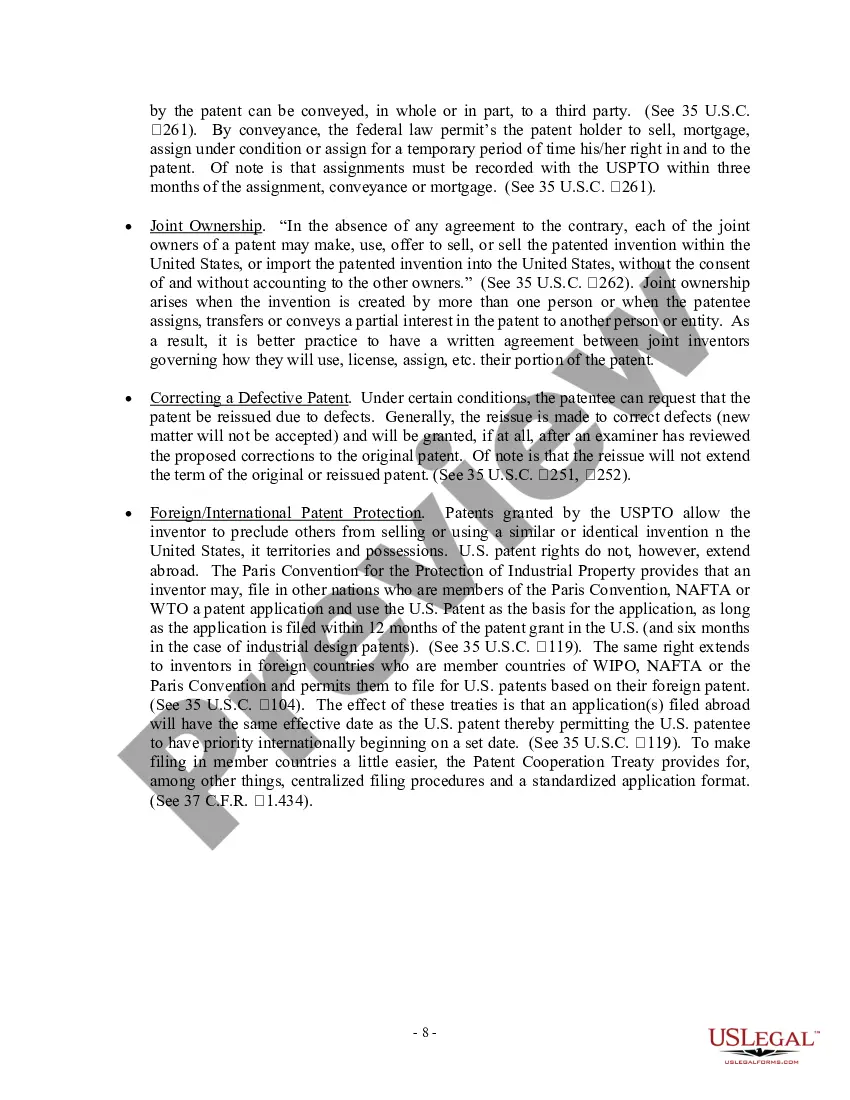
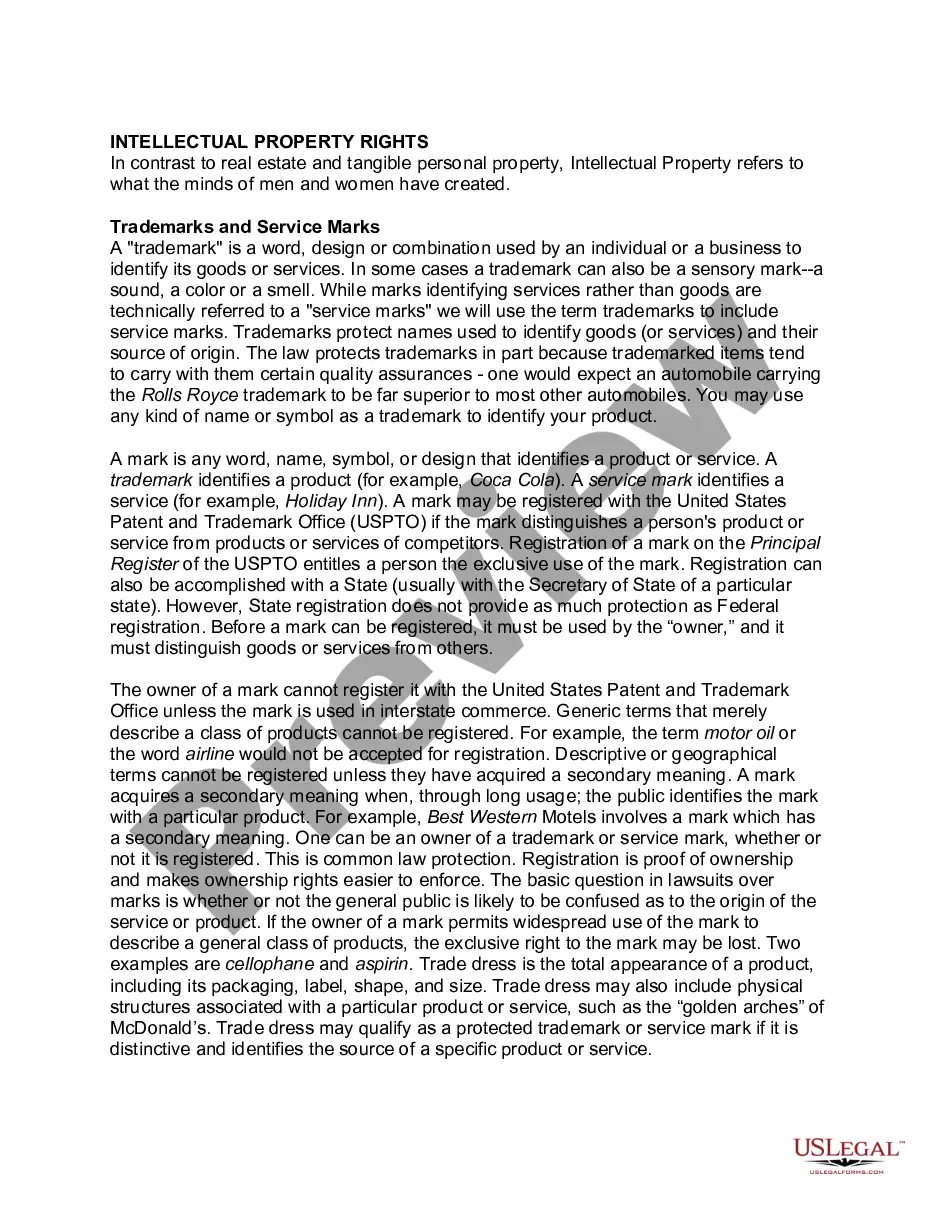
  • Preview USLF Multistate Patent and Trademark Law Handbook - Guide
  • Preview USLF Multistate Patent and Trademark Law Handbook - Guide
  • Preview USLF Multistate Patent and Trademark Law Handbook - Guide
  • Preview USLF Multistate Patent and Trademark Law Handbook - Guide
  • Preview USLF Multistate Patent and Trademark Law Handbook - Guide
  • Preview USLF Multistate Patent and Trademark Law Handbook - Guide
  • Preview USLF Multistate Patent and Trademark Law Handbook - Guide
  • Preview USLF Multistate Patent and Trademark Law Handbook - Guide
  • Preview USLF Multistate Patent and Trademark Law Handbook - Guide
  • Preview USLF Multistate Patent and Trademark Law Handbook - Guide
  • Preview USLF Multistate Patent and Trademark Law Handbook - Guide

Get your form ready online

Our built-in tools help you complete, sign, share, and store your documents in one place.

Built-in online Word editor

Make edits, fill in missing information, and update formatting in US Legal Forms—just like you would in MS Word.

Export easily

Download a copy, print it, send it by email, or mail it via USPS—whatever works best for your next step.

E-sign your document

Sign and collect signatures with our SignNow integration. Send to multiple recipients, set reminders, and more. Go Premium to unlock E-Sign.

Notarize online 24/7

If this form requires notarization, complete it online through a secure video call—no need to meet a notary in person or wait for an appointment.

Store your document securely

We protect your documents and personal data by following strict security and privacy standards.

Form selector

Make edits, fill in missing information, and update formatting in US Legal Forms—just like you would in MS Word.

Form selector

Download a copy, print it, send it by email, or mail it via USPS—whatever works best for your next step.

Form selector

Sign and collect signatures with our SignNow integration. Send to multiple recipients, set reminders, and more. Go Premium to unlock E-Sign.

Form selector

If this form requires notarization, complete it online through a secure video call—no need to meet a notary in person or wait for an appointment.

Form selector

We protect your documents and personal data by following strict security and privacy standards.

Looking for another form?
This field is required
Ohio
Select state

Form popularity

FAQ

There are five requirements that must be met to obtain a patent: patentable subject matter, utility, novelty, nonobviousness and enablement.

Yes, You Can Patent Food Products! Companies in the food and beverage industry might overlook significant advantages by not patenting their innovations. While there's a common belief that “recipes” cannot be patented, unique formulations and other aspects of food and beverage products often can be.

In the United States, there are three types of patents, all governed by the U.S. Patent and Trademark Office (USPTO): utility, design, and plant. Chemical patents can protect chemical compounds, compositions of matter, methods of making the chemical compound or composition, and methods of use.

Trusted and secure by over 3 million people of the world’s leading companies

Patent Use Can For Known Compound In North Carolina